
Melanerpes, Genus of Woodpeckers
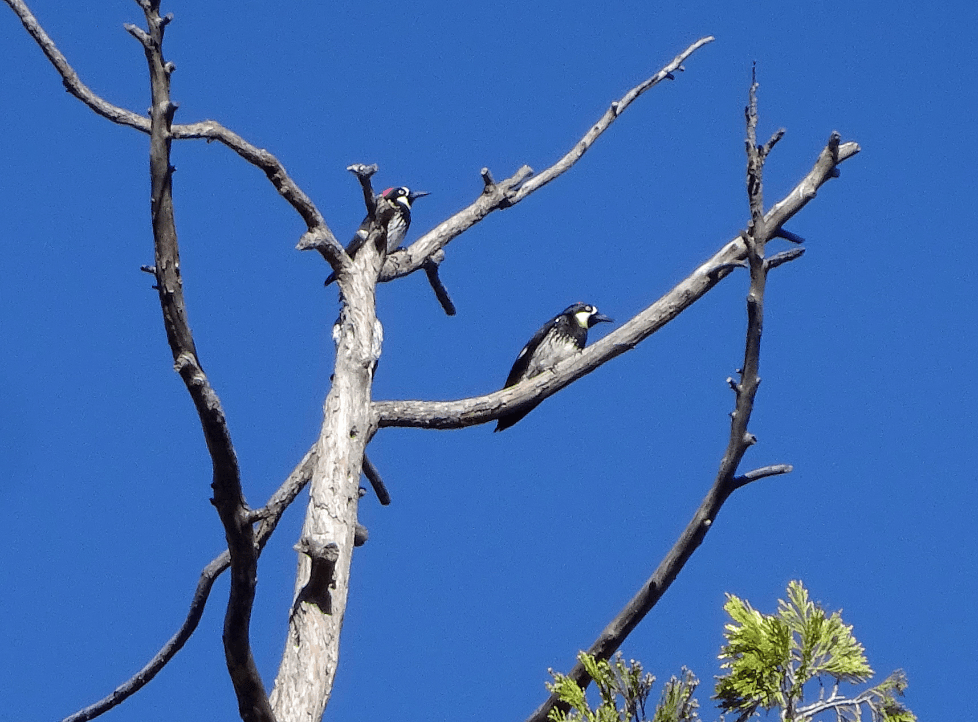
Figure 01. Charismatic Acorn Woodpeckers have distinctive lifestyles, despite being similar to other woodpeckers in many ways.
This is the ninth of nine blogs about the Piciformes order of birds and its nine highly diverse families.
- The first blog introduced the order and three of its nine families: Galbulidae, jacamars; Bucconidae, puffbirds; and Indicatoridae, honeyguides, https://bird-brain.org/2026/08/30/piciformes-tree-hugging-birds-part-1/
- Second blog: Ramphastidae family of toucans, https://bird-brain.org/2026/09/07/piciformes-tree-hugging-birds-part-2/
- Third: the four barbet families, especially the New World Capitonidae and Semnornithidae families, https://bird-brain.org/2026/09/13/piciformes-tree-hugging-birds-part-3/
- Fourth: Megalaimidae family of Asian barbets, https://bird-brain.org/2026/09/20/piciformes-tree-hugging-birds-part-4/
- Fifth: Lybiidae family of African barbets, https://bird-brain.org/2026/09/27/piciformes-tree-hugging-birds-part-5/
- Sixth: introduced the Picidae family of woodpeckers and their distinctive characteristics, as well as some variations, https://bird-brain.org/2026/10/04/piciformes-tree-hugging-birds-part-6/
- Seventh: subfamilies and genera of the Picidae family, highlighting a couple of woodpeckers, https://bird-brain.org/2026/10/11/piciformes-tree-hugging-birds-part-7/
- Eighth: the Dryobates genus of woodpeckers, especially the Nuttall’s Woodpecker (Dryobates nuttallii), https://bird-brain.org/2026/10/18/piciformes-tree-hugging-birds-part-8/
The current blog (ninth of nine in this series) focuses on the Melanerpes genus of woodpeckers, especially the Acorn Woodpecker (Melanerpes formicivorus), including the following:
- Melanerpes Genus
- Acorn Woodpecker (Melanerpes formicivorus)
- References
Melanerpes Taxonomy
The taxonomy of the Melanerpes genus is as follows: kingdom Animalia, phylum Chordata, class Aves, order Piciformes, suborder Pici, infraorder Picides, family Picidae, subfamily Picinae (“true woodpeckers”), and tribe Melanerpini (which includes 95 species in 12 genera, such as the 4-species Sphyrapicus sapsuckers and the 1-species Xiphidiopicus, Cuban Green Woodpecker).
In 1832, ornithologist William Swainson introduced this genus, based on the type specimen Red-headed Woodpecker, which at that time had been named Picus erythrocephalus (named by physician and taxonomist Carol Linnaeus in 1758); Swainson reassigned this species to the newly named Melanerpes genus. Swainson was pretty prolific; Wikipedia includes two pages of “Taxa named by William Swainson,” including 476 links. Taxa (singular, taxon) refer to any level of taxonomic classification — orders, families, and most commonly genera (singular, genus) and species. These links include both common names and scientific names, so the actual number of taxa is probably fewer than 240. Even so, that’s quite a few.
The name Melanerpes combines two ancient Greek words: melas, meaning “black,” which appears in the wing and back plumage of these woodpeckers; and herpēs, meaning “creeper,” pointing to their main method of foraging, creeping along tree trunks, in search of insect larvae and adults.
Melanerpes Appearance
As their genus name suggests, all species of Melanerpes have black plumage on their wings, backs, and upper tails, most with white bars or patches, as well. Underparts (breast, belly) are typically white (but may be light cream or gray, yellow, or red), sometimes with black speckles or bars. Overall, for most species, the plumage is mostly black and white, but often with some splashes of red and/or yellow. The head plumage includes black and/or white (or possibly yellow); males (and some females) typically have some red on the face, throat, crown, or nape; a few exceptions include the yellow-and-white head of the White Woodpecker, all-black head of the Guadaloupe Woodpecker, and all-red head of the Red-headed Woodpecker. In many species, males and females have differing plumage coloration, at least to some extent. Among these small to medium-sized woodpeckers, the sexes may differ in size, too. All have long, pointed bills; most have straight bills, but some species’ bills may be slightly decurved (downward).
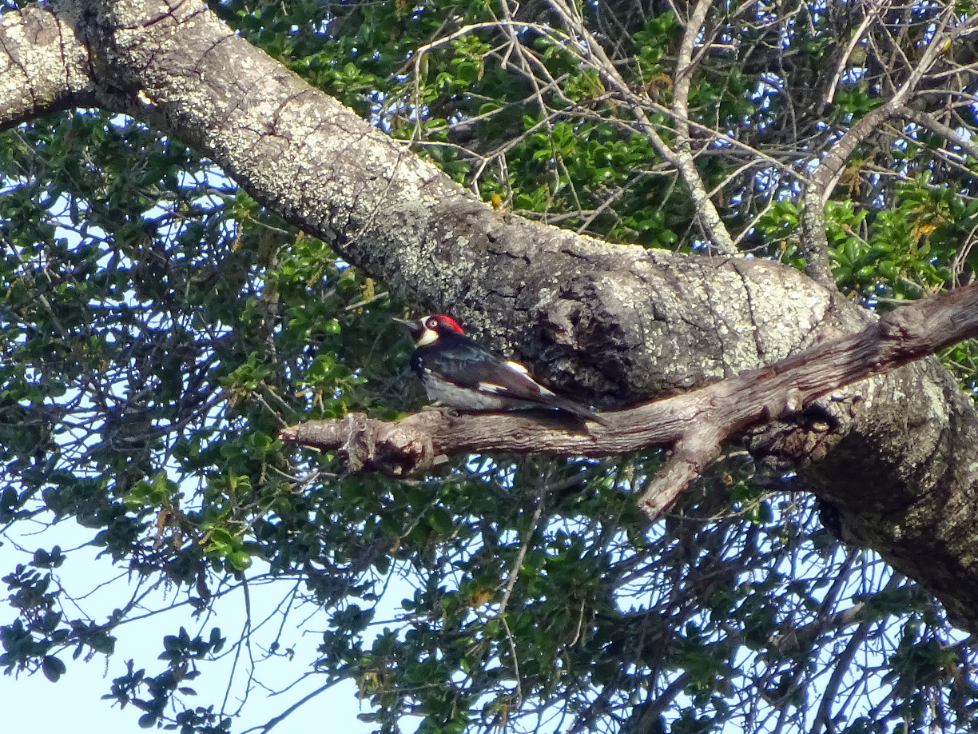
Figure 02. Like other woodpeckers in the Melanerpes genus, Acorn Woodpeckers have sharp pointed bills and predominantly black and white plumage, with a splash of red.
Melanerpes Distribution
Melanerpes woodpeckers are found only in the Americas (i.e., New World). All 23 species in the Melanerpes species have a conservation status of LC (Least Concern) — impressive adaptability to their environs. Of these 23 species, 6 are found only in North America:
- Gila Woodpecker, Melanerpes uropygialis (uropygialis refers to “rump,” but its significance isn’t obvious; see images, https://search.macaulaylibrary.org/catalog?taxonCode=gilwoo ; e.g., https://macaulaylibrary.org/asset/56446141 ), southwestern United States, western Mexico
- Golden-cheeked Woodpecker, Melanerpes chrysogenys, Mexico
- Gray-breasted Woodpecker, Melanerpes hypopoliusu, southwestern Mexico
- Lewis’s Woodpecker, Melanerpes lewis (named for explorer Meriwether Lewis), western and central United States
- Red-bellied Woodpecker, Melanerpes carolinus, eastern United States
- Red-headed Woodpecker, Melanerpes erythrocephalus (Greek, erythros, “red”; Latin, cephala, “head”), southern Canada, east-central United States
An additional 4 species are found not only in North America but also in Central and/or South America:
- Acorn Woodpecker, Melanerpes formicivorus, Canada, western and southwestern United States, south through Mexico and Central America to northwestern Colombia
- Black-cheeked Woodpecker, Melanerpes pucherani, southeastern Mexico, south to western Ecuador
- Golden-fronted Woodpecker, Melanerpes aurifrons, Texas and Oklahoma, through Mexico, Belize, Guatemala, El Salvador, Honduras, northern Nicaragua
- Yucatan Woodpecker, Melanerpes pygmaeus, Belize, Mexico
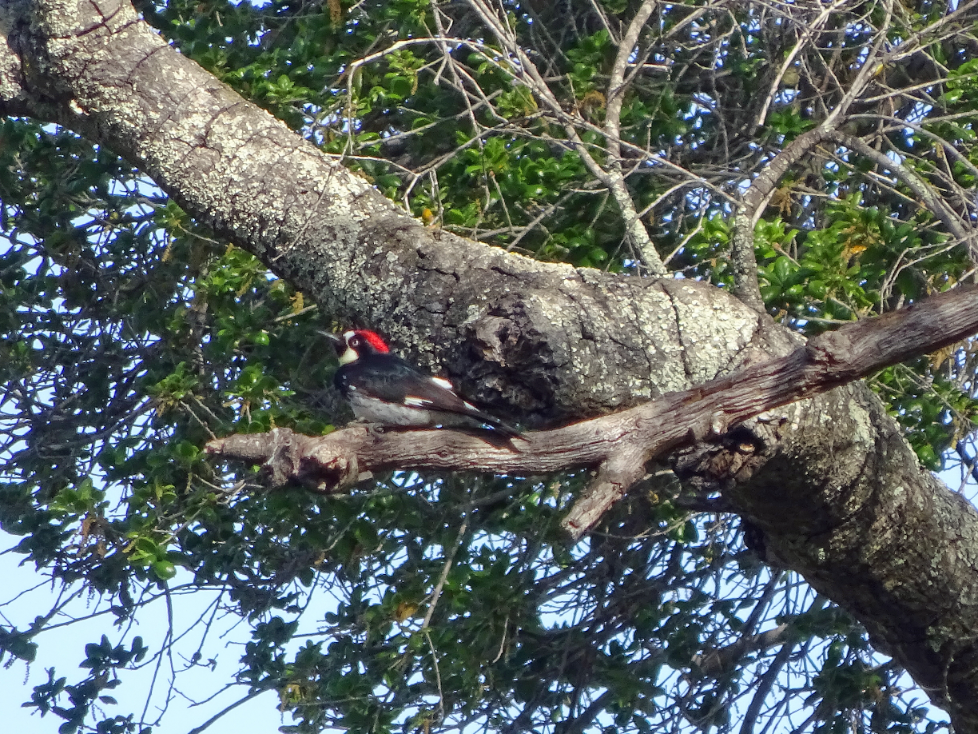
Figure 03. Acorn Woodpeckers have a broader range than many other species in the Melanerpes genus.
Another 5 species are found only in the Caribbean:
- Guadeloupe Woodpecker, Melanerpes herminieri, Guadeloupe archipelago
- Hispaniolan Woodpecker, Melanerpes striatus, Hispaniola (Haiti, Dominican Republic)
- Jamaican Woodpecker, Melanerpes radiolatus, Jamaica
- Puerto Rican Woodpecker, Melanerpes portoricensis, Puerto Rico
- West Indian Woodpecker, Melanerpes superciliaris, Bahamas, Cayman Islands, Cuba
An additional species is found not only in the Caribbean, but also in Central and South America:
- Red-crowned Woodpecker, Melanerpes rubricapillus, Tobago, Costa Rica, Panama, Colombia, Venezuela, the Guianas
Two species are found only in Central America:
- Golden-naped Woodpecker, Melanerpes chrysauchen, Costa Rica, western Panama
- Hoffmann’s Woodpecker, Melanerpes hoffmannii, southern Honduras, south to Costa Rica
And 5 species are found only in South America:
- Beautiful Woodpecker, Melanerpes pulcher, Colombia
- White Woodpecker, Melanerpes candidus, Suriname, French Guiana, Brazil, Bolivia, Paraguay, Uruguay, Argentina
- White-fronted Woodpecker, Melanerpes cactorum, Bolivia, Paraguay, Argentina
- Yellow-fronted Woodpecker, Melanerpes flavifrons, Brazil, Paraguay, far northeastern Argentina
- Yellow-tufted Woodpecker, Melanerpes cruentatus, Bolivia, Peru, Ecuador, Colombia, Venezuela, Guyana, Suriname, French Guiana, Brazil
Fossil evidence shows that an additional species, Melanerpes shawi, has been extinct since the Late Pleistocene (c. 129,000–11,700 years ago).
Melanerpes Behavior
Like other woodpeckers, most Melanerpes species eat mostly insects (especially larvae), but some species not only probe for insects on trees but also catch flying insects midair. In addition, many species eat fruit, and some species eat sap as part of their diet. All of these species excavate nest cavities in which to rear their young. Distinctively, the Red-crowned Woodpecker and the Hoffmann’s Woodpecker both sometimes enter their nest cavities backward. Because these woodpeckers typically excavate new nest cavities each breeding season, their abandoned nest cavities provide homes for other birds to use for their own families (e.g., wrens, bluebirds, nuthatches).
Figure 04. Most Melanerpes woodpeckers eat mostly insects, but when insects aren’t available, some species (e.g., Acorn Woodpeckers) make small holes in living trees from which to consume nourishing tree sap.
Though the social behavior of woodpeckers varies widely, many species are solitary outside of breeding season. Some species, however, such as the Acorn Woodpecker and the Yellow-tufted Woodpecker are quite sociable. These species may forage together and nest communally, often communicating through vocalizations. Their breeding style is complex, as both communal and cooperative breeders.
Acorn Woodpecker (Melanerpes formicivorus)
Taxonomy
In 1827, 5 years before he named the Melanerpes genus, naturalist William Swainson formally described the species “Picus formicivorus” (changed to Melanerpes formicivorus in 1832), based on a type specimen from Temiscaltepec, Mexico (the text of his description introduces the following section). Swainson named it formicivorus, from Latin formica, meaning “ant,” and -vorare, meaning “to eat” or “to devour.” In his description, he acknowledged help from a physician who observed its eating habits. It has 7 recognized subspecies, which appear to be differentiated by location (Oregon to northern Baja California, . . . Nicaragua and Panama, . . . Colombia). A fossil of this species was found in New Mexico, dated to less than 400,000 years ago.
Appearance
Following is Swainson’s description of 1827 (see https://www.biodiversitylibrary.org/item/53108#page/455/mode/1up for the English text):
Mr. Swainson’s Synopsis of the Birds of Mexico. 439
FAM. PICIDÆ.
80. Picus formicivorus.
Glossy blue-black ; hind head red; front, rump, and band on the quills white; throat yellow: breast black with white stripes
Table land: not uncommon in the pine woods of Temiscaltipec. Information derived from Mr. Jenkens, a medical gentleman now at Real del Monte, enables me to give this species a name appropriate to its habits. Total length, 8 [inches]: bill, 1 1/10 [1.1 inches]; wings, 5¾; tail 3½ [inches].
In general, Acorn Woodpeckers are about 8 inches long, bill to tail (20 cm; range 7.5–9.1 inches, 19–23 cm), and weigh about 3 ounces (85 g; range 2.3–3.2 ounces, 65–90 g). Within a family group, the breeders (males and females) tend to be quite a bit larger than the group’s helpers. Wingspan is about 14–17 inches (35–43 cm). Tail length is about 3.1–3.5 inches (7.9–9 cm), and tarsus length 0.8–1 inch (1.95–2.605 cm, ankle to toes). Bill length (culmen) is about 0.9–1.25 inches (2.3–3.2 cm), with males typically having longer culmens than females.
To see how what a culmen measurement looks like, please see https://bird-brain.org/2026/05/24/falcons-gyrfalcon/#cere-etc .
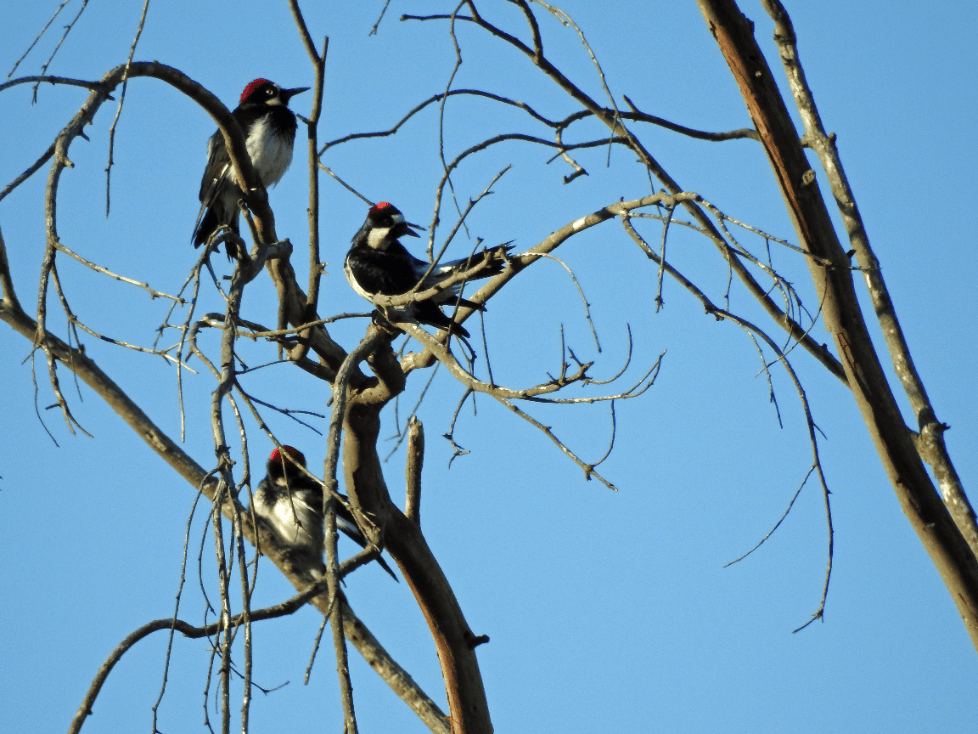
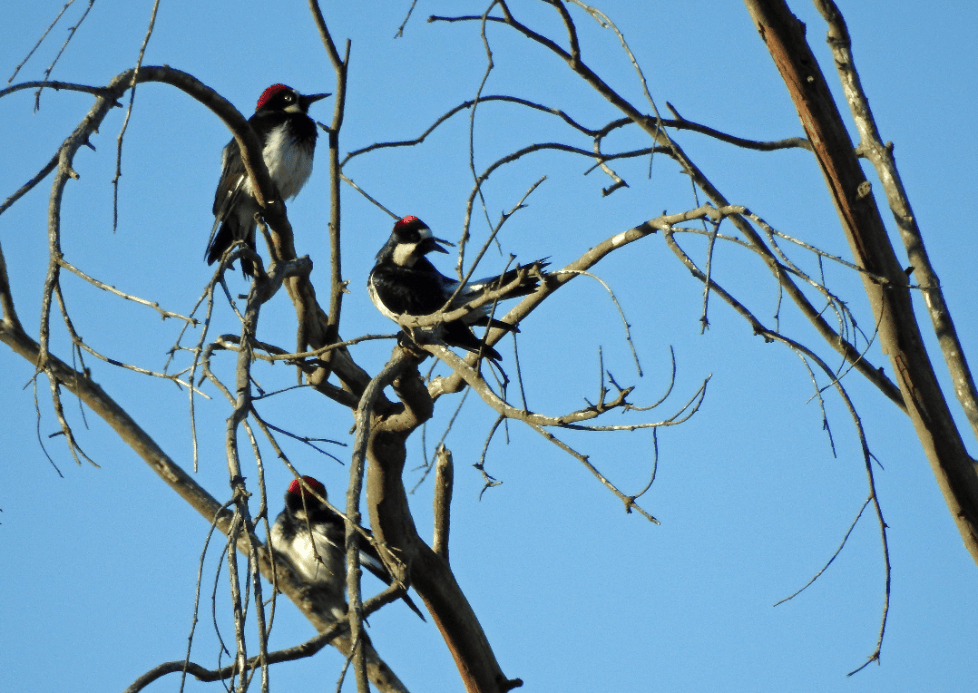
Figure 05. These three Acorn Woodpeckers illustrate the overall species plumage, as well as the difference between male and female head plumage. Look carefully at the head plumage between the crown and the bill to see whether you notice any difference.
Adult Acorn Woodpeckers have glossy black wings, upper back, and upper tail, perhaps with a slight brownish tint. On the back is a big white rump patch, visible when the wings part. A white patch appears on each upperwing, near the tip, visible with wings spread. Under the wings, the wing edges are black, but most of the underwing plumage is a band of white, with black feathers near the body. In front, directly beneath the pointed black bill is a small black patch of chin feathers, beneath which, white plumage flows up to the forehead. Below the bill, beneath this narrow white band (sometimes appearing yellowish) is a black breast, which progresses to mostly white underparts (lower breast, belly, and flanks).
Males and females have a white forehead and throat. Both also have black cheeks and black plumage surrounding each eye. On females, this black plumage extends up and over the head, between the white forehead and the red nape feathers. On males, the black plumage stops above the eyes, below a red-feathered cap, such that the red cap touches the white forehead, unimpeded.
The Acorn Woodpecker’s flight feathers include 10 primaries (toward the wing tips), 7 secondaries (closer to the body), and 3 tertials (closest to the body). They also have 6 pairs of rectrices (singular rectrix, tail feather; 12 total). Please see https://macaulaylibrary.org/asset/667203953 for a view of an Acorn Woodpecker in flight, viewed from below; for a side view of this woodpecker in flight, please see https://macaulaylibrary.org/asset/667143635 ; for a view of its upperparts in flight, please see https://macaulaylibrary.org/asset/666806784 ; two more flight shots: https://macaulaylibrary.org/asset/666806779 and https://macaulaylibrary.org/asset/666806775 .
At all ages, the Acorn Woodpecker’s pointed chisel-like bills are black, with a pinkish gape; their legs and feet (with zygodactyl toes) are black, too. Hatchlings have dark irises, which gradually become white during the first 2–3 months after hatching.
Sounds and Vocal Behavior
Keen observers have distinguished at least 9 distinct vocalizations made by Acorn Woodpeckers, including
- greeting calls;
- warning calls associated with defenses and possibly accompanied by synchronized head and body motions;
- a call made when flying toward an intruder, possibly also used when feeding nestlings, often accompanied by feather rousing and perhaps hopping toward the intruder;
- a call made during power struggles among conspecifics (i.e., fellow Acorn Woodpeckers);
- a call made when being attacked, or made by a juvenile begging for food;
- a call usually made by nestlings waiting to be fed in the nest cavity, may be accompanied by head-bobbing, feather rousing, and wing flicking;
- two calls made by young nestlings left alone in the nest;
- alarm call, notifying the others of a predator’s approach, usually linked with either dashing into the nearest roost hole or freezing in place;
- “scream,” distress call vocalized when an Acorn Woodpecker is captured by a predator or by a human.
One observer also noted that “Acorn woodpeckers have a call that sounds almost like they are laughing.” More than 1,900 audio recordings of this species may be found at the Macaulay Library’s website, https://search.macaulaylibrary.org/catalog?taxonCode=acowoo&mediaType=audio . In addition, more than 300 recordings of Acorn Woodpecker calls may be heard at https://xeno-canto.org/species/Melanerpes-formicivorus .
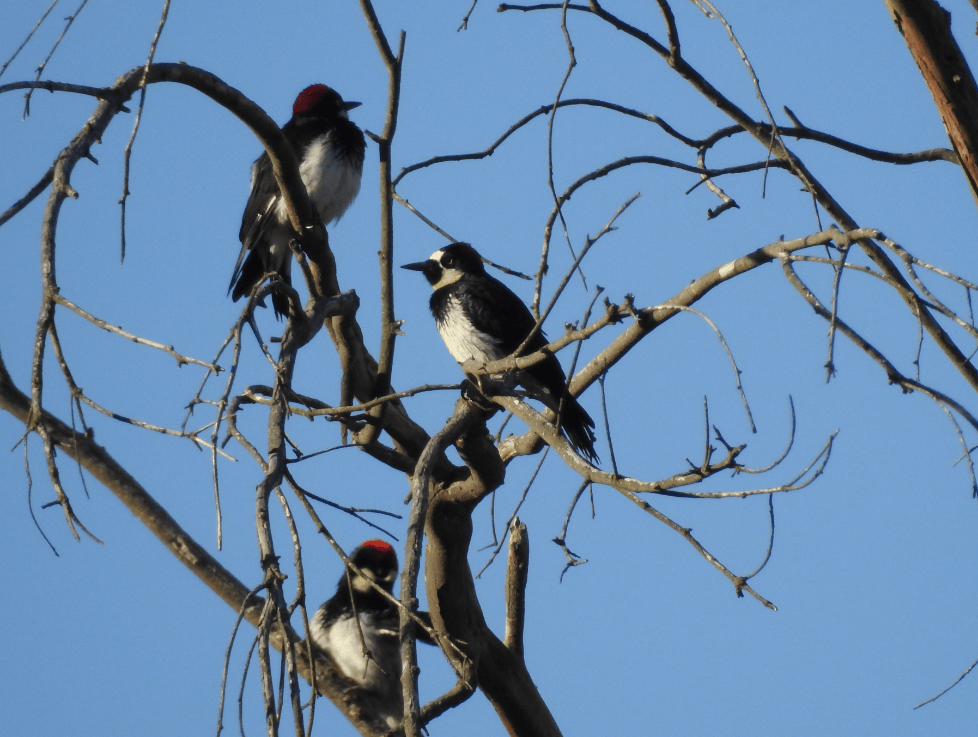
Figure 06. Walter Lantz based the appearance of his cartoon character Woody Woodpecker on the Pileated Woodpecker (see https://en.wikipedia.org/wiki/Woody_Woodpecker#/media/File:Woody_Woodpecker.svg ), but he is said to have based Woody’s call on that of the Acorn Woodpecker. It’s fun to imagine how these woodpeckers inspired Lantz.
In addition to this variety of vocalizations, Acorn Woodpeckers use drumming to communicate, often regarding territorial disputes. When drumming, the woodpecker will tap 2–20 times, evenly spacing the taps, usually on a resonant structure, such as a hollow dead or rotten tree limb. Drumming is rarely a drum solo, and both males and females may drum at any time of year, though more commonly early in the breeding season.
Distribution, Habitat, Migration
The Acorn Woodpecker can be found throughout much of North America: Canada (often vagrant, nonbreeding), western and southwestern United States (Washington, Oregon, California, Arizona, New Mexico, western Texas), Mexico, Central America (Belize, Guatemala, El Salvador, Honduras, Nicaragua, Costa Rica, Panama), as far south as the northern Andes of Colombia. The range of its breeding territory is +1.45 to + 45.7 degrees latitude, with a centroid longitude of −104.16 degrees. Total range size is estimated to be 580,310–2,467,200 square miles (1,502,706–6,390,000 km2).
As its common name suggests, the Acorn Woodpecker prefers habitat with oaks and is typically found in pine–oak woodlands. It also adapts to riparian woodland corridors, such as redwood, evergreen, and hardwood forests; acacia woodlands, savannas, and palm groves will do, as well. It even adapts to suburban environments, as needed, though it still needs standing dead trees for storage of acorns. It can be found between sea level and 14,400 feet (4,400 m), but in Central America, it’s more commonly found at 3,300 feet (1,100 m) and above.
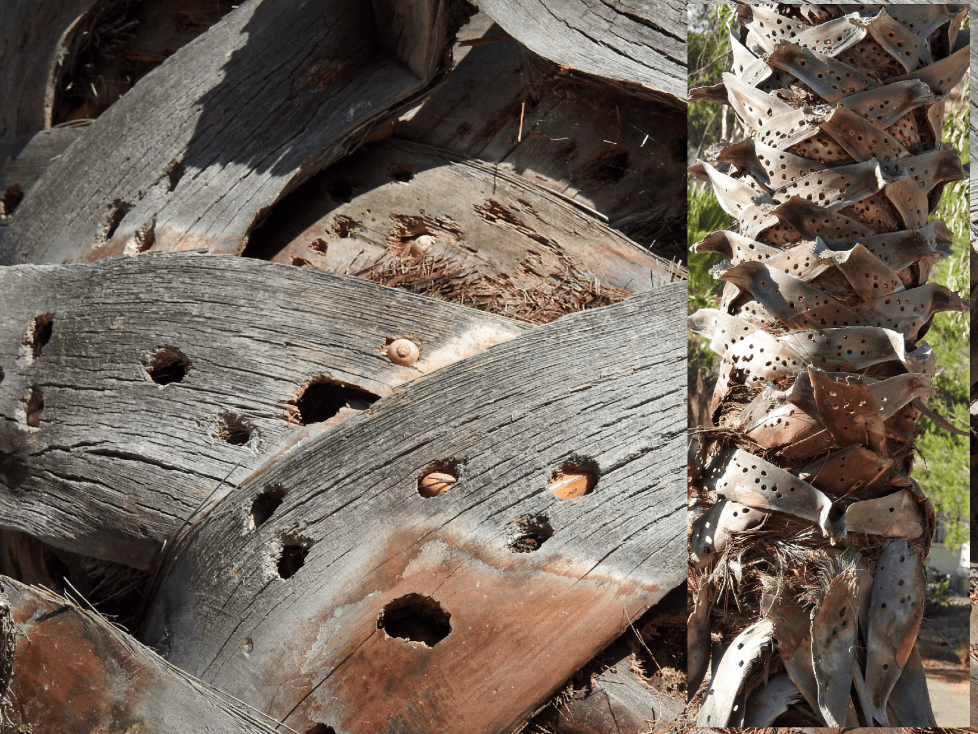
Figure 07. Whenever acorns are abundant (typically, autumn), industrious Acorn Woodpeckers store them in the dead or rotten bark of trees known as “granaries,” where they keep them — perhaps for months — until they’re needed, when other food sources are low (typically, winter). Acorn Woodpeckers use the same granary trees year after year, adding holes, as needed.
Most Acorn Woodpeckers are sedentary, so their breeding territory is their year-round territory for most. In many locations, insects aren’t as widely available in winter, so they rely more on eating from their acorn stores then. In some locations (e.g., mountains in Arizona), where both insect supplies and acorn supplies drop annually, Acorn Woodpecker populations may migrate seasonally. In any location, if Acorn Woodpeckers don’t have insects available, and they deplete their existing supply of stored acorns, or they can’t find enough water to drink, they may wander nomadically looking for food or water. During such times, they may wander into habitats such as grasslands or even deserts, which would otherwise be unsuitable.
Acorn Woodpeckers have also been known to colonize new territory, though usually within 125 miles (200 km) of their starting location. Also, low-status nonbreeding members of a collective may leave the collective’s territory in search of possible openings in other collectives, where they may be able to breed. If they find an opening elsewhere, they leave their natal territory for the new collective’s territory.
Food and Foraging
True omnivores, Acorn Woodpeckers have a varied diet, but their favorite food seems to be insects, whenever they’re available. According to Avibase, about 55% of their diet is seeds (especially acorns), 25% is invertebrates (especially flying insects), 20% is fruits. In addition, their diet includes traces of sap, flower nectar, land vertebrates (e.g., lizards, bats, mice, birds, bird eggs), and “miscellaneous” food items. Other studies confirm that acorns are 53–60% of their diet about 9 months or more each year. When insects are more plentiful (e.g., spring and summer), these woodpeckers prefer this high-protein food source, but when insects are in short supply, these woodpeckers look to acorns and other foods.
Typically, Acorn Woodpeckers eat more acorns in winter than in other seasons, but they store more acorns in their “granaries” in autumn, when the acorns are more available. A granary tree may hold only a few acorns or up to about 50,000, each placed in its own well-fitting hole. A given group of Acorn Woodpeckers may have one primary tree, as well as one or more secondary granary trees.
Figure 08. Acorn Woodpeckers monitor their granaries because acorns shrink as they dry out, so a tight fit may become a loose fit over time. When a particular acorn fits too loosely in its hole, in danger of falling out, these woodpeckers move the acorn to a hole offering a tighter fit. They must also defend their granary trees from fellow nut lovers, such as jays.
Because they bore these acorn holes only in dead or dying wood or in the outermost layer of thick bark, the holes don’t jeopardize the well-being of the living tree. The same granary tree is used over many years, so the holes aren’t drilled all at once; rather, the holes accumulate over time. In fact, a given hole isn’t drilled all at once, but instead, drilled over a series of drilling sessions, estimated to take about an hour per hole in total.
There is geographical variation in the use of acorn granaries; while it’s nearly universal in California, it’s less common in other locations, where other nuts or seeds may be stored in other plants, such as bromeliads or other natural storage spots. A bonus to storing acorns is that sometimes insect larvae parasitize the acorns, offering extra protein to the woodpecker that eats them. A drawback of acorns is that some oak species’ acorns contain high levels of tannin, which inhibits the bird’s protein metabolism.
Unlike many other woodpeckers, Acorn Woodpeckers rarely dig into wood to probe for insect adults or larvae. Instead, these woodpeckers typically hawk flying insects by sallying out from tree limbs in the canopy, catching one insect at a time, 1–6 insects/minute. They also glean insects from bark. In addition, they pluck fresh acorns and fruits directly from trees, rarely seeking any on the ground.
In early spring and again in midsummer (when the acorn supply may be running low), Acorn Woodpeckers may drill small holes (shallow, narrow diameter) into the bark to get to the tree’s sap. Often, Acorn Woodpecker groups will congregate at sap holes, visiting the same holes over several years. They don’t consume the wood tissue, just the sap. They also drink water, either from springs or from water collected in tree holes.
Figure 09. The holes on this tree were probably drilled by Acorn Woodpeckers, such as this male, for extracting sap when other food supplies aren’t available.
Nonbreeding Behavior
Though these woodpeckers don’t really walk, they hop easily across, up, and down tree trunks and limbs. Like most other woodpeckers, Acorn Woodpeckers typically fly by alternating powered and unpowered flight — that is, they use vigorous spread-wing flapping to swoop upward, then close their wings against their bodies, letting gravity dip them slightly downward before they swoop up again — creating wavy undulations. At times, however, they make swift short, direct flights.
Surprisingly, these sociable woodpeckers don’t cluster together much. Usually no more than 2–3 individual birds are seen near each other. Exceptions: early in breeding season or at times when they’re establishing dominance, sucking sap together, or mobbing perceived predators. Also, these woodpeckers don’t allopreen (mutually preen one another). They do preen themselves, though, and they sunbathe with their wings partially spread out (and sometimes fall asleep while sunbathing). Whenever they have access to water suitable for bathing, they bathe regularly. They haven’t been seen anting — using ants to get rid of parasites on their feathers.
Figure 10. (a) In general, Acorn Woodpeckers are usually found with just 0–2 other woodpeckers, such as these two inspecting this tree together. (b) Though Acorn Woodpeckers don’t preen one another, they do preen themselves, which this male is doing here.
Acorn Woodpeckers are highly sociable, living in groups and communities year-round, and they roost together in tree cavities. Sociable roosting ensures that nighttime temperatures inside the nest cavities are considerably higher than the ambient temperatures outside the cavities, especially in a windy habitat. On the other hand, during warm daytime weather, even the nestlings may find the nest cavity stiflingly hot and may leave the cavity during extreme daytime heat.
In some geographic locations, Acorn Woodpeckers forage independently, but in others, they forage together, moving from one spot to another as a group. They get along together pretty well, with rare squabbles until dominance issues are resolved; males dominate females within the group. An exception arises when a reproductive vacancy emerges — that is, when the group’s breeders of one sex die or leave the group, leaving a vacancy to be filled, usually by an unrelated bird outside the group, rather than by a helper from within the group. These disputes can last for days, or even weeks, especially if the vacancy is a female breeder.
The entire group tends their shared granary tree or trees as a communal resource. Their relationships with other species, however, can be disputatious. They’ll vigorously defend their granary trees and other stored acorns against any acorn-eating competitors, whether birds (jays, nuthatches, crows) or mammals (e.g., squirrels). They’ll sometimes go even further, defending favored acorn-bearing oaks, sap-yielding trees, or even favorite perches.
During breeding season, nest cavities are also the subject of ardent defensive actions. One such defensive action is mobbing, when the entire group makes repeated aerial dives at the perceived intruder (e.g., a crow or squirrel), assaulting it communally. All members of a collective defend their communal resources, but if granary trees aren’t a factor, they’re much less combative in defending their territory.
At nest cavities, they’ll mob potential predators, such as Cooper’s Hawks, Great Horned Owls, falcons, other raptors, or even snakes; they’ve been observed to be effective in removing a snake and dropping it to the ground. They also vehemently defend active nest cavities against would-be nest-cavity competitors (e.g., European Starlings). On the other hand, an individual Acorn Woodpecker may respond to an approaching predator by hiding and staying motionless.
Breeding Behavior
As cooperative breeders, Acorn Woodpeckers live and breed in family groups of up to 15 individuals. Particular breeders may be monogamous (one male, one female) or polygynandrous (each female having multiple male partners and each male having multiple female partners). A polygynandrous collective might have up to 4 female and 8 male breeders. More commonly, just 1 breeder female mates with up to 3 males (more accurately called polyandry). Polygynandry has been described as “opportunistic,” in that 1–8 male breeders will compete to mate with 1–4 female breeders in the collective. So, among polygynandrous breeders, all the breeder males compete to mate with all the breeder females. In addition, the breeders are aided by 1–10 helpers, male or female, fledglings from the collective’s previous breeding seasons; these helpers may be up to 5 years old. They will never become breeders within this collective, though some may move to other collectives, in hopes of finding a reproductive vacancy.
Figure 11. Acorn Woodpeckers are all cooperative breeders; a given breeding collective may be one or more monogamous pairs or may be a polygynandrous group.
Whether monogamous or polygynandrous, Acorn Woodpeckers haven’t been seen to engage in courtship displays or in pair-bonding rituals. Even copulation appears to be brief and infrequent. Nonetheless, among nonmigratory monogamous pairs, the twosome typically stays together on their shared territory year-round.
When ready to lay their eggs, all the Acorn Woodpecker breeder females lay their eggs communally in one nest cavity, which may or may not be in the same tree as their granary. They’re not entirely cooperative, however; when a female is ready to lay her first egg in the communal nest, she destroys any eggs already in the nest. After each female has laid at least one viable egg, the females stop destroying other eggs in the nest. It’s been estimated that about 1 in 3 eggs is destroyed for this reason. Interestingly, a small percentage of the first eggs laid by these females are “runt” eggs — small nonviable eggs.
Males aren’t entirely cooperative either, often showing mate-guarding (vigilantly watching over a female to ensure she doesn’t mate with another male) until the female starts to lay eggs. Because males usually can’t be sure whether they fathered particular eggs and hatchlings, they help to raise all the offspring of the group.
One source suggests that cooperative breeding (i.e., more than two birds caring for the nestlings) occurs in only 9% of bird species. Even less common is cooperative polygynandry, so Acorn Woodpeckers are rare birds indeed. It has been suggested that one stimulus for this breeding style is habitat saturation — that is, when the woodpecker population is dense in a given habitat. Another stimulus (perhaps related) is the limited availability of a resource — acorns, in this case. The number of breeders relates to the availability of acorns; when the acorn crop is poor, fewer birds breed. If the acorn crop is particularly good, the group may breed a second time within one season, though the clutch sizes and breeding success of the second nests are usually lower. (The range of breeding attempts is about 1–2.5/year.)
At least half of the time, the Acorn Woodpecker group digs out a new nest cavity in dead or rotting wood, but they may also reuse a cavity from a previous breeding season, sometimes for numerous years. The nest cavity has an inside diameter of about 5.9 inches (15 cm) and a depth of about 8.7–27.6 inches (22–70 cm), positioned about 7.5–59 feet (2.3–18 m) above the ground. The bottom of the cavity is usually lined with fresh wood chips.
Figure 12. Acorn Woodpecker families work cooperatively year-round, but especially during breeding season.
Each female Acorn Woodpecker lays 3–7 smooth white elliptical eggs (laid about 1 day apart); eggs are translucent when they emerge but become opaque during incubation. Both male and female breeders develop brood patches, and both sexes incubate the eggs; females incubate slightly more than males during daytime, but 1–2 dominant breeder males do the nighttime incubation and brooding. The collective’s helpers seldom aid in incubation. Incubation lasts about 11–14 days (usually 11–12). The time spent incubating increases over the duration of the egg-laying period, reaching a peak when the penultimate egg is laid; each breeder spends about 1 hour at a time on the nest, until another breeder arrives.
At about Day 10 of incubation, the Acorn Woodpecker chicks start peeping from inside the shell, and they start pipping the shell within about 12 hours after. Because eggs are laid asynchronously, they hatch asynchronously, too, but even so, the chicks usually hatch within 24 hours from when the first chick hatches. Any who hatch after that time may be ignored and go unfed, regardless of food availability. (About 16% of nestlings starve to death before they fledge.) Like other woodpeckers, they hatch blind (eyes opening at about Day 10), highly altricial (helpless), and featherless. The first feathers to emerge are juvenile plumage — no down — which starts to appear at about 14–21 days after hatching. They can’t reliably thermoregulate (control their internal body temperature) until about 13–14 days of age, so they’re vulnerable if left unattended.
Upon hatching, even before Acorn Woodpecker chicks can sit upright, they start to make begging calls. For the first 3–4 weeks, parents and helpers enter the nest cavity to feed the chicks, but afterward, the chicks climb up to the nest entrance to be fed. Breeding parents and helpers feed insects and acorn bits to the nestlings — mostly insects at first (83% of diet). The adults gradually increase the proportion of acorns as the chicks grow (reaching 31–42% of the diet by age 23 days). Parents eat mostly acorns during this time, perhaps supplemented with some tree sap.
Breeding Acorn Woodpecker parents brood the chicks, aided by helpers, for about 60–65% of the first 4–5 days, declining to about 10–15% of the time by age 12 days. When more adults are providing food, chicks are fed more frequently. (Not surprisingly, fledging success and survivorship increase with the group’s size, significantly so in some populations.) The adults also remove hatchlings’ fecal sacs by eating them during the first week. After that, the adults physically remove the fecal sacs from the nest — more often the breeder males doing so. Adults often replenish the nest’s wood chips by pecking the walls of the cavity; the chips stick to the feces and absorb some of the fluid, making it easier for adults to remove the fecal sacs with the wood dust stuck to the sacs. Eventually, after >20 days, the growing chicks produce so much feces that the adults can’t keep up with its removal, and it accumulates on the nest floor, attracting numerous invertebrates.
Before fledging, Acorn Woodpecker chicks may start leaning outward at the nest entrance and may even tentatively climb outside the nest and hang on a tree limb. About 30–32 days after hatching, the nestlings are ready to fledge (take their first flight) and leave the nest. They don’t leave for good, however. They return to the nest not only to roost, but also to be fed. Even several months after they fledge, the fledglings continue to be fed by the collective’s adults — not only at the nest, but also away from it. Wherever they are, the fledglings noisily demand to be fed. About 65% of fledglings survive until the parental care ends, and survival is greatest when the collective still has large stores of acorns later in the year.
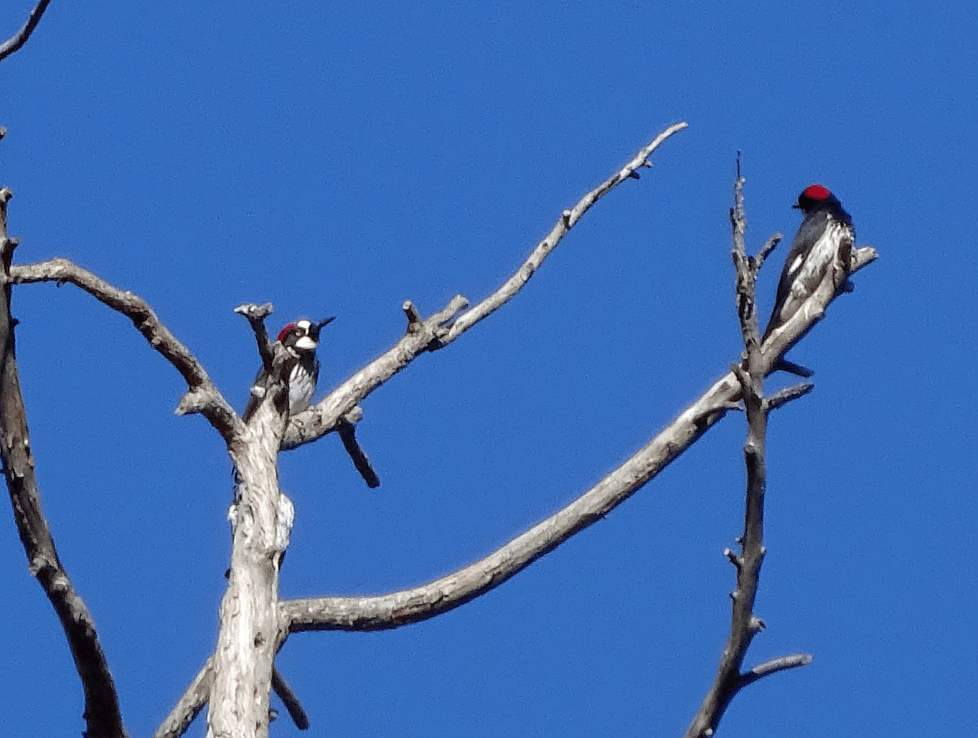
Figure 13. Acorn Woodpeckers have greater reproductive success when more adult birds are caring for the offspring.
Acorn Woodpeckers are typically 1–2 years old when they first breed — if they are to be among the breeders in their collective. Male chicks are slightly heavier and have slightly longer bills than females, but female juveniles tend to be slightly younger than males at first breeding. Average generation length is about 3.7–4.7 years.
Survivorship and Lifespan
The annual survival rate for adult Acorn Woodpeckers is 52–87%, with first-year birds having a much lower survival rate than older birds. As expected, birds in higher-quality territories, with greater abundance of acorns, have higher survival rates. For females, breeding females have lower survival rates than other birds; as is true of humans, breeding can reduce survival rates of females. The oldest recorded ages of wild Acorn Woodpeckers are an 18-year-old male and a 17-year-old female. In captivity, the oldest male had passed his 24th birthday (and was still alive when this record was observed), and the oldest captive female lived to be 19 years old.
Among adults, predation appears to be the primary cause of death. Another cause is starvation due to repeated and widespread failure of acorn crops.
Conservation Status
The IUCN Red List conservation status for the Acorn Woodpecker is LC, Least Concern. Considered the most common and often the most abundant woodpecker within its range in the United States, it’s also common in both Mexico and Central America, as well as in local areas in Colombia. Estimates of the number of adults vary: 1,500,000, 3,400,000, or 7,500,000. Also, the population has shown an increase, rather than a decline, and it has an extremely large territorial range.
For all Acorn Woodpeckers, the availability of acorns, nesting cavities, and suitable granary trees limits their population, and this species depends heavily on forest habitat, which has declined by more than 15% over about 13–14 years. When humans degrade or destroy forest habitat for their own pursuits (e.g., firewood, agriculture, development projects), they jeopardize the well-being of this species. The human-caused climate crisis further impacts oak forests and therefore these woodpeckers. Their future may not be as bright as its current population numbers and trends suggest. Luckily, Acorn Woodpeckers appear able to adapt to the presence of humans and human-made buildings and other structures for roosting and storage; some woodpeckers have been observed eating dog food, as well.
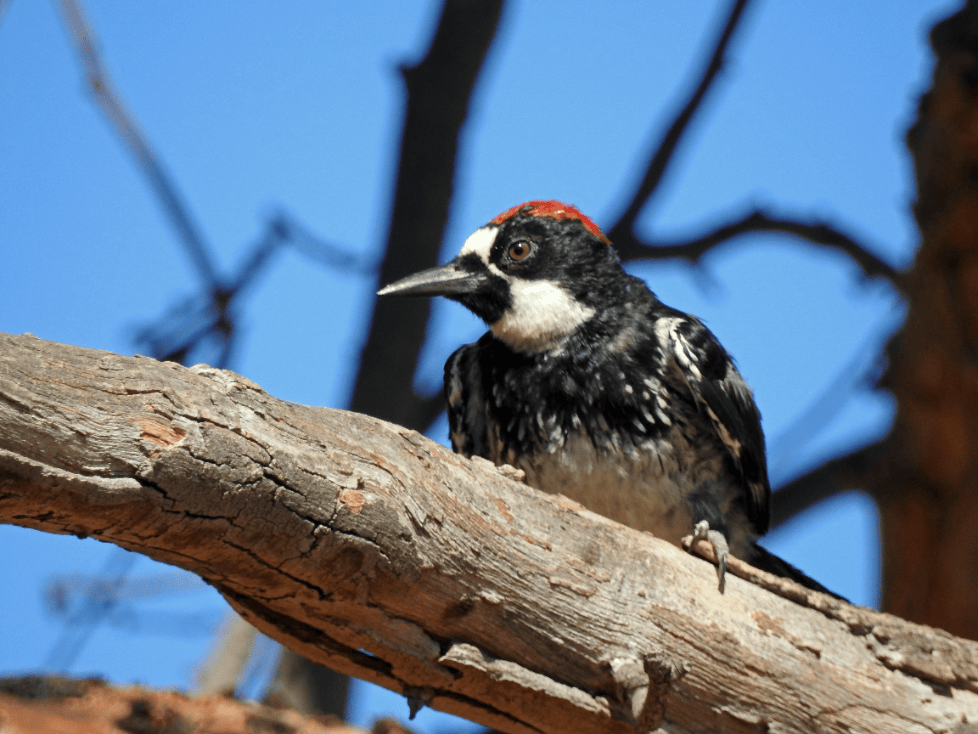
Figure 14. Acorn Woodpeckers seem to be thriving throughout their large range, but their future is less certain, given the climate crisis and other human-caused negative impacts on their habitats.
Researchers observe the behavior and the demographics (population studies) of woodpeckers within particular nature preserves (e.g., Hastings Reservation in California’s central coast), learning a great deal through long-term observations of specific collectives. In addition, they use technology such as solar-powered tags and automated radio telemetry on individual birds, which track their movements even when not directly viewed by researchers. These studies may be crucial to helping these woodpeckers adapt as the climate crisis and other factors affect their habitats. In addition to these in-depth studies in North America, ornithologists hope that researchers in Central America and Colombia will provide more data on the behavior of Acorn Woodpeckers in these locations, where the habitats differ from those in North America.
In early California, Native Americans trapped Acorn Woodpeckers, both for food and for feather ornamentation (sometimes lavish) on their garments.
Observations
The Cornell Lab of Ornithology gathers information from observers around the world through the eBird app and website (https://ebird.org/species/acowoo ), which has more than 1,650,000 observations of the Acorn Woodpecker, including 55,951 with photos and 1,668 with audio recordings. Also, the lab’s Macaulay Library website (https://search.macaulaylibrary.org/catalog?taxonCode=acowoo ) holds 95,259 photos, 1,943 audio recordings, and 402 videos of the Acorn Woodpecker. In addition, iNaturalist gathers observations with its app and website (https://www.inaturalist.org/observations?taxon_id=18209 ), which has 68,897 observations of this species, each of which includes a photograph, audio recording, or video.
References
Melanerpes Genus
- Winkler, D. W., S. M. Billerman, and I. J. Lovette (2020). Woodpeckers (Picidae), version 1.0. In Birds of the World (P. G. Rodewald and B. K. Keeney, Editors). Ithaca, NY: Cornell Lab of Ornithology. https://doi.org/10.2173/bow.picida1.01 ; https://birdsoftheworld.org/bow/species/picida1/cur/species#genusMelanerpes
- Melanerpes, https://en.wikipedia.org/wiki/Melanerpes
- Swainson, William, https://en.wikipedia.org/wiki/William_Swainson
- Swainson, William, links to 476 taxa, including both common names and scientific names of taxa (species and genera), https://en.wikipedia.org/wiki/Category:Taxa_named_by_William_Swainson , https://en.wikipedia.org/w/index.php?title=Category:Taxa_named_by_William_Swainson&pagefrom=Hemifusus#mw-pages
Acorn Woodpecker (Melanerpes formicivorus)
- Koenig, W. D., E. L. Walters, P. B. Stacey, M. T. Stanback, and R. L. Mumme (2020). Acorn Woodpecker (Melanerpes formicivorus), version 1.0. In Birds of the World (P. G. Rodewald and B. K. Keeney, Editors). Ithaca, NY: Cornell Lab of Ornithology. https://doi.org/10.2173/bow.acowoo.01 ; https://birdsoftheworld.org/bow/species/acowoo/cur/introduction
- Acorn Woodpecker (Melanerpes formicivorus), https://en.wikipedia.org/wiki/Acorn_woodpecker
- Acorn Woodpecker (Melanerpes formicivorus), Avibase, https://avibase.bsc-eoc.org/species.jsp?avibaseid=13E4DA11
- Acorn Woodpecker (Melanerpes formicivorus), Avibase, life history, https://avibase.bsc-eoc.org/species.jsp?lang=EN&avibaseid=7E3273031F76242B&sec=lifehistory&ssver=1
- Acorn Woodpecker (Melanerpes formicivorus), IUCN Red List, https://www.iucnredlist.org/species/22680813/264597214
- Acorn Woodpecker (Melanerpes formicivorus), iNaturalist, https://www.inaturalist.org/observations?taxon_id=18209
- Swainson, William. (1827). LXXXV. A synopsis of the birds discovered in Mexico by W. Bullock F.L.S. and H.S., and Mr. William Bullock, jun. The Philosophical Magazine : Or Annals of Chemistry, Mathematics, Astronomy, Natural History and General Science, 1, 433–442. https://doi.org/10.1080/14786442708674357 ; https://www.biodiversitylibrary.org/item/53108#page/455/mode/1up ; Acorn Woodpecker (Melanerpes formicivorus), identified by William Swainson.
Etymology
- Gotch, A. F. [Arthur Frederick]. Birds—Their Latin Names Explained (348 pp.). Poole, Dorset, U.K.: Blandford Press.
- Gruson, Edward S. (1972). Words for Birds: A Lexicon of North American Birds with Biographical Notes (305 pp., including Bibliography, 279–282; Index of Common Names, 283–291; Index of Generic Names, 292–295; Index of Scientific Species Names, 296–303; Index of People for Whom Birds Are Named, 304–305). New York: Quadrangle Books.
- Lederer, Roger, and Carol Burr. (2014). Latin for Bird Lovers: Over 3,000 Bird Names Explored and Explained (224 pages). Portland, OR: Timber Press.
Text and images by Shari Dorantes Hatch. Copyright © 2026. All rights reserved.
These images were recorded in San Diego County.


Leave a Reply