
Picidae, Woodpeckers, Subfamilies and Genera
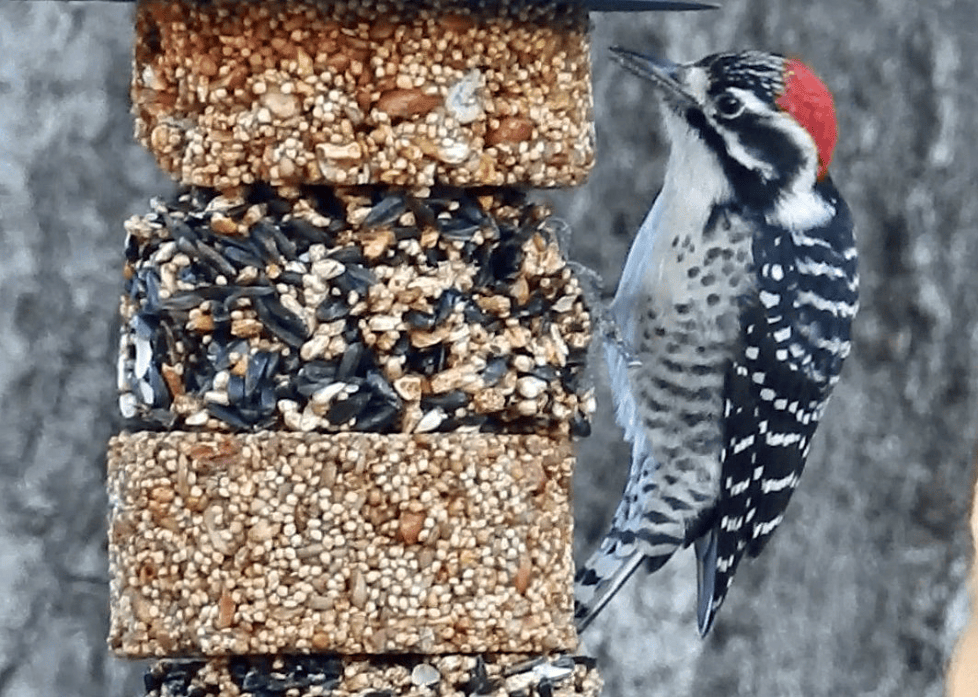
Figure 01. Woodpeckers are among the most fascinating birds on Earth, with a distinctive lifestyle and appealing looks.
This is the seventh of several blogs about the Piciformes order of birds and its nine highly diverse families. The first blog introduced the order and three of its nine families: Galbulidae, jacamars; Bucconidae, puffbirds; and Indicatoridae, honeyguides, https://bird-brain.org/2026/08/30/piciformes-tree-hugging-birds-part-1/ . The second blog introduced the Ramphastidae family of toucans, https://bird-brain.org/2026/09/07/piciformes-tree-hugging-birds-part-2/ . The third blog introduced the four barbet families, then focused on the Capitonidae family of New World barbets and the Semnornithidae family, including two more New World species, https://bird-brain.org/2026/09/13/piciformes-tree-hugging-birds-part-3/ . The fourth blog introduced the Megalaimidae family of Asian barbets, https://bird-brain.org/2026/09/20/piciformes-tree-hugging-birds-part-4/ . The fifth blog introduced the Lybiidae family of African barbets, https://bird-brain.org/2026/09/27/piciformes-tree-hugging-birds-part-5/ . The sixth blog introduced the Picidae family of woodpeckers and their distinctive characteristics, as well as some variations, https://bird-brain.org/2026/10/04/piciformes-tree-hugging-birds-part-6/ .
The current blog introduces the subfamilies and genera of the Picidae family, highlighting two species of woodpeckers. Forthcoming blogs will further explore the Picidae family, focusing on two genera of woodpeckers — Dryobates and Melanerpes.
- Picidae Subfamilies and Genera
- Overview
- Subfamily: Jynginae (Wrynecks)
- Subfamily: Sasiinae (Piculets)
- Subfamily: Picumninae (Piculets)
- Subfamily: Nesoctitinae
- Subfamily: Picinae, “True Woodpeckers”
- Tribe: Hemicirini, 1 Genus, 2 Species
- Tribe: Campephilini, 3 Genera, 23 Species
- Tribe: Melanerpini, 13 Genera, 95 Species
- Tribe: Picini, 14 Genera, 85 Species
- Greater Yellownape (Chrysophlegma flavinucha)
- Northern Flicker (Colaptes auratus)
- References
Picidae Subfamilies and Genera
Overview
The taxonomy of the Picidae family is as follows: kingdom Animalia, phylum Chordata, class Aves (all living birds, including about 45 orders), order Piciformes, suborder Pici, infraorder Picides, and family Picidae. Within the Picidae family are 36 genera, including 236 species, distributed across four subfamilies: the wryneck subfamily, Jynginae (2 species); two subfamilies of piculets, Picumninae (25 species) and Sasiinae (3 species); and the huge Picinae subfamily of “true woodpeckers” which includes the vast diverse majority of woodpecker genera (32) and species (206). Not addressed in these blogs are three genera of extinct species, for which there may be fossil evidence.
Subfamily: Jynginae (Wrynecks)
The subfamily of wrynecks has just one genus, Jynx, which includes just two species. The Red-throated Wryneck (Jynx ruficollis), named for its rufous (reddish-brown) throat (Latin collus means “neck”), is found only in sub-Saharan Africa. The Eurasian Wryneck (Jynx torquilla) is found in much of the Old World, breeding in Europe and Asia and wintering in northern Africa and southern Asia; it’s named for its highly twistable neck (Latin, torqueo, “twist” or “turn”) and its small size (-illa, diminutive).
To see photos, audio, and video of both species of Jynx wrynecks, please visit https://search.macaulaylibrary.org/catalog?taxonCode=t-12006355&includeChildTaxa=true .
Both species of wrynecks earn their common name by frequently twisting their necks when threatened. (Videos of a Eurasian Wryneck’s neck movements may be seen at https://macaulaylibrary.org/asset/663931921 and https://macaulaylibrary.org/asset/665700753 and https://macaulaylibrary.org/asset/640029288 .)
Both wryneck species have complex cryptic neutral-colored plumage patterns. They have short, weak bills, compared with the true woodpeckers of the Picinae subfamily, and they do not drill holes for themselves, instead using holes dug by other species. Wrynecks don’t have stiff tail feathers that would facilitate climbing or pecking. In fact, they typically spend much of their time foraging on the ground (mostly ants and other insects); in the trees, they perch and hop along branches, more like songbirds than like woodpeckers. Even more distinctive is the wryneck tongue — the longest bird tongue in the world, in relation to its small body size. Its genus name Jynx seems to have origins in ancient Greek and Roman rites, in which the bird was associated with “curse” or “bad luck.”
Subfamily: Sasiinae (Piculets)
The Sasiinae subfamily is one of two subfamilies of piculets. This subfamily includes two genera: the monotypic (one-species) Verreauxia genus, which includes only one species, the African Piculet (Verreauxia africana), scattered across tropical Africa.
The Verreauxia genus may be seen at https://search.macaulaylibrary.org/catalog?taxonCode=t-12042219&includeChildTaxa=true
Its other genus, Sasia, has 2 species of piculets: Rufous Piculet (Sasia abnormis) and White-browed Piculet (Sasia ochracea), found in southeast Asia.
To see photos, audio, and video of the Sasia genus, please visit https://search.macaulaylibrary.org/catalog?taxonCode=t-12018240&includeChildTaxa=true .
Subfamily: Picumninae (Piculets)
Most piculets (25 species) belong to the subfamily Picumninae, which has just one genus, Picumnus. One of these species, the Speckled Piculet (Picumnus innominatus), is found extensively through much of Asia. The other 24 Picumnus piculets are American, mostly in South America, especially in the tropics. Piculets are small, most of them just 3.5–4 inches (9–11 cm) long — or smaller.
To see photos, audio, and video of the Picumnus genus, please visit https://search.macaulaylibrary.org/catalog?taxonCode=t-12014499&includeChildTaxa=true
Subfamily: Nesoctitinae or Tribe: Nesoctitini within the Picinae Subfamily (Piculet)
One more piculet has been troublesome to ornithologists who puzzle over taxonomy. The Antillean Piculet (Nesoctites micromegas) is endemic to the Caribbean island of Hispaniola and its satellite island, Gonave. It’s also ginormous for a piculet at more than 6 inches (16 cm) long. Both characteristics are preserved in its scientific name, which has Greek origins: Neso-, meaning “island,” and ktites, meaning “inhabitant”; micro-, “small,” and mega, “large,” for this big instance of a small bird.
To see photos, audio, and video of the Antillean Piculet (Nesoctites micromegas), please visit https://search.macaulaylibrary.org/catalog?taxonCode=t-12010991&includeChildTaxa=true .
Taxonomists agree that it’s a piculet and that it’s monotypic, the only species in its genus, Nesoctites. They disagree, however, about whether it merits its own subfamily, Nesoctitinae, or it should be a one-species tribe, Nesoctitini, within the Picinae subfamily. They do agree that its evolutionary history distinguishes this biggish island-dwelling piculet from other piculet species.
Subfamily: Picinae, “True Woodpeckers”
As might be expected of a subfamily comprising 32 genera and 206 species of woodpecker, these woodpeckers range widely in size — from the 5-inch-long (13 cm) Scarlet-backed Woodpecker (Veniliornis callonotus) to the 20-inch long (50 cm) Great Slaty Woodpecker (Mulleripicus pulverulentus). Two woodpeckers, now believed probably to be extinct, are/were even longer: the Ivory-billed Woodpecker (Campephilus principalis), up to 21 inches (53 cm) long, and the Imperial Woodpecker (Campephilus imperialis), up to 24 inches (60 cm) long. Most species of woodpeckers are at least somewhat sexually dimorphic, typically with the male having more striking crests, crowns, or other plumage features.
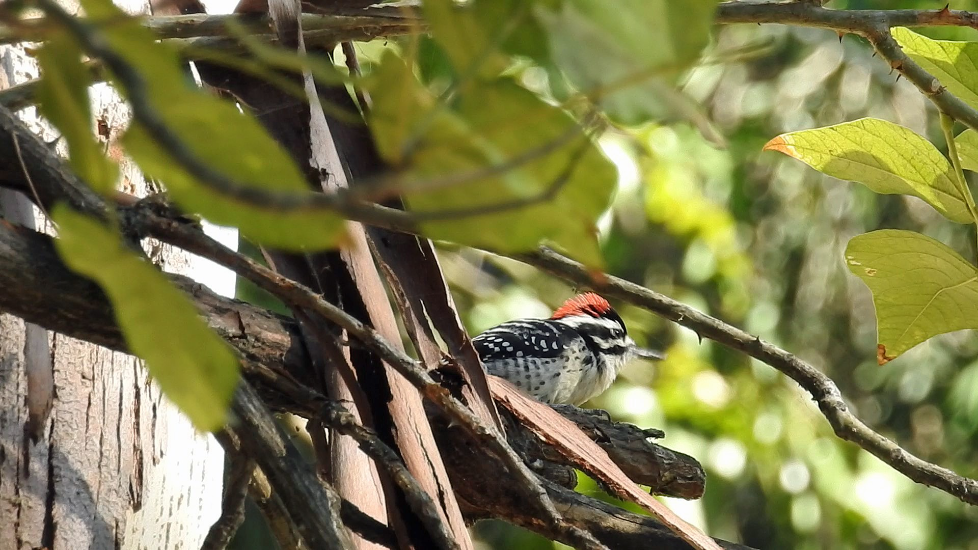
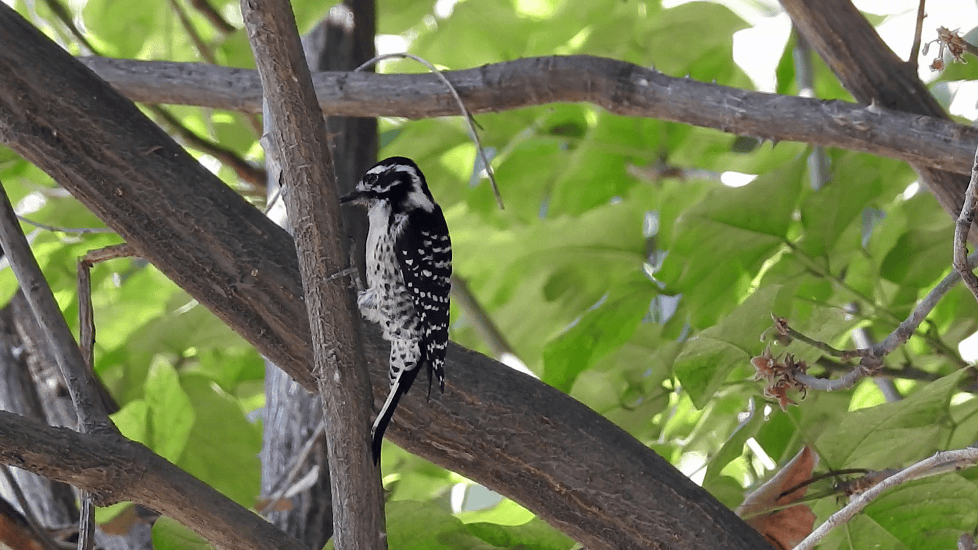
Figure 02. Among Nuttall’s Woodpeckers and many other woodpecker species, females (right) and males (left) look slightly different.
With rare exceptions, these woodpeckers dwell in wooded habitats of all sorts, at all latitudes — savannahs or scrublands, mangroves or bamboo forests, temperate broadleaf forests or conifer forests, even deserts or grasslands for some species. Though most dig their own cavity nests in trees, a few dig nest holes in cacti, in termite mounds, in insect nests, in the earth, in earthen banks, or even in human-made buildings or poles. Though insects feature prominently in the diets of most woodpeckers, some also eat plant matter, especially seeds or fruits.
As is so often the case in science, as new techniques and new information become available, our understanding of ornithology changes. In the 1970s and beyond, ornithologists subdivided the Picinae subfamily of true woodpeckers into six tribes: Melanerpini, Campetherini, Colaptini, Campephilini, Picini, and Meiglyptini. Subsequent “molecular methods” of study, using DNA and RNA data have led to new understandings. After a few iterations of seeing the genetic links among Picinae woodpeckers, ornithologists currently believe that they are best classified into three main tribes: Picini, Camphelini, and Melanerpini, along with two one-genus tribes: Nesoctitini and Hemicirini. Following is a list of the five tribes, with the genera in each tribe.
- Tribe: Nesoctitini, 1 genus — note previous mention of this species as having its own distinctive subfamily
- Nesoctites, 1 species
- Tribe: Hemicirini, 1 genus, 2 species
- Hemicircus, 2 species
- Tribe: Campephilini, 3 genera, 23 species
- Campephilus, 11 species
- Blythipicus, 2 species
- Chrysocolaptes, 10 species
- Tribe: Melanerpini, 13 genera, 95 species
- Sphyrapicus, 4 species
- Picoides, 3 species
- Yungipicus, 7 species
- Dendrocoptes, 3 species
- Leiopicus, 1 species
- Chloropicus, 3 species
- Dendropicos, 12 species
- Dendrocopos, 12 species
- Leuconotopicus, 6 species
- Veniliornis, 14 species
- Xiphidiopicus, 1 species
- Dryobates, 6 species
- Melanerpes, 23 species
- Tribe: Picini, 14 genera, 85 species
- Micropternus, 1 species
- Meiglyptes, 4 species
- Gecinulus, 3 species
- Dinopium, 5 species
- Picus, 13 species
- Pardipicus, 2 species
- Geocolaptes, 1 species
- Campethera, 10 species
- Mulleripicus, 4 species
- Dryocopus, 6 species
- Celeus, 12 species
- Piculus, 7 species
- Chrysophlegma, 3 species
Tribe: Hemicirini, 1 Genus, 2 Species
- Hemicircus, 2 species
The etymology of the genus name is disputed. All agree that hemi is Greek for “half,” but while some suggest that circus points to the semicircular scalloped feathering on its wings, others think its origin is kerkos, pointing to its half-sized “tail.” Alas. In any case, most would agree that these two Asian species of crested, short-tailed woodpeckers are strikingly handsome, as can be seen by visiting https://en.wikipedia.org/wiki/Hemicircus .
To see photos, audio, and video of the Hemicircus genus, please visit https://search.macaulaylibrary.org/catalog?taxonCode=t-12004766&includeChildTaxa=true .
Tribe: Campephilini, 3 Genera, 23 Species
- Campephilus, 11 species
The 11 Campephilus species can all be found in the New World, mostly in South America, but some in Central America, Cuba, Mexico, and the southern United States. The genus name has Greek origins: kampē, meaning “caterpillar,” and philos, meaning “loving.” Though it’s not unusual for woodpeckers to love caterpillars, apparently, zoologist George Robert Gray (1840) was struck by this fondness when naming the genus. This genus includes the two largest woodpecker species mentioned previously — the Ivory-billed Woodpecker, Campephilus principalis, and the Imperial Woodpecker, Campephilus imperialis, both now believed probably to have become extinct.
To see photos, audio, and video of the genus Campephilus, please visit https://search.macaulaylibrary.org/catalog?taxonCode=t-11995463&includeChildTaxa=true .
- Blythipicus, 2 species
In 1854, when ornithologist Charles Lucien Bonaparte identified and named the Blythipicus genus, he chose to honor zoologist Edward Blyth by combining Blyth’s name with the suffix -picus, meaning “woodpecker.” Both species are found in southeastern Asia.
To see photos, audio, and video of the Blythipicus genus, please visit https://search.macaulaylibrary.org/catalog?taxonCode=t-11994427&includeChildTaxa=true
- Chrysocolaptes, 10 species
Of the 10 Chrysocolaptes species, 8 are appropriately named “Flamebacks” for the brilliant plumage on their backs, and 1 is named Orange-backed Woodpecker (Chrysocolaptes validus) for a similar reason. (At one time, the Orange-backed Woodpecker had been assigned to its own genus, Reinwardtipicus.) The only exception is the White-naped Woodpecker (Chrysocolaptes festivus), which also has vivid plumage on its head crest (red, males; yellow, females) and wings. Chryso- is a Greek prefix for “gold” or “golden” — apt for these brilliantly plumed birds — colaptes, from Greek kolaptēs, meaning “chiseler,” a perfect name for these woodpeckers with big chisel-shaped bills. These woodpeckers can be found in Asia (e.g., India, Sri Lanka) and/or the Pacific Islands (e.g., Phillippines, Borneo, Java, Bali).
To see photos, audio, and video of the Chrysocolaptes genus, please visit https://search.macaulaylibrary.org/catalog?includeChildTaxa=true&taxonCode=t-11997401 .
Tribe: Melanerpini, 13 Genera, 95 Species
The Melanerpini tribe is sometimes called the “pied woodpeckers” because many species have plumage that includes black-and-white patterns; this tribe includes 13 genera and 95 species, who may be found in the Americas (6 genera), as well as in Eurasia, Asia, and Africa.
- Sphyrapicus, 4 species
The Sphyrapicus genus comprises 4 species of “sapsuckers,” woodpeckers known for extracting and eating tree sap, rather than foraging for insects or other invertebrates. In 1858, naturalist and ornithologist Spencer Fullerton Baird introduced the genus name Sphyrapicus, from Greek sphyra, meaning “hammer,” as well as pikos for “woodpecker.” Like most other woodpeckers, sapsuckers have stiff tails and sharp bills for pecking holes into trees, but they make numerous short, small holes for tapping the tree’s nutrient-rich xylem and phloem fluid. (Xylem flows upward, carrying water and nutrients from the tree’s roots to its leaves; phloem flows from the leaves, where photosynthesis produces carbohydrates, to wherever the tree needs carbohydrates.) During breeding season, sapsuckers also capture insects attracted to the tree sap, feeding these protein-rich insects to their young. All 4 species of sapsuckers can be found in North America (many sapsuckers migrate within North America). In addition to the sapsucker’s dietary preferences, it has a distinctive undulating (wavy) flight style, in which it alternates rapid bursts of flapping with brief episodes of leaping forward with its wings tucked closely against its body (not gliding, with wings outspread, as many other birds do). All 4 species have a conservation status of LC.
To see photos, audio, and video of the Sphyrapicus genus, please visit https://search.macaulaylibrary.org/catalog?taxonCode=t-12019231&includeChildTaxa=true .
- Picoides, 3 species
All 3 species of Picoides woodpeckers have just three toes, with two pointing forward, the third pointing backward. One is Eurasian, the other two are North American. In 1799, naturalist Bernard Germain de Lacépède introduced genus Picoides, based on the Latin picus (woodpecker) with the Greek suffix -oidēs (or eidos), meaning “resembling” or “similar to.” Until 2015, the genus included about 12 species, but DNA analysis led to the realization that 9 of the species actually belonged in other genera: Dryobates, Leuconotopicus, Dendropicos, and Veniliornis. These woodpeckers are also considered “pied” because of their black-and-white patterned plumage; also, the male Picoides woodpeckers have yellow crowns, but the females don’t.
To see photos, audio, and video of the Picoides genus, please visit https://search.macaulaylibrary.org/catalog?includeChildTaxa=true&taxonCode=t-12014391 .
- Yungipicus, 7 species
All species in the Yungipicus genus are native to Asia and the Pacific Islands (e.g., Philippines). When ornithologist Charles Lucien Bonaparte introduced this genus (1854), he combined jynx, the Greek for “wryneck” with the Latin picus. The common names of all 7 species include the words “Pygmy Woodpecker,” indicating their diminutive size; most are little more than 5 inches long, with the largest being a little more than 6 inches long (13–16 cm long). The Sulu Pygmy Woodpecker (Yungipicus ramsayi) has a conservation status of VU, Vulnerable; the other 6 species have an LC conservation status.
To see photos, audio, and video of the Yungipicus genus, please visit https://search.macaulaylibrary.org/catalog?includeChildTaxa=true&taxonCode=t-12042220 .
- Leiopicus, 1 species (monotypic)
In 1854, ornithologist Charles Lucien Bonaparte introduced the genus Leiopicus, combining Greek leios, for “smooth,” with Latin picus (“woodpecker”). The genus has just one species, Yellow-crowned Woodpecker, Leiopicus mahrattensis. The species designation mahrattensis reflects its links to the historical Indian region of Marhatta; it’s now found more widely from India to other Asian nations, such as Nepal and Thailand. In most ways, this woodpecker is like most other woodpeckers, mostly foraging for insect larvae on tree crowns and trunks, rarely going to the ground, but it does frequently hang upside down on tree branches.
To see photos, audio, and video of the Leiopicus genus, please visit https://search.macaulaylibrary.org/catalog?includeChildTaxa=true&taxonCode=t-12042207 .
- Dendrocoptes, 3 species
The 3 Dendrocoptes species can be found across Europe and Asia — from Spain through Iran, from Afghanistan through Bhutan, and in Saudi Arabia and Yemen. The genus name Dendrocoptes combines Greek dendron, for “tree,” and koptō, meaning “to strike.” Two of the species have a conservation status of LC, but the Arabian Woodpecker (Dendrocoptes dorae) is considered NT, Near Threatened.
To see photos, audio, and video of the Dendrocoptes genus, please visit https://search.macaulaylibrary.org/catalog?includeChildTaxa=true&taxonCode=t-12042204 .
- Chloropicus, 3 species
The 3 Chloropicus species of woodpeckers are native to sub-Saharan Africa and all have a conservation status of LC. The genus name comes from the Greek khlōros, meaning “green” and picus (“woodpecker”).
Please look for yourself to see whether these Chloropicus species look “green” to you, by visiting https://search.macaulaylibrary.org/catalog?taxonCode=t-12000559&includeChildTaxa=true .
I sometimes wonder about the visual perception of ornithologists who name genera and species; of course, most are using taxidermy specimens, so the coloration may look different on a living bird.
- Dendropicos, 12 species
On the other hand, several of the small Dendropicos species have mainly olive-green plumage on their backs and/or wings. However, their genus name combines Greek dendron, for “tree,” with picos (“woodpecker”). All natives of Africa, most live in woodlands south of the Sahara Desert, and all have a conservation status of LC.
To see photos, audio, and video of the Dendropicos genus, please visit https://search.macaulaylibrary.org/catalog?taxonCode=t-12074766&includeChildTaxa=true .
- Dendrocopos, 12 species
Of the 12 Dendrocopos species, 9 can be found across Asia, the other 3 spread across Europe, Asia, and northern Africa. Like the genus name Dendrocoptes, the name Dendrocopos combines Greek dendron, for “tree,” and koptō, for “to strike.” The Okinawa Woodpecker (Dendrocopos noguchii) has a conservation status of EN, Endangered, but the other 11 species have an LC conservation status.
To see photos, audio, and video of the Dendrocopos genus, please visit https://search.macaulaylibrary.org/catalog?includeChildTaxa=true&taxonCode=t-12000344 .
- Leuconotopicus, 6 species
The 6 Leuconotopicus species of woodpeckers are native to North and South America. Ornithologist Alfred Malherbe (1845) named the Leuconotopicus genus, combining Greek leukos, for “white,” and nōton, for “back,” along with picus (“woodpecker”). One species has negligible amounts of white; three have mostly white breasts and bellies (not backs); one has a white head and belly, with a white patch on its back.
To see photos, audio, and video of the Leuconotopicus genus, please visit https://search.macaulaylibrary.org/catalog?includeChildTaxa=true&taxonCode=t-12950304 . Judge for yourself whether you agree with Malherbe regarding the coloration of these species.
The Red-cockaded Woodpecker (Leuconotopicus borealis) has a conservation status of NT, Near Threatened, but the other 5 have a conservation status of LC.
- Veniliornis, 14 species
The 14 Veniliornis species inhabit Central and South America, especially in the Neotropical zone. Most of these species have mostly olive-green upperparts and barred underparts. Red or rufous crowns are common, as well, and two of these species have red or rufous upperparts, rather than olive-green. Two species have white underparts, speckled with black, and black upperparts, speckled with white. Ornithologist Charles Lucien Bonaparte (1854) named the genus Veniliornis, alluding to Venilia, the Roman nymph and goddess of winds and seas, combined with the Greek ornis, for “bird” (as in “ornitho-logy,” study of birds). All 14 species have a conservation status of LC.
To see photos, audio, and video of the Veniliornis genus, please visit https://search.macaulaylibrary.org/catalog?includeChildTaxa=true&taxonCode=t-12950308 .
- Xiphidiopicus, 1 species
The single Xiphidiopicus species of woodpecker is the Cuban Green Woodpecker (Xiphidiopicus percussus), endemic to Cuba. Ornithologist Charles Lucien Bonaparte (1854) — he was quite busy, wasn’t he? — named the genus Xiphidiopicus, by combining xiphidion, Greek for “small sword,” and picus (“woodpecker”); its bill is sharply pointed, so this name seems apt. The Cuban Spanish for this species is Carpintero Verde — that is, “Green Woodpecker.” It’s widespread and common in Cuba, and its conservation status is LC.
To see photos, audio, and video of the Xiphidiopicus genus, please visit https://search.macaulaylibrary.org/catalog?taxonCode=t-12023877&includeChildTaxa=true .
- Dryobates, 6 species
Of the 6 species in the Dryobates genus, 3 species can be found in Eurasia (Europe, India, China, Vietnam, etc.), 2 can be found in North America, and 1 is in North and Central America. All have a conservation status of LC. Naturalist Friedrich Boie (1826) named the genus Dryobates, combining two Greek words: dryos, for “woodland,” and -batēs, for “walker,” though they’re just as likely to fly and to forage on trees as other woodpecker species.
To see photos, audio, and video of the Dryobates genus, please visit https://search.macaulaylibrary.org/catalog?includeChildTaxa=true&taxonCode=t-12023442 .
Figure 03. The upcoming eighth blog in this series (probably to be posted October 18) will explore the Dryobates genus, especially the Nuttall’s Woodpecker, such as this one.
- Melanerpes, 23 species
When glancing at all 23 species in the Melanerpes genus, an overall impression is that 13 species have black-and-white barred wings and backs, most with white or ivory underparts; an additional 4 species have black wings with underparts made of black-and-white bars and a red patch; 6 have all-black or mostly black wings with underparts that may be white, red, mottled, or black. All 23 species dwell in the Americas: 9 only in Central and/or South America, 4 only in the Caribbean, 6 only in North America (Mexico, United States, Canada), and 4 in North, Central, and/or South America. All 23 species have a conservation status of LC. Ornithologist William Swainson (1832) named the genus Melanerpes, from Greek melas, for “black” or “dark,” reflecting the plumage of many of these species, and herpēs, for “to creep.” Though most species in this genus eat mostly insects, some also eat a lot of fruit, and some eat sap (though not as much as sapsuckers do).
To see photos, audio, and video of the Melanerpes genus, please visit https://search.macaulaylibrary.org/catalog?includeChildTaxa=true&taxonCode=t-12008752 . To further explore one of the Melanerpes species, Lewis’s Woodpecker (Melanerpes lewis), please see https://www.allaboutbirds.org/guide/Lewiss_Woodpecker/ .
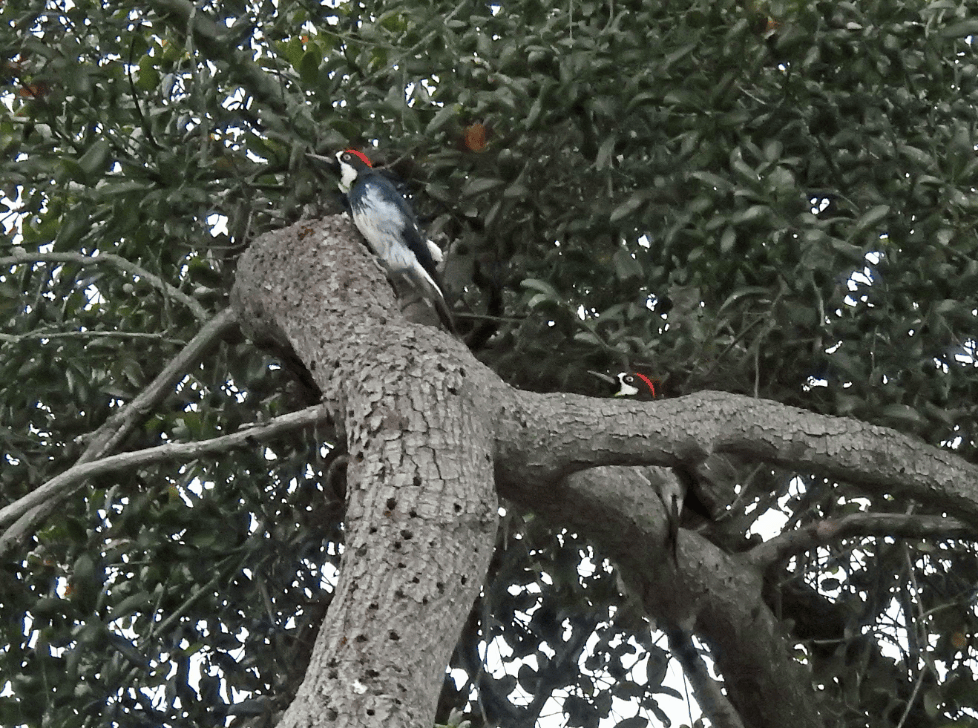
Figure 04. The ninth and final blog in this series about Piciformes birds will highlight the Melanerpes genus, focusing on the Acorn Woodpecker.
Tribe: Picini, 14 Genera, 85 Species
The Picini tribe includes 14 genera and 85 species, many of whom are found solely in the Old World.
- Micropternus, 1 species (monotypic)
The Rufous Woodpecker (Micropternus brachyurus) had previously been linked to other genera, but Edward Blyth noticed it had a shorter first toe and claw, shorter bill and tail feathers, and round nostrils, distinguishing it from other species; later DNA evidence confirmed its distinction from species in other genera.
To see photos, audio, and video of the Micropternus genus, please visit https://search.macaulaylibrary.org/catalog?includeChildTaxa=true&taxonCode=t-12036573 .
- Meiglyptes, 4 species
Naturalist William Swainson (1837) named the Meiglyptes genus, from ancient Greek, meiōn, meaning “lesser” or “smaller”; and gluptēs, meaning “carver.” A better name for these Southeast Asian woodpeckers might have been “gleaner,” as they seem to specialize in this technique for finding prey. Two of the four have a conservation status of LC, but the Zebra Woodpecker (Meiglyptes tristis) is EN (Endangered), and the Buff-necked Woodpecker (Meiglyptes tukki) is NT (Near Threatened).
Three of the four Meiglyptes species have distinctive forehead crests, as can be seen here: https://search.macaulaylibrary.org/catalog?taxonCode=t-12008709&includeChildTaxa=true .
- Gecinulus, 3 species
Ornithologist Friedrich Boie (1831) named the Gecinulus genus based on classical Greek gē, meaning “earth,” or “ground,” and kineō, meaning “ to move.” This genus includes the aptly named Bamboo Woodpecker (Gecinulus viridis), for its preference for foraging on living or dead bamboo wood, though it also forages on evergreen and deciduous trees, as well.
To see photos, audio, and video of the Gecinulus genus, please visit https://search.macaulaylibrary.org/catalog?includeChildTaxa=true&taxonCode=t-12003731 .
- Dinopium, 5 species
All five species in the Dinopium genus have common names of “flamebacks,” for the flaming red, gold, or orange plumage on their backs (and wings), and all five dwell in south or southeast Asia. Four of the five species have an LC conservation status, but the Spot-throated Flameback (Dinopium everetti) is considered NT, Near Threatened. The genus name (by Constantine Samuel Rafinesque, 1814) stems from classical Greek deinos, meaning “huge” or “mighty”; and ōps or ōpos, meaning “appearance.” These species are about 11–12.6 inches long — not enormous, but with the brilliant plumage, they may indeed seem dinopic.
To see photos, audio, and video of the Dinopium genus, please visit https://search.macaulaylibrary.org/catalog?includeChildTaxa=true&taxonCode=t-12000947 .
- Picus, 13 species
Most of the 13 Picus species have greenish-yellowish plumage, typically adorned by a bright crest — red or yellow.
To see an assortment of photos of these Picus species, please visit https://search.macaulaylibrary.org/catalog?taxonCode=t-12014583&includeChildTaxa=true .
Most (9) species can be found across Asia, 2 live in Europe, 1 lives in Europe and Asia, and 1 lives in northern Africa. Most of these species feed on the ground, rather than on trees, with ants playing a major role in their diets. All but 1 have a conservation status of LC. The Red-collared Woodpecker (Picus rabieri) is considered NT (Near Threatened). Naturalist and taxonomist Carl Linnaeus (1758) identified this genus (name meaning “woodpecker”) in the tenth edition of his Systema Naturae.
- Pardipicus, 2 species
Both species of the Pardipicus genus dwell in rainforests, savannahs, and other woodlands of tropical Africa. They may forage both on trees and on the ground. Both species have a conservation status of LC.
To see photos, audio, and video of the Pardipicus genus, please visit https://search.macaulaylibrary.org/catalog?includeChildTaxa=true&taxonCode=t-12074789 .
- Geocolaptes, 1 species (monotypic)
The Ground Woodpecker (Geocolaptes olivaceus) is the only species in this genus, and it’s one of very few woodpeckers who spend all of their time on the ground, rather than in trees. On the ground, it forages for ants on relatively barren, steep, rocky upland terrain (up to 6,900 feet, 2,100 m) in southern Africa. Its conservation status is NT, Near Threatened. Its genus name combines Greek geō, aptly meaning “ground,” with the genus name Colaptes, also from the Greek, kolaptēs, meaning “chiseler,” less apt for this ground-dwelling species. The second part of its binomial name, olivacea, meaning “olive-green-colored,” seems even less apt to describe its brownish-gray plumage.
To see whether you agree regarding its plumage, you can find photos, audio, and video of the Geocolaptes genus by visiting https://search.macaulaylibrary.org/catalog?includeChildTaxa=true&taxonCode=t-12003750 .
- Campethera, 10 species
On the other hand, “olivaceous” could aptly be applied to the Campethera species of woodpeckers, most of whom have olive-green-yellowish wing and back plumage. Closely related to Geocolaptes, it’s native to sub-Saharan Africa, mostly in savannahs and woodlands, rather than dense forests. Many of these species flexibly forage both in trees and on the ground. The species name originates in ancient Greek, kampē, for “caterpillar,” and thēras, for “hunter,” a name that could be applied to many other woodpecker species. The conservation status of 9 Campethera species is LC, but the Knysna Woodpecker (Campethera notata) has a status of NT, Near Threatened.
To see photos, audio, and video of the Campethera genus, please visit https://search.macaulaylibrary.org/catalog?includeChildTaxa=true&taxonCode=t-11995489 .
- Mulleripicus, 4 species
The 4 Mulleripicus species are found in south and southeast Asia. When naturalist Charles Lucien Bonaparte (1854) named this genus, he wished to honor naturalist Salomon Müller, adding the suffix -ipicus, indicating these species are woodpeckers. Only one of the Mulleripicus species has a status of LC (Ashy Woodpecker, Mulleripicus fulvus). The Northern Sooty Woodpecker (Mulleripicus funebris) has a status of NT, Near Threatened; more concerning, the Southern Sooty Woodpecker (Mulleripicus fuliginosus) and the Great Slaty Woodpecker (Mulleripicus pulverulentus) have a conservation status of VU, Vulnerable. Interestingly, the Great Slaty Woodpecker is considered the largest living woodpecker at present, and two woodpeckers considered to be larger — Imperial Woodpecker and Ivory-billed Woodpecker — are both believed to extinct now. It would seem that having a large size isn’t advantageous for woodpeckers.
To see photos, audio, and video of the Mulleripicus genus, please visit https://search.macaulaylibrary.org/catalog?includeChildTaxa=true&taxonCode=t-12009930 .
- Dryocopus, 6 species
The Dryocopus species can be found in the Americas (3 species), Asia (2 species), and Europe (1 species). One species — Pileated Woodpecker (Dryocopus pileatus) — makes a home in the United States and in Canada; another — Lineated Woodpecker (Dryocopus lineatus) — can be found in Mexico, the Caribbean, and South America. These woodpeckers are pretty big (14–18 inches, 35–45 cm long), with mostly black (and white) plumage. Both males and females have red crown plumage, but in several species, the male’s red plumage extends down the forehead to the bill. Friedrich Boie (1826) named the genus from the Greek druokopos, with druos meaning “tree” and kopos meaning “beating” — an apt name for these large woodpeckers. Four of these species have a conservation status of LC. The Black-bodied Woodpecker (Dryocopus schulzii) is considered NT, Near Threatened; the Andaman Woodpecker (Dryocopus hodgei) is VU, Vulnerable.
To see photos, audio, and video of the Dryocopus genus, please visit https://search.macaulaylibrary.org/catalog?includeChildTaxa=true&taxonCode=t-12001088 .
- Celeus, 12 species
Of the 12 Celeus species, 11 are Neotropical (in the tropics and subtropics of Central and South America), but 1 (Rufous Woodpecker, Celeus brachyurus) is found in Asia. Most species have mostly brown or brownish plumage — reddish brown, chocolate brown, creamy brown, or blackish brown — as well as a striking forehead crest. All but two have a conservation status of LC. Two, however, have a conservation status of VU, Vulnerable: the Helmeted Woodpecker (Celeus galeatus) and the Kaempfer’s Woodpecker (Celeus obrieni), which was thought to be extinct until 2006, when one was found again. Friedrich Boie (1831) named the genus Celeus. One source says it refers to the ancient Greek word keleos, meaning “green woodpecker” — which doesn’t seem to apply to this genus of woodpeckers. Another source (https://en.wikipedia.org/wiki/Celeus) suggested that keleuō can mean “to command,” or “to order” or “to urge (on),” or “to drive on.” That source also said, “Robert Graves suggested that Celeus’ name can mean ‘burner’ as well as ‘woodpecker’ or ‘sorcerer.’”
To see photos, audio, and video of the Celeus genus, please visit https://search.macaulaylibrary.org/catalog?includeChildTaxa=true&taxonCode=t-11996256 .
- Piculus, 7 species
The 7 species of the Piculus genus have olive-green upperparts (backs and wings) and patterned underparts (bars or speckles on breast and belly). All 7 can be found in the Neotropical zone of Central and South America. As you may have surmised, Piculus comes from Latin: picus (“woodpecker”), and -ulus, suffix indicating “diminutive,” “little,” named by naturalist Johann Baptist von Spix (1824). Fortunately, all of these small woodpeckers have a conservation status of LC, Least Concerned.
To see photos, audio, and video of the Piculus genus, please visit https://search.macaulaylibrary.org/catalog?includeChildTaxa=true&taxonCode=t-12014450 .
- Chrysophlegma, 3 species
The 3 species in the Chrysophlegma genus can be found in south and southeast Asia. These species were previously classified as the Picus genus, but DNA analysis (as well as the distant location) showed that they differed from Picus and should be assigned to their own separate genus. Actually, in 1850, renowned ornithologist John Gould had introduced the genus, naming it for Greek khrusos or chrys-, meaning “gold” and phlegma, meaning “flame.” Two of the 3 species have a conservation status of LC, but the Checker-throated Woodpecker (Chrysophlegma mentale) is considered NT, Near Threatened.
To see photos, audio, and video of the Chrysophlegma genus, please visit https://search.macaulaylibrary.org/catalog?includeChildTaxa=true&taxonCode=t-12042202 .
Later in this blog is a brief discussion of the Greater Yellownape (Chrysophlegma flavinucha).
- Colaptes, 14 species
One of the 14 species of the Colaptes genus is extinct, known only through fossils: Bermuda Flicker (Colaptes oceanicus; it may have been reported by Captain John Smith in 1623; human invaders may have been its downfall). A second, Fernandina’s Flicker (Colaptes fernandinae) is endemic to Cuba and is considered EN, Endangered. Like the other 6 living Colaptes species commonly called “flickers,” it feeds entirely or almost entirely on the ground, the exception being when the ground is flooded. The 6 Colaptes species commonly called “woodpeckers” forage mostly on trees, but also sometimes on the ground. All Colaptes species are entirely or primarily insectivorous. The genus name (given by zoologist Nicholas Aylward Vigors in 1825) Colaptes (from Greek, kolaptēs, meaning “chiseler”) does describe the look of their long, pointed bills, but the ground-foraging flickers in this genus rarely use their bills as chisels. All Colaptes species dwell in the Americas, mostly South America, but also North, Central, and Caribbean Americas.
To see photos, audio, and video of the Colaptes genus, please visit https://search.macaulaylibrary.org/catalog?includeChildTaxa=true&taxonCode=t-11998335 .
This blog briefly discusses the Northern Flicker (Colaptes auratus) following the discussion of the Greater Yellownape (Chrysophlegma flavinucha).
Greater Yellownape (Chrysophlegma flavinucha)
In the previous discussion of genera, the genus name Chrysophlegma was described as originating in Greek chrys-, for “gold,” and phlegma, for “flame.” The second part of its binomial name has a similar meaning: flavinucha, combines flavus, for “yellow,” and nucha, for “nape” — which also happens to be in the common name for this woodpecker. It’s somewhat less obvious why it’s called “Greater.” At 12.6–13.8 inches (32–35 cm) long, it’s in about the middle of the woodpecker length range of 3–23.5 inches (7–60 cm). Weighing 5.4–7 ounces (153–198 g), compared with the woodpecker weight range of 0.25–20 ounces (7–570 g), it might even be viewed as on the lighter side. It is, however, longer and heavier than the other two woodpeckers in this genus.
Figure 05. This Greater Yellownape, videorecorded at the San Diego Zoo, is demonstrating how to peck, using intermittent bursts of pecking, separated by brief breaks.
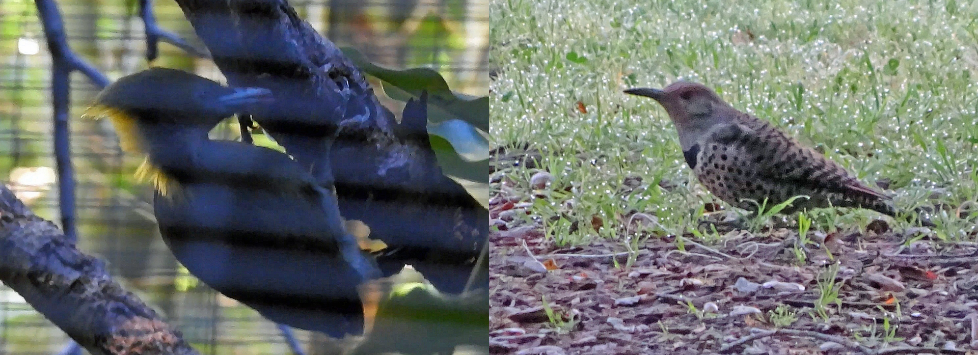
My poor-quality images, shown here, don’t adequately convey this woodpecker’s stunning green, yellow, orange, black, gray, and brown plumage. Please visit https://search.macaulaylibrary.org/catalog?taxonCode=greyel1&mediaType=photo , for more than 5,000 photos of this gorgeous bird; special mentions: https://macaulaylibrary.org/asset/664010389 , or https://macaulaylibrary.org/asset/663745545 , or https://macaulaylibrary.org/asset/663616211 ; or this flight photo, https://macaulaylibrary.org/asset/664496395 .
Like other woodpeckers, vocalizations aren’t the main sounds it produces, but it does vocalizations some, usually exchanges between mates in a pair. You can listen to 76 audio recordings at https://xeno-canto.org/species/Chrysophlegma-flavinucha or to 131 audio recordings at https://search.macaulaylibrary.org/catalog?taxonCode=greyel1&mediaType=audio .
This woodpecker has an extensive range of about 3,552,000 square miles (9,200,000 km²), from northeastern India, through much of Asia, including southeastern China, to Indochina, ranging from sea level to 9,000 feet (2,750 m) up. Within its range, it occupies mostly tropical and subtropical moist lowland or montane forests, including primary and secondary forests, swamp forests, and taiga, as well as acacia woodlands, savannas, and palm groves. Like most other woodpeckers, it doesn’t migrate.
Invertebrates (especially ants, termites, and wood-boring beetle larvae) form 70% of its diet; the rest is about 10% land vertebrates (especially frogs), 10% fruits, and 10% seeds or nuts. This woodpecker prefers to forage on the trunks and branches of almost any size of tree and will exploit all levels of the forest. It is nearly never seen on the ground. On smaller branches, it moves about quickly and typically perches crosswise (parallel with the branch). It rarely pecks, instead preferring to glean its prey from the surface of tree trunks or branches or to probe into existing cracks or holes. It’s usually seen in pairs or in small family groups of 4–5 woodpeckers.
During breeding season, both parents excavate the nest cavity, located about 7–49 feet (2–15 m) up in a tree, digging out a cavity about 8 inches (20 cm) deep. The female lays 2–4 eggs, which both parents take turns incubating; after the chicks hatch, both parents feed their young, but these woodpeckers’ behavior isn’t well documented. Age at first breeding is about 1.8 years, and generation length is about 3.9–5.9 years. Annual survival rate for adults is about 76%. The maximum recorded age for this species is 12.7 years. This species has a conservation status of LC, though its global population size has not been quantified.
Reporters to Cornell Lab of Ornithology’s eBird site (https://ebird.org/species/greyel1 ) have recorded 30,030 observations of this species, including 2,729 with photos and 118 with audio recordings; the lab’s Macaulay Library website, https://search.macaulaylibrary.org/catalog?taxonCode=greyel1 , includes 4,998 photos, 130 audio recordings, and 50 videos. The iNaturalist website, https://www.inaturalist.org/observations?taxon_id=793107 includes 877 observations of the Greater Yellownape (Chrysophlegma flavinucha), each of which includes a photo, an audio recording, or a video.
Northern Flicker (Colaptes auratus)
Like the other six Colaptes species known as “flickers,” the Northern Flicker forages primarily on the ground. Nonetheless, it lives mostly in wooded habitats, which include urban parks and even well-treed residential backyards. These flickers are large woodpeckers — about 11–13.8 inches (28–35 cm) long, with a wingspan of about 21.3 inches (54 cm), weighing about 4.6–5.7 ounces (129–160.6 g); most females weigh less than males.
Northern Flickers eat mostly ants (up to 98% of the diet at times), but they will also eat various other insect larvae, and during much of the year (outside of breeding season), they’ll also eat various berries, other fruits, nuts, and seeds. Though they forage almost entirely on the ground, they still use their powerful bills to probe and hammer into soil, ant colonies, beetle burrows, and so on.
Figure 06. Northern Flickers forage entirely on the ground, probing and pecking and picking to find the invertebrates they relish eating. This one was videorecorded at Dos Picos County Park in San Diego County.
A Northern Flicker’s tongue is extremely long, sticky, and protrusile — protruding forward up to 1.6 inches (4 cm) past its bill tip (or maybe more) — which facilitates its reach deep into chambers or burrows. These flickers spend between a fourth and half of their daytime hours foraging, depending on the season (about half the time during breeding season, about a fourth other times) and the weather (less foraging during inclement weather).
When feeding nestlings, these flickers store prey in their crops to carry it to their nestlings. The two parents forage apart, to avoid depleting the food in any particular location. With young hatchlings, dads do slightly more of the brooding than moms do, and dads often continue to feed their chicks after the moms have stopped doing so. This disparity is even greater among some pairs; about 5% of females are polyandrous, with a female laying eggs in the nests of two different males, so the males must do more of the egg and chick tending while the female divides her caregiving. About 85% of pairs stay together across breeding seasons. (Like other woodpeckers, hatchlings arrive naked and helpless, bypassing a downy phase and acquiring juvenile plumage as they mature.) Incubation takes about 9–12 days, and the period between hatching and fledging lasts about 24–27 days, so about 33–39 days total.
As ground dwellers and foragers, these flickers hop and walk slowly — typically, for short distances at a time — much more than they fly. When a Northern Flicker does fly, it has the same undulating (wavy) flap-leap flight pattern as sapsuckers; it alternates bursts of powered flapping of wings with brief leaps forward, its wings tucked closely against its body — alternately flapping upward, then leaping as gravity tugs it downward, then flapping upward again. One study found that this method achieved an airspeed of 31.5 feet/second (9.6 meters/second, range 25–38 feet/second, 7.7–11.6 m/s), with about 3.6 (range 1–5) wing flaps between each leap. Of course, to take off or to ascend, it flaps continuously, and it may do some gliding when landing.
These flickers need two complementary elements in their habitat: (1) dead or dying trees in which they can excavate their nest cavities, and (2) large areas of open ground in which they can find their prey. Because these requirements are met in so many locations, they can readily make themselves at home in a wide variety of landscapes. Nonetheless, while they can breed in far northerly locations during summer, they can’t stay in those spots once snow starts covering the ground. Therefore, unlike most woodpecker species, they must migrate south to warmer climes as summer ends; some also migrate altitudinally, from higher to lower elevations as the weather cools. They have been observed migrating mostly during daylight, but at least one observer watched these flickers migrate overnight.
The Northern Flicker is more widely distributed than any other North American woodpecker, from the Canadian Arctic (when breeding) through Mexico and the Caribbean (year round). Its population has been estimated at 11,000,000 Northern Flickers (2006–2015), and it has a conservation status of LC.
Two distinct subspecies can be found: Red-shafted Flickers reside in western North America, having red shafts on their primary feathers, as well as red underwing and undertail plumage; Yellow-shafted Flickers reside in eastern North America and have yellow shafts on their primary feathers, as well as yellow underwing and undertail plumage; in the middle of the continent, hybrids may be found. The subspecies also differ in some other ways (e.g., colors on the crown, throat, ear coverts, nape, and the presence of a malar [cheek] stripe, sometimes called a “moustache,” appearing only on Red-shafted males).
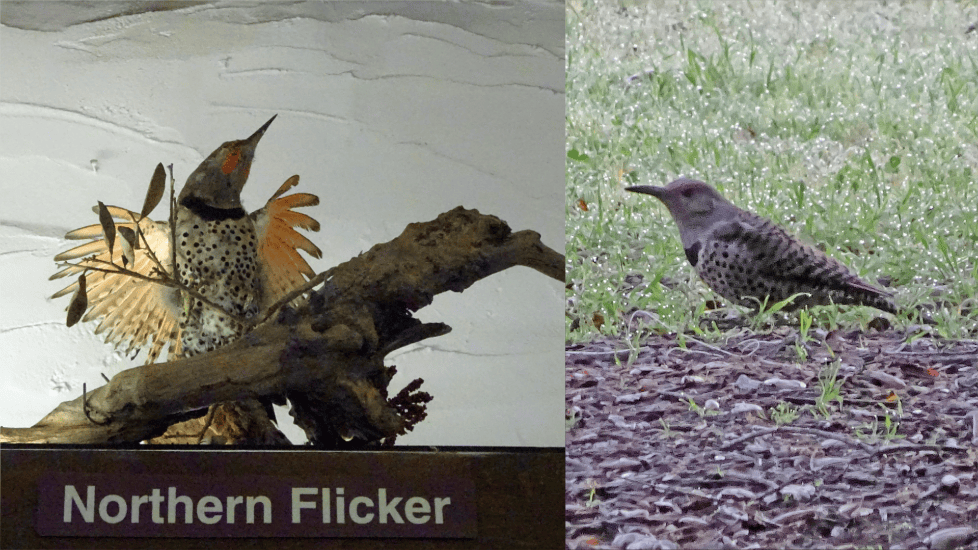
Figure 07. Both of these Northern Flickers are Red-shafted Flickers, found in western North America. One was foraging on the ground at Dos Picos County Park in San Diego County; the other is a taxidermy specimen on display at Torrey Pines State Natural Reserve in San Diego; Torrey Pines reserve is closed to the public until at least March 2027, while it undergoes a construction project.
The plumage colors come from dietary carotenoids (specialized nutrients), which each bird’s metabolism modifies to create distinctive pigments. Changes in diet (e.g., consuming particular berries) may affect the resulting feather color. In addition, research shows that plumage pigmentation is a true signal of health and body condition, both in nestlings and in adults. Health also affects the size of the black plumage patches in adults and nestlings; also, older females typically have larger patches than younger females, and females have larger patches than males.
Both subspecies can be heard drumming and vocalizing during breeding season; to hear some of their vocalizations, please visit https://xeno-canto.org/species/Colaptes-auratus ; or https://search.macaulaylibrary.org/catalog?taxonCode=norfli&mediaType=audio .
Regarding the yellow coloration, the second part of its binomial name is auratus, Latin for “gilded” or “golden,” almost certainly based on a Yellow-shafted Flicker. The origins of the English word “flicker” are Old English, flikeren, “to fly” or “to flutter,” and perhaps originally Latin plangere, “to strike.”
Northern Flickers preen, dust-bathe, and smear ants over their feathers, so that the ants’ formic acid can remove unwanted parasites; they haven’t been seen either sunbathing or bathing in water. They roost and sleep in or on trees.
Like many other woodpeckers, Northern Flickers play an important role in their ecosystem by excavating many nests that will be used by other species of cavity nesters, who rely on finding existing excavated nests. Because they’re large woodpeckers, their nest cavities can accommodate a wider variety of other cavity nesters. These flickers also serve an important role for agriculture, as they prey on an invasive species of moth that causes more than $1 billion in annual crop losses and damage.
Northern Flickers start breeding at just 1 year of age and breed every year afterward. They also have larger clutches (5 to 8 or so eggs). However, they have lower survival rates as chicks (studies of survival from egg to fledging varied, e.g., 40%, 64%, 73%, 76%, 81%). Adult survivorship is also challenging; one study (using a capture–tag–recapture strategy) found just 1–2 of 300 adult Northern Flickers had reached 7 or more years of age; the oldest recorded adult Yellow-shafted Northern Flicker was a little more than 9 years old; the Red-shafted record is a little less than 9 years old.
Reporters to Cornell Lab of Ornithology’s eBird website (https://ebird.org/species/norfli ) have recorded 14,800,000 observations, 197,500 with photos, and 9,670 with audio recordings of this species; the lab’s Macaulay Library website (https://search.macaulaylibrary.org/catalog?taxonCode=norfli ) includes 312,974 photos, 10,564 audio recordings, and 895 videos. The iNaturalist website, https://www.inaturalist.org/observations?taxon_id=18236 , includes 159,726 observations of the Northern Flicker, each of which includes a photo, an audio recording, or a video.
References
Picidae
- Elphick, Jonathan. (2014). The World of Birds (pp. 441–444). Buffalo, NY: Firefly Books.
- Lovette, Irby, & John Fitzpatrick (Eds.). (2016). The Cornell Lab of Ornithology Handbook of Bird Biology (3rd ed.). Hoboken, NJ: Wiley.
- Winkler, David W., Shawn M. Billerman, & Irby J. Lovette. (2015). Bird Families of the World: An Invitation to the Spectacular Diversity of Birds. Barcelona, Spain: Lynx, Cornell Lab of Ornithology.
- Winkler, D. W., S. M. Billerman, and I. J. Lovette (2020). Woodpeckers (Picidae), version 1.0. In Birds of the World (S. M. Billerman, B. K. Keeney, P. G. Rodewald, and T. S. Schulenberg, Editors). Ithaca, NY: Cornell Lab of Ornithology. https://doi.org/10.2173/bow.picida1.01 ; https://birdsoftheworld.org/bow/species/picida1/cur/introduction?
- Please note. This resource was used to check the conservation status of each species, as well as other details (e.g., distribution, anatomical size) though I don’t enumerate each of the species in this reference list. Such a list would have been extensive, but each species can be found via direct link from this website.
- Woodpeckers, Picidae, https://search.macaulaylibrary.org/catalog?taxonCode=picida1&includeChildTaxa=true , 2,876,134 photos, 108,440 audio recordings, 16,281 videos
- Picidae family of woodpeckers, IUCN Red List, https://www.iucnredlist.org/search?taxonomies=22673150&searchType=species
- Picidae family, https://en.wikipedia.org/wiki/Woodpecker
Picidae Subfamilies, Tribes, Genera
- Jynginae subfamily, Jynx genus of wrynecks, https://en.wikipedia.org/wiki/Wryneck
- Picumninae subfamily, Picumnus genus, https://en.wikipedia.org/wiki/Picumnus_(bird)
- Sasiinae subfamily
- Verreauxia genus, https://en.wikipedia.org/wiki/African_piculet
- Sasia genus, https://en.wikipedia.org/wiki/Sasia
- Picinae subfamily (5 tribes) https://en.wikipedia.org/wiki/Picinae
- Hemicircini tribe, Hemicircus genus, https://en.wikipedia.org/wiki/Hemicircus
- Melanerpini tribe, 13 genera, 95 species
- Sphyrapicus genus, https://en.wikipedia.org/wiki/Sapsucker
- Picoides genus, https://en.wikipedia.org/wiki/Picoides
- Yungipicus genus, https://en.wikipedia.org/wiki/Yungipicus
- Leiopicus genus, 1 species, https://en.wikipedia.org/wiki/Yellow-crowned_woodpecker
- Dendrocoptes genus, https://en.wikipedia.org/wiki/Dendrocoptes
- Chloropicus genus, https://en.wikipedia.org/wiki/Chloropicus
- Dendropicos genus, https://en.wikipedia.org/wiki/Dendropicos
- Dendrocopos genus, https://en.wikipedia.org/wiki/Dendrocopos
- Leuconotopicus genus, https://en.wikipedia.org/wiki/Leuconotopicus
- Veniliornis genus, https://en.wikipedia.org/wiki/Veniliornis
- Roman deity, Venilia, https://en.wikipedia.org/wiki/Venilia
- Xiphidiopicus genus, https://en.wikipedia.org/wiki/Cuban_green_woodpecker
- Dryobates genus, https://en.wikipedia.org/wiki/Dryobates
- Melanerpes genus, https://en.wikipedia.org/wiki/Melanerpes
- Picini tribe, 14 genera, 85 species
- Micropternus genus, https://en.wikipedia.org/wiki/Rufous_woodpecker
- Meiglyptes genus, https://en.wikipedia.org/wiki/Meiglyptes
- Gecinulus genus, https://en.wikipedia.org/wiki/Gecinulus
- Dinopium genus, https://en.wikipedia.org/wiki/Dinopium
- Picus genus, https://en.wikipedia.org/wiki/Picus_(bird)
- Pardipicus genus, https://en.wikipedia.org/wiki/Pardipicus
- Geocolaptes genus, 1 species, https://en.wikipedia.org/wiki/Ground_woodpecker
- Campethera genus, https://en.wikipedia.org/wiki/Campethera
- Mulleripicus genus, https://en.wikipedia.org/wiki/Mulleripicus
- Dryocopus genus, https://en.wikipedia.org/wiki/Dryocopus
- Piculus genus, https://en.wikipedia.org/wiki/Piculus
- Chrysophlegma genus, https://en.wikipedia.org/wiki/Chrysophlegma
- Colaptes genus, https://en.wikipedia.org/wiki/Colaptes
- To investigate a species of woodpecker, a good place to start, for a brief overview, is https://www.allaboutbirds.org/news/ ; type in the name of a genus, then choose a species from among those offered.
Greater Yellownape (Chrysophlegma flavinucha)
- Winkler, H., and D. A. Christie (2020). Greater Yellownape (Chrysophlegma flavinucha), version 1.0. In Birds of the World (J. del Hoyo, A. Elliott, J. Sargatal, D. A. Christie, and E. de Juana, Editors). Ithaca, NY: Cornell Lab of Ornithology. https://doi.org/10.2173/bow.greyel1.01 ; https://birdsoftheworld.org/bow/species/greyel1/cur/introduction .
- Greater Yellownape, Chrysophlegma flavinucha, https://en.wikipedia.org/wiki/Greater_yellownape
- AviBase, Greater Yellownape, Chrysophlegma flavinucha, https://avibase.bsc-eoc.org/species.jsp?avibaseid=B122779F
- AviBase Life History, Greater Yellownape, Chrysophlegma flavinucha, https://avibase.bsc-eoc.org/species.jsp?lang=EN&avibaseid=B122779F97420784&sec=lifehistory
- IUCN, Greater Yellownape, Chrysophlegma flavinucha, https://www.iucnredlist.org/species/22681437/130041888
Northern Flicker (Colaptes auratus)
- Wiebe, K. L. and W. S. Moore (2024). Northern Flicker (Colaptes auratus), version 2.1. In Birds of the World (P. G. Rodewald and B. K. Keeney, Editors). Ithaca, NY: Cornell Lab of Ornithology. https://doi.org/10.2173/bow.norfli.02.1 ; https://birdsoftheworld.org/bow/species/norfli/cur/introduction
- Northern Flicker, Colaptes auratus, https://en.wikipedia.org/wiki/Northern_flicker
Etymology
- Gotch, A. F. [Arthur Frederick]. Birds—Their Latin Names Explained (348 pp.). Poole, Dorset, U.K.: Blandford Press.
- Gruson, Edward S. (1972). Words for Birds: A Lexicon of North American Birds with Biographical Notes (305 pp., including Bibliography, 279–282; Index of Common Names, 283–291; Index of Generic Names, 292–295; Index of Scientific Species Names, 296–303; Index of People for Whom Birds Are Named, 304–305). New York: Quadrangle Books.
- Lederer, Roger, and Carol Burr. (2014). Latin for Bird Lovers: Over 3,000 Bird Names Explored and Explained (224 pages). Portland, OR: Timber Press.
- Merriam-Webster. (n.d.). [numerous words, definitions, etymologies]. In Webster’s Unabridged Dictionary (online). Retrieved from https://unabridged.merriam-webster.com/unabridged/?.
Text and images by Shari Dorantes Hatch. Copyright © 2026. All rights reserved.
Images were recorded at the San Diego Zoo
and other locations in San Diego County.


Leave a Reply