
Picidae, Woodpeckers, Introduction
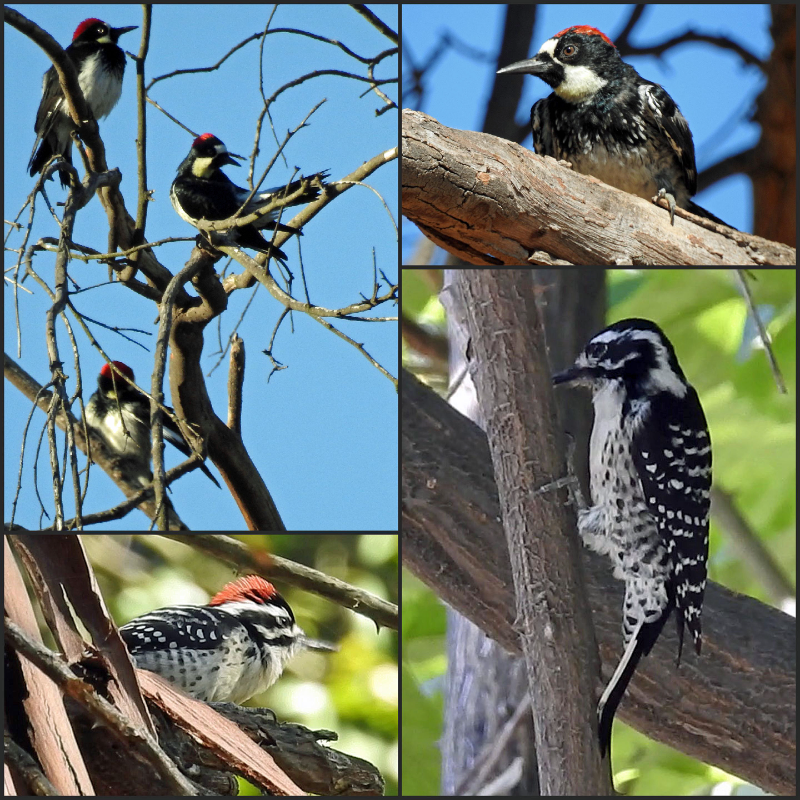
Figure 01. Woodpeckers have such a distinctive look that even novice bird-watchers can identify their family.
This is the sixth of several blogs about the Piciformes order of birds and its nine highly diverse families. The first blog introduced the order and three of its nine families: Galbulidae, jacamars; Bucconidae, puffbirds; and Indicatoridae, honeyguides, https://bird-brain.org/2026/08/30/piciformes-tree-hugging-birds-part-1/ . The second blog focused on the Ramphastidae family of toucans, https://bird-brain.org/2026/09/07/piciformes-tree-hugging-birds-part-2/ . The third blog introduced the four barbet families, then focused on the Capitonidae family of New World barbets and the Semnornithidae family, including two more New World species, https://bird-brain.org/2026/09/13/piciformes-tree-hugging-birds-part-3/ . The fourth blog discussed the Megalaimidae family of Asian barbets, https://bird-brain.org/2026/09/20/piciformes-tree-hugging-birds-part-4/ . The fifth blog described the Lybiidae family of African barbets, https://bird-brain.org/2026/09/27/piciformes-tree-hugging-birds-part-5/ .
The current blog introduces the Picidae family of woodpeckers.
- Etymology
- Taxonomy
- Distribution, Habitat, and Migration
- Appearance
- Characteristics Specialized for the Woodpecker Lifestyle
- Sounds: Vocalizations and Drumming
- Food and Foraging
- Locomotion
- Social Behavior
- Breeding
- Conservation Status
- Relationship with Humans
- References
- Appendix: Picidae Species under Threat
Forthcoming blogs will further explore the Picidae family, focusing on two genera of woodpeckers.
Etymology
As mentioned in the introduction to the Piciformes order (https://bird-brain.org/2026/08/30/piciformes-tree-hugging-birds-part-1/#Etymology ), the order’s name originates in Roman mythology’s Picus, who was turned into a woodpecker by an envious and vengeful witch. Picus also gives his name to the woodpecker family, Picidae; two subfamilies of woodpeckers, Picinae and Picumninae (piculets); and nine genera — Picus, Sphyrapicus, Yungipicus, Chloropicus, Leuconotopicus, Blythipicus, Pardipicus, Mulleripicus, Piculus — as well as inspiring the names of two other genera, Picoides and Dendropicos.
Taxonomy
The taxonomy of the Picidae family: kingdom Animalia, phylum Chordata, class Aves (all living birds, including about 45 orders), order Piciformes, suborder Pici, infraorder Picides, and family Picidae. Within the Picidae family are 36 genera, including 236 species. The family has been further classified into four subfamilies: the wryneck subfamily, Jynginae; two subfamilies of piculets, Picumninae and Sasiinae; and the Picinae subfamily of “true woodpeckers,” which includes the genus Sphyrapicus with four “sapsuckers,” the genus Colaptes with nine “flickers”; and two genera that include “flamebacks,” Dinopium and Chrysocolaptes.
In 1819, zoologist and marine biologist William Elford Leach introduced the family name Picidae in his guide to the contents of the British Museum. Decades earlier, in 1758, the biologist known as the “father of modern taxonomy,” Carl Linnaeus, had introduced the type genus Picus in an edition of his Systema Naturae.
The earliest known members of the Picidae family first appeared about 26 million years ago, late in the Oligocene epoch of evolutionary history, originating in the Old World. It’s believed that they were more like piculets than like other woodpeckers. Evidence suggests, however, that they may have even earlier origins, perhaps as many as 50 million years ago, in the early Eocene epoch, in the Americas. A single amber-encased fossil feather of a relative of the Antillean Piculet (Nesoctites micromegas) dates to about 25 million years ago, hinting at an even earlier origin for that species. Other woodpecker subfamilies don’t appear in the fossil record until about 15–10 million years ago (mid-Miocene epoch).
Distribution, Habitat, and Migration
Woodpeckers have yet to show up in Antarctica, Australia, New Guinea, New Zealand, Madagascar, and the north pole; nor are they found in vast deserts or on most oceanic islands; otherwise, however, they can be found on every continent, in almost any terrestrial location with trees or other suitable living plants. A few woodpecker species can even make a home in treeless locations south of the equator. The Jynginae subfamily of wrynecks are found only in the Old World, the piculet subfamily Picumninae prefers tropical locations on various continents, and the Sasiinae subfamily sticks to Africa and southeast Asia.
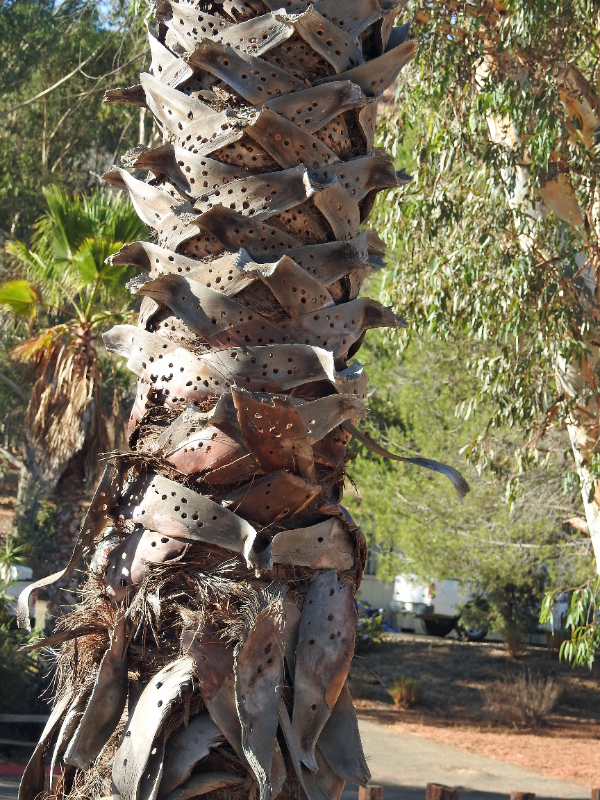
Figure 02. Woodpeckers can make themselves at home in almost any earthly environment with trees, and they often leave evidence of their affection for a particular tree.
Most picids (woodpeckers and their relations) prefer treed habitats, at almost any elevation or latitude. Treed environments include tropical rainforests (which host the greatest diversity of woodpeckers), dense forests, open woodlands, boreal or montane conifer forests, temperate broadleaf woodlands, scrublands, bamboo forests, savannahs (combined grasslands and woodlands), or even orchards or plantations, parks or gardens. Most species need to have some dead or rotting wood on which to forage or to nest. Monitoring studies have shown that when more dead wood is available, nesting increases; reduction of available dead wood decreases the nesting of these species.
Even just a scattering of trees, shrubs, or cacti may do for some species. For instance, the Gila Woodpecker specializes in living on cacti, and Ladder-backed Woodpeckers nest in cacti. Many species of woodpeckers have particularly favorite trees; for instance, the Acorn Woodpecker specializes in dwelling on oak trees. Others are generalists who can readily adapt to changes in woodland species or to varied forest environments, such as parks and secondary-growth forests. A few species also have become entirely terrestrial, nesting in holes in the ground (e.g., Ground Woodpecker, Geocolaptes olivaceus).
Though most woodpeckers don’t migrate, several species do. In the Old World, four species migrate from European and western Asian breeding grounds to African wintering grounds; in the Americas, more than four species migrate from northerly breeding grounds to southerly wintering grounds. In addition, some woodpeckers migrate altitudinally, such as the Grey-capped Pygmy Woodpecker. Also, the fledglings of many species disperse from their natal territory after fledging. Otherwise, woodpeckers may show irruptive or other movements to escape harsh weather conditions or lack of food. When woodpeckers migrate, they do so during the daytime, which is also when they forage.
Appearance
Size and Shape
The size variation of woodpeckers has been described as sparrow size to raven size. Length range is about 3–23.5 inches (7–60 cm); weight range is 0.25–20 ounces (7–570 g). Probably the smallest woodpecker is the Bar-breasted Piculet, about 3.0 inches (7.5 cm) long, weighing about 0.31 ounces (8.9 g). At the other end, the largest existing species is probably the Great Slaty Woodpecker, about 18–22 inches (45 to 55 cm) long, averaging about 15 ounces (430 g), and at least one specimen weighed 19.9 ounces (563 g). Two woodpeckers were even larger — Imperial Woodpecker, at 22–24 inches (55–61 cm) long, and the Ivory-billed Woodpecker, at 19– 21 inches (48–53 cm), weighing 18.2 ounces (516 g) — both of them probably extinct now.
Whatever the size, woodpeckers typically have ovoid bodies, which may be elongated in some species. Their wings are medium-long, broad, and relatively rounded. Almost all (except piculets and wrynecks) have stiff, pointed tail feathers.
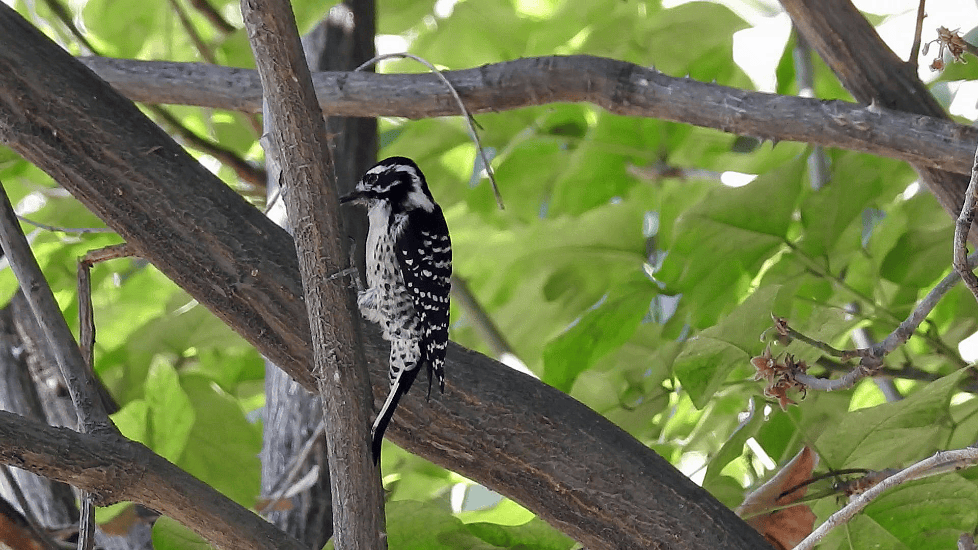
Figure 03. The plumage of this female Nuttall’s Woodpecker differs slightly from that of males of her species.
Plumage
As you might imagine, across 236 species, within 36 genera, the plumage variation of woodpeckers is great, though there are some plumage trends. For instance, many species have olive-green, brown, or yellowish plumage, suggesting feathered camouflage in treed habitats. Many other species go in the opposite direction, with boldly patterned black, white, and red plumage, often with feather crests or tufts on the crown (more likely on males than on females). Many woodpecker species are sexually dimorphic, but the differences between males and females are typically small, though the male Orange-backed Woodpecker (Chrysocolaptes validus) and male Williamson’s Sapsucker (Sphyrapicus thyroideus) differ strikingly from the females of those species. Almost all woodpeckers molt once/year, except the wrynecks, which also molt again (partially) before they breed.
To get a sense of the variety of woodpeckers (Picidae), as well as some similarities, please see https://search.macaulaylibrary.org/catalog?taxonCode=picida1&includeChildTaxa=true , for 2,876,134 photos, 108,440 audio recordings, and 16,281 videos of woodpeckers. An additional
1,459,178 observations of 250 species of woodpeckers may be found at the iNaturalist website, https://www.inaturalist.org/observations?taxon_id=17599 , each of which includes a photo, audio recording, or video.
Characteristics Specialized for the Woodpecker Lifestyle
The distinctive lifestyle of woodpeckers is facilitated by numerous physical and physiological adaptations. Researchers have tracked these adaptations through evolutionary time. For instance, the earliest known common ancestor of the Picidae family wasn’t able to climb up tree trunks or to drill into wood to excavate nest cavities. The earliest adaptations enabled early piculets and true woodpeckers to drill into wood. Later, almost all “true woodpeckers” developed stiffened tail feathers, which facilitated their climbing upward on tree limbs and trunks. Next to emerge was the distinctive toe arrangement.
Legs and Toes
Like other Piciformes, almost all woodpeckers have zygodactyl toes, with the two middle toes pointing forward and first and fourth toes pointing backward, creating an “X” pattern with their toes. Most woodpeckers have an extra adaptation of this toe pattern, known as ectropodactyl toes, in which these woodpeckers can easily switch the rear-facing fourth toe to face outward to the outside, reducing gravity’s pull. When they’re pecking into wood, this sideways grasp helps them more firmly resist gravity. To further enhance their tree-dwelling lifestyle, their toes end in long, thick, sharply curved claws. Above their toes are short, strong legs, keeping each bird’s center of gravity close to the tree, making balance easier. With these adaptations, these tree-dwelling birds readily grasp rough tree bark to hop or climb upward with ease. A few exceptions to this rule: The first rear-facing toe of each flameback in the Dinopium genus is too small to be useful, and some species in the Picoides genus have only three toes. In some species of Campephilus and Drycopus woodpeckers, the first hind toe points forward instead of backward.
Tails
The wrynecks and the piculets have normal bird tails, but the other woodpecker species have stiff, pointed tails with rigid-shafted feathers. These woodpeckers can lean back on their stiff tails when perching on an upright tree or other surface. The added support not only makes vertical perching easier, but also enables them to peck vigorously without losing their balance. The tail feathers of some woodpeckers even curve upward at the tip, giving them a broader tail surface to press downward against the tree trunk.
Figure 04. As this Nuttall’s Woodpecker shows, a stiff tail offers great support while hammering into a tree hole.
Head, Neck, and Bill
Woodpeckers typically have big heads with medium-long powerful thick necks. On most woodpeckers, the head is built for using its bill to peck into wood (or other surfaces) to find invertebrate prey, to excavate nest cavities, and to announce its presence to other woodpeckers. Woodpeckers usually seek out soft wood that is decaying or dead, but most species will also sometimes drill into hard, living wood, so their specialized adaptations serve them well. Not all woodpeckers are equipped for repeatedly pounding into hard wood, however. The bills of piculet and wryneck species aren’t as long, sharp, and strong as those of other woodpeckers, and they peck into only very soft, decaying wood. Nonetheless, the shape and structure of the bill is very similar to that of other woodpeckers. In addition, some species of woodpeckers (e.g., flickers) don’t hammer into trees so much as they use their bills to probe for prey in soil or other softer media; these species tend to have longer, decurved (curving downward) bills, rather than straight bills that work well for hammering or drilling.
Surprisingly, when woodpeckers peck into wood, they are actually sharpening the chisel-like tip of the bill. How can that be true? The woodpecker’s bill has three layers. The most interior layer is bone made of mineralized collagen fibers surrounding a large cavity. The middle layer is made of porous bone, with longitudinal ridges. The outer sheath layer, which observers can see, is the rhamphotheca, formed from keratin proteins, much like the proteins that make your nails and hair. Like your nails and hair, the rhamphotheca is continually growing; when the woodpecker is pecking into wood, it wears away some of the rhamphotheca layer, thereby sharpening the tip of the bill. Controlling this bill is a highly efficient network of powerful muscles and tendons.
Tongue
The great majority of woodpecker species have long sticky, barbed tongues, which they use for extracting insect adults and larvae from holes they have excavated into trees. Research has shown that they don’t usually spear larvae or other insects; instead, they wrap the long tongue around the prey, grasping it to pull it out. The barbs ensure a tight grip. Woodpeckers have superlative control over precise movements of the tongue, flicking it into and out of the hole, expanding and contracting their tongue muscles. Woodpeckers can’t see the prey they’re seeking, so they rely on their tactile sensations to find the prey and grasp it.
The woodpecker’s tongue is controlled by long, specialized, flexible muscles, which are sheathed by paired extremely elongated hyoid bones, also called “tongue bone” (or “lingual bone”). These ultra-long bones extend all the way from the base of the tongue, around the back of the woodpecker’s skull, on either side of the spinal column, then over the top of the skull around the brain case, meeting in the front of the skull. In some species, the hyoid bones are long enough to wrap around an eye socket or to enter the bill at the nostril cavity. (Please see https://en.wikipedia.org/wiki/Woodpecker#/media/File:Dendrocopos_major_skull.jpg for a diagram of the hyoid bone of one species of woodpecker.) These hyoid bones not only sheath the tongue when it’s not extended, but also provide extra shock absorption for the woodpecker’s brain, cushioning it from repeated intense pecking. Some ornithologists have referred to the hyoid bones as the brain’s “safety belt.”
In addition to muscular control and numerous backward-pointing barbs, the tongue is specially equipped with glands that secrete sticky mucus. An insect stands little chance of eluding the grasp of a woodpecker tongue. The four species of sapsuckers in the Sphyrapicus genus specialize in extracting sap, not insects, so they have shorter tongues, which have brushlike tips that make it easy to lap up large quantities of liquid sap.
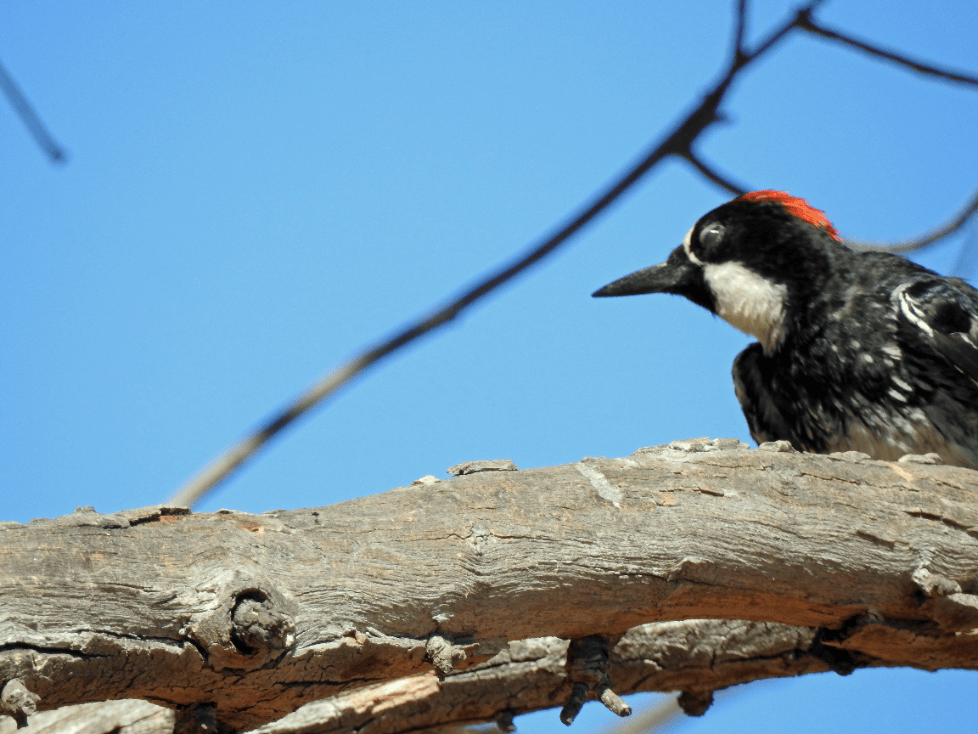
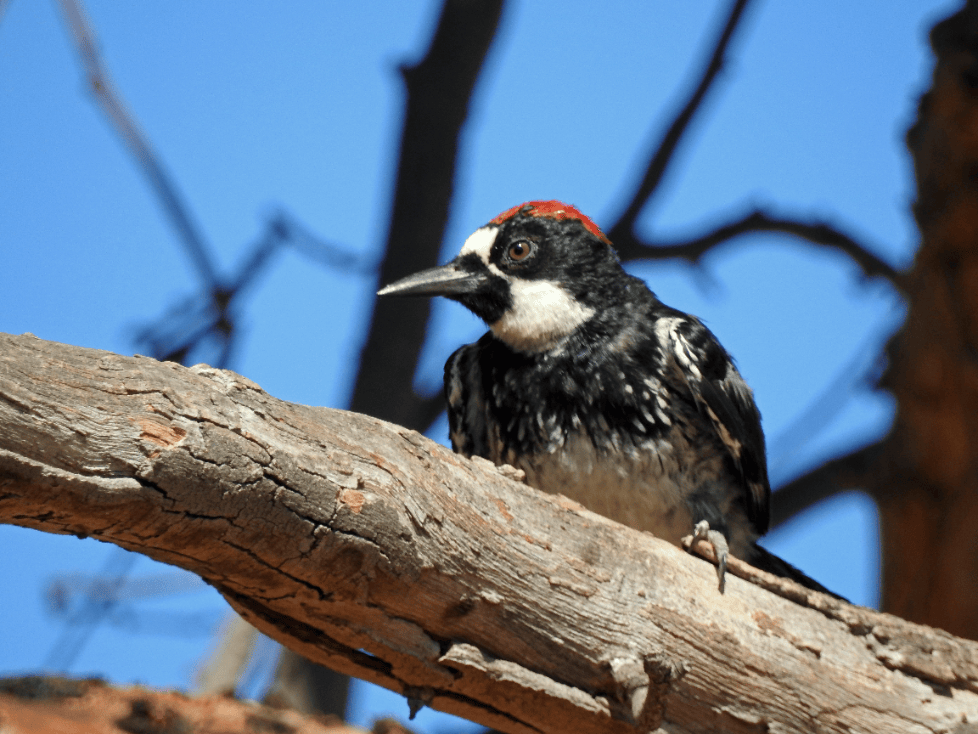
Figure 05. On the left, you can see this Acorn Woodpecker’s translucent nictitating membrane between its slightly narrowed top and bottom eyelids; on the right, its eyes are wide open.
Protection for Eyes and Nostrils
Anyone who has cut or drilled into wood knows that sawdust is a perpetual problem. Flying sawdust could pose serious problems for woodpeckers if they hadn’t developed specialized adaptations to protect their eyes and nostrils. Like most other birds, woodpeckers have protective nictitating membranes, translucent eyelids, which slide sideways from the inner to the outer corner of the eye. For woodpeckers, this membrane is thickened, and milliseconds before the bill makes contact with the wood, it closes shut. This not only protects the eyes from flying sawdust, but also prevents the retina from tearing due to the intense repeated impact of bill against wood. The nostrils are also protected, with tough tiny feathers covering them; in most species, the nostrils are mere slits, sometimes also protected from flying debris by a ridge.
Brain Protection
Seeing and breathing are important, but existence depends on a functional brain. Given all we have heard about chronic traumatic encephalopathy (CTE) in recent decades, we might wonder how a woodpecker’s brain can withstand the repeated, intense trauma of pecking into wood, day after day. One adaptation is that the maxilla (upper bill) and the mandible (lower bill) aren’t equally long, with the front of a woodpecker’s skull protruding forward over the lower bill, so that the jaw isn’t forced upward toward the brain with each blow. Another is that the hinge joining the front of the skull to the maxilla folds inward in a way that minimizes the compression of the jaw bone as the bill hits the tree. Instead, each blow creates tension in the bone, which is counteracted by a shock-absorbing muscle lying below the cranium.
The brain itself also has protective adaptations by minimizing the space for the brain inside the skull, so it doesn’t jostle around; the brain is relatively small and smooth, with a narrow subdural space (area between the brain and the skull), with little cerebrospinal fluid, and oriented in a way to maximize the area of contact between the brain and the skull.
The skull itself is strong, with high mineral density, made of highly compressible sponge-like bone that can absorb shock; this spongy bone is concentrated mostly in the forehead (at the base of the bill) and the back of the skull, the areas of greatest impact from pecking. When researchers have conducted computer simulations of woodpeckers’ pecking, they have found that more than 99% of the pecking force is distributed throughout the woodpecker’s body, with only a tiny fraction of that energy reaching the bird’s brain. In addition, some of the energy of intense pecking is transformed into heating up the skull, so woodpeckers peck only in short bursts, taking frequent brief breaks to give the head a chance to cool.
Other adaptations further protect the woodpecker’s brain. Nonetheless, researchers have found that woodpecker brains share similarities (such as the accumulation of tau protein) with humans who have suffered repeated concussions, resulting in CTE. They don’t yet know whether these similarities reflect brain pathology or are benign. The study of woodpecker brains is not only offering insight into these fascinating birds, but also providing an animal model for study of CTE.
In 2023, researchers reported that across the Picidae family, the size of a woodpecker’s brain was positively correlated with the woodpecker’s foraging skills, such as being able to sense, grasp, and extract grubs from the interior of trees. It’s thought that a larger brain offers the woodpeckers greater sensory and motor control. No relationship was found between brain size and drumming abilities.
Sounds: Vocalizations and Drumming
Though woodpeckers aren’t known for their vocalizations, many species do distinctively vocalize, though their songs are less complex than those of passerines, aka “songbirds.” Across species, woodpeckers’ calls have been variously described as sharp, piercing, high-pitched, rattling, chattering, whinnying, crowing, or laughing, and as whistles, trills, screams, wails, nasal churrs, twitters, and so on. The frequency range (high or low pitch) of woodpeckers is about 1.0–2.5 kHz (kilohertz), which is thought to be optimal for efficiently transmitting sound in woodsy habitats.
Among woodpecker genera, the Jynx wrynecks are thought to produce more musical sounds than most other species. To listen to any of 870 calls produced by Jynx wrynecks, please visit https://xeno-canto.org/explore?query=jynx . Piculets, too, have more songlike vocalizations, either a long trill or a series of a few notes. To hear up to 13 vocalizations of one of the smallest members of the woodpecker family, the Antillean Piculet (Nesoctites micromegas), please see https://xeno-canto.org/species/Nesoctites-micromegas . Among the “true woodpeckers,” some sapsuckers produce distinctive vocalizations; for instance, you may want to listen to this Red-breasted Sapsucker (Sphyrapicus ruber), https://xeno-canto.org/363352 (XC363352). To listen to any of 388 vocalizations by the sapsuckers of the Sphyrapicus genus, please visit https://xeno-canto.org/explore?query=Sphyrapicus . On the other hand, most of the 1,905 sounds listed for 5 species of Dryobates are drumming sounds, https://xeno-canto.org/explore?query=Dryobates ; some, however, are vocalizations, such as this call of the Lesser Spotted Woodpecker (Dryobates minor), https://xeno-canto.org/799400 (XC799400).
Woodpecker calls can be used in courtship, in territorial disputes, in shouting an alarm, and for other reasons. Partners in a mated pair may exchange muted, low-pitched calls. Nestlings may call for their parents’ attention by noisily begging.
Even when woodpeckers don’t give voice, they can make plenty of noise, which they can use for communication. The reverberations of their pecking can be heard at great distances, depending on the quality of the substrate into which (or onto which, such as metal poles) they’re pecking. Typically, the woodpecker will choose a surface that resonates well, such as a hollow tree — or a human-made gutter or drainpipe (much to the chagrin of nearby humans). To hear the sound of a woodpecker pecking, please see https://en.wikipedia.org/wiki/File:Woodpecker2.ogg .
Ornithologists call this nonvocal pounding or hammering drumming when it is used as a form of communication. Typically, drumming is done with a series of rolls — highly rapid, repeated hammering onto a hard surface, interspersed with pauses. In a given species, the pattern is distinctive, with each roll having a distinctive length, number of beats, and cadence (mean number of beats per second), as well as a distinctive length for the break between drum rolls.
Some ornithologists can distinguish among multiple species within a given territory, even when they seem similar to other listeners. The distinctive drum rolls of a particular species is consistent within a species, across geographical regions; unlike songbirds, they don’t appear to have regional “dialects.” In addition to distinctions across species, it’s thought that individual woodpeckers can recognize the drumming of other individuals, such as their mates and their neighbors.
The brain regions that control drumming appear to be similar to the brain regions that control singing in many songbirds. To listen to any of 108,440 audio recordings of members of the Picidae family, visit https://search.macaulaylibrary.org/catalog?taxonCode=picida1&includeChildTaxa=true&mediaType=audio .
Food and Foraging
Woodpeckers are well known for eating mostly insects and other arthropods, typically by excavating their prey from inside trees, which they access by hammering or chiseling into bark or branches. Their invertebrate prey includes ants and termites, beetles and spiders, with special interest in larval insects, including not only tree-boring grubs, but also caterpillars. In truth, most woodpeckers are omnivorous and opportunistic, supplementing their invertebrate diet with a variety of other food sources: seeds and nuts, small rodents and lizards, fruits and tree sap. Some species even eat crustaceans, molluscs, carrion, domestic waste scraps, or suet from bird feeders, as well as the eggs and nestlings of other birds, especially when feeding their own chicks.
Figure 06. Though this novice photographer accidentally photographed this Nuttall’s Woodpecker sideways, it still shows that a bird feeder offering seeds can be quite appealing to some species of woodpecker.
Not all woodpeckers consume all of these food items. Many species have specialties. Some have insect specialties, such as preferring just ants and termites (e.g., Colaptes and Picus woodpeckers) or just the larvae of tree-boring insects (many species). Others have non-invertebrate dietary preferences. For instance, though many woodpeckers consume sap some times of the year, the four species of sapsuckers (Sphyrapicus genus) specialize in harvesting tree sap year-round; recall their brushlike tongue tip, mentioned previously. Some species eat mostly seeds and nuts; interestingly, Acorn Woodpeckers (Melanerpes formicivorus) actually eat more insects than acorns, and they feed on sap, too; even so, acorns play an important role in their diet. (A blog focused on this species is forthcoming.)
Most woodpecker species extract their invertebrate prey by drilling, hammering, chiseling into trees. To know where to dig a hole, they probably listen for sounds of their prey inside of the tree. They also use other methods for snatching their prey. They may glean tiny prey from bark or foliage, or they may simply probe into crevices or under loose bark. Sometimes, they catch flying insects by hawking them mid-air. In addition, some species — such as the wrynecks and some flicker species, find all the food they need at ground level. Woodpeckers forage during the daytime, roosting inside holes or crevices at night.
Locomotion
The flight of most woodpeckers undulates (appears to move up and down in waves) as they alternate flapping (powered) flight with gliding (unpowered) flight. That is, they making a series of rapid flaps, which propels them upward, followed by a glide, as gravity pulls them slowly downward, after which they flap upward again, and so on. There are some variations, however. Large Dryocopus woodpeckers have a fast, direct flight pattern; many Melanerpes woodpeckers seem to use rowing wing-strokes; and piculets seem to explode into flight with bursts of quick flying.
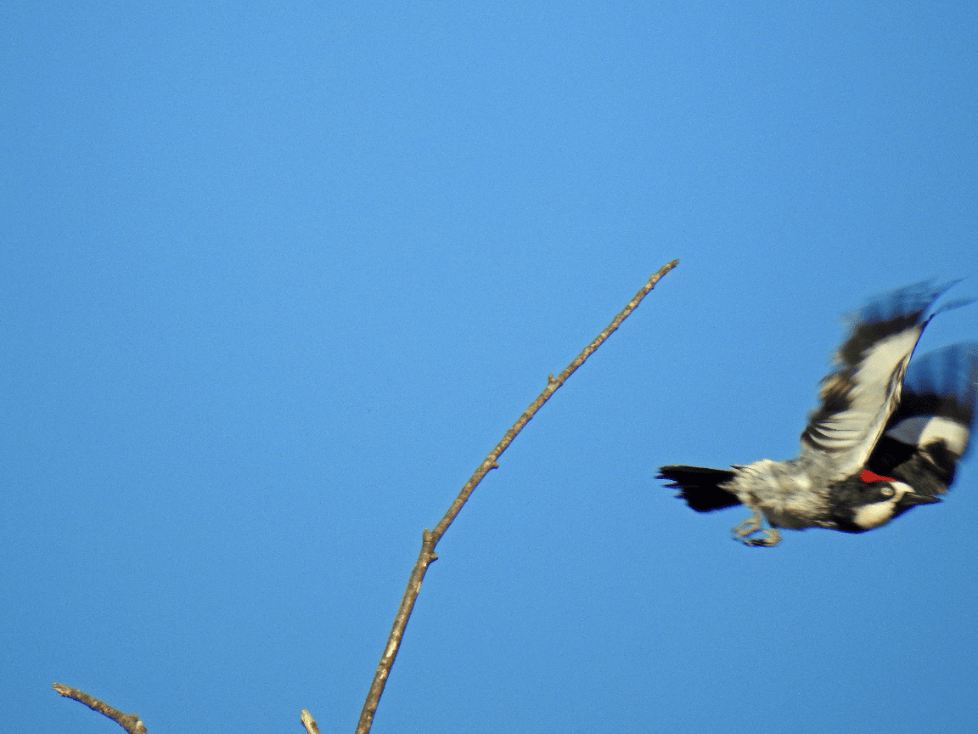
Figure 07. Woodpeckers, such as this Acorn Woodpecker, can burst into powered flight.
When moving up a tree trunk, woodpeckers typically use two-footed hops, during which both feet are completely airborne for a fraction of a second. They may also use two-footed hops to move along the ground. It’s doubtful that they’d try to hop or climb downward, when flying is so much safer and easier.
Social Behavior
Though there’s a wide range of social behavior among woodpecker species, most woodpeckers live and roost alone. Many species defend their roosts and their feeding grounds from any intruders, whether their own species or another. When behaving aggressively, they will shake their heads, point and jab their bills, flick their wings, and drum or vocalize to let their opponent know to skedaddle. Rarely do these disputes result in actual contact, let alone injury.
A few woodpecker species live in complex social groups, who jointly defend their shared territory. Some even forage in mixed-species flocks of other insectivorous birds, so they can share in watching for predators, as well as in eating. In addition, some woodpecker species live and breed communally, in colonies with shared nests, such as the Acorn Woodpecker.
Breeding
The Acorn Woodpecker (Melanerpes formicivorus) has a distinctive breeding style. Like a few other species, this woodpecker is a colonial breeder (nesting together and sharing parenting duties as a colony) and also a cooperative breeder. In cooperative breeding, other woodpeckers aid the primary parents; the helpers are often their own young from previous breeding seasons. Up to 12 individual Acorn Woodpeckers may communally care for the offspring of some of the group members. In addition, within the group, Acorn Woodpeckers are polygynandrous, such that each female has multiple male partners, and each male has multiple female partners, with up to 3 of the females laying their eggs in the same nest cavity. Parenting duties are shared among these partners; any of the males could have been the parents to any of the offspring. Ironically, the reproductive success of the whole group is greater, but the success of any given individual is less.
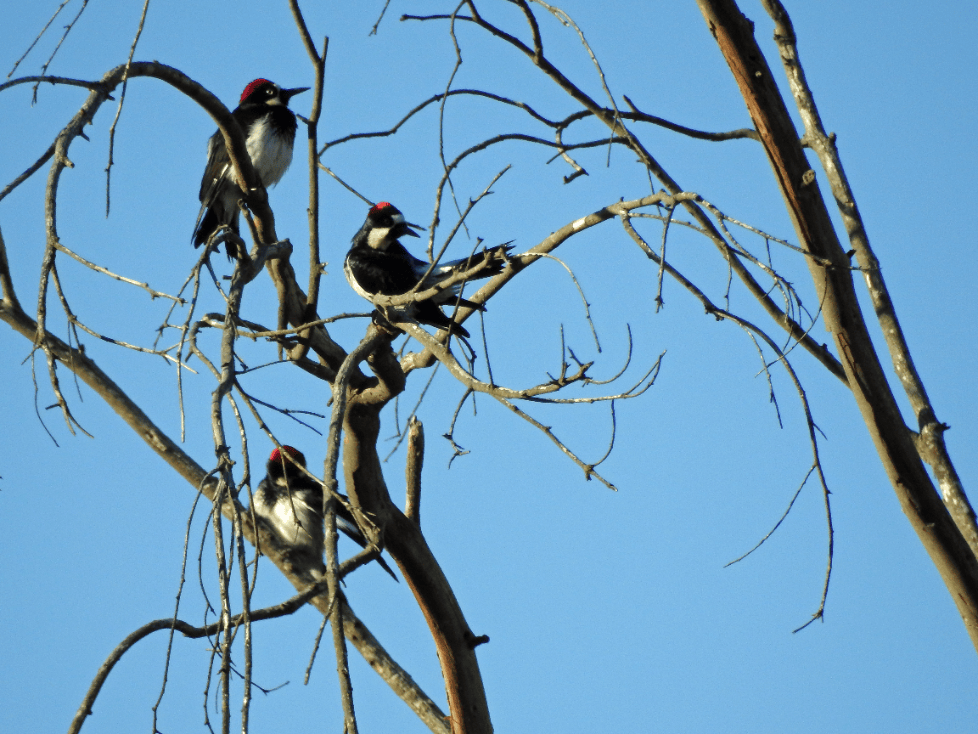
Figure 08. These Acorn Woodpeckers live and breed communally, sharing in the care of their offspring.
Another member of the Melanerpes genus, the West Indian Woodpecker (Melanerpes superciliaris) is usually monogamous, but at least one female appeared polyandrous (mating with two males); she was observed to lay eggs in the nests of two different males during the same breeding season, and she later was seen to help with incubation and the initial feeding of the hatchlings of both males. Other females of this species were not observed engaging in polyandry. Despite these exceptions, most adult woodpecker parents are monogamous, with biparental care — both parents incubate their eggs and brood their nestlings.
Each breeding season, most woodpeckers excavate new nest cavities, leaving the abandoned nest cavities from previous seasons for other bird species to use — an ecological benefit of living near woodpeckers. Often, the pair will test out numerous potential locations before settling on an optimal nest-cavity location. Once the site is chosen, with both partners excavating the cavity, it typically takes about a month to complete the cavity. The nest is structured to have a round entrance hole that’s just right to allow a parent to enter it, but not anyone larger; below the entrance is a large, deep, vertical chamber for the eggs and then the hatchlings.
Often, the nest cavity is also used for roosting after the breeding season, but not always. The nest cavities are usually dug into tree trunks, ideally not near the foliage, in an area of soft rotten or dead wood, surrounded by harder living wood. A few woodpecker species don’t nest in tree cavities and instead dig their cavities in the mounds of termites, the nests of ants, or even in the ground.
The two species of wrynecks (Jynx genus) don’t do any excavating; instead, they use existing natural cavities, take over abandoned cavities, or even use human-provided nest boxes. Whatever nest cavity is used, woodpeckers don’t carry materials from elsewhere to line the nest, though they may line it with the wood chips and sawdust created by the excavation process.
An adequate supply of trees in a given habitat may limit the number of woodpeckers who can breed in a given territory, including the number of woodpeckers who can breed within a colony. There may be great demand for suitable trees, so the excavating parents may have to defend their nest hole not only from other woodpeckers, but also from other cavity-nesting birds (e.g., swallows, starlings).
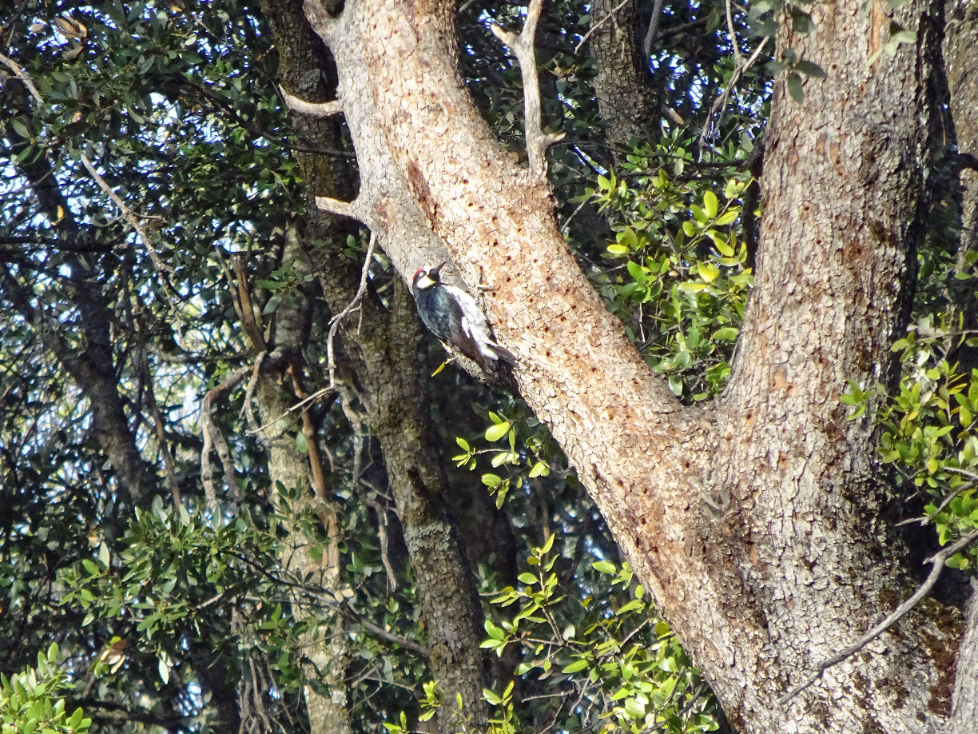
Figure 09. Having an adequate supply of trees for nest cavities constrains the population of woodpeckers who can live in a given area. This Acorn Woodpecker has made several probing pecks into this tree.
Some species get around this problem by excavating holes in other locations. For instance, Gilded Flickers typically excavate their nests in saguaro cactus, though they’ll use cottonwood or willow trees when they’re available. Ladder-backed Woodpeckers will excavate tree nests when available, but they’ll also use various species of yucca, agave, and saguaro cactus when tree cavities aren’t handy. Bamboo Woodpeckers specialize in digging nest cavities in bamboo, up to 10 inches deep.
Some species ignore plant options altogether. Andean Flickers and Ground Woodpeckers dig cavities in earthen banks, rocky cliffs, or among rocks. Campo Flickers readily use termite mounds or earthen banks when trees aren’t handy, and in some locations, they seem to prefer to use termite mounds. Rufous Woodpeckers prefer to make their nests in the active nests of tree-dwelling ants (in pine or palm trees). Also, much to the dismay of their human neighbors, many woodpeckers excavate their nest holes in human-made wooden utility poles or even in residences or commercial buildings.
Both parents work together to excavate the nest, but in many species, the male does more of the excavation, while the female is preparing to lay their eggs. After the nest is prepared, the female lays 2–12 white eggs (most woodpeckers have 2–5, wrynecks often have up to 12). Because the eggs are in a nest cavity, there’s no need for camouflage, and white eggs are easier to see in the dim light of a nest cavity. Both parents incubate the eggs for about 9–14 days (up to 19 days for larger woodpeckers), but the male usually takes the night shift.
The woodpecker’s altricial (helpless) young are naked upon hatching, and they don’t pass through a downy phase. Instead nestlings go straight to developing juvenile plumage. Both parents feed their chicks for about 20–28 days — up to 31 days in some large species, and as few as 11 days in the tiniest piculets. Once the chicks fledge, most youngsters leave the nest and are expected to feed themselves, with a few exceptions. Typically, cavity nesting leads to greater reproductive success than nesting strategies that leave nestlings more vulnerable to threats. Nonetheless, some African woodpecker species have been victimized by brood parasitism by some species of honeyguides.
Conservation Status
The good news: The Picidae family of woodpeckers have proportionately fewer species at risk of extinction than ornithologists would have expected, given their arboreal lifestyle and the ever-present threats to their habitats. Nonetheless, around the world, woodlands are threatened by deforestation and by clearance of wilderness to make way for agriculture and other human purposes. Part of the good news is that some woodpecker species have adapted to secondary-growth forests, recovering from selective deforestation for the timber industry; to plantations or other human-made habitats; or even to scattered trees and remnants of forests. Some, however, do not. In addition, human restoration efforts, such as creating artificial nest cavities in wooded areas, are noble, and often successful, but they don’t work for all species, and these efforts can’t replace the conservation of existing habitat.
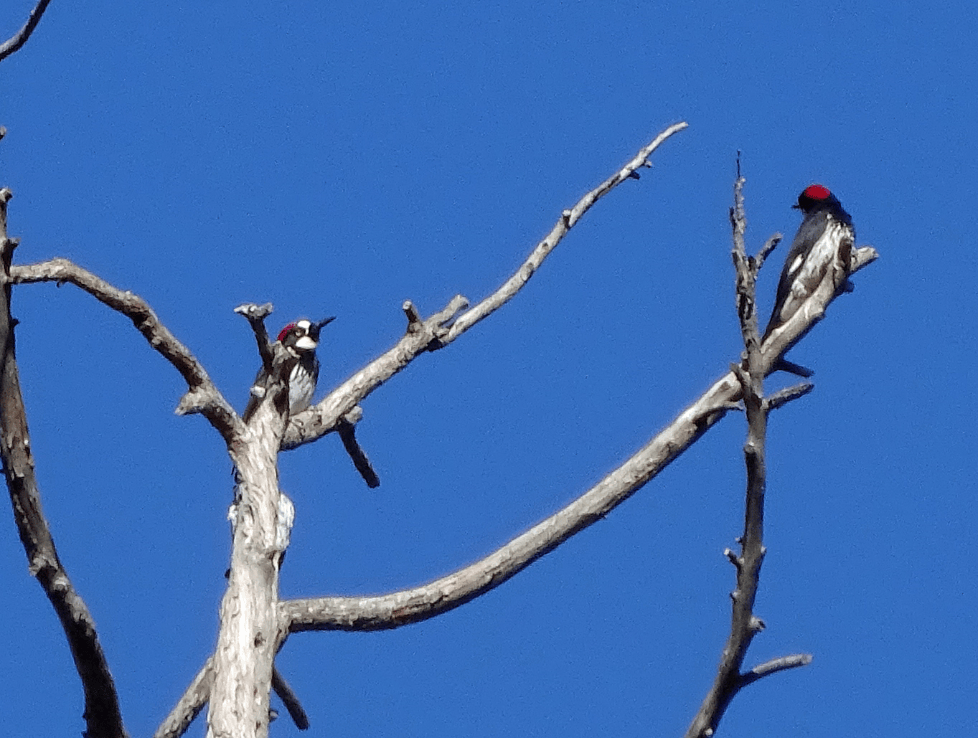
Figure 10. Most woodpeckers are less endangered than other families of birds, but they still need to have their treed habitats preserved, such as the scrubby woodland where these Acorn Woodpeckers make themselves at home.
Using both the IUCN Red List and information from the Cornell Lab of Ornithology’s subscription website Birds of the World (as noted in the References section), following is a best estimate of the conservation status of the Picidae family of woodpeckers:
- Least Concern, LC, 80.5% (221 species)
- Near Threatened, NT, 5.9% (17 species)
- Vulnerable, VU, 2.5% (6 species per IUCN; 7 species per Birds of the World)
- Endangered, EN, 1.7% (4 species)
- Critically Endangered, CR, 0.85% (2 species)
- Extinct in the Wild, EW, 0% (0 species)
- Extinct, EX, 0.42% (1 species)
- Not Evaluated, NE, 0%
- Data Deficient, DD, 0%
- Unknown, 8.1%
Following the references section is an appendix listing the known species of threatened woodpeckers, by their conservation status. Given their reliance on forested habitats, it should be no surprise that so many species are threatened, to varying degrees. Species inhabiting islands or other finite habitats are at greater risk than species with an expansive distribution.
Relationship with Humans
Many humans who live near woodpeckers find their persistent loud drumming to be annoying, at the least. When woodpeckers drum on metal rain gutters, pipes, or roofing; or they peck on wooden shingles, siding, or any reverberating structures within earshot, they can drive any hearing person to distraction. Woodpeckers may even cause damage by excavating holes in buildings, fencing, and other structures, requiring costly repairs.
On the other hand, woodpeckers kill and eat wood-boring insects that damage wooden structures or trees. Their appetites for larvae can prevent a mass infestation of wood-borers from sickening or even killing a forest’s trees. One study showed that woodpeckers removed up to 85% of the larvae infecting individual ash trees. Woodpeckers also create nesting cavities, which they later abandon, making them available to other cavity-nesting birds. Their cavities are even used by mammals and other animals on occasion.
In human culture, woodpeckers have played a role in Greek and Roman mythology, such as a woodpecker who brought food to the young Romulus and Remus, later the founders of Rome. In the United States, many baby boomers recall Woody Woodpecker cartoons (https://en.wikipedia.org/wiki/Woody_Woodpecker ; for a photo of his star in Hollywood, see https://commons.wikimedia.org/wiki/File:Woody_Woodpecker_HWoF_Star.jpg ). More recently, youngsters have been introduced to Pokémon Pikipek, who looks similar to a Pileated Woodpecker (Dryocopus pileatus).
Perhaps more importantly, the skull design and bill design of woodpeckers have inspired engineers to create construction designs based on their physiology. One bio-inspired construction beam was able to reduce impact damage by 50–80%.
References
Picidae Family
- Elphick, Jonathan. (2014). The World of Birds (pp. 441–444). Buffalo, NY: Firefly Books.
- Lovette, Irby, & John Fitzpatrick (Eds.). (2016). The Cornell Lab of Ornithology Handbook of Bird Biology (3rd ed.). Hoboken, NJ: Wiley.
- Winkler, David W., Shawn M. Billerman, & Irby J. Lovette. (2015). Bird Families of the World: An Invitation to the Spectacular Diversity of Birds. Barcelona, Spain: Lynx, Cornell Lab of Ornithology.
- Winkler, D. W., S. M. Billerman, and I. J. Lovette (2020). Woodpeckers (Picidae), version 1.0. In Birds of the World (S. M. Billerman, B. K. Keeney, P. G. Rodewald, and T. S. Schulenberg, Editors). Ithaca, NY: Cornell Lab of Ornithology. https://doi.org/10.2173/bow.picida1.01 ; https://birdsoftheworld.org/bow/species/picida1/cur/introduction
- Picidae, woodpeckers, https://en.wikipedia.org/wiki/Woodpecker
- Picidae, William Elford Leach, https://en.wikipedia.org/wiki/William_Elford_Leach
- Picus, type genus, Carl Linnaeus, 1758, https://en.wikipedia.org/wiki/Carl_Linnaeus
- Nictitating membrane, https://en.wikipedia.org/wiki/Nictitating_membrane
- Picidae family of woodpeckers, https://search.macaulaylibrary.org/catalog?taxonCode=picida1&includeChildTaxa=true , 2,876,134 photos, 108,440 audio recordings, 16,281 videos
- Picidae family of woodpeckers, IUCN Red List, https://www.iucnredlist.org/search?taxonomies=22673150&searchType=species
Selected Individual Picidae Species
- Acorn Woodpecker — Koenig, W. D., E. L. Walters, P. B. Stacey, M. T. Stanback, and R. L. Mumme (2020). Acorn Woodpecker (Melanerpes formicivorus), version 1.0. In Birds of the World (P. G. Rodewald and B. K. Keeney, Editors). Ithaca, NY: Cornell Lab of Ornithology. https://doi.org/10.2173/bow.acowoo.01 ; https://birdsoftheworld.org/bow/species/acowoo/cur/introduction
Figure 11. This Acorn Woodpecker shows how easily they can move up, down, and sideways on a tree trunk.
- Andean Flicker — del Hoyo, J., H. Winkler, D. A. Christie, and N. Collar (2022). Andean Flicker (Colaptes rupicola), version 1.1. In Birds of the World (N. D. Sly, Editor). Ithaca, NY: Cornell Lab of Ornithology. https://doi.org/10.2173/bow.andfli1.01.1 ; https://birdsoftheworld.org/bow/species/andfli1/cur/introduction
- Bamboo Woodpecker— Winkler, H. and D. A. Christie (2020). Bamboo Woodpecker (Gecinulus viridis), version 1.0. In Birds of the World (J. del Hoyo, A. Elliott, J. Sargatal, D. A. Christie, and E. de Juana, Editors). Ithaca, NY: Cornell Lab of Ornithology. https://doi.org/10.2173/bow.bamwoo1.01 ; https://birdsoftheworld.org/bow/species/bamwoo1/cur/introduction
- Campo Flicker — Dias, R. I. and R. H. Macedo (2020). Campo Flicker (Colaptes campestris), version 1.0. In Birds of the World (T. S. Schulenberg, Editor). Ithaca, NY: Cornell Lab of Ornithology. https://doi.org/10.2173/bow.camfli1.01 ; https://birdsoftheworld.org/bow/species/camfli1/cur/introduction
- Gilded Flicker — Moore, W. S., P. Pyle, and K. L. Wiebe (2020). Gilded Flicker (Colaptes chrysoides), version 1.0. In Birds of the World (P. G. Rodewald, Editor). Ithaca, NY: Cornell Lab of Ornithology. https://doi.org/10.2173/bow.gilfli.01 ; https://birdsoftheworld.org/bow/species/gilfli/cur/introduction
- Ground Woodpecker — Winkler, H., D. A. Christie, G. M. Kirwan, and C. J. Sharpe (2020). Ground Woodpecker (Geocolaptes olivaceus), version 1.0. In Birds of the World (J. del Hoyo, A. Elliott, J. Sargatal, D. A. Christie, and E. de Juana, Editors). Ithaca, NY: Cornell Lab of Ornithology. https://doi.org/10.2173/bow.growoo1.01 ; https://birdsoftheworld.org/bow/species/growoo1/cur/introduction
- Ladder-backed Woodpecker — Lowther, P. E., P. Pyle, and M. A. Patten (2020). Ladder-backed Woodpecker (Dryobates scalaris), version 1.0. In Birds of the World (P. G. Rodewald, Editor). Ithaca, NY: Cornell Lab of Ornithology. https://doi.org/10.2173/bow.labwoo.01 ; https://birdsoftheworld.org/bow/species/labwoo/cur/introduction
- Rufous Woodpecker — Winkler, H. and D. A. Christie (2020). Rufous Woodpecker (Micropternus brachyurus), version 1.0. In Birds of the World (J. del Hoyo, A. Elliott, J. Sargatal, D. A. Christie, and E. de Juana, Editors). Ithaca, NY: Cornell Lab of Ornithology. https://doi.org/10.2173/bow.rufwoo2.01 ; https://birdsoftheworld.org/bow/species/rufwoo2/cur/introduction
- West Indian Woodpecker — Askins, R. A., M. E. Akresh, and W. K. Hayes (2020). West Indian Woodpecker (Melanerpes superciliaris), version 2.0. In Birds of the World (T. S. Schulenberg and B. K. Keeney, Editors). Ithaca, NY: Cornell Lab of Ornithology. https://doi.org/10.2173/bow.weiwoo1.02 ; https://birdsoftheworld.org/bow/species/weiwoo1/cur/introduction
Etymology
- Gotch, A. F. [Arthur Frederick]. Birds—Their Latin Names Explained (348 pp.). Poole, Dorset, U.K.: Blandford Press.
- Gruson, Edward S. (1972). Words for Birds: A Lexicon of North American Birds with Biographical Notes (305 pp., including Bibliography, 279–282; Index of Common Names, 283–291; Index of Generic Names, 292–295; Index of Scientific Species Names, 296–303; Index of People for Whom Birds Are Named, 304–305). New York: Quadrangle Books.
- Lederer, Roger, and Carol Burr. (2014). Latin for Bird Lovers: Over 3,000 Bird Names Explored and Explained (224 pages). Portland, OR: Timber Press.
Picidae Species under Threat
The following species of woodpeckers face varying degrees of threatened conservation status.
- 17 species NT (Near Threatened), 5.9% of all woodpecker species
- Knysna Woodpecker, Campethera notata
- Olive-backed Woodpecker, Chloropicoides rafflesii
- Red-headed Flameback, Chrysocolaptes erythrocephalus
- Javan Flameback, Chrysocolaptes strictus
- Chequer-throated Yellownape, Chrysophlegma humii
- Amami Woodpecker, Dendrocopos owstoni
- Arabian Woodpecker, Dendropicos dorae
- Spot-throated Flameback, Dinopium everetti
- Ground Woodpecker, Geocolaptes olivaceus
- Black-bodied Woodpecker, Hylatomus schulzii
- Red-cockaded Woodpecker, Leuconotopicus borealis
- Buff-necked Woodpecker, Meiglyptes tukki
- Northern Sooty Woodpecker, Mulleripicus funebris
- Varzea Piculet, Picumnus varzeae
- Speckle-chested Piculet, Picumnus steindachneri
- Sumatran Woodpecker, Picus dedemi
- Red-collared Woodpecker, Picus rabieri
- 7 species VU (Vulnerable), 2.5% of species (6 species per IUCN Red List)
- Helmeted Woodpecker, Celeus galeatus
- Kaempfer’s Woodpecker, Celeus obrieni
- Southern Sooty Woodpecker, Mulleripicus fuliginosus
- Great Slaty Woodpecker, Mulleripicus pulverulentus
- Sulu Pygmy Woodpecker, Picoides ramsayi
- Speckle-chested Piculet, Picumnus steindachneri
- listed by Birds of the World but not by IUCN Red List, Andaman Woodpecker, Dryocopus hodgei
- 4 species EN (Endangered), 1.7%
- Yellow-faced Flameback, Chrysocolaptes xanthocephalus
- Fernandina’s Flicker, Colaptes fernandinae
- Okinawa Woodpecker, Dendrocopos noguchii
- White-rumped Woodpecker, Meiglyptes tristis
- 2 species CR (Critically Endangered; including 1 possibly extinct species), 0.85%
- Imperial Woodpecker, Campephilus imperialis
- Ivory-billed Woodpecker, Campephilus principalis
- 0 species EW (Extinct in the Wild), 0%
- 1 species EX (Extinct), 0.42%
- Bermuda Flicker, Colaptes oceanicus
- NE (Not Evaluated), 0%
- DD (Data Deficient), 0%
- Unknown, 8.1%
- 221 species, not threatened, LC (Least Concern), 80.5% of all woodpecker species
Text and images by Shari Dorantes Hatch. Copyright © 2026. All rights reserved.
These images were recorded at the San Diego Zoo’s Safari Park,
Lake Hodges, and other locations in San Diego County.


Leave a comment