
Gyrfalcon, Falco rusticolus
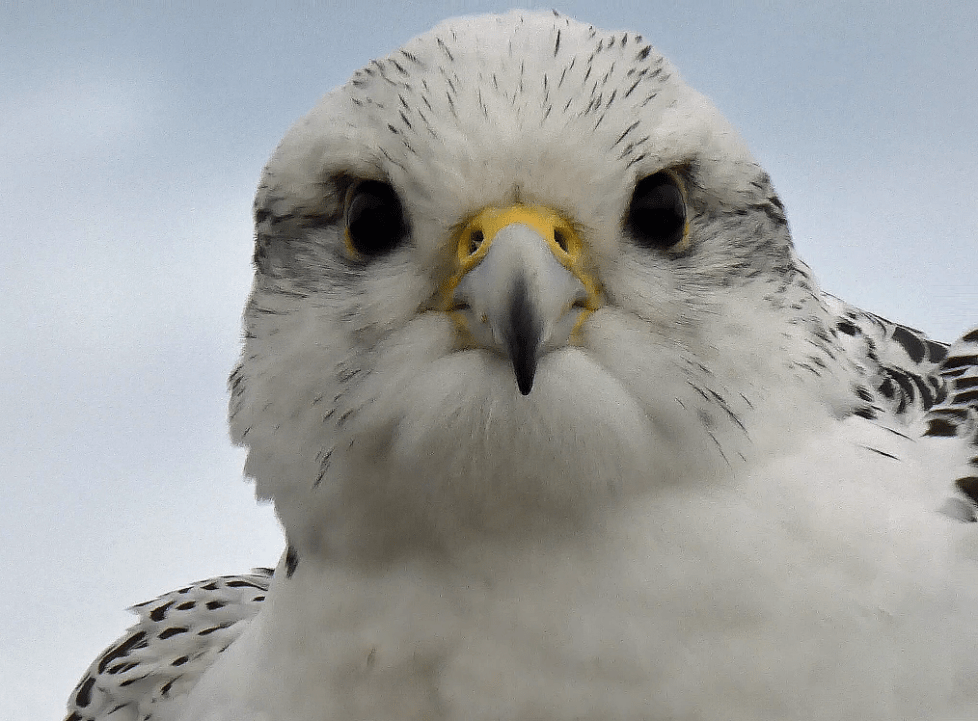
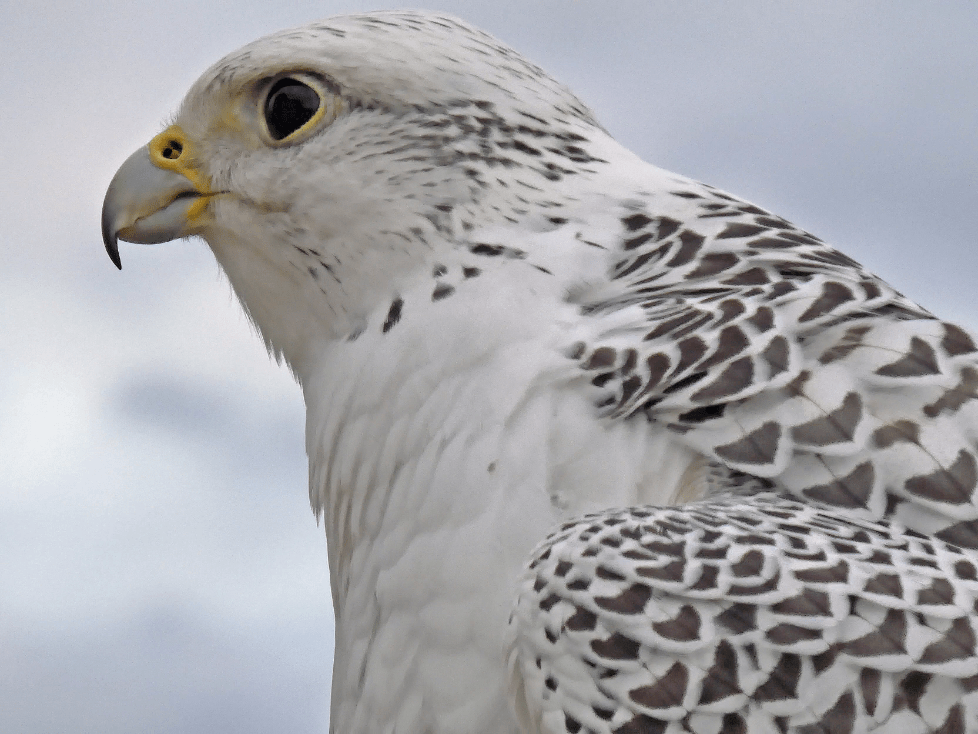
Figure 01. Gyrfalcons, the largest falcons, live farther north than any other diurnal (daytime) birds of prey. From bill to talons, they’re superbly equipped to take down prey.
This is my fourth blog in a series of blogs about falcons. The first, https://bird-brain.org/2026/05/03/the-falcon-family/ , introduced the order, Falconiformes; the family, Falconidae; and the Merlin species, Falco columbarius. The second blog in this series, https://bird-brain.org/2026/05/10/falcons-prairie-falcon/ , focused on the Prairie Falcon, Falco mexicanus. The third blog focused on the Pygmy Falcon, Polihierax semitorquatus, https://bird-brain.org/2026/05/17/falcons-pygmy-falcon/ . The current blog focuses on the Gyrfalcon, Falco rusticolus. Following this blog will be two more blogs about falcons, featuring the Peregrine Falcon, Falco peregrinus, and the American Kestrel, Falco sparverius.
Contents
- Description
- Vocalizations
- Distribution, Habitat, and Migration
- Food and Hunting
- Locomotion
- Behavior
- Breeding
- Survival and Lifespan
- Conservation Status
- Observations
- References
Etymology and Taxonomy
The genus name Falco comes from Latin, falx, for “sickle,” referring to these falcons’ sickle-shaped sharp talons. In his 1758 Systema Naturae (10th edition), Carl Linnaeus gave this falcon its species name rusticolus, which comes from Latin, rusticus, for “rustic,” “rural,” “country” (as opposed to “city,” “urban”); and incola, “inhabitant of” or “dweller.” The common name Gyrfalcon may have a proto-Germanic origin, girį, for “vulture” (as well as possibly “greed”), mostly because it’s larger than other falcons. Some sources say gyro signifies “circle” (possibly because this falcon flies in circles in search of prey), but other sources deny that connection. Sometimes spelled “Gyr Falcon,” its Spanish name is Halcón Gerifalte. To summarize its taxonomy: kingdom, Animalia; phylum, Chordata; class, Aves; order, Falconiformes; family, Falconidae; genus, Falco; species, rusticolus; binomial scientific name: Falco rusticolus. The Gyrfalcon is monotypic, having no recognized subspecies, but because it’s highly polymorphic — having multiple color “morphs” with different colors of plumage, some have thought there were subspecies.
Figure 02. With their keen eyesight and exceptional hunting skills, Gyrfalcons make superlative partners to falconers.
Description
Size
The Gyrfalcon is the largest of the Falco falcons; a few Striated Caracaras may be a smidge (< ½”, 1 cm) longer than some Gyrfalcons. In general, however, Gyrfalcons are heavier and longer than almost all other falcons. In fact, the Gyrfalcon is about the same size as the largest hawks in the Buteo genus (e.g., Red-tailed Hawks), and slightly heavier than most of them. Gyrfalcon females weigh 39.9–75.8 ounces (2.5–4.7 pounds, 1130–2150 g; one report of a female weighing 91.7 ounces, 5.7 pounds, 2600 g), and males weigh 27.1–51.1 ounces (1.7–3.2 pounds, 769–1450 g; sometimes up to 56.9 ounces, 3.6 pounds, 1614 g). Males typically weigh about 64–74% as much as females. There are some geographic differences in average overall size, with the largest birds in Iceland and Greenland and the smallest in North America and Scandinavia. As expected, females are also longer, bill to tail — 20–25.2″ (51–64 cm) — compared with males — 18.9–24″ (48–61 cm).
The Gyrfalcon has a bigger head, a longer tail, and a deeper chest than other large falcons. Its wings are relatively short for its size, however. The length for each wing is 13.5–16″ (34.4 – 40.6 cm). Females have a wingspan of 49–53″ (124 to 134 cm), males have a 43–51″ (110 to 130 cm) wingspan. Compared with other falcons, their shorter wings (relative to body size) are broader, with a rounder tip. Tail lengths vary greatly (7.2–11.4″, 18.4–29 cm; most commonly, 7.4–8.7″, 19–22 cm).
Plumage
The Gyrfalcon’s polymorphic plumage colors vary so widely that some observers have thought they were subspecies, though other evidence doesn’t support that conclusion. The three main color morphs are white, gray (sometimes called “silver”), and blackish-brown (sometimes separated into “brown” and “black”); actual plumage colors can fall anywhere on the spectrum from all-white to very dark. In addition, among the morphs, there are also variations in plumage patterns (e.g., barring, spotting, speckling).
Location seems to be a factor in color variations (e.g., Greenland Gyrfalcons are lighter than most others). The white morph of the Gyrfalcon is the only white falcon in the family. These color variations seem not to be strongly linked to sex, but females and juveniles do tend to be darker and browner than males and adults. Juveniles also show more vertical streaking and heavier markings on their undersides, compared with adults; different color morphs also show different markings and patterns. Adults may or may not have markings on their underparts. To get an idea of the wide variations among Gyrfalcons, please visit https://search.macaulaylibrary.org/catalog?taxonCode=gyrfal . (Gyrfalcons have 12 tail feathers, 10 primary flight feathers, and 13 secondary and tertial flight feathers.) To complicate matters further, Gyrfalcons undergo seasonal molts, involving sequential losses of feather groups (e.g., primaries and tail feathers, then secondaries and body feathers).
Figure 03. Because of the frigid environments where Gyrfalcons live, their plumage is especially dense and covers much of their bodies, extending down over their thighs and most of their lower legs.
For Gyrfalcons, plumage plays a key role in temperature regulation. Their feathers are typically softer, denser, and fluffier than those of other falcons, and they densely cover the thighs and the upper half of the tarsus, less densely covering the lower leg, almost to the ankle.
Bare Parts
Legs and feet are yellow in adults, but greenish–bluish–grayish in immature birds, pinkish to yellowish in hatchlings. Talons are pale gray to black, varying by plumage-color morphs. Also, adults’ legs are quite long (tarsus, 1.9–3″, 4.9–7.5 cm; commonly, 2″, 5.2–5.9 cm) and covered with feathers — dense on the thighs, less densely feathered to below the ankle.
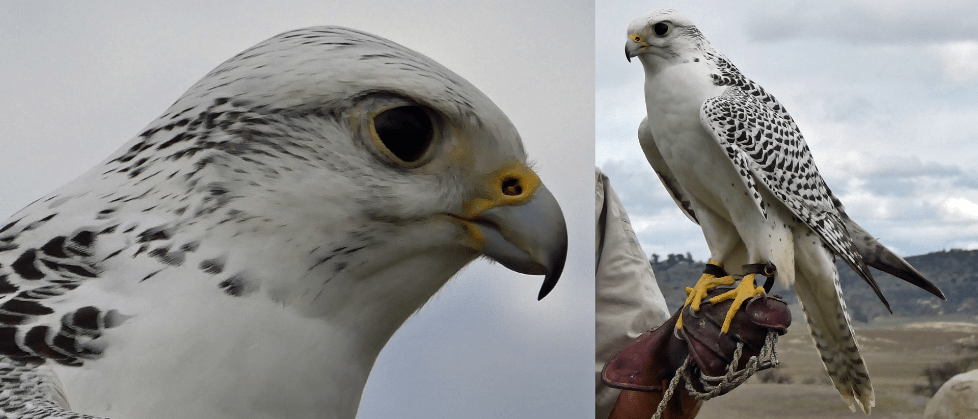
A similar color pattern affects the cere (bare skin across top of the bill, holding the nostrils) and the gape (unfeathered skin around the bill) — yellow, adults; greenish–bluish–grayish, juveniles; pinkish, hatchlings. For all morphs, irises / irides are dark brown, at all ages. Bare skin surrounding the eyes (orbital rings) vary, along with plumage-color morphs (e.g., gray, yellow, tan, bluish-gray). In general, the bill is lighter in color at the base, darker at the tip, but again, the exact colors vary from pale blue-grayish to yellowish to blackish. Male adults tend to have brighter bill colors than females or juveniles. The culmen of the bill (from base to tip, measured in a straight line), including the tomial tooth, is about 1.3–1.5″ (3.2– 3.8 cm) and is less than 1″ deep, even narrower side to side.
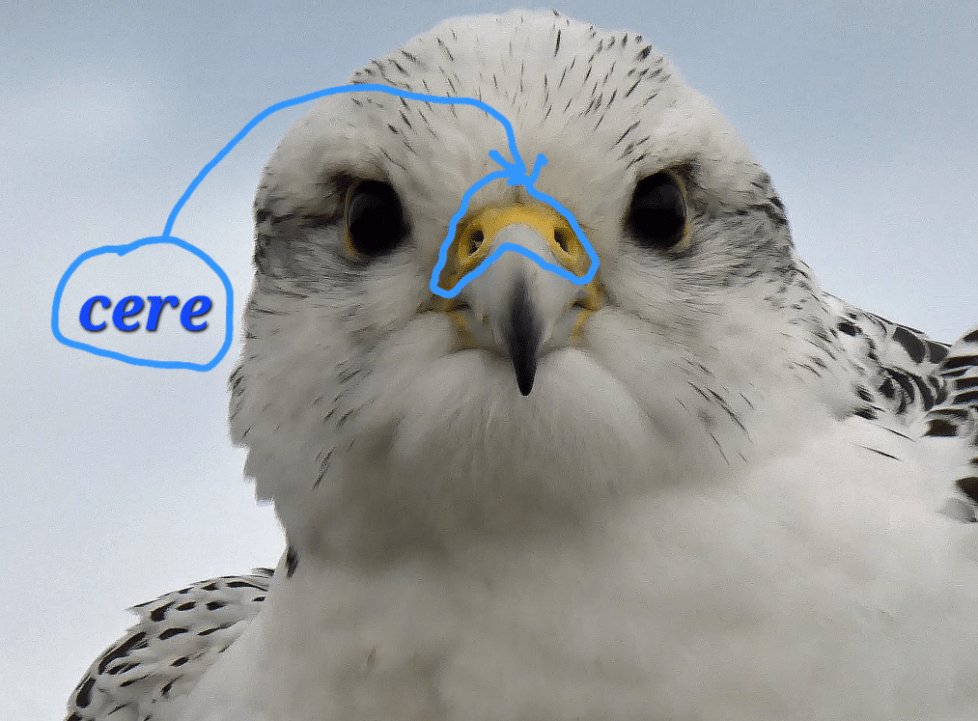
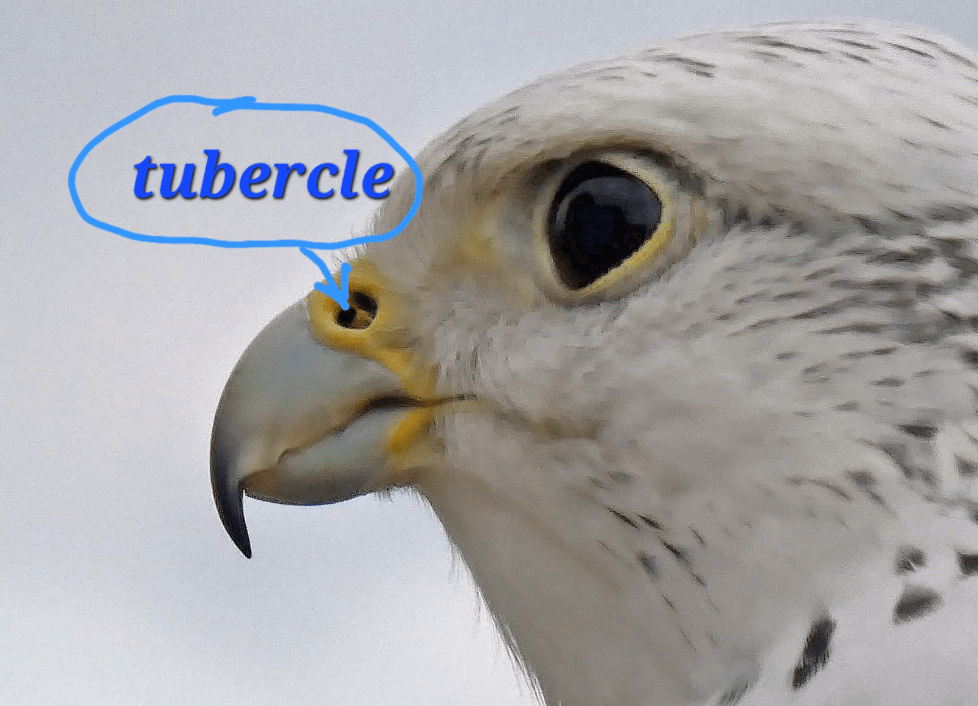
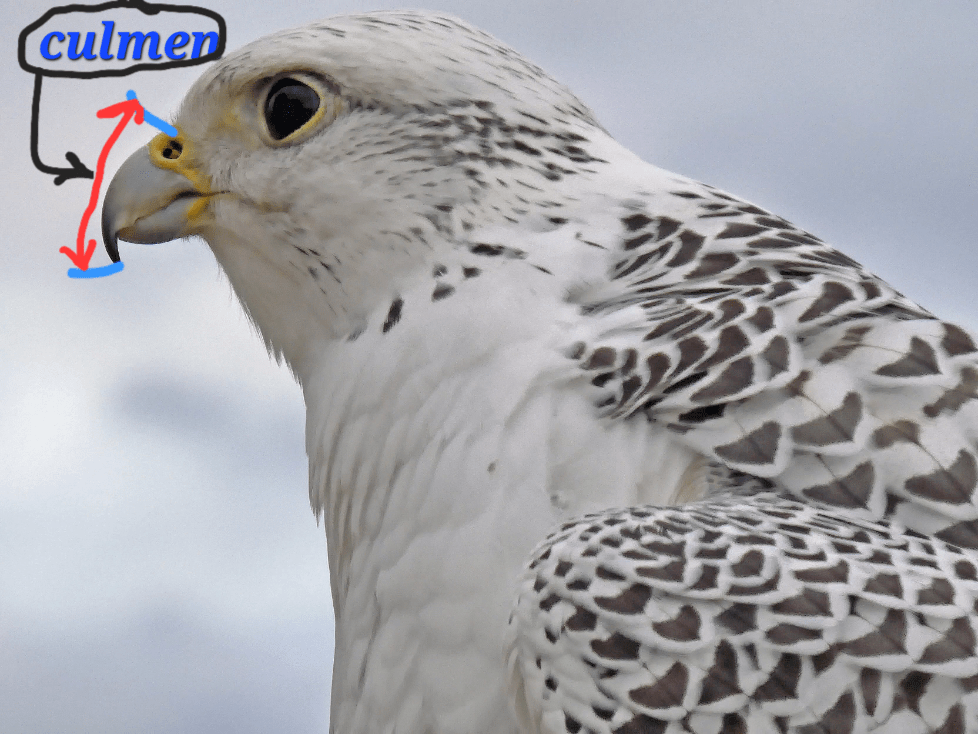
Figure 04. Falcons and many other raptors have a cere (left), bare skin across the top (base) of the bill, where their nostrils are found. Inside the nostrils of falcons are tubercles (middle), cone-like baffles that slow down the airflow when they’re making steep speedy dives. The culmen (right) is a way to measure the whole bill of a bird, from its base to its tip, regardless of the curvature of the bill. (Scientists usually use calipers, rather than a measuring tape or ruler, which would distort the length, depending on the curvature.) Note that in falcons, the culmen also includes the length of the tomial tooth, the tooth-shaped projection at the tip of the bill.
Vocalizations
In general, Gyrfalcons are pretty quiet outside of the breeding season. When they do vocalize, females have lower-pitched calls than males, and some observers can tell females from males based on their vocalizations. Outside of the breeding season, in response to perceived threats, Gyrfalcons of either sex will make repeated loud “kak” alarm calls, such as when approached by humans. (Please visit https://xeno-canto.org/species/Falco-rusticolus for more than 20 audio recordings of various calls by Gyrfalcons.)
All other Gyrfalcon vocalizations occur close to (or at) the nest site. Females do more vocalizing (e.g., “kak” call) in defense of the nest. Breeding occurs chiefly in arctic locations, during arctic summer, when days are quite long and nights are nearly nonexistent; Gyrfalcons are quieter between midnight and 4 A.M., but they may vocalize any time of the day or (nearly nonexistent) night. Three calls are hard to differentiate, other than by observing in context:
- repeated “chup” calls between mates, such as regarding food transfers
- “chatter,” brief calls, mostly made while caring for nestlings
- “chitter,” brief calls, mostly related to copulation
In addition, Gyrfalcons make these vocalizations:
- long, continuous loud “wail,” various contexts related to breeding (mating and nesting)
- long, continuous “whine,” which isn’t as loud as the “wail,” related to courtship and copulation
- repeated “beg” call, used by nestlings or by female soliciting food from male
The begging call has been described as “harsh, querulous screeching.” It may begin during hatching or immediately afterward. As the hatchlings mature, the begging becomes louder and harsher, especially during feeding or upon a parent’s arrival at the nest. Older chicks may also beg even in the absence of their parents. After fledging, fledglings will still make begging calls to elicit food from their parents. If intruders approach, nestlings and other young birds will hiss, and they can make the “kak” call by 5 or 6 weeks of age.
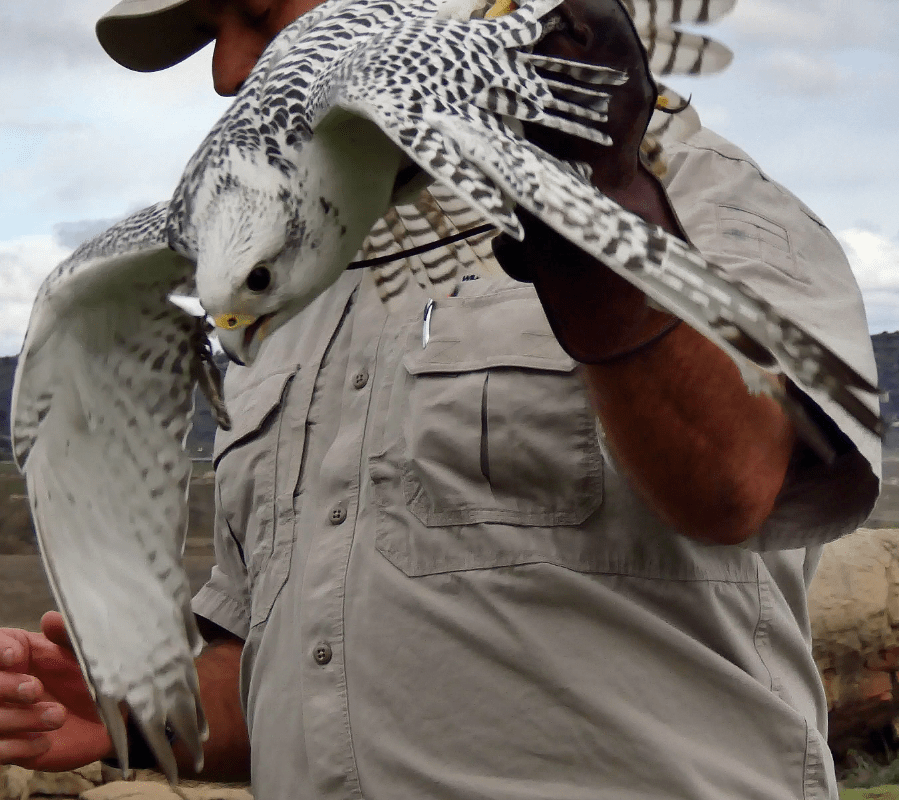
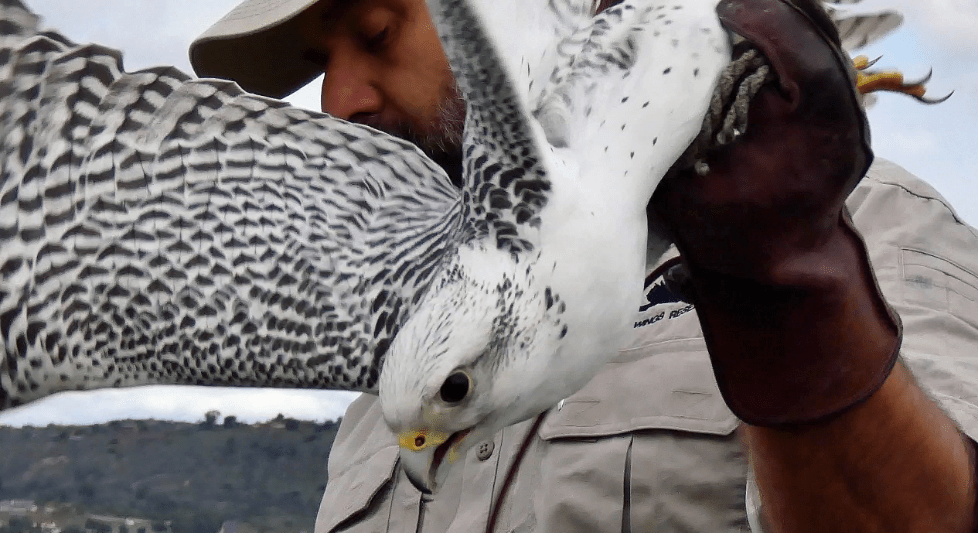
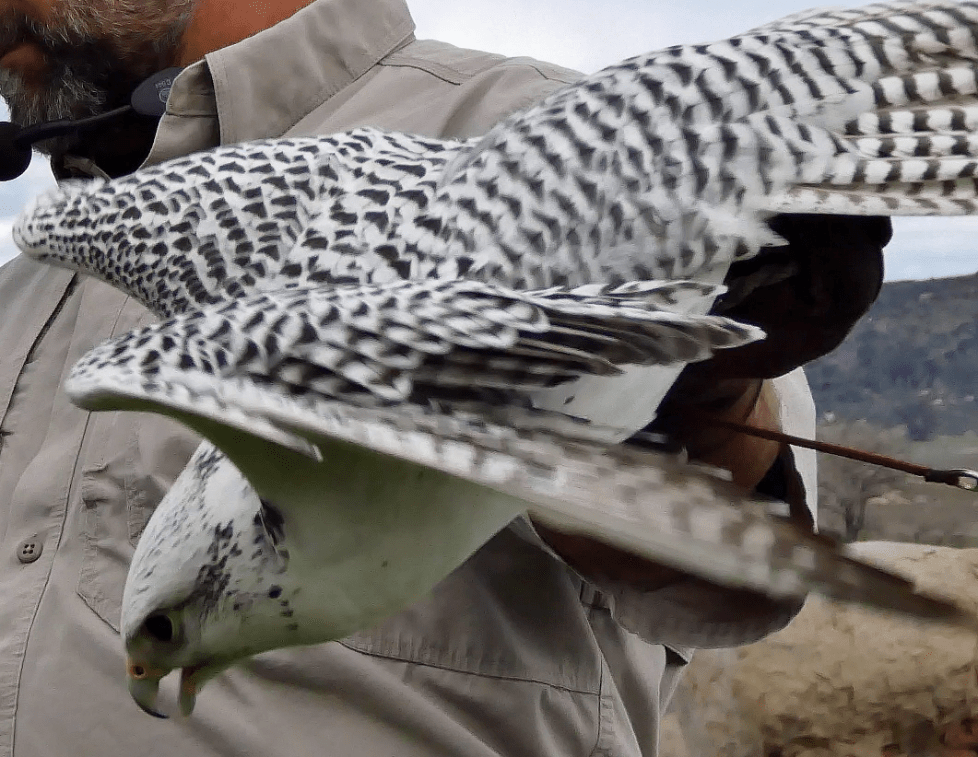
Figure 05. In addition to hearing Gyrfalcon vocalizations, careful observers have heard the air turbulence caused by adults’ wingbeats approaching or the hiss of air as adults make a diving stoop.
Distribution, Habitat, and Migration
Distribution
Among diurnal raptors (i.e., not owls), the Gyrfalcon resides the farthest north: 51–83 degrees latitude. The North Pole is 90 degrees latitude, and at 60 degrees latitude, the sun shines 18 hours/day at the June solstice; even nighttime gets no darker than nautical twilight, during which sailors can see the horizon well enough to navigate. The circumpolar arctic and subarctic regions inhabited by the Gyrfalcon include Canada, Alaska (U.S.), Greenland, Scandinavia, and eastern Siberia (Russia). Outside of the breeding season, in fall and winter, some Gyrfalcons head south to the northern temperate zones of North America (e.g., northern U.S. states), Russia, China, Europe (e.g., France, Ireland, Estonia, Spain), and Asia (e.g., Japan, Kyrgyzstan). Occasional vagrants have been seen as far south as Bermuda, Mexico, and even Brazil. Its total range size is 3,401,600–14,324,000 square miles (8,809,464–37,100,000 km2). For a range map, based on eBird observations, please see https://ebird.org/map/gyrfal .
Habitat
Within its geographic range, the Gyrfalcon can be found between sea level and 4,900 feet or higher (1500+ m). Though it’s more commonly observed on tundra (mostly dwarf shrubs, grasses, mosses, lichens; frigid cold hinders tree growth), taiga (mostly boreal coniferous forests), cliffs and montane ecosystems (mountainous, grasses or shrubs), steppes, fjords and coasts, riparian and riverine habitats, and other arctic land habitats, it is now known to inhabit marine and maritime environments, on sea ice far from land. During breeding season, the Gyrfalcon prefers arctic and alpine tundra, often along rivers and seacoasts, but outside of breeding season, the Gyrfalcon has also been seen on grasslands, shrublands, and even agricultural areas.
Movement and Migration
The breeding season climate of Gyrfalcons is polar continental, with a temperature range of −22 to +50 degrees F. (−30 to +10 degrees C.). Outside of breeding season, many Gyrfalcons move to lower elevations and to lower latitudes. Many Gyrfalcons don’t migrate far, but others migrate long distances. Gyrfalcons living farther north (e.g., north of 70 degrees latitude) are more likely to migrate than those living farther south (e.g., 52 degrees latitude).
The key prompt to migration is the availability of prey, especially their favorite prey, ptarmigans. It’s thought that prey availability may also prompt irruptive movements. Where Gyrfalcons have abundant prey available, they’re less likely to migrate. Similarly, weather factors that affect prey species will also affect Gyrfalcon movements. Females seem more likely to migrate than males, perhaps because their energy needs are greater; immature birds also migrate farther than adult Gyrfalcons, but subadults don’t migrate as far. Gyrfalcons who migrate do so during daylight, solo, though more than one may be sighted wherever prey species are abundant.
Food and Hunting
Diet
Gyrfalcons are carnivores, dining solely on animal prey: mainly birds — especially ptarmigans (e.g., Rock, Willow), seabirds (e.g., auks, gulls), and waterfowl (e.g., geese, ducks) — and small mammals (e.g., voles, hares), but Gyrfalcons have been observed hunting fish (e.g., brown trout) on rare occasions, too. Gyrfalcons will compete with Peregrine Falcons, and they’ve been known to hunt them, other falcons, and even some buteo hawks, as well. They’re less likely to take migrant species or domestic species, focusing instead on resident wild species. They will eat carrion when live prey isn’t available. Immature Gyrfalcons have been seen to steal food from other raptors.
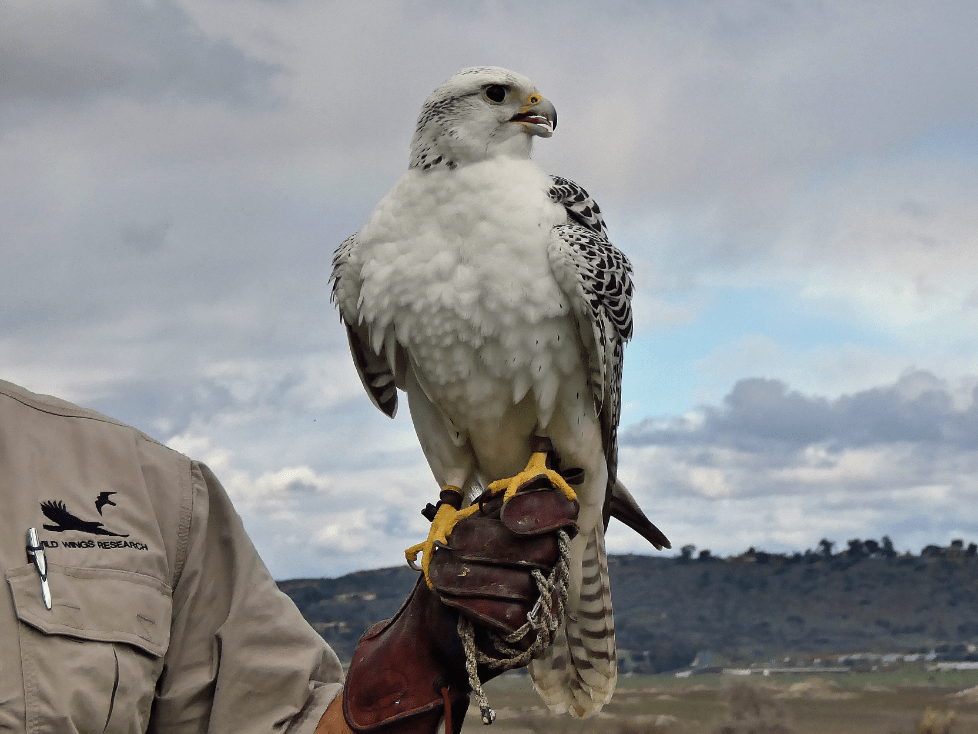
Figure 06. Though Gyrfalcons have prey preferences — especially their favorite, ptarmigans! — they’re opportunistic feeders and will eat other prey and even carrion when hungry.
Dietary studies of Gyrfalcons have documented that ptarmigans make up 50–95% of the total biomass eaten by Gyrfalcons. For many Gyrfalcons, migration and movement patterns seem linked to ptarmigan populations. If Gyrfalcons don’t migrate, they change their diet to adapt to the available prey, which may shift seasonally. Gyrfalcons are typically opportunistic feeders, so coastal residents take more seabirds, wetland residents take more waterfowl, tundra residents take more ptarmigans and grouses, and Gyrfalcons living at higher latitudes and elevations take more mammals than other Gyrfalcons. They also tend to prefer birds who congregate in large numbers, such as waterfowl, and they pick out prey who are more vulnerable, such as molting birds or young animals.
Hunting
Unlike the Peregrine Falcon, the Gyrfalcon more typically hunts prey horizontally rather than vertically via a speed-diving stoop. The Gyrfalcon can capture birds in midair, but it more often strikes it, forcing the bird to the ground, or it captures various kinds of prey already on the ground. Prey are typically found with broken breastbones (sterna), suggesting the Gyrfalcons’ typical means of attack. Gyrfalcons can carry off prey between 0.7 and 141 ounces (0.04–8.8 pounds, 20–4000g). Both male and female Gyrfalcons will still kill larger prey (e.g., a 10-lb. / 4.5 kg hare), but they’ll dismember it to carry pieces to the nest.
In general, the Gyrfalcon uses three key ways to find food: (1) Perch somewhere high, with a panoramic view; (2) survey their territory at a low altitude, while in motion, using both powered (flapping) flight and gliding; (3) soar above ridges or over valleys, but not from a great height.
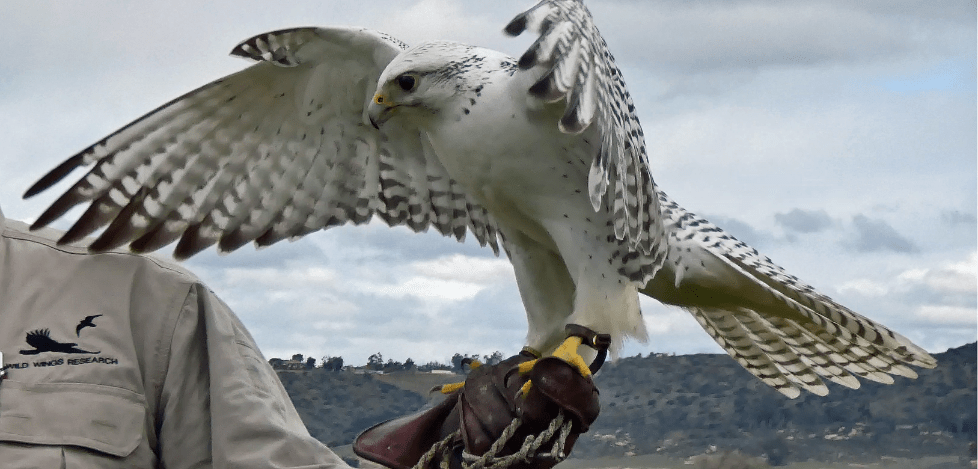
Figure 07. First, the Gyrfalcon visually searches for prey, then it pursues the prey, using various methods.
Once the Gyrfalcon spots prey, it pursues it, using one of these methods: (1) Fly close to the ground, hiding behind vegetation, to avoid being observed, for a sneak attack; (2) quickly pursue the prey, chasing its tail, often over long distances until the prey is exhausted; (3) hover over hidden prey, diving toward it repeatedly, to flush it from cover, then chasing it; (4) climb steeply to capture soaring prey from below. Few data are available revealing hunting success rates, but one study showed that wintering birds were successful during 10–28% of their attempts to chase feral pigeons.
Wild Gyrfalcons probably get enough water from the food they eat, but captive birds have been observed drinking. No data are available regarding defecation in adult birds, but pellets are probably cast daily. The long, ovular pellets include feathers, fur, small-to-medium-sized bones, and the stomach contents of their prey.
Locomotion
Moving on the Ground
Gyrfalcons are more comfortable locomoting on the ground than most other falcons. They walk holding their bodies horizontally (probably to keep the long tail off the ground), with a slight side-to-side rocking motion (probably due to their wide stance). They can quickly and agilely run on the ground, such as to pursue prey. They can hop onto perches, such as rocks, with a little help from their wings, and they can climb a bit, also with help from their wings.
Flight
The large, long-tailed Gyrfalcon has slower, deeper, and more powerful wingbeats than other falcons. With its relatively short, round wings, it can fly more rapidly (at least 25 mph / 40 km/h) and for longer sustained flights than other falcons. Though the Gyrfalcon is less maneuverable than the Peregrine Falcon, it’s more buoyant. It typically flies 3–60 feet (1–18 m) above the ground and soars at 200–3,000 feet (60–900 m).
According to https://birdsoftheworld.org/bow/species/gyrfal/cur/behavior#locom , “Trained falcons flying 500 m [1,640 feet] to a lure demonstrated average minimum power speeds of 11.4 m/s [37.4 feet/second], relative air speed of 1.53, and wing beat frequencies of 5.27 Hz.” [From what I can gather, “relative air speed” is the relationship between the bird’s flight speed and the speed of the air moving around the bird, so probably this means that the Gyrfalcon is flying about 1.53 times faster than the air is moving? I would welcome more accurate information.]
The Gyrfalcon isn’t as well-known for stooping dives as the Peregrine Falcon, but a captive male Gyrfalcon reached a maximum speed of 130 mph (209 km/h) when stooping. There are three phases to the Gyrfalcon’s stoop to attack a lure: (1) accelerate at 17–72 degrees from horizontal (bearing in mind that 90 degrees is a right angle); (2) briefly fly at a constant speed, increasing drag; (3) decelerate by dramatically increasing drag (cupping wings into a high angle of attack) then grasp the moving lure. (For an illustration and explanation of angle of attack, please see https://en.wikipedia.org/wiki/Angle_of_attack .) In theory, a wild Gyrfalcon on a very long stooping dive could achieve speeds of 155 mph (250 km/h) or more. Clearly, at that speed, even a slight glancing blow could have a powerful impact on prey.
Figure 08. Though the Gyrfalcon’s wings shorter and rounder than those of many other falcons, they’re still built for speed and maneuverability. (The other two falcons in the video are a Prairie Falcon and an American Kestrel.)
Behavior
Seasons are extreme in the arctic, with some seasons having very long daytimes and short nighttimes (arctic summers, breeding season), and others having extremely long nighttimes and nearly negligible daytimes (arctic winters, nonbreeding season). This results in wide variations in how Gyrfalcons budget their time across the year, in addition to the changes due to breeding versus nonbreeding seasons.
Self-maintenance
Preening, Head-Scratching, Stretching, Bathing, Sunbathing
Gyrfalcons preen often, using the bill to gather secretions from the uropygial gland (on their rumps). After preening, it typically rouses (shaking all its feathers). It has been seen rousing while flying, as well. The Gyrfalcon sometimes stretches sideways, laterally extending the wing and leg on one side, then the other; they also stretch by leaning forward, extending both wings up and forward at the same time, with the top surfaces facing each other. A Gyrfalcon can’t reach the top of its head and its cere (atop the base of its nose) by using its bill, so it uses the long middle toe to scratch those otherwise unreachable spots.
Figure 09. Gyrfalcons routinely rouse — shaking their feathers — after preening, but in a frigid climate, rousing helps to them ensure that their feathers offer maximum insulation, so Gyrfalcons rouse at other times, too — even in flight, sometimes.
To bathe in water, the Gyrfalcon will rock its body back and forth, dipping its head into the water; it flutters its wings and tail while holding its feathers upward and outward. One observer found that a bath might last 17 minutes. Even in the arctic, liquid water can be found in pools, at the edges of flowing rivers, or from runoff water on frozen water bodies. Captive Gyrfalcons have been seen bathing in snow. Both male and female wild Gyrfalcons have been observed taking dust baths on sunny days, during breeding season. Wild Gyrfalcons have not been seen sunbathing, but captive birds have.
Sleeping, Roosting
During breeding season, the female stays on the nest nearly round the clock, brooding the hatchlings. Once the nestlings are past the brooding stage, however, the female sleeps away from the nest site, sleeping a little more than 6 hours/day. Males don’t roost at the nest site. After the young fledge, the fledglings roost together.
Outside of the breeding season, if the Gyrfalcons stay in the same area as during the breeding season, most parents will roost at the nest sites. (Scientists have only rarely observed this directly, but pellets, prey remains, snow tracks, molted feathers and down imply this behavior pattern.) When Gyrfalcons leave the breeding areas, outside of the breeding season, they’ve been seen roosting on the ground or in the nests of other birds (e.g., ravens).
To sleep, the Gyrfalcon will use a few poses: During its longest sleep period (during the darkest time of the day), it will tuck its head under its scapular (shoulder) feathers. For shorter sleeps, it may either strike a normal perching position, with head forward but hunkered down a bit, or lie down on the belly, as if covering eggs, with the head on the ground.
Social Interactions
Adult Gyrfalcons are typically observed alone or in pairs both during and outside of the breeding season. Groups of adults aren’t seen together, but fledglings often roost together, and small groups of 6–8 immature Gyrfalcons may be seen together toward the end of the breeding season.
Play
Like some other falcons, Gyrfalcons may play with tossing around and catching inanimate objects to keep sharp their prey-handling skills. They also “make abortive attacks on live animals with no apparent attempt to kill” (https://birdsoftheworld.org/bow/species/gyrfal/cur/behavior#social ). Falconers have also reported that adult Gyrfalcons still engage in play.
Aggressive or Defensive Behavior
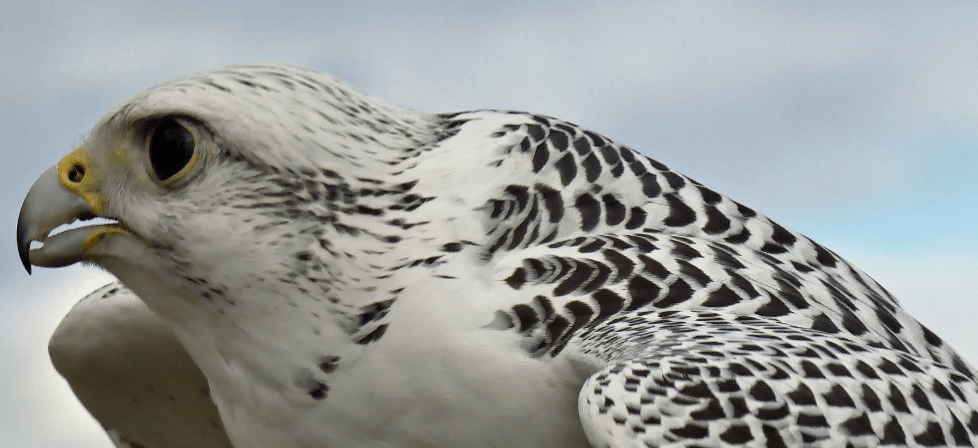
Figure 10. Though fierce predators and fierce defenders of their young, Gyrfalcons aren’t recklessly aggressive, avoiding physical combat when prudent to do so.
Year-round, Gyrfalcon males and females will chase, strike, and even kill intruders to their territory, both conspecifics (other Gyrfalcons) and other species (e.g., ravens, hawks, other falcon species). If Gyrfalcons engage in aerial combat with other raptors, they may lock talons and cartwheel around each other until they strike the ground — a lose–lose encounter.
Short of these physical confrontations, a Gyrfalcon will engage in threat displays — facing toward the threat, opening wide its bill, erecting its feathers, thrusting its head forward along its body axis, and hissing — all with varying degrees of intensity. To intensify the display, the bird assumes a posture ready for a physical attack.
On the other hand, a Gyrfalcon may deem discretion to be the better part of valor and will engage in appeasement (submissive) displays — pointing the bill away from the threat, closing its bill, sleeking down its feathers, lowering its head and possibly pointing it downward, making a soft chick-like call or remaining silent. In addition to attacks by larger raptors (e.g., Bald Eagles), Gyrfalcons may be mobbed by small passerines. Sometimes, too, Gyrfalcons seem content to allow would-be prey, such as geese, to nest within 600 feet (180 m), one Canada Goose family was seen nesting within 8–15 feet (2.5 and 4.5 m) of a Gyrfalcon, unharmed.
Breeding
Gyrfalcons are pretty plain-jane breeders: no cooperative breeding, no colonial breeding, no polygyny, no leks, no extra-pair mating, and no brood parasitism (as host or as victim). They form monogamous pairs, at least for one breeding season, and presumably for life; if one member of the pair dies, the other will readily form a new pair, but otherwise, they probably stay together. During breeding season, the pair shares resources on their territory, but at other times, they don’t.
“A female-female pairing of a Gyrfalcon and Peregrine Falcon that laid eggs in and shared incubation duties on a nest was documented in 1989 and 1990 in Norway . . . ; no eggs hatched” (https://birdsoftheworld.org/bow/species/gyrfal/cur/behavior#sex ).
Courtship Displays
Nest-ledge Displays
At the nest ledge, both males (more often) and females (less often) will engage in bowing their head low, either while holding the body upright or while holding the body horizontal. Both males and females will also engage in scraping, pushing their feet vigorously backward to scrape the ground, forming a small depression. This will be done repeatedly, often while shifting directions.
Both sexes will engage in ledge displays, approaching the scrape with head-bows, taking high steps; while a male does so, he pauses to look at the female to see her reaction and adjust his intensity and duration of the display. When a female does so, she doesn’t pause to look at the male, and her intensity, frequency, and duration of display is less than the male’s. Gyrfalcons also engage in mutual ledge displays.
Both sexes will also engage in “billing,” in which they nibble each other’s beaks while perching close together; the female’s head is turned sideways, oriented upward, while the male’s is turned downward.
Aerial Displays
As courtship moves toward egg laying, the male may engage in various aerial displays. A Gyrfalcon may roll sideways, partially (between 30 and 60 degrees) or wholly (180 degrees), around its horizontal axis (one side’s wings rotating upward then back downward as other side’s wings rotate up then down). In an undulating roll, the male combines a roll with steep vertical dives. A flash roll is a quick 90-degree roll to one side, then reverse-roll 90 degrees to the other side, creating a flash of alternating dark back and light breast.
Paired aerobatics include “Passing and Leading,” during which the male quickly flies closely past the female then weaves back and forth in front of her. In “Mutual Floating,” the male soars about 6.5–10 feet (2–3 m) above a soaring female, then in tandem, both birds descend slowly at a constant distance apart, at about a 20-degree angle, while keeping their wings partially closed, their legs extended, and their tails spread.
Food Transfers
As the female gets closer to laying eggs, she sleeps most of the time, relying more and more on the male to feed her. The male kills the prey and holds the prey in his talons, wailing. As he approaches a perch near the nest, holding the prey, he switches to a chup call. The female flutter-glides to the male, using shallow wing beats and giving a begging call. The male then takes the prey into his bill and presents it to her with a low head bow while still in an upright posture. The female lands beside the male and takes the food with her feet or her bill and displays a low head bow with a horizontal body posture.
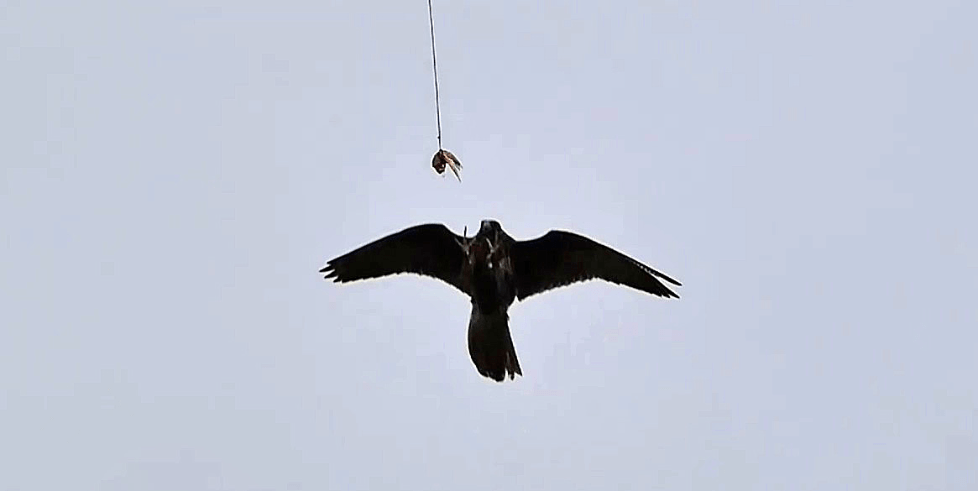
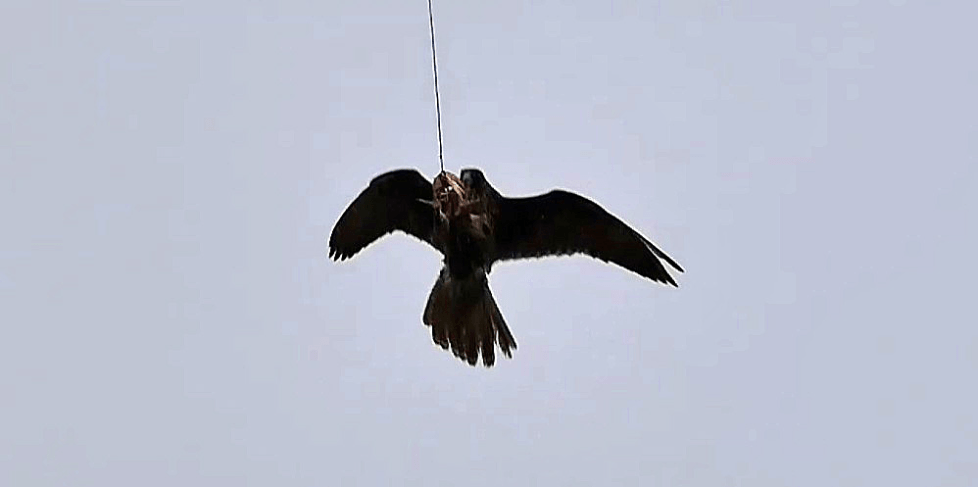
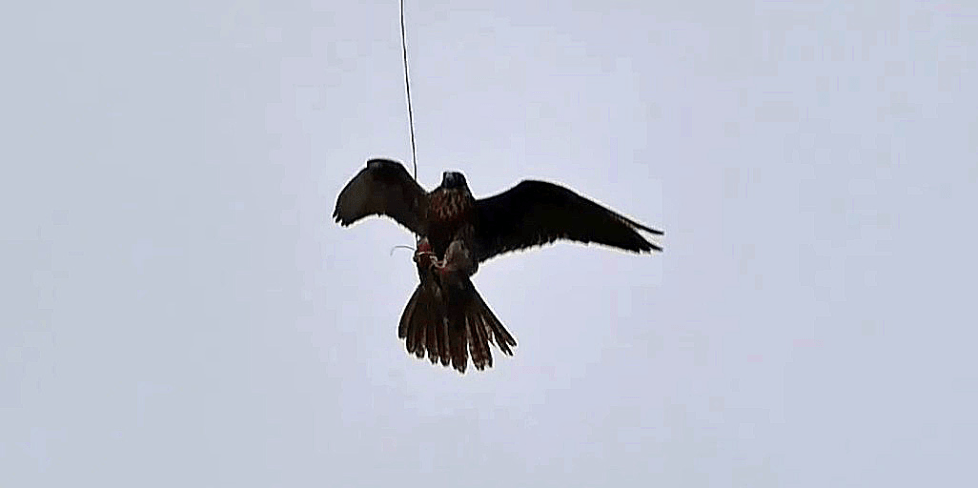
Figure 11. A Gyrfalcon male will typically transfer food to a female while perching, but these food transfers can also occur midair. This gray-morph Gyrfalcon is showing how to effectively grasp food.
Less often (<15% of the time), the male transfers food to the female in midair. To do so, she flies toward the male, about 33 feet (10 m) above him, flies upward some, then dives in front of him, to beneath him, then turns upside down to grab the prey with her talons. Meanwhile, the male appears to adjust his speed and position, too, almost hovering, to facilitate the transfer.
Once the female is brooding, food transfers occur at the nest, with the male delivering prey directly to the brooding female.
Copulation
Both males and females solicit copulation through displays, which typically induce the mate to display in response. Females solicit copulation by positioning their body horizontally, with their head below the axis of the body, bill pointing downward, and tail raised slightly upward, giving a soft whine. As the male responds to the solicitation and moves toward the female, she changes her vocalization to a chitter and tilts her body forward about 45 degrees (halfway to 90 degrees), with her wings slightly opened and her tail downward and to one side. The male then hovers briefly about 20″ (50 cm) above her, orienting his body to face in the same direction as hers, then he lands on her back, pulling his toes and feet inward, supporting his lower legs (tarsi) between her long wing bones (humeri) and her back (thorax), with his tail pointing straight down. As the male chitters, he shuffles side to side, constantly flapping his wings, and the female’s vocalizations become a wail — the entire copulation lasting about 4–12 seconds, just enough time for the male to make 4–5 thrusts. Typically, copulation begins up to 29 days before the first egg is laid, and it continues throughout egg laying.
Gyrfalcons have only one clutch per season, though there have been records of Gyrfalcons having a second brood if the first clutch is lost or abandoned. Some Gyrfalcons don’t breed every year, depending on food availability.
Nests
Most Gyrfalcons nest on high cliff faces, with males, as well as females, choosing the nest site. They prefer sites with overhangs 85–94% of the time where such sites are available. When overhangs aren’t available, the sites are usually oriented south or west, to lessen the likelihood of being snowed on and experiencing severe winds. Gyrfalcons typically either use the stick nests of other birds (58–91% of the time; nests of ravens, eagles, hawks, etc.) or make scraped depressions on the ground of a cliff ledge (e.g., the scraping courtship displays by both males and females). Stick nests are pretty much demolished by the time the chicks fledge, so they’re not used again by the Gyrfalcons. The same nest sites are reused over many years, however, as confirmed by carbon dating of accumulated feces at nest sites.
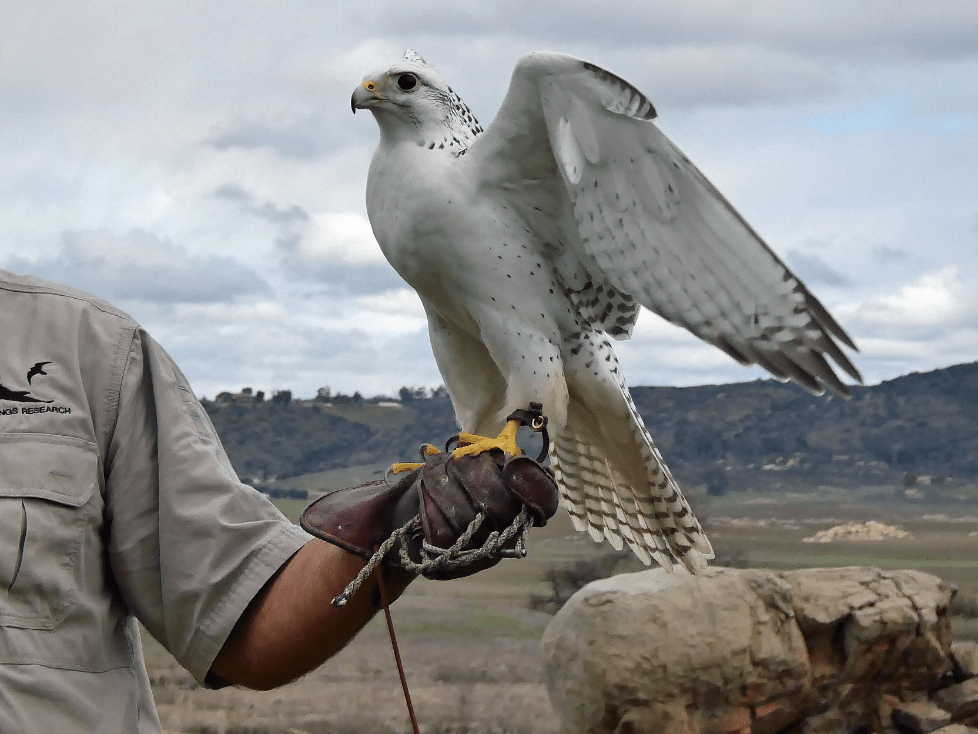
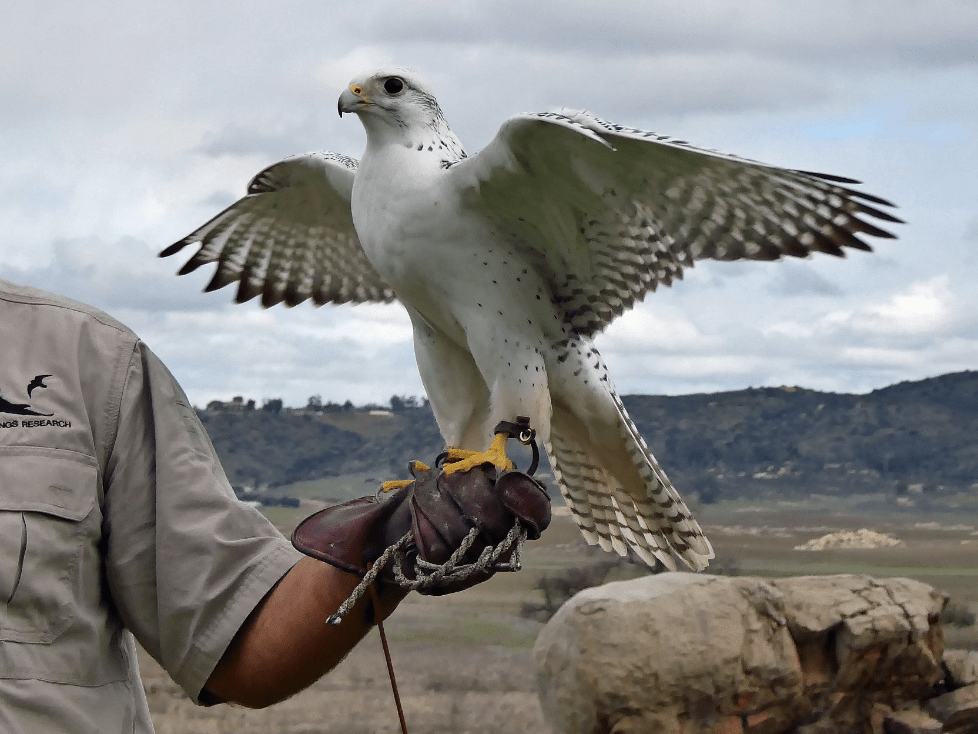
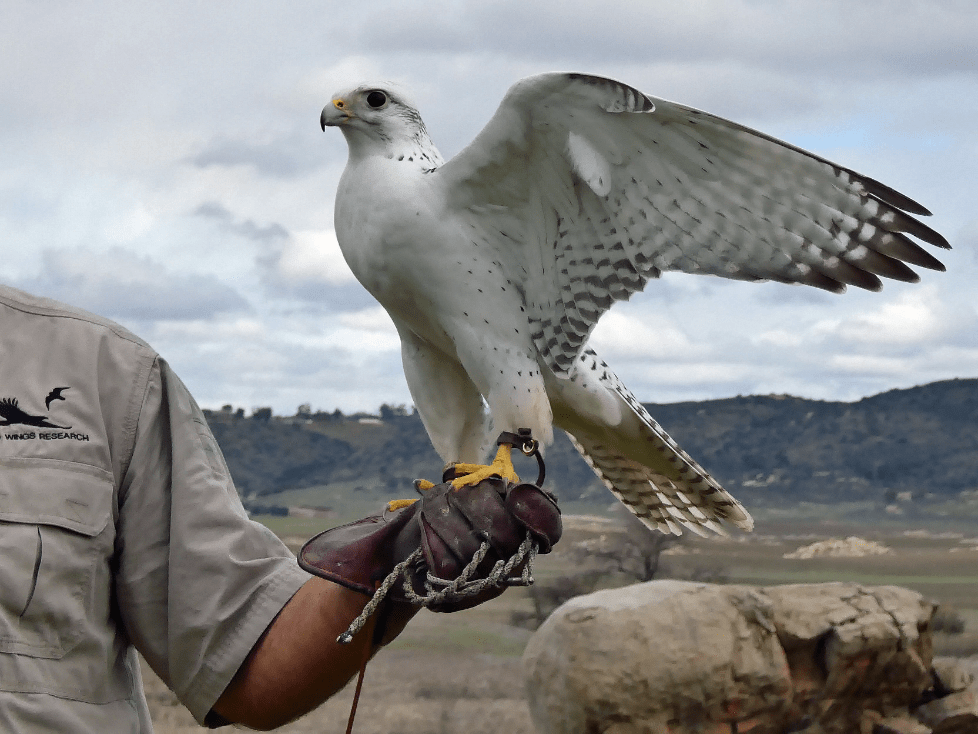
Figure 12. Gyrfalcon parents choose high cliff ledges for their nest sites, far above possible terrestrial predators.
Eggs, Egg Laying, and Incubation
The mom lays 1–8 (3–4 being more common) short, elliptical eggs (2.25 × 1.75″, 5.8 × 4.5 cm); color varies from near-white to reddish brown, possibly with cinnamon spots. Each eggs averages about 3.5% of the mom’s body weight, but egg size varies among clutches, as well as across females. The interval between the laying of each egg is about 60 hours. Gyrfalcon eggs are remarkably hardy, withstanding freezing temperatures for hours, with no apparent harm.
Males and females both have two paired lateral brood patches, though female patches are more fully developed than male patches. After the female lays the penultimate egg, incubation begins — unless inclement weather dictates an earlier start. Both parents take turns incubating the eggs for 34–36 days, but shorter periods have been observed. The female’s turn at incubating is usually about twice as long as the male’s turn, and females are the only parents to incubate during the night, so males incubate about 17–24% of the time. Under normal circumstances, it takes parents 2–4 minutes to switch places, but during extremely cold weather, they can do so in 20–45 seconds, with one bird lying next to the other in anticipation of the switch. While taking over, the incubating parent works its feet beneath the eggs while rocking its body, lowering it over the eggs. While incubating, the parent will adjust the nest debris with the bill and will change body orientation about 90 degrees laterally.
Hatching
It takes about two full days (give or take 15 hours) for a chick to get from pipping the eggshell to emerging and hatching. During pipping, as the egg tooth chips away at the eggshell, clicking noises can be heard, and the chick may also make soft begging calls. Despite being laid asynchronously, the eggs are incubated almost synchronously, and the entire clutch typically hatches within 48–72 hours, though there are instances of it taking up to 6 days (perhaps as a result of asynchronous incubation during extremely cold weather). Parents don’t help at all with the pipping, and most parents eat the eggshells soon after the hatching.
Nestlings
Upon hatching, Gyrfalcon chicks’ eyes are only slightly open, but they soon open wide enough to show their dark brown irises / irides. The egg tooth is still evident for at least a week after hatching. For all chicks, their gapes (skin surrounding their bill) are pinkish, but they don’t immediately know to orient their gapes toward the parent offering food. Even so, they respond to sounds or vibrations by begging for food, and they’re soon able to sit up on their tarsi to beg.
The bare skin of their cere (across the top of the bill) and their lower legs, feet, and toes are pale yellowish-pink. Their bills vary in color — depending on the color morphs they will become — ranging from nearly colorless to blackish, with jet-black bill tips on some. Gyrfalcon chicks are covered with thick down, though slightly more sparse toward the back of their bellies; it varies in color, too, from pure white with colorless talons to dark plumes along their back and head, with dark talons. By 8 days of age, their second set of downy feathers emerges from different follicles than the first, creating an even denser feathered covering. Between 3 and 5 weeks of age, their flight and contour feathers erupt from the same follicles as the second set of down feathers; these feathers’ tips are stuck to the downy feathers at the follicles. Even before the contour feathers emerge, chicks start preening their feathers. In addition to having downy insulation, hatchlings move around enough to keep warm.
Initially, hatchlings sleep lying down, either on their belly or while sitting on their tarsi. Older nestlings sleep in adultlike poses, but they still prop themselves against each other or against another surface. When awake they do less sitting on their tarsi and gradually stand more of the time. Once they can stand, they start stretching and flapping their wings, holding their wings slightly above and behind the back.
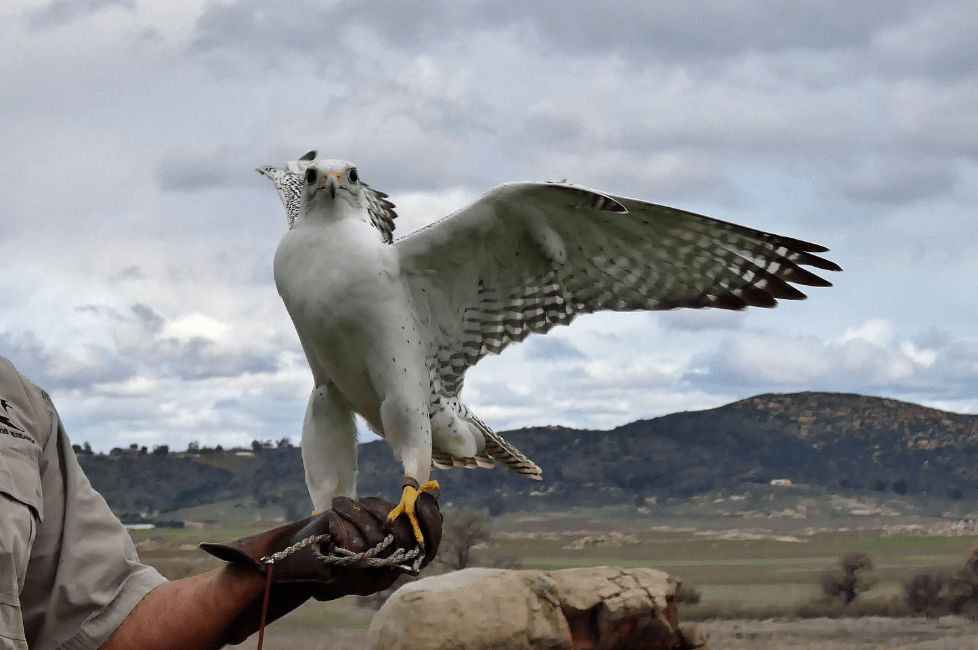
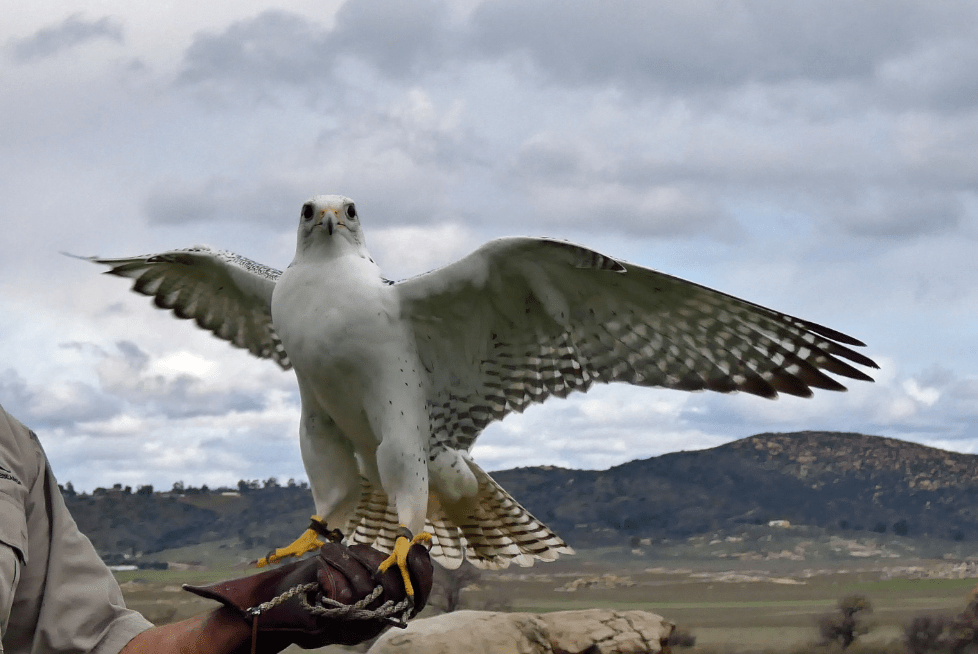
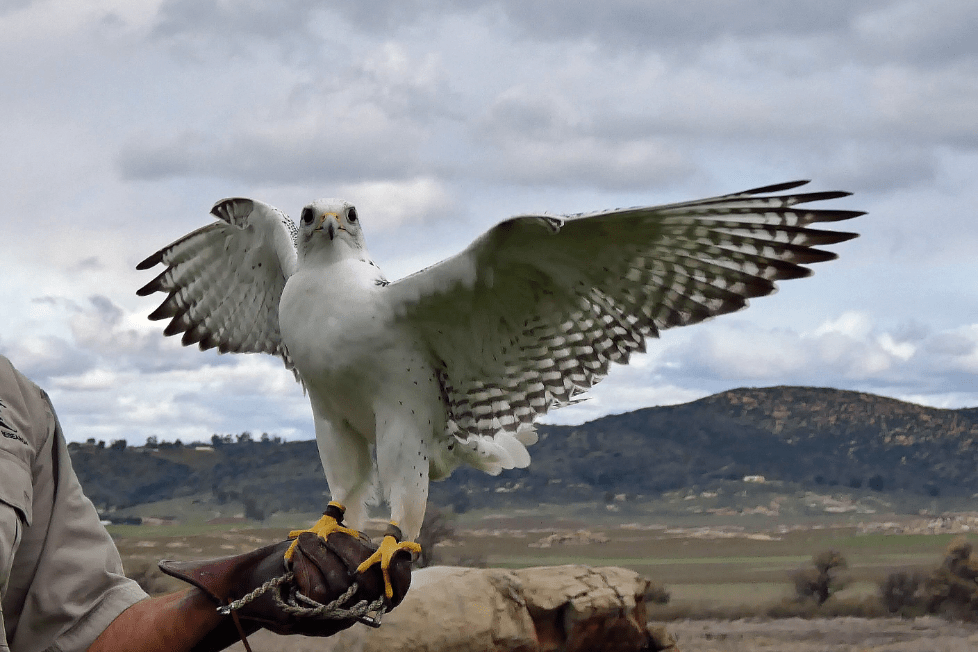
Figure 13. This Gyrfalcon is an adult, but nestlings do similar stretching and flapping exercises in preparation for fledging.
Parental Care of Nestlings
As mentioned previously, both parents have brood patches and brood their emerging hatchlings, though the female does more (75–100%) than the male (0–25%), whose brooding bouts usually occur while the female is feeding herself. For the first 6–19 days, the nestlings are brooded more than 80% of the time, then the parents spend less time brooding the nestlings, finally stopping altogether between 11 and 32 days after they hatch. Brooding bouts last about 43–97 minutes, about 6 bouts/day. As needed, the female will use her bill to carry (or drag) her nestlings.
Chicks are fed starting immediately after hatching. Studies of nest sites show a lack of skulls and wing tips, implying that prey is decapitated and wing tips are removed wherever it’s killed, not carried to the nest site. In addition, the kill sites show an abundance of plumage, so medium- to large-sized bird prey is probably plucked before it’s carried to the nest site; this practice is supported by video-monitored nests, where bird prey had already been plucked, usually completely so. Viscera were usually absent, too, but the breast, back, and usually legs and upper wings were carried to the nest site, often dismembered. Nestlings typically ate ptarmigans in about 16 minutes (1–30 minutes). (During courtship, males didn’t prepare ptarmigans for females in this way, so this behavior is limited to feeding nestlings.)
What goes in is digested and then must be excreted out. Even young chicks will point their back ends toward the outer edge of the scrape, lean their heads forward, and defecate outward and away from the scrape. (Dried fecal matter accumulates just outside the scrape or nest throughout the breeding season.) Parents remove some of the uneaten prey remains from the nest, as well.
During breeding season, when chicks are 0–43 days old, they often don’t completely finish eating prey at each regular feeding. Dads almost never engage in food caching, but moms do cache food, usually behind vegetation, within 300–650 feet (100–200 m) of the nest. The female retrieves the cached food between regular feedings and feeds it to her chicks. Caching is very rare outside of breeding season. Once the chicks are bigger and eat more in a single feeding, caching slows or stops.
By about 4 weeks after hatching, chicks can stand on the prey and pull it apart themselves, but the mom often still feeds the chicks directly until they’re almost ready to fledge; dad does, too, about 2.3–9.1% of the time. Parents apportion the food to young chicks fairly evenly, ensuring that all chicks will have a chance to survive and fledge. After about 15 days, the chicks actively compete with one another for food, so apportionment may be less equal, but chicks aren’t aggressive toward each other, even as they near the age for fledging.
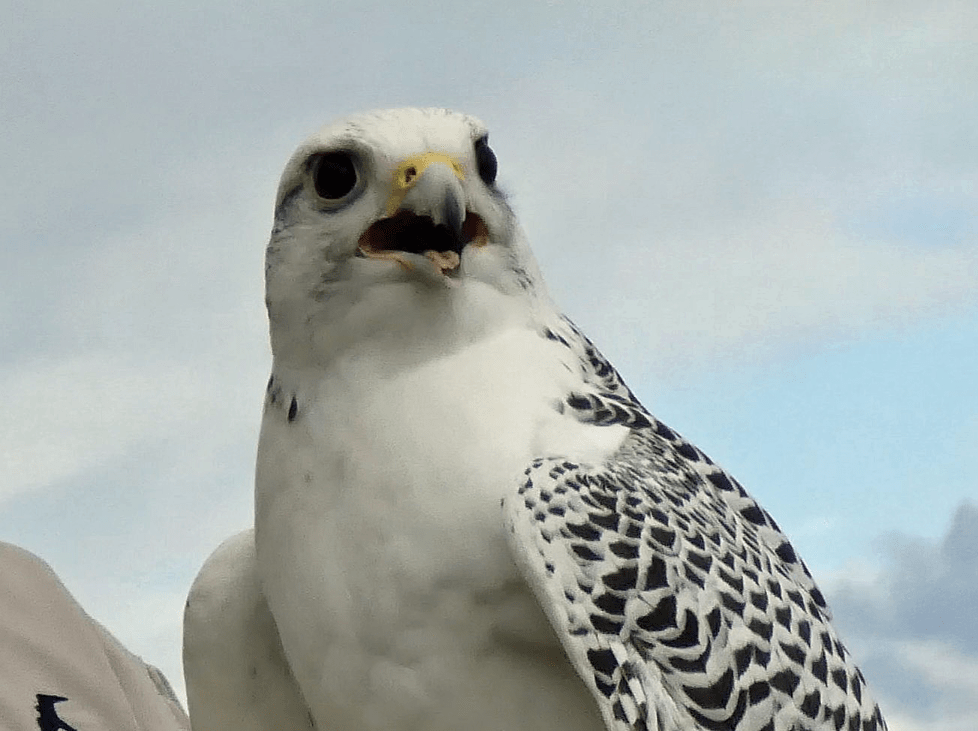
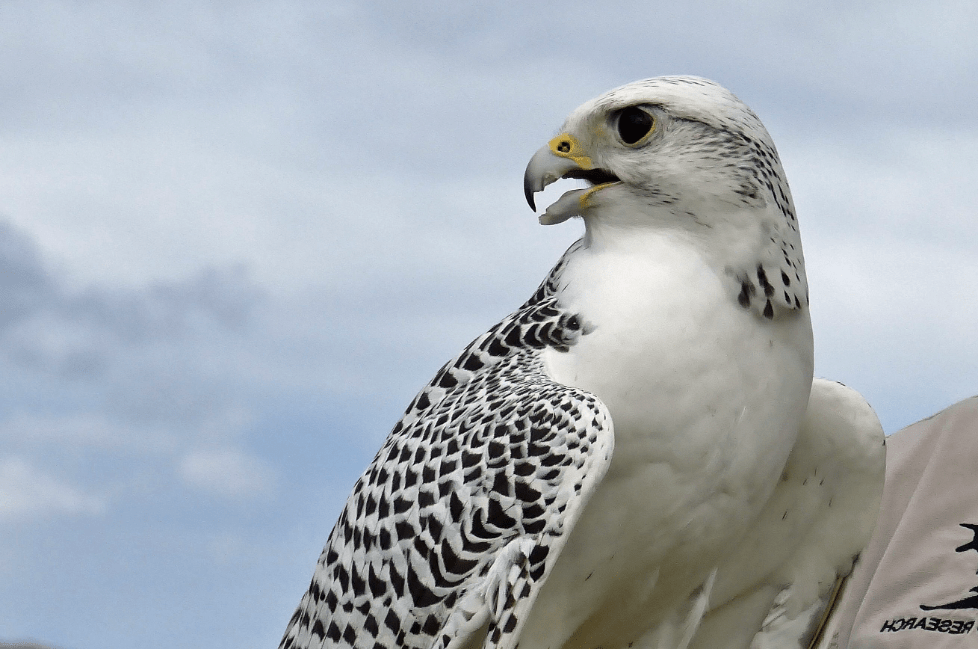
Figure 14. Gyrfalcon bills and mouths are well equipped for eating prey.
At 29–43 days after hatching, parents start delivering food to the nest about 6% of the time, increasing over time. Dad delivers all of the prey to the mom, via food transfer, for the first 2–3 weeks, after which time the mom starts hunting, too, and the dad starts delivering food directly to the nest (0–62% of the time). Deliveries can occur at any time throughout the day, but may increase in late morning and evening, and may decrease very early in the morning. The rate of feeding also varies according to the size of the prey, but the interval between feedings averages 84–218 minutes.
When ptarmigans are the main prey, observers have estimated that a family of Gyrfalcons will consume about 150–200 ptarmigans during the entire breeding season (from courtship through fledging).
Fledging, Independence, and First Breeding
Male Gyrfalcons fledge at about 45–47 days, and larger females fledge at about 47–56 days, perhaps even before their flight feathers have fully formed. They continue to depend on their parents, however, as it takes time to gain the skills needed for hunting their own prey. They typically leave the nest at 7 to 8 weeks but will stay within 1000 feet (300 m) of the nest for awhile. It can take 3–4 months for immature Gyrfalcons to become independent of help from their parents. Immatures mostly prey on rodents and passerines, as well as young ptarmigans, which are easier to catch, though not as filling. Even after that, the young may still hang out with their siblings through the following winter months.
Gyrfalcons aren’t in a rush to reproduce after reaching adulthood. Age at first breeding is at least 2 years but may be 3 or 4 years for both males and females. Average generation length has been estimated at 5.9–7.7 years. In addition, a monogamous pair may not attempt to breed every year, depending on food availability; one estimate suggests an interval of about 2.3 years. Yearly productivity has been estimated at 1.3–4 young per pair, but the actual number varies widely, depending on food availability. Another observer estimated egg and nestling mortality as 48%, with annual productivity of 1.5 young per active nest.
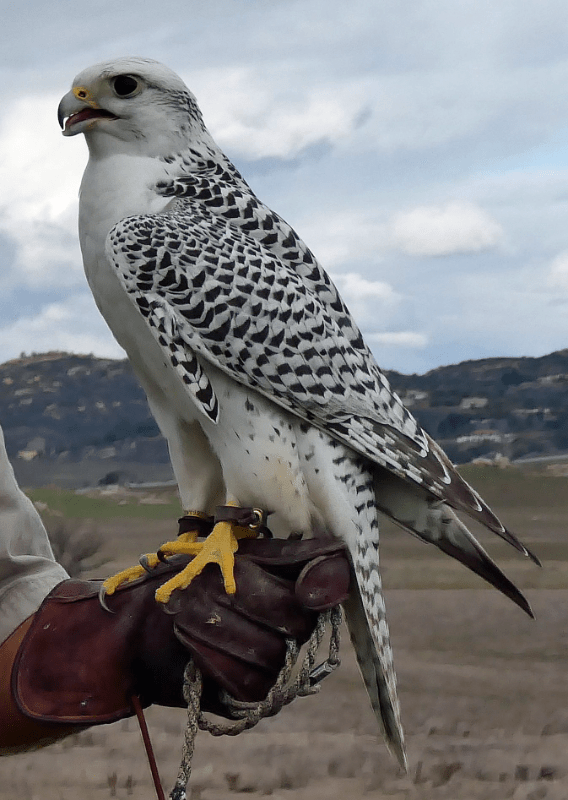
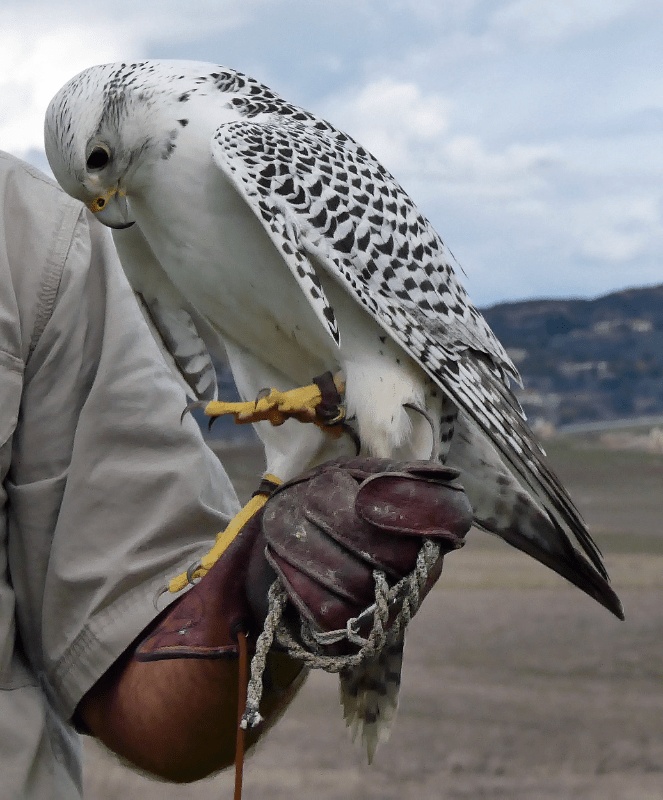
Figure 15. Adult Gyrfalcons aren’t in a hurry to start breeding, and even then, they don’t typically breed each year unless food is abundant.
Survival and Lifespan
Gyrfalcons’ annual adult survival rate is 79%, and average survival age is 12.9–13.5 years. Maximum known age of an adult Gyrfalcon is 15.8 or 21 years. (Wikipedia suggests that Gyrfalcons who reach adulthood are likely to survive to age 20 years, https://en.wikipedia.org/wiki/Gyrfalcon#Breeding .) Common Ravens have been known to take Gyrfalcon eggs and nestlings. Young Gyrfalcons have been preyed upon by Golden Eagles, and both Golden Eagles and Bald Eagles may attack and kill an adult, but such incidents are rare.
Gyrfalcons (especially nestlings) may also be plagued by parasites or pathogens, but not commonly so. Regarding avian influenza, all falcons are highly susceptible, but a commercial influenza vaccine proved highly effective in preventing deaths in five vaccinated falcons, whereas five unvaccinated falcons died. (Vaccinating any wild falcons is trickier than inviting them to stop by the local pharmacy.) Severe weather also causes mortality among nestlings, especially if the nest site has a southern orientation. Collisions and oilings may also cause the death of Gyrfalcons.
Conservation Status
The Gyrfalcon has an IUCN Red List conservation status of LC, Least Concern (CITES Appendix I), not globally threatened, given its extremely large range. It is rare in some areas but locally common in others and considered widespread. A difficulty in estimating Gyrfalcon populations is the cyclical nature of its population numbers, in association with cyclical availability of prey. Given these variations, preliminary estimates of its global population are 12,600–55,300 mature individuals, and despite its cyclical nature, its population is considered stable globally, with 0% decline across 10 years.
Unlike most other birds, habitat destruction hasn’t yet affected the Gyrfalcon in its remote northern habitats. In addition, it largely escapes pesticide contaminants and mercury pollution, which kill many other birds. Nonetheless, the climate crisis does pose an emerging threat to this species, which relies on chilly arctic habitats and prey. In addition, Peregrine Falcons are now moving northward, into Gyrfalcon territory, posing added competition, as well as direct threats.
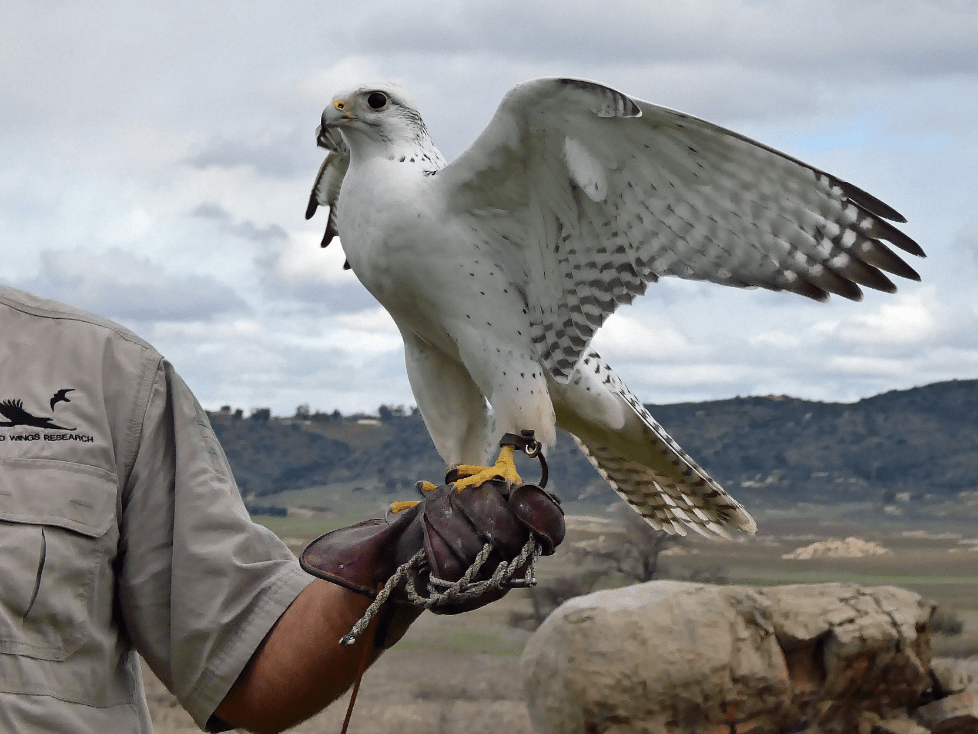
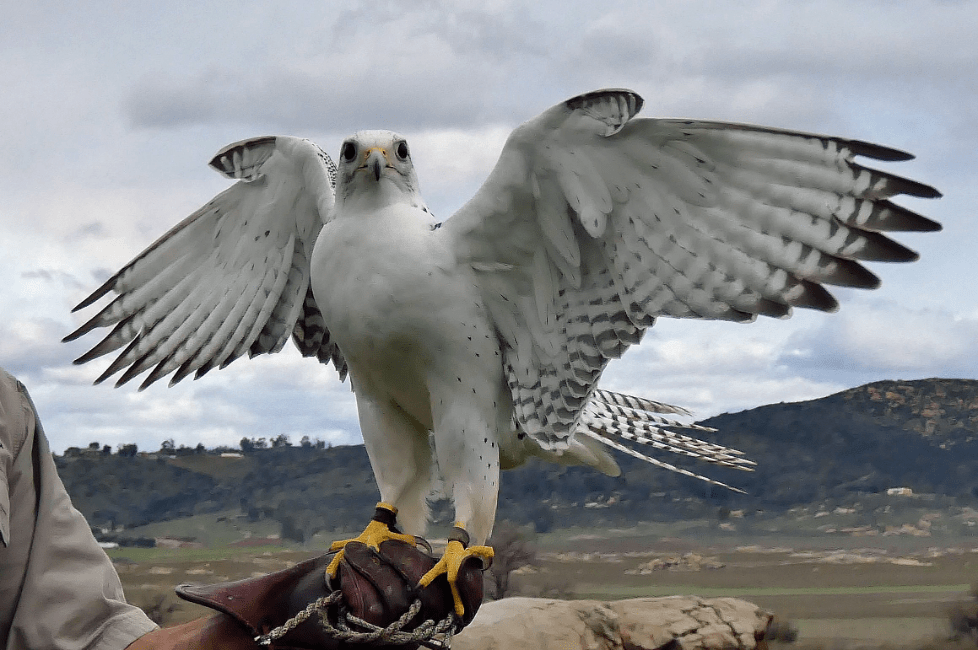
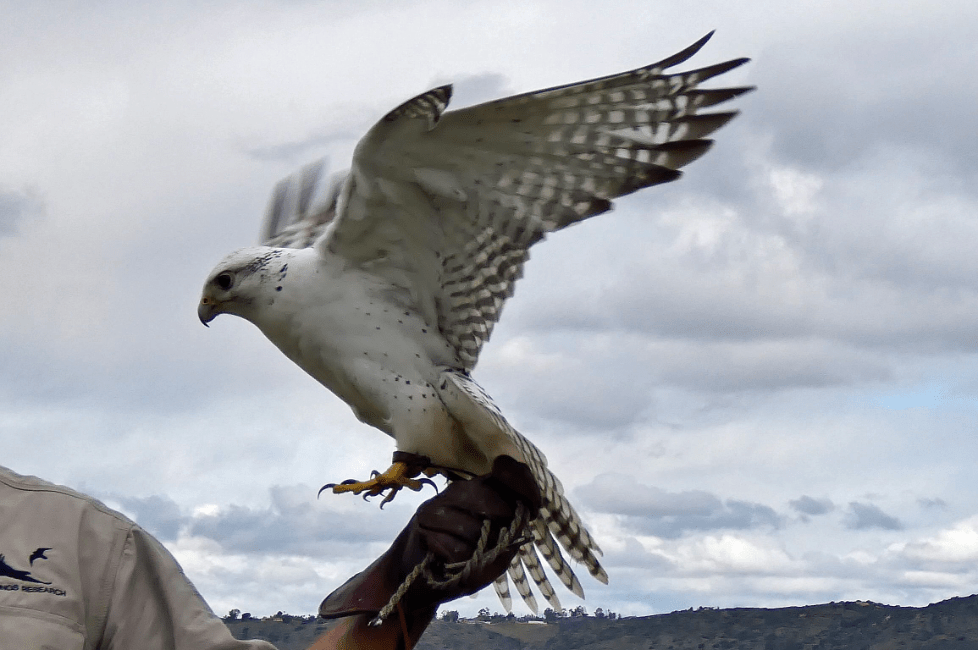
Figure 16. Though Gyrfalcons are now considered to have an IUCN Red List status of LC, Least Concern, the effects of the climate crisis are not yet known and may have a disproportionately harsh impact on these northern-dwelling falcons.
IUCN data (https://www.iucnredlist.org/species/22696500/206261845#threats ) revealed that key threats to Gyrfalcons included (a) oil and gas drilling (e.g., pipelines in Russia), as well as mining; (b) transportation corridors (e.g., roads for oil development, which give human access to remote areas); (c) pollution, especially herbicides and pesticides; (d) severe weather and the climate crisis; (e) the hunting and trapping of terrestrial animals (e.g., grouse, ptarmigans), which are the prey of these falcons; (f) human intrusions and disturbance, due to recreational activities, and other observers point to tourism as a threat to Gyrfalcon nests; and (g) intentional persecution of Gyrfalcons.
The climate crisis deserves special mention because it creates thermal stress on this species, alters existing habitat and availability of prey, causes changes to the breeding and wintering seasons, increases the likelihood of human access to Gyrfalcon territory, increases or introduces changes in weather affecting nesting and survival, and shifts the habitats of other raptors northward, introducing new competitors into Gyrfalcon territories. For now, the remoteness of the Gyrfalcon’s breeding sites has limited human access to Gyrfalcon eggs and nestlings, but the climate crisis may make human intrusions more likely.
Human Interactions, such as Falconry
Since at least the medieval era (roughly A.D. 500–1500), humans have partnered with falcons in falconry, which continues to this day. In the early 1100s, in China, nobles partnered with Gyrfalcons to hunt swans, and the Chinese emperor imposed taxes to ensure an ample supply of Gyrfalcons for this purpose. Later, the Holy Roman Emperor, Frederick II (1194–1250), wrote a treatise on falconry, exalting the Gyrfalcon above all others as a superlative hunter of cranes and other large quarry. In the late 1200s, geographer and historian Ibn Sa’id al-Maghribi observed that the Egyptian Sultan had paid to have Gyrfalcons brought to him from islands off the coast of Ireland. European nobles likewise engaged Gyrfalcons for hunting. Even today, Gyrfalcon eggs and young are collected to supply the falconry market, often threatening this species in some localities (e.g., Finland, Russia, Scandinavia).
Figure 17. The Wildlife Research Institute hosts HawkWatch each Saturday morning in January and February, where falconers show off the skills of their raptors, using decoys and lures that ensure the safety of their birds. With falcons, the bird moves more quickly than our eyes.
Conservation Actions
Conservation actions have been spotty (e.g., non-governmental long-term monitoring in Greenland, Canada, Alaska), not coordinated across national boundaries. At least four European countries have breeding schemes. Though the Gyrfalcon is a protected species in Canada and the United States, it’s not listed as threatened or endangered in either nation. Other conservation efforts have been successful in some locations, unsuccessful in others. Captive breeding of Gyrfalcons for falconry has reduced the pressure to capture birds from the wild. Most North American falconers are using captive-bred Gyrfalcons. At least one protected conservation site has been identified within the Gyrfalcon’s entire range. Among qualified zoos and other holding institutions, 49 Gyrfalcons are ex situ: 14 males, 22 females, and 13 unsexed.
Whereas the remoteness of most of the Gyrfalcon’s range has been an advantage, it also makes research more challenging. Even population size and trends are difficult to estimate, let alone observations of the effects of the climate crisis. Most aspects of its biology (e.g., survival rates, longevity) and life history (e.g., aspects of breeding) are based on limited studies of relatively few individuals, restricting how widely applicable generalizations may be to the entire species.
Large, collaborative studies are especially needed, to coordinate observations across vast geographic areas, perhaps gaining greater understanding of population fluctuations. Even plumage patterns are little understood, to date. Of particular interest would be to gain an understanding of how Gyrfalcon eggs, chicks, and adults are so beautifully adapted to tolerate extreme temperatures.
As the climate crisis intensifies, researchers are eager to understand and perhaps to anticipate the effects on Gyrfalcons. In addition to the remoteness of this species, a technical difficulty has increased the challenge of studying Gyrfalcons. They seem particularly intolerant of radio and satellite tracking devices, which may even lead to harm of the birds, to say nothing of the devices.
Observations
The Cornell Lab of Ornithology gathers information from observers around the world through the eBird app and website (https://ebird.org/species/gyrfal ), which holds 18,535 observations, 10,776 with photos, 20 with audio recordings. The lab’s Macaulay Library website (https://search.macaulaylibrary.org/catalog?taxonCode=gyrfal ) holds 10,761 photos, 20 audio recordings, and 84 videos.
Figure 18. On observing this magnificent bird, researchers are highly motivated to better understand and protect it, despite the many challenges of doing so.
In addition, iNaturalist gathers observations with its app and its website (https://www.inaturalist.org/observations?taxon_id=4657 ), which offers 887 observations.
Forthcoming are two additional falcon blogs, featuring two more falcons: Peregrine Falcon, Falco peregrinus; and American Kestrel, Falco sparverius.
References
Gyrfalcon
- Booms, T. L., T. J. Cade, and N. J. Clum (2020). Gyrfalcon (Falco rusticolus), version 1.0. In Birds of the World (S. M. Billerman, Editor). Ithaca, NY: Cornell Lab of Ornithology. https://doi.org/10.2173/bow.gyrfal.01 https://birdsoftheworld.org/bow/species/gyrfal/cur/introduction
- Elphick, Jonathan. (2014). The World of Birds. Buffalo, NY: Firefly Books.
- Gyrfalcon, AviBase, https://avibase.bsc-eoc.org/species.jsp?avibaseid=E19252A7
- Gyrfalcon, AviBase Life History, https://avibase.bsc-eoc.org/species.jsp?lang=EN&avibaseid=E19252A76FC7845B&sec=lifehistory
- Gyrfalcon, IUCN Red List, https://www.iucnredlist.org/species/22696500/206261845
- https://en.wikipedia.org/wiki/Gyrfalcon
Etymology
- Gotch, A. F. [Arthur Frederick]. Birds—Their Latin Names Explained (348 pp.). Poole, Dorset, U.K.: Blandford Press.
- Gruson, Edward S. (1972). Words for Birds: A Lexicon of North American Birds with Biographical Notes (305 pp., including Bibliography, 279–282; Index of Common Names, 283–291; Index of Generic Names, 292–295; Index of Scientific Species Names, 296–303; Index of People for Whom Birds Are Named, 304–305). New York: Quadrangle Books.
- Lederer, Roger, and Carol Burr. (2014). Latin for Bird Lovers: Over 3,000 Bird Names Explored and Explained (224 pages). Portland, OR: Timber Press.
Text and images by Shari Dorantes Hatch. Copyright © 2026. All rights reserved.
Images were recorded at HawkWatch, annual event hosted by Wildlife Research Institute.


Leave a Reply