
American Kestrel, Falco sparverius, Part 1
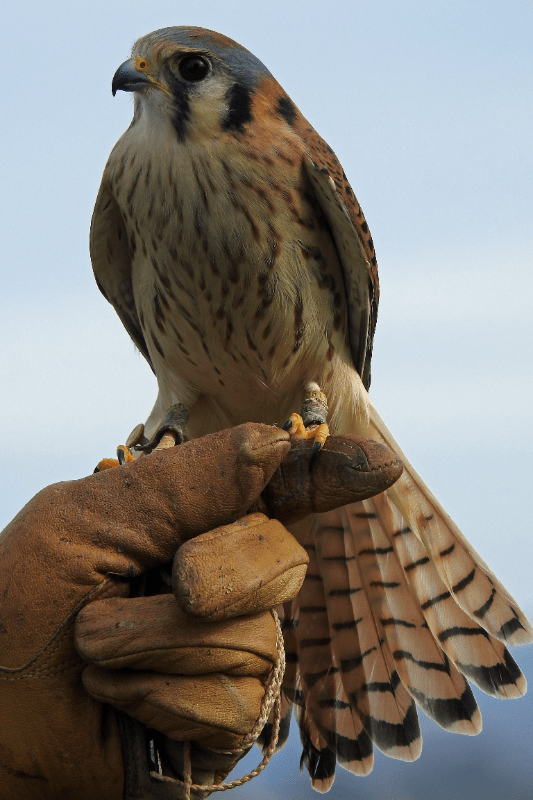
Figure 01. The American Kestrel, smallest falcon in North America, is a fierce predator, targeting invertebrates and small vertebrates such as mammals and birds. This photo was taken at HawkWatch, hosted by the Wildlife Research Institute.
This is my seventh blog in a series of eight blogs about falcons. The first, https://bird-brain.org/2026/05/03/the-falcon-family/ , introduced the order Falconiformes; the family Falconidae; and the Merlin species, Falco columbarius. The second blog in this series, https://bird-brain.org/2026/05/10/falcons-prairie-falcon/ , focused on the Prairie Falcon, Falco mexicanus. The third blog focused on the Pygmy Falcon, Polihierax semitorquatus, https://bird-brain.org/2026/05/17/falcons-pygmy-falcon/ . The fourth focused on the Gyrfalcon, Falco rusticolus, https://bird-brain.org/2026/05/24/falcons-gyrfalcon/ . The fifth and sixth focused the Peregrine Falcon, Falco peregrinus, https://bird-brain.org/2026/06/01/falcons-peregrine-falcon-part-1/ and https://bird-brain.org/2026/06/07/falcons-peregrine-falcon-part-2/ .
The current blog is the first of two parts focusing on the American Kestrel, Falco sparverius. Because this falcon is so widespread in North America, and so well studied, it seemed to call for two parts. This first part discusses this falcon’s etymology and taxonomy; description of appearance; vocalizations; distribution, habitat, and migration; food and hunting; locomotion; self-maintenance behavior (e.g., preening, sleeping and roosting); and references. The subsequent blog, Part 2, will discuss the American Kestrel’s social behavior, breeding behavior (from courtship to fledglings), survival and lifespan, conservation status, relationship with humans, observations of it, and references. That blog will conclude my exploration of falcons. Next, I’ll shift gears to an entirely different bird order and family — probably flamingos. (Feel free to make a special request, though.)
Etymology and Taxonomy
The American Kestrel’s genus name, Falco, comes from Latin, falx, for “sickle,” pointing to falcons’ sharp sickle-shaped talons; its species name, sparverius, is Latin for “sparrowhawk,” formerly a common name for this falcon, due to its predilection for preying on sparrows. The common name kestrel comes from crécerelle, French for “rattle,” presumably referring to its vocalizations.
Naturalist Carl Linnaeus initially named this species Falco sparverius, in his 1758 Systema Naturae (10th edition), based on a South Carolinian specimen described by Mark Catesby. This falcon’s full taxonomy is kingdom, Animalia; phylum, Chordata; class, Aves; order, Falconiformes; family, Falconidae; genus, Falco; species binomial name, Falco sparverius. Before DNA analysis was available, the American Kestrel was thought to be more closely related to European and African kestrels, but DNA analysis revealed that it’s genetically more similar to other American falcons (e.g., Peregrine, Prairie, and Aplomado Falcons). It seems similar to the other kestrels (in appearance and hunting methods) due to convergent evolution, preying on smaller species, which complements the predilections of the larger American falcons instead of competing with them. Fossil evidence of their presence in the Americas goes back 11,000–26,000 years.
Figure 02. American Kestrels, closely related to larger North American falcons, prey on smaller birds and mammals than the larger falcons target, complementing their diet, rather than competing with them. These videos were taken at HawkWatch, hosted by the Wildlife Research Institute.
Description
Size and Shape
Researchers have identified 17 subspecies of the American Kestrel, based on differences in size, plumage, and vocalizations. Size variations range widely, from the weight of a blue jay to that of a mourning dove, or 2.8–5.8 ounces (80–165 g). This species is also sexually dimorphic regarding both size and plumage. Females typically weigh 10–15% more than males — females weighing 3–5.8 ounces, males 2.8–5 ounces. Subspecies residing in the northern hemisphere tend to weigh more than southern-hemisphere subspecies. Seasonal variations also affect size; for instance, females reach their maximum weight (mass) during incubation, and males reach their minimum mass while provisioning nestlings and young fledglings, not returning to normal weight until after breeding ends. Of course, maturity also matters; hatchlings weigh about 0.3 ounces (9 g).
As expected, American Kestrels weigh less than larger falcons, but they’re also less muscular for their size, especially in their pectoral flight muscles. For American Kestrels, these muscles amount to about 12% of body weight, whereas for strong flyers such as the Peregrine Falcon, these muscles account for about 20% of body weight. This difference is linked with differing hunting strategies. Peregrines capture much of their prey in flight, in aerial pursuits requiring big pectoral muscles, which consume lots of energy; American Kestrels mostly look for prey while perching, then quickly pounce on it, a relatively low-energy strategy not demanding brawny flight muscles. Nonetheless, the American Kestrel can occasionally capture and kill prey weighing as much as they do — or even more.
American Kestrel length (bill to tail) ranges from 8.6 to 12.2″ (22–31 cm), and here, too, females tend to be longer (9–12.2″, 23–31 cm) than males (8.6–10.6″, 22–27 cm). Female wingspans are 22.4–24″ (57–61 cm); males’ are 20–22″ (51–56 cm). For all of these kestrels, the wing length ranges 6.9–7.7″ (17.6–20 cm); wing area for females is 79 square inches (512.5 cm2), for males is 70 square inches (451.4 cm2). If you happen to glimpse at an American Kestrel in flight, you’ll notice the wing shape, similar to other falcons: relatively long and narrow, tapering to a point. Overall range for tail length is 4.3–5.9″ (11–15 cm), relatively longer than the tails of larger falcons.
The length of the tarsus (ankle to toes) is about 1.3–1.65″ (3.4–4.2 cm) for both sexes in North America. The length of the middle toe (of the three forward-pointing toes; a fourth toe points backward) is about 60% as long as the tarsus, like many other ground-feeding falcons. On the American Kestrel’s head, the bill length (culmen) is 0.4–0.7″ (1–1.7 cm), varying not only with sex but also with location; bill depth (top to bottom) is 0.4″ (1 cm); bill width (side to side) is about 0.3″ or slightly more (0.7 – 0.9 cm).
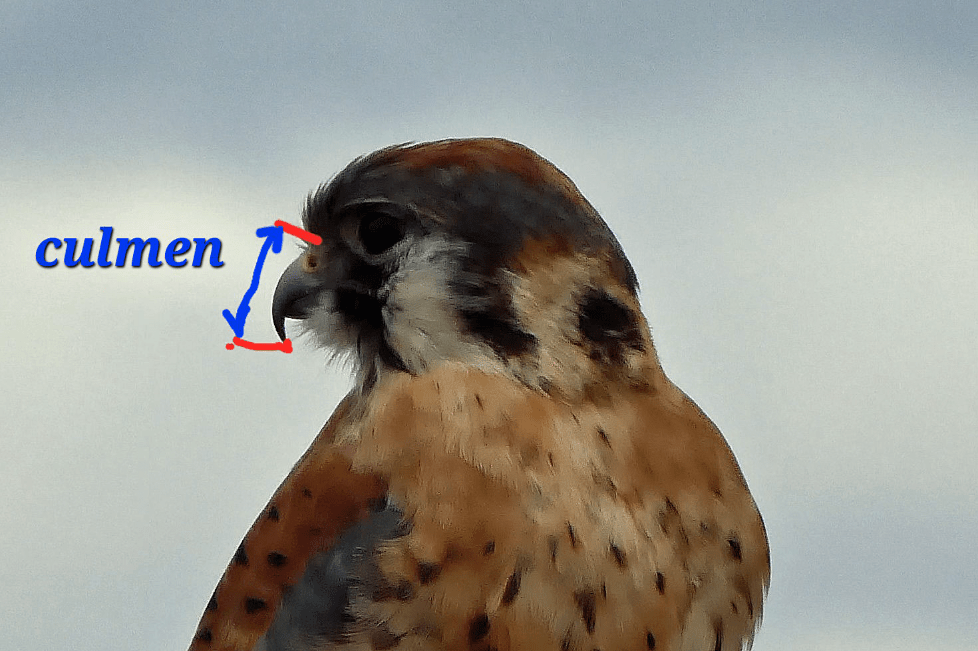
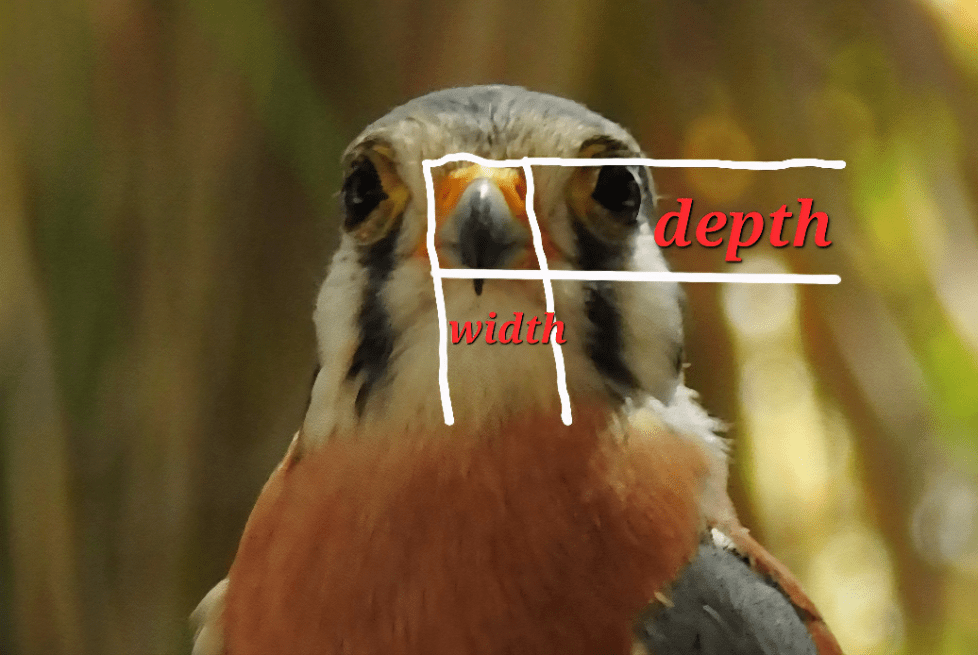
Figure 03. The culmen length of a bird’s bill is measured with a caliper, from the base of the bill to the bill’s tip; by using a caliper, the measurement doesn’t include the curvature of the bill. The bill’s depth is measured from top to bottom; width is measured from side to side. (Note. Photo on the left was taken at HawkWatch, hosted by the Wildlife Research Institute; photo on the right was taken at the San Diego Zoo’s Safari Park.)
Plumage
Female and male American Kestrels look more like each other than like any other birds, but males and females differ not only in size, but also in plumage coloration. Both sexes have a rufous (reddish-brownish) back and rump with prominent dark crosswise bars. Typically, the male’s underparts — chest, belly, and flanks — are pale buff or light rufous color, with light to moderate amounts of dark streaking and spotting. The female underparts are usually creamy to buff colored, with heavy dark brown streaks.
Females have rufous coloration with dark barring on their wings, as well as on their back and rump. Males’ wings are bluish-gray with black spots. Underwings are usually light (pale rufous, white, cream) with strong dark (black, dark brown) barring across the feathers. These long, pointed wings have 10 primary and 10 secondary remiges (flight feathers, singular remex, in both sexes).
This kestrel’s long tail has 6 pairs of rectrices (tail feathers, singular rectrix, both sexes). The female’s tail is dark rufous, with numerous dark crosswise bands, down the length of the tail; the male’s tail is almost entirely deep rufous, but tipped with a wide black band near the lower edge, above white tips.
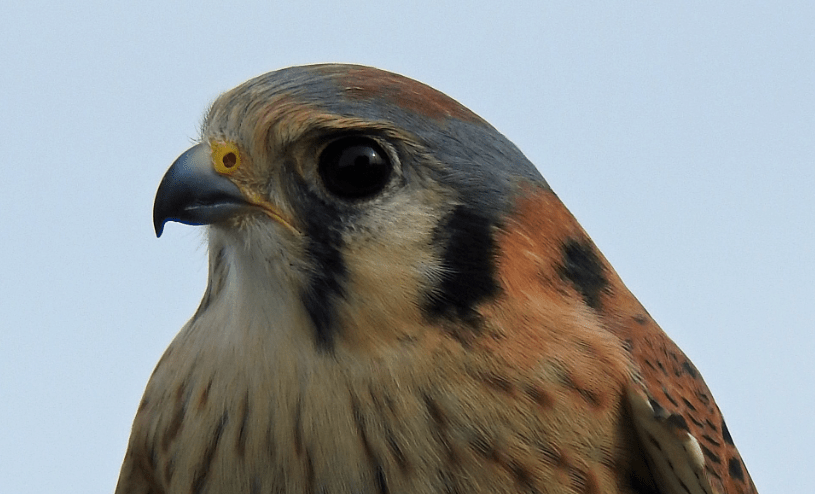
Unlike other falcons’ heads, the American Kestrel’s head has two distinctive vertical stripes on either side of its face. On each side, one vertical stripe extends downward from the front of its eye to below its chin, and a second extends from a little behind its eye (the auricular area, including its ear holes); the pair of stripes outline its cheek (malar area). The crown of the head is blue-gray with a rufous center (which varies in size across birds). At the back of the head, a black stripe extends down the middle of the nape; on either side of that stripe are two black dots, called ocelli, “false eyes,” which may trick potential attackers into believing they’re being watched. The nape itself is light in color, from white to light rufous-orange.
American Kestrel hatchlings emerge with sparse white natal down, through which you can see their pinkish skin. Even their second down coat is white. Later, however, young American Kestrels look very much like their parents, with female juveniles more closely resembling female adults, and male juveniles more like adult males. Their crown may not have fully developed its rufous coloration, though. (See these examples of youngsters:
https://macaulaylibrary.org/asset/659584759 ; https://macaulaylibrary.org/asset/659584760 .)
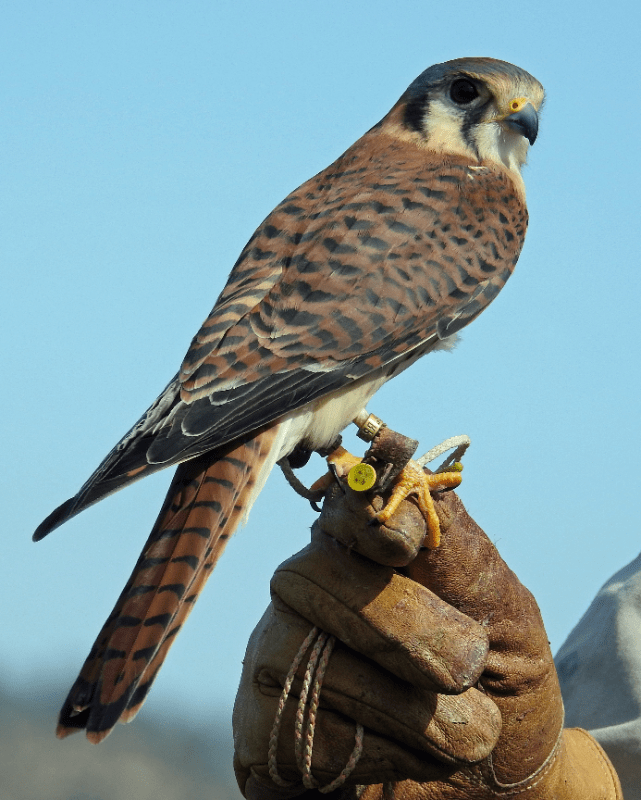
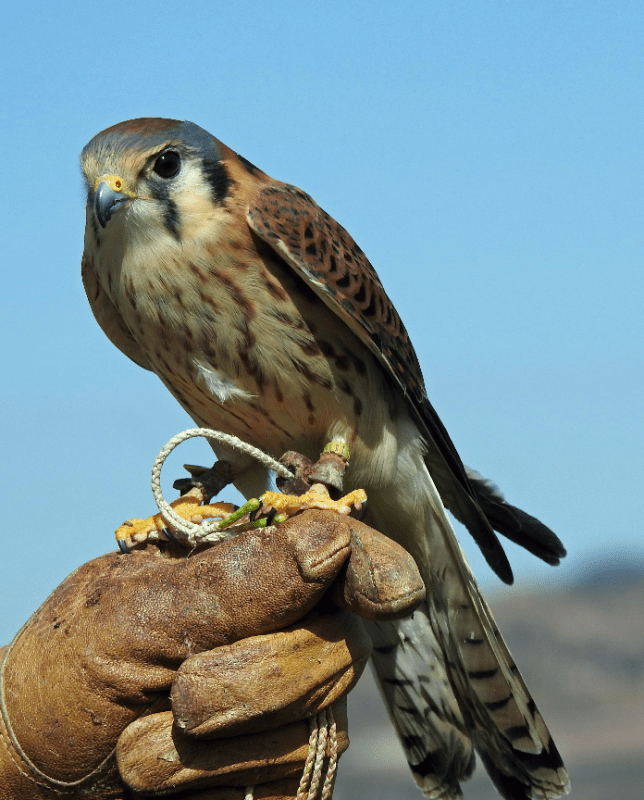
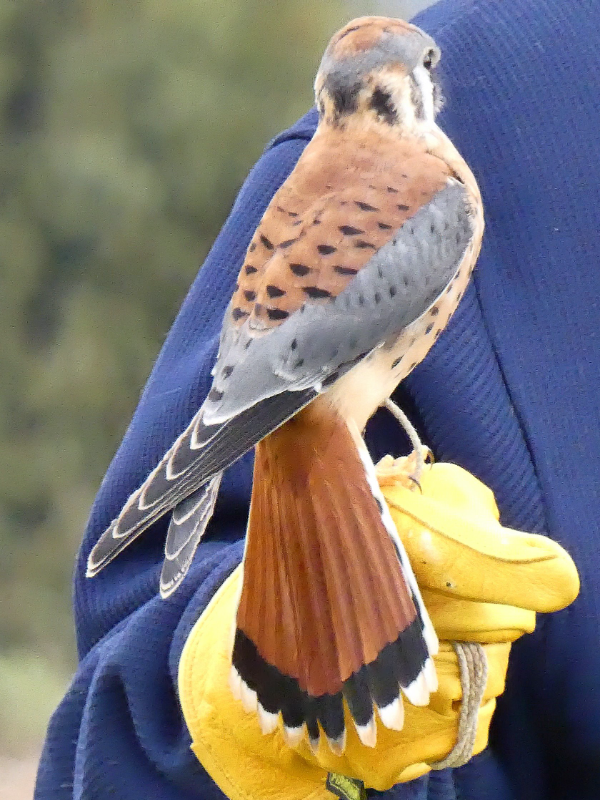
Figure 04. American Kestrel plumage varies widely across subspecies and even across individuals. For instance, you might see a male with a pale blue or a dark rufous chest, as well as numerous other variations of plumage colors. (Please compare female’s tail, far left, with male’s tail, far right.) These photos were taken at HawkWatch, hosted by the Wildlife Research Institute.
Unfeathered Parts
In general, American Kestrels are well feathered. The cere (bare skin across the base of the bill; location of the nostrils) and the gape (bare skin surrounding the bill) are yellow, sometimes pale, sometimes bright orange-yellow, with color intensity probably due to dietary differences. More carotenoids in the diet intensify the color. Humans and many other mammals obtain carotenoids by eating yellow-orange vegetables (e.g., carrots, pumpkins), but these carnivores obtain carotenoids by eating prey who have eaten carotenoids. Nestlings start out with bluish-green ceres and pale-yellow gapes, which turn yellower over time.
The curved, compact bill is bluish-gray in both sexes, and adult bills have black tips. Like other falcons, the upper mandible ends in the falcon’s distinctive tomial tooth (serrated tip of the bill); the lower mandible has a groovy notch to match. This kestrel’s large dark brown eyes are well-positioned for spotting prey, and a prominent ridge above each eye may help to cut down glare.
The legs and feet, as with other bare skin, start out pale yellow and deepen in color over time. As mentioned previously, their legs and most toes are relatively short for a falcon; they don’t need length for their perch-and-snatch style of capture. Their talons are black.
Vocalizations
The website https://xeno-canto.org/species/Falco-sparverius includes 176 recordings of this species, from far north to far south (as a range map on the website confirms). Some ornithologists categorize their vocalizations as “klee” or “killy,” “whine,” and “chitter.” The klee call is used by both sexes, often signaling distress. The whine call is often uttered either when feeding or during copulation. The chitter usually involves some interaction between male and female partners, such as during courtship or when feeding their nestlings. Within their first day after hatching, chicks peep to beg for food, with this call increasing in volume and pitch over time. By 16 days of age, nestlings can also produce calls sounding similar to those of adults.
Figure 05. If I had to guess, I’d say this might be the “klee” call, expressing this American Kestrel’s distress at being in this throng of captivated onlookers. This video was taken at HawkWatch, hosted by the Wildlife Research Institute.
Distribution, Habitat, and Migration
Distribution
The American Kestrel, with its 17 subspecies, may be found in various habitats throughout the Americas — from northern Canada to the Tierra del Fuego southern tip of Argentina (+ 68.7 degrees north to −54.3 degrees southern latitude), from the Pacific to the Atlantic and the Caribbean. Vagrants have even been spotted in Europe, as far east as Denmark. For a range map of this species, please see https://ebird.org/map/amekes , based on eBird observations. Many dozens of American nations are listed as residences of the American Kestrel, many noted just as breeding range (as far north as the Yukon territory; south through the Amazon Basin) or as wintering range (north to British Columbia or Vermont, south to the Caribbean). Many of these falcons reside year-round at or near where they breed. The estimated geographic range is 20,350,000 square miles (52,700,000 km²).
Habitat
American Kestrels prefer open habitats, as well as partially open ones — grasslands, deserts, meadows, agricultural croplands, suburbs, shrublands, wetlands, and so on — and year-round, they need some kind of perches, too — utility wires, trees, boulders, and the like. When breeding, they also need locations with some kind of nest holes (e.g., tree cavities, cliffs, buildings, nest boxes), such as woodlands, groves, forests. (The introduction of nest boxes has helped enlarge their breeding range.)
Given those basics, American Kestrels have adapted to a wide variety of habitats, from Arctic tundra to Central American tropics to Andes Mountains to the subpolar Tierra del Fuego archipelago, South America’s southernmost tip. They reside between sea level and 14,400 feet (4,400 m) above sea level. American Kestrels are often studied for their response to climate and weather. When faced with cold and wet conditions, they increase their metabolic rate (and oxygen consumption) to mitigate the effects of heat loss; their metabolic responses to temperature and moisture don’t differ between the sexes.
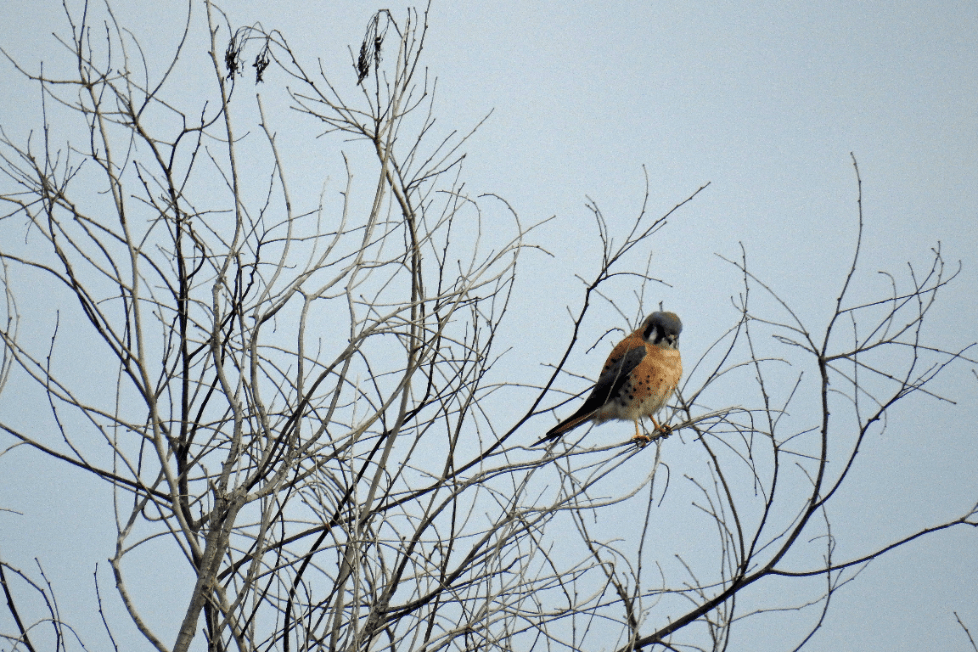
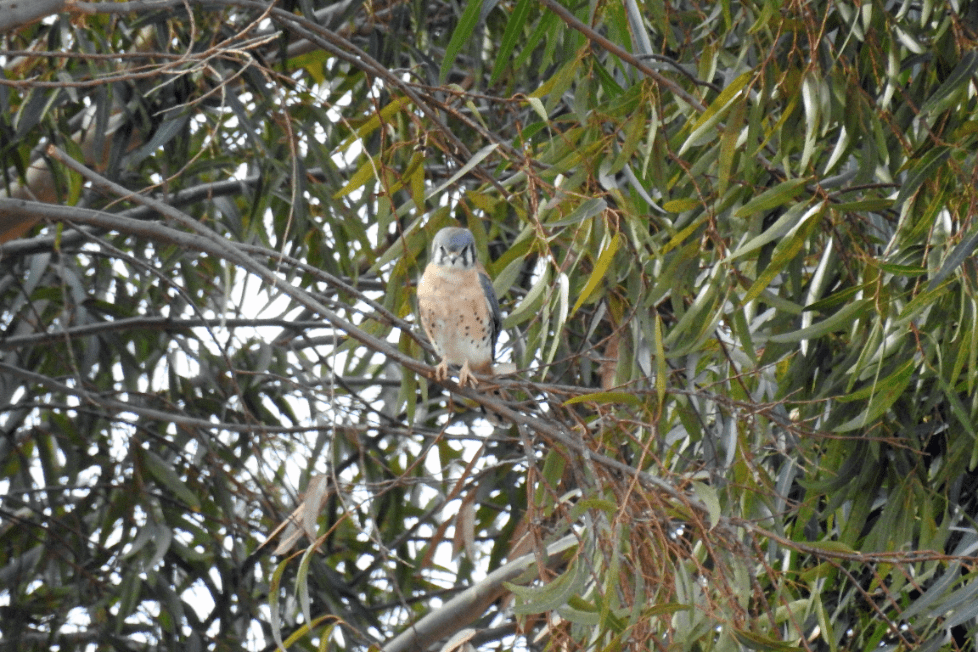
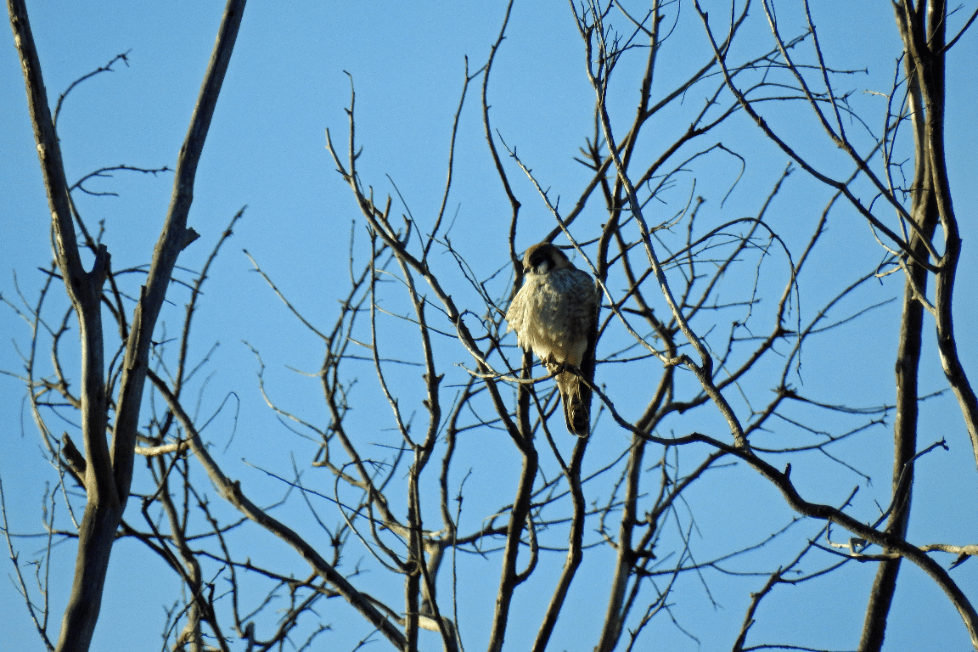
Figure 06. These photos of American Kestrels were taken on different dates at different locations, but they all involve some kind of perch from which to scan for prey on the ground below.
Movements and Migration
Do American Kestrels migrate? That depends. In general, the likelihood that a kestrel will migrate decreases from north to south, with those breeding farther north much more likely to migrate than those who breed farther south. American Kestrels who breed in the far north (Canada and northern United States) typically migrate south after the breeding season, then return north when ready to breed. These migrants sometimes end up near resident birds when they land in tropical or subtropical regions.
On the other hand, American Kestrels who breed south of 35 degrees northern latitude (e.g., along the lines of San Luis Obispo and farther south) rarely migrate; they typically reside year-round, breeding at or near their wintering residences. The in-betweeners (breeding 36–44 degrees northern latitude) tend to migrate relatively short distances, depending on seasonal prey availability. Local weather conditions can also affect whether or not to migrate, and individuals also differ in whether and where they migrate. Though all migrants will be constrained by the need for new flight feathers after molting during the breeding season, the timing of migration varies widely across locations and individuals.
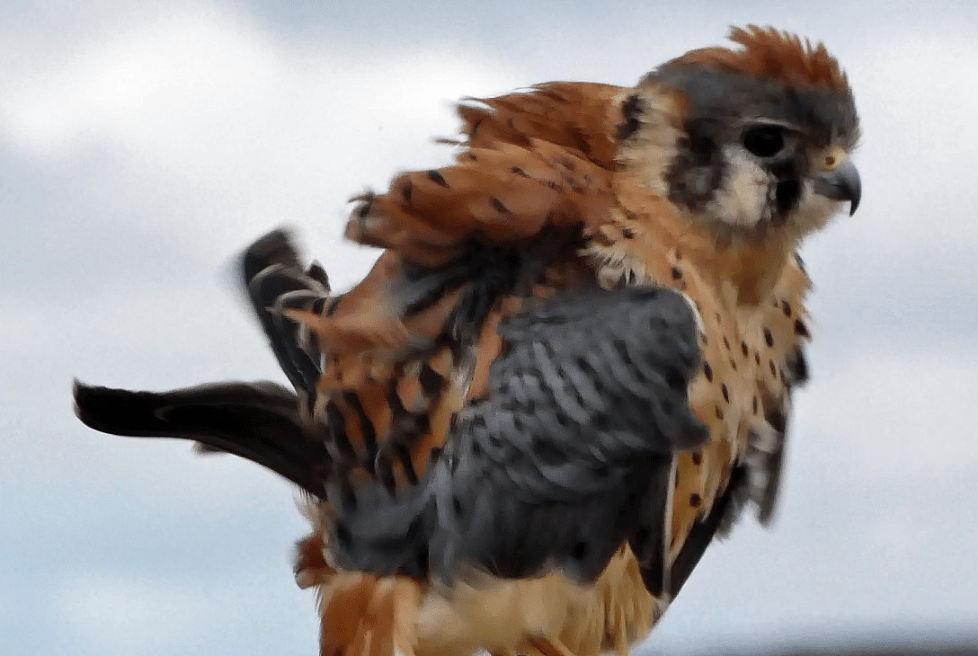
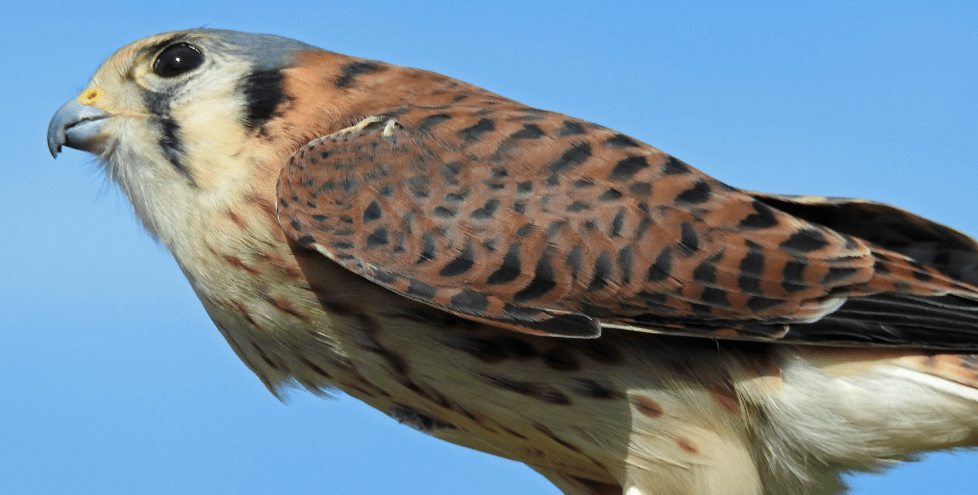
Figure 07. Both of these American Kestrels reside in middle latitudes, where they can easily find prey year-round, with no need to migrate. These photos were taken at HawkWatch, hosted by the Wildlife Research Institute.
Migrants tend to fly solo or in loose groups of several individuals, though they may congregate where prey is abundant. Often, human-modified habitats (parks, pastures, etc.) offer abundant prey during migration. They typically avoid large bodies of water, where easy to do so (e.g., Great Lakes, but not Caribbean).
During migration, when soaring, they take advantage of thermals (over sun-heated ground) and of ridge lift (along cliff edges with updrafts); see https://bird-brain.org/2026/06/01/falcons-peregrine-falcon-part-1/#soaring for explanations of thermals and ridge lift as energy-conserving strategies for soaring. The altitude at which they migrate is estimated at 2,500 feet (>750 m) above the ground, but it varies depending on such atmospheric conditions as wind speed, wind direction, convection currents (for thermals), and deflective updrafts (along ridges).
Some sources have observed that these kestrels do less soaring at high altitudes and more powered (flapping) flight at lower altitudes. If so, they’ll use more energy to fly and will have to eat more prey during migration. At any rate, you’re unlikely to see any of these small falcons migrating high in the sky.
Food and Hunting
Diet
Like other falcons, the American Kestrel is a carnivore, whose diet is entirely the animals upon whom it preys. Unlike larger falcons, this falcon’s diet is estimated as 74% invertebrates (e.g., insects and other arthropods), 16% mammals (e.g., bats, small rodents), 9% birds (e.g., small passerines such as finches, sparrows), and 1% other vertebrates (e.g., lizards, small snakes, occasionally frogs or small fish).
A diurnal predator, it hunts for its prey during daytime, relying on its superlative vision and depth perception. An opportunist, its diet varies widely by location and by season of the year. Anecdotally, it has been seen taking prey that outweighs it, such as squirrels or large birds. Its broad array of prey options make this falcon highly adaptable to hugely various locations, as well as better able to tolerate being densely populated when prey are abundant locally.
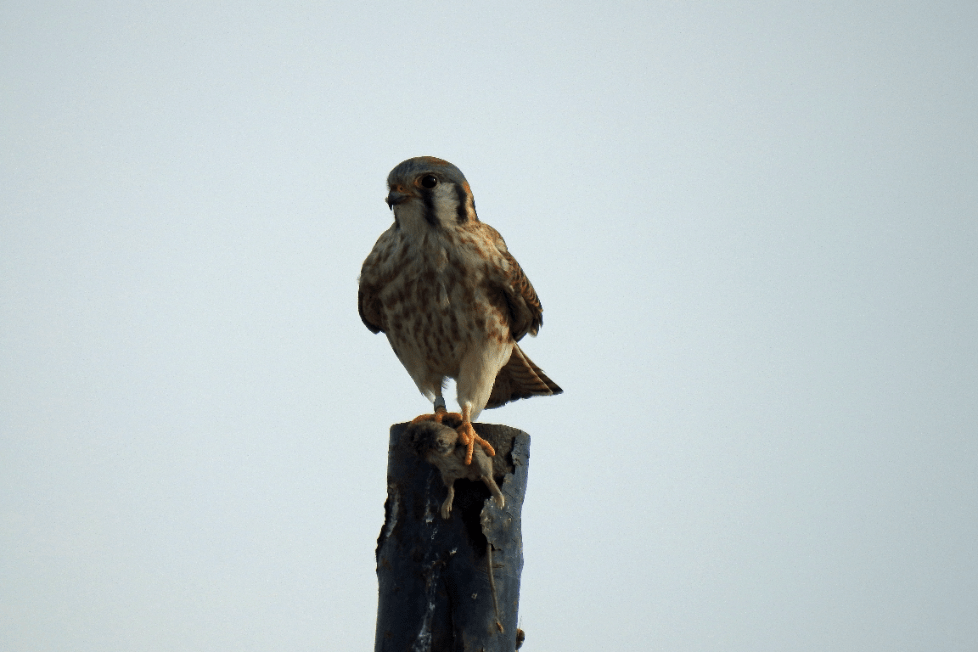
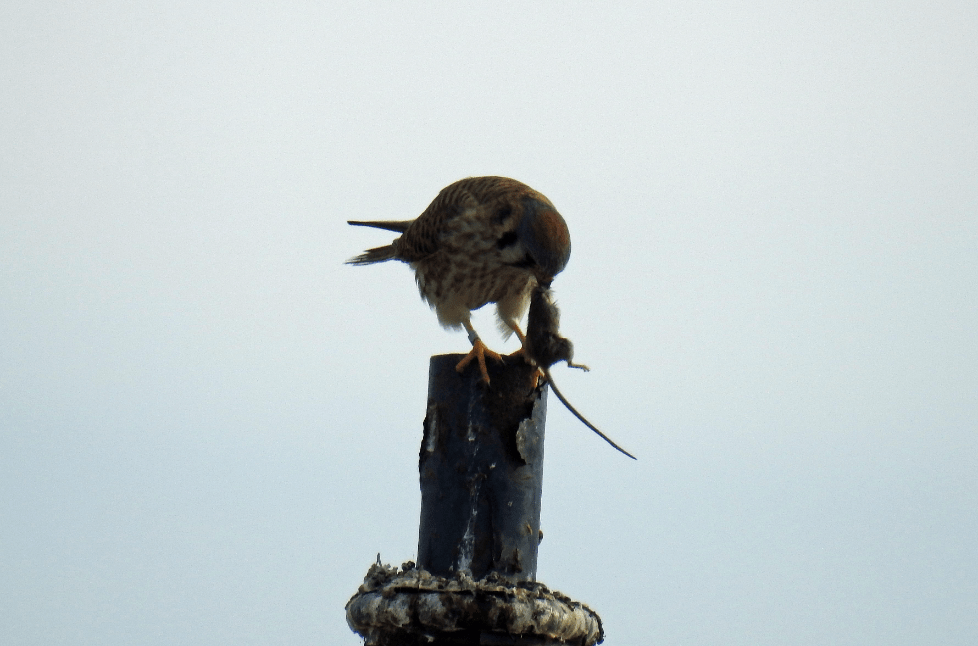
Figure 08. Though invertebrates make up the majority of prey eaten by American Kestrels, they also consume substantial amounts of small vertebrates.
Hunting and Eating
For American Kestrels to find prey, they need open habitats covered by short ground vegetation, along with places to perch — ideally trees, but rooftops, utility wires, or scarecrows will do, too. These falcons can also take advantage of more densely vegetated habitats, as long as there are patches of open ground on which to hunt. When hunting for prey, this falcon looks mostly for movement, but size and type of prey may play a role, too. Hungry falcons and female falcons seek larger prey, compared with well-fed male falcons. Males are also more likely to target birds than females are. These falcons also favor prey with normal coloration. Interestingly, they can also follow the urine trails of small mammals, detecting the urine’s ultraviolet light reflections.
In practice, the American Kestrel uses an energy-conserving method of hunting. It perches and carefully scans the ground for prey near enough that the kestrel can easily ambush and catch it. This falcon doesn’t leap into action without being relatively confident of catching the prey it pursues. Careful observers have noticed that when this kestrel has spotted catch-able prey, it bobs its head (and tail) then flies straight to the prey. It’s thought that the head-bobbing actually helps the kestrel precisely locate the prey, using parallax, a means of estimating distance by comparing the location of an object from two different eye positions. (We who have binocular vision use parallax, too; when you look at your finger in front of your nose, each eye sees it from a different angle, and your brain integrates that information to tell you the distance of your finger from your eyes; the closer your finger, the greater the disparity of the information from each eye.)
The tail-wagging seems to be a prepare-to-fly ritual, the purpose of which isn’t yet known. (Could it be a way of detecting subtleties of wind and air currents? Who knows?) Its head-bobbing and tail-wagging are immediately followed by flying directly to the prey, pouncing on it, and grabbing it with the talons of one or both feet. The talons are long and strong enough to capture and hold the prey while the falcon swiftly bites the head or neck with the deadly tomial tooth on its bill, severing the spinal column of the vertebrate, immobilizing it immediately. (For invertebrates, the bite is a death blow.)
Figure 09. American Kestrels swiftly immobilize vertebrate prey, carry it to their hunting perch, and eat it at leisure.
At times — such as when suitable perches aren’t handy or when facing a strong headwind — the American Kestrel will hover to catch its prey. When hovering (also called “kiting”), this kestrel minimizes its energy expenditure by facing into the wind — the stronger the wind, the better. It keeps its head and eyes in a fixed position while rapidly flapping its wings (or gliding in a strong headwind) to keep in position, with guidance from the tail, too. Whether hovering or perching, the kestrel’s main strategy is to spot prey then ambush and capture it on the ground.
Some American Kestrels can proficiently capture insects and small birds in flight, either while flying over fields or when chasing midair; most, however, prefer less energy-consuming hunting strategies. On rare occasions, the prey isn’t immediately immobilized, and the kestrel may fly after it, chasing it in a high-energy pursuit. Success rates vary widely, with some studies estimating 36%, others 76%. Some research suggests that females have greater success than males for perch hunting, but males may be more successful than females at hover hunting. One study found that the number of pounces per day were 70–85; another noted that in areas with dense availability of prey, some kestrels may eat all they need fairly early in day. Doubtless, prey availability determines when and for how long American Kestrels hunt, how often they pounce, and how often they succeed in capture for each pounce.
For small insect prey, the American Kestrel may land on the ground next to the prey, snatching it with its bill and eating it all on the spot. For larger prey, this falcon usually carries the immobilized prey back to its perch to consume it. To eat larger insects, this falcon may remove and discard legs, wings, and rear parts, eating just the head and entrails. To eat birds, the American Kestrel starts by eating the head, then the breast and the upper belly; typically, the legs and feet are discarded. Given their wide range of body mass (2.8–5.8 ounces, 80–165 g), it’s no surprise that the mass of the prey eaten also varies widely across birds (estimates include 0.8–1.4 ounces/day, 24–40 g), as well as across seasons (more in fall and winter, less in spring and summer). In general, during breeding season, American Kestrel parents minimize their expenditure of energy to catch prey, choosing nest-site locations nearest to abundant prey. (See https://macaulaylibrary.org/asset/61248861 and https://macaulaylibrary.org/asset/61248891 for a male and a female both eating small-mammal prey.)
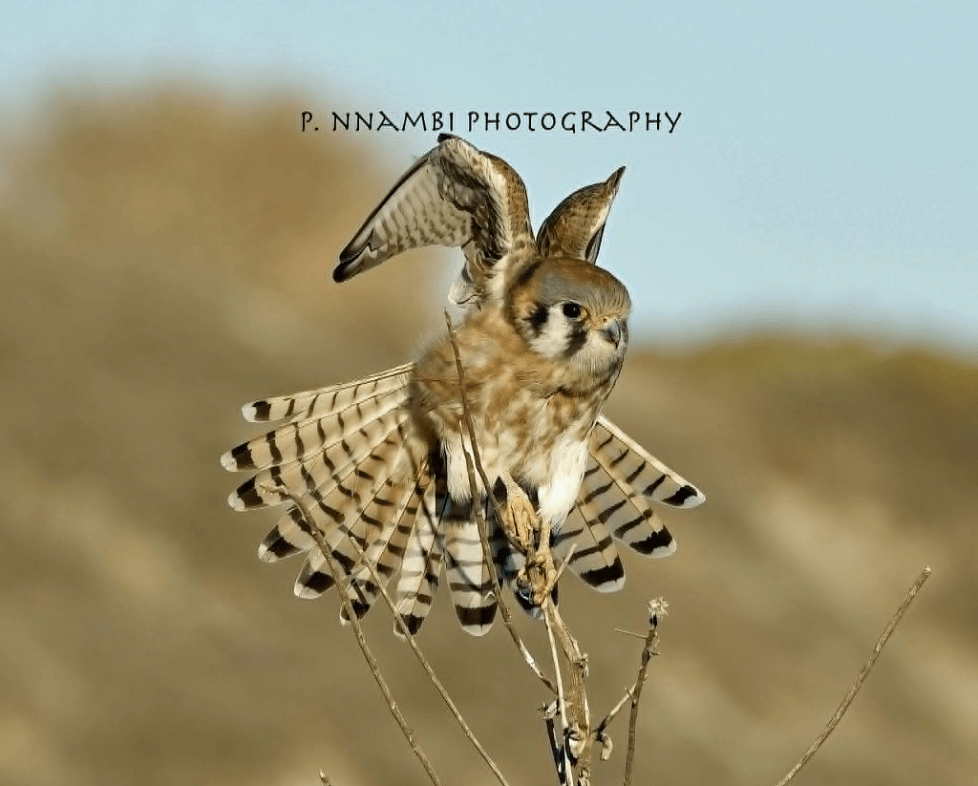
Figure 10. My pal Parrish Nnambi took this exquisite photo of this well-fed American Kestrel landing. Parrish Nnambi, Copyright, 2026. All rights reserved.
The American Kestrel’s relatively lean build (requiring less food to maintain) and its energy-conserving hunting strategy lessens its need for consuming large volumes of prey. This falcon also wisely stashes any surplus vertebrate prey or prey parts, caching them for lean times when prey are less available. The cache could be in any hidden location — tree cavity or roots, inside bushes or clumps of grass, and so on.
American Kestrels seem to be able to get adequate hydration from the food they eat; they also excrete highly concentrated urine. These falcons lose little water through defecation, which they appear to drop effortlessly. It’s normally chalky white uric acid with small bits of black feces.
They typically cough up and cast out one or two pellets of indigestible materials about every 21 hours, but they’ll cast out up to four pellets if they’ve eaten large amounts of indigestible solids. Each elliptical pellet is about 1″ long (2.4 cm) and is typically cast about half an hour after a meal.
Locomotion
American Kestrels have not been seen swimming or hopping, nor do they do much walking or climbing. When capturing prey, they may be on the ground for a few seconds, perhaps longer with challenging prey. They fly directly to and from their perch, without walking around on it. Like other falcons, they have long, narrow, pointed wings (see https://bird-brain.org/2026/06/01/falcons-peregrine-falcon-part-1/#flight for more on falcon flight). Though perhaps not as magnificent or as swift in flight as some of the larger, more muscular falcons, the American Kestrel can fly swiftly and buoyantly, with deep powerful wing beats; its primary feathers point backward at the end of each downstroke.
American Kestrels occasionally soar, and they can stoop from high altitudes sometimes, too. As mentioned in regard to hunting, when it hovers, it faces into the wind, positioning its wings for gliding, using its wings and body posture to continually adjust for wind turbulence while holding its head and eyes in a fixed position. When not pursuing prey, it flies by alternating energy-consuming flapping flight with gliding flight. When pouncing — from a perch, a hover, or a stoop — it uses flapping flight, sometimes punctuated by a brief hover (perhaps to focus on the prey) just before it zooms in for the capture. When ready to land on a perch, it flies straight toward the perch, then widely spreads both wings and tail, tilting them to “apply the brakes,” and then contacts the perch.
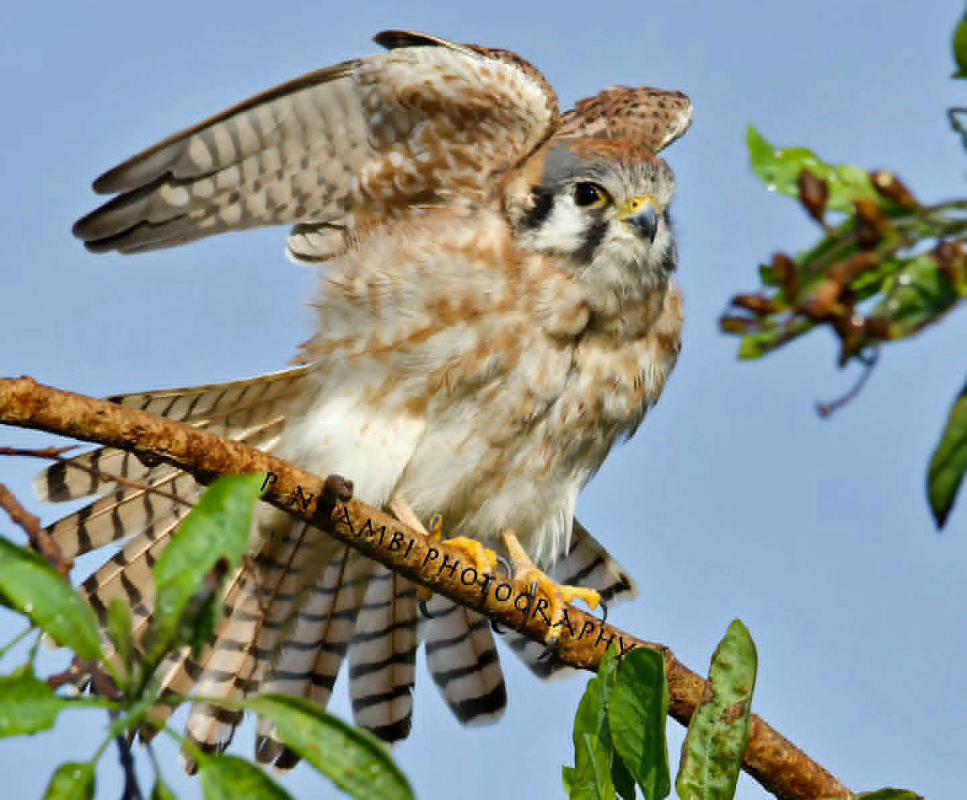
Figure 11. Parrish Nnambi took this beautiful photo of this American Kestrel spreading its tail and using its wings to “brake” for landing. Parrish Nnambi, Copyright, 2026. All rights reserved.
Self-Maintenance
Wild American Kestrels haven’t been seen sunbathing or bathing in water, but captive kestrels will readily bathe, either in shallow water or under dripping water. Wild birds have been seen dust-bathing, and they use their bill to clean their toes after eating prey. They feak the bill to clean it (feaking is rubbing the bill against a hard surface, usually the perch). They’ll sometimes stretch from side to side, first stretching one leg and wing outward, then the opposing leg and wing.
Figure 12. These are two views of the same female American Kestrel, preening atop a solar panel located above open ground; in that spot, she has been seen with both vertebrate and invertebrate prey.
Like all flighted birds, the American Kestrel carefully preens its feathers. It gleans yellowish preen oil from the uropygial gland on its rump, then draws its long flight feathers between its upper and lower mandibles, along the length of each feather. It rubs its contour feathers with its bill, making nibbling motions on the feathers and on the skin below. Preening may also include some yawning, some shaking, and some rousing (erecting all the feathers). The head and nape feathers can’t be reached by the bill, so foot-scratching has to do the trick. They preen (and feak, scratch, rouse, and shake) most often early in the morning and late in the day — unless they have finished hunting early for the day, in which case they also preen midday.
If cavities are available for roosting, they roost in cavities; otherwise, they roost in dense vegetation.
Figure 13. Every Saturday morning in January and February of each year, the Wildlife Research Institute hosts its HawkWatch event. There, falconers show off their partners, such as this appealing American Kestrel; perhaps members of the public will be motivated to care about these birds and want to conserve them.
References
American Kestrel
- Smallwood, J. A. and D. M. Bird (2020). American Kestrel (Falco sparverius), version 1.0. In Birds of the World (A. F. Poole and F. B. Gill, Editors). Ithaca, NY: Cornell Lab of Ornithology. https://doi.org/10.2173/bow.amekes.01 . https://birdsoftheworld.org/bow/species/amekes/cur/
- American Kestrel, AviBase, https://avibase.bsc-eoc.org/species.jsp?lang=EN&avibaseid=20C2214E
- American Kestrel, AviBase Life History, https://avibase.bsc-eoc.org/species.jsp?lang=EN&avibaseid=20C2214E655A79AB&sec=lifehistory
- American Kestrel, https://ebird.org/species/amekes
- https://en.wikipedia.org/wiki/American_kestrel
- American Kestrel, IUCN Red List, https://www.iucnredlist.org/species/22696395/140950605
Etymology
- Lederer, Roger, and Carol Burr. (2014). Latin for Bird Lovers: Over 3,000 Bird Names Explored and Explained (224 pages). Portland, OR: Timber Press.
- Gotch, A. F. [Arthur Frederick]. Birds—Their Latin Names Explained (348 pp.). Poole, Dorset, U.K.: Blandford Press.
- Gruson, Edward S. (1972). Words for Birds: A Lexicon of North American Birds with Biographical Notes (305 pp., including Bibliography, 279–282; Index of Common Names, 283–291; Index of Generic Names, 292–295; Index of Scientific Species Names, 296–303; Index of People for Whom Birds Are Named, 304–305). New York: Quadrangle Books.
Text by Shari Dorantes Hatch. Copyright © 2026. All rights reserved.
Images by Parrish Nnambi and by Shari Dorantes Hatch, as indicated in captions.
Images not by Nnambi are by Shari Dorantes Hatch. Copyright © 2026. All rights reserved.
Images were recorded at the annual HawkWatch event, hosted by the Wildlife Research Institute; at the San Diego Zoo’s Safari Park; and elsewhere in San Diego County.
 Bird Brain
Leave a comment