
Peregrine Falcon, Falco peregrinus, Part 2
This is the second of a two-part blog about Peregrine Falcons. The first was https://bird-brain.org/2026/06/01/falcons-peregrine-falcon-part-1/ and covered this falcon’s taxonomy and etymology; description of appearance; vocalizations; distribution, habitat, and migration; food and hunting; locomotion; and other nonbreeding behavior. This blog discusses its breeding behavior (from courtship to fledglings), its survival and lifespan, its conservation status, its relationship with humans, observations of it, and references. My final blog (or possibly blogs) about falcons will feature the American Kestrel, Falco sparverius.
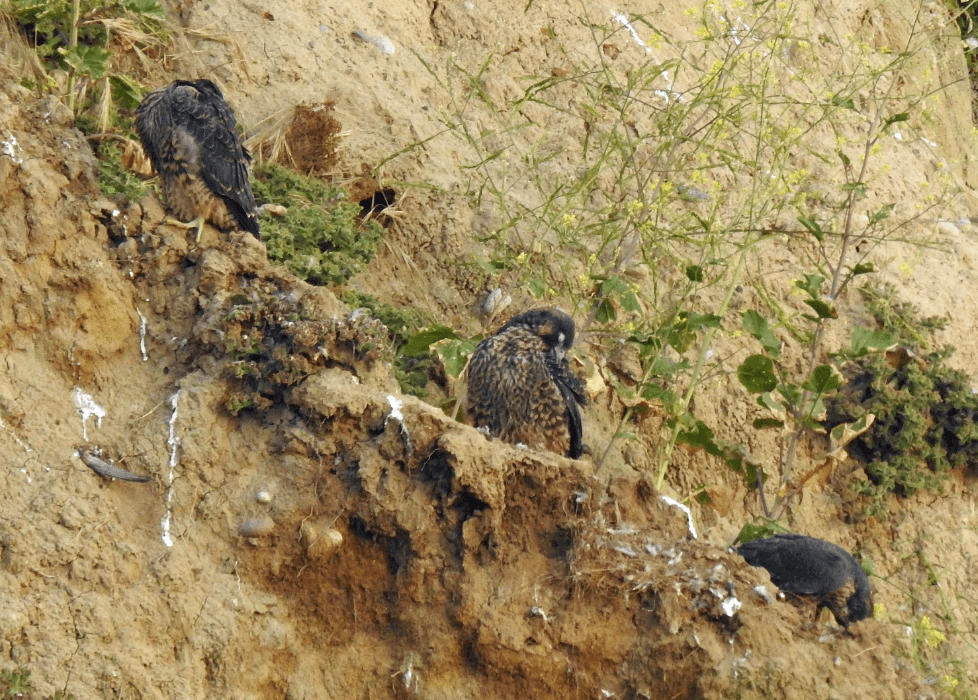
Figure 01. These three Peregrine Falcon chicks (of four) were resting on cliffs in La Jolla, California; at least two of the four had already fledged; all four carefully preened their feathers.
Sexual Behavior and Breeding
Peregrine Falcons are neither the perpetrators nor the victims of brood parasitism, they don’t breed colonially, and they rarely breed cooperatively. They’re almost invariably monogamous, but there are exceptions. At least three times, observers have seen a male providing food to two females at two nest sites, and at least twice, two females were observed taking turns incubating the same clutch. On another occasion, one female seemed to be paired with two males, but she only copulated with one of them, and he was the only one to transfer food to her; it’s thought that she merely wished to hold the territory of the second male, in addition to her own. Also, extra adults are occasionally seen at nest sites, though their role is not clear. If all goes well with the first clutch of eggs, Peregrine Falcons don’t have a second clutch within a breeding season. If the first clutch fails, however, the pair may renest, usually within a couple of weeks after losing the first clutch.
Pair Bond
Peregrine Falcon pairs stay together from courtship until the dispersal of their fledglings. Some pairs also stay together between breeding seasons, but it’s not known whether they are devoted to their shared territory or to each other. About 10–18% of females choose a different mate during the following breeding season, and known turnover of partnerships is about 17–28%. Only about 1.3% of couples were found to have engaged in extra-pair copulation (infidelity) in one study, based on DNA evidence.
Nest
Traditionally, North American Peregrine Falcons have nested atop the edges of cliffs, rock faces, or other high natural formations (preferring 160–650 feet up, 50–200 m, but range is 25–1,300 feet, 8–400 m). In recent decades, they have nested atop skyscrapers, bridges, or other high spots in urban settings, as well as towers, buoys, or the abandoned nests of Ospreys, eagles, or ravens, in addition to the natural locations. Where available, these falcons choose nest sites under an overhang, in the hollow of a large tall tree, or on a ledge with some vegetation. In the far north, these falcons often choose south-facing nest sites, which receive the maximum amount of solar radiation throughout the long day of a northern summer. Farther south, the orientation might be better facing north, or at least somewhere that offers afternoon shade (e.g., by vegetation if not by the topography). These are their preferred nest sites, but they have also been observed nesting on the ground or even in a sink hole when preferable sites aren’t available.
When Peregrine Falcons don’t live in their breeding territory year-round, the male of a pair often arrives at the nesting area before the female. If there are many possible locations for the nest, the male will explore multiple options even before the female arrives. He then scrapes some debris in a few possible locations, and when she arrives, she makes the final selection. She then scrapes some more, building on what the male has done.
When thinking of a “nest,” please don’t picture a cup nest or other built structure. If these falcons don’t use the abandoned nests of other large birds, the two pretty much just scrape a shallow depression in the ground and call it a day. Their technique: One at a time, the prospective parent moves to the middle of the depression, leans forward with breast down, and puts all its weight onto its breast. Then the bird vigorously and forcefully pushes its feet outward and back, displacing soil and debris toward the shallow rim. It continues this displacement as it shifts position, rotating and scraping as it goes. Each partner contributes to the joint effort in scraping out a “nest,” as part of their courtship; neither bird vocalizes as they work to scrape their nest. Though nest sizes vary widely, typically, the nest is about 1.2–2″ (3–5 cm) deep and about 6.7–8.7″ (17–22 cm) across (recalling that their body length is about 13–23″, 34–58 cm!).
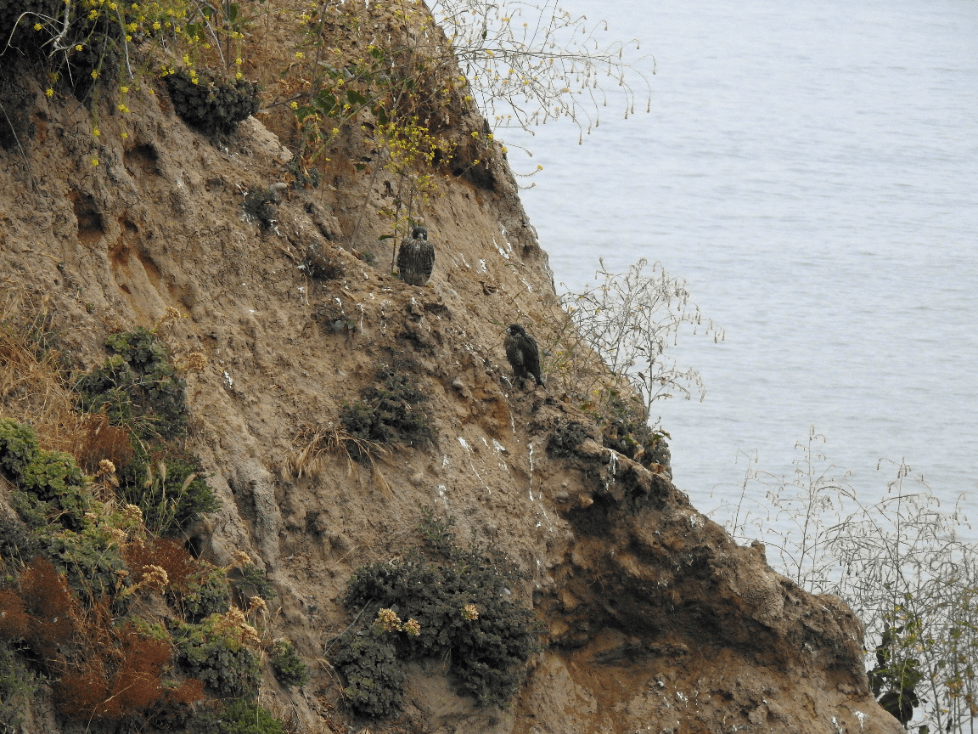
Figure 02. This is the general area where a pair of Peregrine Falcons made a “nest” for their four chicks; you can see two of the fledglings here, as well as the feces drippings from them and their siblings.
Whether using the same territory year-round or having a separate breeding territory, during the breeding season, the Peregrine Falcon is territorial. In the same general area, nesting pairs tend to be at least 0.6 miles (1 km) apart, often much farther apart, even when there are large numbers of Peregrine Falcon families. Having wide separation between nesting pairs makes it more likely that each pair can find enough prey to feed the whole family for the duration of the breeding season. Typically, a pair of parents will have a hunting territory radiating 12–15 miles (19 to 24 km) from the nest.
Courtship
Courtship typically begins with the male and female roosting or perching at the area of the nesting site, which gradually becomes roosting or perching side-by-side. If they are an established couple, they may soon step it up to peeping, mutual allopreening (both partners preen each other’s feathers, both on the head and on places they can reach for themselves), nibbling each other’s toes, or billing (they nibble each other’s bills, with the female’s head turned sideways, oriented upward, the male’s head turned downward).
As courtship proceeds, either mate may engage in head-bowing, though the male does so more often, with deeper bows, and either might vocalize (eechip) while bowing. The male’s head-bowing is accompanied by strutting and swaggering, as well as eechip vocalizing, and he often pauses to look at how the female is responding. When the female bows her head, she does so less deeply, less vocally, and without looking toward the male. These activities are part of the courtship “ledge display,” taking place near the nest scrape. To further seal the deal, each partner works to deepen and widen the nest scrape (described in the section, “Nest”).
More dramatic than the ledge displays are the aerial displays, which can involve high soaring, aerial acrobatics (e.g., figure-8s, loop-de-loops, side-to-side rolls up to 180 degrees), swift undulating flight, steep dives, slow deep halting wingbeats with feet extended, and tight spirals. Any of these displays may also be enhanced by vocalizations, especially the male’s advertisement wail. Any of these may also be performed as a paired activity, such as when one mate stoops toward the other, the other rolls over, then perhaps they touch talons or breasts or bills.
Most dramatic of all are the food transfers, in which the male catches prey and passes it to the female, midair. As impressive as the male’s flight is, the female’s may be more so, as she literally flies upside-down to grab the food from her mate’s talons. The female may solicit a food transfer with her posture, perhaps also vocalizing a wail or a begging call. Such solicitations may prompt a male to hunt for prey if he doesn’t already have food to offer his mate. Alternatively, a less dramatic food transfer occurs when the male offers the female food in his bill, and she accepts it with her bill, often accompanied by vocalizations by either or both. In some cases, the male may simply drop food near the female in a fly-by.
In addition, during courtship, the pair may hunt cooperatively, perhaps just by hunting near one another, but also by mutual cooperation, such as when one bird flushes birds from a flock while the other circles above to snatch those who are flushed. All of these courtship behaviors may continue through copulation and even egg-laying, but they cease altogether during brooding.
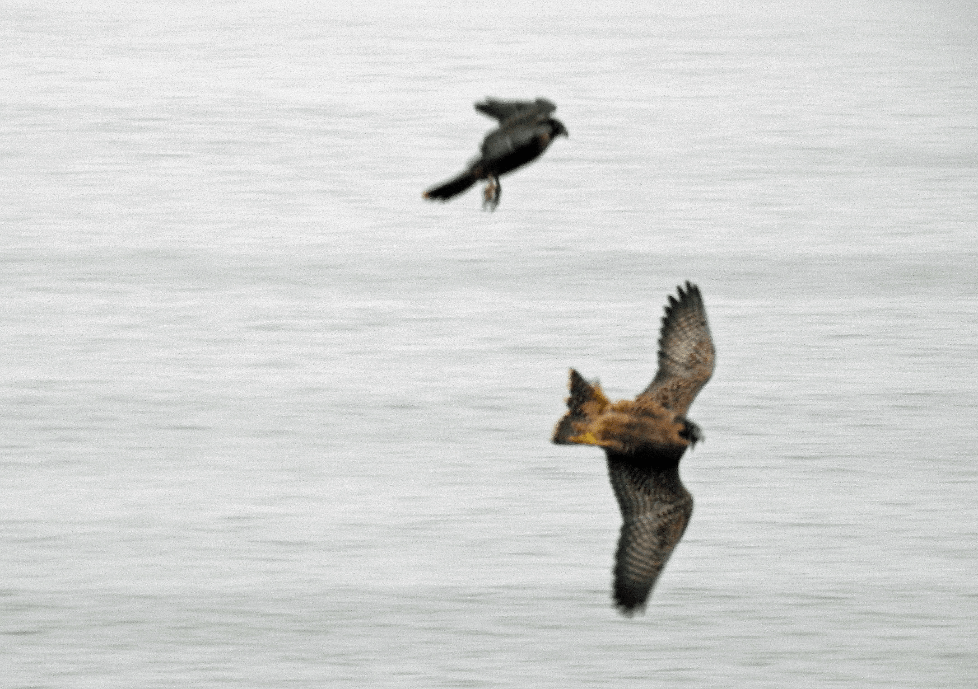
Figure 03. This juvenile Peregrine Falcon isn’t yet a skilled flyer, but when it’s ready to mate, it will be capable of astonishing aerobatic performances.
Copulation
As courtship proceeds, either may solicit copulation — the male by strutting high on his legs, the female by bowing her head. Once the two are ready to copulate, the female sleeks down her feathers and crouches forward, perhaps moving her tail sideways. The male mounts her either from the air or from standing next to her. While mounting the female, the male closes his toes, turns his feet inward, holds his body upright, flaps his wings, and balances on his tarsi. As he chitters, she vocalizes a copulatory wail. Not all mountings involve full cloacal contact, so multiple (brief, 5–10 seconds) mountings are usually needed. About two weeks after the first successful copulations, the female is ready to start laying eggs. Copulation continues until after she lays their third egg. For videos of copulation, please see https://macaulaylibrary.org/asset/614684389 , https://macaulaylibrary.org/asset/652534543 .
Eggs, Egg Laying, and Incubation
About 5 days before the female starts to lay their eggs, she becomes lethargic and stops hunting. She typically has 2–4 eggs (but up to 5–6, and sometimes just 1), which she lays about 48–72 hours apart. Inexplicably, Peregrine Falcons tend to have bigger clutches in the far north than in the Southern Hemisphere (e.g., in Australia). Sadly, though the average number of eggs is 2.5, the average number of fledglings is 1.5, partly due to the production of infertile eggs, but also due to death of the nestlings for various reasons.
The eggs are matte (not glossy) and smooth, creamy colored (white to buff), with reddish or brownish spots, speckles, or other markings. After the penultimate egg is laid, incubation begins — though in extremely cold climates or cold weather, it may begin earlier. Eggs are sensitive to temperature, especially during early development. Both parents develop paired lateral brooding patches, and both participate in incubating the eggs. Whichever parent is sitting on the eggs, she or he changes position about every half-hour, often shifting the eggs around then, too. Typically, the female incubates the eggs more than the male (about 33% of the time, but some males up to 50%). The female does all the incubating at night, as well as more than the male during the day.
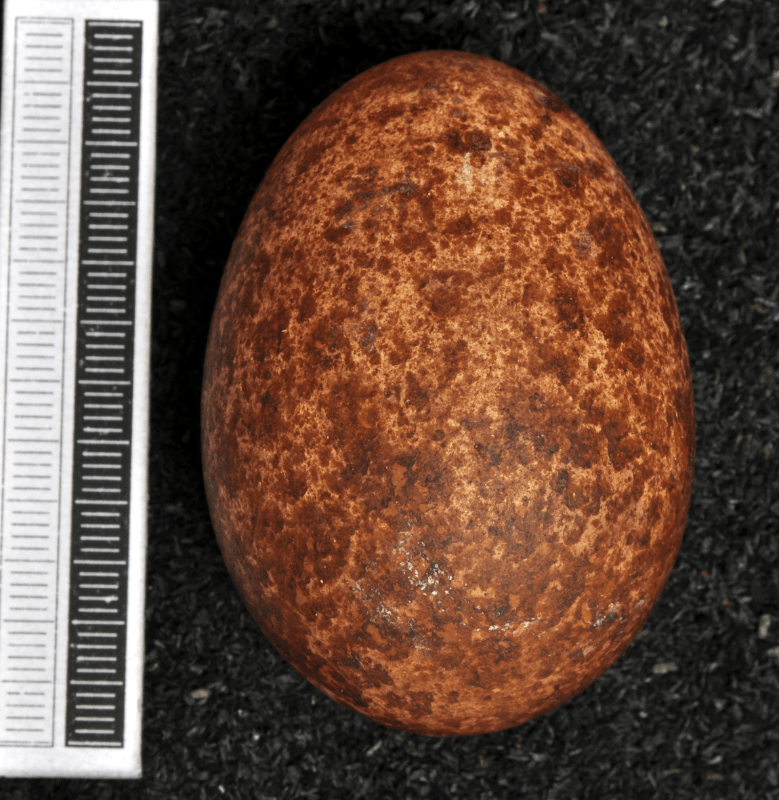
Figure 04. This Peregrine Falcon egg is probably darker than most, but it shows the markings (from Wikipedia, https://en.wikipedia.org/wiki/Peregrine_falcon#/media/File:Falco_peregrinus_MWNH_0671.JPG ).
Description, English: Peregrine falcon Falco peregrinus , egg, Coll. Museum Wiesbaden. Date: 2012. Source: Own work. Author: Klaus Rassinger und Gerhard Cammerer, Museum Wiesbaden.
Licensing: I, the copyright holder of this work, hereby publish it under the following license: w:en:Creative Commons, attribution share alike. This file is licensed under the Creative Commons Attribution-Share Alike 3.0 Unported license.
You are free: to share – to copy, distribute and transmit the work; to remix – to adapt the work — Under the following conditions: attribution – You must give appropriate credit, provide a link to the license, and indicate if changes were made. You may do so in any reasonable manner, but not in any way that suggests the licensor endorses you or your use. share alike – If you remix, transform, or build upon the material, you must distribute your contributions under the same or compatible license as the original. https://en.wikipedia.org/wiki/Peregrine_falcon#/media/File:Falco_peregrinus_MWNH_0671.JPG
Incubation may last 28–35 days, depending on whether incubation was interrupted.
Hatching and Hatchlings
Even before chicks start pipping their eggshells, struggling to hatch, they can be heard peeping, and the peeps get louder as they crack their shells open. One study noted that it takes more than 72 hours from the time a chick first pips the shell until it has cracked it open enough to hatch fully. (One reason it takes so long is that it’s exhausting to pip the tough shell, so the tiny chick needs lots of rest breaks between pipping sessions.) The chick thrusts its egg tooth (atop its bill) against the shell, repeatedly. It also rotates inside the shell, creating a circle or oval of cracks, through which it can finally burst through; the final pipping session lasts about 15–60 minutes until it hatches.
Within a clutch, though the eggs are laid asynchronously, because incubation doesn’t start until the penultimate (or the last) egg is laid, they hatch synchronously (within 24–48 hours for a clutch of four eggs). In extremely cold locations, however, incubation may begin earlier, so eggs may hatch less synchronously. This strategy may be linked with higher mortality of chicks. The chicks are semialtricial, with eyes closed and covered with off-white down. Unlike precocial chicks, they stay in the nest after hatching. Parents sometimes remove the shells, sometimes eat the shells, and sometimes leave the shells to be broken or knocked out of the nest later. On the first day after a chick hatches, its bill and (extra-large) feet are pinkish to pale gray, and before the day ends, its eyes open to slits whenever begging for food.
Within a few days after hatching, the hatchlings have doubled in weight, open their eyes more widely, and sit relatively easily. By 6–8 days of age, their second set of down feathers start erupting in separate follicles from the first set. Within another 2 days, their flight and tail feathers start to emerge, and contour feathers start emerging by day 17. By day 30, they’ve developed about half of their feathers, and by day 40, they’re almost fully feathered. Not until all their feathers emerge can the chicks fully thermoregulate, though that varies, depending on the ambient temperature at the nest.
During their first few days, the hatchlings excrete feces willy-nilly, but after several days, they back their rear ends toward the edge of the nest and squirt their feces over the sides of the nest. If the nest is at a cliff ledge, the feces can accumulate over the years, providing a historic record, occasionally dating thousands of years. For uneaten remnants of prey, the parents may use their bills to remove it from the nest.
Parental Care of the Nestlings
As soon as the eggs pip, the female stays at the nest much more — up to 90% of the time, decreasing over time until she’s rarely there by the time the chicks fledge. On the other hand, the male’s stays at the nest decrease (down to 10–20% of the time) — often because the female shoos him away. Nonetheless, the male stays within the vicinity of the nest until the chicks fledge. During the first half of the nestling period, the male provides most of the food delivered to the nest. In terms of brooding, one study showed that chicks were brooded about 80% of the time for the first 10 days, with the amount of time gradually decreasing until about 20 days of age, then not brooded after that.
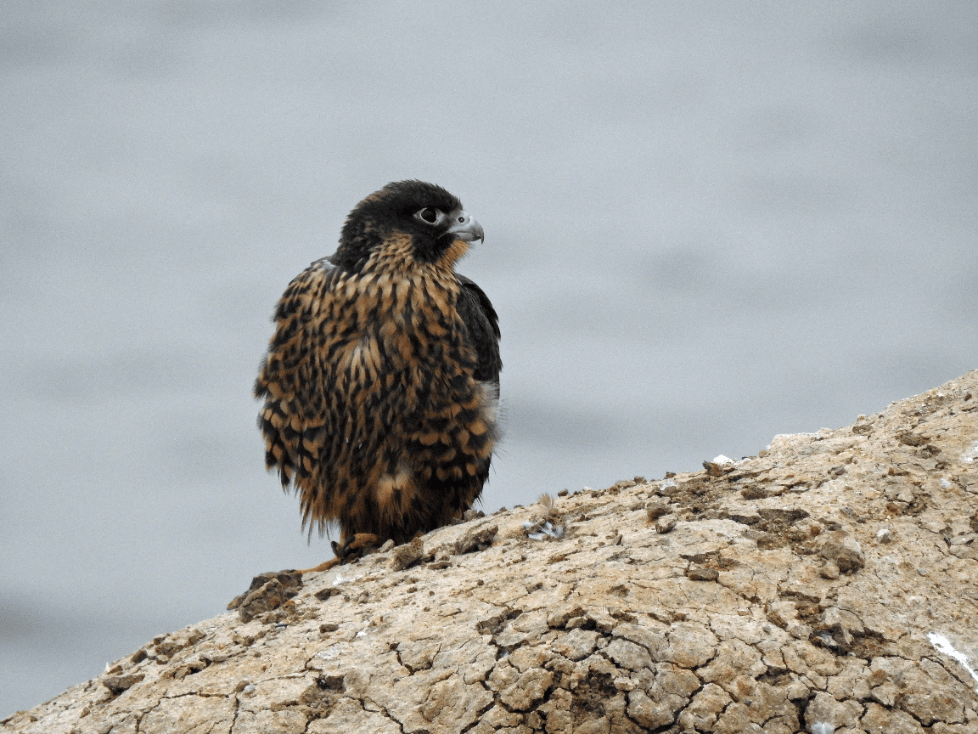
Figure 05. Before this fledgling could fly, it was brooded, fed, and defended by both parents, to the best of their abilities.
By the time brooding ends, both parents are hunting for food and feeding the young. Food deliveries start out at about 1 delivery every 43 minutes and gradually decrease to about 1 every 75 minutes by age 20 days. New hatchlings were fed entirely on muscle meat, prepared by parents, without bones; after 2–3 weeks, parents delivered food less carefully stripped of bones. To see videos of a parent feeding its fuzzy nestlings, please see https://macaulaylibrary.org/asset/201524061 .
Parental defense of the nest is essential for the chicks’ survival, as the youngsters are often favorite prey of raptors (e.g., eagles, large owls, Gyrfalcons, other Peregrine Falcons) and other birds (e.g., ravens, gulls). If the nests aren’t elevated, even ground predators, such as cats, bears, or wolves, as well as snakes, can prey on falcon chicks. A Peregrine parent will fiercely defend its young from predators as large as eagles, often successfully. If parents think chicks aren’t safe, they’ll pick them up by the scruff of the neck (nape), using their bills, and cart them off to safety.
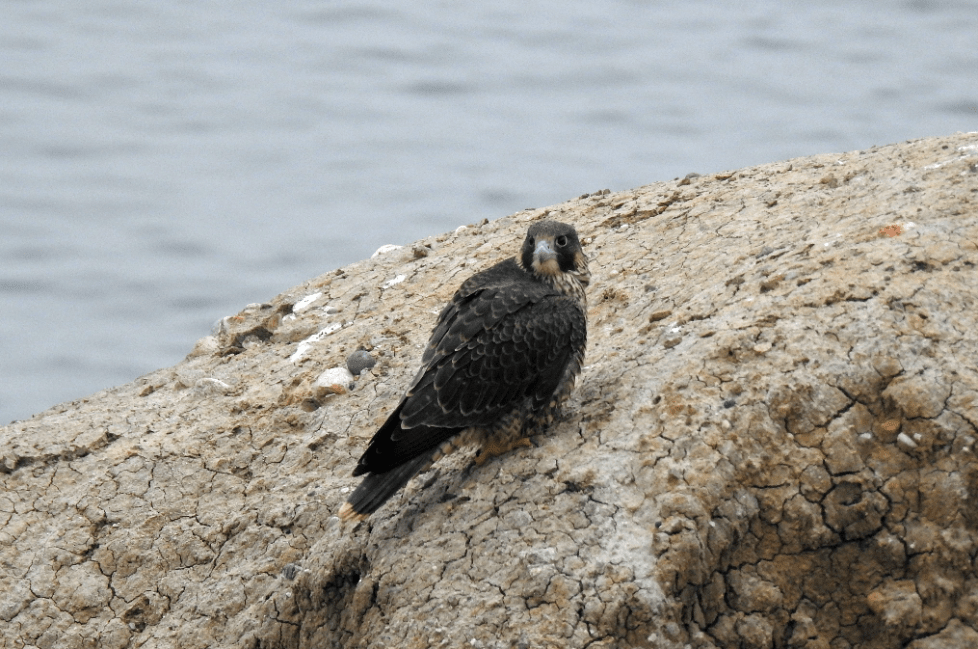
Figure 06. When this Peregrine Falcon fledgling was still a nestling, its mom was seen rising to defend it and its siblings against an attacker, then never seen again — probably killed defending them. At first, observers were worried whether these chicks would survive, but dad stepped up and provided enough food for all four youngsters to survive to fledge.
Fledglings
Peregrine chicks typically fledge about 35–42 days after hatching, but they continue to depend on their parents for up to 60 days or more because it’s so challenging to fly well enough to capture and kill prey. Specifically, while flying, the fledgling must pursue and grasp the prey then use its bill to pierce the neck of the prey — severing its spinal cord and immobilizing it — while maintaining a firm grip on the prey. The fledgling may also kill the prey in the process, but the key is to immobilize it, so the prey can safely be eaten.
If parents don’t feed the fledglings when they’re hungry, the youngsters will beg vocally while pursuing their parents. Parents often respond by dropping either dead or captured living birds from the air, for the youngsters to capture and eat. For nonmigratory Peregrine falcons, the parents may continue to offer some food up to 9 or 10 weeks after the young have fledged. Toward the end of this period, parents may become aggressive toward youngsters who continue to beg to be fed.
Figure 07. This fledgling continually screeched, but to no avail. When it was younger, its parent doubtless ensured it was well fed, but once the youngster fledges, the parent starts to expect the youngster to hunt for most of its own prey.
Immature Peregrines will also engage in play to sharpen their hunting skills, chasing their siblings (or adults) and attacking inanimate objects or invertebrates — as well as suitable prey. Siblings may also playfully fight one another in midair “combat,” chasing, grasping, rolling, dart-diving, grappling, and so on.
Survival and Life Span
Hatchlings and fledglings have a high mortality rate. Even during their first year, Peregrine Falcons have a high mortality rate of 59–70% — that is, only 30–41% survive their first year. After that, the average annual survival rate of adult Peregrine Falcons is about 77–78%. Arctic migrants have a 70–80% annual survival rate; temperate-zone nonmigrants about 80–90%. These numbers may underestimate the number of survivors, however. Maximum longevity records for banded birds are 16–19.75 years, with the oldest known captive Peregrine Falcons living up to 25 years.
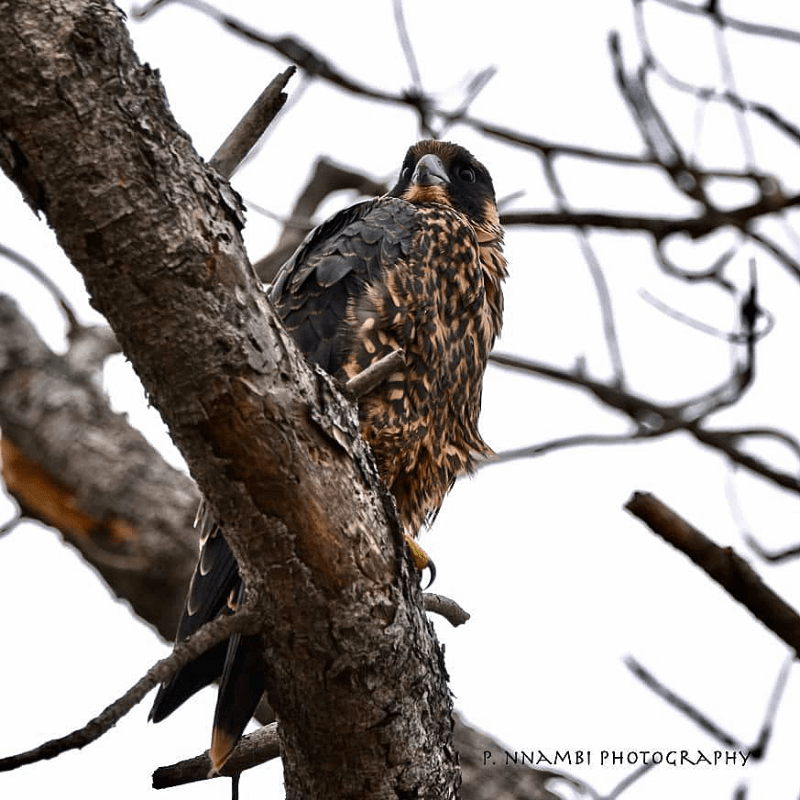
Figure 08. My pal Parrish Nnambi generously sent me his exquisite photo of this beautiful fledgling, which he captured at Torrey Pines State Natural Reserve (1 of 280 California State Parks, https://www.parks.ca.gov/?page_id=657 ). He graciously agreed to share his photo with readers of my blog. Parrish Nnambi, Copyright © 2026. All rights reserved.
In addition to predation by raptors (especially Great Horned Owls), Peregrine Falcons may fall victim to any number of deadly parasites and pathogens. Urban falcons have higher rates of collision-caused deaths, but even rural falcons face deaths due to utility-line electrocution, airplane strikes, and being shot by humans. Storms, lightning strikes, and various accidents can also kill a falcon.
Conservation Status
The Peregrine Falcon now has an IUCN Red List conservation status of LC, Least Concern (CITES I) — not globally threatened, given its near-global reach and enormous range, even in coastal and mountainous areas. Though it is rare in some areas, it’s locally common in others and considered widespread. Like many other raptors, the Peregrine Falcon had been gravely endangered before the widespread use of DDT was outlawed. By the end of 1999, it had recovered fully enough to be removed from the U.S. Endangered Species list.
Estimates of population decline are now 0% over three generations of these falcons, and the trend is for this population to be increasing. The global number of mature individuals are estimated at 100,000–480,000 (or perhaps 248,000–478,000). A 2020 estimate suggested about 72,000 mature individuals in North America.
As with almost all birds, however, Peregrine Falcons are imperiled by agriculture, aquaculture, and livestock grazing; logging, mining, and road building; utility lines; hunting and trapping of prey species; human-caused fires; pollution of air, water, and land; and the climate crisis — all of which degrade, fragment, or destroy natural habitats or otherwise imperil these falcons.
Ironically, artificial illumination has helped this falcon population, though it has certainly hindered prey species by extending the hours of hunting beyond dusk and before dawn.
Unlike the vast majority of birds, Peregrine Falcons are widely studied, with at least 2,000 scientific articles addressing some facet of their life history, population, habitat, or other features. Nonetheless, ornithologists still have a wish list for further study: monitor distribution and abundance in relation to various changing habitats, use telemetry and other technologies to study wintering locations in relation to breeding populations, and study reproduction (e.g., age of first breeding, survival of chicks).
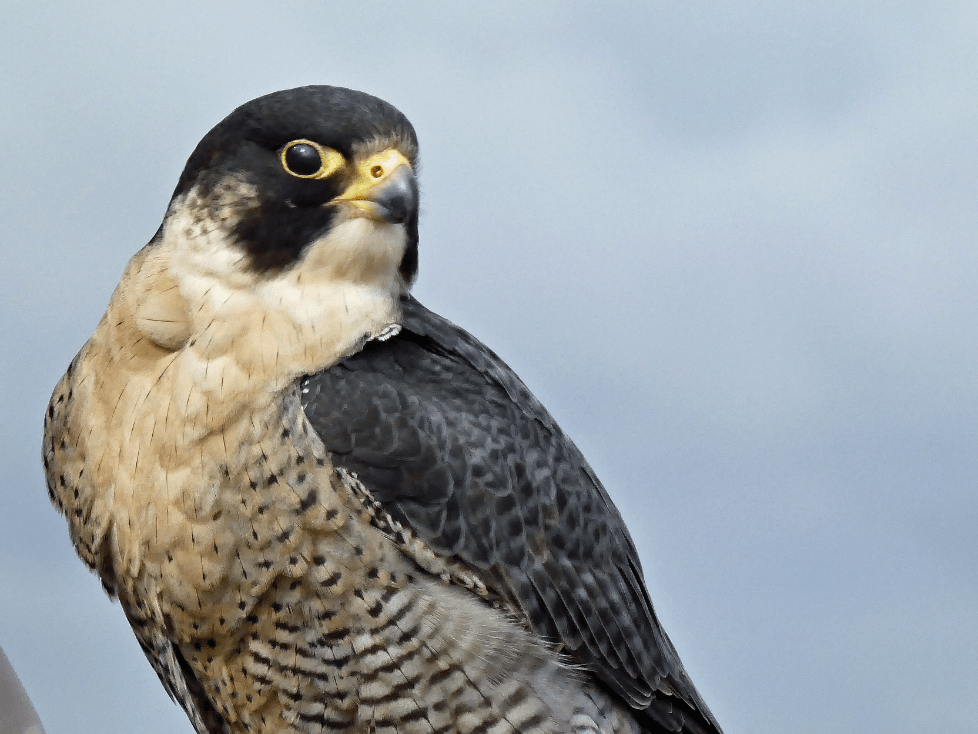
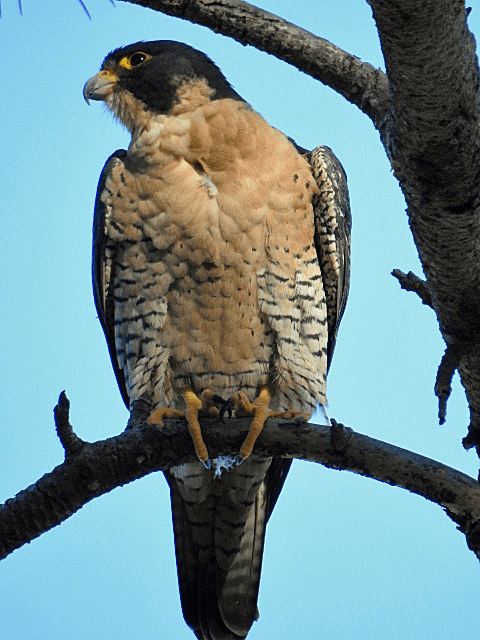
Figure 09. It’s easy to see why so many people are fascinated by majestic Peregrine Falcons.
Peregrine Falcons also benefit from conservation schemes such as international legislation and controls, scientific monitoring, protection in various conservation sanctuaries, and captive breeding programs for reintroduction or introduction of falcons into wildlands. Peregrine Falcon captive breeding programs, often called “hacking back to the wild,” typically involve strategies to keep the young birds from imprinting on — or even becoming familiar with — their human handlers. The chicks are kept in a container (box or cage) within a larger aviary. The handlers either feed the young through a chute or use a hand puppet with a Peregrine-like head, concealing the human identity of the handler.
Once the chicks are ready to spread their wings, they’re allowed to leave the container in which they were being raised, to test their wings and learn to fly. They continue to be fed in the container. Once they have fully fledged, the handlers put dead birds inside the aviary, reducing the container feedings. Next, they put live prey birds inside the aviary and further reduce the container feedings. Before they’re fully released to the wild, they’re put into a special cage and taken to a high cliff or tower in the general area where they’ll be released. After they’ve acclimated to the new location, they’re released, usually quite successfully so, bearing in mind that young falcons have a high mortality rate even under the best of circumstances.
Even with these conservation actions in place, falcon lovers would like to see greater protection of natural habitats, restoration of degraded habitats, greater legal protections of this species, as well as greater enforcement of the Migratory Bird Treaty Act, and — of course — greater study of how best to protect this magnificent species.
In addition to captive-breeding programs, Peregrine Falcons occasionally feature in zoos and other holding institutions. At present, 184 Peregrine Falcons are being held, ex situ, in 95 institutions, across 28 countries: 90 males, 71 females, and 23 unsexed. These falcons allow for long-term close study of their behavior, especially their breeding behavior.
Relationship with Humans
As mentioned, humans threaten Peregrine Falcons by degrading, destroying, and fragmenting their habitats, especially their eyries; using pesticides in agriculture, forestry, or city landscapes; introducing toxic metals (mercury, lead) through mining and other activities; introducing utility poles and wires and other structures that kill falcons directly; and building structures and other obstacles, especially those with windows, which pose collision hazards to falcons. Even well-intentioned but unskilled or ignorant banders may also imperil chicks by using faulty techniques for capturing or trapping the birds to be banded.
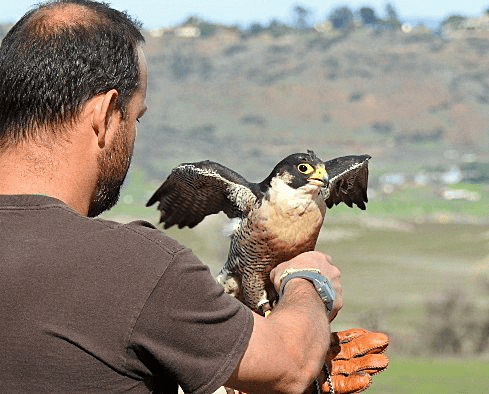
Figure 10. In California (and many other places), falconers must be certified to be allowed to have a falcon partner. At the annual HawkWatch event, hosted by the Wildlife Research Institute, the falconers show off their partners in the hope of enticing members of the public to care about these birds and to want to conserve them.
In addition to all the aforementioned ways in which we indirectly threaten these falcons, we endanger them in other ways, too. Some outdoor-loving, bird-loving humans have become more like stalkers than true lovers of these falcons — approaching their eyries, even approaching occupied nests — forcing falcon parents to focus attention on the intruders rather than on caring for their young. Human intrusions may even cause parents to abandon their nests, or to otherwise fail to care for their young adequately. Even rock climbers may accidentally stumble into intruding on falcon nests unless they take reasonable precautions to avoid doing so. Not mentioned yet in the research, but it seems likely that helicopters and drones may pose a hazard to falcon eyries, too.
Some humans go way beyond unwitting or accidental intrusions by shooting or trapping falcons of any age, or by collecting falcon eggs. There are now legal protections against doing so, but scofflaws pay no heed to these protections unless they’re strictly enforced. Internationally, these falcons are still subject to use and trade as pets, as food, as sport-hunting targets, and as specimens for collecting. Internationally, Peregrine Falcons are often favorites of falconers.
Falconry
For millennia, the Peregrine Falcon has been coveted by falconers for its speed and strength, its hunting zeal and skill, and for its intelligence and ease of training to capture a wide array of prey species (10.6–53 ounces, 0.7–3.3 pounds, 0.3–1.5 kg) — even birds larger than the falcon, such as grouse. Its hunting style well suits falconry. It circles above the falconer, who can then flush the prey up into the falcon’s sights. Now that licensed falconers can buy their partners from certified captive breeders, legitimate falconers rarely take birds from the wild. A limited number have been allowed by the U.S. Fish & Wildlife Service since 2004, in part to promote genetic diversity. Captive breeders also offer hybrids of Peregrines and Gyrfalcons, combining the trainability of the Peregrine with the enormous size of the Gyrfalcon for capturing huge game birds.
Falconers also sometimes provide a public service with their partners, such as by scaring away birds at airports, who might cause airplane collisions. Some also say they help to keep down pigeon populations in cities, but pigeon fanciers don’t appreciate the help.
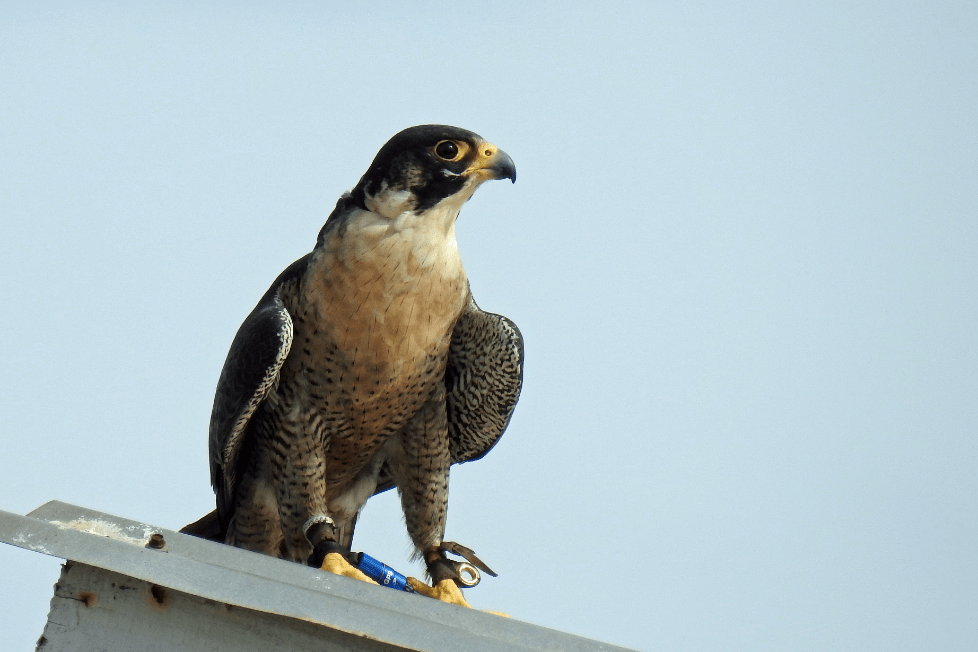
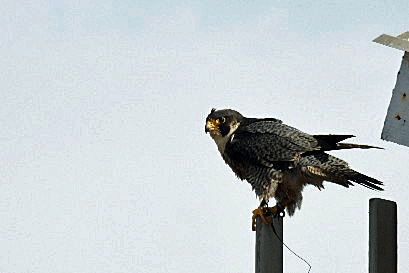
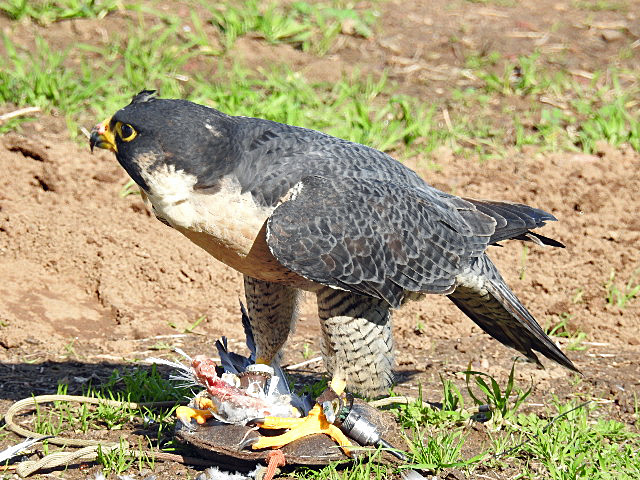
Figure 11. Falconers deeply understand that their partners are wild birds who freely choose to stay with their falconer partners. At any time that this Peregrine Falcon no longer wishes to remain with its partner, it’s free to fly away.
Even people who aren’t falconers or ornithologists may be fascinated by the Peregrine Falcon. From ancient Egyptians, who used the head of a Peregrine Falcon in their religious symbology, to the 1999 Suzuki motorcycle Hayabusa, the Japanese name for Peregrine Falcon, humans have been captivated by these falcons. When a series of quarters were issued featuring each U.S. state, Idaho’s quarter featured a Peregrine Falcon. In 1986, a TV show Starman included an episode, “Peregrine,” filmed with help from UC Santa Cruz’s Peregrine Falcon Project, and highlighting an injured falcon and the endangered species program.
Observations
The Cornell Lab of Ornithology gathers information from observers around the world through the eBird app and website (https://ebird.org/species/perfal ), which holds 1,350,000 observations of Peregrine Falcons, 131,800 with photos, and 1,709 with audio recordings. The lab’s Macaulay Library website (https://search.macaulaylibrary.org/catalog?taxonCode=perfal ) holds 253,808 photos, 1,997 audio recordings, and 1,030 videos.
In addition, iNaturalist gathers observations with its app and its website (https://www.inaturalist.org/observations?taxon_id=4647 ), which offers 52,699 observations.
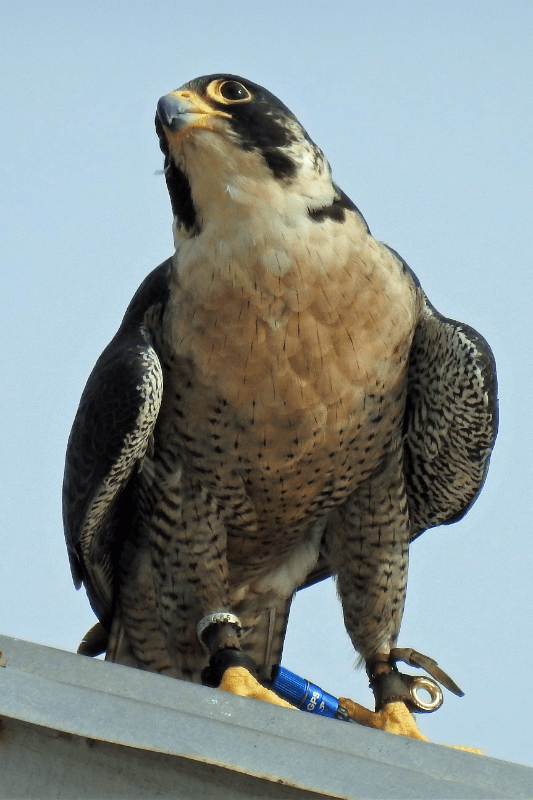
Figure 12. This Peregrine Falcon seems to be thinking deep thoughts — such as, where will I find my next tasty morsel? I think deep thoughts like that, too.
Forthcoming will be my last falcon blogs, which will feature the American Kestrel, Falco sparverius, in at least two parts.
References
Peregrine Falcon
- Elphick, Jonathan. (2014). The World of Birds. Buffalo, NY: Firefly Books.
- White, C. M., N. J. Clum, T. J. Cade, and W. G. Hunt (2024). Peregrine Falcon (Falco peregrinus), version 1.1. In Birds of the World (S. M. Billerman and M. G. Smith, Editors). Ithaca, NY: Cornell Lab of Ornithology. https://doi.org/10.2173/bow.perfal.01.1 . https://birdsoftheworld.org/bow/species/perfal/cur/introduction
- Peregrine Falcon, AviBase, https://avibase.bsc-eoc.org/species.jsp?lang=EN&avibaseid=47E58408
- Peregrine Falcon, AviBase Life History, https://avibase.bsc-eoc.org/species.jsp?lang=EN&avibaseid=47E5840880DC9FA8&sec=lifehistory
- https://en.wikipedia.org/wiki/Peregrine_falcon
- Peregrine Falcon, IUCN, https://www.iucnredlist.org/species/45354964/206217909
Text by Shari Dorantes Hatch. Copyright © 2026. All rights reserved.
Images by Parrish Nnambi, Shari Dorantes Hatch, and a Wikipedia source,
as indicated in captions. Images not by Nnambi or Wikipedia are by Shari Dorantes Hatch.
Copyright © 2026. All rights reserved.
Several images were recorded at the annual HawkWatch event, hosted by the Wildlife Research Institute; others were recorded elsewhere in San Diego County.


Leave a comment