
Greater Flamingo, Phoenicopterus roseus
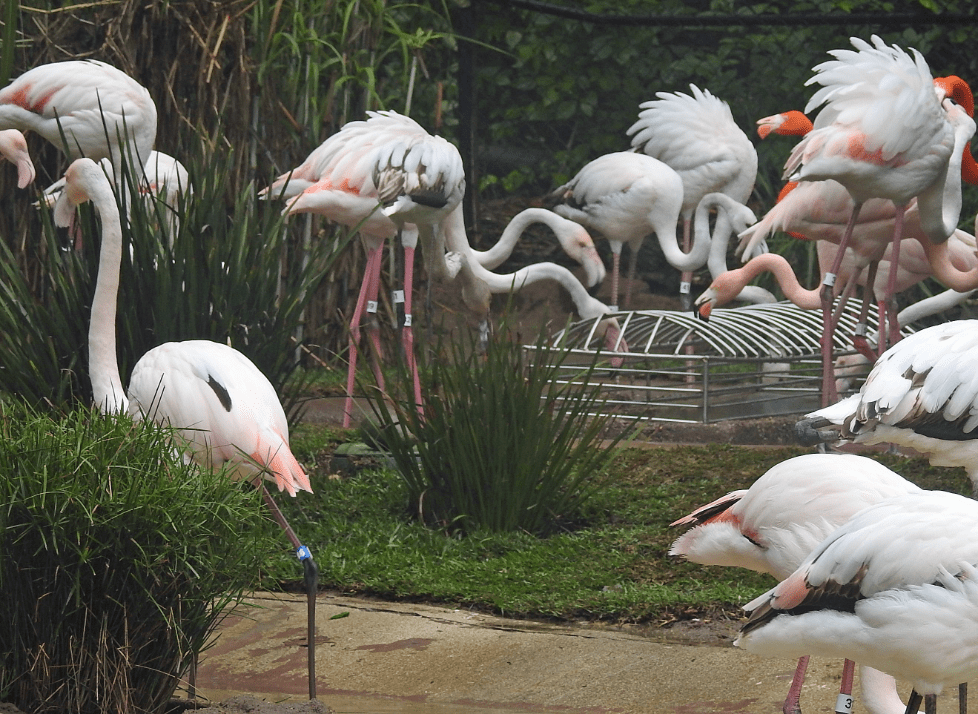
Figure 01. Greater Flamingo, Phoenicopterus roseus, the largest species of flamingo, is also the most widespread. (This photo was taken at the San Diego Zoo’s African Marsh Exhibit; also included are American Flamingos in the background.)
This is the fourth of five blogs about flamingos, all of whom belong to the Phoenicopteriformes order, comprising the Phoenicopteridae family. Part 1 introduced the order and its solitary family, https://bird-brain.org/2026/06/28/flamingos-part-1/ . Part 2 introduced the Phoeniconaias genus, with just one species, the Lesser Flamingo, Phoeniconaias minor, https://bird-brain.org/2026/07/05/flamingos-part-2/ . Part 3 introduced the Phoenicopterus genus, the largest flamingo genus, and focused on one species in that genus: Chilean Flamingo, Phoenicopterus chilensis, https://bird-brain.org/2026/07/12/flamingos-part-3/ . The current blog centers on the Greater Flamingo, Phoenicopterus roseus, as follows:
- Etymology
- Taxonomy
- Description
- Vocalizations
- Distribution, Habitat, and Migration
- Diet and Foraging
- Locomotion
- Self-maintenance Behavior
- Social Behavior
- Breeding
- Maturity and Lifespan
- Conservation
- Observations
- References
The fifth and final blog in this series will focus on the third Phoenicopterus species, the American Flamingo, Phoenicopterus ruber. Not included in this series is the Phoenicoparrus genus, which includes two species: Andean Flamingo, Phoenicoparrus andinus; and James’s Flamingo, Phoenicoparrus jamesi, neither of which will be described in a separate blog, though both were briefly discussed in Part 1.
Etymology
The etymology of the order Phoenicopteriformes, the family Phoenicopteridae, and the genus Phoenicopterus has Greek origins: phoenico-, from phoinix or phoinikos, meaning “crimson red”; and pteron, signifying both “feathers” and “wing.” The species suffix for the Greater Flamingo, roseus, refers to its subtly rosy plumage. Its common name, “Greater,” points to its status as the largest species in the flamingo family. The name “Flamingo” has Latin origins — flamma, meaning “flame,” which aptly describes some of the plumage in some flamingo species. Its Spanish common name is Flamenco Común, also apt given that it’s the most widespread species of flamingo, having an IUCN conservation status of LC, Least Concern. (At one time, this species was named Phoenicopterus antiquorum, which some references still use.)
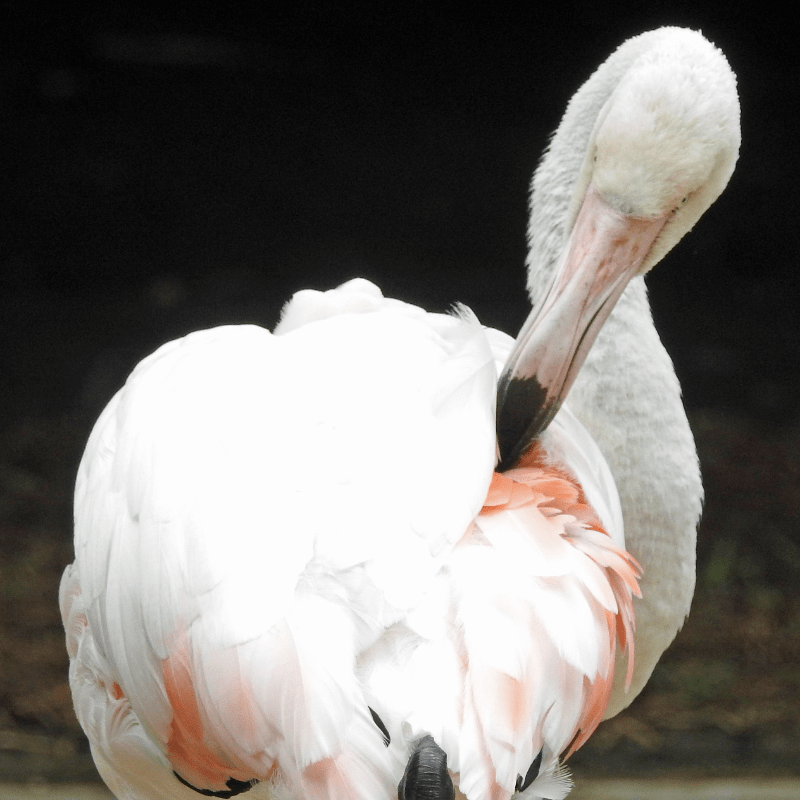
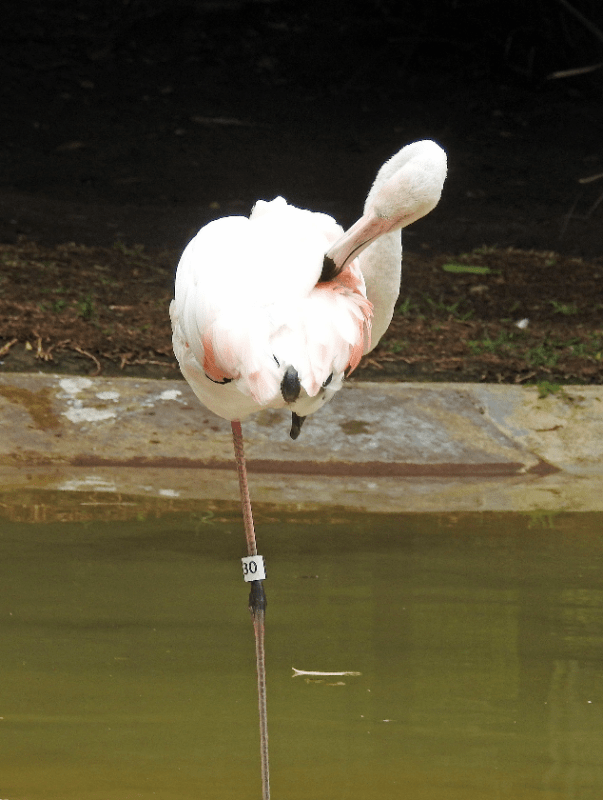
Figure 02. In addition to showing the Greater Flamingo adult’s typical plumage, bill, and leg colors, this flamingo is showing typical flamingo behavior — preening while standing on one leg.
Taxonomy
To summarize the taxonomy for this flamingo species: kingdom, Animalia; phylum, Chordata; class, Aves; order, Phoenicopteriformes; family, Phoenicopteridae; genus, Phoenicopterus; binomial scientific name: Phoenicopterus roseus; common name, Greater Flamingo. Carl Linnaeus had first described the genus Phoenicopterus in 1758, presuming that Greater Flamingos and American Flamingos (Phoenicopterus ruber) were the same species. Later, closer observation revealed them to be two separate species, however, based on coloration, as well as on displays and vocalizations.
In 1811, naturalist and taxonomist Peter Simon Pallas first described this species (Zoographia Rosso-Asiatica. Volume 2 of 3, p. 207, https://www.biodiversitylibrary.org/item/92517#page/223/mode/1up , in Latin; https://en.wikipedia.org/wiki/Peter_Simon_Pallas ). The Greater Flamingo is monotypic, meaning that there are no recognized subspecies of this flamingo.
In addition, hybrids have been documented between some flamingo species. In captivity, hybrids have been seen of American Flamingo (Phoenicopterus ruber) × Greater Flamingo, and of Chilean Flamingo (Phoenicopterus chilensis) × Greater Flamingo. Both in captivity and in the wild (Mediterranean region), hybrids have been observed of Lesser Flamingo (Phoeniconaias minor) × Greater Flamingo.
Greater Flamingo fossils have been found dating to the early Miocene (ca. 23,000,000 – 5,000,000 years ago), Pleistocene (c. 2,600,000 – 11,700 years ago), and Holocene (11,700 years ago; aka Neolithic) periods of the Cenozoic Era.
Description
Measurements
The Greater Flamingo is the largest of all six flamingo species, weighing 70.5–157 ounces (2000–4450 g; 4.5–9.9 pounds); females typically weigh 72–116 ounces (2064–3300 g; 4.5–7.3 pounds), with males weighing about 125 ounces (3550 g; 7.8 pounds). These enormous birds start out at just 3 ounces (85 g; about the weight of two large chicken eggs) when they first emerge from their eggshell. Adult total length, bill to tail is about 47.2–57″ (120–145 cm), with males typically longer (and taller) than females. They’re even taller than they are long, averaging 43–59″ (110–150 cm) tall, with records of the tallest male at 74″ (187 cm) tall.
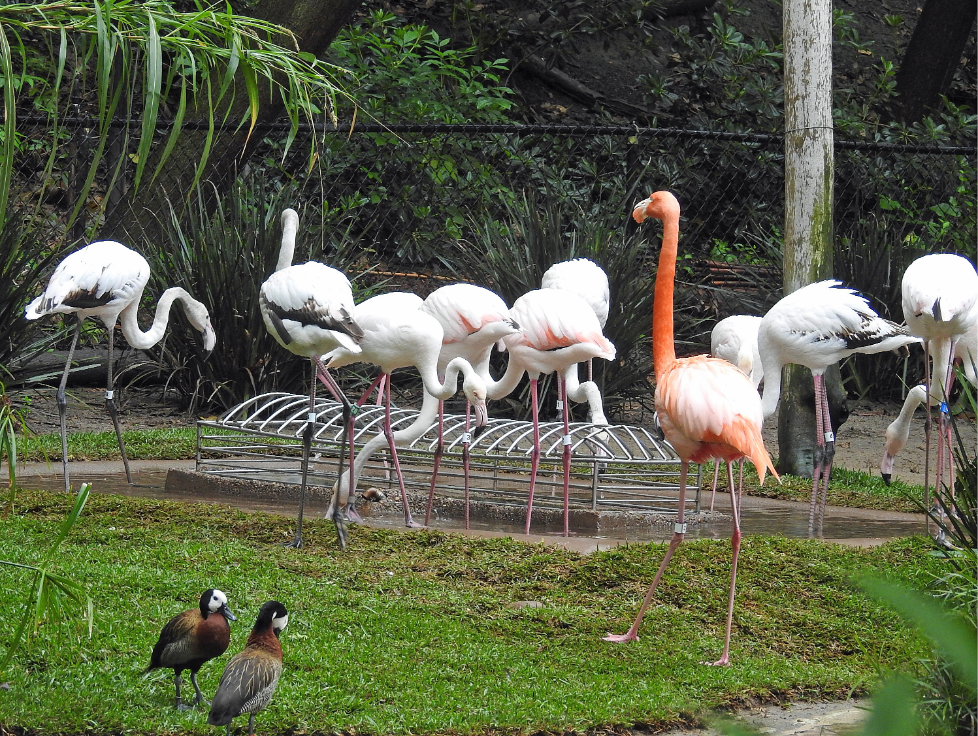
Figure 03. You probably won’t have a tough time picking out the solitary American Flamingo among these Greater Flamingos photographed at the San Diego Zoo’s African Marsh exhibit. (The ducks are White-faced Whistling Ducks.)
With their long, narrow, wings, their wingspan of 55.1–73.6″ (140–187 cm) is even greater than their length or their height. (Wing length for just one wing reaches 14.6–17.2″, 37–43.7 cm). Tail length is less impressive, ranging 4.3–7.4″ (11–18.9 cm). Far exceeding tail length is tarsus length, which ranges 9.8–13.5″ (25–34.2 cm), from ankle to toes. Even bill length sometimes rivals tail length, ranging 4.6–5.2″ (11.64–13.17 cm). Bill depth (top to bottom) is 1.4–1.6″ (3.5–4.1 cm); bill width is 1–1.2″ (2.4–3 cm). (I was unable to find length measurements for the neck or for the entire length of the leg, but they’re doubtless impressive.)
Plumage, Feathers
Greater Flamingos have an impressive set of feathers, including 11 full-length primary flight feathers on each wing, as well as 21–23 secondary flight feathers. The primary and secondary flight feathers are black; the black pigment (melanin) in these feathers fortifies them against wear and tear. Atop and slightly covering the primary and secondary flight feathers are the wing covert feathers, which are varying shades of red in fully mature adults. The intensity of the coloration of the wing coverts can be salmony to crimson, depending on how many carotenoids the flamingo consumes. The other feathers of an adult Greater Flamingo are pale pink (e.g., head, neck, breast) to nearly white (back, shoulders, tail, lower underparts).
Intriguingly, an additional factor that affects the coloration of adult plumage is whether or not the adult is a parent providing crop milk to its young. (For more on “crop milk,” please see https://bird-brain.org/2025/01/06/got-bird-milk/#flamingo-crop-milk .) These flamingo parents channel their nutritious carotenoid pigments into their (reddish) crop milk, to ensure the well-being of their chicks. In doing so, they deplete the color pigments of their own plumage, becoming somewhat paler than adults who are not feeding crop milk to their young. Throughout this time, however, their legs remain bright pink (usually with dark ankles and webbed toes).
On the other hand, flamingos who are courting actually enhance their coloration with pigments secreted by their uropygial (preen) glands on their rumps. These glands secrete pigments (mostly canthaxanthin) derived from carotenoids, and courting flamingos rub their cheeks on the glands, coating their cheeks with the pigments. The lusty flamingos then use their pigment-coated cheeks to “paint” the plumes on their neck, breast, and back. What’s more, the pigments do attract mates to start nesting earlier than unpainted flamingos. Getting an early start may even give their young an extra boost for survival.
It typically takes about 4 years before Greater Flamingo youngsters acquire full adult plumage, though rarely, some do so by age 30 months. Upon hatching, chicks are whitish but their plumes soon become grayish on their upperparts (remaining whitish on their underparts and nape). By about 10 days, their still-downy plumage is darker gray, with melanin pigment. (Their legs are dark gray to black.) First-year flamingos have some scatterings of pale pink feathers, which increase in number during the second and third years.
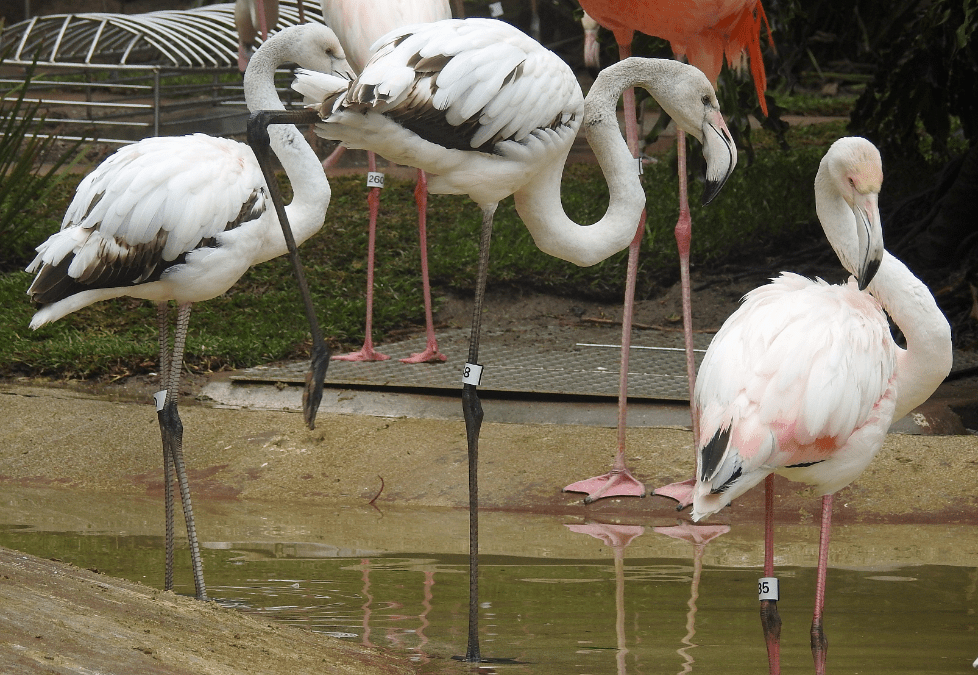
Figure 04. These two juvenile Greater Flamingos (left) don’t yet have the pinker plumage and rosy legs of an adult (right).
The timing and sequencing of molting among Greater Flamingos has not been well studied in the wild, especially among African populations. Age and breeding status (whether or not they have bred) seems to affect molting. Apparently, in some populations, molting of the primary and secondary flight feathers is nearly simultaneous, occurring rapidly and rendering the bird flightless for about four weeks until new feathers emerge. Optimal water level and food availability in the wetlands must be adequate for successful molts. Some captive flocks have been observed to show progressive molting of the flight feathers every other year.
Bare Parts
The bill of adult Greater Flamingos is mostly pale pink, with a black tip a way below the pronounced downward bend in the bill. Individual adults differ in the pattern and extent of the black tip, and the pink of the bill seems to be brighter and more colorful as courtship and breeding approach, becoming paler and less colorful during molting. (The structure of the adult’s bill is discussed more in the section on Diet and Foraging.) Bill size generally correlates with overall body size.
When chicks first hatch, the bill is bright red, gradually darkening over the next two weeks until it becomes dark gray. By about 50 days of age, the chick’s bill has a pinkish tinge, but it continues to be yellowish, darkish, or bluish gray with a blackish tip for the first 1–2 years after hatching. By about 2–3 years of age, the juvenile’s black bill tip becomes more distinct.
Among adults, the iris is bright yellow, but when Greater Flamingo chicks first hatch, their irises are black. In juveniles, the irises become brown, then they lighten to yellowish during the first two or three years. The nestling’s bare facial skin is red, becoming dark gray among juveniles, and finally pale pink in adults.
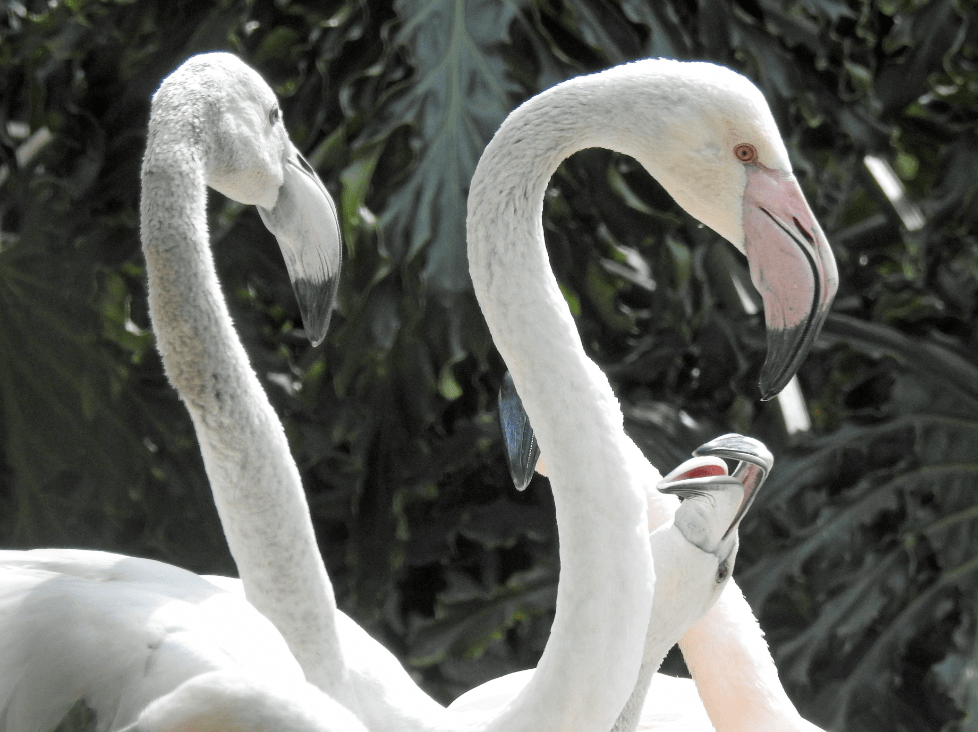
Figure 05. Adult Greater Flamingos differ from juveniles not only in their plumage, but also in the color of their eyes, with bright yellow irises and pale bare skin surrounding the eyes.
The legs and toes of Greater Flamingos also change over time. Newly hatched chicks have pink or even bright red toes and tarsi, because of hemoglobin visible beneath their thin skin. By 5 days of age, however, they’re dark brown, tinged with pink, and by 14 days, they’re entirely black, due to melanin pigment in their skin. Juvenile Greater Flamingos have grayish legs, which gradually get lighter and pinker over the first two years. Adult Greater Flamingos have entirely bright pink legs with dark ankles and webbed toes.
Vocalizations
The extensive vocalizing of the Greater Flamingo can be seen by checking the website https://xeno-canto.org/explore?query=greater%20flamingo , which currently has 439 recordings of Greater Flamingo vocalizations, such as this chattering of flamingos: https://xeno-canto.org/1081330 , which has been described as “goose-like honking.” Most calls are simply “Contact Calls,” between parents and their chicks, between mates during courtship, among flock members, or to signal a simultaneous takeoff for a flock. The contact calls among a breeding flock are believed to help synchronize egg laying.
Another call is the “Flight Call,” such as this call nocturnal flight call: https://xeno-canto.org/982020 . Observers have also identified “Threat Calls” and “Warning Calls,” as well as soft courtship calls during pair formation, with male voices deeper than those of females.
In addition, chicks use several specific calls to communicate with their parents, such as when begging for food. Parents recognize their own chick’s calls among the multitudinous other chicks in the flock; their own chick’s call actually stimulates the parent’s secretion of crop milk (from the esophagus) to feed the chick. The chicks know their parents’ call, as well. One observer saw an adult flamingo approach a crèche of 800 chicks, calling; no chicks responded, until one distant chick heard the call, returned the call, ran to the parent, and was promptly fed. Scientists who have recorded these calls were able to differentiate among individuals only through careful analysis of the vocalizations.
Figure 06. Greater Flamingos seem to enjoy keeping in constant communication with one another. (Recorded at the San Diego Zoo’s Safari Park.)
Distribution, Habitat, and Migration
Distribution
The Greater Flamingo can be found in a range spanning Africa, western Asia, and southern Europe, mostly along coasts, such as the Mediterranean, the Persian Gulf, the Gulf of Aden, the Red Sea, and the Atlantic and Indian Oceans. Its latitude range is −34.8 to + 51 degrees latitude (the southern tip of Africa to northern Europe). The longitudinal center of its range is 28.91 degrees longitude, running through Sudan and near the border of Uganda and the Democratic Republic of Congo.
To see its extent, please see https://ebird.org/map/grefla3 , based on citizen-science observations reported to the Cornell Lab of Ornithology’s eBird (app and website). Its geographic region is described as tropical–temperate. Research has shown that there are no significant differences among populations of Greater Flamingos, indicating that genes flow across the various colonies of flamingos. The extent of its occurrence has been estimated at between 1,966,400 square miles (5,093,092.47 km²) and 23,707,000 square miles (61,400,000 km²). The IUCN Red List mentions 106 nations where it resides, 9 where it’s known to breed, and an additional 46 where it has been seen either during migration or as a vagrant. In addition, occasional sightings have been recorded in the United Kingdom, Scandinavia, Siberia, and China, among others — even one observation in Brazil from 2021.
Habitat
Like other flamingos, the Greater Flamingo prefers shallow (no more than 3 feet / <1 m deep) wetlands, lakes, lagoons, mudflats, saltworks, and so on. Like others, it particularly seeks out water that’s hypersaline (extremely salty) or hyperalkaline (very alkaline, such as containing lots of soda, up to pH 11, the range being 0–14, with 7 neutral). It’s especially choosy about its habitat during breeding season, more than at other times. When breeding, these flamingos prefer mudflats, which provide the muddy substrate these flamingos use for building their elevated nest mounds. Another consideration in habitat selection during the breeding season is the abundance of prey. Because Greater Flamingo flocks are enormous, the need for abundant prey affects their choice of habitats.
Additional habitat constraints may arise when Greater Flamingos are molting. Many Greater Flamingos undergo simultaneous molting of all their flight feathers at once, rendering them incapable of flight for about 4 weeks. During this time, they must have easy access to food, as well as protection from predators while unable to fly. For instance, large and deep wetlands may deter predators better than smaller and shallower wetlands, thus providing more protection for molting flamingos. Not all Greater Flamingos undergo simultaneous molting, however, instead undergoing sequential molting, during which they lose their flight feathers sequentially instead of all at once, so they’re able to take flight. Even so, they may prefer more protected habitats with easy access to food.
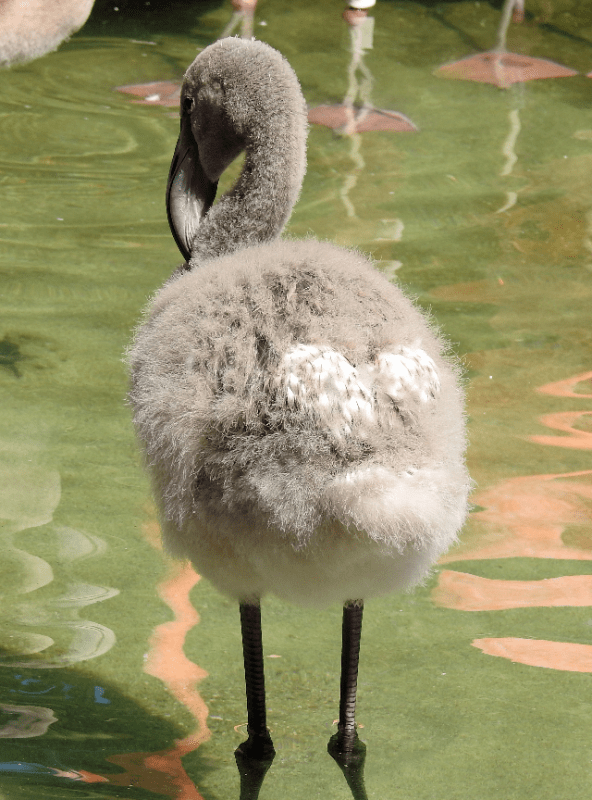
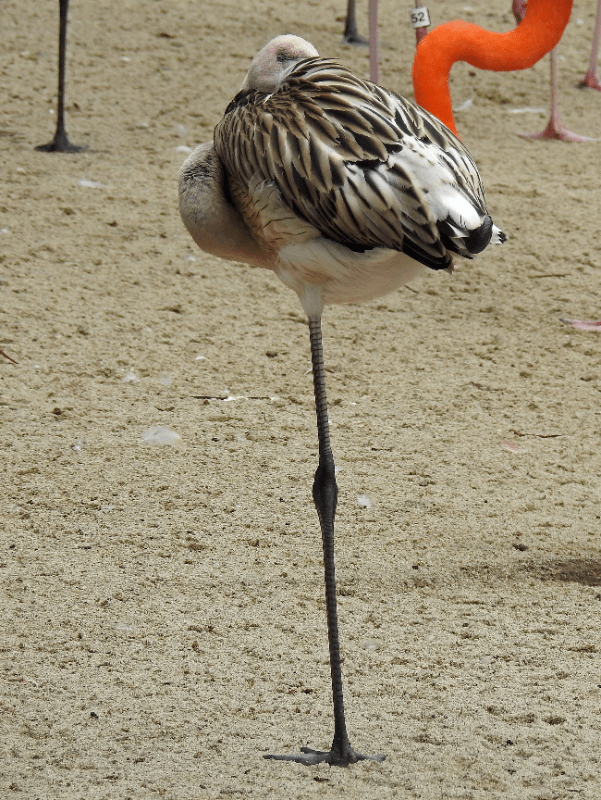
Figure 07. To get from fluffy puffball (left) to smooth-feathered juvenile (right), Greater Flamingos molt the old feathers and grow in new ones. Later, when this juvenile is ready to molt its feathers for more mature ones, it may molt all of them simultaneously, dropping all the flight feathers at once, rendering it unable to fly for a few weeks.
When not breeding, these flamingos may also be found in marshes, reservoirs, estuaries, and even rice fields that aren’t as high in salt or soda. This species can also accommodate to a wide range of altitude, from sea level to 10,500 feet up (0–3200 m). Juveniles may prefer to avoid sharing habitat with adults, so they often end up in wetlands with less for them to eat.
Movements and Migration
Differing populations of Greater Flamingos show differing migration patterns. For instance, among the populations in the Middle East and around the Mediterranean Sea, some birds overwinter near their breeding colonies, whereas others migrate south to elsewhere in the Mediterranean or in northern Africa. In eastern Africa, however, breeding populations typically stay put, though they may move nomadically among a series of lakes along the Great Rift Valley.
Weather patterns affect migration, too; for instance, decreased precipitation may lead to increased migration. Greater Flamingos are also highly philopatric, preferring the locations where they were hatched, but they still may disperse widely, then return. (Researchers know about these movement patterns based largely on studies of banded birds.)
Figure 08. Some Greater Flamingos migrate, whereas others don’t. The most likely explanation for the difference? If you already have plenty of delicious food and a comfy habitat, why leave? If you don’t, maybe it’s a good idea to look elsewhere.
There are some indications that birds with better body condition are 90% more likely to migrate than birds who are less healthy, but that hasn’t been established. Among those Greater Flamingos who do migrate, they typically do so in flocks of 20–60 birds (mostly adults, but sometimes adults and juveniles), though flocks of fewer than 20 and more than 300 have been recorded. When flying over seas, they tend to fly between just above the sea’s surface to little more than 164 feet (50 m) above. Over land, however, they have been observed or tracked by radar, flying 6,600–19,700 feet (2,000–6,000 m) above the ground. Adults migrate both by day and by night. Juveniles typically take flight just after sunset and fly at night.
When flying intermediate distances, Greater Flamingos have been clocked at 31–37.3 mph (50–60 km/h). Interestingly, when flying either short distances (<124.3 mi, <200 km) or longer distances (>>497 mi, >>800 km), Greater Flamingos have been seen flying 37.3–43.5 mph (60–70 km/h). The maximum speed recorded for a Greater Flamingo was 56 mph (90 km/h). They can show great stamina, too, with one bird recorded as flying for 15 hours nonstop. The longest nonstop flights were by one bird who flew 596 miles (959 km), then stopped for 8–9 hours, and then flew another 708 miles (1,139 km) nonstop.
Females, with their lighter, smaller bodies, expend less energy to fly, and they have been observed flying faster than males. Greater Flamingos also have less mineral density in their bones, compared with soaring birds, such as raptors. That, too, lightens their load. Another energy saver is their pattern of flight in flocks; by aligning themselves in rows or in a “V” shape, they minimize the energy costs of flying for the birds behind the lead birds. (Presumably, they trade off the lead position.)
Diet and Foraging
According to AviBase, about 80% of the foods consumed by Greater Flamingos are invertebrates, such as crustaceans (brine shrimps, etc.), molluscs, insects (aquatic, terrestrial, larval), worms. The other 20% or so is plant matter — blue-green algae, diatoms, decaying leaves, seeds such as rice or marsh grasses.
According to Birds of the World (online), “the energetic gain when it feeds on rice (intake rate = 0.45 kJ/s) was 16 times higher than when feeding on Artemia [brine shrimp], and 375 times higher than when feeding on chironomid [flies] larvae” — quite a difference!
Greater Flamingos also consume bacteria and other organic matter that’s in mud they ingest, as well as occasional tiny fish or “fish fry” (baby fish). Most of the prey they consume is between 0.3″ and 0.4″ (8.2–9.7 mm), but they also capture food particles as small as 0.02″ (0.5 mm). Though their food is tiny, they eat a whole lot of it. As just one example, in one Greater Flamingo, researchers found about 16,000 seeds and about 1,000 larvae.
Greater Flamingo males typically weigh more than females, and they consume more food than females. In cold weather, Greater Flamingos also need to consume more food.
Figure 09. Greater Flamingos spend many of their waking hours foraging for food, almost always at dawn and dusk; in hotter weather, they usually also forage at night, and in cooler weather, usually also forage during the day.
Greater Flamingos spend many of their waking hours foraging for food. They’re crepuscular, feeding at dawn and dusk year-round. In summer, they also feed at night, between dusk and dawn (presumably when it’s less hot). (The nighttime feeding pattern may also correlate with the nighttime movements of brine shrimp.) In winter, they’re more diurnal, feeding from dawn through dusk. They feed in large flocks (sometimes many thousands of birds), and they roost in large flocks, too.
Greater Flamingos use a variety of foraging strategies, all of which involve using their bill to filter and extract food from the surrounding water. Making this strategy easier for them is their movable upper jaw (unlike most other birds and other animals), which isn’t rigidly fixed to its skull. (Try moving your upper jaw without moving your skull!) The bill is also densely packed with specialized tactile receptors for touch sensations. Researchers also suspect that these flamingos may have a well-developed sense of smell, based on a relatively large area in their nasal cavity, associated with olfaction.
Like other flamingos, the Greater Flamingo positions its head in the water so that the upper bill is upside-down and the lower bill is actually above the upper bill. The bill bends about 50 degrees downward, from about the middle of the bill. Like other Phoenicopterus flamingos, the Greater Flamingo’s narrow lid-like upper jaw has a shallower keel (ridge along its length) than the upper jaw of the Lesser Flamingo. Below the bend (toward the tip), the bill is straight and flat. This straight flat area on top of the upper bill, below the bend, is held upside-down and parallel to the muddy bottom of the lake when foraging.
Along the outer and inner edges of the upper bill are lamellae (ridges) made of keratin (the same substance that forms feathers and your fingernails and hair). The outer hook-like lamellae are coarser at the tip and finer at the base of the bill. The blade-like inner lamellae point inward and backward toward the throat. (Please see https://bird-brain.org/2026/06/28/flamingos-part-1/#lamellae , for more about lamellae.)
The lower jaw is positioned above the upper jaw when the bird’s head is upside-down, while filter feeding. Though the lower jaw holds fewer lamellae than the upper jaw, its keratinous serrated lamellae oppose the lamellae of the upper jaw, creating a finer mesh than would be possible with just the lamellae of the upper jaw. When the bill is closed, the intermeshing of the upper and lower lamellae leaves narrow slits (0.02″, 0.5 mm) through which water can escape, but not prey or other food particles; at the bill tip, the minimum spacing increases to 0.04″ (1.0 mm) — still pretty tiny!
By opening the upper bill to varying degrees, the flamingo’s lamellae can both keep food from entering the bill and keep food from leaving it. Flamingos can adjust the opening of the bill to exclude material from entering the bill and to filter the material that leaves the bill, keeping food in while forcing water, mud, and so on out. Typically, when excluding material from entering their bill, they open the gape between the upper and lower jaws to about 0.2″ (4–6 mm). (They manipulate their bills differently when feeding in coarse sand, rather than fine mud.)
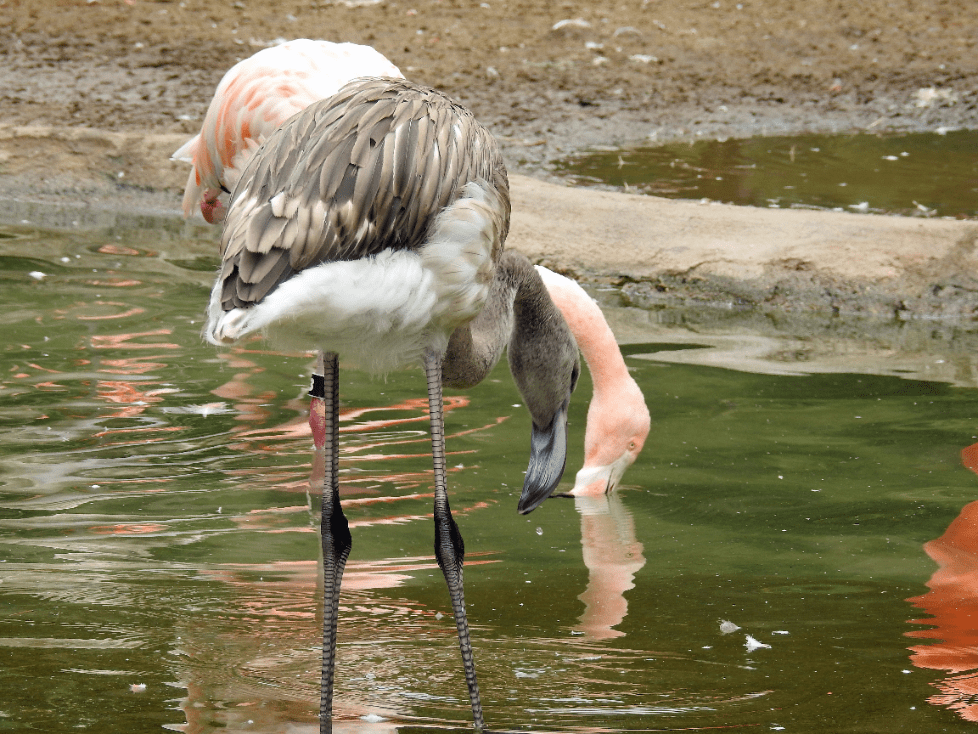
Figure 10. Greater Flamingos have specially designed bills, ideally suited for filter feeding — keeping out the overly large bits and keeping in the yummy edible bits.
The lower jaw also holds a thick, fleshy, mouth-filling tongue, muscular at its base. Atop the tongue are two parallel rows of about 20 small (0.1–0.2″, 3–5 mm) flexible lingual spines that point backward toward the throat. Observations of the tongue and jaws of captive flamingos have revealed that the tongue forcefully expels water through the filtering lamellae at a rate of four pulses per second. Between expulsions, the flamingo sucks prey-rich water into its bill. The flamingo coordinates tongue, bill position, bill opening, and lamellae, for optimal filter feeding. The lingual spines transport the food backward into the throat.
Typically, the Greater Flamingo feeds in shallow (2–20″, 5–50 cm deep) water. When necessary, however, it can forage in deeper water (35.4″, 90 cm deep), and it can swim in water up to 41.3″ (105 cm) deep, tipping itself bottoms-up to reach the lower levels of water. When swimming, it may also skim the surface of the water, swiping its bill side to side.
More typically, the Greater Flamingo feeds while on foot. Whenever it spots prey, it outstretches its neck and grabs the prey with its bill tip. Most prey, however, is caught by filtering the water through its bill. When food is less abundant, it may stamp the mud and lift its feet, or it may stir the mud (sometimes called “jig” movements), to move prey into the water near its bill, for filter feeding.
Another strategy used on muddy lake bottoms, channel foraging, involves the flamingo walking slowly, head down, as the bill creates a channel in the mud — about 0.4″ (1 cm) deep by about 6.5–10 feet (2–3 m) long — all the while extracting prey from the water. Similarly, in pit foraging, the flamingo will slowly turn in a circle, while the bill creates a pit about 25–38″ (63–96 cm) in diameter. This strategy works well for capturing microalgae. Interestingly, Greater Flamingos show a preference for always turning in one particular direction — 63.6% of them preferring counterclockwise movements, starting with the right leg.
Like other flamingos, Greater Flamingos will drink freshwater, rather than briny or hyperalkaline water, whenever it is available.
Aquatic habitats affect the feeding behavior of Greater Flamingos, but these flamingos — sometimes called “ecosystem engineers” — also affect the aquatic habitats where they live. Their behaviors prompt sediments and nutrients to shift around in the water, and their foraging also alters the topography of the substrates through which they move (e.g., creating channels, gullies, bowls, and mounds). They also affect the populations of invertebrates dwelling where they feed; these, in turn, can affect the plant species there. Their guano also affects the habitats where they forage.
Locomotion
Greater Flamingos spend most of their time walking while foraging, but they’re also great at flying. As mentioned in the discussion of migration, they have been clocked at flying up to 56 mph (90 km/h), and they have been documented as flying up to 15 hours nonstop and for many hundreds of miles. Part of their flight ability comes from their wing loading of about 1.04 g/cm² in males and about 1.09 g/cm² in females; 1 gram is less than 0.04 ounces, 1 cm² is about 0.16 square inches. Wing loading is the relationship between a bird’s total weight and the total area of both wings.
According to one source (https://www.mun.ca/biology/scarr/Wing_Loading.htm ; text material © 2002 by Steven M. Carr), hummingbirds weigh about 3 grams, with a wing surface area of 12.4 cm², for a wing load of 0.242 g/cm². Canada Geese weigh 5662.0 grams, with a surface area of 2820.0 cm², for a wing load of 2.007 g/cm². Peregrine Falcons weigh about 1222.5 grams, with a surface area of 1342.0 cm², for a wing load of 0.911 g/cm². A different source (https://agentcalc.com/bird-wing-loading-calculator ) gives Peregrine Falcon wing loading as 1.29 g/cm² (900 grams ÷ 700 cm²). Greater Flamingos have a wing loading of 1.04–1.09 g/cm² — an advantageous ratio for sustained flight.
Figure 11. These Greater Flamingos were strolling, foraging, and pooping at the San Diego Zoo’s African Marsh exhibit, where they never have to worry about water levels or adequate food.
The Greater Flamingo’s third mode of locomotion is swimming, when water is more than 3.2 feet (1 m) deep, which it can readily do while foraging, submerging its head and neck for 5–25 seconds at a time to find food. Chicks up to 10 days old are reticent about entering the water, but by 12 days, they readily enter it, and by 50–60 days, they can swim quickly and easily.
Self-maintenance Behavior
Preening and Bathing
Like other birds, Greater Flamingos preen to rearrange and align their feathers, as well as to remove ectoparasites that plague their skin and feathers. Before these flamingos preen their feathers, they rub their cheeks on the uropygial glands on their rumps. Unlike most other birds, the uropygial gland secretions of these flamingos are pigmented, so when they use their bill to spread those secretions, they not only protect their feathers but also tint them pinker. Greater Flamingos spend about 3–10% of their time preening. When freshwater is available, Greater Flamingos drink water and bathe in it, starting by age 15 days or so.
Sleeping and Roosting
To rest or to sleep, the Greater Flamingo usually lays its head on its back and curves its neck to one side of its body. Even while sleeping, it periodically opens its eyes, to surveil its environment. Often, it rests on one leg, which is actually an energy-saving strategy. Greater Flamingos roost in large flocks, with many other eyes monitoring for potential threats.
There seem to be seasonal variations in sleep patterns. For instance, in a location in Spain, these flamingos slept about 75% of the daytime from October to February but about 25% of the daytime from March to June, and they slept throughout almost all of the daytime from July to September. The time spent sleeping was quite different in other locations, however (e.g., sleeping only 2–11% of the daytime in winter in Algeria, but 18% of the daytime in Pakistan).
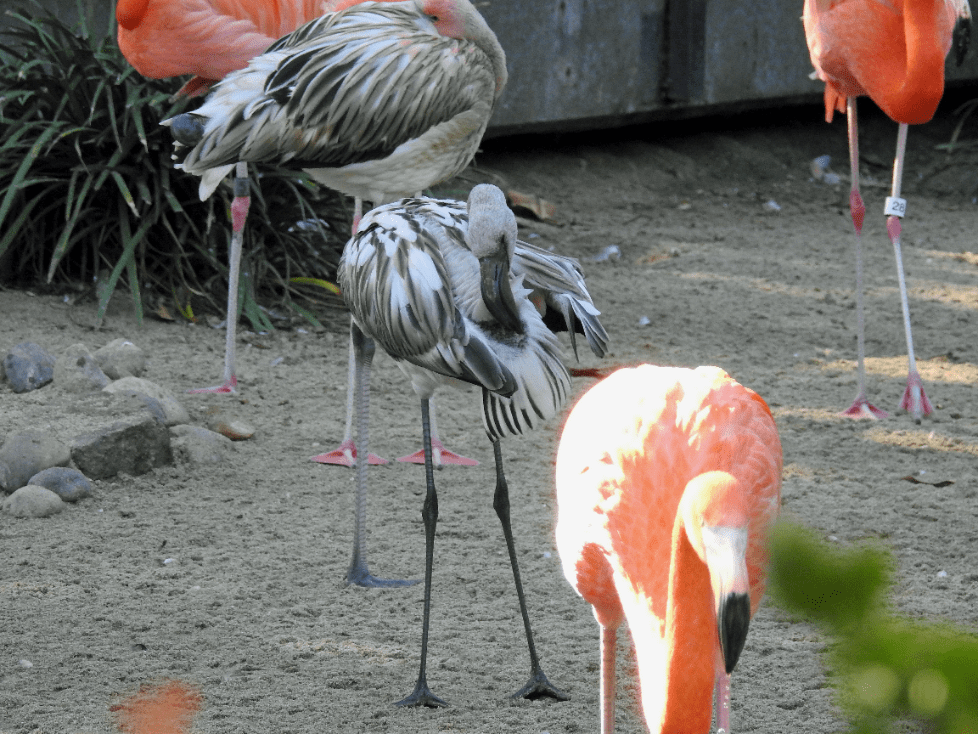
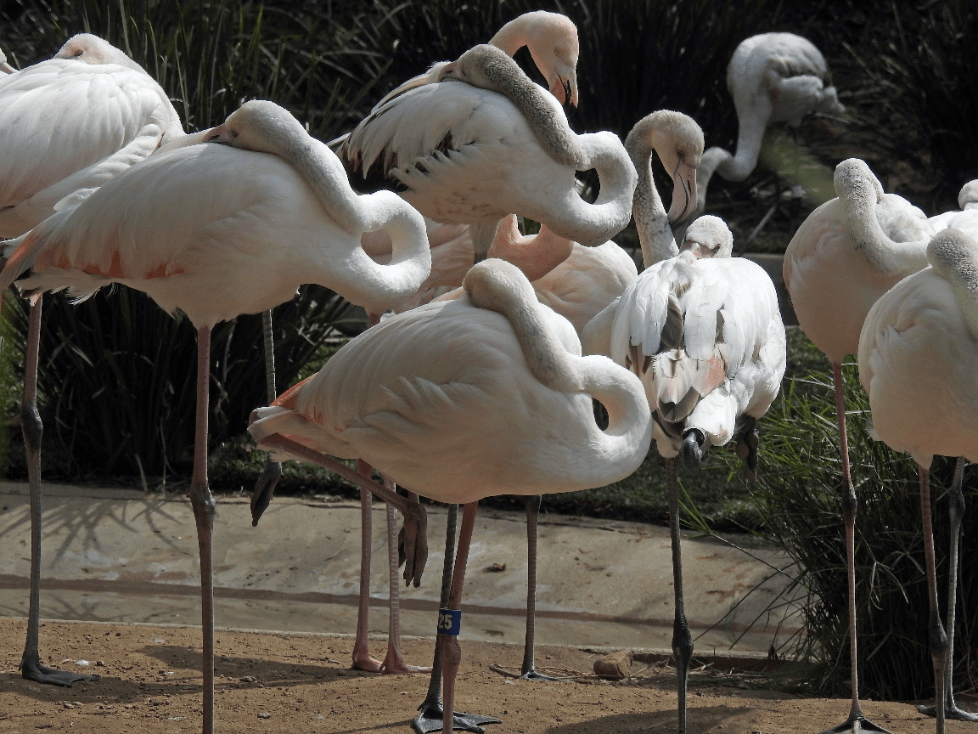
Figure 12. Greater Flamingos spend much less time preening (left) than they do resting (right). No idea why these particular flamingos seem to prefer resting their neck over the left shoulder.
Social Behavior
Greater Flamingos are highly gregarious year-round, commonly hanging out in flocks of 100–1000s outside of the breeding season, flocking to areas of abundant food at hypersaline or hyperalkaline lakes. They also molt and winter together. In some locations, these flamingos molt soon after breeding, becoming flightless for awhile, so they stay in large flocks in waters inaccessible to land predators. In sub-Saharan Africa, outside of breeding season, their flocks may also include numerous Lesser Flamingos. During breeding season, they form large flocks for not only feeding, drinking, and bathing, but also courting, breeding, nesting, and rearing their young.
Outside of breeding season, they show some degree of low-intensity agonistic behavior (defensive or aggressive), but such behavior may ramp up during breeding season. In the “Threat Display,” the aggressor raises its shoulder feathers while making repeated short, deep vocalizations. A defensive behavior is the “Hooking Posture,” in which the flamingo extends its neck, bill down, and bill tip pointing toward its chest, while rousing its back and shoulder feathers — making the defender look larger. If the aggression intensifies, the flamingos sway their necks side to side while continuing the threat display. Typically, one or both birds will decrease the aggression by showing submissive behavior, lowering the head and neck. During breeding season, agonistic behavior typically arises when birds either approach incubating birds or perhaps even try to steal nest material from other breeding birds.
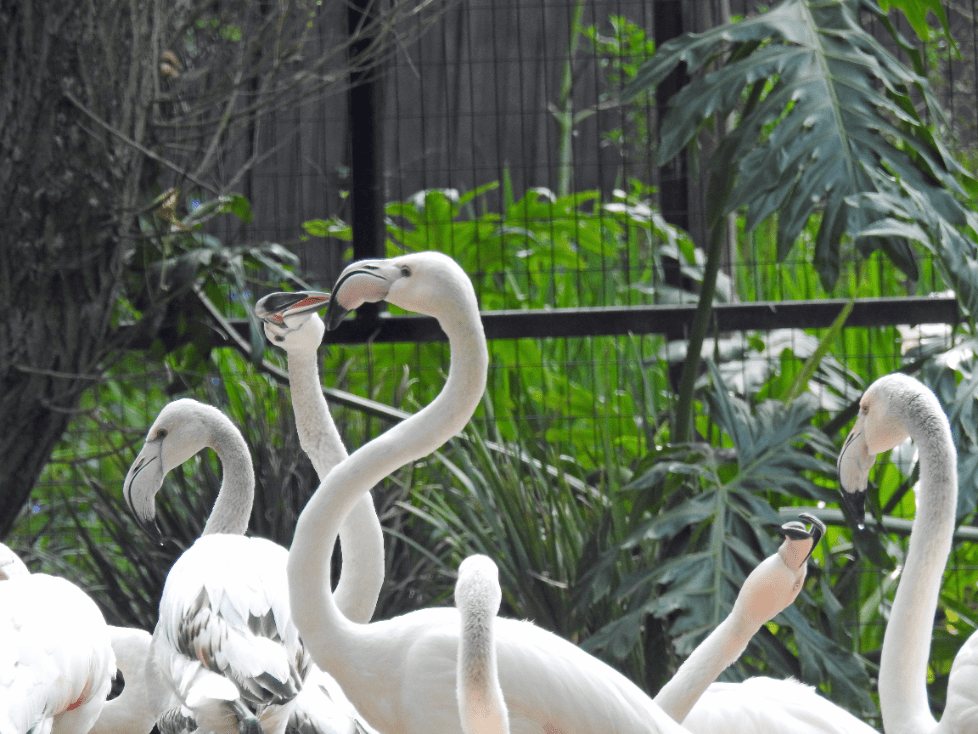
Figure 13. Greater Flamingos show agonistic behavior at times, but outside of breeding season, these disputes typically end before anyone gets hurt.
Numerous other bird species tend to feed near Greater Flamingos, profiting from the flamingos’ stirring various invertebrates into the water column: numerous gull and tern species, avocets and stilts, spoonbills and ibises, cormorants, herons, and Great White Pelicans (who actually follow Greater Flamingos when they leave a site). In return, some of these species provide early warnings of approaching predators and sometimes even harass the predators.
Breeding
Greater Flamingos breed colonially in large flocks (e.g., 20,000–200,000 pairs), usually with nests only 7.9–31.5″ (20–80 cm) apart. Most of the time, breeding occurs within pairs, but during the chick stage, these flamingos raise their chicks cooperatively in crèches.
Where and When
These flamingos show wide variation in breeding and hatching success, from year to year. A crucial factor is annual variations in rainfall (and resulting water availability) in the months leading up to egg laying. Adequate water levels are essential for breeding: too much rainfall, and nests may be flooded; too little rainfall, and the wetlands can dry out, killing the needed food for raising chicks. Another consideration is access to the nests by terrestrial predators; the surrounding water must be deep enough to deter them.
The water situation also affects the timing of breeding, which changes across locations and may change year to year. For instance, Asian and sub-Saharan populations breed following the rains, whenever that may be, and they sometimes breed there with Lesser Flamingos, too. A minimum amount of precipitation must be available at a breeding site, or they will not breed there. That may mean skipping a year of breeding if rainfall is inadequate.
Figure 14. The Greater Flamingos at the San Diego Zoo’s Safari Park are provided with optimal levels of water to ensure they can breed there.
Ideally, a breeding ground is best made on muddy substrates, which can be scraped and piled up to create elevated mounds resistant to flooding. If muddy breeding grounds aren’t available, they may make do with sandy or even rocky substrates, which don’t allow for the construction of tall mud mounds.
Courtship and Pair Bond
Greater Flamingos are seasonally monogamous, but they’re more likely than other flamingo species to seek a new mate each breeding season. If there is a breeding failure, they may even switch mates during the same season. In addition, extra-pair matings have been observed. Several months before the onset of breeding, while still on feeding grounds, Greater Flamingos engage in mixed-sex ritualized group courtship displays. Groups can be from 10–12 to several hundreds of birds, usually about half females, half males. Females tend to lead the group displays, whereas males tend to be situated toward the rear. During displays, the composition continually changes, with some birds joining the flock, while others are leaving.
During the courtship period, these flamingos also deliberately enhance their plumage colors. Individual flamingos rub their cheeks on the uropygial glands on their rumps. Their uropygial secretions include carotenoid pigments (e.g., canthaxanthin), and they then smear their pigment-coated cheeks onto their neck, breast, and the front of their back feathers — cosmetically painting themselves to be more colorful. Prospective mates take note of the intensified coloration. (After the courtship season, their bright plumage fades.)
Color alone won’t win a mate, however. A prospective mate has to have the right moves, to show off those colors. The complexity of an individual flamingo’s courtship displays indicates its age and its fitness; display complexity increases each year until about 20 years of age, after which it starts to decrease. The likelihood of finding a mate increased with the complexity of a bird’s courtship display. Flamingos with more complex displays — males and females — more readily attract mates. Both sexes seem to prefer older, more experienced individuals, so both sexes typically pair up with mates of a similar age.
Greater Flamingos display a wide array of postures and movements during courtship displays, such as the following.
- Alert Posture Display — bird stands upright, neck stretched upward, bill held high
- Head-flagging Display — bird keeps head and neck stretched upward but sways head side to side, while starting to vocalize loudly with a Contact Call (see Vocalizations)
- Wing-Salute — bird stops Head-flagging but keeps head and neck stretched upward, gives a contact call, and suddenly spreads its wings slightly backward
- Inverted Wing Salute — bird stretches neck forward, holds its tail up, and then flashes its wings partially open, above its back
- Hooking Posture — bird extends its neck, slanting it 30–60º forward, while hooking the bill downward, with the bill tip pointing toward the chest
- Wing-leg-stretch Display — bird stretches one wing and one leg outward for about 1–2 seconds
- Scratching Display — bird lowers itself and scratches its neck, placing its toes behind its chin
- Twist-preen Display — bird twists its neck and head to one side, flashes a wing downward on that side, and then appears to preen behind the extended wing
- Feather Preening — synchronized exaggerated preening movements by the group
- False-feeding Display — synchronized pretend foraging movements, in which the whole group trails their bills in the water then all lift up their heads
- Marching Display — synchronized walking, first in one direction, then in another direction
Copulation
Among Greater Flamingos, copulation is brief — 1–2 seconds of cloacal contact — and the total time for mounting, copulating, and dismounting lasts 6–10 seconds. Either partner can invite copulation, but typically, the female walks forward, the male follows her with outstretched neck and then mounts her while flapping his wings, lowering his neck, and tipping his head downward.
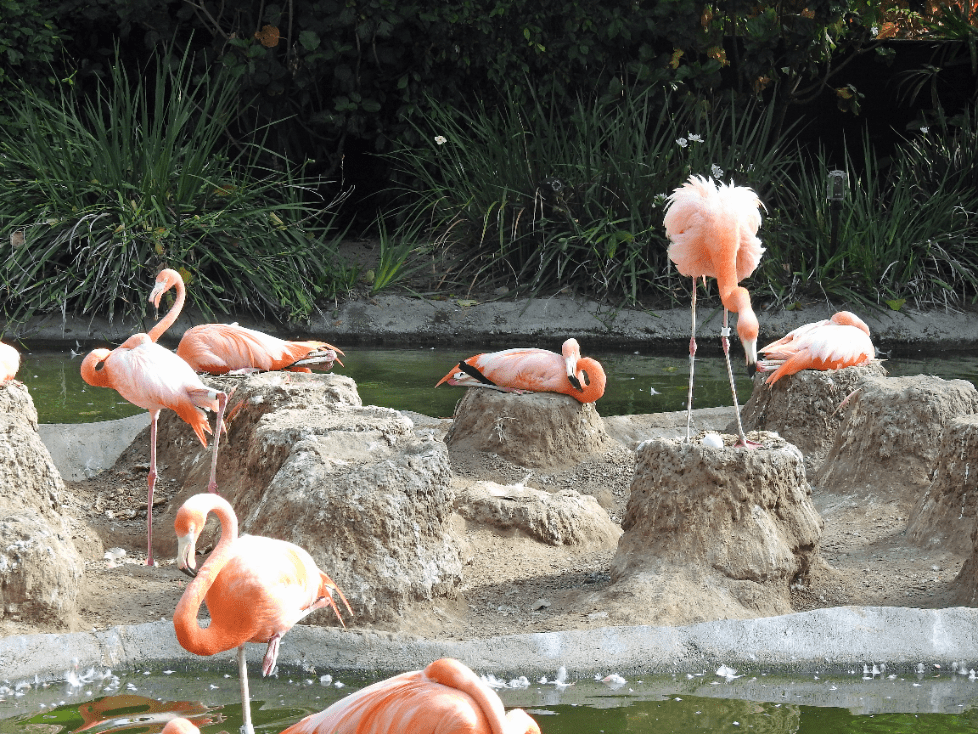
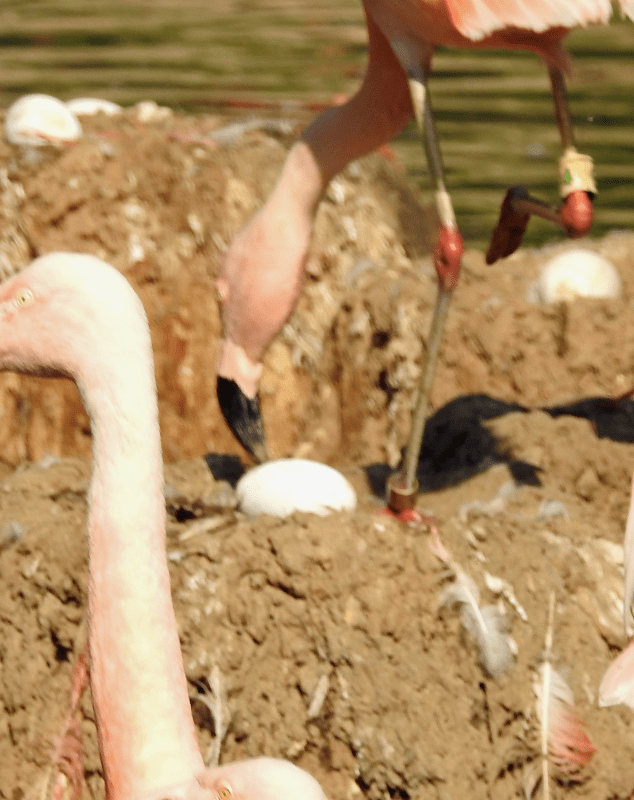
Figure 15. These flamingo nests at the San Diego Zoo and at the zoo’s Safari Park look similar to those of Greater Flamingos, though they are actually not. On the left are American Flamingo nests; on the right are Chilean Flamingo nests.
Nests and Eggs
Both partners choose a nest site, with older and more dominant pairs choosing better sites, earlier in the breeding season than younger and less dominant pairs. Greater Flamingos build nests in close proximity to one another — 14–31.5″ / 35–80 cm apart in one location; in another location, a 10.8 square feet (1 square meter) area hosted 0.88–2.9 flamingo nests. The distance has been described as “pecking distances between neighbors.”
A few days before the female lays their single chalky-white elongated oval egg, the partners build their nest. Initially, the male starts scraping mud toward himself, but soon both partners are building the nest by scraping mud up into a pillar, atop which is a shallow depression. When mud isn’t available, they may make do with sand or even a small pile of stones and debris. As needed, these flamingos can also nest directly on the ground. Typically, these flamingos don’t line their nests, but occasionally, they’ll add feathers, grasses, or stones.
When mud is available, nests may be 11.8–15.7″ (30–40 cm) high, sometimes with a circular trench surrounding the nest mound, about 7.9″ (20 cm) deep. The diameter at the base of the nest mound may be 19.7–23.6″ (50–60 cm), and the diameter around the rim at the top may be 9.8–15.7″ (25–40 cm). In contrast, a nest built on sand may be only 3.9–5.9″ (10–15 cm) high with an external diameter of just 14.5″ (36.9 cm). If the water level rises, the parents will add more mud to increase the height of the nest. Also, it’s not unusual for nests to be reused in subsequent breeding seasons, usually with repairs or improvements.
Though Greater Flamingos almost always lay just one egg, observers have sometimes (0.25–0.5%) seen nests with two — and rarely, even three! — eggs. Based on characteristics of the eggs (and the age of the growing embryo), researchers inferred that these eggs were probably not laid by the same female, so they believe that the occurrence of two (or more) eggs means a second female has laid her egg in the first female’s nest — typically as a nest thief in locations where nest sites are fewer than wannabe parents. Occasionally, however, two females — or sometimes three — will share one nest. The timing of egg laying is typically just a one-month period for all pairs in a colony (e.g., late February to late March in a Spanish lake), but when conditions are optimal, that period may last longer.
How Many Attempts?
Typically, each Greater Flamingo pair raises just one youngster from egg to fledgling each year. If the egg fails to grow to hatching, the couple may make a second attempt to breed that season if the loss occurs early during breeding season. Later losses aren’t replaced. On rare occasions, after two nest failures, a pair may attempt a third clutch if both losses occur relatively early in the breeding season. In captivity, pairs have made up to six breeding attempts within a season, with about 7–15 days between attempts. In the wild, the interval between attempts is 15–35 days, with males being more likely than females to try again. At one Kenyan lake, Greater Flamingos had two breeding seasons: October to February and April to August, with some birds breeding during both seasons. On the other hand, when conditions aren’t optimal for breeding, it’s common for these flamingos to skip a year, breeding only 76% of the years.
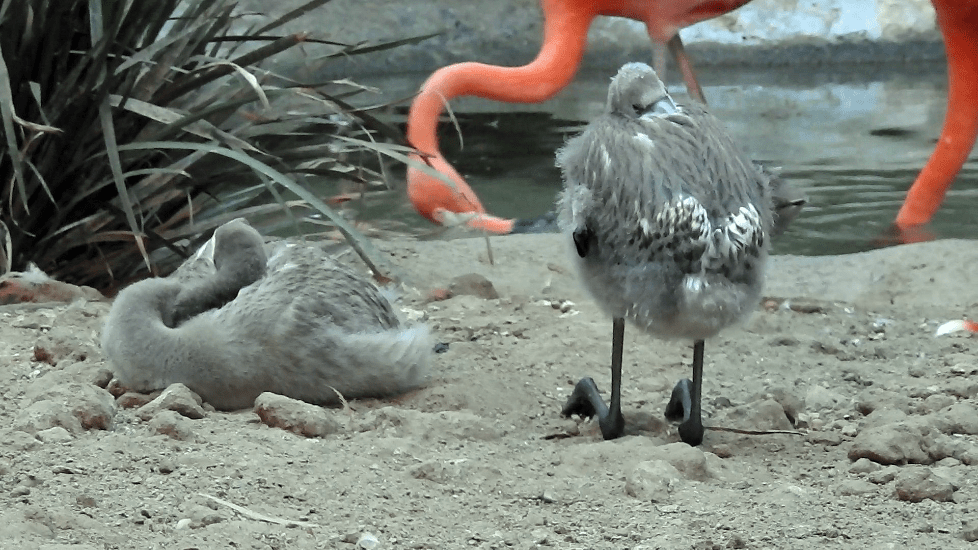
Figure 16. These Greater Flamingo chicks at the San Diego Zoo are being fostered by American Flamingo adults. Normally, these flamingos wouldn’t share the same habitat, but at the zoo, these foster parents feed their own crop milk to their foster chicks, and the youngsters thrive on it.
Incubation
The chalky white coating of the Greater Flamingo eggshell has a strongly hydrophobic (water-resistant) surface, which resists bacterial penetration. During incubation, lime from the environment may soil the eggshell. Both mom and dad incubate the egg for about 27–36 days, usually round the clock. In captivity, males are more involved in incubation and nest protection than females, presumably allowing females more time to feed and recover from egg laying. Continuous presence on the nest discourages predators, as well as other flamingos who might seek to usurp the nest. When nests were deserted (rarely!), it was usually the female who abandoned the egg. The only notable behavior at the changing of the guard is that the returning parent may shake mud off its feet before entering the nest.
Hatching and Hatchlings
It typically takes a Greater Flamingo hatchling about 24–48 hours from the time it first pips a crack in the shell until it fully emerges. The parent uses its bill to remove the sharp shell fragments and then plops down on the hatchling. The hatchlings — about 9″ (22.5 cm) long, bill to tail — don’t stand and move out of the nest until 2–3 days after hatching. At about 7–10 days after hatching, these precocial and seminidifugous chicks leave the nest to explore their colony. At first, the chicks are closely followed by their doting parents, who vigorously defend them against potential threats, even other flamingo chicks.
By 10–12 days, flamingo chicks join crèches of fellow chicks; they can swim by this age, too. These crèches also include 1–8 adults for every 100 or more chicks. Once chicks enter the crèches, parental brooding stops, but the chicks continue to be fed high-protein, high-fat crop milk by both parents. Crop milk also contains glucose, carotenoids, and even blood provided by the parents. The begging calls of chicks seem to stimulate the parents to secrete crop milk; the parents deposit the crop milk directly into the chick’s bill, bill-tip to bill-tip. While feeding, the chicks make different vocalizations, the effect of which isn’t known. Feedings may last more than 20 minutes at a time, lengthening as the chick grows larger (e.g., starting out at just a few minutes for hatchlings).
The chick stores this milk in its crop, which bulges after feeding; the milk may take hours to be absorbed fully by the chick. In a chick older than 30 days, a full crop may hold up to 18% of the chick’s body mass. To provision their chicks, parents must sometimes fly to other wetlands (often at night) to acquire enough food to feed themselves and their young. When food is more abundant nearby, chicks are fed more often and in larger quantities.
At first, the chicks’ bills are straight, not bent like the bills of adults, but by 39 days after hatching, their bills are curved.
Fledglings
At about 60–70 days, chicks start flapping their wings. Fledging occurs at an age of 71–98 days after hatching. The fledglings’ wing length is about 95–100% of the wing length of adults, though their legs remain shorter than those of adults. Fledglings are rarely fed by parents after they can fly. In locations with less abundant food, fledging takes longer. At about 80–139 days, juveniles leave the breeding area. When they leave, their body mass and leg length still haven’t reached that of adult flamingos.
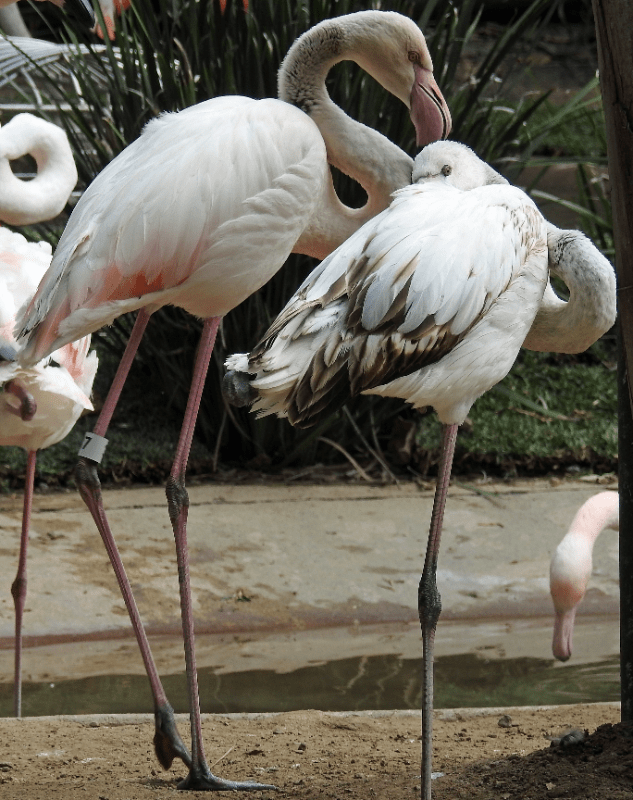
Figure 17. These Greater Flamingo juveniles can feed themselves. Their wings are probably adult length, but their legs haven’t yet reached adult length. (On the left are Greater Flamingos at the zoo’s Safari Park; on the right are those at the San Diego Zoo, fostered by American Flamingo adults.)
Sexual Maturity and Breeding Success
Technically, Greater Flamingos are sexually mature by 3 years of age, but few start breeding at this age. Females don’t start reproducing until they’re 5–6 years old, and the average age of first breeding overall is 4–8 years, with 5 being more typical. Average generation length is 14.7–17.1 years. In three different locations, hatching success ranged from 0–88% (mean 53%) to 4.5–98% (mean 70%) to 77% overall. Factors affecting success included exposure (weather) and either depredation or predator disturbance.
Overall breeding success is often tied to rainfall and food availability. In natural wetlands, success may vary widely (e.g., 10.6–77.5% success, with one instance of 92% breeding success) between locations in a given year and between years in a given location. Intense competition for nest sites can also imperil breeding success; sometimes, Great White Pelicans can also compete for nest sites desired by Greater Flamingos. In managed wetlands, variation among sites and years is less, and the likelihood of breeding success is greater. Predation (e.g., by Marabou Storks, wild boars), adverse weather, and human disturbance increase breeding failures. An additional factor is the age of the parents, with parents having increasing success as they aged from 4 to 15 years.
Maturity and Lifespan
Greater Flamingos can live long lives, documented as living up to 30–44 years or more in the wild, based on banding studies; two captive birds were documented to live 83 years and more than 60 years. Upon reaching adulthood, annual survival is 92%, except that females who attempt breeding before reaching age 7 years may have lower survival rates. In one study, the survival rate in the first year was 83.7%, from the first to the second year was 71.5%, and it was 88.8% from the second to the third year.
During incubation, hatching, and fledging, both eggs and chicks are subject to predation by gulls, crows, vultures, and raptors, and even by jackals and lions. Predation on eggs and chicks increases when water levels are low, allowing for easier access by terrestrial predators. Gulls typically take eggs and chicks directly from a nest, by pecking at the parent to move away, or from a crèche, usually doing so at the edges of a crèche. One study found that 42% of predation attempts were successful. Another important predator, Marabou Storks, caused 1.8% of egg mortality and 36.5% of chick mortality, according to one source. What’s more, these storks can cause an entire flock to abandon their nests, sometimes only temporarily, but sometimes altogether. After the young have fledged, predators of immature and adult flamingos include boars, badgers, feral dogs, foxes, hyenas, and Eurasian Eagle-Owls.
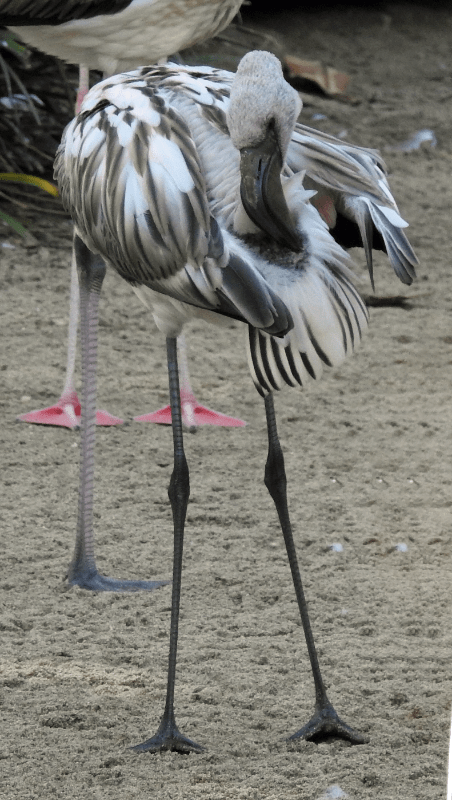
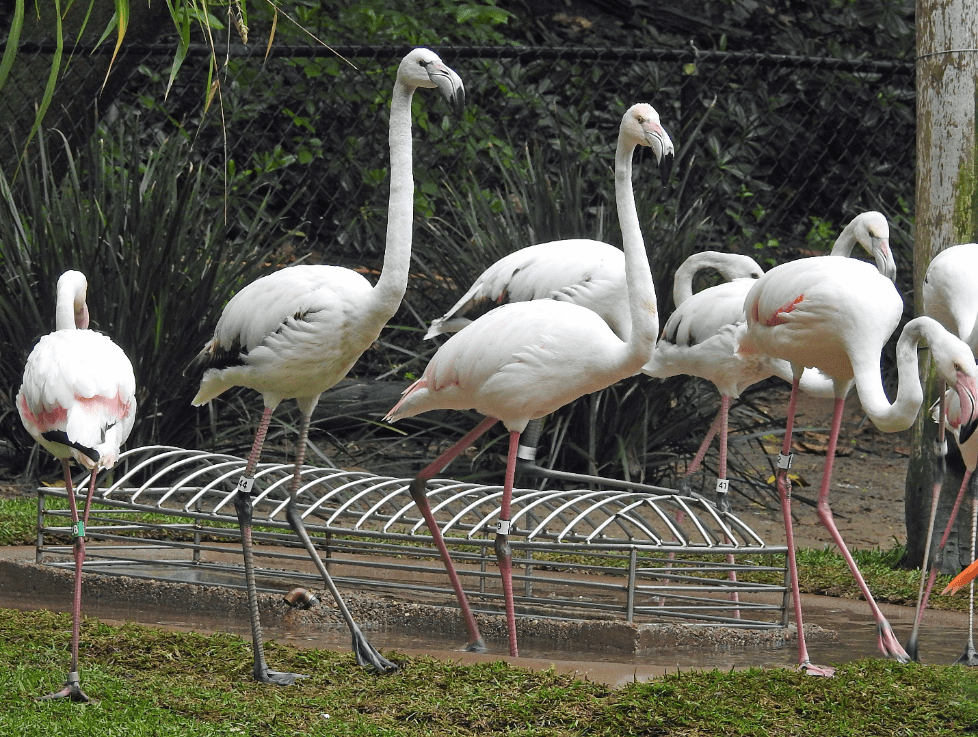
Figure 18. In the wild, Greater Flamingos face many hazards, especially before they fledge and continuing for their first couple of years. In the San Diego Zoo, however, they face no immediate threats.
Greater Flamingos can deter predators in a few ways. Individual parents can be vigilant, raising their heads often to scan for threats. They have also been seen using a threat display to ward off the approach of a predator. Larger flocks also deter predators, and nest sites central to the flock are safer than nest sites on the periphery. Even chicks in crèches can deter predators both by compactly pressing into dense masses and by moving closer to other birds, such as terns, who will fend off gull predators.
Other threats to longevity include habitat degradation or destruction, such as through humans draining wetlands or converting wetlands to agricultural development (e.g., rice fields), construction of dams or diversion of water flow, groundwater extraction, soda-ash mining, and the human-caused climate crisis. Direct human disturbances to Greater Flamingos include hunting (humans have hunted this species for thousands of years), trapping, collisions with vehicles or structures or powerlines, and lead poisoning such as from gunshot. Humans also pollute their waterways (e.g., heavy metals such as cadmium and mercury, pesticides and other chemical pollutants, sewage) and encroach on their habitat (e.g., by all-terrain vehicles or by low-flying aircraft). In some locations, humans even directly harm them, such as by capturing them for sale, by collecting their eggs for consumption, or simply by disturbing the nest colony, prompting colony abandonment or other losses (e.g., 3.5% of eggs lost at two Kenyan locations).
Natural and unnatural toxins threaten them, as do diseases (e.g., tuberculosis), bacterial infections (e.g., Pseudomonas-caused septicemia, botulism), viral infections (e.g., West Nile Virus, avian influenza, Newcastle disease), fungal infections (e.g., Aspergillus fumigatus). Ectoparasites afflict their skin and feathers, and endoparasites such as nematodes, trematodes, and cestodes plague them internally. Blooms of toxic cyanobacteria can also kill chicks. Heavy rainfall can cause flooding and other sources of breeding failure; other weather, such as hail, drought, freezing temperatures, and high tides can sometimes kill adults, too.
Conservation
According to the IUCN Red List of Threatened Species, the conservation status of Greater Flamingos is LC, Least Concern. One reason for this status is its very large range and its overall population estimated at 690,000–910,000 individuals — with the proviso that accurate censuses are still needed. No population decline has been detected, either over 10 years or over three generations. According to the IUCN, “most of these estimates are based on expert opinion and should be treated with caution.” Another consideration is that Greater Flamingo populations at least partially fluctuate in response to unpredictable fluctuations in the environment, such as the number of suitable nest sites available, the abundance of prey available, favorable or detrimental weather conditions, and so on.
In Afghanistan, an imam decreed that the Greater Flamingo should be given a level of protection because of its pink plumage. There, Greater Flamingos are “in the pink.”
In many locations, Greater Flamingo nesting and foraging wetlands are now protected, and in some areas, their nesting colonies are actively protected by guards who protect them from hunting, theft, capture, and disturbance. Other steps include predator control, removal of lead shot, erosion control, and translocation of pre-fledgling chicks from a dessicated area to a wetland.
To prevent or minimize conflicts between flamingos and farmers, hedges were added to surround rice fields, and lights and other deterrents were used for discouraging flamingos from visiting rice fields at night. In addition, various conservation sites have been identified throughout their range, and systematic monitoring is being conducted in some locations. International management and trade controls are being proposed or have been adopted.
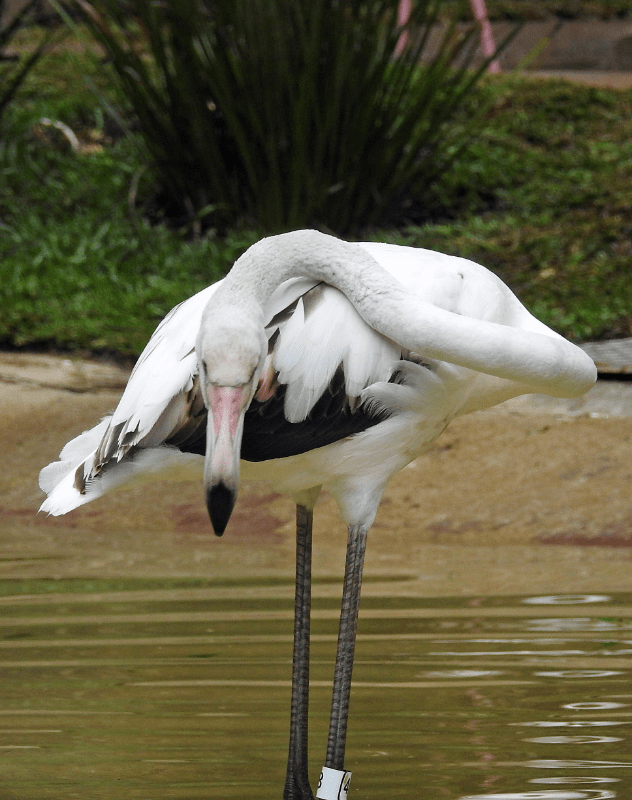
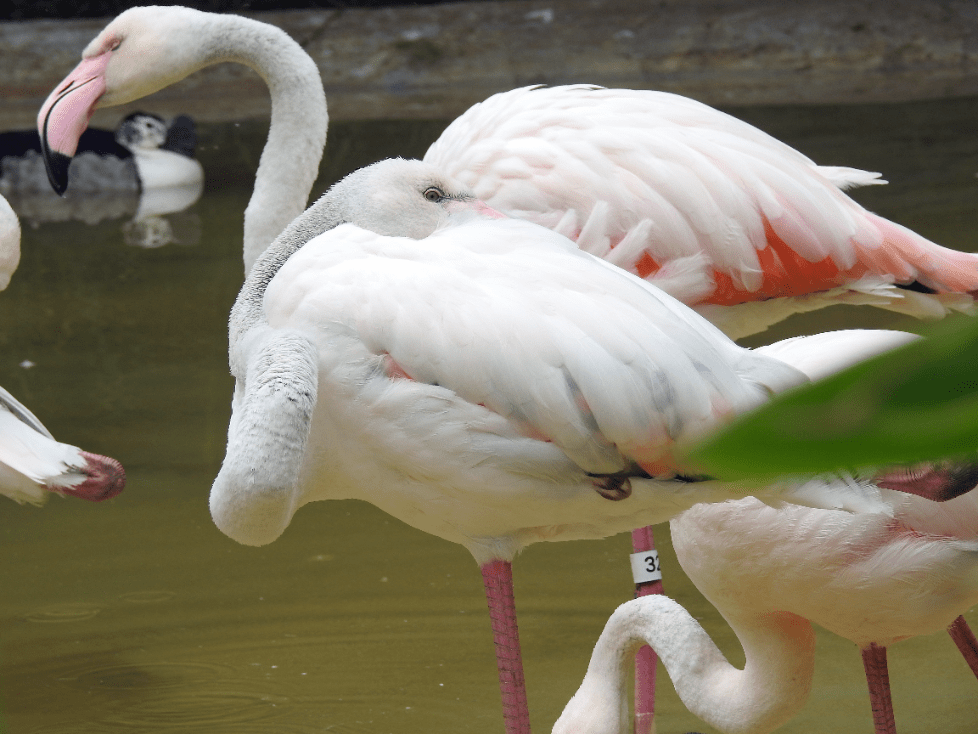
Figure 19. These Greater Flamingo beautifully illustrate what motivates conservationists to try to protect these flamingos from habitat destruction, predation, and other threats.
Global opportunities for captive breeding also provide a genetic reservoir for this species, as well as opportunities for research and for conservation and education. In 1959, Zoo Basel was the first zoo to successfully hatch a Greater Flamingo. Since 2000, about 20–27 birds have hatched there each year.
Observations
The Cornell Lab of Ornithology gathers information from observers around the world through the eBird app and website (https://ebird.org/species/grefla3 ), which holds 308,200 observations, 31,452 with photos, and 388 with audio recordings. The lab’s Macaulay Library website (https://search.macaulaylibrary.org/catalog?taxonCode=grefla3 ) holds 61,509 photos, 427 audio recordings, and 589 videos. In addition, iNaturalist gathers observations with its app and its website (https://www.inaturalist.org/observations?taxon_id=73222 ), which offers 34,056 observations, each including a photograph, audio recording, or video.
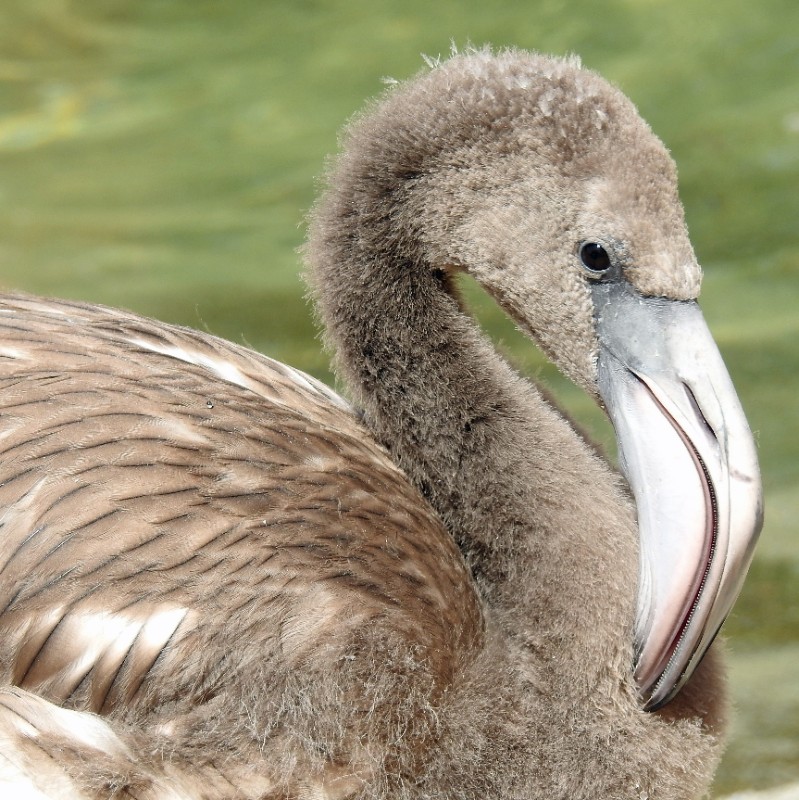
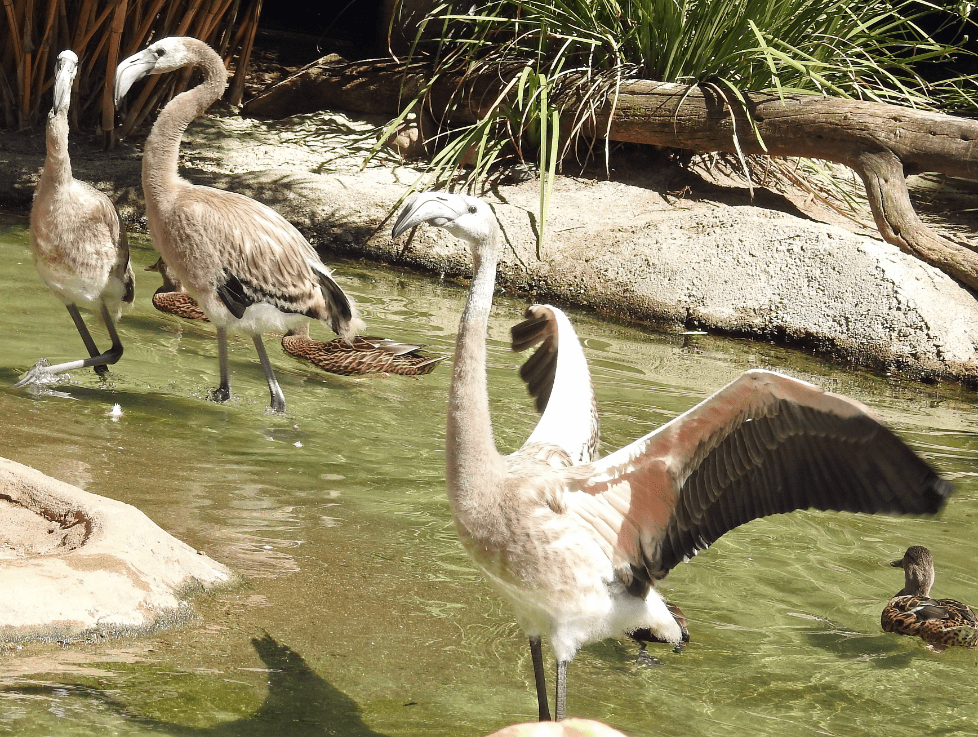
Figure 20. These Greater Flamingo adults and juveniles at the San Diego Zoo and its Safari Park enjoy companionship among a much smaller flock than they would have in the wild.
References
Greater Flamingo, Phoenicopterus roseus
- Elphick, Jonathan. (2014). The World of Birds (p. 326). Buffalo, NY: Firefly Books.
- Lovette, Irby, & John Fitzpatrick (eds.), (2016). The Cornell Lab of Ornithology Handbook of Bird Biology (3rd ed.). Hoboken, NJ: Wiley.
- Winkler, David W., Shawn M. Billerman, and Irby J. Lovette. (2015). (p. 254), Bird Families of the World: An Invitation to the Spectacular Diversity of Birds. Barcelona: Lynx, Cornell Lab of Ornithology.
- Salvador, A., M. Á. Rendón, J. A. Amat, and M. Rendón-Martos (2024). Greater Flamingo (Phoenicopterus roseus), version 3.0. In Birds of the World (S. M. Billerman and B. K. Keeney, Editors). Ithaca, NY: Cornell Lab of Ornithology. https://doi.org/10.2173/bow.grefla3.03 https://birdsoftheworld.org/bow/species/grefla3/cur/introduction
- https://en.wikipedia.org/wiki/Greater_flamingo
- Greater Flamingo, https://avibase.bsc-eoc.org/search.jsp
- Greater Flamingo, Avibase Life History, https://avibase.bsc-eoc.org/species.jsp?lang=EN&avibaseid=0F9B5174A8ACF737&sec=lifehistory
- Greater Flamingo, iNaturalist, https://www.inaturalist.org/observations?taxon_id=73222
- Greater Flamingo, IUCN Red List, https://www.iucnredlist.org/species/22697360/155527405
Etymology
- Gotch, A. F. [Arthur Frederick]. Birds—Their Latin Names Explained (348 pp.). Poole, Dorset, U.K.: Blandford Press.
- Gruson, Edward S. (1972). Words for Birds: A Lexicon of North American Birds with Biographical Notes (305 pp., including Bibliography, 279–282; Index of Common Names, 283–291; Index of Generic Names, 292–295; Index of Scientific Species Names, 296–303; Index of People for Whom Birds Are Named, 304–305). New York: Quadrangle Books.
- Lederer, Roger, and Carol Burr. (2014). Latin for Bird Lovers: Over 3,000 Bird Names Explored and Explained (224 pages). Portland, OR: Timber Press.
Text and images by Shari Dorantes Hatch. Copyright © 2026. All rights reserved.
Images were recorded at the San Diego Zoo and at the zoo’s Safari Park.


Leave a Reply