
Lesser Flamingo, Phoeniconaias minor
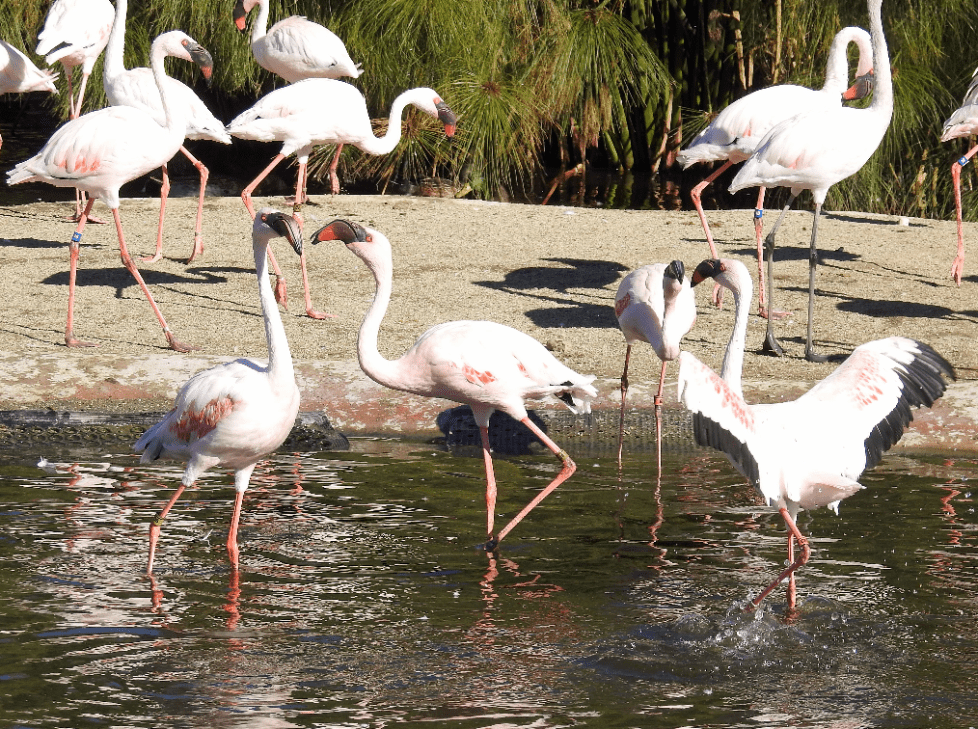
Figure 01. Though the Lesser Flamingo is the smallest member of the flamingo family, it’s still quite a tall bird. And what a fun bird to watch, right?
This is the second of a few blogs about flamingos (the first is https://bird-brain.org/2026/06/28/flamingos-part-1/ ). This blog focuses on the Lesser Flamingo, Phoeniconaias minor, as follows:
- Taxonomy
- Description
- Distribution, Habitat, Migration
- Food and Foraging
- Vocalizations
- Social Behavior and Breeding
- Lifespan and Survival
- Conservation Status
- Observations
- References
Among the six species in the Phoenicopteridae family is this one-species genus Phoeniconaias. The prefix Phoenico- comes from Greek phoinikos, meaning “red.” The suffix -naias also has Greek origins, meaning “water nymph.” Not surprisingly, the species name minor refers to this flamingo’s diminutive size (for a flamingo!).
Taxonomy
To summarize the taxonomy for this flamingo species: kingdom, Animalia; phylum, Chordata; class, Aves; order, Phoenicopteriformes; family, Phoenicopteridae; genus, Phoeniconaias; binomial species name Phoeniconaias minor. In Spanish, it’s called “Flamenco Enano,” dwarf flamingo. In 1798, naturalist Étienne Geoffroy Saint-Hilaire identified this flamingo as a member of the Phoenicopterus genus, Phoenicopterus minor, based on a specimen from Senegal (in French, https://www.biodiversitylibrary.org/item/28082#page/258/mode/1up ).
In 1869, George Robert Gray, zoologist and head of ornithology at the British Museum, designated this species as Phoeniconaias minor, in this one-species genus.
For fun, please see his earlier (1849) publication, The genera of birds : comprising their generic characters, a notice of the habits of the genus, and an extensive list of species referred to their several genera by Gray, George Robert, (1808–1872); Mitchell, David William; this work, published two decades prior to his identification of the Lesser Flamingo, subsumes the entire family of flamingos within the Anseriformes order, along with ducks and geese, https://archive.org/details/generaofbirdscom03gray/page/n290/mode/1up ).
Apparently, a second, now-extinct, species has been identified within this genus, Phoeniconaias proeses; it was even smaller than the Lesser.
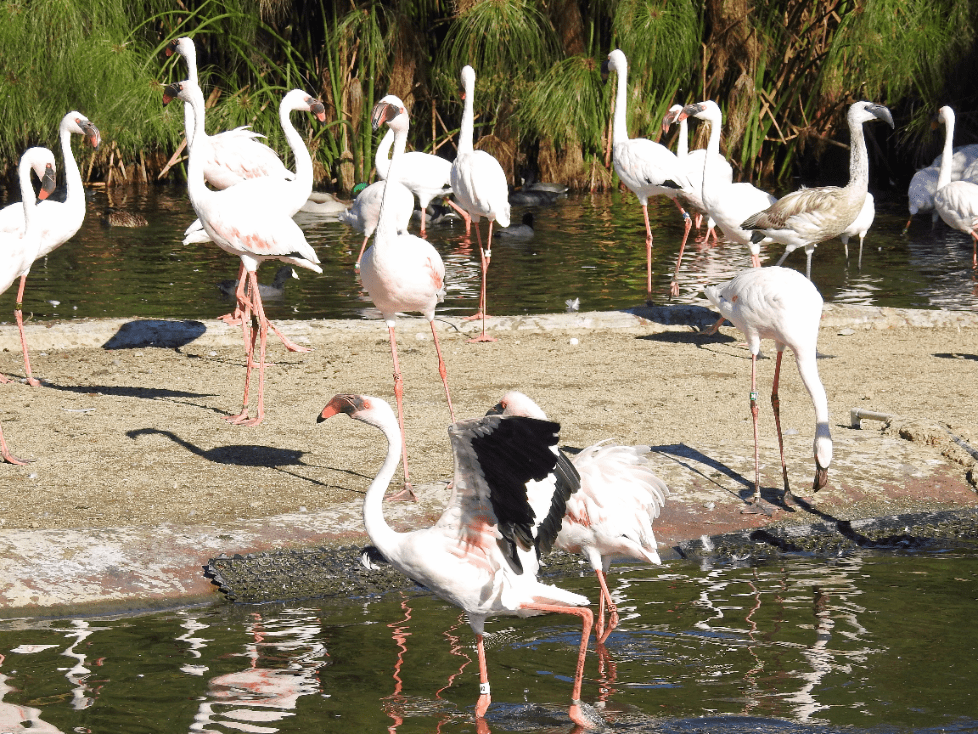
Figure 02. It took ornithologists a few generations to figure out where Lesser Flamingos fit into the flamingo family.
Description
Bearing in mind that all flamingos are extraordinarily tall birds, the Lesser Flamingo is the smallest member of the flamingo family, with females being slightly smaller than males. They weigh 2.6–6.0 pounds (1.2–2.7 kg, but typically 1.5–2 kg); hatchlings start out at 3 ounces (<0.2 pounds, 85.5 g). Adult length (bill to tail) is about 35–41 inches (90–105 cm); wingspan is about 37–39 inches (95–100 cm); and tail length is 3.5–4.3 inches (8.8–11 cm). Standing, these flamingos reach 31–35 inches height (80–90 cm). Compare the length of its short tail (about 4″) to the length of its long tarsus (bone from ankle to [webbed] toes), about 7–8.1″ (17.7–20.6 cm). Adult legs and feet are pink; chicks’ and juveniles’ are black.
Please see https://bird-brain.org/2026/06/28/flamingos-part-1/#Standing for pictures of how the flamingo’s leg bends forward from the ankle to the toes.
Unlike the three Phoenicopterus species of flamingo, the Lesser Flamingo and the Andean and James’s Flamingos have bills with a “deeper keel” that curves more sharply and deeply than the bills of the other three. In addition, their bills contain a more complex arrangement of tiny lamellae (bumpy ridges or spikes) — thousands in the Lesser Flamingo. This dense arrangement lets them carefully extract just microscopic phytoplankton (mostly blue-green algae and diatoms) from the water, rather than macroscopic zooplankton (tiny visible animals) and other food particles on the surface of the silt, which the other three species consume. Because of these differences in their bill structure, two species (e.g., a Lesser and a Greater) can eat side-by-side without competing for food.
Whereas all flamingos have black-tipped bills, the Lesser Flamingo’s bill is almost entirely dark, with the lower mandible of many adults having a dark-rosy area. The bill’s measurements reveal its size: bill length 3.7–4.3″ (9.3 – 10.8 cm; cf. 4″ tail), depth 1.3–1.5″ (top to bottom, 3.2–3.8 cm), and width 1″ (side to side, 2.6–3 cm). Bare skin on the head, such as the orbital skin surrounding the eyes, is dark, often black.
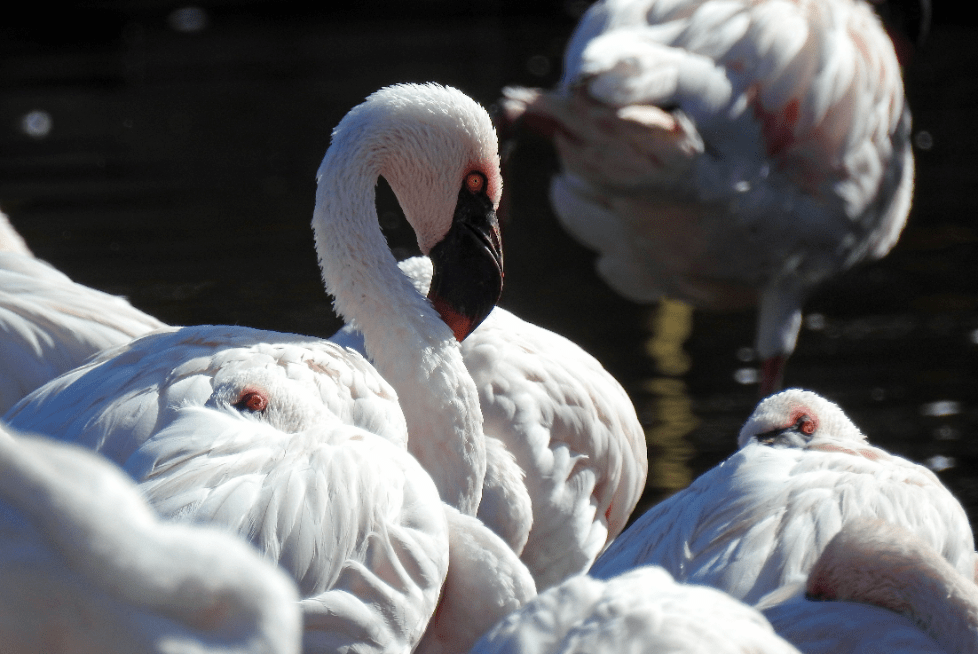
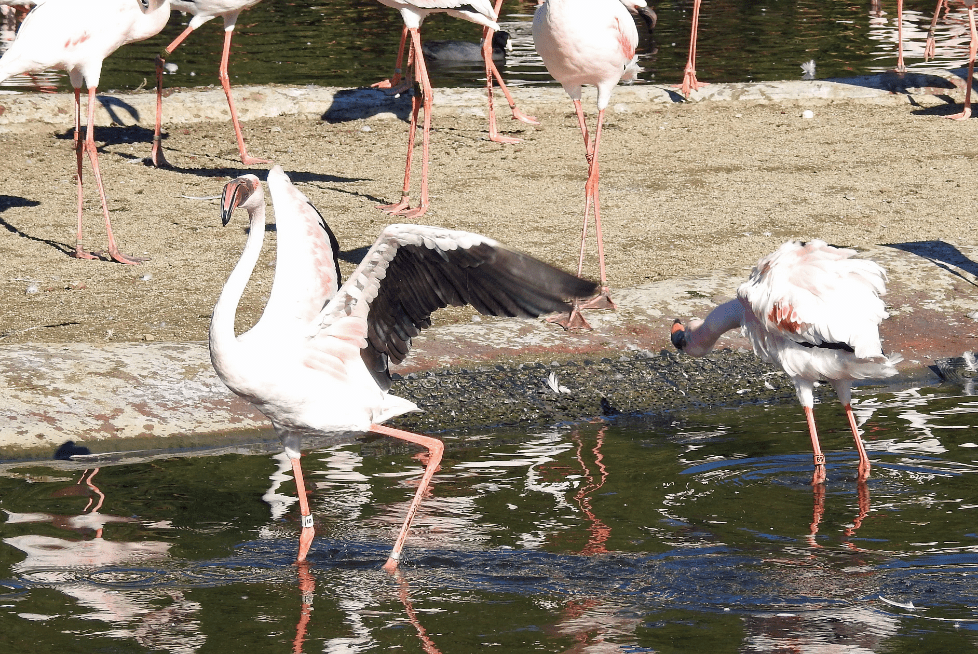
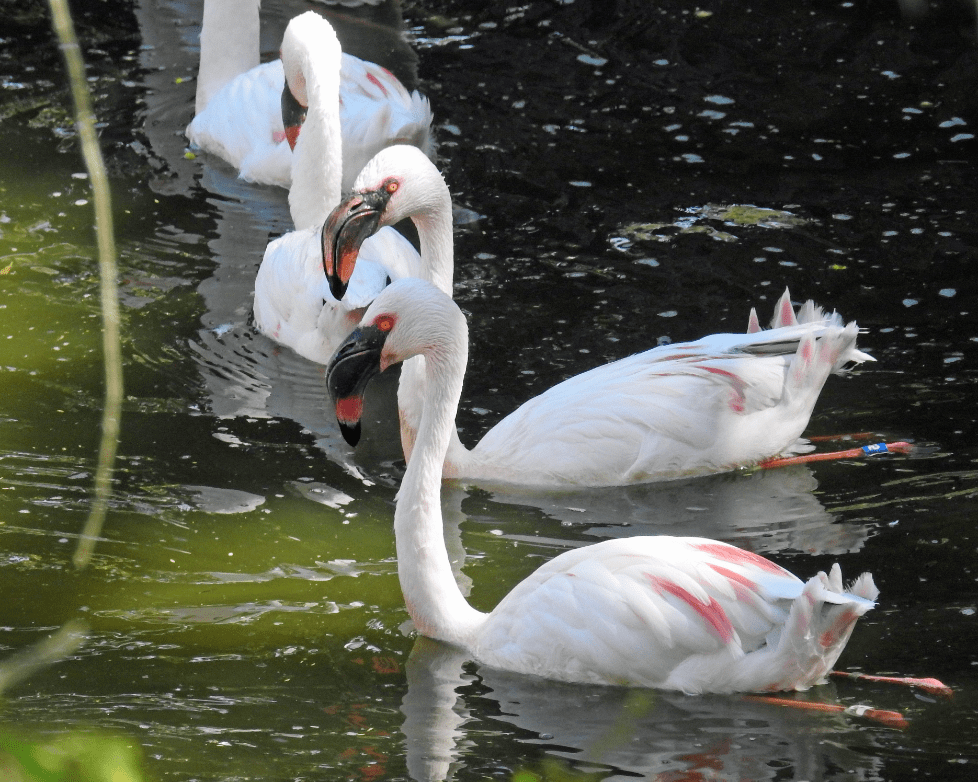
Figure 03. Lesser Flamingos are certainly among the most unusual birds in nature, with their pink eyes and plumage and their distinctive dark bills. The black trailing edges on their wings contrast with their otherwise pale pink plumage (and legs).
The Lesser Flamingo’s plumage is mostly pale pinkish, with rosy accents. Juveniles are more grayish, brownish (especially the head and neck), acquiring their pinkish hue over time (e.g., see a maturing juvenile, https://macaulaylibrary.org/asset/660232874 ; https://macaulaylibrary.org/asset/660138241 and https://macaulaylibrary.org/asset/659798968 show smatterings of juveniles at various stages of maturation, along with adults).
Distribution, Habitat, Migration
Distribution
Most Lesser Flamingos can be found in alkaline and saline lakes in the Rift Valley of eastern Africa, but many can also be found in sub-equatorial Africa (including Madagascar), as well as the western coast of super-equatorial Africa, and in Gabon, Kenya, Ethiopia, and Somalia. Some are also found in Yemen, Saudia Arabia, and western India, with scattered groupings (or vagrants) in Spain and France (see range map, https://ebird.org/map/lesfla1 , based on eBird observations). Its breeding range extends from −28.9 degrees latitude south of the equator to +24.7 degrees north, with the longitude extending from western Africa to western India.
Habitat
As the only two flamingos residing outside of the Americas, Greater and Lesser Flamingos often share habitats, especially saline and alkaline lakes, as well as some coastal (saline) lagoons, estuaries, marshes, or other wetlands. Their coastal habitats tend to be far inland from the shore. Despite this overlap, the Lesser Flamingo better tolerates highly alkaline water than Greaters do, largely because they specialize in eating algal microorganisms more than Greaters do. The saline or alkaline wetlands where they reside may be at sea level or up to 1,640 feet (500 m).
Migration
As a whole, Lesser Flamingos aren’t consistently seasonal migrants. Instead, some populations in Asia and Africa are partially migratory, regularly moving from inland breeding locations to coastal wetlands outside of breeding season. These seasonal migrations may involve flying hundreds of miles (or kilometers) as a megasized flock. In addition, in general, Lesser Flamingos move extensively in response to favorable or unfavorable environmental conditions. In response to local environmental changes, they have adapted by changing their location, flying to more optimal locations, as a flock. Typically, after spending several months at a particular lake, when conditions there become unsuitable, the flock will take flight at night. They have been called “itinerant” and “nomadic” by some.
Food and Foraging
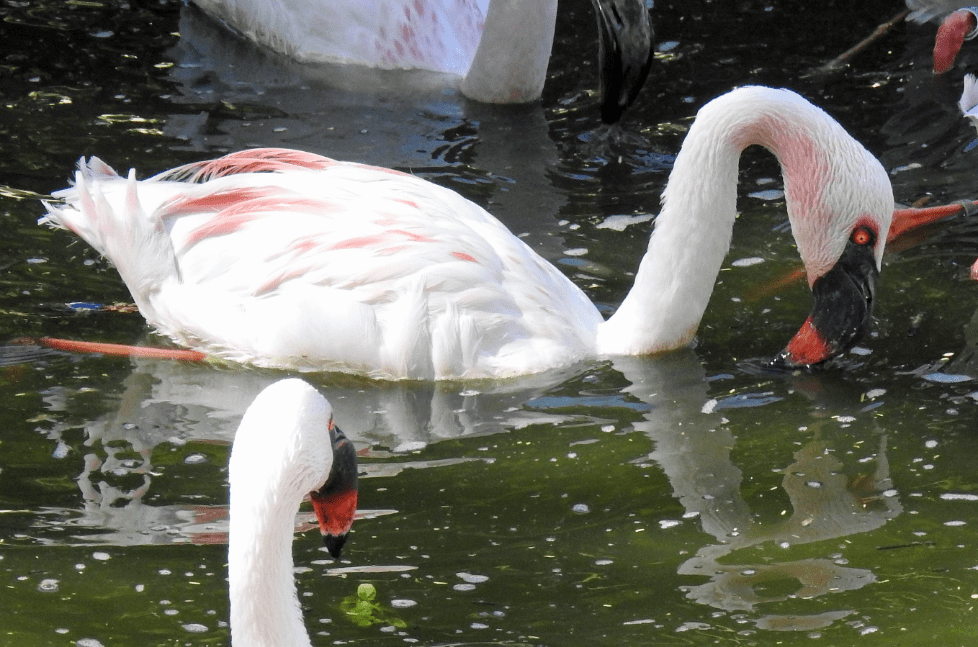
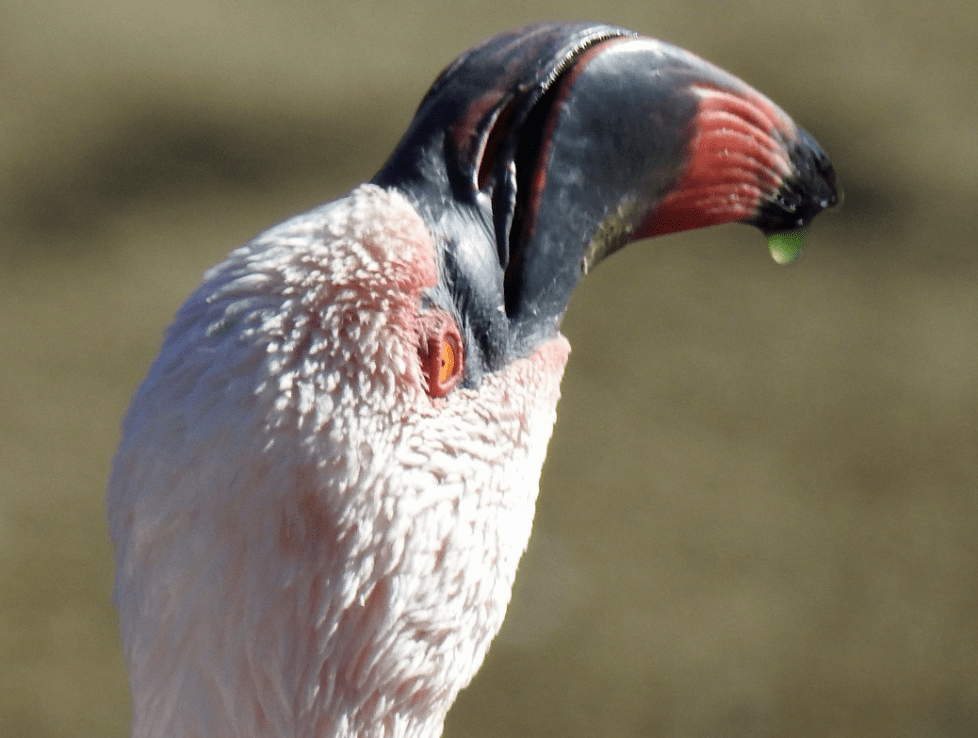
Figure 04. Unlike three other species of flamingos, Lesser Flamingos dip their bills close to the surface of the water (left), to glean algae and other phytoplankton (microscopic plant matter). It seems odd to think that microscopic life forms captured in drops of water (right) actually sustain these tall birds. But then . . . baleen whales . . . .
For the Lesser Flamingo, at least 90% of its diet is phytoplankton, mostly microscopic blue-green algae and some diatoms (a different kind of unicellular algae); less than 10% is invertebrate zooplankton (e.g., copepods and rotifers — minute multicellular invertebrates); and they also consume some microscopic photosynthesizing cyanobacteria. All of these microorganisms are found exclusively in alkaline or saline lakes, lagoons, and estuaries. Whereas most flamingos (e.g., Greater Flamingos) hold their bills at or near the surface of the lakebed, Lesser Flamingos hold their bills above the lakebed, only partially submerged as they swim or walk through the hypersaline or hyperalkaline water, gleaning their microscopic food.
To extract these microorganisms, the water should be calm, not roiling. Calmer waters prevail at night and in the early morning, which is when they typically feed. In addition, they feed en masse as a large dense flock, creating calmer waters toward the center of the flock. Presumably, they rotate in and out of the center so all can have some optimal feeding opportunities. Interestingly, Lesser Flamingos obtain the pigment responsible for their admittedly pale pink plumage from the photosynthetic pigments contained in blue-green algae.
When farmers see flamingos near bodies of water, they know that the water is probably too high in alkali or salt to be useful for irrigation.
Vocalizations
To hear some of the calls made by Lesser Flamingos, please visit https://xeno-canto.org/species/Phoeniconaias-minor , which has 29 audio recordings. Their most common vocalization has been described as a constant low-pitched, subdued murmuring, made while the entire flock is feeding. In flight, they make a higher-pitched call.
Figure 05. When strolling together on land, Lesser Flamingos make low-pitched murmurs to keep in touch with one another. When in flight, however, they call more loudly and at a higher pitch.
Social Behavior and Breeding
As mentioned previously, Lesser Flamingos typically hang out in large flocks (many thousands of pairs (sometimes up to >1 million pairs). These flocks may also include Greater Flamingos. These flamingos breed only when conditions are optimal at their few chosen breeding locations (e.g., Lake Natron in Tanzania). The conditions vary year to year, so they may not breed every year. Also, even at a given location, breeding might not be attempted at the same time from year to year. In some locations, the optimal conditions are during a dry season that follows a very wet season (high rainfall). Even within a given flock, not all breeding adults will breed each year.
Pairs of Lesser Flamingos engage in ground-level mating displays, not aerial displays. The pairs build mud nest mounds, as described in my previous blog, https://bird-brain.org/2026/06/28/flamingos-part-1/#Breeding .
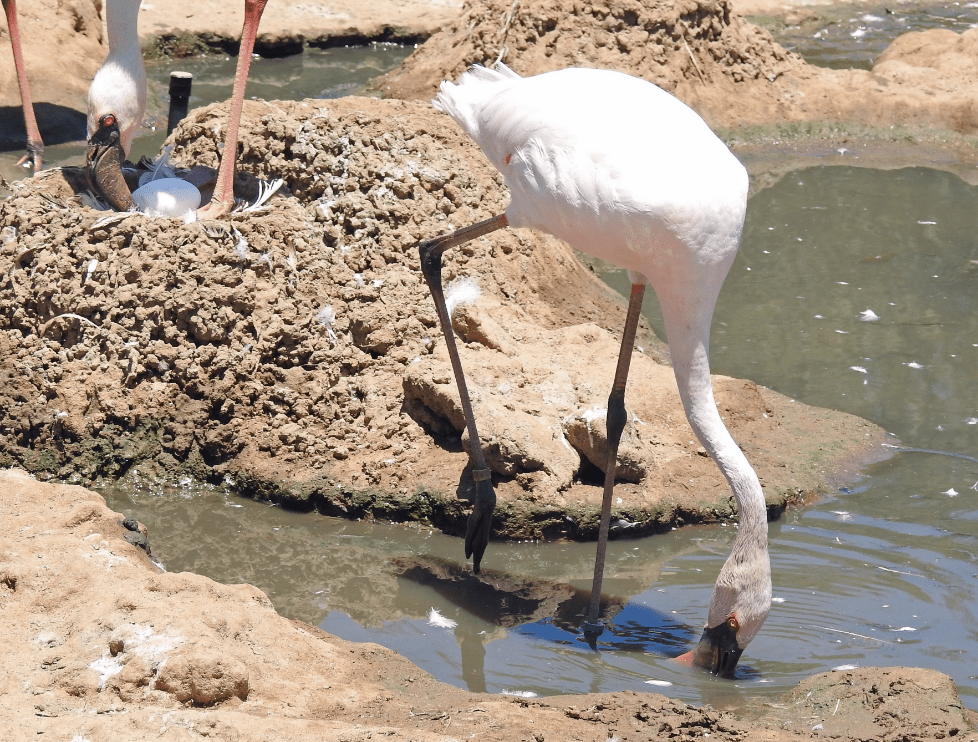
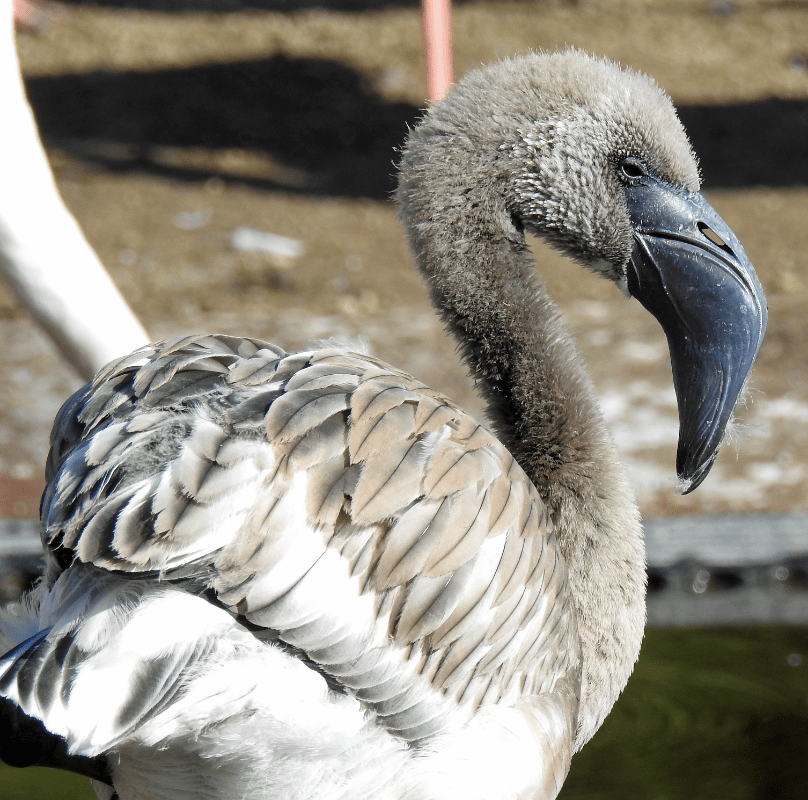
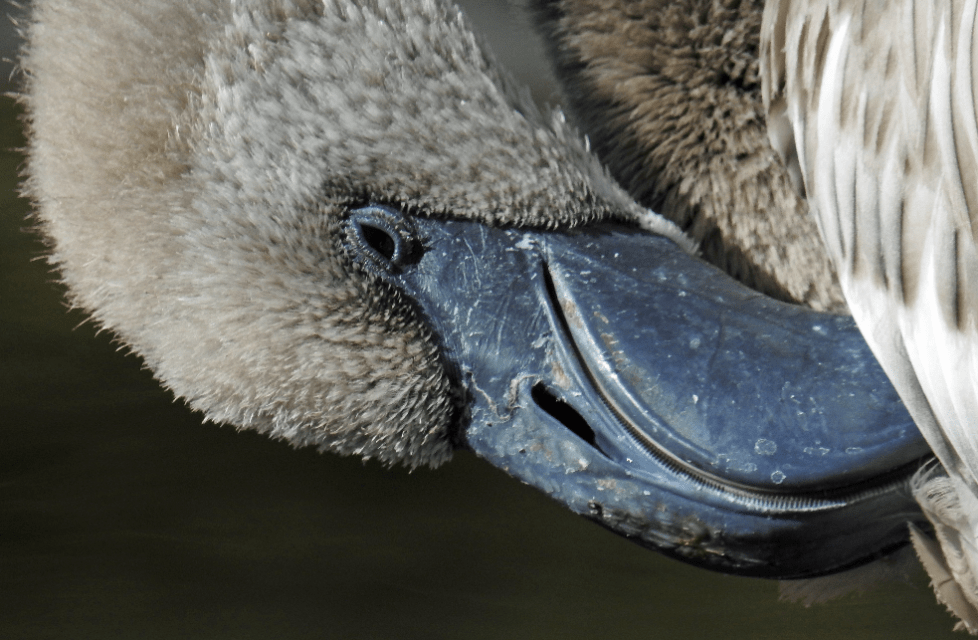
Figure 06. Both mom and dad incubate their egg, then after it hatches, both parents feed their hatchling with crop milk until its bill’s lamellae are able to glean enough nutrition by extracting algae and other plankton from the water. (If you look closely, you can see teensy lamellae developing on the bill of the youngster on the right, still not ready for prime-time.)
Almost invariably, the mom lays one chalky-white egg, but rare instances of two have occurred. Both parents incubate the eggs — about 28 days until hatching. Chicks are covered in whitish to dark gray down, growing relatively slowly in size and in feathering up. At first, both parents feed “crop milk” to the young chick until it has developed its bill structure — and its feeding technique — well enough to filter feed on its own. (Please see https://bird-brain.org/2025/01/06/got-bird-milk/#flamingo-crop-milk about the protein-rich “milk” secreted in each parent’s esophagus.)
Even as these parental feedings continue, within a couple of weeks, young chicks join crèches with other chicks, supervised by some adult colony members; over time, these crèches can number more than 100,000 chicks. Because these youngsters aren’t yet able to drink salt water, in locations lacking nearby fresh water, adults must lead the chicks to find fresh water — sometimes even traveling 20–30 miles or more (32–50 km) on foot. Many chicks don’t survive these grueling marches.
At about 65–90 days (usually 70–73 days) after hatching, chicks typically fledge but they don’t acquire full adult plumage until about 3–4 years of age — which is about the same age when they start breeding. (Average generation length is 12–15.5 years, from parents’ hatch date to the average age when their first offspring hatches.)
Lifespan and Survival
It’s tough for chicks to reach adulthood, but once they do, annual survival for adults is 90%. It’s normal for Lesser Flamingos in the wild to live to age 33 years or more. The maximum known age for Lesser Flamingos in the wild is a record of one banded bird who lived at least 50 years and 3 months. Other banded birds have been known to live more than 40 years in the wild.
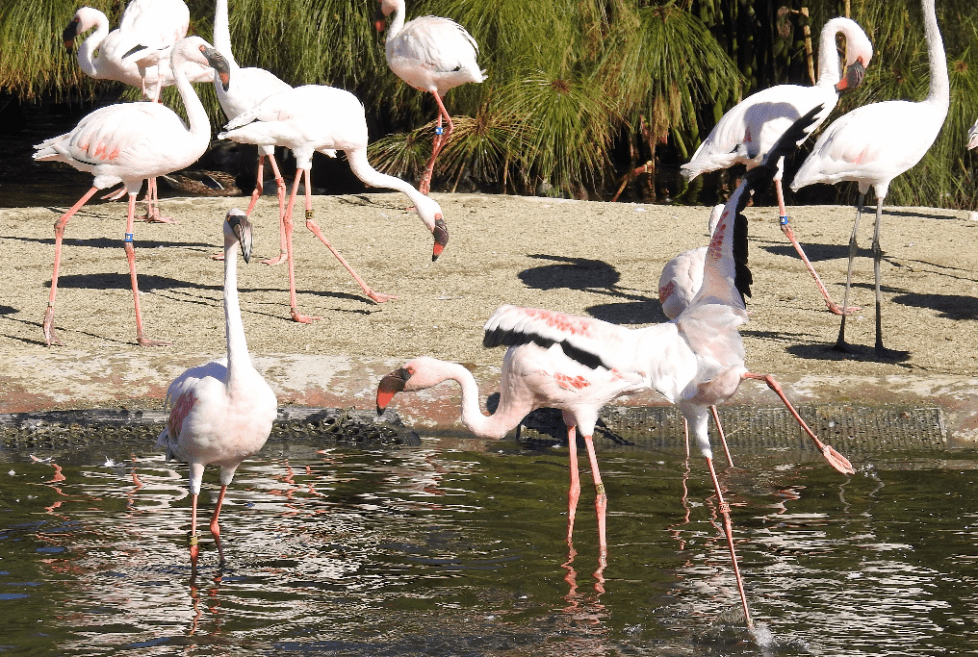
Figure 07. Lesser Flamingos typically move together, whether they’re wading or swimming, but while together, a few individuals will exuberantly express their individuality.
Though Lesser Flamingos typically seek remote hypersaline or hyperalkaline lakes, they still fall prey to various predators — birds such as Marabou Storks, Great White Pelicans, Martial Eagles, African Fish Eagles, and vultures; mammals such as jackals, hyenas, foxes, and big cats. Human activities are also endangering this flamingo species, such as through electric wires posing collision hazards. Most threats, however, assault their habitats, such as through heavy-metal poisoning, pollution from manufacturing, hydroelectric power plants and dams, soda-ash mining.
Conservation Status
According to the IUCN Red List of Threatened Species, the conservation status of Lesser Flamingos is NT, Near Threatened, despite its being the most numerous flamingo species, with a global population estimated at about 2,220,000–3,240,000 individuals. Unfortunately, because of its frequent large-scale flock movements, it has been hard to assess by how much this population has been declining. Nonetheless, it’s estimated at 5–8% decline over 10 years and at 18–26% decline over three generations. The main concern is that the decreasing population trend is chiefly due to habitat degradation and disturbance, which are continuing to worsen, so a “moderately rapid decline” is now anticipated. It was assessed as having “lower risk/near threatened” in 2000, which was changed to NT, Near Threatened, in 2004. Within this assessment, some locations are of more grave concern than others. Both breeding locations and nonbreeding locations (where feeding is still important) have been concerning to ornithologists and conservationists.
Because of its specialized feeding habits, the Lesser Flamingo has been more difficult to breed in captivity, but many institutions (including the San Diego Zoo’s Safari Park) have succeeded. In South Africa, an artificial island has hosted up to 80,000 birds, yielding 9,000–13,000 chicks in successive years, but the site is now imperiled. Botswana has established a flamingo sanctuary, and in West Africa, a colony of Lesser and Greater Flamingos showed breeding success, by deterring predators and preventing hunting of the birds. In Namibia, they have been taking steps to reduce collisions with power lines. Tanzanians are investigating how to preserve Lake Natron as a permanent sanctuary for breeding Lesser Flamingos.
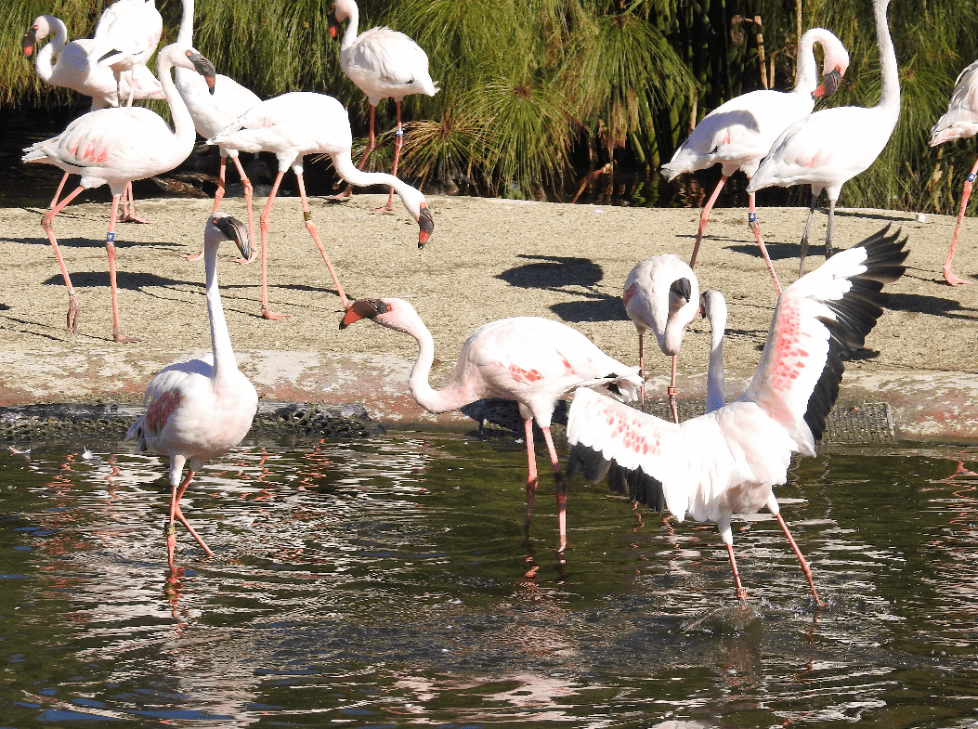
Figure 08. Isn’t Earth a much richer place for having Lesser Flamingos here with us? Let’s hope more humans take steps to ensure that these charming birds thrive into the distant future.
Observations
The Cornell Lab of Ornithology gathers information from observers around the world through the eBird app and website (https://ebird.org/species/lesfla1 ), which holds
31,038 observations, including 5286 with photos, and 47 with audio recordings. The lab’s Macaulay Library website (https://search.macaulaylibrary.org/catalog?taxonCode=lesfla1 ) holds 11,398 photos, 55 audio recordings, and 179 videos.
In addition, iNaturalist gathers observations with its app and its website (https://www.inaturalist.org/observations?taxon_id=4259 , which offers 4,153 observations, each including a photograph, audio recording, or video.
References
Lesser Flamingo
- del Hoyo, J., P. F. D. Boesman, E. Garcia, and G. M. Kirwan (2020). Lesser Flamingo (Phoeniconaias minor), version 1.0. In Birds of the World (J. del Hoyo, A. Elliott, J. Sargatal, D. A. Christie, and E. de Juana, Editors). Ithaca, NY: Cornell Lab of Ornithology, USA. https://doi.org/10.2173/bow.lesfla1.01 https://birdsoftheworld.org/bow/species/lesfla1/cur/introduction
- https://en.wikipedia.org/wiki/Lesser_flamingo
- Lesser Flamingo, Avibase, https://avibase.bsc-eoc.org/species.jsp?avibaseid=B06A9079
- Lesser Flamingo, Avibase life history, https://avibase.bsc-eoc.org/species.jsp?lang=EN&avibaseid=B06A9079584A8D53&sec=lifehistory
- Lesser Flamingo, iNaturalist, https://www.inaturalist.org/observations?taxon_id=4259
- Lesser Flamingo, IUCN Red List, https://www.iucnredlist.org/species/22697369/129912906
Phoenicopteriformes, Phoenicopteridae
- Elphick, Jonathan. (2014). The World of Birds (p. 326). Buffalo, NY: Firefly Books.
- Lovette, Irby, & John Fitzpatrick (eds.), (2016). The Cornell Lab of Ornithology Handbook of Bird Biology (3rd ed.). Hoboken, NJ: Wiley.
- Winkler, David W., Shawn M. Billerman, and Irby J. Lovette. (2015). (p. 254), Bird Families of the World: An Invitation to the Spectacular Diversity of Birds. Barcelona: Lynx, Cornell Lab of Ornithology.
Etymology
- Gotch, A. F. [Arthur Frederick]. Birds—Their Latin Names Explained (348 pp.). Poole, Dorset, U.K.: Blandford Press.
- Gruson, Edward S. (1972). Words for Birds: A Lexicon of North American Birds with Biographical Notes (305 pp., including Bibliography, 279–282; Index of Common Names, 283–291; Index of Generic Names, 292–295; Index of Scientific Species Names, 296–303; Index of People for Whom Birds Are Named, 304–305). New York: Quadrangle Books.
- Lederer, Roger, and Carol Burr. (2014). Latin for Bird Lovers: Over 3,000 Bird Names Explored and Explained (224 pages). Portland, OR: Timber Press.
Text and images by Shari Dorantes Hatch. Copyright © 2026. All rights reserved.
Images were recorded at the San Diego Zoo’s Safari Park.


Leave a comment