
Phoenicopteriformes, Phoenicopteridae
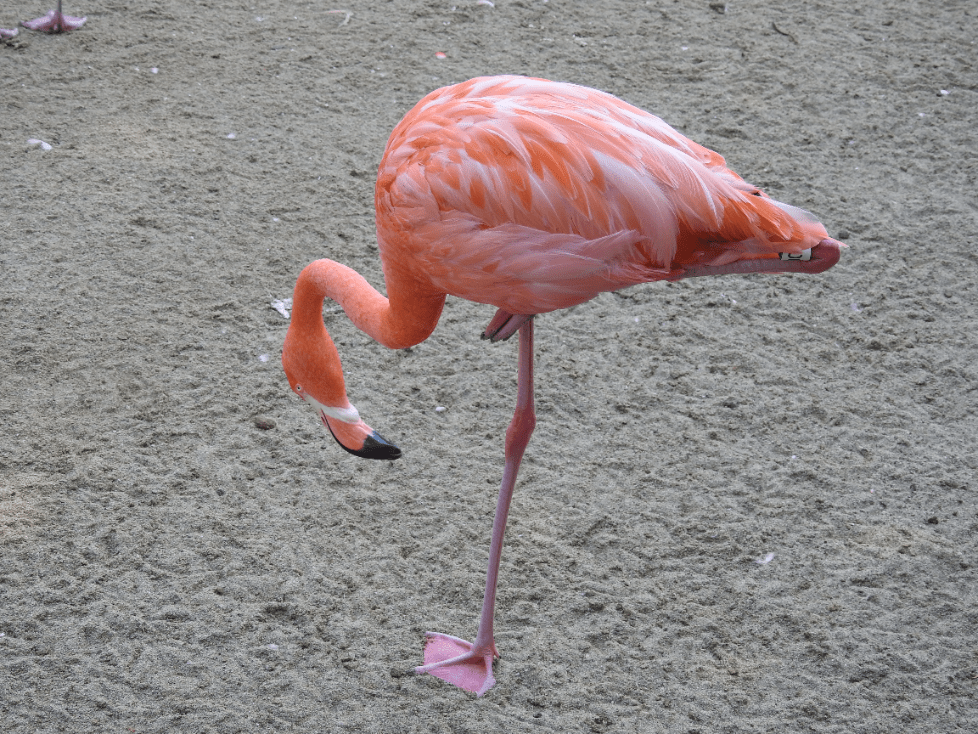
Figure 01. This American Flamingo at the San Diego Zoo beautifully illustrates the crimson feathers for which this order and family are named — as well as the flamingo’s customary one-legged stance.
This is the first of five blogs about flamingos. This blog focuses on the Phoenicopteriformes order and the Phoenicopteridae family of flamingos, as follows:
- Names and Etymology
- Taxonomy
- Description
- Vocalizations
- Distribution
- Habitat
- Migration
- Food and Foraging
- Standing, Walking, Swimming, Flying
- Social Behavior
- Breeding
- Lifespan, Survival, Threats
- Conservation Status
- References
Future blogs will focus on four of the six living species of flamingos: Lesser Flamingo (Phoeniconaias minor), Chilean Flamingo (Phoenicopterus chilensis), American Flamingo (Phoenicopterus ruber), and Greater Flamingo (Phoenicopterus roseus). All four of these flamingo species have been held at the San Diego Zoo or its Safari Park, so I was able to photograph them, at least to some extent. Not discussed will be the Andean Flamingo (Phoenicoparrus andinus) or James’s Flamingo (Phoenicoparrus jamesi, also known as the Puna Flamingo), neither of which may be found at the zoo or its safari park.
Names and Etymology
The common name for this order and family of birds, flamingo, comes from the Spanish word flamenco, meaning “flame-colored” and perhaps originating in an Andalusian folk song, possibly linking to Latin flamma, “flame” or “fire.” (Flamenco may also refer to ethnic “Flemish” people.)
The name of the order Phoenicopteriformes, as well as its only family Phoenicopteridae, has Greek origins: phoenico-, from phoinix or phoinikos, meaning “crimson red” (or “deep purple”); -pteri-, from pteron, meaning both “feathers” and “wing” (depending on the context); and -formes, meaning “form.” The -idae suffix is used for all animal family names. Originally, phoinikos meant “Phoenician,” referring to the people who first discovered this color of dye and introduced it to Grecians; it may also be referring to “blood red,” associated with slaying. In Greek myth, the phoenix is an immortal bird that repeatedly dies in a combustion of (brilliant red) flames, then is reborn, rising anew from the ashes.
Phoenico- also appears in the three genus names (and, therefore, the six species names) in the Phoenicopteridae family:
- The Phoenicopterus genus reuses the phoenico- and pteron roots. The three species in this genus are
- Phoenicopterus roseus — roseus meaning “rose-colored” (Latin), Greater Flamingo
- Phoenicopterus ruber — ruber meaning “red” (Latin), American Flamingo (sometimes called the Caribbean Flamingo)
- Phoenicopterus chilensis — chil-, “Chile” and -ensis meaning “belonging to” (Latin), Chilean Flamingo

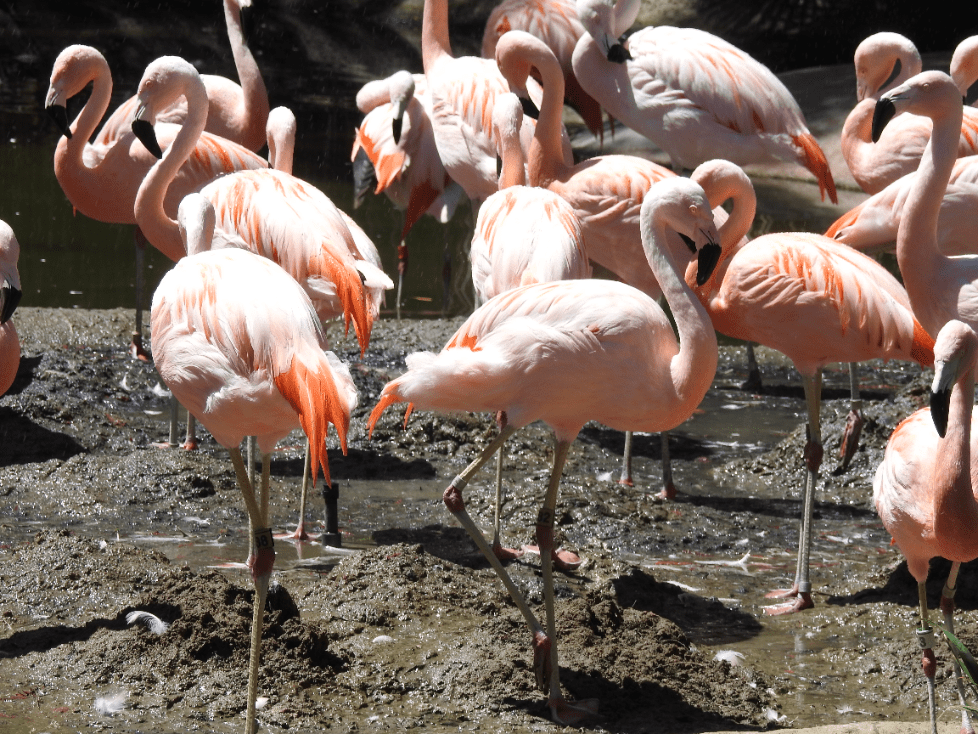
Figure 02. Chilean Flamingos come from . . . Chile, as well as parts of Argentina, Peru, and Bolivia. Their grayish legs with rosy bulging ankles and webbed feet distinguish this species. (These Chilean Flamingos were photographed at the San Diego Zoo’s Safari Park.)
- The Phoeniconaias genus ends in -naias, “water nymph” (Greek), which has just one species, Phoeniconaias minor, Lesser Flamingo
- The Phoenicoparrus genus adds -parra (Latin), “unknown bird of ill omen” to the Phoenico- prefix. This genus contains two flamingos:
- Phoenicoparrus andinus, Andean Flamingo
- Phoenicoparrus jamesi, James’s Flamingo, also known as the Puna Flamingo (for the Puna ecoregion in west central South America where it’s found); namesake Harry Berkeley James (1846–1892) was a British naturalist who studied this bird while living in Chile.
Aptly, the collective noun for flamingos is a “flamboyance” (or a “stand”), much like a “conspiracy of ravens,” a “scoop of pelicans,” or a “watch of nightingales.”
Taxonomy
As mentioned previously, the order Phoenicopteriformes comprises only one family, Phoenicopteridae, and the whole family comprises just three genera and six species (as noted previously). All six flamingos have extremely long legs for wading, and long necks and a highly specialized bill for filter feeding.
To summarize the taxonomy for flamingos: kingdom, Animalia; phylum, Chordata; class, Aves; order, Phoenicopteriformes; family, Phoenicopteridae. In 1831, zoologist Charles Lucien Bonaparte introduced the Phoenicopteridae family, and in 1888, taxonomist and anatomist Max Carl Anton Fürbringer (1846–1920), while organizing and classifying birds based on their morphology (physical shape), introduced the order Phoenicopteriformes. Flamingos have been organized into various groupings of genera and species since then, but at present, they’re grouped as follows:
- Phoenicopterus, 3 species
- American Flamingo, Phoenicopterus ruber
- Chilean Flamingo, Phoenicopterus chilensis
- Greater Flamingo, Phoenicopterus roseus

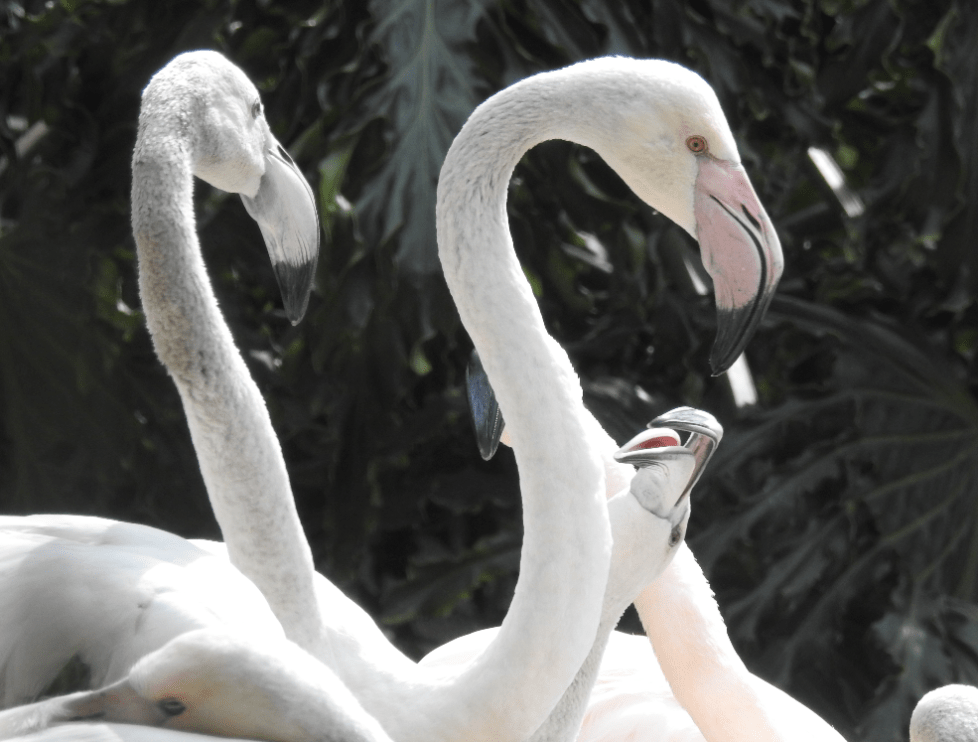
Figure 03. The Greater Flamingo is both the largest and the most widespread of all living flamingos. (These Greater Flamingos were photographed at the San Diego Zoo’s Safari Park.)
- Phoeniconaias, 1 species
- Lesser Flamingo, Phoeniconaias minor
- Phoenicoparrus, 2 species
- Andean Flamingo, Phoenicoparrus andinus (for photos, please see https://search.macaulaylibrary.org/catalog?taxonCode=andfla2 )
- James’s Flamingo, Phoenicoparrus jamesi (for photos, please see (https://search.macaulaylibrary.org/catalog?taxonCode=jamfla1 )
At least five extinct genera have also been identified. The Lesser Flamingo and the Greater Flamingo are both found in Afro-Eurasia, but the four others are American, mostly South American. The three Phoenicopterus species have less specialized bills, suited to a generalized diet; the Phoeniconaias species and the two Phoenicoparrus species have more specialized bills, suited to more specialized diets. The two Phoenicoparrus species also lack the fourth small hind toe present in other flamingo species.
When analysis and classification of birds relied mostly on field observations of birds or on observing specimens in hand, the bird’s morphology, plumage, habitat, and feeding methods played an outsized role in figuring out which birds were related to one another. Based on such observations, it was assumed that the closest relatives of flamingos were Ciconiiformes (long-legged storks) and Threskiornithidae (e.g., long-legged wading ibises and spoonbills). Other possible relatives were Ardeidae (herons et al.), as well as waterfowl (e.g., duck and geese, who are plagued with similar feather lice to those that parasitize flamingos). Genetic (“molecular”) studies, however, revealed an unexpected link. The closest living relatives of flamingos belong to the Podicipedidae family of grebes, also highly aquatic. Once this link was established, observers found that these two families shared at least 11 morphological traits not found in other bird families. These traits had already been known in flamingos but weren’t all known in grebes.
The fossil record for flamingos dates to at least 34 million years ago, and across that time, they were also present in Australia, North America, and in much of Europe.
Description
Size
Male and female flamingos have similar plumage and otherwise look similar, though males tend to be heavier, with longer legs than females (up to 20% more in Greater Flamingos). Their bill-to-tail length is 31–57″ (80–145 cm), wingspan 37–59″ (94–150 cm), weighing 4.2–9 pounds (1.9–4.1 kg). At the extreme ends are the Greater Flamingo, 47.2–57″ (120–145 cm) bill to tail, weighing up to 9 pounds (4.1 kg), and standing 47–55″ (120 to 140 cm) high; and the Lesser Flamingo, 35–41″ (90–105 cm) bill to tail, weighing 2.6–6 pounds (1.2–2.7 kg), and standing 31–35″ (80–90 cm) high.
Plumage
All flamingos have some combination of pink, crimson red, and white plumage on their head, neck, and body, with black flight feathers. (Black feathers have more melanin, which fortifies the feathers against wear and tear.) The specific coloration — almost white, pale pink, deep rose, intense crimson — varies across species. In addition, healthy, well-fed flamingos tend to have more vibrantly colored plumage, which makes them more attractive to potential mates.
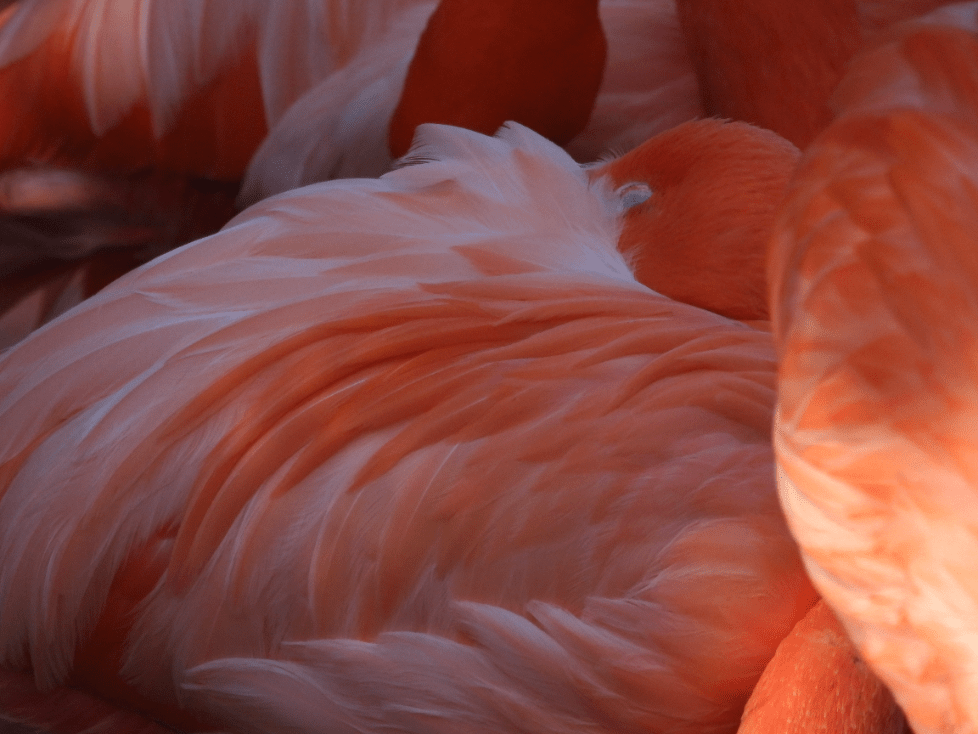
Figure 04. At the San Diego Zoo, the keepers have figured out that for their American Flamingos to maintain their brightly colorful plumage, they need to have carotenoids in their diet.
At one time, zookeepers were flummoxed when their captive flamingos, fed a nourishing diet, had drab plumage and weren’t breeding successfully. Luckily, scientists figured out that flamingo feathers get their pinks and reds from carotenoids, pigment molecules found in the algae and the small shrimp and other invertebrates they eat. (Actually, algae is entirely the source of carotenoids; the shrimp and other invertebrates eat the algae, which is why they contain carotenoids, too.) Flamingos have specialized enzymes in their livers, which break down the consumed carotenoids, producing the reddish pigment canthaxanthin. Once zookeepers figured out the problem, they added sources of carotenoids to the flamingo diets, solving the problem. Hatchlings have mostly grayish plumage, but over time, with a proper carotenoid-rich diet, their plumage reddens and brightens to the colors of adults of their species.
The particular coloration of differing species relates to their particular diets. For instance, American Flamingos typically have deeply crimson or rose coloration because their diet contains a high level of carotenoids, yielding more pigment; Lesser Flamingos have pale pink plumage because their diet includes lower amounts of carotenoids, which means less pigment in their feathers. Flamingos who eat mostly blue-green algae obtain more carotenoids than flamingos who mostly eat invertebrates who have eaten carotenoids — that is, first-hand carotenoids yield more pigment than second-hand.
Unlike fellow waders in the Ardeidae family, flamingos don’t have powder down feathers. Powder down feathers grow continuously, never molting, but they continually break down, creating powdery dust, which the bird can apply to its other feathers during preening, providing extra protection.
Body Shape
Relative to body size, the narrow necks of flamingos are longer than the necks of any other bird. Surprisingly, the long neck holds just 17 vertebrae (cf. swans’ 25 neck vertebrae). Each vertebra is quite long, however. Its long neck makes it easy for the flamingo to reach the bottom of a lake, to feed. Below the neck is an ovular body, with narrow, pointed wings, and a short tail.

Figure 05. Flamingos have the longest necks and the longest legs of any birds, in relation to their body size. (These Lesser Flamingos were photographed at the San Diego Zoo’s Safari Park.)
As with their necks, their slender legs are longer than the legs of any other bird, relative to body size. Their long legs, too, serve them well, allowing them to wade into deeper water than other wading birds. Their three forward-facing toes are fully webbed, for easily walking on muddy lake bottoms, as well as for swimming in water too deep for standing. Four of the six flamingo species also have a short rear toe that faces backward (not the Phoenicoparrus species, Andean Flamingo and James’s Flamingo). Four flamingos have pink or pinkish legs and feet; the Chilean Flamingo has yellowish-gray legs, red ankles and feet; the Andean Flamingo legs and feet are yellow.
Head and Bill
Atop the neck is a small round head; its feathers and bare facial skin are near-white, assorted shades of pink, or apricot/salmon colored. The thick, wide black-tipped bill is about as big as the rest of the head and has a distinctive shape with a sharp downward bend (of about 50 degrees). Inside, the edges of the upper bill (and usually also the lower bill) are lined with rows of lamellae, ridges made of keratin. Keratin — the same substance that makes bird feathers and your hair and nails — can form lamellae that are short, smooth ridges; sharp, serrated ridges; or even triangular fibers that form a fringe. Different species of flamingos have differing shapes, sizes, spacings, and locations of lamellae.
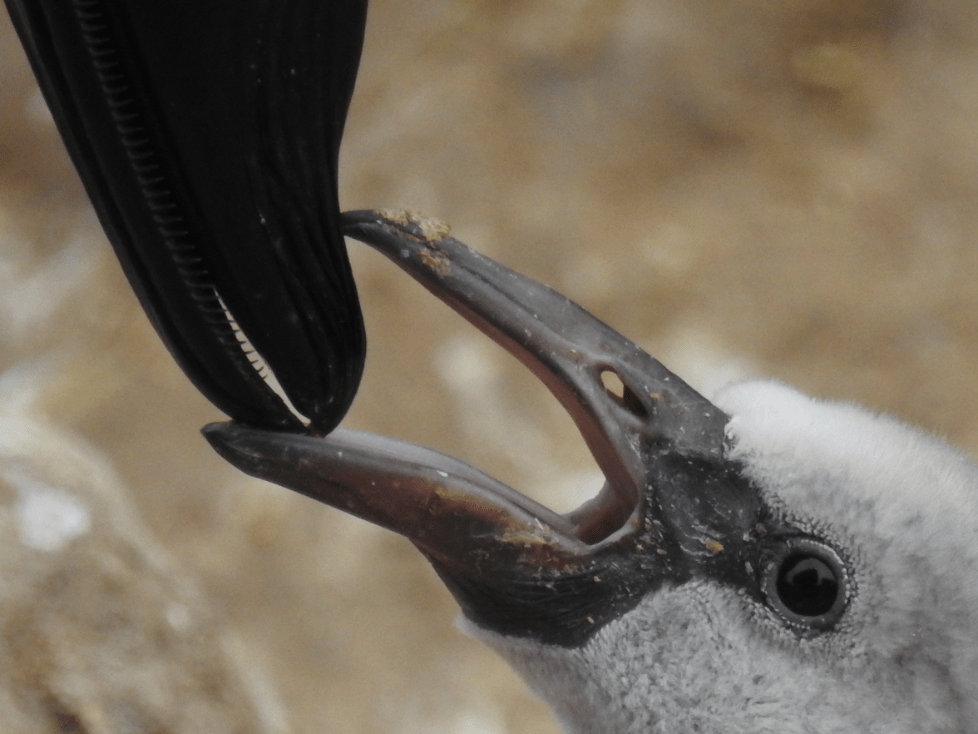
Figure 06. The lamellae around the edge of this parent’s bill can be seen, as well as the absence of lamellae on the chick’s bill. (These American Flamingos were photographed at the San Diego Zoo.)
When the flamingo is filter feeding, the upper bill is actually positioned below the lower bill, with the flamingo’s head upside-down. The rows of lamellae vary from fine to coarse and are pointed inward and backward, to catch food of varying thickness. Even more amazing is the flamingo’s thick fleshy tongue, which has two (or four) sets of flexible spines, and which rapidly thrusts forward and back, pushing water through the lamellae and trapping tiny food inside the bill.
Vocalizations
Flamingos are noisy, murmuring when feeding, and making much louder nasal honking calls when flying in flocks. They also produce a range of grunts, growls, and other sounds during ritualized displays or in agonistic interactions during breeding season. Parents and chicks vocalize to one another, as well. Keen observers can distinguish among the vocalizations of differing species of flamingos. (For a small sampling of James’s Flamingo vocalizations, please see https://xeno-canto.org/species/Phoenicoparrus-jamesi .)
Distribution
The largest flamingo, Greater Flamingo (Phoenicopterus roseus), is the most widespread flamingo and can be found in various locations from parts of Africa, through southern Europe to southwest Asia. The smallest flamingo, Lesser Flamingo (Phoeniconaias minor), is the most numerous flamingo and can be found from Africa through northwestern India.

Figure 07. The Lesser Flamingo is both the smallest flamingo species and the most numerous — and what’s not to love about these goofballs? (These Lesser Flamingos were photographed at the San Diego Zoo’s Safari Park.)
The other four species of flamingos stick to the Americas, mostly South America. The location of the Chilean Flamingo or the Andean Flamingo is no surprise; the James’s Flamingo is also known as the Puna Flamingo, named for the Puna region high in the Andes where the Andean Flamingo can be found. The American Flamingo, also known as the Caribbean Flamingo, can be found throughout the Caribbean islands, Mexico, southern Florida, central America, northern South America, and the Galápagos Islands.
Habitat
In general, flamingos prefer large shallow tropical lakes and lagoons, with highly saline or alkaline water (with high concentrations of salt or soda, respectively) that would be deadly or at least irritating to most other vertebrates. Given those conditions, the four American flamingo species can be found anywhere from sea level to Andean peaks (up to 14,764 feet / 4,500 m); the Andean Flamingo can even be found at 16,240 feet (4,950 m).
An advantage of such inhospitable waters, which typically can’t sustain fish, is that vertebrate predators rarely inhabit these locations. Flamingos can tolerate standing in water as hot as 155 degrees F. (68̊ C) at noon and can even drink water as hot as 150 degrees F. (65̊C). Also, the Andean Flamingo can tolerate night-time temperatures as low as −22 degrees F. (−30̊ C), relying on hot springs to keep their roosting spots ice-free on an otherwise frozen lake.
Migration
Most flamingos are sedentary, though they do move around (and some Greater Flamingos migrate seasonally) to find ice-free water, suitable water levels, more pleasant weather, or greater availability of food, as needed. Some flocks may travel thousands of miles (kilometers) to find better living conditions.
Food and Foraging
Omnivorous flamingos feast on both phytoplankton (microorganisms such as diatoms, other algae, and other tiny plant material) and zooplankton (small aquatic invertebrates, such as crustaceans, mollusks, insects), as well as photosynthesizing cyanobacteria. Favorite zooplankton includes brine shrimp, invertebrate larvae, and brine flies. In bodies of normal fresh water, fish would compete with flamingos to eat these plankton, but fish can’t survive in the highly alkaline or saline water where flamingos typically feed.
Flamingos are exquisitely adapted to extract their food from the mud and silt at the bottom of these hypersaline or hyperalkaline lakes and lagoons. As mentioned previously, the flamingo bill is designed for filter feeding with the head held upside-down; the lamellae on the upper bill are on the bottom of the bill with the upturned head. The positions of the lamellae and the variation in fineness or coarseness ensures that tiny food items of any size will be trapped inside the bill.

When the bill is slightly open, the flamingo’s rough tongue pumps forward and backward, letting water in then forcing it out between the lamellae. The backward-pointing spines on both tongue and palate guide food particles toward the throat. The bill’s jaws rapidly chatter open and shut to move water around and through the bill. They sweep the whole head, making rapid movements that create vortexes of sediment and food items. They also stamp their webbed feet to stir things up on the lake bottom. To see an underwater video of flamingos filter feeding at the San Diego Zoo, visit https://www.youtube.com/watch?v=-1BF2XqboOo .
Sometimes, flamingos also eat larger prey, grasping it with the bill, then tossing it backward into the throat, to swallow whole.
When flamingos are offered freshwater or salt water, they choose freshwater, but they’re well equipped to drink saltwater, due to having specialized glands located beneath their eyes, which remove excess salt from their bloodstream. Their filter-feeding style of foraging also helps to ensure that they won’t swallow excess hypersaline or hyperalkaline water while eating.
A drawback to filter feeding seems to be that flamingos may have an upper limit on the amount of food they’re able to ingest at one time — regardless of how abundant the prey may be. It’s thought that the bill structure itself may limit its capacity for consuming extra food. (In the wild, such conditions would be rare, in any case.)
Standing, Walking, Swimming, Flying
One of the first thing an observer — especially a child observer — notices about flamingos is that they typically stand on just one leg, with the other leg tucked up beneath the body. One theory proposed for this behavior is that this behavior lets them conserve more body heat when standing in cold water — but they do so in warm water, too. Research on the flamingo’s musculoskeletal physiology shows that they don’t need to exert any muscular activity to stand on one leg, so it’s truly effortless to do so. Intriguingly, flamingos seem to sway more when standing on two legs than on one. That still doesn’t definitively say why they do so, but it does indicate that it’s easy to.


Figure 09. Flamingo legs don’t make sense, at first. This Chilean Flamingo (far left) seems more comfortable standing on one leg than on two legs. Also, when you look at these American Flamingos (juvenile middle; adults far right), the joint in the middle of the leg — which looks like it should be the knee — is bending forward instead of backward. It’s actually the ankle, not the knee. What?!? (These flamingos were photographed at the San Diego Zoo and its Safari Park.)
Another thing a child observer of flamingo legs will notice is that what looks like their knees seem to be bending forward instead of backward. But look from that mid-leg joint down to the webbed feet. Where’s the ankle? It turns out that the ankle is located in the middle of the leg, and the knee is located much higher on its leg, usually out of view. (On Figure 09, far left, the Chilean Flamingo’s leg is pointing backward at its knee, which is hidden by its feathers, then its leg points forward at its ankle.)
Though flamingos specialize in wading to filter-feed, their webbed feet also ensure they can swim well. Flamingos are such able flyers that when they’re in captivity, if their wings aren’t clipped, they escape. A pair of flamingos escaped from a Kansas zoo in 2005, and one of them was spotted in other states, most recently seen in Texas in 2019.
Social Behavior
Flamingos love hanging out with other flamingos, often in flocks of thousands of birds, even up to more than 1 million birds at a time, foraging together. When these huge flocks fly together, they fly close to one another, in graceful tight formations. With their long necks stretched forward and their long legs stretching backward (see https://macaulaylibrary.org/asset/660406147 or https://macaulaylibrary.org/asset/660283791 to see what one looks like in flight), their balletic movements can be breathtaking. (See a small group taking flight at https://macaulaylibrary.org/asset/660234100 ; https://macaulaylibrary.org/asset/660100464 and https://macaulaylibrary.org/asset/659978476 or https://macaulaylibrary.org/asset/659916857 for a closeup of a flock in flight; https://macaulaylibrary.org/asset/659851430 or https://macaulaylibrary.org/asset/659893711 .) It’s thought that their colonial lifestyle minimizes the likelihood of predation and optimizes the use of suitable nesting sites; some have said it also maximizes food intake.
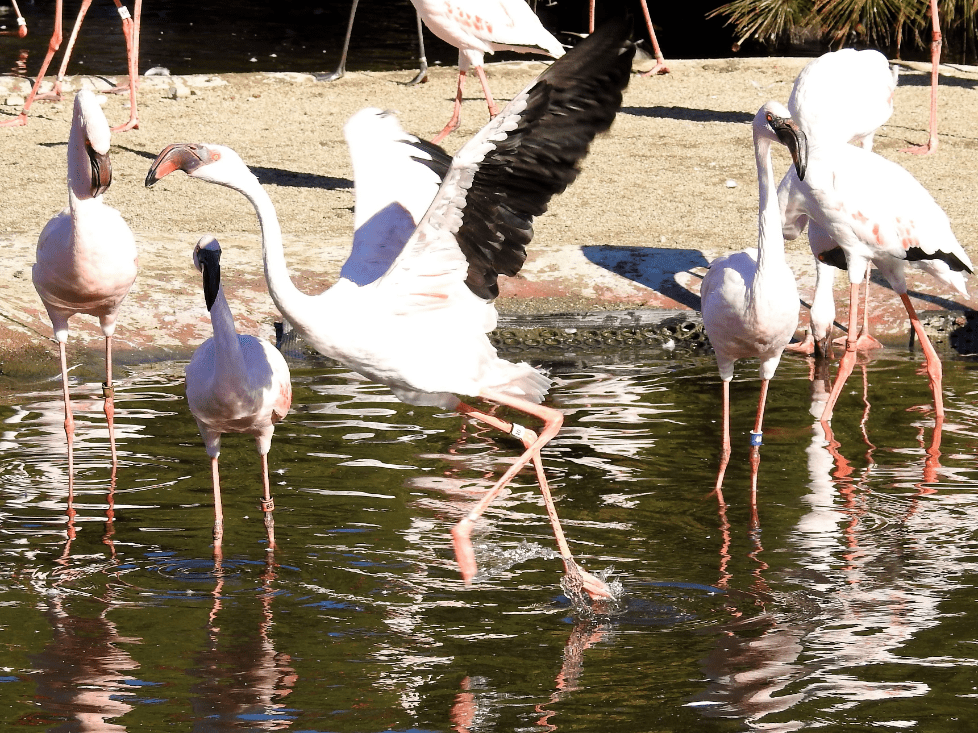
Figure 10. Flamingos, such as these Lesser Flamingos, seem to enjoy just being together and especially moving around together. (These Lesser Flamingos were photographed at the San Diego Zoo’s Safari Park.)
Breeding
Not all adult flamingos breed every year, and the timing of breeding can be irregular, tailored to the optimal conditions for building nests, laying and incubating eggs, and caring for hatchlings and nestlings until they’re ready to fledge. As colonial breeders, flamingos breed in huge flocks — up to 1 million Lesser Flamingos in some spots in Africa — with nests so close that there may be up to five per square meter (less than 11 square feet), on the same hypersaline or hyperalkaline lakes and lagoons where they reside. When the right time for breeding approaches, all members of the colony experience hormonal stimulation prompting the colony members to be ready to breed at pretty much the same time.
Similarly, individual courtship displays are less flamboyant than group displays, which may involve groups of 15–50 males and females or up to thousands of birds at a time, vocalizing while moving in synchronized ritualized stretches, wing salutes, head waving, and more. The whole group will march closely together in one direction then suddenly turn together en masse. Following the courtship displays, partners pair off for synchronous nest building and mating. Most species of flamingos form strong monogamous pair bonds for at least two or more breeding seasons, but Greater Flamingos tend to choose a new mate more often than other flamingos do. (Same-sex flamingo pairs have been observed, too.)
The pair chooses a nesting spot and builds a mud nest that looks like the tops of a volcano: a high mud base, with a central depression for holding the solitary egg and one of its incubating parents. They start copulating before completing the nest; both partners also defend their nest spot and their nest.
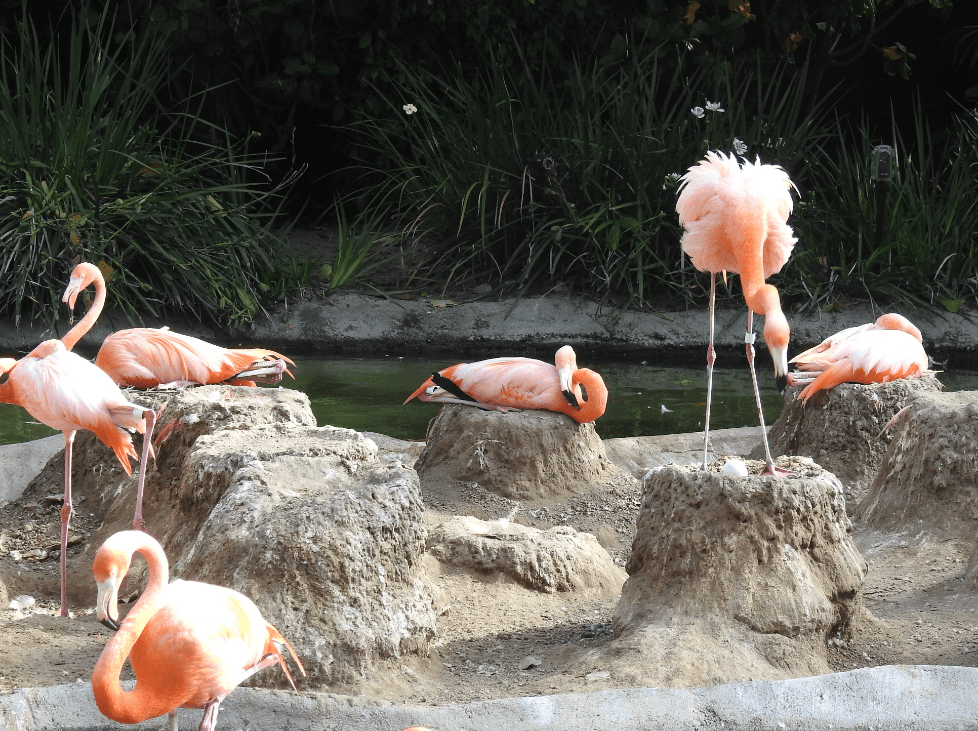
Figure 11. Flamingo moms and dads, such as these American Flamingos at the San Diego Zoo, build distinctive nests, then after mom lays their egg, both mom and dad take turns incubating it.
Once the female lays the egg, both parents take turns incubating it for about 27–31 days. Upon hatching, the chick is brooded by both parents, who snuggle it under their back feathers. The chick’s bill is straight, without the curve, the lamellae, or the other aspects of the bill that facilitate filter feeding.
At about 5–12 days of age, chicks leave the nest and wander around, and by age 2 weeks, they join small crèches of other locomoting chicks, supervised by some of the adult colony members who aren’t breeding. Gradually, the small crèches merge to form a huge créche containing thousands of youngsters.
Even after leaving the nest, the chicks can’t feed themselves. It takes about 4–6 weeks for the bill to develop the shape and structure for filter feeding, and up to 12 weeks to master filter feeding on their own. Meanwhile, the hormone prolactin stimulates both parents to produce “crop milk” (see https://bird-brain.org/2025/01/06/got-bird-milk/#flamingo-crop-milk), protein-rich secretions from each parent’s esophagus. Unlike mammalian milk, flamingo milk contains fats but no carbohydrates. Both parents feed crop milk to their growing chick.
It takes about 65–90 days after hatching for the chicks’ flight feathers to finish growing in, after which they fledge, having already mastered feeding themselves. Unfortunately, the chicks are highly vulnerable to such predators as large gulls or storks (e.g., Marabou Storks). In hyperalkaline lakes, dense with soda, soda can become encrusted around the chicks’ legs, making it impossible for them to move and to feed themselves, as well as making them easy targets for predators.
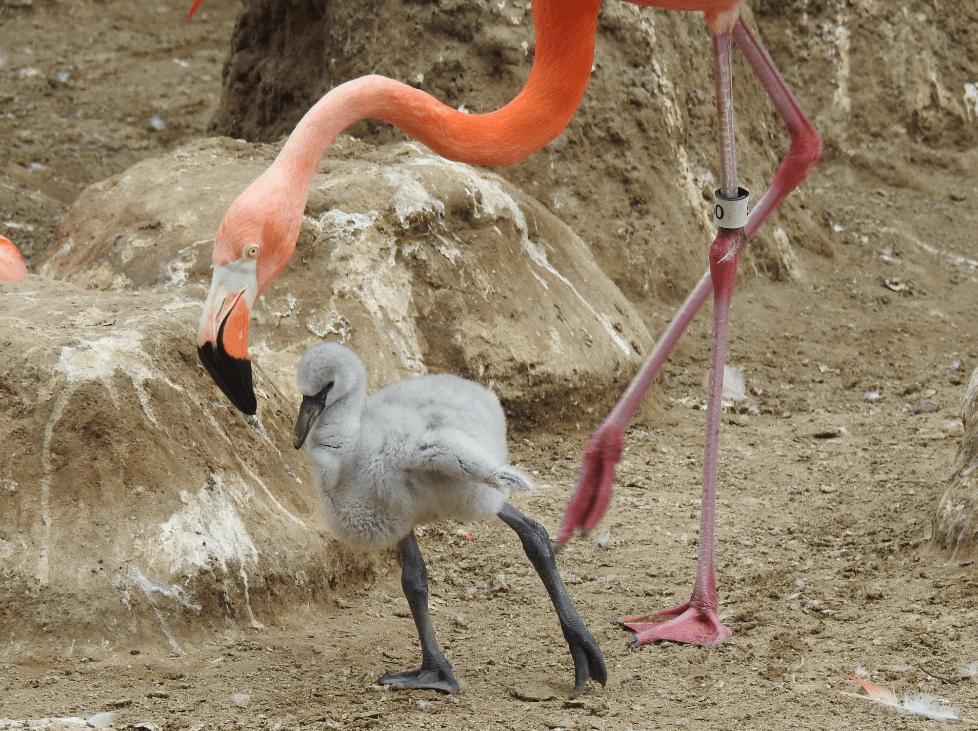
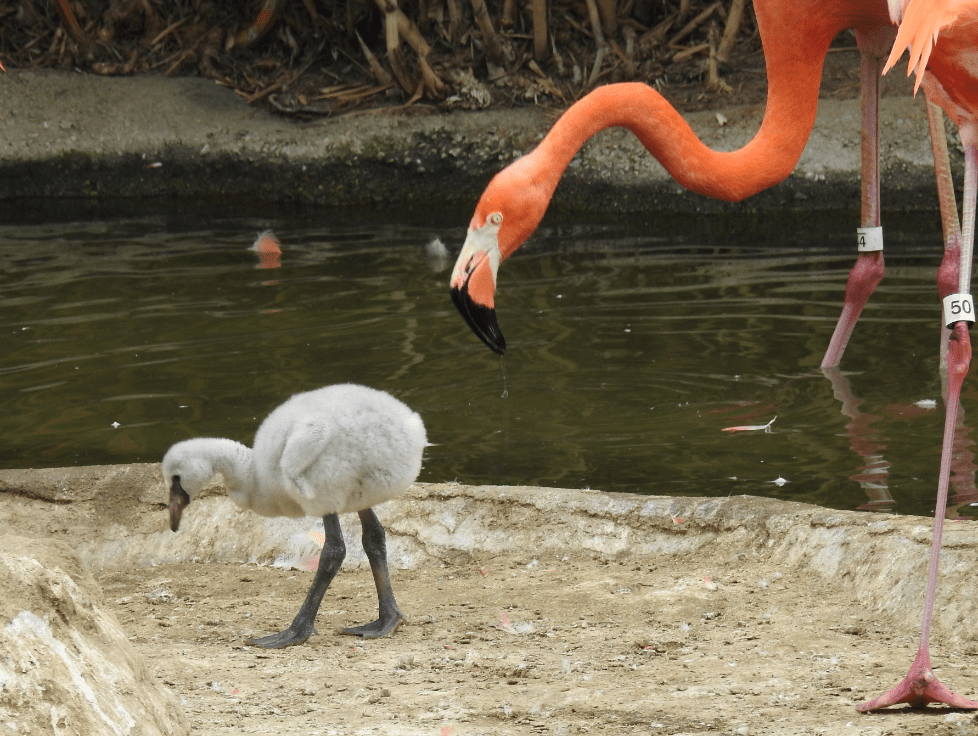
Figure 12. These gray-plumed downy hatchlings have straight bills ill suited to filter feeding, so they rely on both dad and mom to feed them nutritious “crop milk” (sometimes called “flamingo milk”). Their plumage remains variations of white, gray, or brown for several years, while they gradually acquire scatterings of pink or red plumage; their bill, feet, and legs remain gray or black, too. While still relying on mom and dad to feed it, the chick can wander about exploring for its first couple of weeks after hatching. (These American Flamingos were photographed at the San Diego Zoo.)
Most species of flamingos may start breeding at 3–4 years of age, but Greater Flamingos usually don’t until ages 5–6 years.
Lifespan, Survival, Threats
Once they reach adulthood, flamingos are rarely targeted for predation, and they live long lives. It’s typical for flamingos to live about 20–30 years, and some wild birds are documented to have lived more than 50 birds, with captive birds living at least 60 years. One Greater Flamingo, held at Australia’s Adelaide Zoo, lived to be at least 83 years old (died in 2014). Nonetheless, disturbance by humans, water pollution, and habitat destruction do threaten many flamingo populations.
As bad as we humans are now, humans have harmed flamingos even more in the past. In ancient Rome, flamingos were highly prized — to eat. In his Natural History, Pliny the Elder observed that “Apicius, that very deepest whirlpool of all our epicures, has informed us that the tongue of the phœnicopterus is of the most exquisite flavour” (https://en.wikipedia.org/wiki/Flamingo ). Apparently, flamingo brains were also considered a delicacy. In contrast, the Moche people of ancient Peru often depicted flamingos in their artworks, as emblematic of their celebration of the natural world. Ancient Egyptians also depicted a flamingo head in images of their god Set. In the Bahamas, flamingos are the national bird. Many zookeepers around the world host captive populations of flamingos.
To encourage captive flamingos to breed, zookeepers have used mirrors to make the flamingos think they were in a larger flock.
Figure 13. In these troubled times, does it lift your spirits to watch some flamingos? (These Lesser Flamingos were recorded at the San Diego Zoo’s Safari Park.)
Conservation Status
The conservation status of flamingos varies across species, with 33.3% LC, Least Concern; 50% NT, Near Threatened (Chilean Flamingo, Phoenicopterus chilensis; Lesser Flamingo, Phoeniconaias minor; and James’s Flamingo, Phoenicoparmus jamesi, due to habitat degradation); and 16.7% VU, Vulnerable (Andean Flamingo, Phoenicoparrus andinus, also due to habitat degradation). None are EN, Endangered; CR, Critically Endangered; or EW, Extinct in the Wild.
References
Phoenicopteriformes, Phoenicopteridae
- Elphick, Jonathan. (2014). The World of Birds (pp. 306–308). Buffalo, NY: Firefly Books.
- Lovette, Irby, & John Fitzpatrick (eds.), (2016). The Cornell Lab of Ornithology Handbook of Bird Biology (3rd ed.). Hoboken, NJ: Wiley.
- Winkler, David W., Shawn M. Billerman, and Irby J. Lovette. (2015). Bird Families of the World: An Invitation to the Spectacular Diversity of Birds (pp. 66–67). Barcelona: Lynx, Cornell Lab of Ornithology.
- Winkler, D. W., S. M. Billerman, and I. J. Lovette (2020). Flamingos (Phoenicopteridae), version 1.0. In Birds of the World (S. M. Billerman, B. K. Keeney, P. G. Rodewald, and T. S. Schulenberg, Editors). Cornell Lab of Ornithology, Ithaca, NY, USA. https://doi.org/10.2173/bow.phoeni1.01 https://birdsoftheworld.org/bow/species/phoeni1/cur/introduction
- https://en.wikipedia.org/wiki/Phoenicopteriformes
- https://en.wikipedia.org/wiki/Flamingo
Etymology
- Lederer, Roger, and Carol Burr. (2014). Latin for Bird Lovers: Over 3,000 Bird Names Explored and Explained (224 pages). Portland, OR: Timber Press.
- Gotch, A. F. [Arthur Frederick]. Birds—Their Latin Names Explained (348 pp.). Poole, Dorset, U.K.: Blandford Press.
- Gruson, Edward S. (1972). Words for Birds: A Lexicon of North American Birds with Biographical Notes (305 pp., including Bibliography, 279–282; Index of Common Names, 283–291; Index of Generic Names, 292–295; Index of Scientific Species Names, 296–303; Index of People for Whom Birds Are Named, 304–305). New York: Quadrangle Books.
Text and images by Shari Dorantes Hatch. Copyright © 2026. All rights reserved.
Images were recorded at the San Diego Zoo and its Safari Park.


Leave a comment