
Chilean Flamingo, Phoenicopterus chilensis
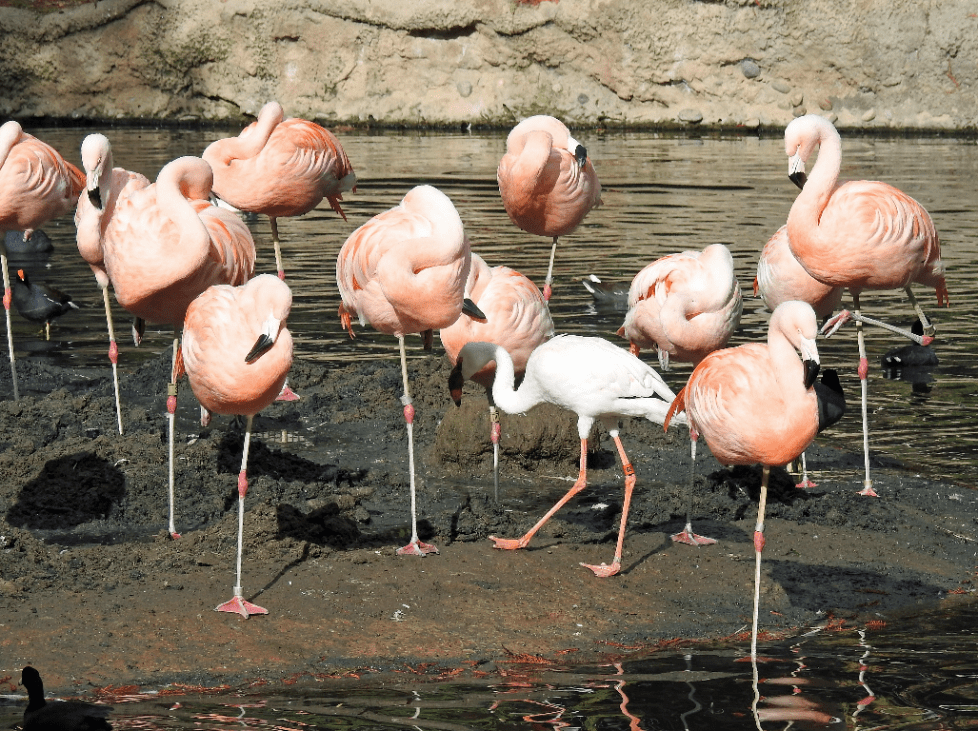
Figure 01. Chilean Flamingos, Phoenicopterus chilensis, have distinctive rosy ankles and webbed toes.
This is the third of five blogs about flamingos, all of whom belong to the Phoenicopteriformes order, Phoenicopteridae family. Part 1 introduced the order and its solitary family, https://bird-brain.org/2026/06/28/flamingos-part-1/ . This blog focuses on one member of the Phoenicopterus genus, the largest flamingo genus, comprising three of the six flamingo species:
- Chilean Flamingo, Phoenicopterus chilensis
- American Flamingo, Phoenicopterus ruber
- Greater Flamingo, Phoenicopterus roseus
Two forthcoming blogs will discuss the other two Phoenicopterus species, American Flamingo and Greater Flamingo. The other three of the six flamingo species include the Phoeniconaias genus, with just the Lesser Flamingo, Phoeniconaias minor, discussed in Part 2 of this series, https://bird-brain.org/2026/07/05/flamingos-part-2/ ; and the Phoenicoparrus genus, which includes two species: Andean Flamingo, Phoenicoparrus andinus; and James’s Flamingo, Phoenicoparrus jamesi. They were briefly discussed in Part 1 but don’t have their own blog posts because I have never seen either one, let alone photographed either.
This blog focuses on the Chilean Flamingo, Phoenicopterus chilensis, as follows:
- Description
- Vocalizations
- Distribution, Habitat, Migration
- Diet and Foraging
- Social Behavior and Breeding
- Maturity and Lifespan
- Conservation Status
- Observations
- References
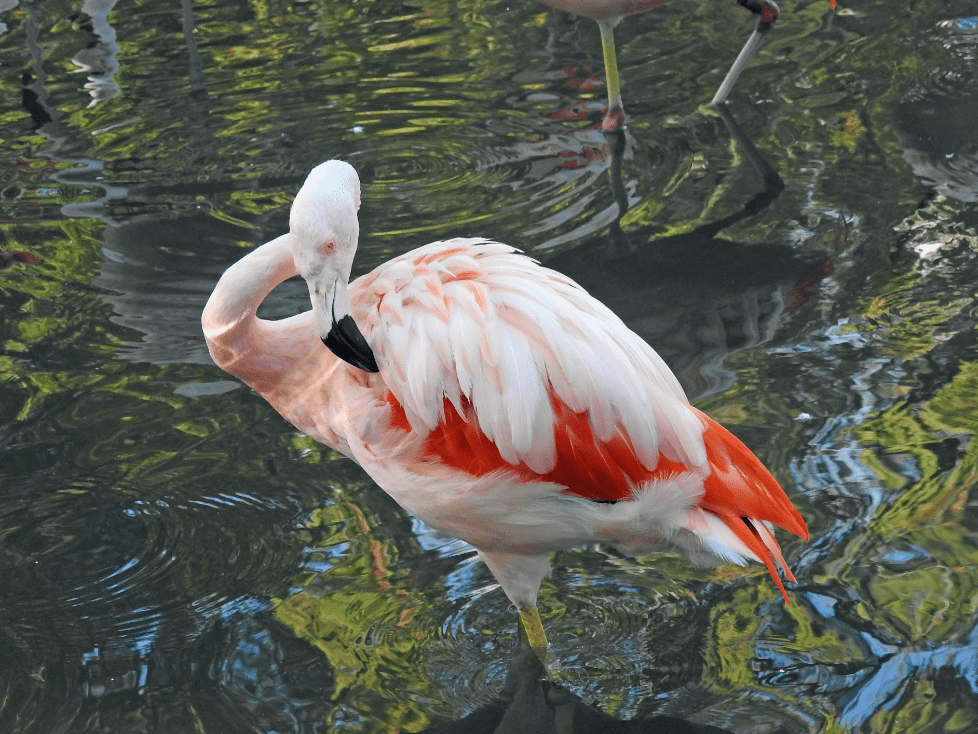
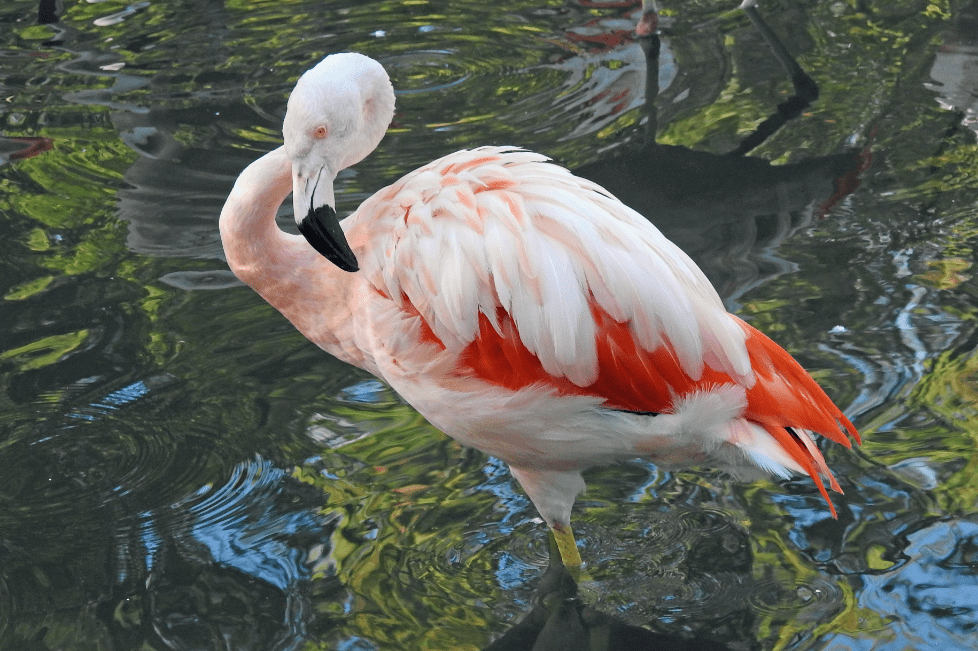
Figure 02. This Chilean Flamingo seems to be pointing to its Phoenicopterus — “red feathers.”
The etymology of the genus Phoenicopterus is the same as that for the order Phoenicopteriformes and the family Phoenicopteridae, both of which were described in Part 1. Briefly, it has Greek origins: phoenico-, from phoinix or phoinikos, meaning “crimson red”; and -pter-, from pteron, meaning both “feathers” and “wing.” The species suffix chilensis refers to Chile, one of the main places where it may be found.
To summarize the taxonomy for the Chilean Flamingo: kingdom, Animalia; phylum, Chordata; class, Aves; order, Phoenicopteriformes; family, Phoenicopteridae; genus, Phoenicopterus; species suffix, chilensis. Both of its genus mates are larger (Greater, as well as American), and the American has more deeply colored plumage. It has no identified subspecies, but hybrids with American Flamingo and with Greater Flamingo have been seen.
In 1782, Juan Ignacio Molina published his Saggio Sulla Storia Naturale del Chile, the first publication describing Chile’s natural history and introducing numerous Chilean native species to science, including the Flamenco Chileno, the Chilean Flamingo. Molina was a Jesuit naturalist whose name was translated as Giovanni Ignazio Molina in Italian, so citations are often given as “G. I. Molina.” To see his Spanish text, visit https://bibdigital.rjb.csic.es/viewer/9635/?offset=#page=242&viewer=picture&o=bookmark&n=0&q= , where his description may be found on pp. 242–247, though the 1700s printing style is hard to read.
Description
Adult Chilean Flamingos weigh 3.8–7.9 pounds (1.720–3.579 kg; 60.7–126.3 ounces, 1720–3579 g), with females weighing up to 5.9 pounds (2.7 kg), and males weighing from 7.6 pounds (3.5 kg) up. Hatchlings typically start out at about 3 ounces (85 g). Average length (bill to tail) is 41.3 inches (105 cm), standing about 43–51 inches high (110–130 cm). Each wing is about 14.7–16.4″ long, with males’ wings usually somewhat longer. Tail length is about 4.4–6 inches (11.3–15.2 cm, males’ tails typically longer than females’). Compare their short tails with their long tarsi (from ankle to toes): 8.7–10.2 inches (22.2–26 cm).
One of their most distinguishing features is the bill, 4–4.3 inches long (10.2–10.9 cm), by 1.3–1.5 inches deep (3.3–3.9 cm, top to bottom) by 0.9–1 inch wide (2.37–2.55 cm, side to side). The black tip of its bill extends upward, slightly past the bend; the top of the bill looks pale pink to match the pale pink plumage on its head and neck. Its legs are mostly yellowish-gray (depending on the lighting), with bright pink ankles and webbed toes. When comparing its plumage with its genus mates, its plumage is pinker than the Greater Flamingo but less deeply colorful than the American Flamingo.
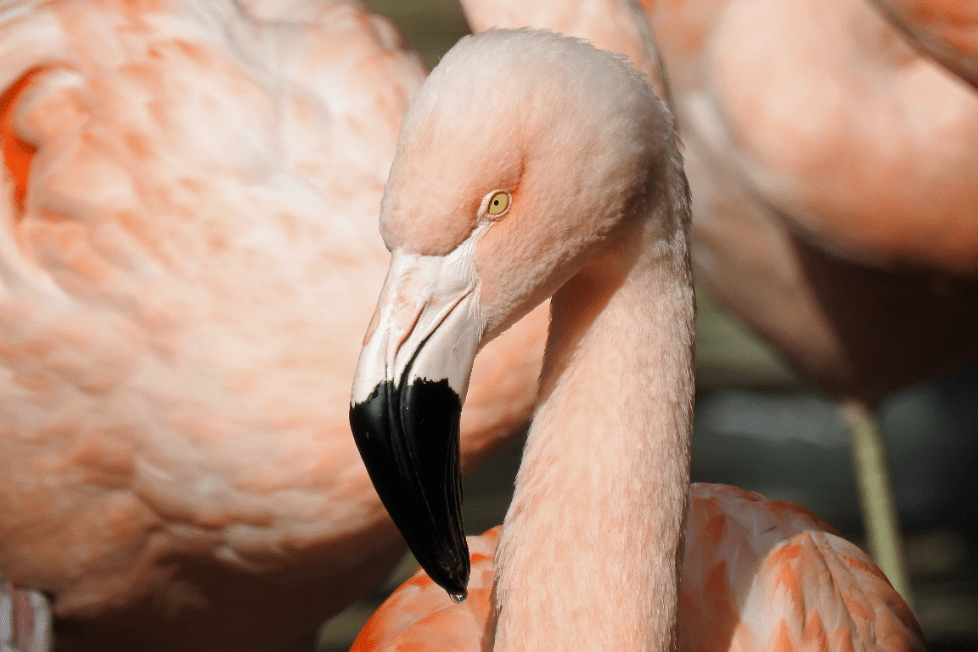
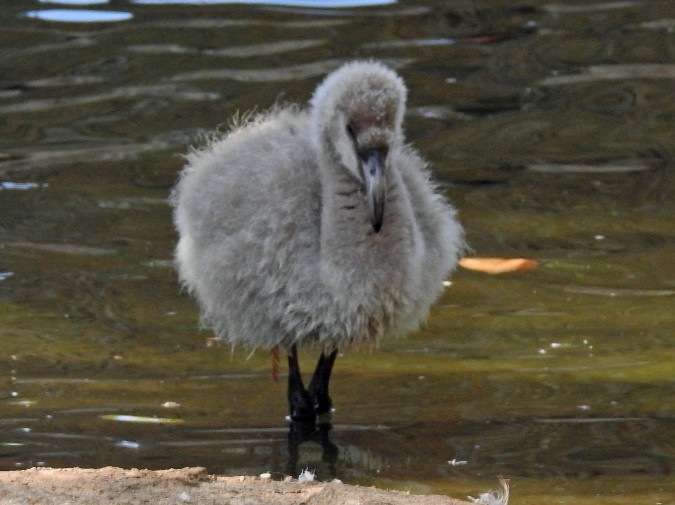
Figure 03. (left) This lovely pale salmon adult Chilean Flamingo has produced these pigments by eating a diet rich in carotenoids. (right) This fluffy gray chick hasn’t yet produced and stored enough pigments to show any hint of pink or salmon coloration yet.
As is true of all flamingos, the plumage of chicks lacks any pink coloration whatsoever. It will take time — and the consumption of a carotenoid-rich diet — to pink up their plumage. Hatchlings less than 15 days old have white down, with salmon-pink un-bent bills and intensely red legs (e.g., see https://macaulaylibrary.org/asset/342853291 ). By age 1–3 months, they shed their white down and are covered in thick brownish-grayish down (e.g., see https://macaulaylibrary.org/asset/451837731 ). Their legs and bills turn charcoal gray. By about 4–5 months of age, they have acquired their vaned flight feathers, which are light brown on the back with whitish or pale salmon underparts (see, e.g., https://macaulaylibrary.org/asset/646792554 , https://macaulaylibrary.org/asset/481988721 , or https://macaulaylibrary.org/asset/377925781 , for juveniles with adults). Their bills are now curved, with a bluish base and a charcoal-gray tip; legs have lightened to pale gray.
Vocalizations
The vocalizations of Chilean Flamingos are important, with each individual having a unique call. A parent can recognize its youngster’s call among the calls of thousands of other flamingos. To hear an assortment of 21 audio recordings of Chilean Flamingos, please see https://xeno-canto.org/species/Phoenicopterus-chilensis . While feeding, flocks of Chilean Flamingos continuously vocalize to one another in what has been called a “kucking” call. While flying in flocks, they also continually communicate with one another, vocalizing in flight, making goose-like nasal honks (e.g., https://xeno-canto.org/272817 ), grunts, or howls to one another. These flamingos also communicate with one another through body movements.
Figure 04. Chilean Flamingos are sociable and like to call to one another — often.
Distribution, Habitat, Migration
Distribution
The Cornell Lab of Ornithology’s citizen-science eBird website (https://ebird.org/home ) and app gathers information from observers around the world and compiles it, so ornithologists and other researchers can better understand the locations and movements of birds. One use of these data is their compilation of range maps, such as this one, mapping the range of Chilean Flamingos: https://ebird.org/map/chifla1 . They can be found mostly in the Andes, along the Pacific coast of South America, the pampas extending from southern Argentina to southern Brazil, and as far south as Tierra del Fuego — that is, from −54.7 to −2 degrees southern latitude (south of the equator). The total territory in which it may be found extends to 2,965,300–3,266,400 square miles (7,680,000–8,460,000 km²), though some estimate a much smaller range (1,262,600 square miles, 3,269,778 km²). Of the three flamingo species that reside and breed exclusively in South America (including also the Andean and the James’s Flamingos), the Chilean is the most common.
Habitat
Like other flamingos, Chilean Flamingos seek out hypersaline (super-salty) or hyperalkaline (high in alkali such as soda) wetlands — lakes, lagoons, mudflats, mangroves, estuaries, bays, coastal fjords, marshes, and so on. These lakes may be found at any elevation from sea level up to about 15,000 feet (4500 m). In general, a lake that can support fish (who may compete for eating the same food) does not attract these flamingos. During breeding season, Chilean Flamingos seek out islands (or islets) with muddy (or gravely) land on which to build their mound nests; suitable habitat for a flock to breed isn’t available every year, thereby affecting the frequency of breeding.
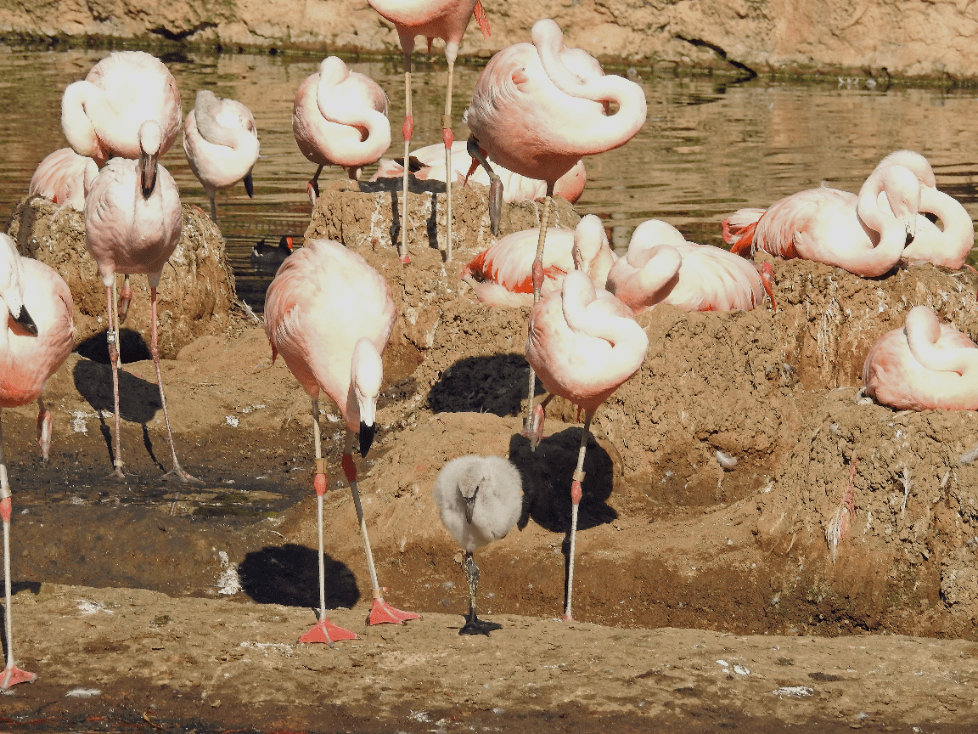
Figure 05. Chilean Flamingos need muddy land on which to build their mud-mound nests, but outside of breeding season, they’re more flexible in their choice of habitat.
Movements and Migration
Given hypersaline or hyperalkaline waters, Chilean Flamingos seek out a range of water levels that work well for them — not so deep that they can’t touch their feet to the ground anywhere, and not so shallow that they can’t find food in the water. If the water levels are too high or too low, they need to move to a more suitable location. That means that many Chilean Flamingos must move up or down in latitude or in elevation; these movements can involve full migrations or merely nomadic or even irruptive movements. (For a photo of a flock of Chilean Flamingos in flight, please see https://macaulaylibrary.org/asset/79925441 ; for a photo of these flamingos taking flight, please see https://macaulaylibrary.org/asset/464977961 .)
Diet and Foraging
Unlike some flamingo species, Chilean Flamingos are predators, eating almost entirely aquatic invertebrates (e.g., crustaceans, snails) and their larvae (e.g., brine flies). They glean these invertebrates from the sediment at the bottom of the water. This flamingo submerges its entire neck so that its bill is positioned upside-down, with the top of its bill atop the sediment and the bottom of its bill above the top of its bill. Usually, it steps forward steadily, in nearly a straight line; or it stomps in place. Occasionally, it swims with its flock, while moving forward through the water, filtering the water closer to the surface. It has also been observed standing on one leg while feeding — presumably in a spot that has an abundance of prey.
The Chilean Flamingo is built for filter feeding. Unlike most animals, its upper mandible can be moved, whereas most animals can move only their lower mandible; this arrangement makes it easier to feed with the bill upside-down in the water. The bill is lined with lamellae (projections that trap tiny prey from escaping out of the bill), and it holds a powerfully muscular tongue that forces water through the lamellae and out of the bill. In addition, their legs and feet are well suited to stirring up the silt and sediment, churning tiny invertebrates to rise up in the water. These flamingos also stir up more prey by moving nearly twice as fast as the other two South American species while feeding. They use these special adaptations to eat food amounting to about 10% of their body weight every day. Unlike night-owl Lesser Flamingos, Chilean Flamingos forage during the daytime.
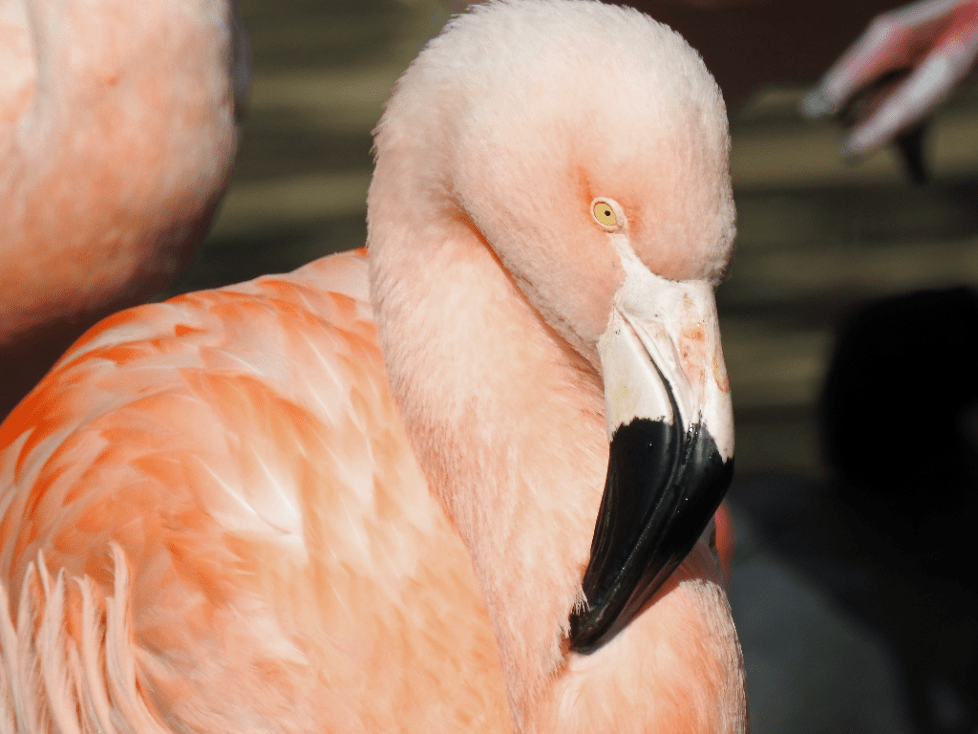
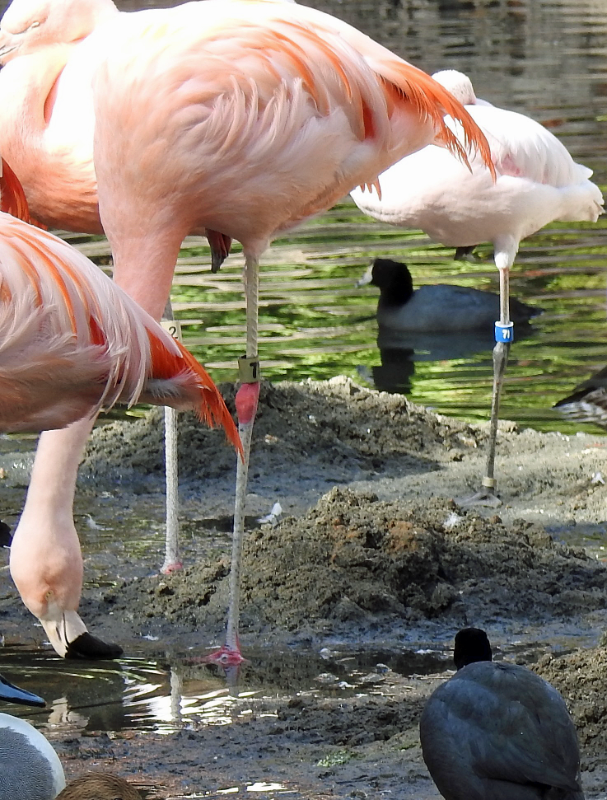
Figure 06. Chilean Flamingos are beautifully adapted to feeding on aquatic invertebrates dwelling at the bottom of hypersaline or hyperalkaline lakes. Can you make out the tiny lamellae on the bill (left)?
Social Behavior and Breeding
Chilean Flamingos enjoy living together and breeding together in flocks, which can reach 6,000–10,000 pairs. As mentioned previously, they often vocalize to keep in near-constant communication; in addition, they communicate by observing one another’s preening behaviors. To keep their feathers flight-ready and waterproof, they preen their feathers about 3.5–7 hours/day.
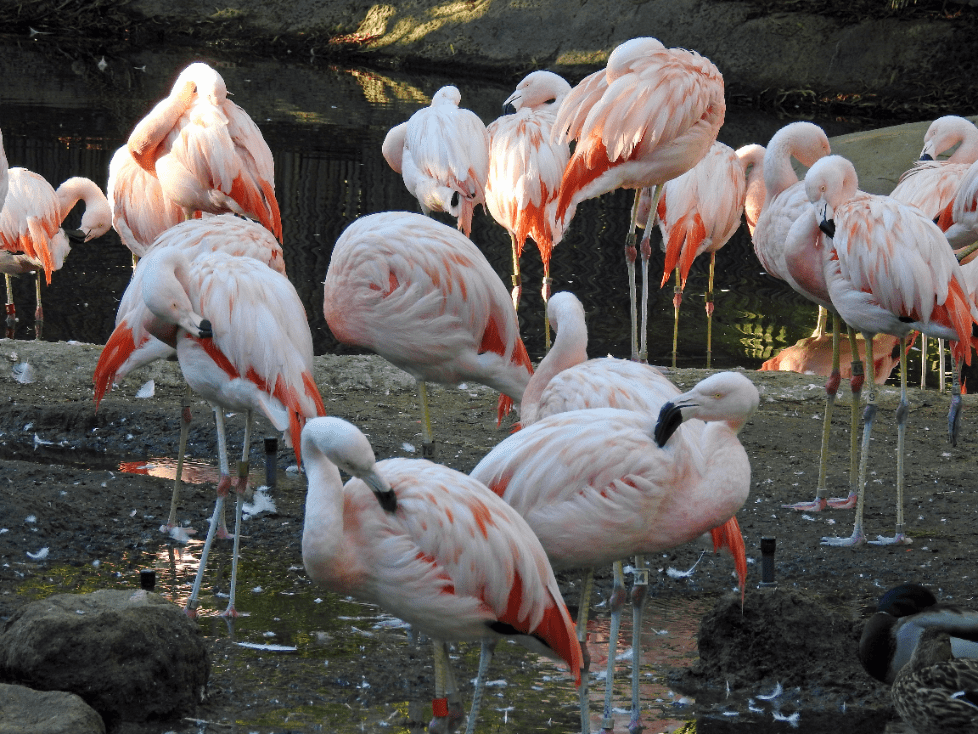

Figure 07. To keep their feathers waterproof (and ready for takeoff), Chilean Flamingos spend many hours each day engaged in social preening.
Chilean Flamingos are colonial breeders, needing dense crowds of fellow flamingos to stimulate breeding. Sometimes, they’ll build nests alongside Andean Flamingos (Phoenicoparrus andinus) or James’s Flamingos (Phoenicoparrus jamesi) — or both. Chilean Flamingos don’t breed every year because they won’t try unless they’re relatively sure of the necessary environmental conditions for breeding success. On the other hand, they occasionally make more than one breeding attempt in a given year if conditions are optimal. When they do breed, it’s typically between October and March (end of spring through start of autumn in the Southern Hemisphere).
During breeding season, male and female flamingos use courtship displays to attract mates. For instance, they engage in tandem head flagging, both partners swiveling their heads side to side, as well as wing salutes, opening and closing their wings repeatedly. They also seal their pair bond by sharing in building a mud-pillar nest together. The pillar/mound keeps the egg and the incubating parent off the ground and has enough room in the bowl-shaped shallow center for both egg and parent (see Figure 05, too). If no mud is available, such as on rocky or gravely islands, the mom will lay the egg on bare ground.
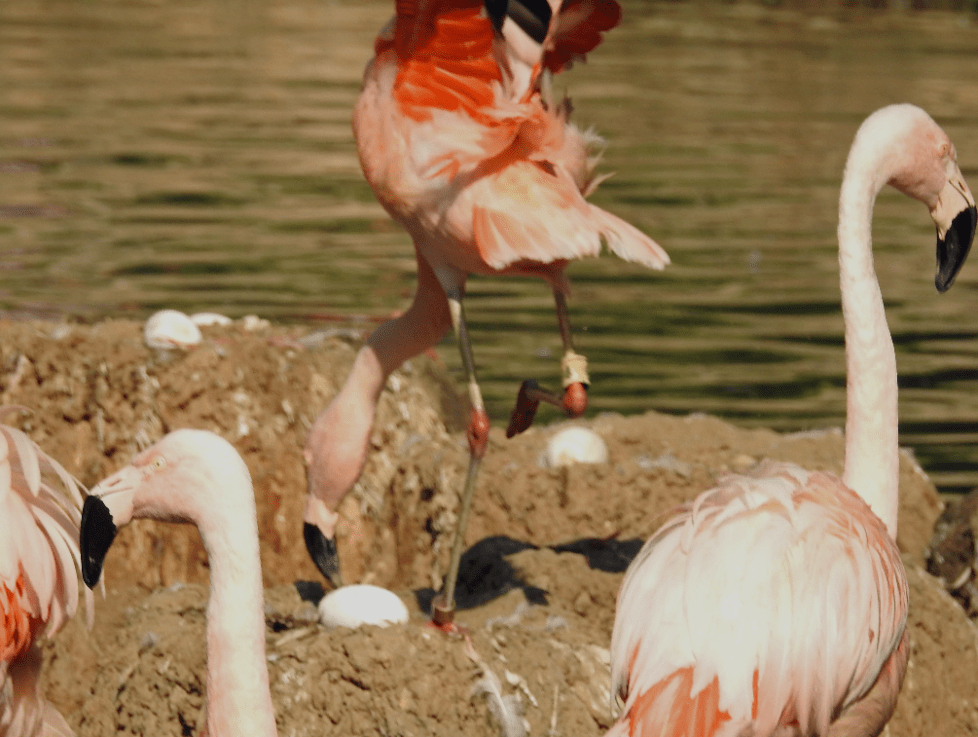
Figure 08. Chilean Flamingos form cooperative pairs, who share in building a nest for their egg, then incubating the egg and feeding it crop milk, produced in each parent’s esophagus.
After the mom lays the chalky-white egg (almost invariably one egg, but rare instances of two have occurred), both parents take turns incubating it. It takes 27–32 days for the egg to hatch. After their gray down-covered chick hatches from the egg, both parents take turns feeding it nutritious “crop milk,” which they produce in their crop (esophagus). (For more on crop milk, please see Got (Bird) Milk? – Bird Brain .) Their carotenoid-rich diet typically produces crimson crop milk. It takes the chick about 65–80 days to develop flight feathers and be ready to take flight, but it won’t gain its adult pink coloration until it’s 2–3 years old. Even then, it probably won’t start breeding until at least 2½–6 years of age. The Chilean Flamingo’s generation length (from the year the parent hatches to the year its first offspring hatch) is about 12–15.3 years.
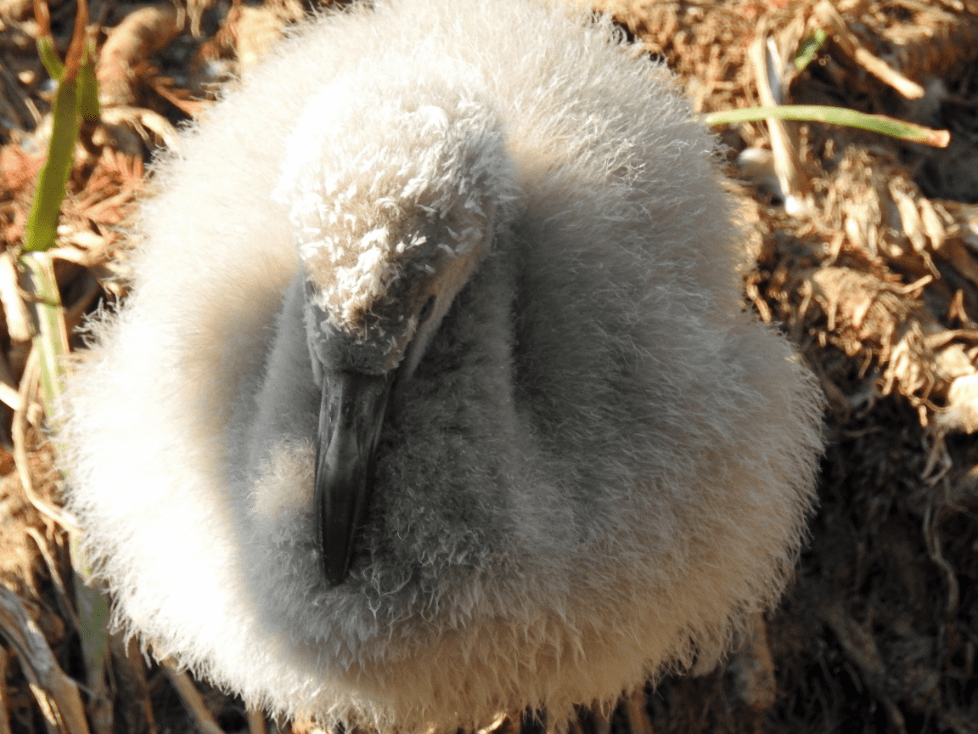
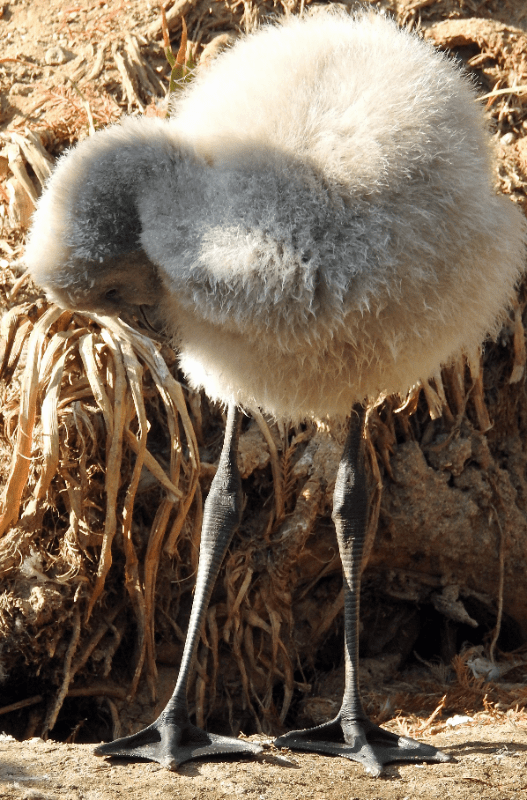
Figure 09. Chilean Flamingo chicks hatch as gray puffballs of down, with black legs and feet and bills.
Maturity and Lifespan
Chilean Flamingos are among the most longest-lived birds. In the wild, they may live up to 32–50 years, and up to 40 years in captivity. Annual survival for adult Chilean Flamingos is 91%. Though this species is the most numerous and widespread flamingo in South America, it does face numerous threats, including humans who have harvested and collected their eggs to the extent that some colonies in Bolivia either partially or completely failed as a result. Their low reproductive rate (less than one chick per pair per year) exacerbates this problem. Hunting and trapping (to eat the meat), as well as tourism and recreation have also imperiled and disturbed these flamingos.
Like other flamingos, this flamingo is also threatened by habitat destruction or degradation, such as when humans divert water from lakes for irrigation projects or for building dams, or when humans conduct mining operations near their habitats.
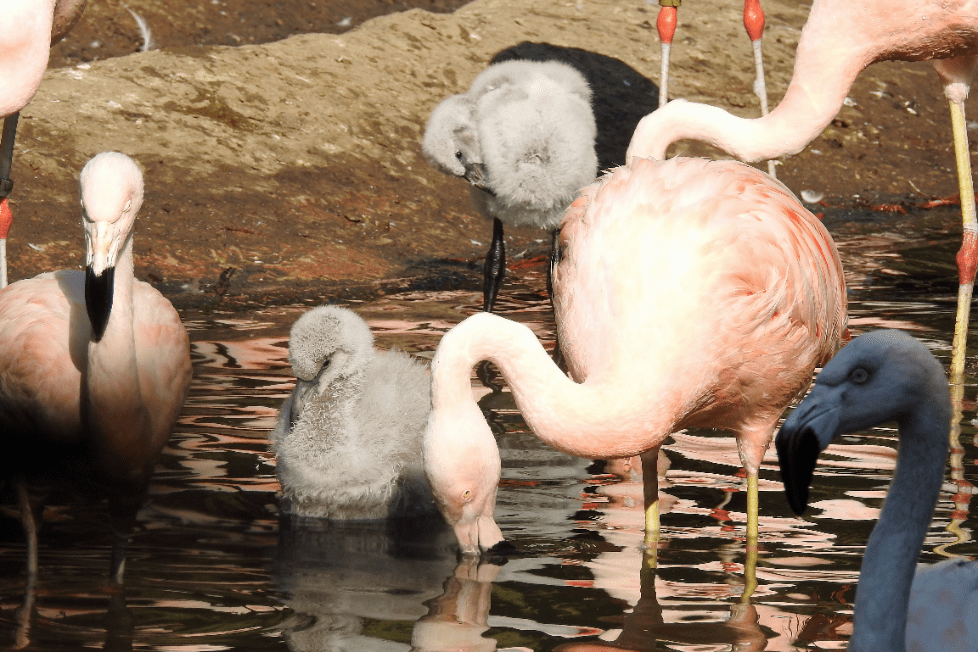
Figure 10. Chilean Flamingos who reach adulthood are very long-lived, but as a population, they are imperiled by human egg collectors, hunters, trappers, and recreators, as well as human devastation of their habitats.
Flamingo chicks are also imperiled by various parasites, especially chewing lice.
Conservation Status
As mentioned previously, Chilean Flamingos are among the most longest-lived birds, and they’re the most numerous and widespread flamingo in South America. Nonetheless, it has an IUCN Red List conservation status of NT, Near Threatened, partly because of human egg harvesting and hunting, but mostly because of threats to their special habitats, particularly because of irrigation and mining. Their population has declined 21–25% over three generations of birds, and 6–8% over 10 years. As with many birds, population estimates are tricky. Nonetheless, in the mid-1970s, their population was estimated at 500,000 individuals, but current estimates are 200,000–300,000 birds.
Conservation actions have been sparse, with some monitoring and some conservation sanctuaries, and some modest international controls in place. No widespread education programs have been implemented. Conservationists have proposed extensive simultaneous surveys during breeding season, to monitor population, as well as control measures to limit intensive harvesting of eggs, with adequate enforcement.
Given the concerns with egg harvesting and low reproductive rates, captive-breeding programs have been undertaken in numerous zoos, to bolster their numbers. The first flamingo chick to hatch in a European zoo (Basel, Switzerland) was a Chilean Flamingo, in 1958. Currently, the comprehensive dataset of the Zoological Information Management System (ZIMS), monitoring animals under human care, lists 2,448 males, 2,245 females, and 1,003 unsexed Chilean Flamingos, totaling 5,696, across 191 holding institutions in 35 countries. The Association of Zoos & Aquariums (AZA) lists a smaller number (55 institutions, 1,375 birds). The Colchester Zoo in England figured out that they could nudge Chilean Flamingos to breed by using mirrors and artificial nest mounds, to make them think they’re among a larger flock of flamingos.
Probably the most famous Chilean Flamingo in captivity was “Pink Floyd,” who had missed his routine wing clipping in 1988, in the Tracy Aviary in Salt Lake City, Utah. Pink Floyd took the opportunity to fly off and was later seen eating brine shrimp in the Great Salt Lake in the winter and then seen in Idaho and Montana in the spring and summer. (For more information, see http://www.utahbirds.org/featarts/2004/UtahsPinkFloyd.htm .)
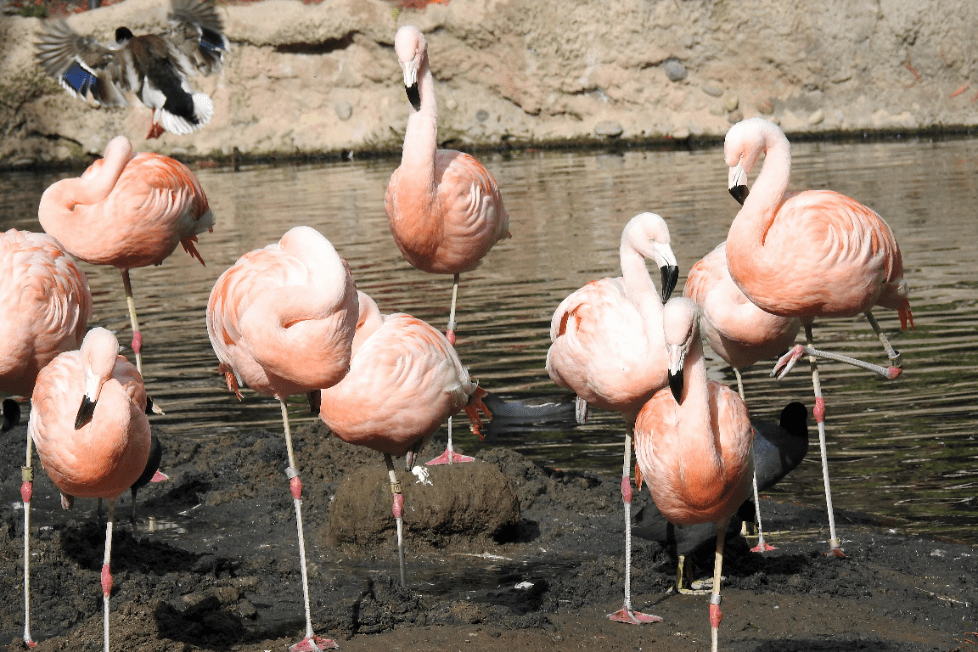
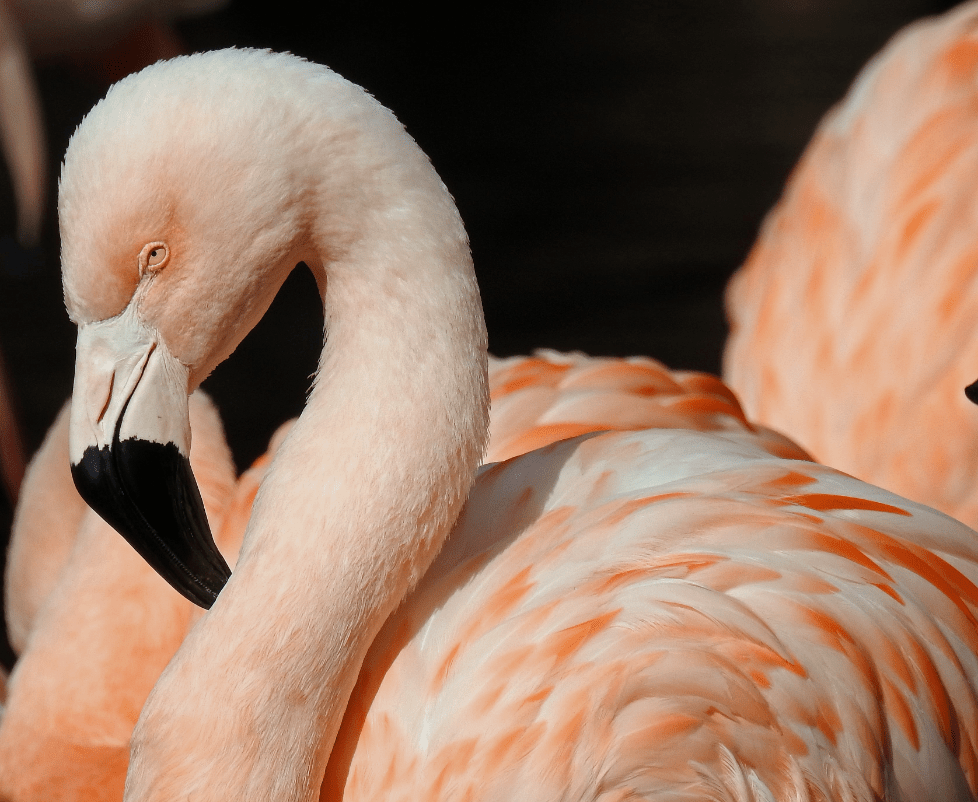
Figure 11. The salmon plumes, the big bent-tipped bill, and the rosy ankles and feet might be what human adults notice first about Chilean Flamingos, but for many children, the first thing they notice is their one-legged stance.
Observations
The Cornell Lab of Ornithology gathers information from observers around the world through its eBird app and website (https://ebird.org/species/chifla1 ), which holds 55,626 observations of Chilean Flamingos, including 9,856 with photos, and 66 with audio recordings. The lab’s Macaulay Library (https://search.macaulaylibrary.org/catalog?taxonCode=chifla1&mediaType=photo&sort=rating_rank_desc ) holds 20,405 photos, 98 audio recordings, and 191 videos of this species. In addition, iNaturalist gathers observations with its app and its website, https://www.inaturalist.org/observations?taxon_id=4258 , which offers 7,220 observations and photographs.
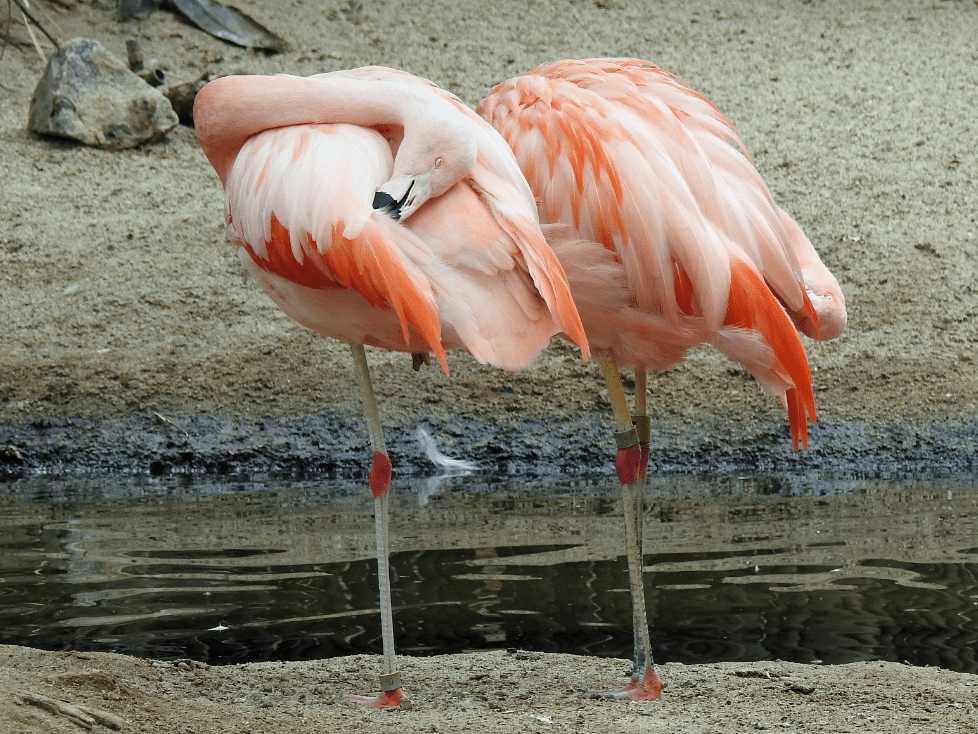
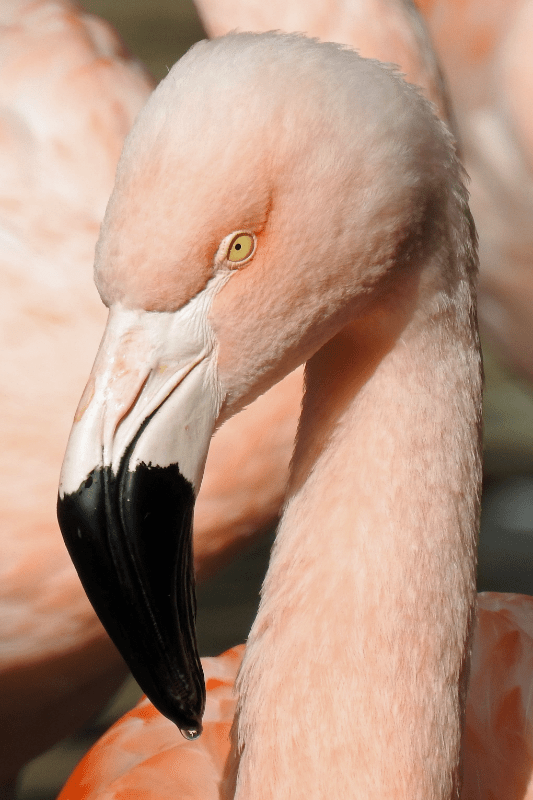
Figure 12. Most photos of Chilean Flamingos include more than one bird, even when just one bird is in the foreground.
Still to come: two more blogs about the flamingo family: the American Flamingo and the Greater Flamingo.
References
Chilean Flamingo, Phoenicopterus chilensis
- del Hoyo, J., P. F. D. Boesman, and E. Garcia (2024). Chilean Flamingo (Phoenicopterus chilensis), version 1.1. In Birds of the World (J. del Hoyo, A. Elliott, J. Sargatal, D. A. Christie, and E. de Juana, Editors). Ithaca, NY: Cornell Lab of Ornithology. https://doi.org/10.2173/bow.chifla1.01.1 https://birdsoftheworld.org/bow/species/chifla1/cur/introduction
- https://en.wikipedia.org/wiki/Chilean_flamingo
- Chilean Flamingo, https://avibase.bsc-eoc.org/species.jsp?avibaseid=4F28673C
- Chilean Flamingo, https://avibase.bsc-eoc.org/species.jsp?lang=EN&avibaseid=4F28673C181D26B8&sec=lifehistory
- Chilean Flamingo, https://ebird.org/species/chifla1
- Chilean Flamingo, https://www.inaturalist.org/observations?taxon_id=4258
- Chilean Flamingo, https://www.iucnredlist.org/species/22697365/132068236
Phoenicopteridae, Phoenicopterus
- Elphick, Jonathan. (2014). The World of Birds (p. 326). Buffalo, NY: Firefly Books.
- Lovette, Irby, & John Fitzpatrick (eds.), (2016). The Cornell Lab of Ornithology Handbook of Bird Biology (3rd ed.). Hoboken, NJ: Wiley.
- Winkler, David W., Shawn M. Billerman, and Irby J. Lovette. (2015). Bird Families of the World: An Invitation to the Spectacular Diversity of Birds (p. 254). Barcelona: Lynx, Cornell Lab of Ornithology.
- Winkler, D. W., S. M. Billerman, and I. J. Lovette (2020). Flamingos (Phoenicopteridae), version 1.0. In Birds of the World (S. M. Billerman, B. K. Keeney, P. G. Rodewald, and T. S. Schulenberg, Editors). Ithaca, NY: Cornell Lab of Ornithology. https://doi.org/10.2173/bow.phoeni1.01 , https://birdsoftheworld.org/bow/species/phoeni1/cur/species#genusPhoenicopterus
Etymology
- Gotch, A. F. [Arthur Frederick]. Birds—Their Latin Names Explained (348 pp.). Poole, Dorset, U.K.: Blandford Press.
- Gruson, Edward S. (1972). Words for Birds: A Lexicon of North American Birds with Biographical Notes (305 pp., including Bibliography, 279–282; Index of Common Names, 283–291; Index of Generic Names, 292–295; Index of Scientific Species Names, 296–303; Index of People for Whom Birds Are Named, 304–305). New York: Quadrangle Books.
- Lederer, Roger, and Carol Burr. (2014). Latin for Bird Lovers: Over 3,000 Bird Names Explored and Explained (224 pages). Portland, OR: Timber Press.
Text and images by Shari Dorantes Hatch. Copyright © 2026. All rights reserved.
Images were recorded at the San Diego Zoo’s Safari Park.
 Bird Brain
Leave a comment