
Bucerotidae
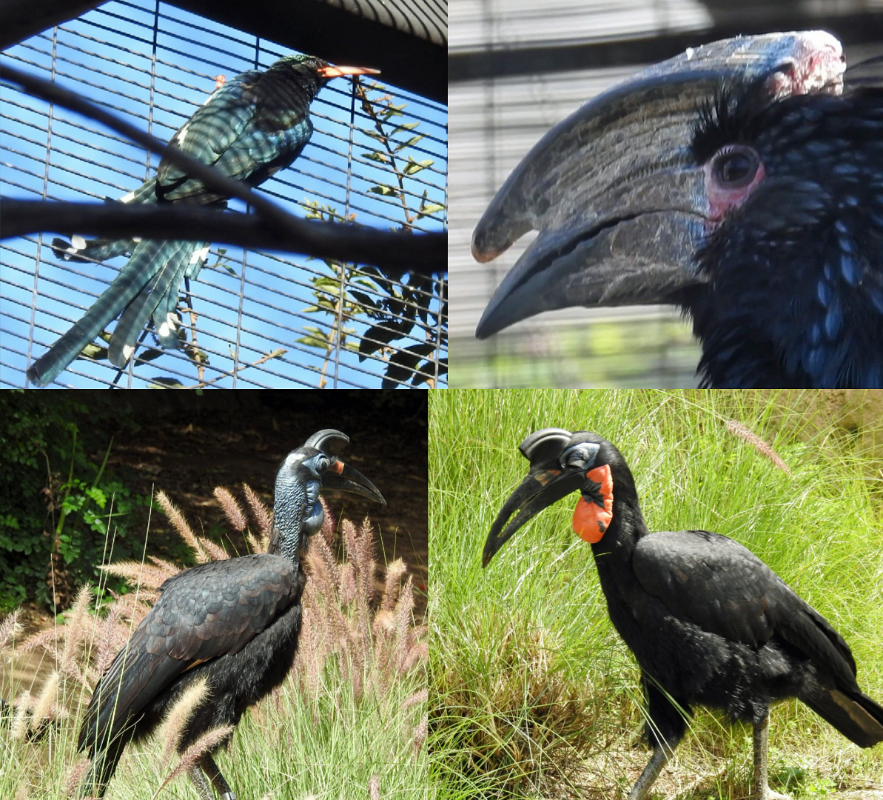
The Bucerotiformes order of birds includes woodhoopoes (Green Woodhoopoe, top left), tree-dwelling hornbills (e.g., Trumpeter Hornbill, top right), and ground hornbills (bottom; female left, male right), as well as hoopoes (not shown).
The Bucerotiformes order of birds includes four families:
- hoopoes (Upupidae),
- woodhoopoes (Phoeniculidae),
- ground hornbills (Bucorvidae),
- and tree-dwelling hornbills (Bucerotidae).
For an overview of the Bucerotiformes order, as well as particular information about woodhoopoes (Phoeniculidae), please see my earlier blog, https://bird-brain.org/2026/04/05/woodhoopoes/ . For an overview of hornbills — both ground hornbills, Bucorvidae, and tree-dwelling hornbills, Bucerotidae — as well as specific information about ground hornbills, please see my earlier blog, https://bird-brain.org/2026/04/13/ground-hornbills/ .
The Bucerotidae family of tree-dwelling hornbills includes 15 genera, across 62 species:
- Lophoceros — 8 species
- Berenicornis — White-crowned Hornbill
- Rhinoplax — Helmeted Hornbill
- Buceros — 3 species
- Anorrhinus — 3 species
- Ocyceros — 3 species
- Anthracoceros — 5 species
- Aceros — rufous-necked hornbill
- Rhyticeros — 6 species
- Penelopides — 5 species
- Horizocerus — 4 species (including the Western Long-tailed Hornbill)
- Bycanistes — 6 species (including the Trumpeter Hornbill)
- Tockus — 10 species (including the Eastern Yellow-billed Hornbill)
- Rhabdotorrhinus — 4 species (including the Sulawesi Hornbill and the Wrinkled Hornbill)
- Ceratogymna — 2 species (including the Black-casqued Hornbill)
The San Diego Zoo and its Safari Park have offered homes to six of the tree-dwelling Bucerotidae hornbill species. The current blog gives an overview of the Bucerotidae family of hornbills and introduces these three Bucerotidae hornbill species:
- Wrinkled Hornbill, Rhabdotorrhinus corrugatus — EN, Endangered
- Sulawesi Hornbill, Rhabdotorrhinus exarhatus — VU, Vulnerable
- Black-casqued Hornbill, Ceratogymna atrata — NT, Near Threatened
All three of these species are in peril, as assessed by their IUCN Red List conservation status.
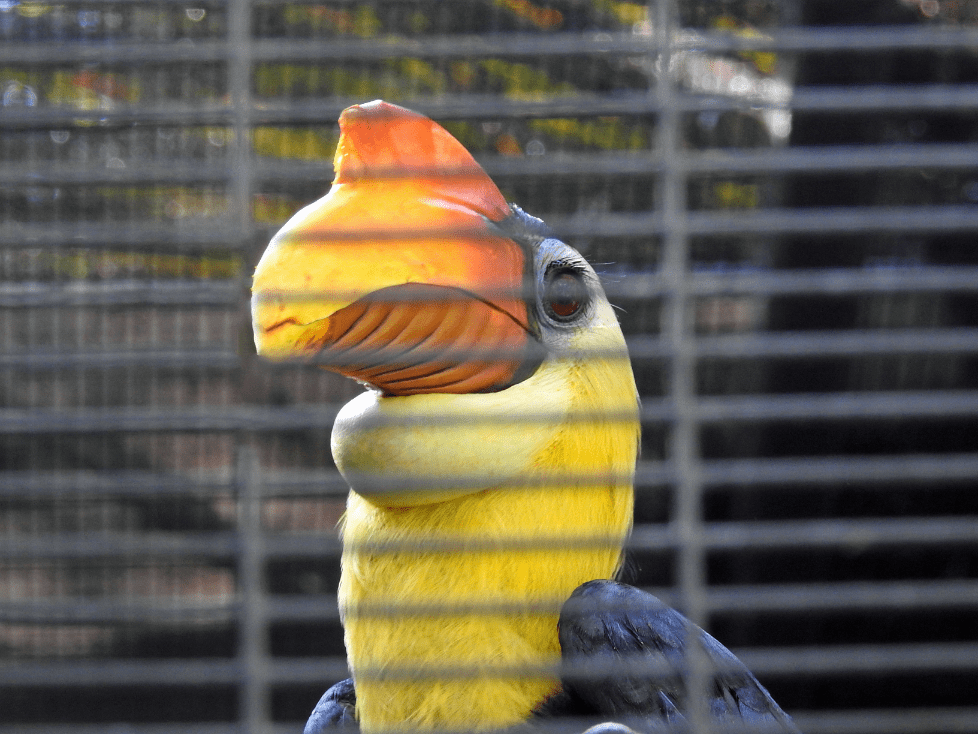
Figure 01. This Wrinkled Hornbill male lives at the San Diego Zoo, where he receives superlative care, but his species is Endangered in the wild.
A future blog will discuss three more Bucerotidae hornbills housed at the San Diego Zoo or its Safari Park:
- Trumpeter Hornbill, Bycanistes bucinator
- Western Long-tailed Hornbill, Horizocerus albocristatus
- Eastern Yellow-billed Hornbill, Tockus flavirostris
All three of these species have an IUCN Red List conservation status of LC, Least Concern.
Both hornbills and toucans have huge bills and similar ecological niches, but they aren’t related genetically. Rather, they show convergent evolution, with the fruit-eating, tree-dwelling toucans living in the Neotropics (southern Mexico, Central and South America) and the fruit-eating, tree-dwelling hornbills living in tropical zones of Asia and Africa (extending to southern Africa). While most toucans have bills of a similar size and shape, the bills of hornbills are more varied in size and shape, as well as having a casque atop the bill.
The tree-dwelling hornbills also vary widely in overall size, from the smallest female Western Dwarf Hornbill, Horizocerus hartlaubi (2.9 ounces, <0.2 pounds, 83.4 g; 12.6″ long, bill to tail, 32 cm) to the largest male Great Hornbill, Buceros bicornis (up to 120 ounces, 7.5 pounds, 3,400 grams; 41.3″ long, 105 cm). (The Helmeted Hornbill isn’t as heavy, but it can reach up to 50″ — 127 cm — long, plus up to 15.7″ — 40 cm — extra with its elongated central tail feathers; for a view of that superlong tail, please see https://macaulaylibrary.org/asset/711300 .) In a given species, male hornbills typically outweigh females, sometimes by a lot.
The plumage of hornbills varies across species, too; most have variations on black backs with white bellies, but some are mostly brown or gray, and some have bright rufous plumes on bellies, necks, or even the back. In most species, males and females have similar plumage, but in some species they differ, often with differing colors on the head or neck. Whereas their wing and tail plumage is typically smooth and lustrous, for minimal friction during flight, the feathers of the head, neck, and other body regions may be coarse and loose, creating a ruffled look. Some species can erect tall crests, fans, or crowns atop their heads, whereas others have no special head feathers.
They do share some body features, such as an ovoid body, usually with a somewhat upright posture. They typically have long, broad, rounded wings; long square-tipped tails (often quite long); and short legs with thick feet and broad syndactyl toes (two partially joined at the base; three forward-facing with one backward-facing). Their necks are thick, medium length, and powerfully muscular. Out of view, the first two vertebrae in their necks are fused, and their skull’s attachment to the neck is distinctive, probably to help support the heavy bill — the only birds to have this skeletal feature. Unlike most birds (which have three-lobed kidneys), hornbills have a two-lobed kidney — an anterior lobe and a posterior lobe, but no middle lobe.
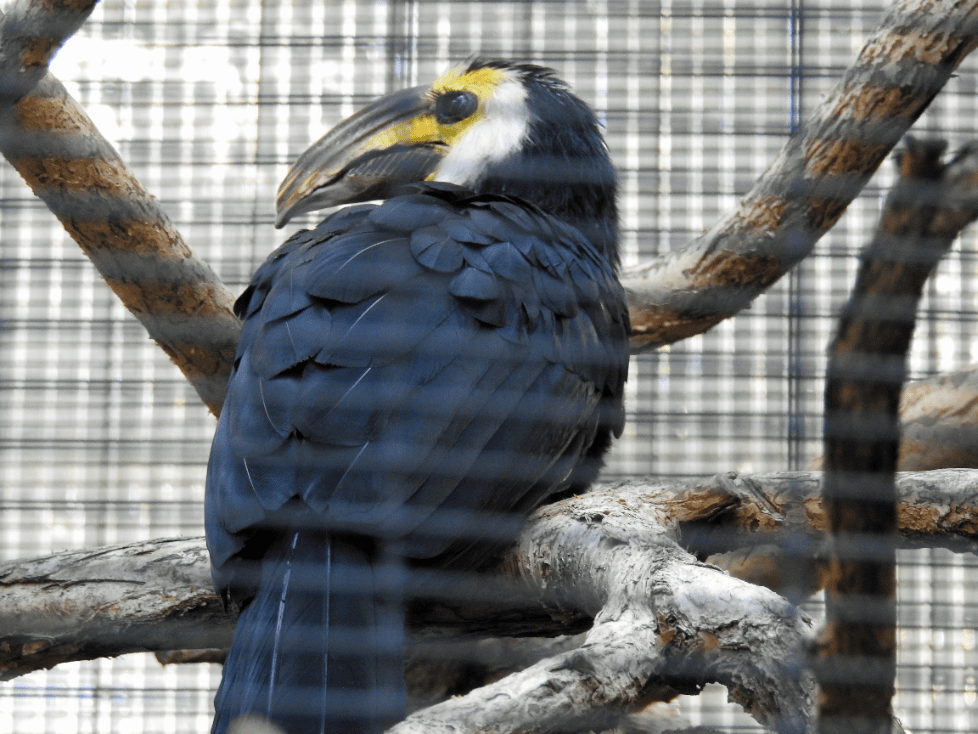
Figure 02. Like many other Bucerotidae hornbill species, this Sulawesi Hornbill has mostly black plumage and an enormous bill.
All hornbill bills are long, deep (top to bottom), and decurved (downward), but the size of the bill varies across species, and the colors may be black, gray, yellow, orange, red, multicolored, or even patterned. Some species even have lengthwise or crosswise ridges and striations in the bill. Among other functions, the hornbill’s bill helps with thermoregulation — that is, they can radiate body heat to their bills, where the heat can dissipate into the surrounding air. (Toucans do so, too; see https://bird-brain.org/2025/01/17/feeling-the-heat/#radiators and https://bird-brain.org/2025/04/02/toucans-parker-aviary-san-diego-zoo/#R-Description .) Other functions include ease of snatching fruits or prey, preening, attracting mates, constructing and sealing nest cavities, and even fighting in some species.
The bill is made of keratin, and keratin also forms the casque overlying the bill. The size, color, and shape of the casque varies widely across species. In some species, the casque is barely visible; in others, it may outsize the bill. In most species, the casque is almost entirely air-filled, with slender bony reinforcing struts; these hollow casques resonate when the hornbill vocalizes. In some species, the bony supports are bigger and denser, and in the Helmeted Hornbill the casque isn’t hollow at all; it’s made of solid hornbill ivory, making it a powerful weapon to use for aerial combat. The Great Hornbill also butts casques with rivals midair, but its casque is hollow like most other hornbills. Juvenile hornbills may be similar to adults in size and even plumage, but their casques are a giveaway of their age, as a casque may take up to 6 years to reach full size.
Males and females may have differences in eye colors and in the coloring of their facial features, such as their bare skin. Their throats have at least a patch of bare skin, possibly more, possibly brightly colored, and possibly with wattles or throat sacs. Bare skin also encircles their eyes, possibly also extending beyond the eyes; this skin may be attractive and brightly colored or inobtrusive, the same color as their head feathers. Eyelashes (barbless feathers) also protect their eyes, either surrounding them or at least overshadowing them. Hornbill eyes also provide binocular vision; their visual field overlaps across their bill, helping them to guide the use of the bill for precise food handling.
Vocalizations
In general, most hornbills are noisy, and they make a variety of vocalizations, from soft whistles and clucks to cackles, barks, and squeals, to loud hoots and booms that can carry over long distances, even in dense woodlands. Observers can even hear the wingbeats of large species with huge wings, and hornbills of many sizes will tap their bills against a log or branch to communicate. To find an assortment of hornbill recordings, visit the xeno-canto “hornbill” website, https://xeno-canto.org/explore?query=hornbill , and skip to page 17. (Of the 91 pages displayed there, it wasn’t until page 17 that hornbill species were displayed; the previous 16 pages were thornbills and numerous other species of birds.)
Distribution, Habitat, and Migration
Though toucans dominate their ecological niche in the Americas, hornbills can be found across the tropics and subtropics from sub-Saharan Africa through southern Asia, from India east to the Melanesian islands. Most live in forests and woodlands of all kinds; many prefer dense woodlands, but a few live in other woodlands, scrublands, savannas, and even plantations. All need trees for nesting, as well as for roosting and resting. Though they aren’t migratory, some will make localized movements or even do some long-distance travel whenever food availability is limited in a particular location.
Food, Foraging, and Locomotion
Hornbills who live in forests eat mostly fruits, and they’re key dispersers of seeds for the fruiting trees there. Most also opportunistically supplement their fruity diet with invertebrates (e.g., arthropods, earthworms) and small vertebrates (e.g., lizards, small mammals, even bird eggs and nestlings). The proportions of fruits versus invertebrates versus small vertebrates varies across species and across seasons. For instance, more invertebrates and small vertebrates are eaten during the breeding season, such as when feeding nestlings. These supplements offer not only extra protein, but also extra calcium, both for eggshells and for building bones.
A hornbill’s bill is a multipurpose tool: forceps for picking up tiny insects, extended pincers for catching venomous or dangerous prey, hoes for digging up soil to find buried critters, long grabbers for reaching distant fruits, and doubtless more. All of these tools are made much more useful because binocular vision can precisely guide the bill to snatch prey or fruit. Like the ground hornbills mentioned in a previous blog (https://bird-brain.org/2026/04/13/ground-hornbills/#GH-Food ), tree-dwelling Bucerotidae hornbills have short tongues, so they can’t manipulate food in their bills. Instead, they snatch food with the tips of their bills and toss it backward into their throats.
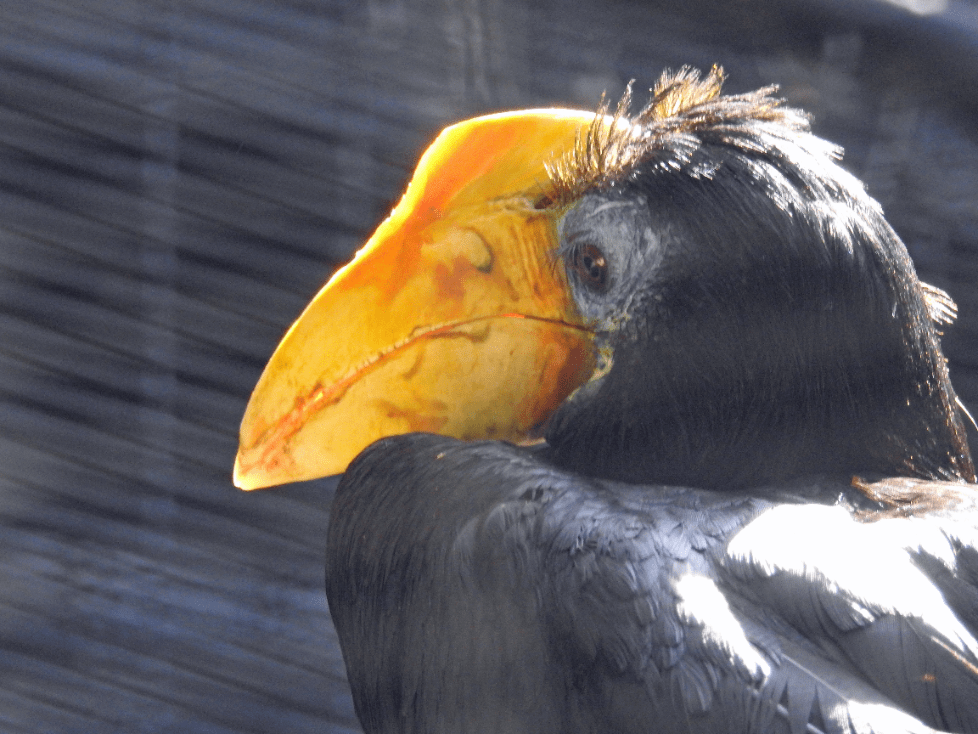
Figure 03. This female Wrinkled Hornbill’s bill is not only impressive looking, but also a multipurpose tool vital for grabbing and eating food.
The woodland-dwelling hornbills tend to have a preferred foraging height (e.g., lower canopy, mid-canopy, upper canopy), so multiple hornbills can be foraging in the same tree without competing or getting in each other’s way. Also, fruit trees tend to be widely dispersed over large areas. Even so, some hornbills will stake out a preferred territory and will go a long way to defend it. Whether on the ground or in the trees, hornbills typically hop with both feet together, rather than walk or climb one foot at a time.
Most hornbills forage during the day, typically either in pairs or in small family groups. Outside of breeding season, some hornbills form larger flocks, typically up to 20 or more; on occasion up to thousands of birds have been observed together. In addition, some species of African hornbills have mutualistic relationships with mongooses (not “mongeese”), foraging together and warning each other about nearby predators, such as birds of prey. Other hornbills merely profit from being near other animals, such as when they follow hoofed animals or monkeys, who stir up insects, which the hornbills can easily catch to eat.
Breeding
During breeding season, hornbills form monogamous pairs, and both parents are involved in caring for their young. Many species stay together year-round, or at least across multiple breeding seasons. Some hornbill species are cooperative breeders, with helpers who aid a dominant pair.
Hornbills are cavity nesters, typically in tree cavities, such as in the empty nests from previous seasons or in the abandoned nests of other birds. If tree cavities aren’t available, they’ll also nest in crevices or in cliff or rock faces, in earthen banks, or even in artificial nest boxes or other human-made structures. Once the pair chooses a nest cavity, they line it with dry plant materials or sometimes with fresh grass or leaves.
Once the nest is prepared, the female enters the nest, and both she and her mate seal the entrance almost entirely, with a mixture of mud, plant debris, feces, fruit remnants, and other materials that will harden into place when dry. They leave a slit just large enough for the male to pass food through it to feed his mate — and later his nestlings, as well. Sealing the entrance can take anywhere from a few hours to a few days.
Within a few days, or up to 3 weeks after the mom is sealed inside, she begins to lay eggs, one at a time, up to eight white eggs (with larger species generally having fewer eggs and smaller species having more eggs). At this point, she relies entirely on her mate to feed her while she incubates the eggs. In most species, she also undergoes a complete molt, losing all her feathers, quite quickly. (Males and nonbreeding females undergo a more gradual, sequential molt.) Unsurprisingly, extra-pair mating doesn’t happen among tree-dwelling hornbills.
For the next 23–42 days, she continues to incubate the eggs while her devoted mate continues to feed her. The eggs hatch, one at a time, and the father continues to provide food for both the mom and their hatchlings. For small species of hornbills, the nestlings will spend another 40–50 days in the nest; for larger species, chicks may spend about 80–100 days (more than 3 months!). As with the laying and the hatching, the fledging occurs asynchronously, with some ready to leave the nest much earlier than others.
In some species, the mom will stay with the chicks for the duration. In others, she will stay until they’re fairly mature, then she’ll break out of the nest, and she and the nestlings will reseal the opening. A key factor in determining whether she stays may be her size, the size of the chicks, and the size of the nest cavity. Though the mom and the chicks typically try to defecate through the opening in the entrance, by the time they all emerge, the nest is soiled with feces, mom’s molted feathers, and dander and feathers emerging from the chicks as they grow mature feathers.
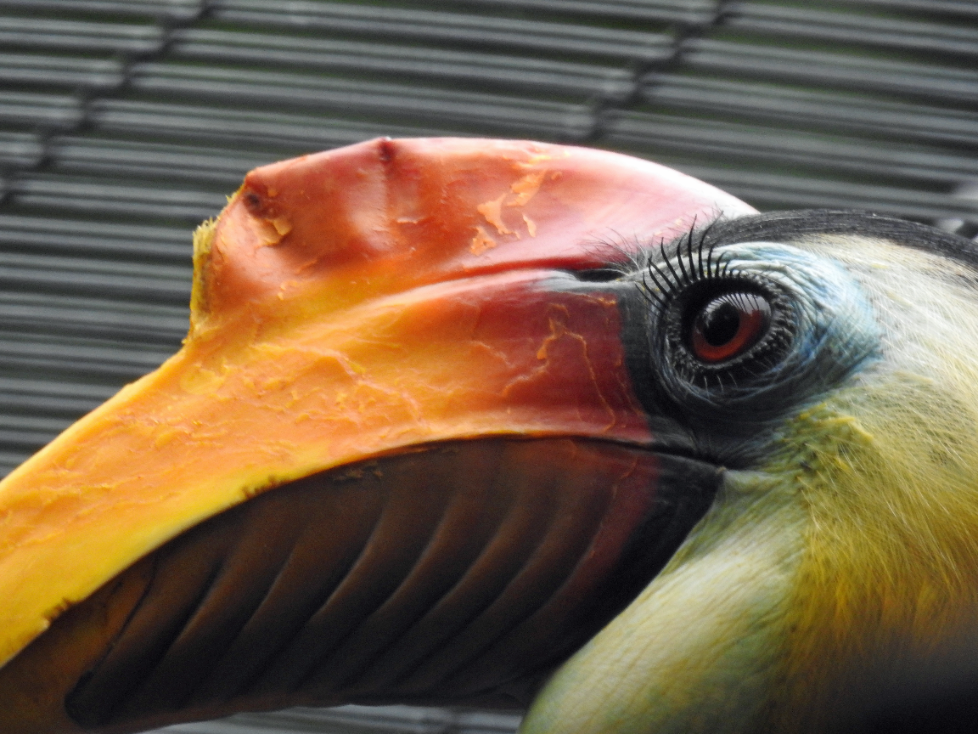
Figure 04. Many species of tree-dwelling hornbill are imperiled. Though this Wrinkled Hornbill male doesn’t seem especially worried, his species is endangered.
Conservation Status
Most hornbills have endangered IUCN Red List conservation status, to varying degrees, as follows:
- Least Concern, LC, 42.2%
- Near Threatened, NT, 9.4%
- Vulnerable, VU, 23.4%
- Endangered, EN, 9.4%
- Critically Endangered, CR, 3.1%
- Extinct in the Wild, EW, 0%
- Unknown, 12.5%
The Asian hornbills are particularly at risk due to habitat destruction (e.g., logging) and to hunting — for meat, for the ivory trade, and for the pet trade. In particular peril are the Helmeted Hornbill (Rhinoplax vigil), sought for its ivory casque, and the Sulu Hornbill (Anthracoceros montani), sought for the pet trade; both are also killed for their meat. Some hornbill researchers guess that some hornbills can survive 35–40 years in the wild. In captivity, hornbills are known to survive for decades — often for 30 years or more. A Great Hornbill female lived to age 53 in the London Zoo.
Three Endangered Hornbills
Wrinkled Hornbill, Rhabdotorrhinus corrugatus
The genus name, Rhabdotorrhinus, has Greek origins — rhabdōtos, “striped,” as in striped animals, and rhinos, “nose” or “bill.” According to the Oxford English Dictionary, its species name, corrugatus comes from Latin, corrugare, “wrinkle” or “wrinkled.” Zoologist Coenraad Jacob Temminck introduced ornithologists to this species in 1832. Another hornbill in this genus, Sulawesi Hornbill, Rhabdotorrhinus exarhatus (discussed later in this blog), is also known as the Temminck’s Hornbill, after C. J. The Wrinkled Hornbill’s Spanish common name is Cálao Arrugado; most hornbills are “Cálao,” and you probably guessed that “Arrugado” means “wrinkled.”
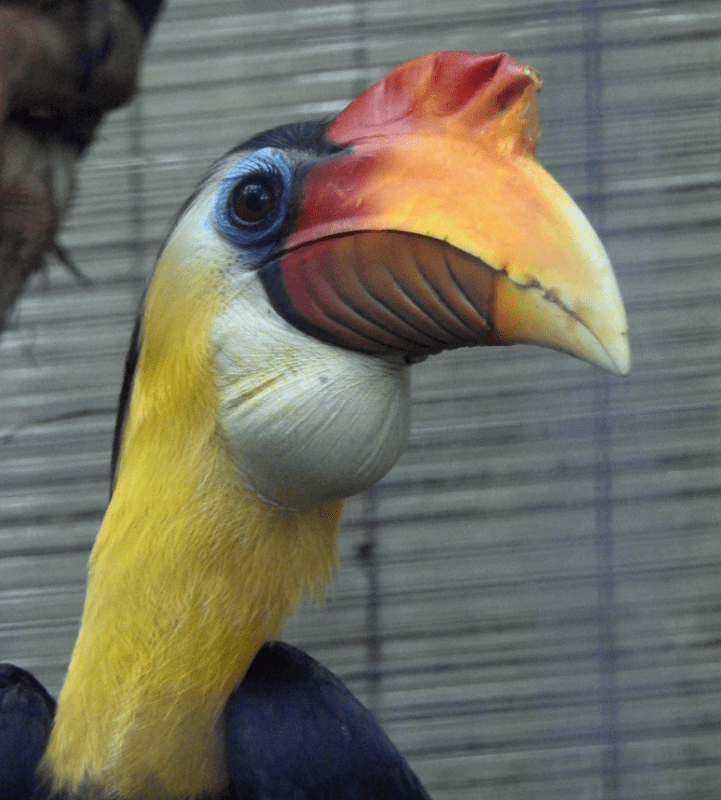
Figure 05. Beneath the bill of the Wrinkled Hornbill male is its namesake “wrinkling.”
Description
Given the size ranges mentioned in the previous section, Wrinkled Hornbills are midsized hornbills,
- weighing about 56 ounces (3.5 pounds; 1590 g),
- and about 26″ long (give or take an inch or so; 65–70 cm), bill to tail.
- Of that length, its tail is about 8.5–9.8″ long (21.6–24.8 cm).
- At the other end, its bill is about 5–6.8″ long (12.6–17.2 cm),
- about 2.4–3.2″ deep (6.11–8.09 cm),
- and about 1.3–1.5″ wide (3.33–3.85 cm);
- its bill is fused to its skull, which probably makes it easier to maneuver.
- (If you’re mentally calculating, the tail and bill add up to more than half its total length.)
- Along its sides, its wings are about 13–14.6″ long (33.1–37.2 cm).
- Its tarsus length from its ankles to its toes is just 1.8–2″ (4.57–5.26 cm) — that is, its bill is much deeper from top to bottom than its tarsus.
Both male and female have black plumage on their wings, backs, and bellies; their tails are black at the base and white at the tip. The female also has a black head and neck, but the male has shades of yellow (bright to light) on the sides of his face and on the front and sides of his neck, though the back of his neck is black, too. Both male and female have blue bare skin around their eyes, but the male has a yellow inflatable throat sac; the female has bare blue skin at the top of her throat. The female’s casque is the same color as the bill and rises modestly above it. The male’s casque is striking in its size and its bright red and orange coloration. The underside of his lower mandible bears the corrugated wrinkling for which this species is named.
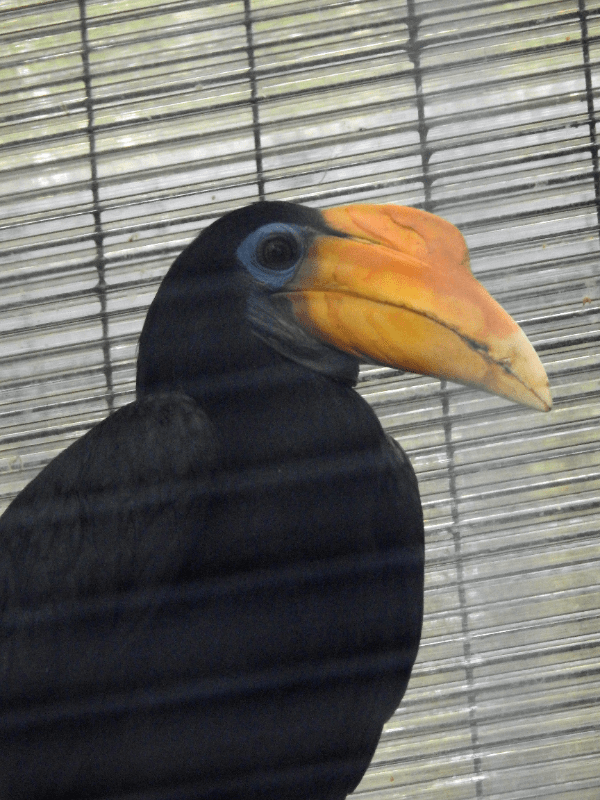
Figure 06. This female Wrinkled Hornbill has bare blue skin surrounding her eyes and at the top of her throat.
Juveniles look similar to adults, but even male juveniles have small pale yellow bills, with no obvious casque. (Pictures of juveniles aren’t abundant, but I was able to find this image of one: https://www.birdforum.net/gallery/juvenile-wrinkled-hornbill-sarawak-malaysian-borneo.732902/ .)
Sounds and Vocal Behavior
Their vocalizations can include barks, as well as harsh vocalizations that can be heard miles away. To listen to a sample, please visit https://xeno-canto.org/species/Rhabdotorrhinus-corrugatus , which includes less than a page of calls. This website also shows distinct locations where these samples were gathered on Borneo island.
Distribution, Habitat, and Migration
The geographic range of the Wrinkled Hornbill includes areas of Indonesia (e.g., Borneo, Sumatra), Malaysia, and Thailand; it was recently observed in southwest Cambodia, as well. It has been observed from sea level to 100 feet (30 m), with rare observations up to 800 feet (250 m). It prefers dense lowland primary evergreen forest, especially coastal swampy forest; it has also been found in secondary forest, taiga, mangroves, and some other forested locations. Though they don’t truly migrate, they are nomadic and can be irruptive at times, as they search for fruiting trees, sometimes even crossing the sea in pursuit of fruits.
Food and Foraging
According to Avibase, 80% of their diet is fruits, another 10% is invertebrates (e.g., insects), and the remaining 10% is small vertebrates (frogs and other land animals, not fish). They’re especially partial to figs and lipid-rich drupes.
Many fruits are drupes (interior stone or pit, surrounded by a fleshy exterior and a skin), such as mangos, açaí, olives, peaches, cherries; so are some nuts, such as almonds and cashews; even coffee and chocolate come from drupes!
Wrinkled Hornbills will forage in flight, plucking tree fruits while flying past the tree canopy, or they’ll glean fruits from where they’re perched. They usually forage in pairs, in family groups, or in small flocks of up to 30 birds. They often roost communally, as well. They get all the water they need from their juicy fruits, so they haven’t been observed drinking water.
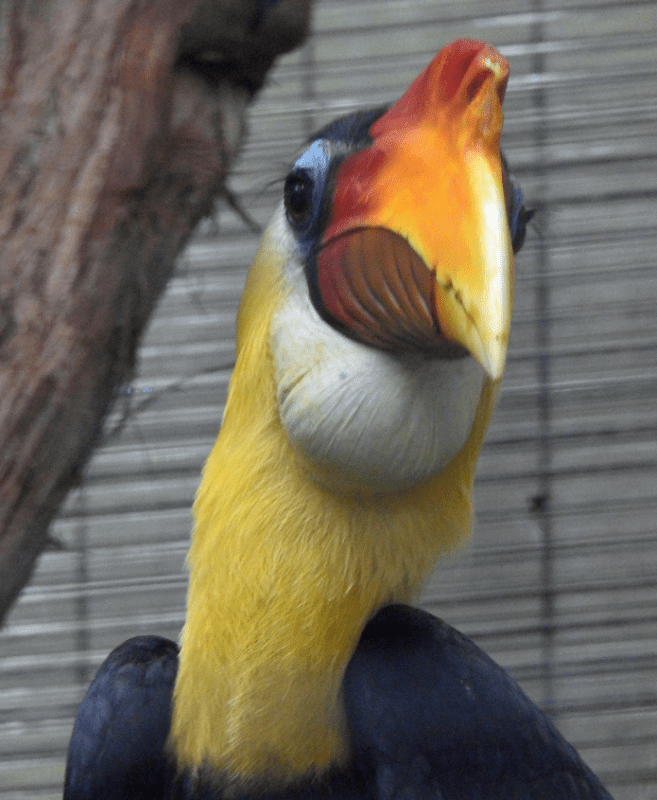
Figure 07. This male Wrinkled Hornbill and his female mate adeptly use their long bills to pluck fruits from trees as they fly past.
Breeding
Their breeding behavior is similar to that of other hornbills in this family: They nest in tree cavities; the female seals herself into the cavity, using feces and food remnants, then she lays 2–3 eggs, one at a time. Her lifelong male partner provides her with food he regurgitates, throughout incubation, which takes about 29 days. After the eggs hatch, he provides food for her and their nestlings (through regurgitation). The mom stays with the chicks until the last one fledges, which takes about 65–73 days. Altogether, she’s in the nest cavity for about 111–124 days.
The age at first breeding averages a little less than 3 years.
Conservation Status
The IUCN Red List conservation status of the Wrinkled Hornbill is EN, Endangered. In several locations, this species is either very rare or perhaps even extinct. Even in locations where it is still relatively common, flock sizes are diminishing, and populations are declining rapidly. One of the key factors is that this hornbill requires large areas of lowland primary forests (untouched, mature) and is reluctant to enter degraded habitats or secondary forests. Within a quarter of a century, this species has lost about 35.5–62% of the suitable habitat within its range, chiefly due to deforestation (e.g., development of land for human purposes). A major culprit is the destruction of forests to make way for palm-oil plantations, as well as for logging, rubber plantations, and small-scale agriculture. Forest fires are also damaging habitat.
Another threat to this species is human hunting; this species is often caught by hunters trying to catch coveted Helmeted Hornbill (Rhinoplax vigil), sought for the “ivory” of their casques — as well as capture for use in the pet trade. If the current threats continue and the rate of decline is not slowed, the population of this species is expected to decline by about 50–79% over the next three generations.
Conservation efforts have mainly been to offer at least one protected area for this species, and it’s now subject to international trade controls (e.g., pet trade, body-parts trade). Other proposed actions include surveys and other research to figure out how best to save the remaining hornbills. In addition, some members of the Association of Zoos & Aquariums (AZA) and the European Association of Zoos & Aquaria (EAZA) are rearing captive birds (at least 39 males, 38 females), in hopes of preventing extinction of these birds.
The annual survival rate of adults is estimated at 84%; the anticipated population decline over 10 years is 24%, and over three generations is 42%; average generation length has been estimated at 7.2–19 years. The maximum recorded age for this species is 21.4 years.
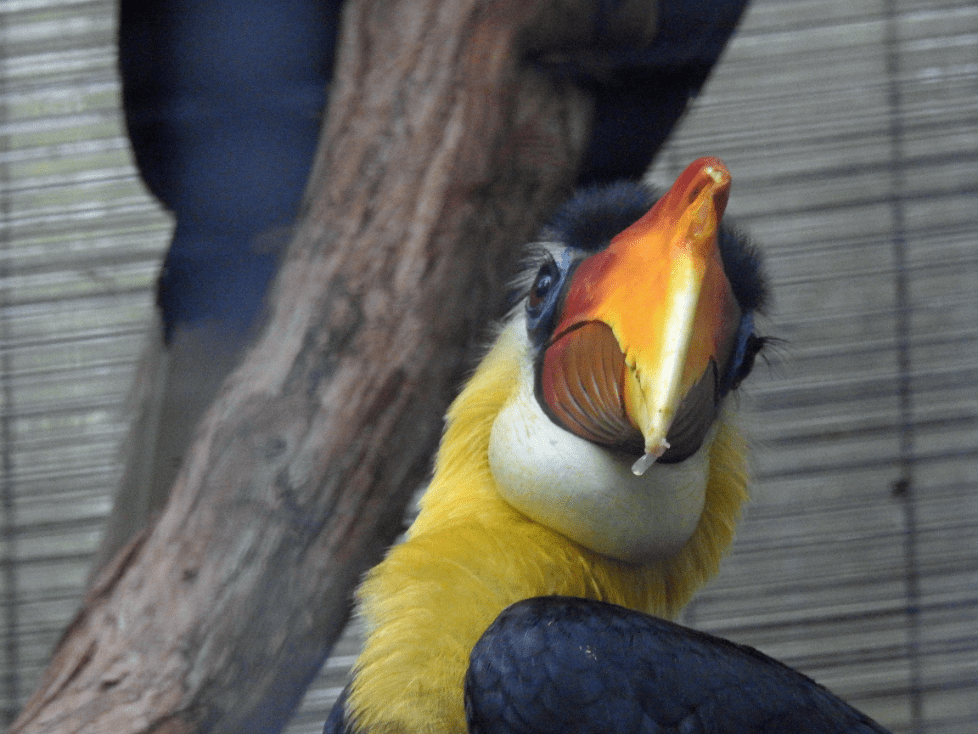
Figure 08. This male Wrinkled Hornbill seems to be making a pretty good case for conserving this species, doesn’t he?
Observations
The Cornell Lab of Ornithology gathers information from observers around the world through the eBird app and website (https://ebird.org/species/wrihor1 ), which has gathered 3,983 observations, 559 of them with photos, and 22 with audio recordings. The lab’s Macaulay Library website (https://search.macaulaylibrary.org/catalog?taxonCode=wrihor1 ) includes 1,052 photos, 23 audio recordings, and 5 videos.
In addition, the iNaturalist app and website (https://www.inaturalist.org/observations?taxon_id=496008 ) includes 496 observations of this species. Here are a few:
- in flight, https://www.inaturalist.org/observations/345398410 , https://www.inaturalist.org/observations/341476429 , https://www.inaturalist.org/observations/340417151 , https://www.inaturalist.org/observations/339405619 , https://www.inaturalist.org/observations/329620203
- two in tree, https://www.inaturalist.org/observations/344780486
- closeup, https://www.inaturalist.org/observations/335805604 , https://www.inaturalist.org/observations/331282606 , https://www.inaturalist.org/observations/331282603
If you have access to Facebook, you might also enjoy seeing these. https://www.facebook.com/watch/?v=1491002514757219 and https://www.facebook.com/watch/?v=1085212319890208 .
Sulawesi Hornbill, Rhabdotorrhinus exarhatus
Like its genus-mate (Wrinkled Hornbill, Rhabdotorrhinus corrugatus), the Sulawesi Hornbill (Rhabdotorrhinus exarhatus) is imperiled, but its conservation status is slightly less dangerous, VU, Vulnerable. This species has also been known as the Temminck’s Hornbill (after zoologist Coenraad Jacob Temminck) and the Sulawesi Tarictic Hornbill. Two subspecies (Sulawesi Dwarf Hornbill in the north; Southern Sulawesi Hornbill, aka Sanford’s Sulawesi Hornbill in the south) have been identified. This species was previously grouped with the Penelopides genus (which now includes five species), but genetic testing revealed it’s more closely tied to the Rhabdotorrhinus genus. Its Spanish names are Cálao Chico de Célebes or Cálao de Temminck.
Description
The Sulawesi Hornbill is at the small end of the spectrum for hornbills, weighing 13 ounces (370 g).
- Of its 17.7″ (45 cm) length (bill to tail),
- its tail is 7.8–8.6″ long (19.9–21.9 cm).
- Its wings are about 8.5–9.6″ (22–24.5 cm), with males having wings a fraction of an inch longer than females.
- Its tarsi (feet from ankles to toes) are about 1.7″ (4.0–4.5 cm) long,
- whereas its bill is about 3.4–4″ (8.6–10.4 cm) long.
- Its bill depth (top to bottom) is 1.4–1.7″ (3.6–4.2 cm), so its bill height is just a smidge shorter than its tarsi length.
- Its bill is 0.9–1″ wide (2.4–2.7 cm).
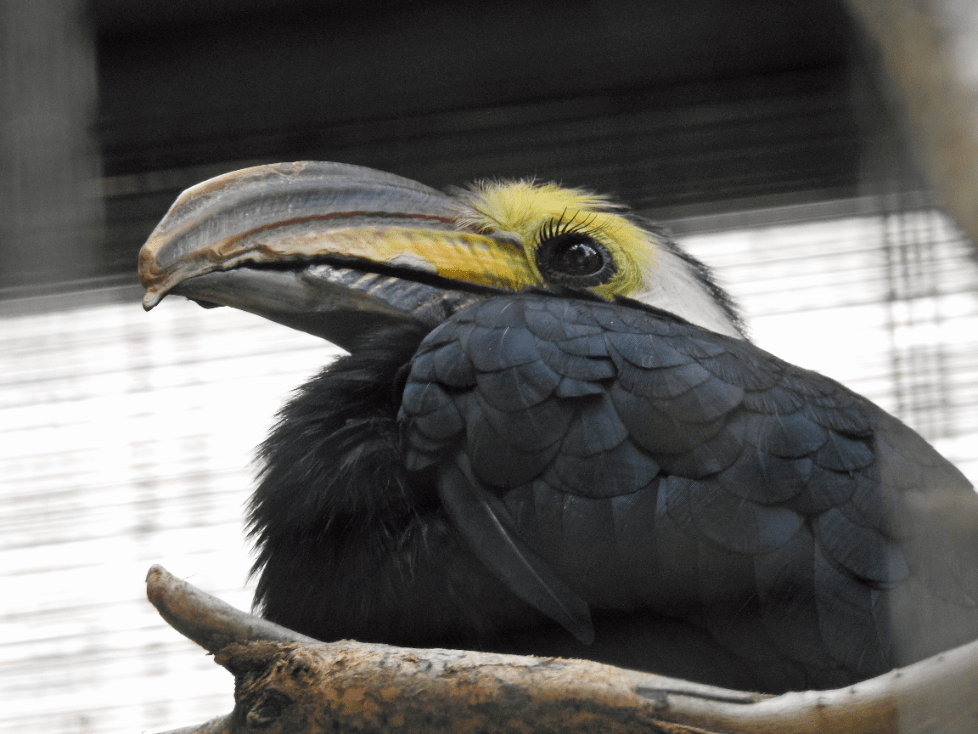
Figure 09. It’s hard to tell the size of this male Sulawesi Hornbill, but he’s diminutive (17.7″) for a hornbill. His bill is a bit less than 1/4th of his total length. Now, that’s impressive.
The female’s plumage is all black, but her back shimmers a forest green in some lights (e.g., see https://macaulaylibrary.org/asset/379618651 ). The male is also mostly black, with green iridescence on his back, but he has a yellow face and throat. Whereas the female’s bill and other bare parts are black, the male has yellow bare skin on his face, as well as a yellowish-brown bill with some black coloration. On both sexes, the upper mandible’s casque has multiple pronounced lengthwise ridges along the top. (To see a side-by-side comparison of male and female, front view, please see https://macaulaylibrary.org/asset/201944401 ). Both sexes have red eyes and black legs and toes.
Juveniles have similar coloring to adults, but their bill is a duller yellow, their eyes are more brown than red, and their casque hasn’t developed.
Sounds and Vocal Behavior
Like other hornbills, Sulawesi Hornbills are typically noisy and loud. To see a small sampling of vocalizations, visit https://xeno-canto.org/species/Rhabdotorrhinus-exarhatus .
Distribution, Habitat, and Migration
Not surprisingly, Sulawesi Hornbills are found on the Indonesian island of Sulawesi, within 7.3 degrees of latitude along the equator (1.6 to −5.7 degrees), between sea level and 2,100 feet (650 m), though sometimes up to 3,600 feet (1100 m). (For a range map showing locations where they have been observed, see https://ebird.org/map/sulhor1? .) Indonesia is also home to 12 other species of hornbills (in Sumatra, Sumba, Papua, and Kalimantan, as well as Sulawesi).
Though these hornbills prefer lowland and lower montane primary forest, they can sometimes be found in mature (tall) secondary forest or in swamp forests. They require large forest trees for breeding, but family groups can also occasionally be found foraging in less densely forested habitats, such as areas recovering from fires and regenerating gaps from tree falls. They don’t migrate, and they’re territorial.
Figure 10. This male Sulawesi Hornbill seems to be on the lookout for yummy food.
Food and Foraging
According to Avibase, about 85% of their diet is from fruits (especially figs), but invertebrates also make up about 15% of their diet; traces of small land vertebrates may also be eaten. During the daytime, they forage slowly and methodically among the foliage below the tree canopy. During breeding season, they have been observed foraging in a territory about 178–343 acres (0.28–0.5 square miles, 72–139 hectares).
Social Behavior and Breeding
Sulawesi Hornbills live in groups of up to 20 birds, and they breed cooperatively, with 2–10 birds for each nest. Nests are natural cavities in trees or in cavities abandoned by other birds, such as woodpeckers (usually about halfway up a tall tree). Typically, the dominant pair breeds, and the other members of the group act as helpers, both males and females.
As with other hornbills, the female of the pair seals herself into the nest cavity and lays 2–4 eggs (more often, 3), starting about 9 days after sealing herself into the nest and continuing at 2-day intervals. While she incubates the eggs for 16–19 days (28–30 days total), her mate and the helpers provision her with food, by regurgitating — YUM! — typically in the early morning and the afternoon. After the eggs hatch, she remains in the nest cavity, and her mate and the helpers provide for her and the nestlings, for about 55–70 days, until the chicks are ready to fledge. Age at first breeding is about 2 years. Average generation length is about 5.8–7 years.
Conservation Status
The IUCN Red List conservation status of the Sulawesi Hornbill is VU, Vulnerable. Remote sensing data indicate a population decline of 26–28% over 3 past generations (21 years); some estimate a population decline of 30–39% over the next 3 generations. As with many other imperiled hornbills, habitat loss is a major threat, and they are also endangered through hunting by humans, both for meat and for the pet trade. The annual survival rate of adults is 76%, and the maximum recorded age is 15.8 years.
At least four Sulawesi nature reserves and national parks offer some refuge, and this species thrives in zoos (e.g., the San Diego Zoo), so captive-breeding programs may help prevent it from becoming extinct altogether. (According to the IUCN, their ex situ population includes 10 males, 6 females, and 2 unsexed, totaling 18 birds across six institutions.) Conservationists urge the funding of further surveys to assess its distribution and conservation status, as well as to monitor population trends. Key to their conservation is the protection of all remaining large tracts of primary forest, as well as strict controls to prevent hunting in (or near) protected areas.
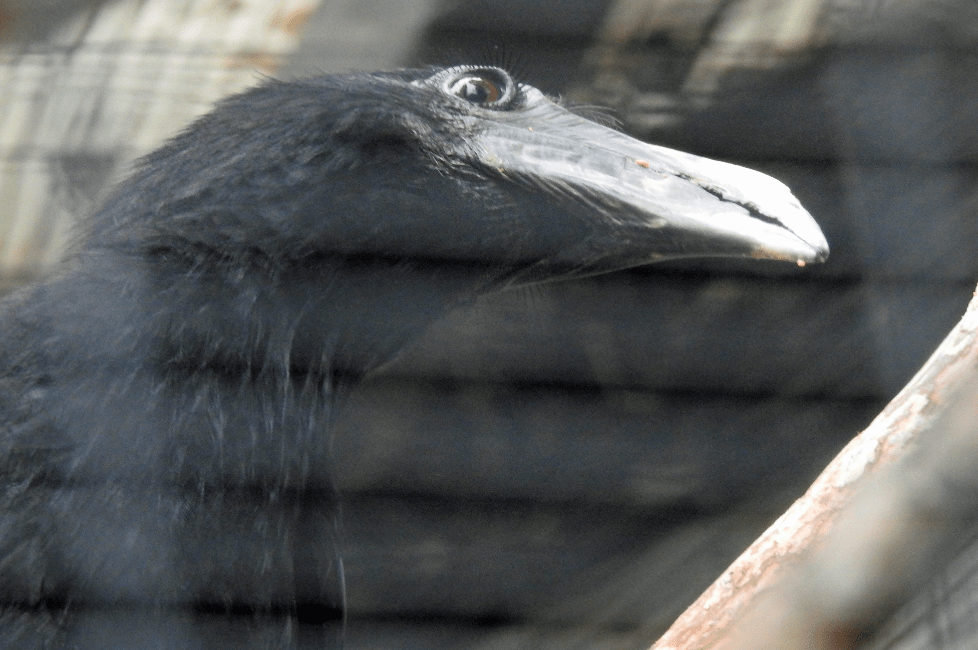
Figure 11. Though habitat loss imperils the Sulawesi Hornbill species, this female is thriving in the care of the San Diego Zoo.
Observations
The Cornell Lab of Ornithology gathers information from observers around the world through the eBird app and website (https://ebird.org/species/sulhor1? ), which has received 1,150 observations, 134 of them with photos, and 22 with audio recordings. The lab’s Macaulay Library website (https://search.macaulaylibrary.org/catalog?taxonCode=sulhor1 ) includes 248 photos, 18 audio recordings, and 6 videos.
In addition, the iNaturalist app and website (https://www.inaturalist.org/observations?taxon_id=496009 ) includes 78 observations, including the following:
- full body, closeups (male, male, female), https://www.inaturalist.org/observations/315741189 , https://www.inaturalist.org/observations/300907315 , https://www.inaturalist.org/observations/300633317 ,
- two males in tree, https://www.inaturalist.org/observations/40535599 ,
- two females, one male in tree, https://www.inaturalist.org/observations/268508969
- male flying, https://www.inaturalist.org/observations/172954826
Black-casqued Hornbill, Ceratogymna atrata
The genus Ceratogymna (cerato-, Greek, “horn”; gymna, Greek, “naked”) includes the Black-casqued Hornbill, Ceratogymna atrata, and the Yellow-casqued Hornbill, Ceratogymna elata, both of which live in overlapping forest areas of tropical western Africa. Temminck introduced this species in 1835. English common names also include Black-casqued Wattled Hornbill and Black-wattled Hornbill; in Spanish it’s called Cálao Casquinegro or Cálao de Casco Negro, both referring to its black casque.
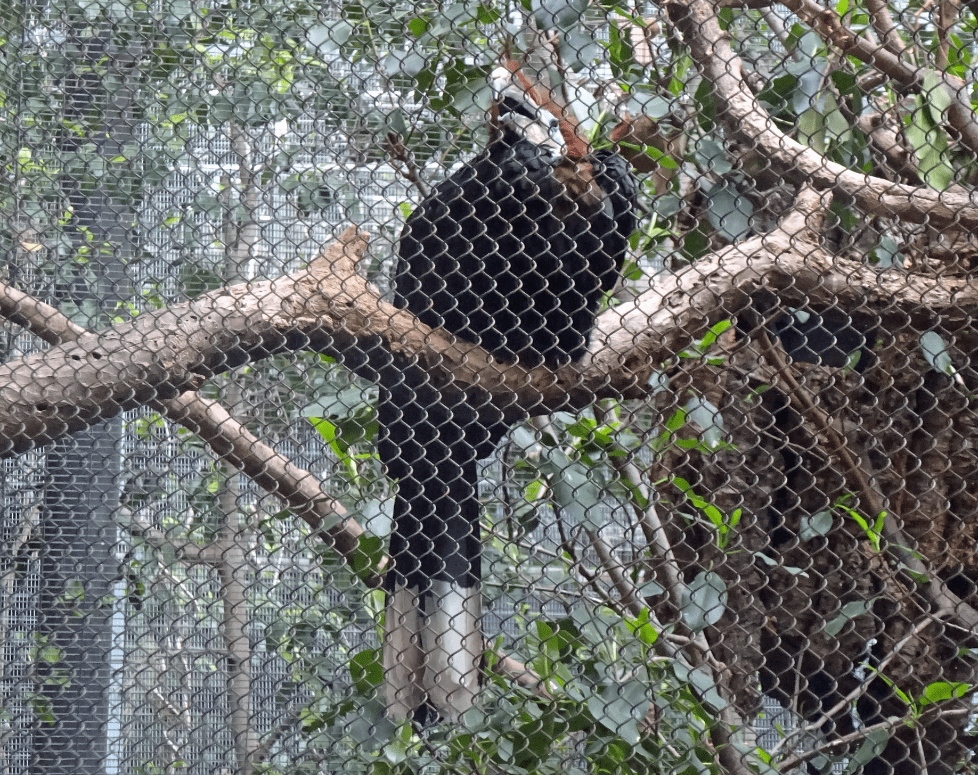
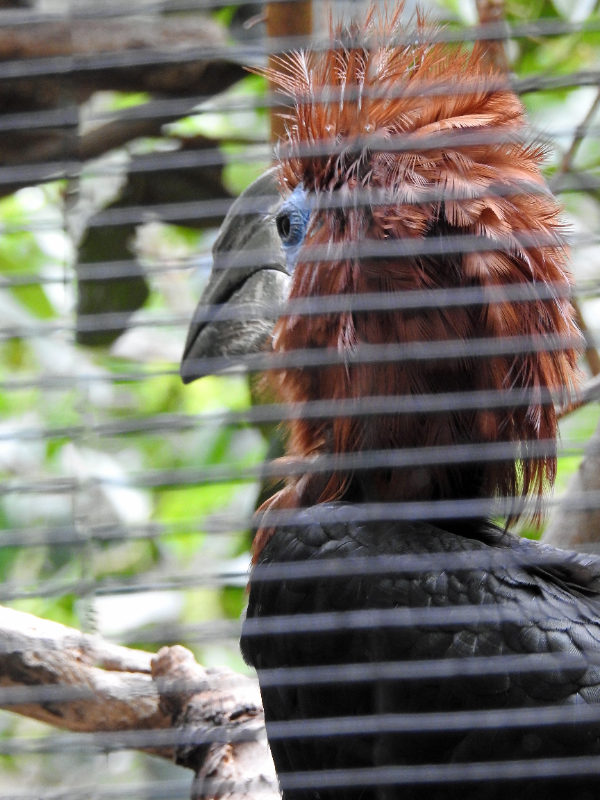
Figure 12. The San Diego Zoo offers a safe home for this female Black-casqued Hornbill (and her mate). (I apologize for the cage partially obstructing the view.)
Description
The Black-casqued Hornbill is heavier than the Sulawesi Hornbill and has an average weight that’s lighter than the Wrinkled Hornbill.
- They weigh about 32–56.4 ounces (907–1600 g), with most males weighing substantially more than most females.
- Average length (bill to tail) is similar to the Wrinkled, as well, at 24–28 inches long (60–70 cm).
- Of that total length, its tail length is 5.5–12.6″ (14–32 cm).
- Wing length is about 13–17.3″ (33.0–44.0 cm), with males tending to have wings a little more than 1″ longer (3–4 cm).
- Of its 24–28 inches in length, its bill is about 5.2–7.3″ long (13.2–18.5 cm);
- depending on the bird, its bill might be close to 1/4 of its total length.
- The bill is about 1.5–1.8″ deep (top to bottom, 3.85–4.67 cm)
- and about 1.5–1.7″ wide (side to side, 3.72–4.23 cm).
- The bill’s depth and width measurements almost rival its tarsus length of 1.9–2.9″ (4.7–7.3 cm).
The male’s cylindrical casque also overshadows — literally — the male’s bill. He also has pale sky-blue bare skin surrounding his eyes and on his throat wattle (which doesn’t inflate). The female also has bare blue skin surrounding her eyes and on her throat wattle. Though she has a relatively modest-sized casque, her vividly rufous hood (head and neck) feathers draw attention. (Readers of a certain age may be reminded of TV comedienne Lucille Ball.) Toward the front of her neck are patches of cream-colored plumes. Both birds have black plumage on back and belly; wing feathers and tail feathers are black with white tips. Eye color is hard to see, but reportedly males have red irides, females brown irides.
Juvenile Black-casqued Hornbills look similar to adult females, but without the rufous hood. They have no wattles, no apparent casques, and smaller bills.
Vocalizations
Both male and female Black-casqued Hornbills have loud braying calls, which can be heard over long distances. Males may vocalize more deeply and loudly than females, and they’re also known to squawk and toot. Females may make a crying tone. Both sexes may softly chuckle. A visit to https://xeno-canto.org/species/Ceratogymna-atrata will offer almost two pages full of their vocalizations.
Figure 13. At first, this female Black-casqued Hornbill listens to the male’s vocalizations, then she responds to his calls with her own.
Distribution, Habitat, and Migration
Found in patchy distribution across sub-Saharan African tropics (8.7 to −9.4 degrees latitude), scattered observations of Black-casqued Hornbills have been noted from Sierra Leone in the west to as far as Kenya in the east. A range map generated from eBird observations of the Black-casqued Hornbill can be found at https://ebird.org/map/blchor1 . The nations where it has been seen include Angola, Cameroon, Congo, Côte d’Ivoire, Equatorial Guinea, Gabon, Ghana, Guinea, Liberia, Nigeria, Sierra Leone, South Sudan, and Uganda, at elevations between sea level and 4,900 feet (1,500 m). In many areas within its range, habitat loss and fragmentation have threatened this species. In Togo, observations have not been noted since the 1800s.
Black-casqued Hornbills prefer dense lowland evergreen forest, but they have been known to adapt to nearby secondary forest, gallery forest, swamp forest, taiga, and even some coffee, cocoa, and palm-oil plantations. During its breeding season, its home range has been estimated at about 11 square miles (28.75 km2). This hornbill doesn’t migrate, but it wanders extensively while foraging — 62 miles (100 km) or more, in pursuit of fruiting trees. Flocks of up to 160 birds have been seen to irrupt at a location abundant with fruiting trees. While wandering, these birds will roost communally, often 65–230 feet (20–50 m) in the tree canopy.
Food and Foraging
According to Avibase, 90% of its diet is fruits (especially figs and the fruits of oil palms), another 10% is invertebrates (mostly insects and larvae), and traces of land vertebrates (including the eggs of weaver birds) and other miscellany may be eaten. Because fruit production can be so variable, rainfall and other local factors influence its availability and — hence — the actions of the hornbills.
Black-casqued Hornbills forage during the day, mostly in the tree canopy more than 70 feet (21 m) above the ground, but they will also descend to the ground to forage for seeds and insects. Like other hornbills, they disperse fruit seeds, vital for some fruiting forest trees. They also catch insects midair while in the canopy. This hornbill has been observed drinking water, more often than any other hornbill.
Social Behavior and Breeding
Most Black-casqued Hornbills live together in pairs or in small family groups, but flocks of up to 40 birds have also been seen roosting and foraging together. The breeding behavior of this species is closely tied to fruit availability. In particularly hard years, they may not breed at all. The monogamous pair may still engage in courtship behavior and may look for suitable nest cavities each year. However, the female will not seal herself into a nest cavity if fruit isn’t abundant enough to sustain her and her developing family. These hornbills may breed cooperatively, in groups of up to five, with more females and juveniles than adult males.
Figure 14. Black-casqued Hornbills definitely enjoy chatting with one another. Perhaps they’re saying, “Will you get a load of the lady with the camera? PUNY BILL! NO CASQUE! What a weirdo!”
When the pair do breed, the female seals herself into a nest cavity in a tall tree (at least 32–75 feet up, 10–23 m). She lays one or two eggs, but usually only one chick fledges from the nest. The length of time for incubation and for fledging has not been definitively determined. Surprisingly, predation by raptors is also a problem. The age at first breeding is slightly less than 3 years. Average generation length is 7–8.9 years. The average annual survival rate of adult hornbills is 86%. The maximum recorded lifespan of Black-casqued Hornbills is at least 19.5 years in captivity, but the maximum age in the wild has not been reported.
Conservation Status
The IUCN Red List conservation status of the Black-casqued Hornbill is NT, Near Threatened; their population is declining somewhat rapidly (very rapid in some locations, less rapid in others). Habitat destruction is the main threat to this species, given its requirement for large trees in which to nest, as well as its need for fruiting trees in order to survive. Forests are being devastated to make way for agriculture, mining, and development (e.g., road building, urbanization); losses of 9–11% of forests have been documented in many areas and are projected to be 17–19% in the future.
In addition, it’s threatened by human hunters, who kill it for bushmeat. This species is also killed for its skull and other body parts. Previously, the trade in body parts was thought to be more as a byproduct of killing it for its meat, but international trade may be increasing that threat.
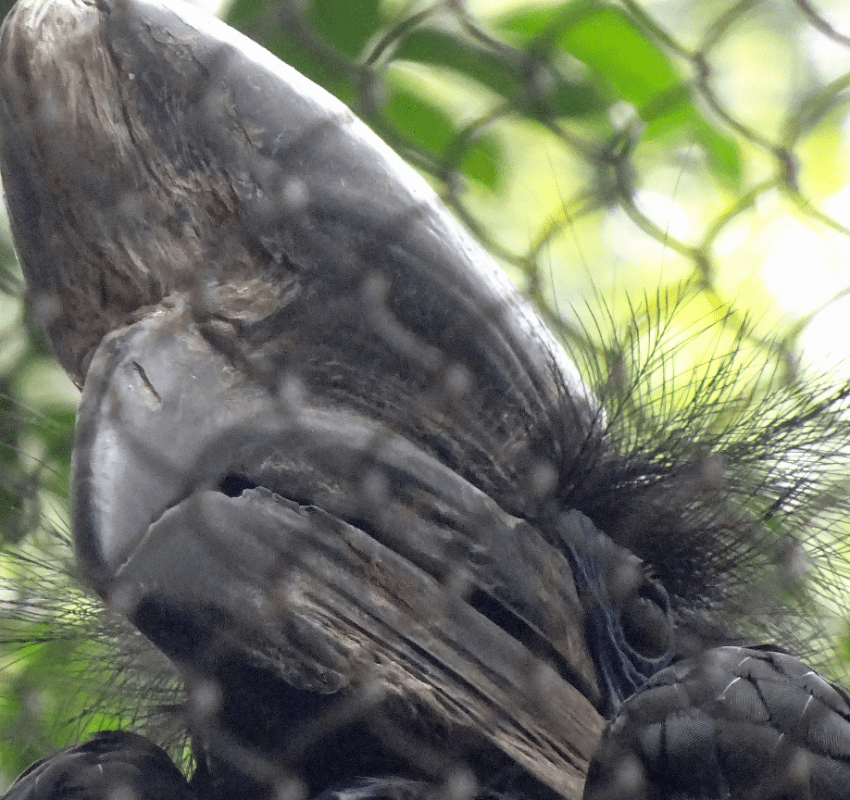
Figure 15. Sadly, the enormous casque atop this Black-casqued Hornbill male is imperiling the population of his species, as many hunters kill these males to profit from trade in his body parts.
Conservation actions include its protection in several reserves and national parks across tropical Africa. Full legal protections would be necessary but not sufficient conditions for protecting these birds from international trade. Research programs (e.g., monitoring) and educational programs may help, as well, but will not suffice. Ex situ, 60 of this species (28 males, 30 females, 2 unsexed) currently reside in supervised holding institutions, overseen by conservation organizations. Though the ideal is to conserve this species in the wild, these ex situ birds may be a genetic reservoir for their species.
Observations
The Cornell Lab of Ornithology gathers information from observers around the world through the eBird app and website (https://ebird.org/species/blchor1 ), which holds 3,885 observations, 258 of them with photos, and 52 of them with audio recordings. The lab’s Macaulay Library website (https://search.macaulaylibrary.org/catalog?taxonCode=blchor1 ) includes 524 photos, 57 audio recordings, and 12 videos.
In addition, the iNaturalist app and website, https://www.inaturalist.org/observations?taxon_id=5558 , offers 234 observations of this species, including the following:
- female flying, https://www.inaturalist.org/observations/38386517 , https://www.inaturalist.org/observations/35789586 ,
- male flying, https://www.inaturalist.org/observations/348984718 , https://www.inaturalist.org/observations/337059711 , https://www.inaturalist.org/observations/320423751 , https://www.inaturalist.org/observations/259847635 , https://www.inaturalist.org/observations/237546974 ,
- female and male, https://www.inaturalist.org/observations/257105343 , https://www.inaturalist.org/observations/254782852 ,
- female only, https://www.inaturalist.org/observations/331791656 , https://www.inaturalist.org/observations/36474791 ,
- male only, https://www.inaturalist.org/observations/347576507 , https://www.inaturalist.org/observations/343510544 , https://www.inaturalist.org/observations/222496815 .
References
Hornbills (Bucerotidae)
- Kemp, A. C., C. J. Sharpe, P. F. D. Boesman, C. Hansasuta, and P. Pyle (2023). Helmeted Hornbill (Rhinoplax vigil), version 1.2. In Birds of the World (J. del Hoyo, A. Elliott, J. Sargatal, D. A. Christie, and E. de Juana, Editors). Ithaca, NY: Cornell Lab of Ornithology.
- Kemp, A. C. and P. F. D. Boesman (2020). Great Hornbill (Buceros bicornis), version 1.0. In Birds of the World (J. del Hoyo, A. Elliott, J. Sargatal, D. A. Christie, and E. de Juana, Editors). Ithaca, NY: Cornell Lab of Ornithology. https://doi.org/10.2173/bow.grehor1.01 https://birdsoftheworld.org/bow/species/grehor1/cur/introduction
- Winkler, D. W., S. M. Billerman, and I. J. Lovette (2025). Hornbills (Bucerotidae), version 1.1. In Birds of the World (S. M. Billerman, B. K. Keeney, P. G. Rodewald, and T. S. Schulenberg, Editors). Ithaca, NY: Cornell Lab of Ornithology. https://doi.org/10.2173/bow.bucero1.01.1 https://doi.org/10.2173/bow.helhor1.01.2 https://birdsoftheworld.org/bow/species/helhor1/cur/introduction
- https://en.wikipedia.org/wiki/Great_hornbill
- https://en.wikipedia.org/wiki/Helmeted_hornbill
- Kidneys, hornbills, https://www.countlessfacts.com/2022/11/interesting-facts-about-hornbills.html . Feinstein, Bernard. (1962). “Additional Cases of Bilobated Kidneys in the Hornbills.” The Auk, 79(4), 709–711. https://doi.org/10.2307/4082654.
Wrinkled Hornbill (Rhabdotorrhinus corrugatus)
- Kemp, A. C., P. F. D. Boesman, and C. J. Sharpe (2020). Wrinkled Hornbill (Rhabdotorrhinus corrugatus), version 1.0. In Birds of the World (J. del Hoyo, A. Elliott, J. Sargatal, D. A. Christie, and E. de Juana, Editors). Ithaca, NY: Cornell Lab of Ornithology. https://doi.org/10.2173/bow.wrihor1.01 https://birdsoftheworld.org/bow/species/wrihor1/cur/introduction
- https://avibase.bsc-eoc.org/species.jsp?avibaseid=9C62A324
- https://avibase.bsc-eoc.org/species.jsp?lang=EN&avibaseid=9C62A32455A107CD&sec=lifehistory
- https://en.wikipedia.org/wiki/Wrinkled_hornbill
- https://www.inaturalist.org/observations?taxon_id=496008
- https://www.iucnredlist.org/species/22682514/132244524
Sulawesi Hornbill (Rhabdotorrhinus exarhatus)
- Kemp, A. C. and G. M. Kirwan (2020). Sulawesi Hornbill (Rhabdotorrhinus exarhatus), version 1.0. In Birds of the World (J. del Hoyo, A. Elliott, J. Sargatal, D. A. Christie, and E. de Juana, Editors). Ithaca, NY: Cornell Lab of Ornithology. https://doi.org/10.2173/bow.sulhor1.01 https://birdsoftheworld.org/bow/species/sulhor1/cur/introduction
- https://avibase.bsc-eoc.org/species.jsp?avibaseid=C0BD105F
- https://avibase.bsc-eoc.org/species.jsp?lang=EN&avibaseid=C0BD105FF3017FFC&sec=lifehistory
- https://en.wikipedia.org/wiki/Sulawesi_hornbill
- https://www.inaturalist.org/observations?taxon_id=496009
- https://www.iucnredlist.org/species/22682504/210091404
Black-casqued Hornbill (Ceratogymna atrata)
- Kemp, A. C. and G. M. Kirwan (2020). Black-casqued Hornbill (Ceratogymna atrata), version 1.0. In Birds of the World (J. del Hoyo, A. Elliott, J. Sargatal, D. A. Christie, and E. de Juana, Editors). Ithaca, NY: Cornell Lab of Ornithology. https://doi.org/10.2173/bow.blchor1.01 https://birdsoftheworld.org/bow/species/blchor1/cur/introduction
- https://avibase.bsc-eoc.org/species.jsp?avibaseid=C05BF908
- https://avibase.bsc-eoc.org/species.jsp?lang=EN&avibaseid=C05BF9086731578C&sec=lifehistory
- https://en.wikipedia.org/wiki/Black-casqued_hornbill
- https://www.inaturalist.org/observations?taxon_id=5558
- https://www.iucnredlist.org/species/22682621/277507175
Etymology
- Lederer, Roger, and Carol Burr. (2014). Latin for Bird Lovers: Over 3,000 Bird Names Explored and Explained (224 pages). Portland, OR: Timber Press.
- Gotch, A. F. [Arthur Frederick]. Birds—Their Latin Names Explained (348 pp.). Poole, Dorset, U.K.: Blandford Press.
- Gruson, Edward S. (1972). Words for Birds: A Lexicon of North American Birds with Biographical Notes (305 pp., including Bibliography, 279–282; Index of Common Names, 283–291; Index of Generic Names, 292–295; Index of Scientific Species Names, 296–303; Index of People for Whom Birds Are Named, 304–305). New York: Quadrangle Books.
Text and images by Shari Dorantes Hatch. Copyright © 2026. All rights reserved.
All images were taken at the San Diego Zoo or its Safari Park.


Leave a comment