
Virginia Postrel’s The Fabric of Civilization, Part 3
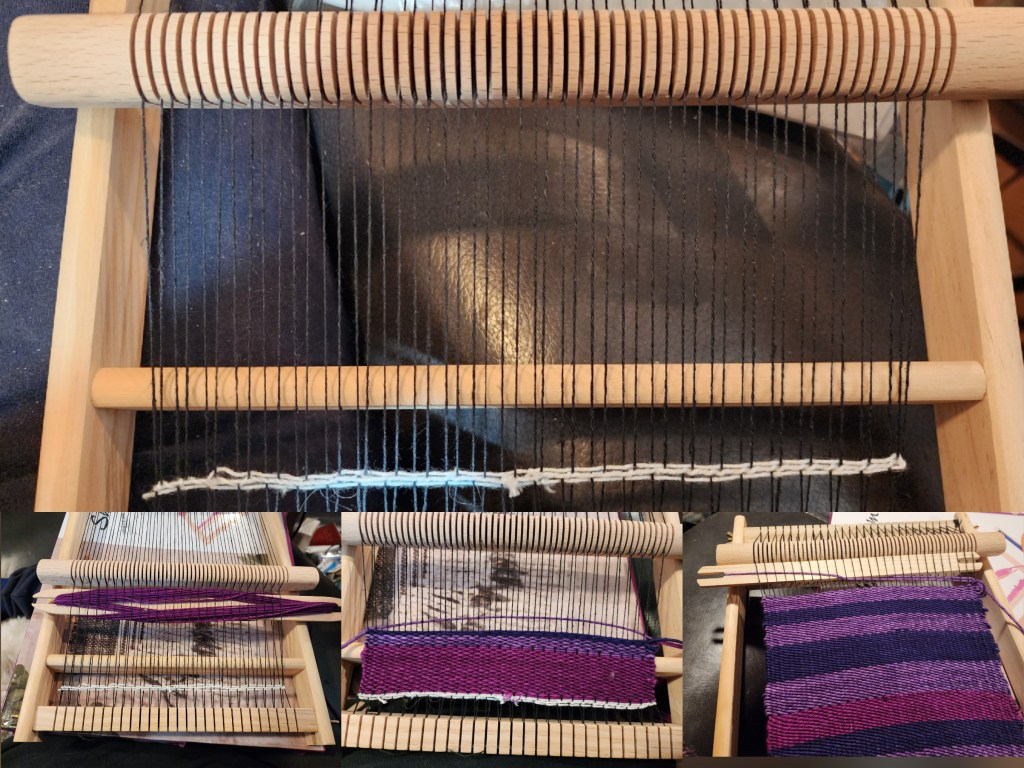
Figure 03-01. With even a simple frame loom, an amateur weaver can set up warp threads (front to back) and weave weft threads (sideways) to make a simple textile.
This is the third of several blogs discussing Virginia Postrel’s book on textile history:
Virginia Postrel. (2020). “Chapter Three: Cloth” (pp. 71–107). The Fabric of Civilization: How Textiles Made the World. New York: Basic Books.
To see the first of these blogs, visit https://bird-brain.org/2026/04/01/fiber/
To see the second of these blogs, visit https://bird-brain.org/2026/04/08/thread/
Postrel introduces her third chapter with a workshop leader’s challenge to create a working loom using a small wooden frame holding a row of nails at each of two opposing ends, a skein of yarn, and two bamboo skewers. The leader said that in more than 10 years of posing this challenge, only two students rose to the challenge: a weaver and an engineer. The participants thought to warp the loom by wrapping the yarn around each nail, across the frame, creating the warp threads of the loom, going from the front to the back of the loom.
But what next? The trick is to use some of the yarn to tie one of the skewers to the even-numbered threads and to tie the other skewer to the odd-numbered warp threads. This creates two heddles, which can lift half of the warp threads, alternately, above the other threads. When lifting one of the heddles, you create a shed — an open space — between the raised threads and the other threads. That done, you can easily slide the weft threads across the warp threads, making one horizontal row of weaving across the warp. Next, you lower that heddle (and its threads) and raise the second heddle (and its alternating threads), to create a new shed for returning the weft threads back across the weft.
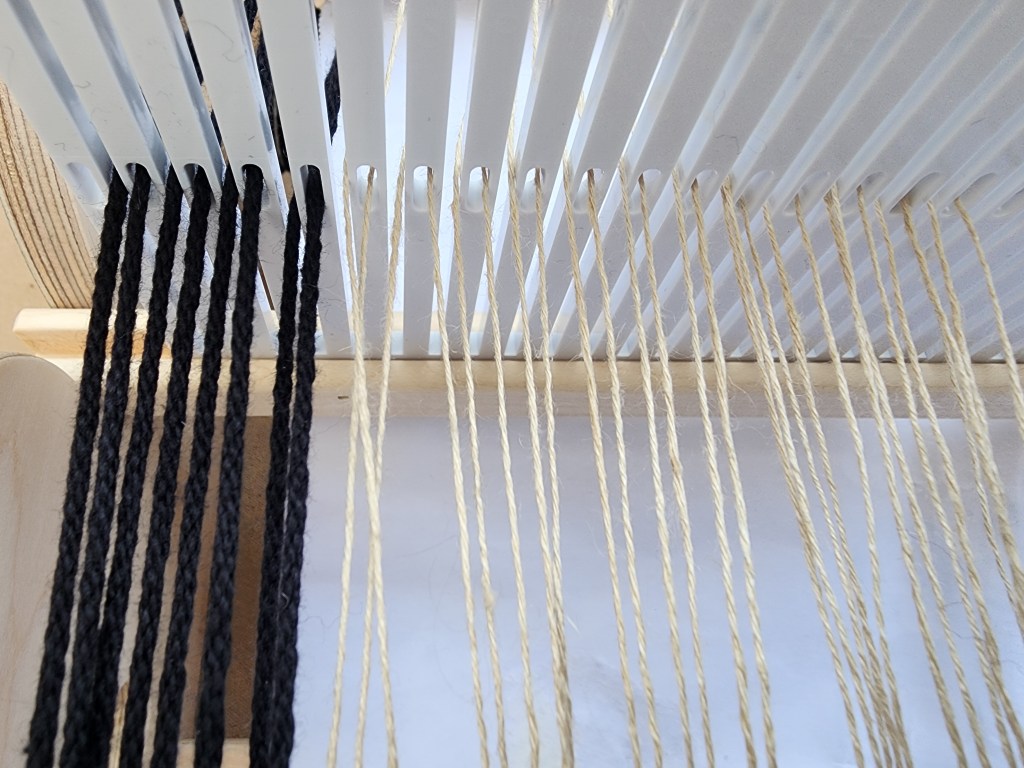
Figure 03-2. When setting up the warp threads for a simple loom, the heddle allows you to create a shed by alternating the warp threads, so that every other thread goes through a hole in the reeds (vertical slats) of the heddle, but the alternate threads go through a slit between the heddle reeds. (This is actually not perfectly threaded, but you get the idea.)
Whereas spinning is mostly a physical process, by which the spinster trains her (usually) hands to draw, twist, and wind thread, weaving often involves mental and even mathematical calculations. According to Postrel, weaving is inherently mathematical, involving counting, adding, dividing; parallel, perpendicular, and diagonal lines; calculations of lengths and areas; knowledge of ratios, prime numbers, and geometry. The more complex the patterns, the more complex the mathematical calculations involved. The more recent method of creating fabric — knitting — also requires mathematics, especially when making three-dimensional shapes.
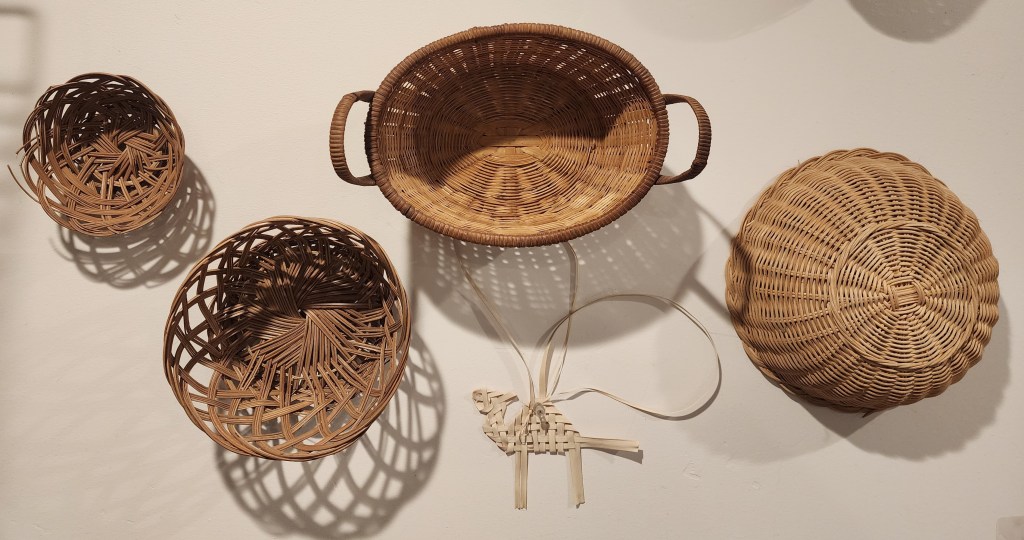
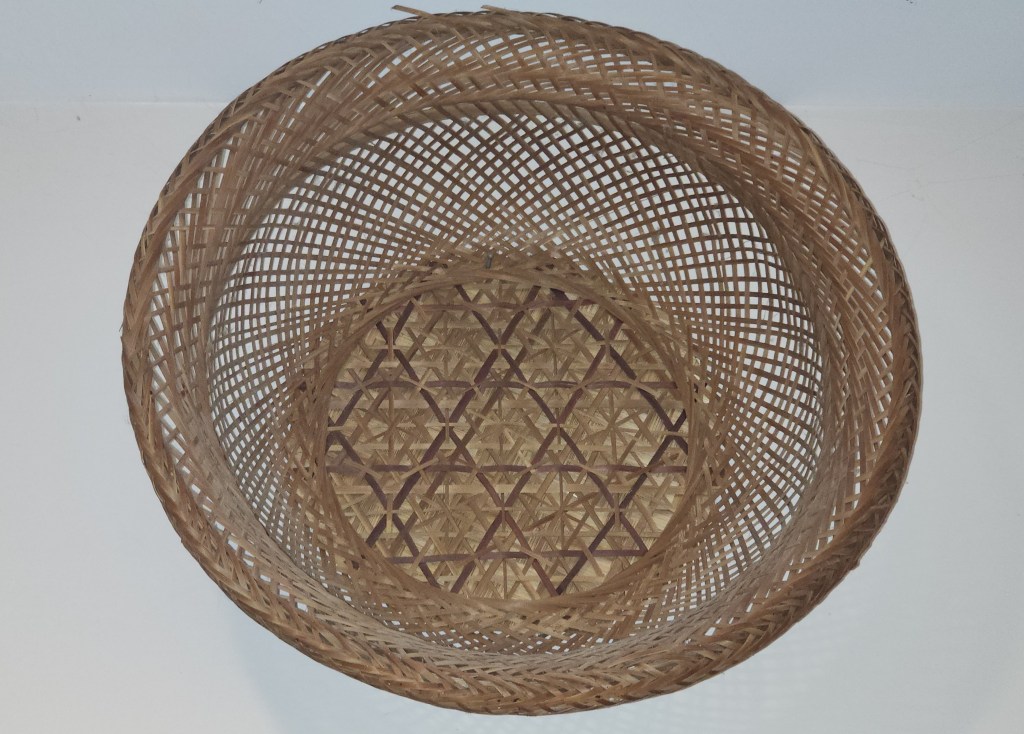
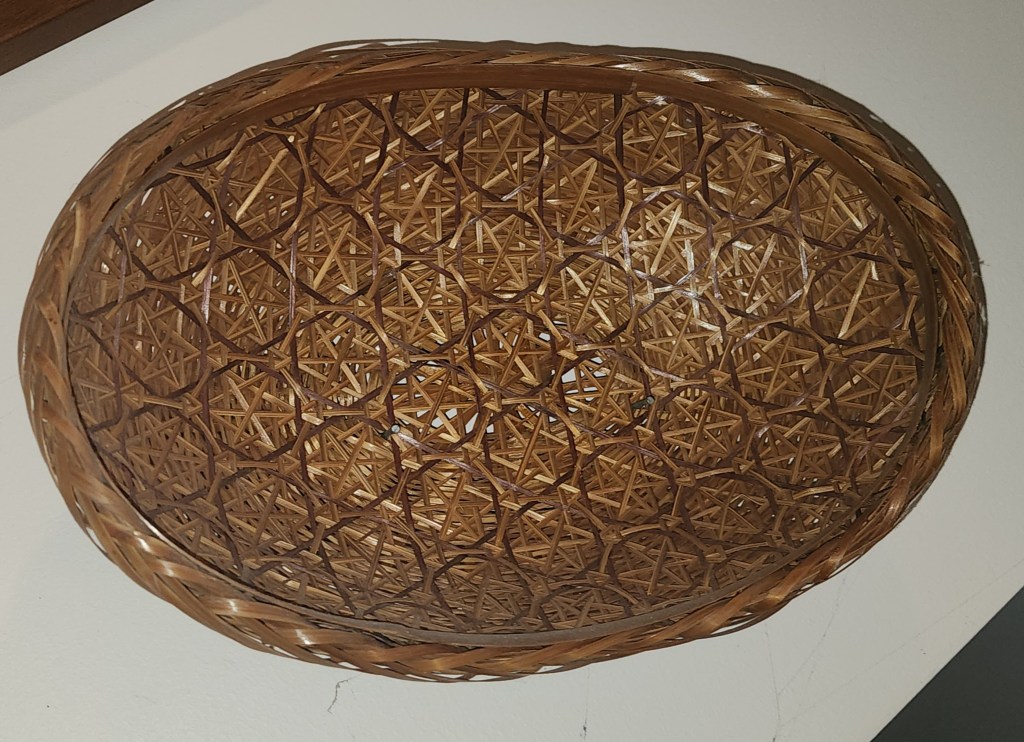
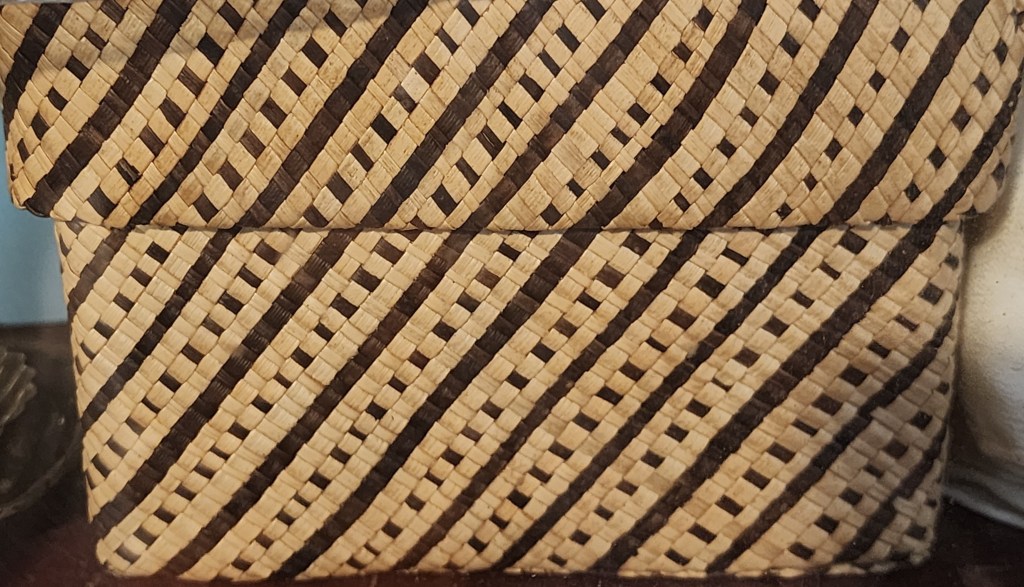
Figure 03-3. Basket weaving reveals the complex geometry and mathematics involved in weaving.
Weaving is more than 24,000 years old, but even before weaving (or knitting) was used to make fabric, people made various textiles by looping and knotting string / thread. A more sophisticated method of looping, nålbinding, uses relatively short pieces of string, which are drawn completely through each loop, so the fabric won’t unravel if the string breaks. Because this technique uses shorter strands, the spinster doesn’t need as much skill to spin them. (For illustrations and descriptions of how to use this technique, see https://en.wikipedia.org/wiki/N%C3%A5lebinding#Technique .)
The innovation of weaving was a conceptual breakthrough in fabric construction. Whether simple or highly complex, all looms do two things: (1) Hold taut a set of parallel warp threads that run from the front to the back (or top to bottom) of the loom, and (2) allow for weft threads to pass over and under the warp threads, typically by creating a shed — gap — between alternating warp threads, then switching the shed to allow for the weft threads to pass under and over a different set of warp threads on the return across the row of warp threads.
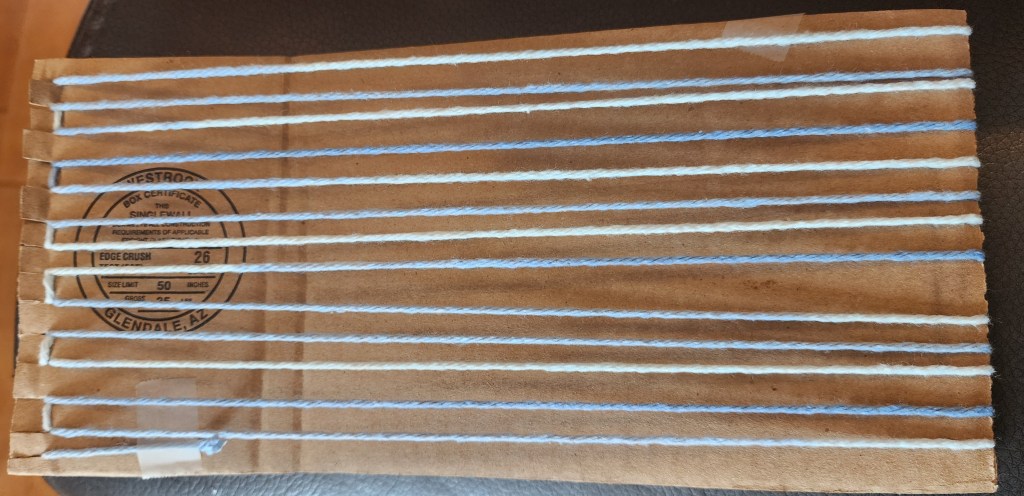
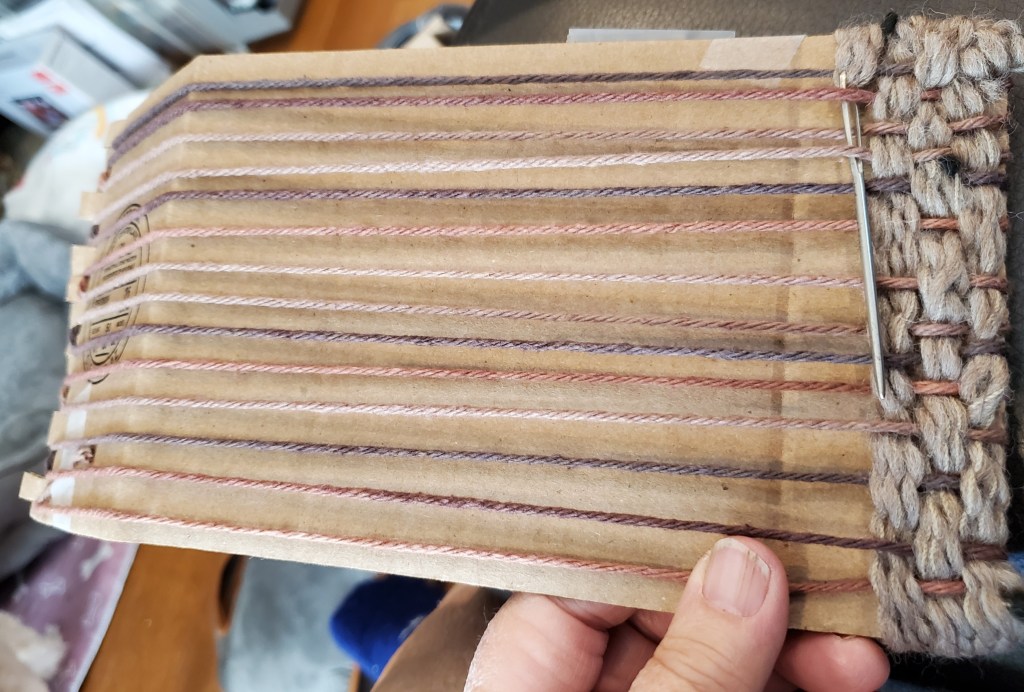
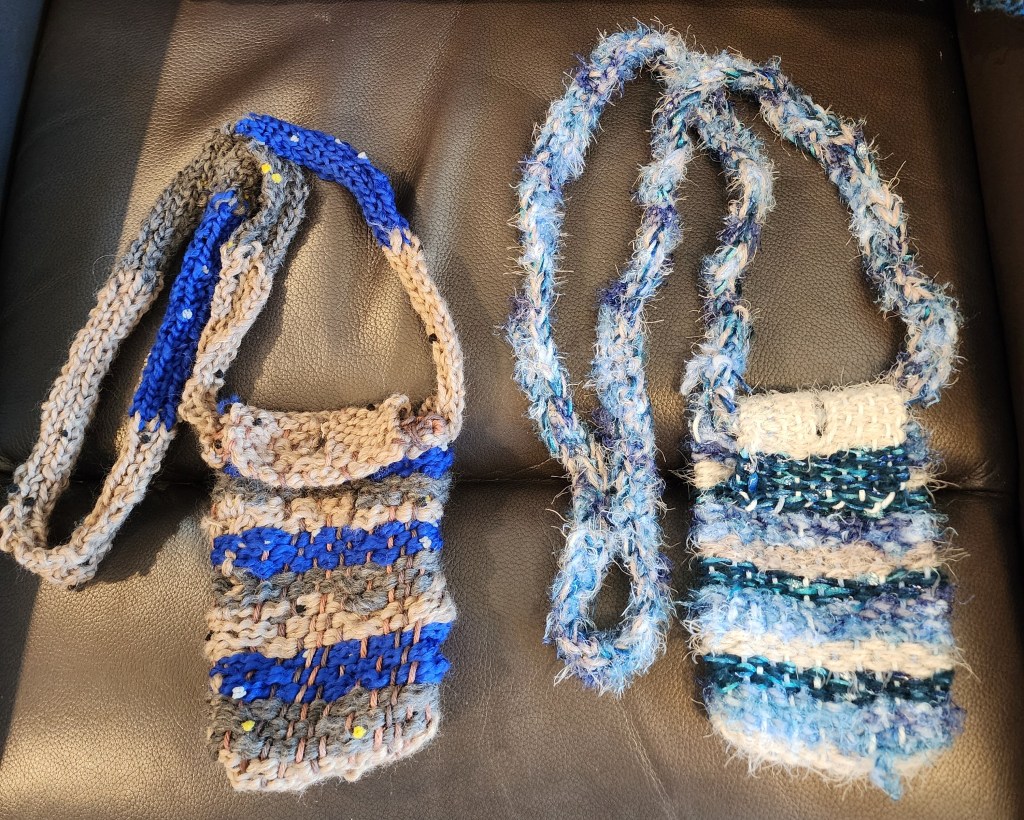
Figure 03-04. Even a simple cardboard loom has the main features of a loom: a way to keep the parallel warp threads taut, and a way to weave the weft threads over and under the warp, alternately. Simple pouches can be woven on cardboard looms.
The possibilities for creating patterns of woven cloth are limitless, not just in terms of the threads (various colors, textures, fibers), but also in terms of how they’re woven — loosely or tightly woven; making the warp more prominent, the weft more prominent, or both equally prominent; with vertical, horizontal, and/or diagonal patterns, or combinations of these; with motifs or representational images; with smoothly woven textures (like satin) or rough ones (like brocade); with a single layer or a double layer of fabric; and so on.
In Peru, Andean weavers start out using a narrow loom for making belts. Only after weavers have years of experience do they graduate to using a wider loom, onto which much more complex patterns can be woven. During the transition, they are gaining deep understanding of the traditional patterns, their symmetries, their meanings, and their underlying mathematics. “Weaving is all about odds and evens, ratios and proportions” (p. 80).
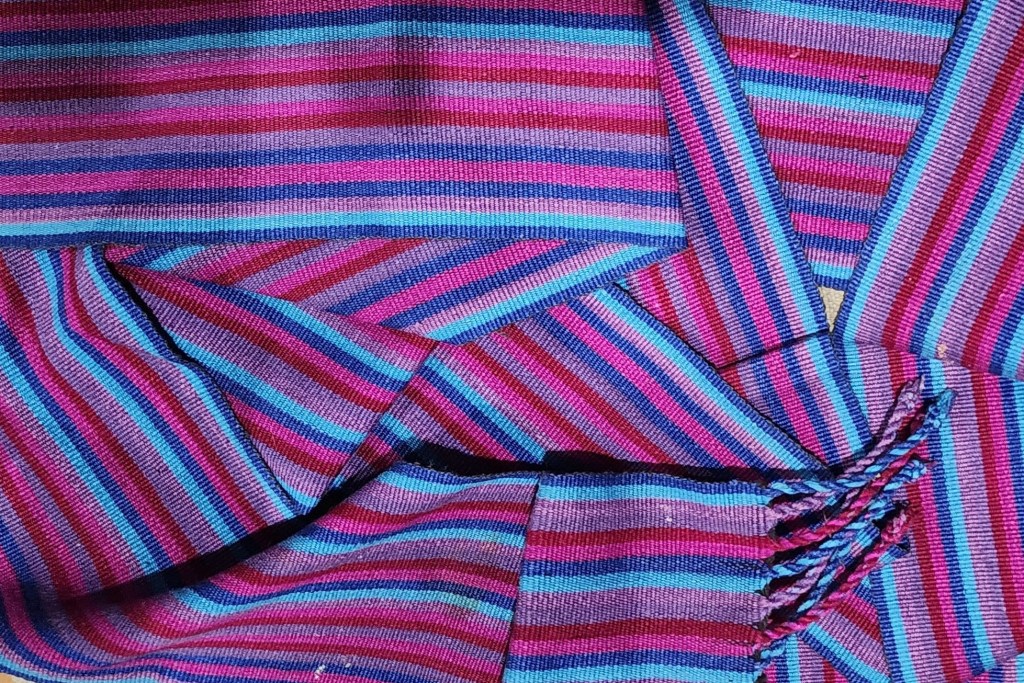
Figure 03-05. Young Andean weavers gain years of experience weaving exquisite belts before they move to wider looms for larger textiles.
In ancient Greece, weaving was celebrated throughout the Greek culture and was a frequent metaphor in poetry and other literature. Many Greek men wove, as well as women, and both appreciated the underlying mathematics of thread counts and pattern making.
Most woven cloth — now and in the past — is a plain weave, over one warp thread, under the next, over the next, and so on, then alternating the over and under traversing the row back across the warp threads. Making a plain-weave cloth requires planning and attention to set up the loom, particularly if using multiple colors, but it doesn’t require complex threading of the warp threads. Thread one heddle to lift even-numbered threads and another heddle to lift odd-numbered threads, and you’re done.
The plain weave is one of three basic weaves. The two other weaves are satin weave and twill weave. In satin weave, the weft thread goes over four or more (e.g., seven) warp threads, then passes under one warp thread then goes over another four warp threads, and so on until the last stitch, which it wraps beneath. On the return row, the weft passes over two warp threads, goes under one thread, then returns to the pattern of over-4, under-1, over-4, and so on, until the last stitch, which it wraps beneath. Because it’s mostly riding across the surface of the warp, it creates a smooth, lustrous, pliable surface, but it’s also easier to snag the relatively loose weft threads of a satin weave. Satins sacrifice sturdiness for lustrous beauty and smooth feel.
In twill weave, the weft threads create a diagonal pattern by passing over two (or more) warp threads then going under one (or more) warp threads and continuing in that pattern across the row. On the next row, the pattern is offset by one warp thread; for instance, if the first row was two-over/two-under, the next row will be one over the warp, then two-under/two-over until the last stitch, which will be one under. And so on.
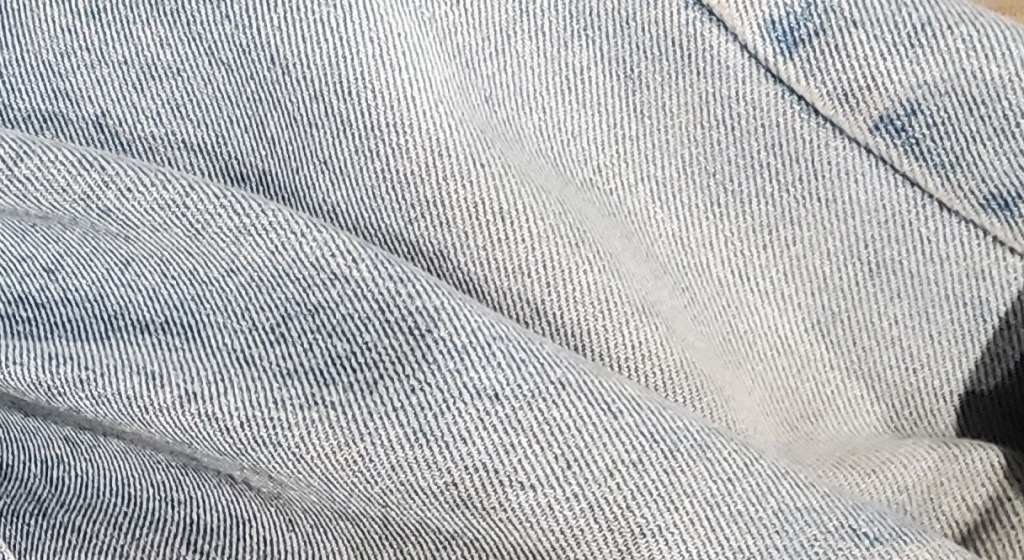
Figure 03-06. The denim fabric used for making blue jeans is made with a twill design, which creates distinctive diagonal ridges in the fabric.
When creating any pattern other than plain weave, the weaver will need more than two heddles and will do more advance planning. For instance, the first row on a simple two-by-two twill pattern requires going under two warp threads, then over two, then under two, and so on. But on the second row, returning back across, the pattern must be offset by one stitch, so it’s over one stitch, then under two, then over two, and so on, ending with going over the last stitch. So far, that’s two different threadings for two different heddles. Then the third row across goes under two warp threads, over two warp threads, and so on — needing a third heddle, with a third set of threadings. Finally, the fourth row goes under one warp thread, then over two, under two, and so on, ending by going under the last warp thread. That requires a fourth heddle, with a fourth set of threadings. That’s for a two-by-two twill. What about a one-by-two twill, a one-by-three twill (used for making denim jeans), or a two-by-three, or a satin pattern, or . . . you get the idea.
Modern-day hand-weavers may use computer programs to plan how they set up their looms with multiple heddles and shafts for lifting each of the heddles or multiple heddles at once. If they don’t want computer assistance, they may use graph paper for planning the pattern by hand. For a complex pattern, the graph paper must indicate not only the final look of the fabric, but also how to thread each heddle, how each heddle connects to a shaft, and when to lift each shaft (and heddle), row by row.
Long ago, computers weren’t available to weavers, and even paper wasn’t readily available. How did weavers of yore manage the complexities of setting up a loom for weaving a pattern, as well as for weaving the pattern, row by row, while keeping in mind not only the pattern, but also where each row fits into the pattern? One clever way to remember pattern was by using chants and songs. Songs, poems, and chants were key memory aids for millennia before writing was widely used.
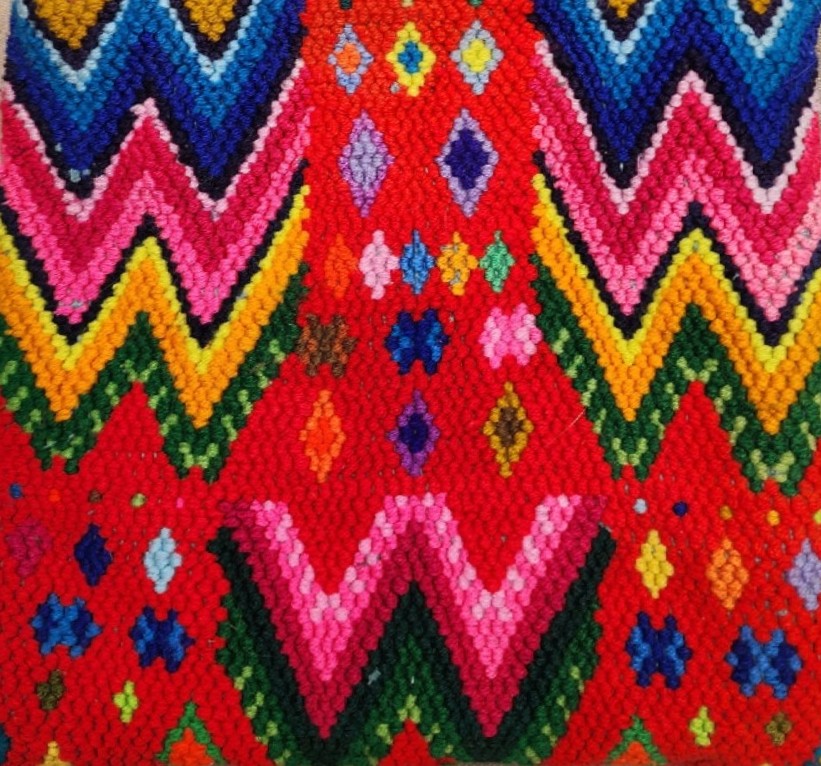
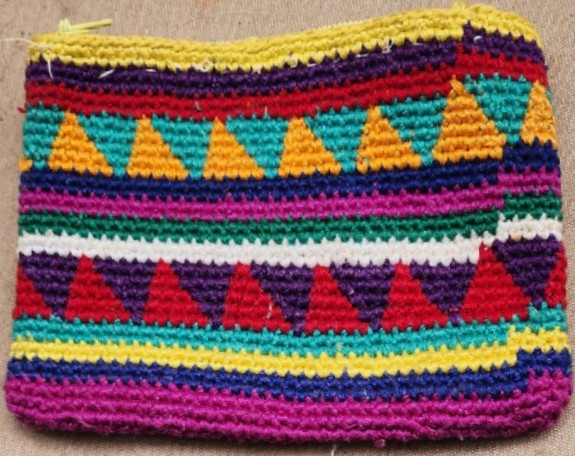
Figure 03-07. Before weavers had access to computers for creating, remembering, and implementing complex patterns, they needed to use memory aids.
Another memory aid was to look at existing textile patterns while creating new ones. By looking at an existing textile, you can figure out the steps needed to produce a similar pattern. Contemporary archeologists have also figured out how ancient textiles were produced by looking carefully at how they were made and replicating those steps. They’ve done so for knitted textiles, too, such as stockings.
It wasn’t until 1677 that Marx Ziegler, a master weaver, published his manual of woven patterns, the first such publication. “Ziegler’s book used lines and graph paper to show weavers how to thread their looms and which shafts to raise to create specific patterns” (p. 86). His book not only revolutionized weaving, but also spread his belief that artisanal knowledge should be shared, not kept secret.
Brocade fabric can look like embroidered fabric, but it’s created during the weaving process, not afterward. To create brocade, the weaver uses supplementary weft threads that sit atop the background weft that gives the fabric its structure. In fact, if you removed every thread of the brocade design, the fabric would remain intact.
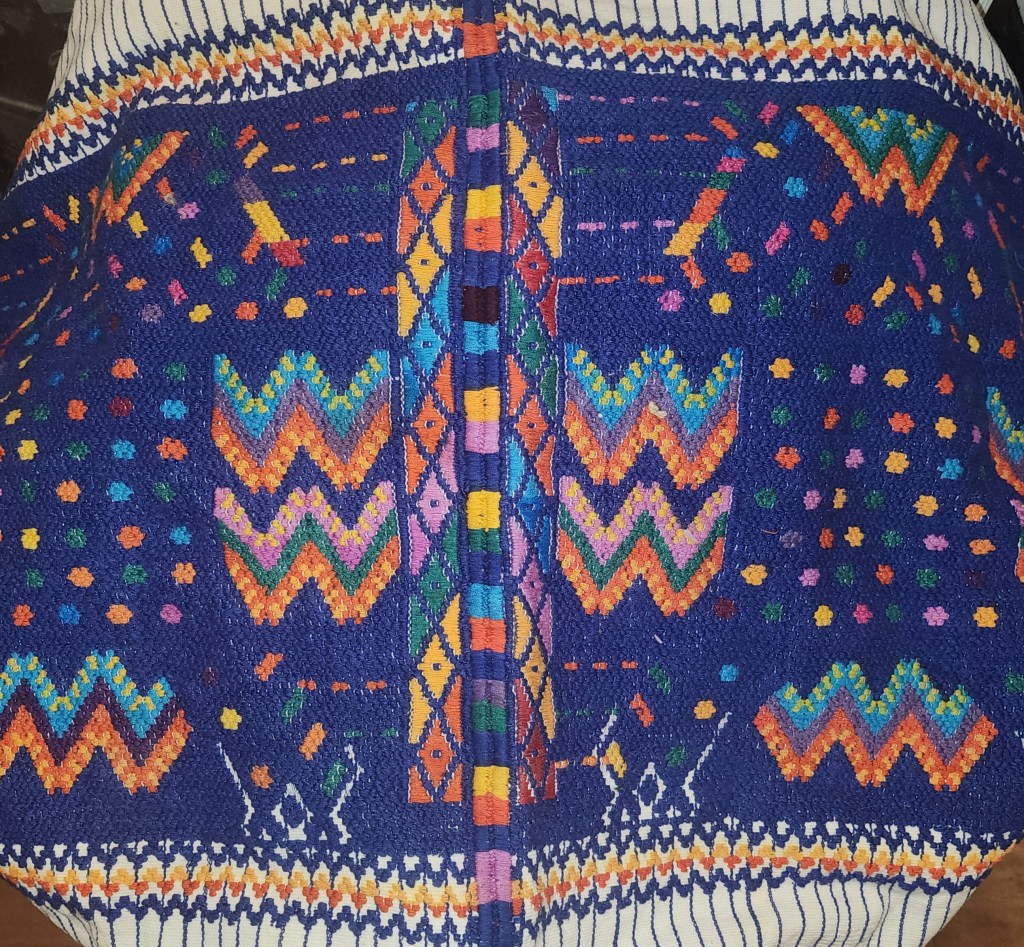
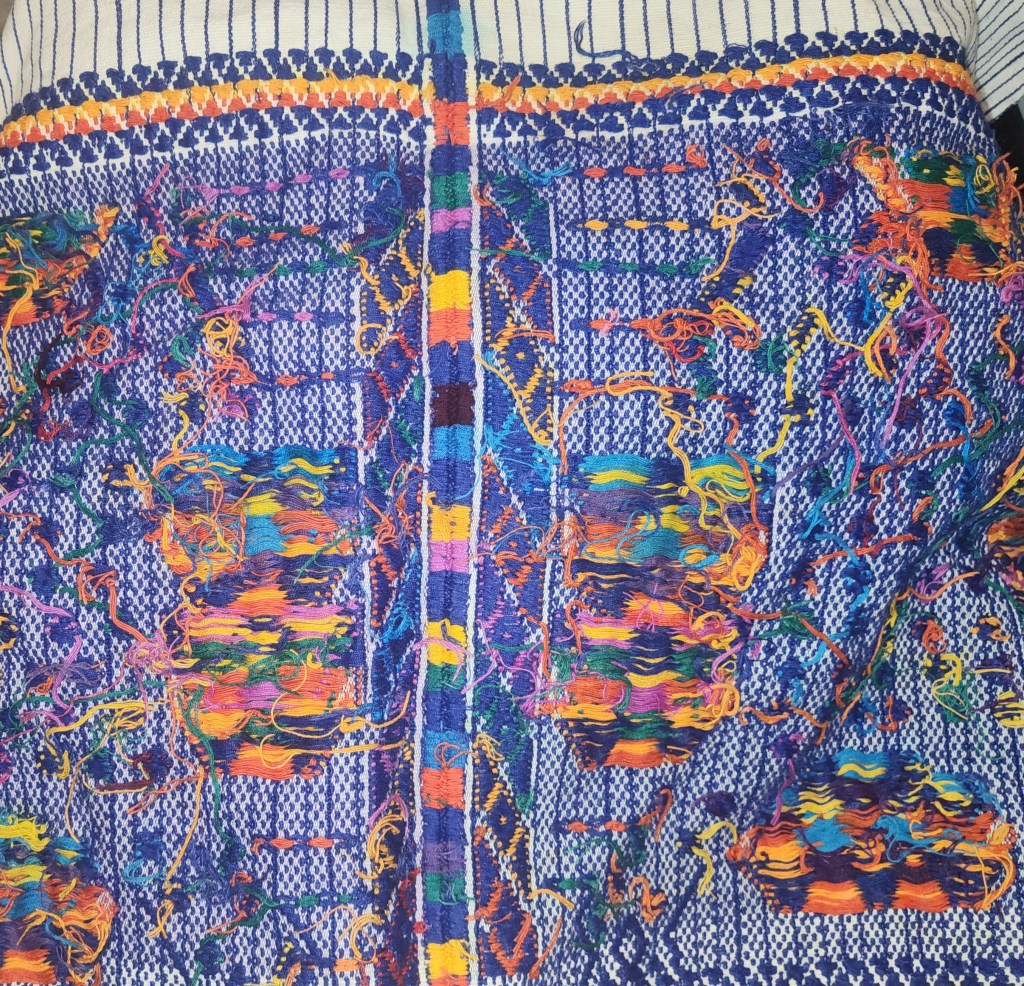
Figure 03-08. With embroidered fabric, the reverse side of the fabric shows the stitches lying atop of the woven fabric, not woven into it. In this particular example, you can see the woven blue, yellow, and orange zigzags along the top and bottom, on both sides of the fabric, but the embroidered elements look quite different on the reverse side of the fabric.
Brocade weaving goes back as far as ancient China (475–221 B.C.E.). It spread to Europe (starting with Greek Byzantium) by the Middle Ages, but it was so challenging to make that it was worn exclusively by royalty or at least nobility at that time. Until the 1800s, all brocade was created by hand, thread by thread; the weaver created and implemented the brocade design while weaving.
Postrel illustrates how a Laotian weaver uses a template of individual heddles to create the brocade pattern atop the basic woven fabric. More time and skill are needed to create the template of heddles for the brocade pattern than to use the template while weaving. Even so, weaving brocade requires more time and skill than weaving a non-brocaded fabric. According to Postrel, “the string template for a Lao brocade can take months to make” (p. 89). Two key benefits of the template: (1) It can be implemented by any weaver who is familiar with the loom, and (2) even more importantly, after the template has been used, it can be removed from the loom, stored, then pulled out at a later time and used again.
Even before Chinese brocade weavers, Neolithic weavers were adding supplemental decorative threads to their weaving at least 5,000 years ago. More recently, Incan weavers have added decorative threads while weaving on backstrap looms, simply by picking up individual threads to create a pattern. Two separate ethnic peoples of China went beyond hand-picking brocade designs, and both devised technology for creating, storing, and reusing a brocade pattern.
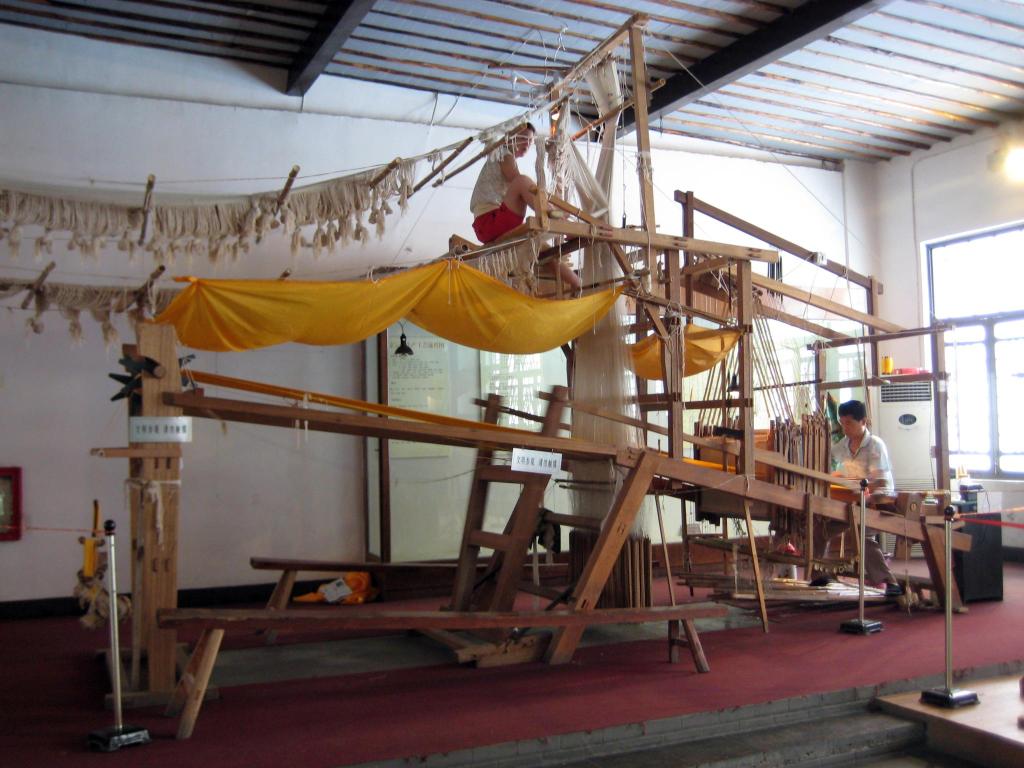
Figure 03-09. This image of a Chinese brocade loom shows its size and the need for two people to operate the loom; the image is from https://en.wikipedia.org/wiki/Brocade#China , where you may find more information about it.
The photographer was Anne Oeldorf-Hirsch, who photographed it 30 June 2010 and posted to Flickr, then later uploaded it to Commons, where it is licensed under the Creative Commons Attribution 2.0 Generic license. You are free: to share – to copy, distribute and transmit the work; to remix – to adapt the work, under the following conditions: attribution – You must give appropriate credit, provide a link to the license, and indicate if changes were made. You may do so in any reasonable manner, but not in any way that suggests the licensor endorses you or your use.
To create long bolts of brocade fabric, a large drawloom was invented. To use traditional drawlooms, a weaver is assisted by a drawboy or drawgirl to raise or lower individual warp threads to make the brocade design. The drawloom could work the brocade design on top of plain weave, twill weave, or satin weave fabric. The possibilities for creating intricate patterns with a drawloom are limitless, but both the weaver and the assistant need superlative skills to implement those patterns. Nor was the work swiftly implemented, so a rare few wealthy people could afford to pay for the long, intensive labor of two highly skilled workers — let alone to pay for the spinning of the fine silken threads to be woven.
For such a luxurious, precious, costly fabric to be worthwhile, even to the wealthiest of patrons, the pattern had to be exquisite. A highly skilled artist would sketch the overall artwork of the design, then that artwork had to be translated into warp and weft threads on a large-scale version of graph paper. The artistry had to consider how a sketch would actually appear once translated into threads. Gradations of color, intricacy of pattern, and overall design all needed to be carefully plotted in the translation to threads. Once the graph was completed, the work began to set up the loom for implementing the design — which could take months, during which the loom was unavailable for any other use.
The way that the drawloom was designed, the setup couldn’t be reused. Once the brocaded fabric was completely woven, all of the elaborate ties and heddles had to be undone in order to use the loom again. Fortunately, textile designer Philippe de LaSalle relished making improvements to the drawloom, and before the end of the 1700s, he figured out a way to make a device that could set up a brocade pattern, use it, remove it, then reuse it again in the future. He was even able to design brocade-woven portraits, such as his portraits of Louis XV and Catherine the Great.
In 1804, Joseph-Marie Jacquard patented a new device for making it much easier to weave brocade patterns — without an assistant — and to store and reuse brocade patterns. Basically, a Jacquard loom device uses a carefully sequenced series of punched cards to control the heddles of the loom. Each card has several rows of punched holes, such that each row affects a single row of the woven pattern. The pattern proceeds row by row, and when one punch card is completed, the next punch card rolls into place, continuing in this manner until the weaving is completed.
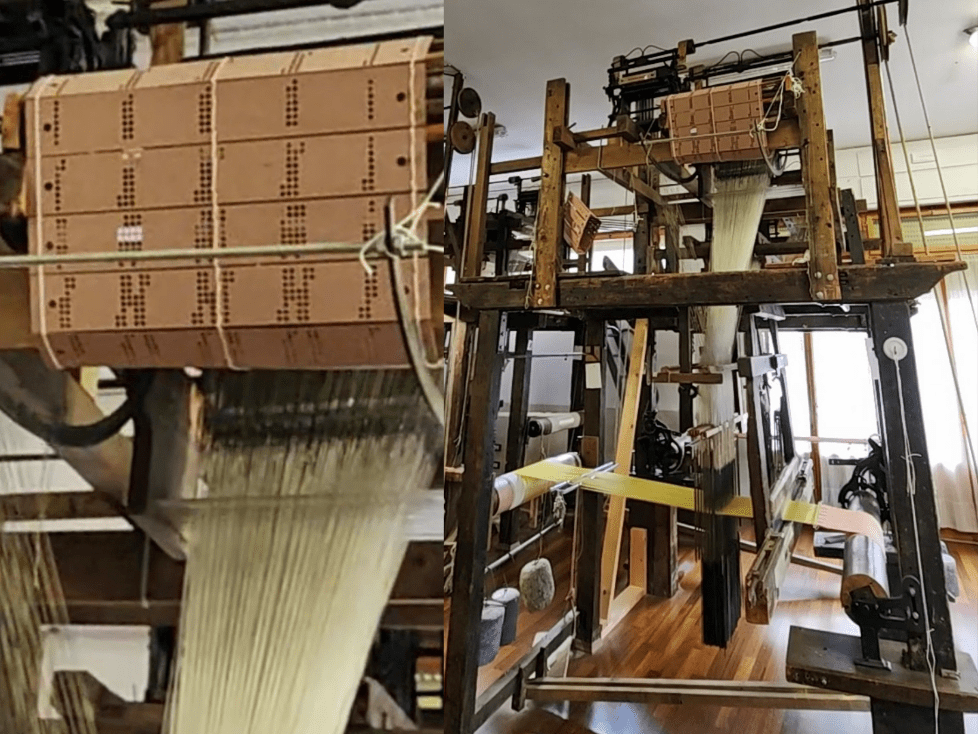
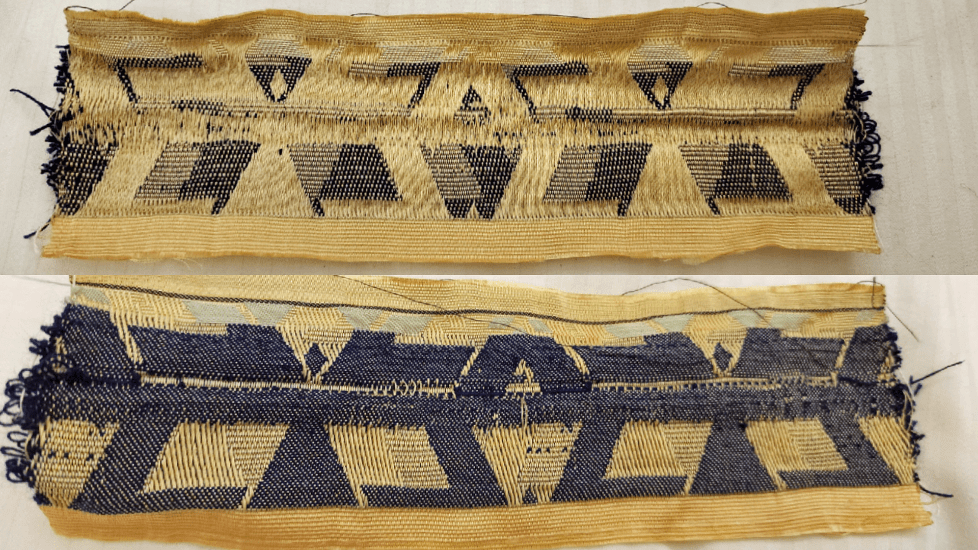
Figure 03-10. In November, 2022, I took a weaving workshop at the Fondazione Arte della Seta Lisio in Florence, Italy. Among the looms at the Fondazione was this exquisite Jacquard loom (circa 1800s); far left is a closeup of the series of punch cards it uses to weave brocade patterns. I spent my first couple of hours at the Fondazione creating this very small sample of silk brocade fabric (top, front; bottom, back). As you can see, the pattern includes flaws of my own creation. (After struggling to weave on the Jacquard loom, I switched to a more primitive loom for weaving twill or plain weave with wool yarn. Much easier!) For further explanation of how the Jacquard punch-card system interacts with the loom, please see https://en.wikipedia.org/wiki/Jacquard_machine#Principles_of_operation .
For each row of the punch card, the card is pressed down over a series of rods. Wherever there is a punched hole, the rod goes through the hole and stays in place. Wherever there is no hole, the rod is pushed downward to catch a hook. Then a beam lifts the rods, and the hooks lift cords attached to heddles that raise the warp threads; where the rods aren’t hooked, nothing happens. It’s more complicated than that, but this is the basic idea. It’s a binary code: a punched hole = 0; no punched hole = 1. Once the weaver passes the weft through the warp threads, that completes one row of the pattern; the weaver then advances the loom device to the next row, such as by stepping on a treadle.
Before Jacquard’s invention, a weaver and an assistant could work together for an entire day and produce 1″ of brocade fabric. After Jacquard’s invention, a weaver alone could produce 2 feet of brocade fabric in a day. Hand-woven brocade fabric was still not affordable for the average person, but one weaver — instead of a weaver and an assistant — could work 24 times as quickly as before. What’s more, though it took an exceedingly long time to make the punch cards for just one pattern, the same punch cards could be reused over and over and over again. Once the design is created and punched, it can be reused indefinitely. And modifications and rearrangements could be easily made, as well. “Jacquard’s breakthrough made weavers’ work easier, improved the quality of their fabric, and expanded the market for their products to middle-class shoppers” (e.g., brocade ribbons) (p. 98).
Jacquard’s binary weaving code was soon being adapted to myriad other enterprises, from shipbuilding to computational devices. Postrel further shows how Jacquard’s binary code became the basis for computer-driven looms, the Apollo space program’s software, and the Computer Age as we know it.
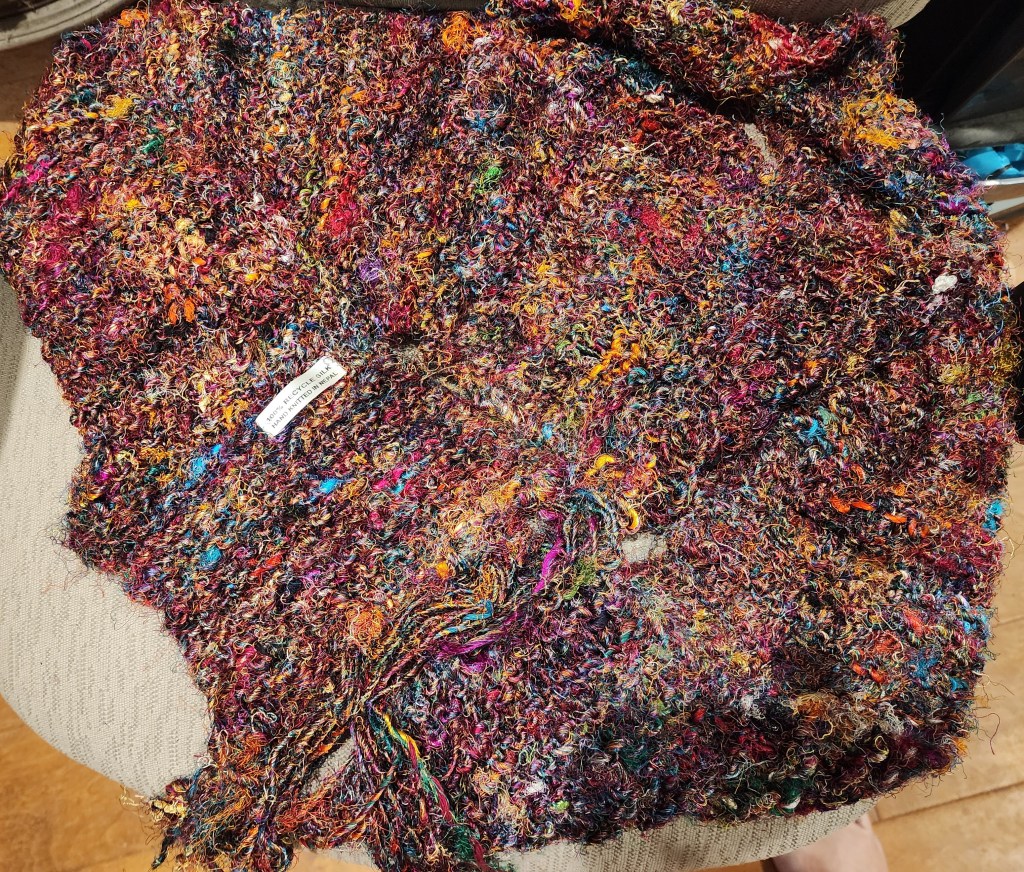
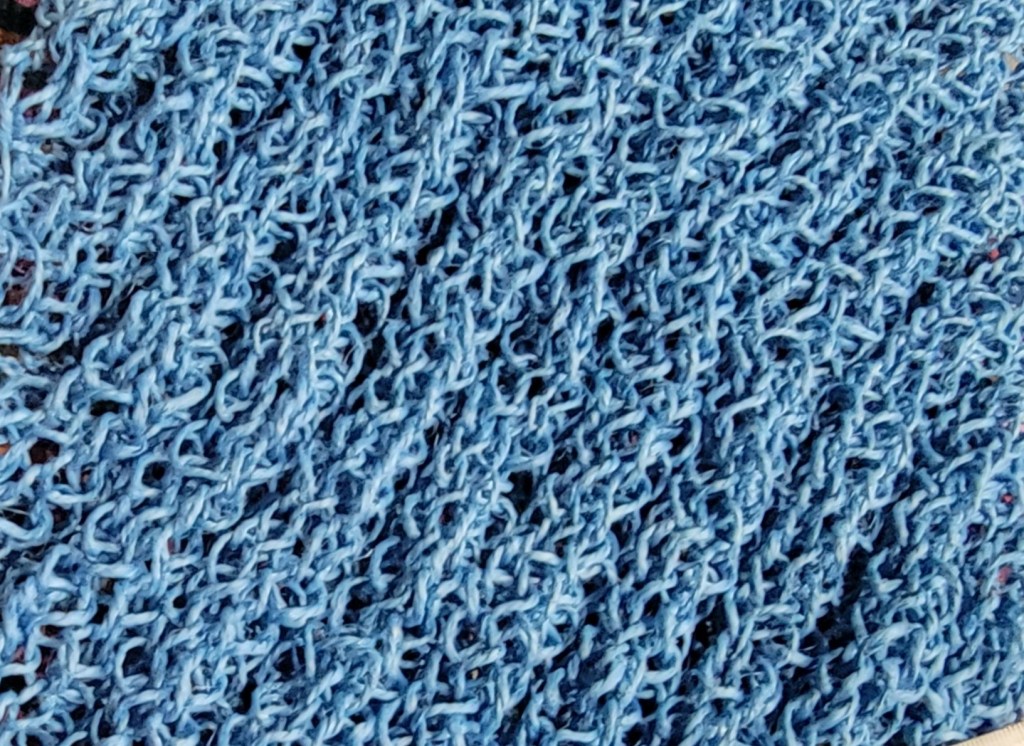
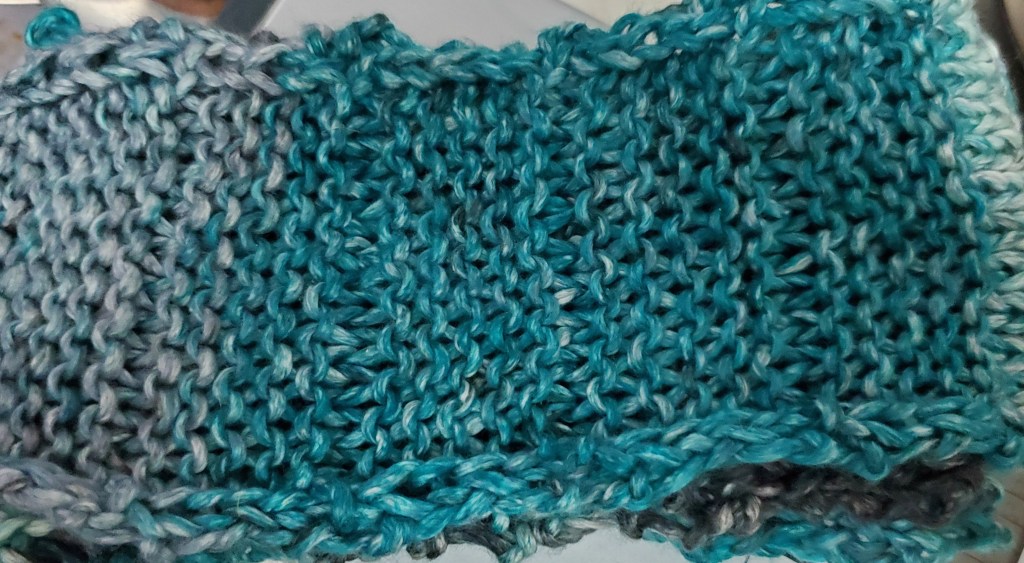
Figure 03-11. These three knitted items look and feel different because of the differing fibers used: Silk (left) is lustrous and drapes beautifully; hemp (middle) is stiff and sturdy; cotton (right) isn’t as lustrous as silk, but it’s softer than hemp, absorbs moisture, and breathes, making it highly suitable for wearing next to the skin.
Weaving is one of the oldest ways to make fabric (looping, knotting, and nålbinding having come earlier), having emerged long before knitting appeared on the scene. Knitting, however, is on the rise.“In 2016, knitting accounted for 57 percent of worldwide fabric sales by weight, compared to 32 percent for weaving, with knitting sales growing at 5 percent a year, compared with 2 percent for weaving” (p. 274). For garments, the disparity is even greater. Right now, I’m wearing knitted socks, knitted underwear, a knitted t-shirt, and woven shorts; I rarely wear woven tops, but I often wear knitted sweatpants or shorts. Do woven undies or socks even exist now?
Woven fabrics have a crisp appearance, toughness, and durability that knitwear lacks, but nothing beats knitted garments for stretch and comfort. Knitwear also fits a moving three-dimensional human form better than even the most tailored of woven garments. Hand-knitted garments can be lovingly crafted to suit each individual, but manufactured knitting has existed since 1589, when a young curate invented a “stocking frame” that could quickly knit row after row. Over the following 100 years, further refinements led to stocking frames that could churn out lots of plain (“stockinette stitch”) stockings. In 1758, another invention allowed for ribbed stockings (alternating knit stitches and purl stitches), which better conform to a foot without stretching out.
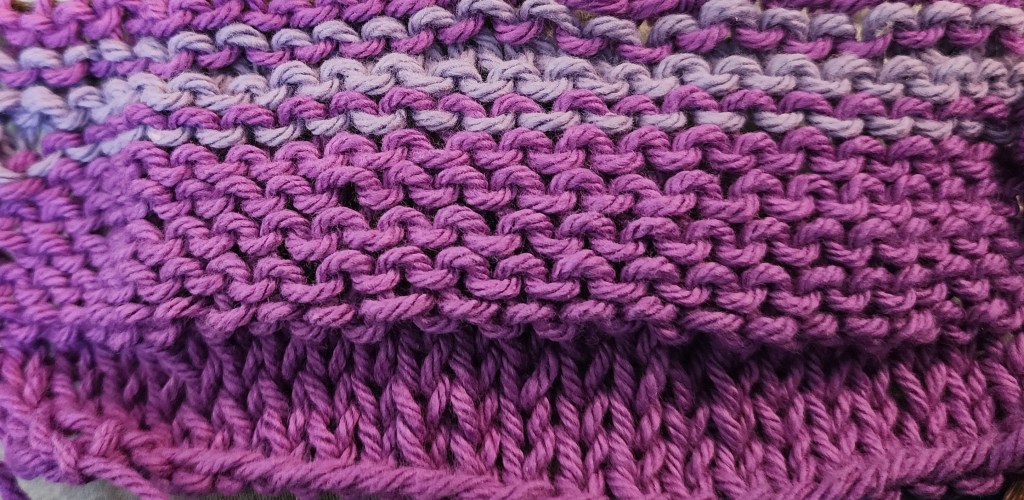
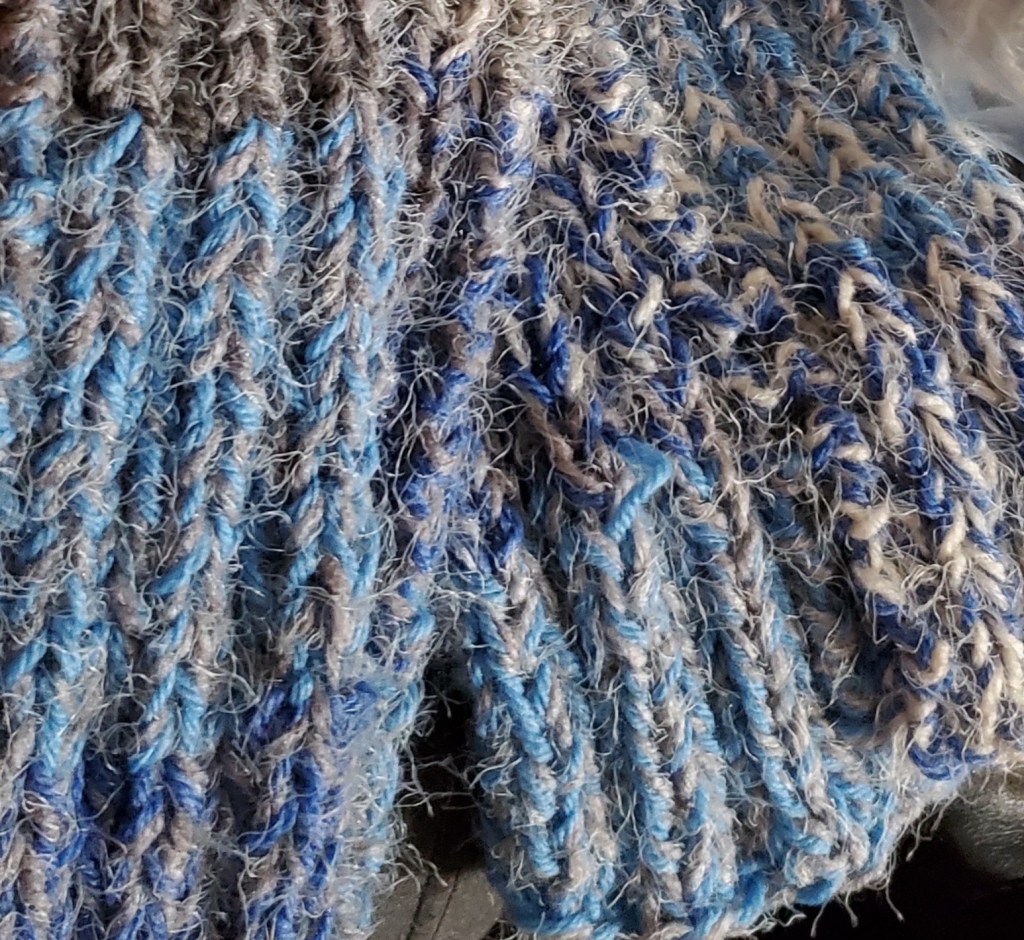
Figure 03-12. Knitted fabrics are stretchier than woven fabrics. On the left is knitted fabric with all knit stitches (bottom rows) or all purl stitches (top rows); this creates stockinette stitch, which works well for most knitted fabrics. For socks, however, stockinette-stitch fabric eventually stretches out, so the tops of socks made with stockinette stitch can lose their stretchiness after repeated wear. For the tops of socks, a better choice is the rib stitch (right), alternating purl and knitted stitches, in columns going up the fabric. Machine-made socks using rib stitching were a huge improvement over socks made only with stockinette stitch.
In the current millennium, most industrially knitted items are produced on circular machines that knit in continuous spirals, “‘turning out hundreds of yards an hour’ the fabric is then cut and sewn to create the final product” (p. 105). Though there’s some waste inherent in the process, it’s cost-effective to knit huge quantities of garments in this way. In contrast, a flatbed machine can use 3-D computer renderings to knit almost any shape of almost any size, color, or texture — seamlessly. It can knit a well-tailored sweater in an hour, with no cutting, no sewing, and no waste — or it can knit a bunny, with long ears and a cute tail — or a sneaker top (not the sole). Apparel executives can have designers quickly and easily produce prototypes and samples, tweaking them with different fibers, textures, colors. The possibilities seem limitless.
Text and images (unless otherwise indicated in the caption) by Shari Dorantes Hatch.
Copyright © 2026. All rights reserved.


Leave a Reply