
Milky Stork, Mycteria cinerea
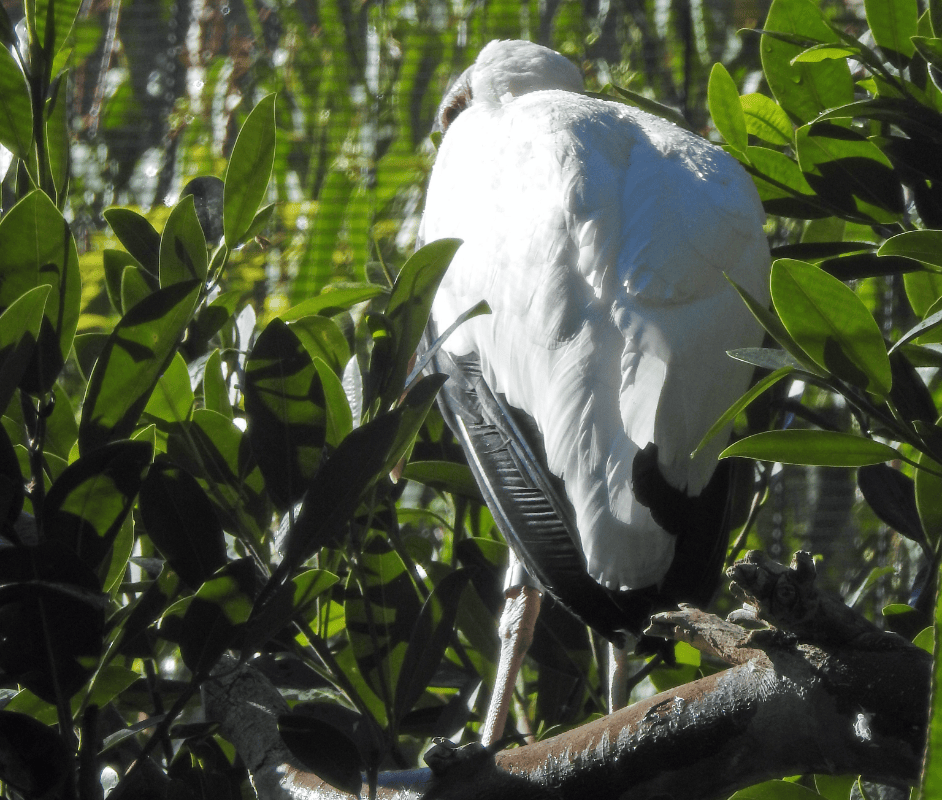
Figure 01. The Mycteria genus comprises four species, one of which is the Milky Stork.
This blog is the fourth of several about the Ciconiiformes order of storks. The first blog introduced the order’s solitary Ciconiidae stork family, https://bird-brain.org/2026/11/01/ciconiiformes-storks-part-1/ . The second focused on African Openbills in the Anastomus genus of storks, https://bird-brain.org/2026/11/08/ciconiiformes-storks-part-2/ . The third introduced the distinctive stork genus Mycteria, highlighting the Wood Stork, Mycteria americana, https://bird-brain.org/2026/11/15/storks-ciconiiformes-part-3/ . The current blog features the Milky Stork, Mycteria cinerea; a subsequent blog will focus on the Yellow-billed Stork, Mycteria ibis.
Following are the sections within this blog about the Milky Stork, Mycteria cinerea:
- Taxonomy
- Appearance
- Vocalizations and Other Sounds
- Distribution, Habitat, Migration
- Food and Foraging
- Nonsocial Behavior
- Social Behavior, Breeding
- Survival, Population, Conservation Status
- Relationship to Humans
- Observations
- References
Taxonomy
The current taxonomy of the Mycteria genus of storks is as follows: kingdom Animalia, phylum Chordata, class Aves (45 orders of living birds), Superorder Pelecanimorphae, order Ciconiiformes, family Ciconiidae, genus Mycteria, which includes four species, one of which was featured previously, and another of which is featured here. The third, the Yellow-billed Stork, Mycteria ibis, will be featured in a forthcoming blog. The fourth species is the Painted Stork, Mycteria leucocephala, resident in Asia (south of the Himalayas and east of the Indus River). This stork often hybridizes with two other Mycteria species, both in the wild and in captivity. None of these species have subspecies (i.e., they’re monotypic). Three of the species have an LC, Least Concern, conservation status, but the Milky Stork is deemed EN, Endangered.
In the previous blog, introducing the Mycteria genus (https://bird-brain.org/2026/11/15/storks-ciconiiformes-part-3/#Mycteria ), the etymology of the genus name was noted as ancient Greek muktēr, meaning “snout” or “nose.” In 1822, Thomas Stamford Bingley Raffles introduced the Milky Stork, giving it the species name, cinerea, from Latin, cinereus, meaning “ashy,” referring to their milky/ashy, off-white color during the breeding season.
Raffles earned a living as a British colonial official (governor and the like) in southeast Asia (Java, Malay Peninsula, Bencoolen [Sumatra], Singapore), but his true passions were zoology, botany, and ethnography. He collected specimens and commissioned illustrations of native plants and animals wherever he was posted. In 1817, he wrote and published a history of Java, including its flora, fauna, and geography. In 1825, when he had returned to England, his scholarship earned him a membership in the prestigious Linnean Society of London. That year, he cofounded the Zoological Society of London and became its first president in 1826; he died later that year, 2 years before the London Zoo opened (1828). (Raffles’s father had been involved in the slave trade, but Raffles abolished the slave trade in the posts where he governed, which led to disputes with his employers, and to his being refused a church burial by the vicar, whose family’s money derived from the slave trade.)
The Milky Stork, Mycteria cinerea, and the Painted Stork, Mycteria leucocephala, are so closely related that they hybridize, both in the wild (e.g., in Vietnam, Cambodia, Thailand) and in captivity (e.g., Singapore Zoo). Juveniles of both species are nearly identical. Adult hybrids may appear to look like either of the two parent species, or some combination in varying proportions. (Surprisingly, one hybrid also arose from a female Milky Stork and a male Lesser Adjutant in Singapore.) For views of these hybrids, please visit https://www.inaturalist.org/observations?taxon_id=1145969 , the iNaturalist site for this hybrid, which includes 694 observations, most of which link to single photographs, but many link to multiple photos; there may also be links to videos, though I didn’t notice any within the first two pages.
Appearance
Milky Storks are somewhat smaller than Painted Storks: Milky Storks weigh about 5.3 pounds (84.4 ounces, 2.4 kg) and are about 36–38 inches (91–97 cm) tall (head to toes), about 37–39 inches (95–100 cm) long, bill to tail; Painted Storks weigh about 4.4–7.7 pounds (70.4–123.2 ounces, 2–3.5 kg) and are about 36.6–40 inches (93–102 cm) long, bill to tail. Typically, Milky Stork males are slightly larger than females. Other measurements of Milky Storks: wing length, 17–20 inches (43.5–50 cm); tail, 5.7–6.7 inches (14.5–17 cm); tarsus (ankle to toes), 7.2–9 inches (18.2–23 cm). Compare that tarsus length with its bill length (culmen): 7.6–10.8 inches (19.4–27.5 cm). Bill depth (top to bottom) is 1.5–1.9 inches (3.9–4.8 cm), bill width (side to side) is 1.2–1.5 inches (3.1 –3.8 cm).
Milky Stork plumage is almost entirely white, as viewed with wings folded down. In flight, however, black wing coverts dominate the trailing edges of the wings, becoming iridescent green when light hits them at the right angle. In breeding season, its bright white plumes look milkier, creamier — hence, its common name.
Coverts are smooth feathers, which overly other feathers, especially on the wings and tail; they minimize drag, smoothing the aerodynamics of birds in flight.
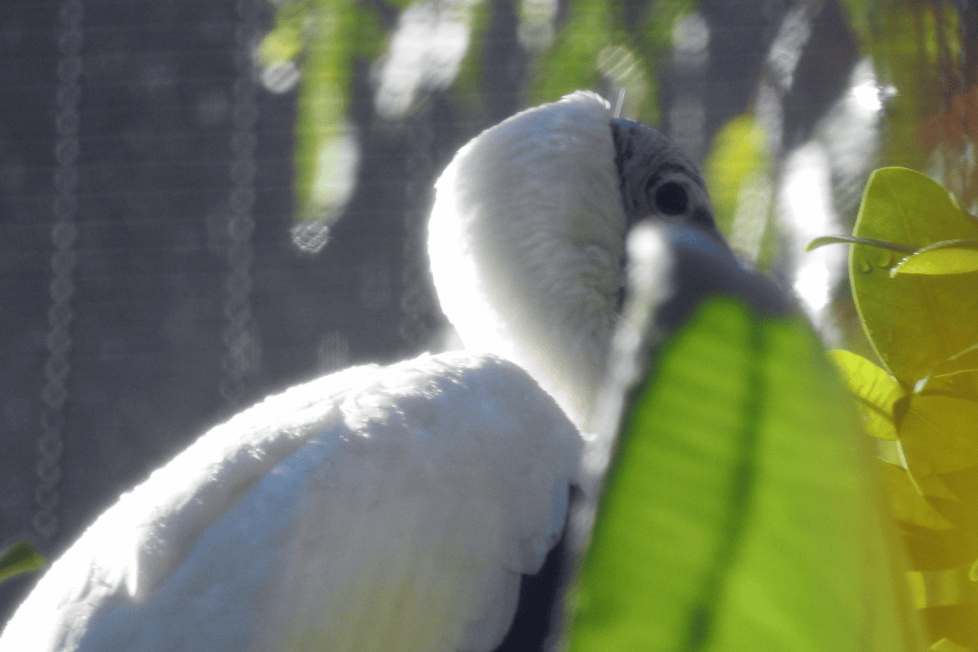
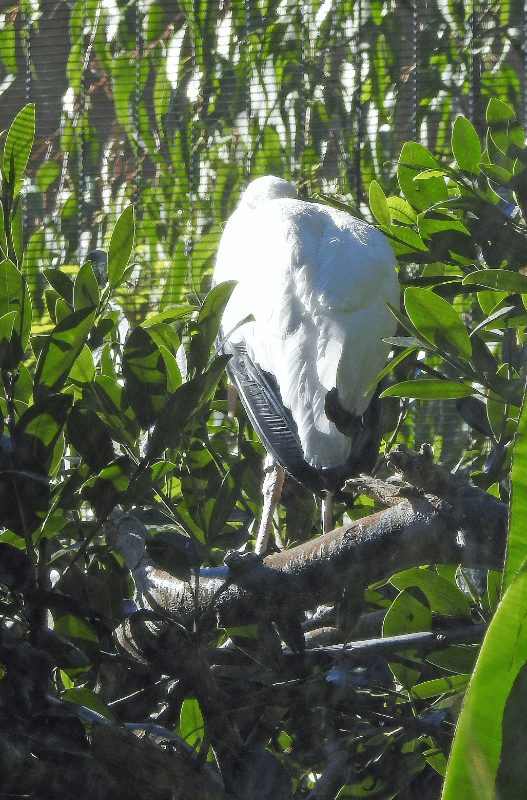
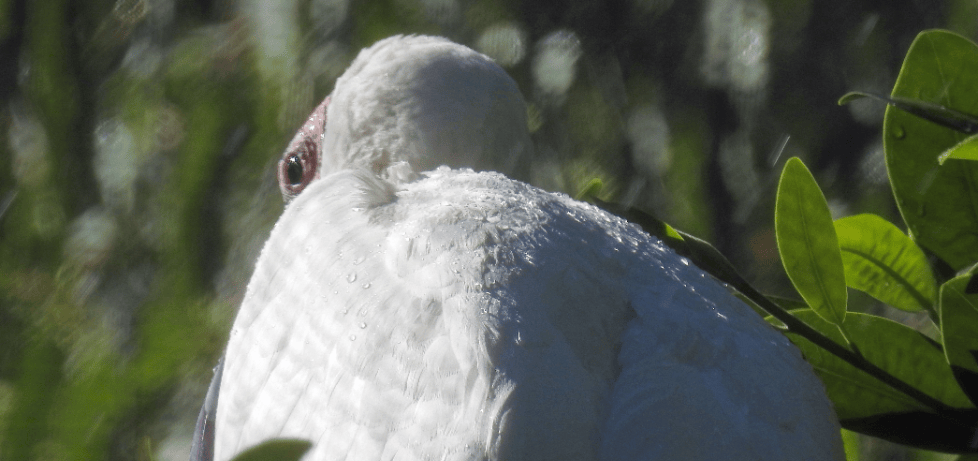
Figure 02. This Milky Stork was seen at the San Diego Zoo in 2017 (now moved to the zoo’s Safari Park) . (The zoo’s captive-breeding program is discussed in the section Relationship to Humans.)
While the crown, nape, and neck are feathered (white), the red facial skin is bare, with irregular black blotches. At the start of the breeding season, the facial skin color deepens to wine red; in addition, black areas appear at the base of the bill and the throat, and the bill’s coloration also deepens (yellower) at this time. As the season progresses, the facial skin lightens. The bill color has been described as yellow-orange in breeding season, but as pinkish-yellow at other times. Males have slightly longer, thinner bills than females, and the slight downward curvature of the bill at its tip may remind observers of ibises — which is what they were believed to be (Ibis denereus), at one time. At all ages, in all seasons, Milky Storks have dark-brown irises.
Leg and foot color also changes seasonally, becoming darker magenta red during breeding season, but lighter and pinker the rest of the year. (In addition, due to urohidrosis, white excretions accumulate on the legs, making them look whiter.) Its long thick toes help this stork to avoid sinking into mud while foraging.
Vocalizations and Other Sounds
The Milky Stork (Mycteria cinerea) is mostly silent outside of breeding season. During courtship, they utter what has been called falsetto “fizz” calls, and they clatter their bills to woo a mate. Their chicks utter froglike croaks when begging their parents for food. Their silence is deafening in ornithology resources, however. The Cornell Lab of Ornithology’s eBird website and its Macaulay Library, combined, have 0 (zero!) audio recordings of this stork (despite having 2,730 photos and 30 videos in the library); the xeno-canto website has exactly 1 (one!) of this stork: https://xeno-canto.org/447671 .
Distribution, Habitat, Migration
The Milky Stork mostly inhabits mangroves, swamps, estuaries, and moist tropical forests in southeast Asia, especially in Sumatra, but also on other Indonesian islands (Java, Sulawesi, Lombok, Sumbawa, Bali, Buton) and East Malaysia, as well as Cambodia and southern Vietnam; at one time, it also resided in southern Thailand. Though it is widespread (range size, 33,829–1,235,500 square miles, 87,616–3,200,000 km2), it’s patchily distributed; vagrants also sometimes show up on nearby islands (e.g., Greater Sundas). The tropical latitude range where these storks are found is −8 to + 13.9 degrees. They’re found at elevations between sea level and 3,290 feet (1000 m), typically 650 feet (200 m) or below.
Milky Storks forage on tidal mudflats and other wetlands, such as mangroves, fresh- or salt-water pools, marshes, ponds, and swamps, as well as rice paddies. They prefer more open, less dense habitats and coastal more than inland locations. During breeding season, they prefer undisturbed mangroves, with tall trees, near their shallow-water foraging grounds. Though they don’t truly migrate, they sometimes move seasonally, nomadically, or irruptively, in pursuit of suitable locations for finding abundant prey — especially in times of drought or flooding. For instance, during and after the local rainy season, they may prefer inundated rice paddies and other inland locations, whereas during the dry season, they may prefer coastal locations. In addition, they may also commute from roosting grounds to foraging grounds, as needed.
Food and Foraging
According to Avibase, about 70% of the Milky Stork’s diet is fish, with another 30% being land vertebrates (e.g., snakes, frogs), especially when feeding their young; marine invertebrates (e.g., prawns, crabs) and other invertebrates (e.g., aquatic insects) also figure into their diets. Those percentages are year-round estimates, with the diet changing dramatically across the wet or dry seasons. Reported food intake is about 22.2 ounces (1.4 pounds; 630 g) wet weight — that is, about 26% of their 84.4-ounce body weight, every day. Luckily, they can consume this much within about 2 hours of intensive foraging.
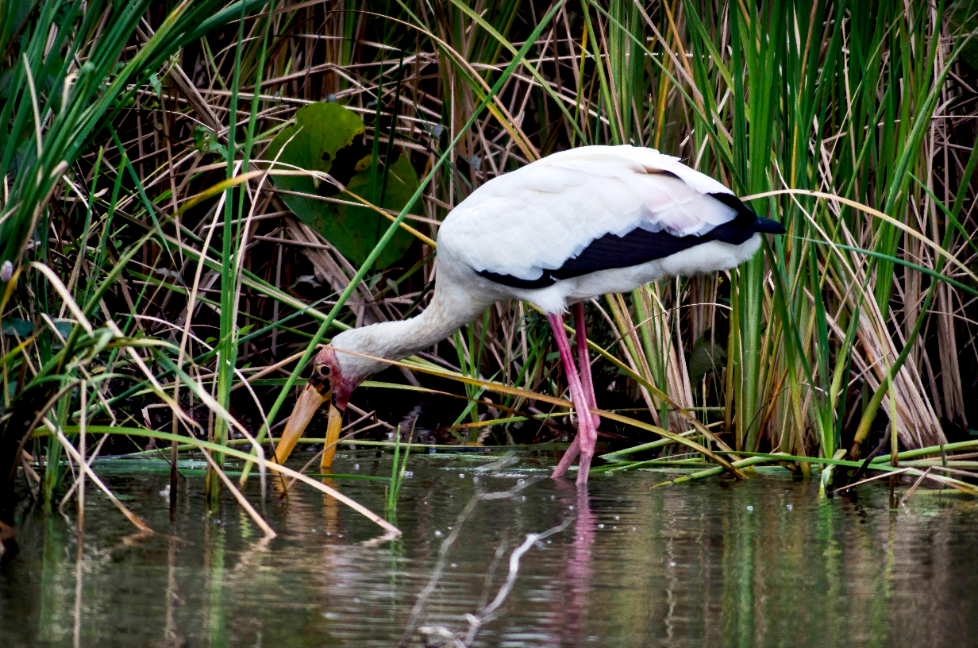
Figure 03. This Milky Stork probably eats about 1.4 pounds of seafood or other prey every day, or about 1/4 of its body weight. This image is from Wikipedia, https://en.wikipedia.org/wiki/Milky_stork#/media/File:Mycteria_cinerea,_Singapore_3.jpg .
Description: Milky Stork Mycteria cinerea, Singapore; Date, 4 January 2013, 09:18; Source, DSC_1768_1; Author, DChai21 from Singapore, Singapore; Licensing, w:en:Creative Commons attribution. This file is licensed under the Creative Commons Attribution 2.0 Generic license. You are free: to share – to copy, distribute and transmit the work; to remix – to adapt the work, Under the following conditions: attribution – You must give appropriate credit, provide a link to the license, and indicate if changes were made. You may do so in any reasonable manner, but not in any way that suggests the licensor endorses you or your use.
To make it easier to catch prey, this stork forages in shallow pools where the fish population is dense. This stork forages by day and occasionally locates prey visually; far more often, however, it uses tactilocation to capture prey, sensing any prey that touches its bill. Standing still or walking slowly, it submerges about 3/4 of its partially open bill into the water, ready to snap shut as soon as prey touches it. This stork will sweep its open bill through the water, tracing an arc from side to side. It also probes deeply into mud to sense prey (to see a Milky Stork probing into the mud, please see https://macaulaylibrary.org/asset/662309145 ). For more photos of a Milky Stork foraging in shallow water, please see https://macaulaylibrary.org/asset/666787540, https://macaulaylibrary.org/asset/665020370 , https://macaulaylibrary.org/asset/664462328 , https://macaulaylibrary.org/asset/664462327 , https://macaulaylibrary.org/asset/662775668 , https://macaulaylibrary.org/asset/657185529 , and https://macaulaylibrary.org/asset/666142122 .
Once the stork grasps its prey, it raises its head and tosses the whole prey backward into its open throat. (See https://macaulaylibrary.org/asset/666625883 , https://macaulaylibrary.org/asset/662775661 , https://macaulaylibrary.org/asset/662307489 , and https://macaulaylibrary.org/asset/663760141 for photos of a Milky Stork in the process of swallowing a whole fish.) After swallowing, the stork may take a break of up to 1 minute before starting to forage again.
To nudge prey to move, this stork may stand on one foot while stirring the water with the other foot. When foraging in water that moves in waves, the stork may simply submerge its bill and let the waves move prey toward its bill. For a video of Milky Storks foraging through shallow waves, please see https://macaulaylibrary.org/asset/664933472 and https://macaulaylibrary.org/asset/664933471 . Where prey is dense, Milky Storks also forage together in flocks, cooperating to flush fish toward shallow water, where their half-open bills can easily capture them. They have also been seen foraging near other seafood-eating birds.
In some locations, human-designed shrimp or fish farms may provide seasonal opportunities for finding prey. For instance, as the wet season shifts to the dry season, and water levels recede, commercial harvesters may leave some shrimp or fish available for these storks and other waders to feast on the leftovers.
Nonsocial Behavior
While slowly foraging on top of goopy mud, the Milky Stork’s long thick toes provide more surface area and help distribute its weight, so the stork doesn’t sink into the ooze. See https://macaulaylibrary.org/asset/663924811 and https://macaulaylibrary.org/asset/661621930 for photos of Milky Storks taking long strides through the mud or on the grass. To go long distances quickly, the Milky Stork flaps to ascend to the heights of thermal air currents, then soars almost effortlessly. During flapping flight, this stork flaps its wings about 205 times/minute. These storks are typically social flyers, with up to 12 or so soaring together. In fact, when one stork takes flight, others often quickly follow. Thermal air currents rely on the sun heating the ground, causing air currents to rise — usually strongest between 10 a.m. and 2 p.m.
The Cornell Lab of Ornithology’s Macaulay Library has numerous photos of these storks in flight. Please see https://macaulaylibrary.org/asset/665959584 for a photo of a Milky Stork flying toward the observer; see https://macaulaylibrary.org/asset/665751733 for side views of two Milky Storks flying; and see https://macaulaylibrary.org/asset/665453633 and https://macaulaylibrary.org/asset/664476312 for closer looks at a Milky Stork in flight. For a view of a Milky Stork flying overhead, please see https://macaulaylibrary.org/asset/662009837 . To see how a Milky Stork uses its wings as brakes when landing, please see https://macaulaylibrary.org/asset/664476350 and https://macaulaylibrary.org/asset/663760138 . For a flock of flying Milky Storks, please see https://macaulaylibrary.org/asset/663087630 .
When not foraging, flying, or roosting, Milky Storks may stand either in the shade or in the sun, adopting a distinctive drooped-spread-wing posture (sometimes called “delta wing,” for its triangular pose). For a photo of a Milky Stork posing with its wings partially spread, please see https://macaulaylibrary.org/asset/661721267 . For a description of this posture and its uses, please see https://bird-brain.org/2026/08/16/new-world-vultures-part-3/#posture . They also engage in self-maintenance activities, such as preening or allopreening, in which partners preen each other. Preening may also include head-rubbing — directly rubbing the top of the featherless head on the preen gland (on the rump), to gather preen oil; then it rubs the oiled-up head on its plumage.
Social Behavior, Breeding
As mentioned previously, Milky Storks are highly sociable (e.g., see a gathering of Milky Storks,
https://macaulaylibrary.org/asset/666011334 ), both during breeding season, when they nest colonially, and the rest of the year, when they often forage together. Their interactions are mostly amicable, but not always, as can be seen by viewing this photo of one Milky Stork chasing away another at https://macaulaylibrary.org/asset/667581268 . On the other hand, they seem to be comfortable in the company of other tall birds, as well, such as this photo of a Milky Stork on a tree branch, perching near another bird, https://macaulaylibrary.org/asset/666386083 . For photos of Milky Storks at the shore with egrets, please see https://macaulaylibrary.org/asset/665453634 and https://macaulaylibrary.org/asset/665453635 ; and to see them wading with cormorants and pelicans, please visit https://macaulaylibrary.org/asset/665051564 .
Milky Storks typically breed in colonies during the dry season, which can last several months, though breeding typically lasts only three months or so, coinciding with the peak of fish density after fish reproduce during the rainy season. Milky Stork colonies can include just 10–20 nests or up to a few-hundred nests, usually in mangrove swamps. Often, their nests are also near the breeding grounds of other stork species, as well as ibises, herons, pelicans, and other large piscivorous birds.
Though researchers haven’t found definitive evidence, it’s thought that these storks, like others, form monogamous pairs, at least throughout one breeding season. They do show courtship displays like the other Mycteria species, with both partners facing each other and mirroring each other’s bows and bill raising. The male also engages in other displays, to which the female responds.
These storks nest in tall trees (often 5–8 nests/tree), in or near abundant foraging areas. Their nests are typically about 20–46 feet up (6–14 m), but they’ve been seen up to 100 feet up (30 m), or as low as 6.6 feet (2 m) in mangrove shrubs. Typically, a nest is built in dead or dying mangrove trees, using medium-sized sticks, to make sturdy bulky nests about 20 inches (50 cm) in diameter. To collect these nesting materials, a Milky Stork will use its bill to firmly grasp a live, leafy tree branch, then fly upward while holding the branch, so it breaks off — which works most of the time. If this technique works, the stork takes it to the nest; if not, the stork moves to a different branch and continues. Parents also continue adding to their nests even after their young have hatched.
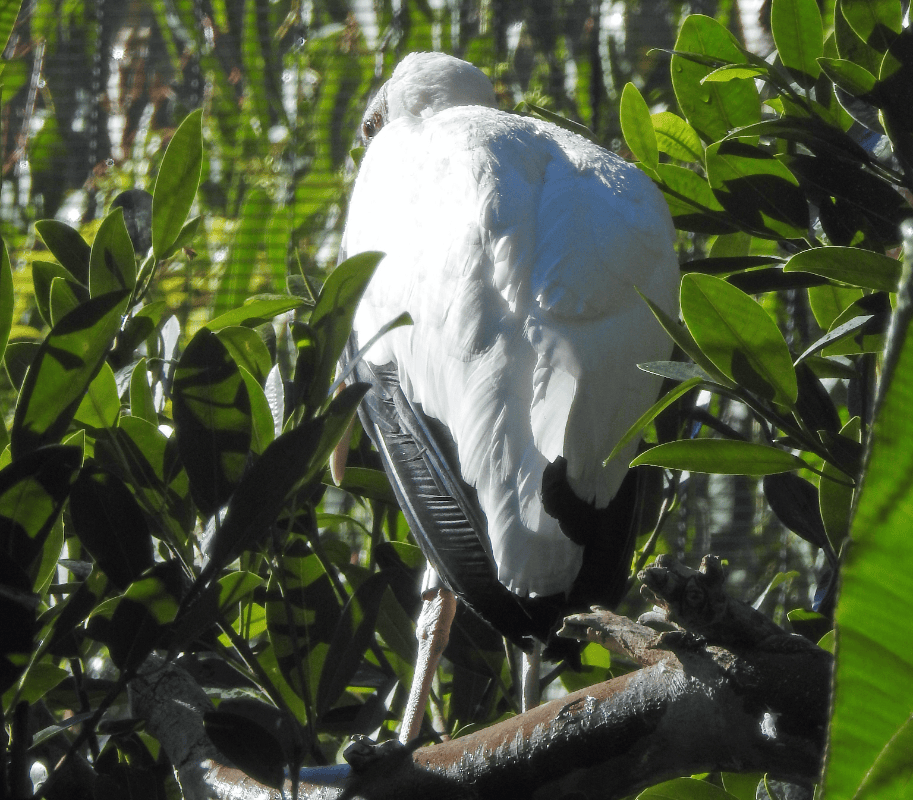
Figure 04. Like other storks, whenever they’re not foraging, Milky Storks spend most of their time in trees — preening, nesting, roosting, or just hanging out. This Milky Stork was seen at the San Diego Zoo in 2017 (now moved to the zoo’s Safari Park).
Once the nest is readied, the female lays 1–4 pale eggs (typically, 2–3). Both parents incubate the eggs for 27–30 days. The eggs are relatively small, compared to the adult’s body size, so chicks must grow substantially, quickly, after hatching. Because they hatch asynchronously, the first chick may be quite a bit bigger than the last chick. All chicks hatch helpless, hungry, and covered with white down. Both parents feed and brood their chicks, taking turns; as they switch off, they greet each other with bill clattering and posturing. During the first two weeks after hatching, parents feed their voracious nestlings up to 4 times every 2 hours; older chicks are fed less often. Because of the size disparities among chicks, the youngest, smallest chicks can’t easily compete to be fed, and they sometimes die of starvation. When their nestlings are too hot, the parents may retrieve water and dribble it from their bills over their nestlings, both for drinking and for cooling as the water evaporates.
Astonishingly, these chicks fully feather with pale grayish-brown juvenile plumage in about 4–6 weeks, though some downy feathers may remain on the underside of the belly and the wings. Unlike the adult’s, the chick’s bare skin is dull yellow, and its bill is dark grayish brown. At about 10 weeks, the chicks fledge (take flight), and they start losing the feathers on their forehead and around their eyes. By about 3 months after hatching, their heads are completely bald, and their bills are yellow with chartreuse tips. By 3–4 months after hatching, they start leaving their natal breeding grounds. Surprisingly, they can breed at this age, but the start of breeding is more likely to be at age 4 years. Average generation length is 8–11 years.
Survival, Population, Conservation Status
The IUCN (International Union for Conservation of Nature) Red List conservation status of the Milky Stork is EN, Endangered. Depending on the location, it has suffered a population decline of 24–60% over 10 years and of 52–82% over 3 generations. Current global population estimates are 600–1,850 birds (down from <2,200 in 2008). The top known threats are habitat destruction, overfishing (which reduces the availability of prey), and the illegal smuggling of stork chicks.
Habitat destruction has been largely due to deforestation and the conversion of natural mangrove habitats to serve human purposes, such as agriculture, aquaculture, logging (and wood harvesting), and residential/commercial development projects. Humans also cause pollution and contamination of natural habitats through agrochemicals, heavy metals (copper, zinc, lead), and other pollutants.
When aquaculture farms are located near these storks, the farmers may consider these seafood eaters to be pests — or worse — and may deliberately harm them, or at least disturb them to the point of threatening their well-being. Throughout this stork’s range, it is also imperiled by people who hunt this species for food (eggs, juveniles, adults), but there is some hope that this practice is declining. In addition, this species has various natural predators (monitor lizards, snakes such as pythons, civets, macaque monkeys, kites, etc.). Its existence as a discrete species is also threatened by its increasing hybridization with the Painted Stork, Mycteria leucocephala.
As individuals, adults have an annual survival rate of 87%. The longest living documented captive Milky Stork reached age 12 years, 4 months, 18 days, but another source said their maximum age is 20.6 years, and a zoo keeper speculated that captives may live 30 years or more.
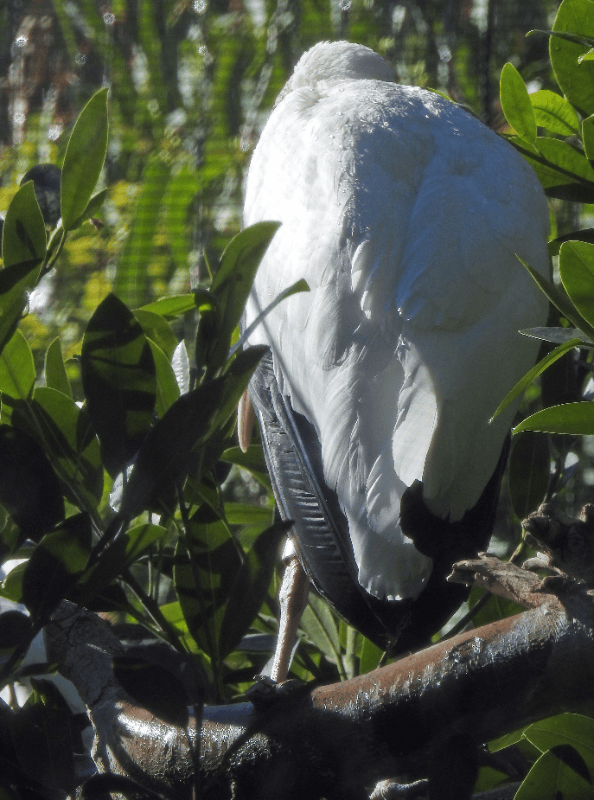
Figure 05. This Milky Stork was seen at the San Diego Zoo in 2017 (now moved to the zoo’s Safari Park); in a 2021 news article, a San Diego Zoo bird keeper speculated that captive Milky Storks may live 30 years or more.
Some steps have been taken to prevent the extinction of this species, which is officially a protected species in Malaysia and Indonesia. In 1987, in Malaysia, a captive breeding and reintroduction program was begun, started with 10 storks and increased to 100 by 2005; of these, 10 were released in 1998, and in 2007–2010, the program released 31 birds. Not all ex-situ conservation and captive-breeding programs have successfully released their storks into the wild, and it’s not clear whether sales of eggs or juveniles to zoos in Europe, Singapore, Kuala Lumpur, and other locations are designed adequately to yield desired results.
Protected conservation areas are also being established in various locations in this stork’s range (e.g., Sumatra and Malaysia). Public education programs are being planned, to discourage both hunting and human disturbance of this species. Other conservation measures have been proposed, some of which have been enacted: systematic research and monitoring, international trade controls and management, and establishment of suitable conservation sites.
Relationship to Humans
In Sumatra, the Milky Stork can commonly be seen on calendars and posters, often as part of public-awareness campaigns. In Sumatra’s Sembilang National Park, the park’s logo depicts a Milky Stork in flight.
In the early 20th century, Milky Storks were exhibited in the Vienna Zoo and the Washington Park Zoo (which held the record-holding long-lived captive Milky Stork, who died in 1950). According to the IUCN, 7 accredited holding institutions, in 6 countries, have a total of 141 Milky Storks — 39 males, 31 females, and 71 unsexed. Not all zoos have successful captive-breeding programs, but the National Zoo of Malaysia, the Singapore Zoo, and the San Diego Zoo have all done so.
By 2021, the San Diego Zoo Safari Park had gathered the last 23 Milky Storks living in North America (including 8 from the Audubon Zoo of New Orleans), to foster a captive-breeding program there, in hopes of helping to prevent the extinction of this species. The Association of Zoos and Aquariums Taxon Advisory Group entrusted the SD Zoo, based on its previous success in helping to save the California Condor from the brink of extinction. At the Safari Park, these storks have a large enclosure simulating a mangrove, lush with trees and other native plants, as well as ponds stocked with live fish. Soon, these storks were pairing up, preening and courting one another.
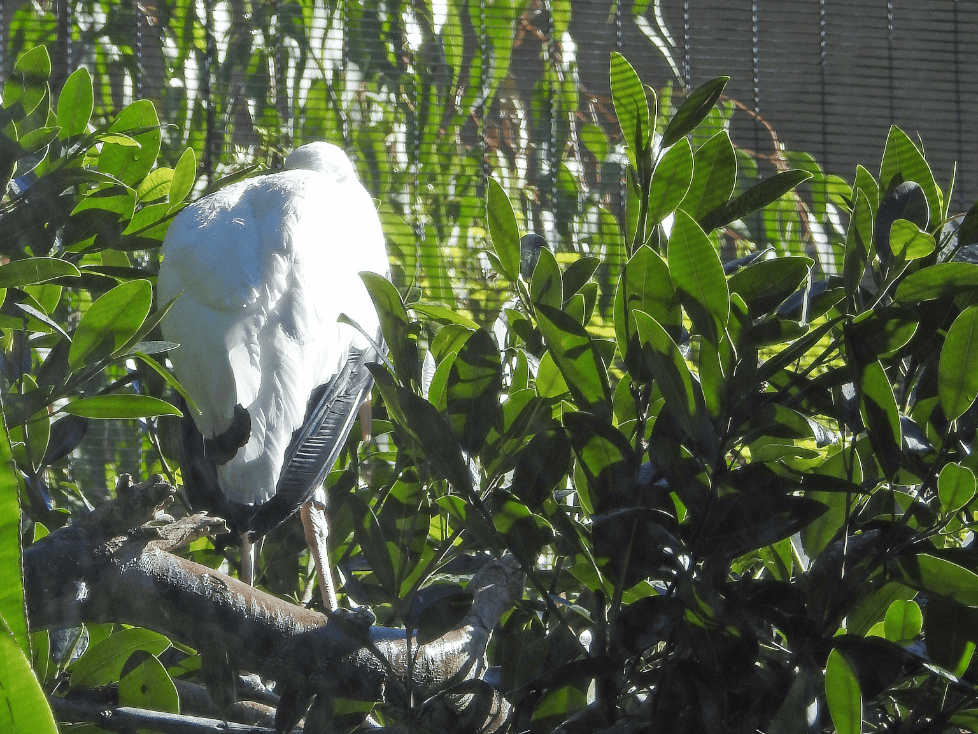
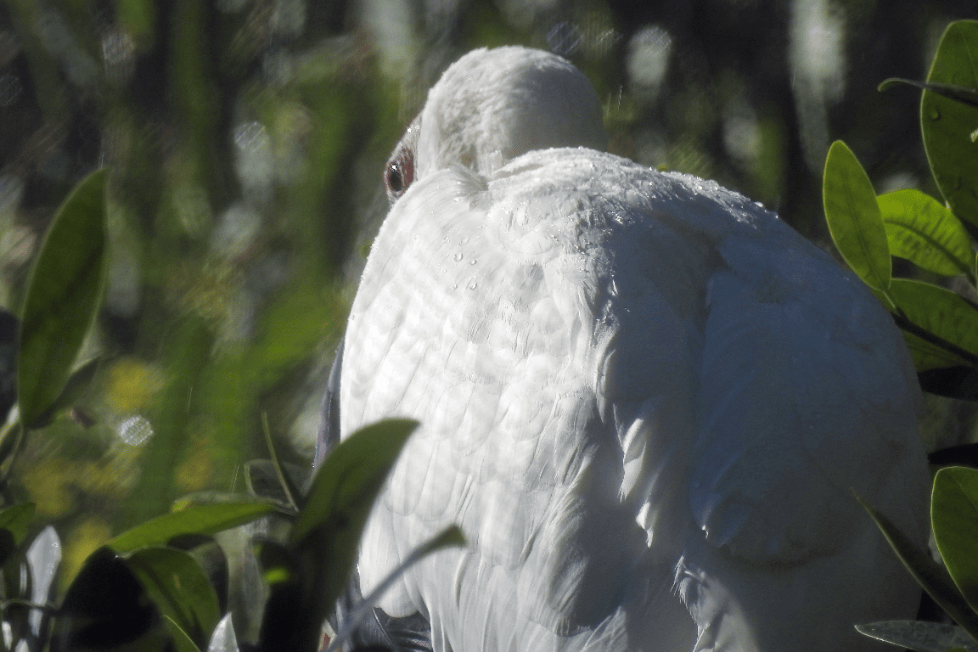
Figure 06. This Milky Stork was seen at the San Diego Zoo in 2017; since then, the zoo’s Milky Storks have joined their species-mates at the zoo’s Safari Park), where they’re participating in a carefully designed captive-breeding program.
By July 3, 2021, the San Diego Union-Tribune reported that the SD Zoo Safari Park was celebrating the hatching of three 1-week-old Milky Storks. Jenny Tibbott, the Safari Park’s senior bird keeper, said, “I see this species extremely declining in the wild, nothing getting better, and then we’re at a point where we look around and they only exist in zoos.” Tibbott noted that the keys to successful reintroduction are a genetically diverse population and assurance of protective policies after reintroduction. “This is, I think, what we should be all about. And this is the heart of why a place like this exists.”
After 2 more years of dedicated birdkeeping, the program had yielded 9 Milky Stork chicks by the end of June, 2023. According to Andrew Stehly, curator of birds at the Safari Park, “San Diego Zoo Wildlife Alliance is the only zoological organization that has successfully bred and raised this species in the last decade.” After giving the chicks a thorough checkup, the keepers band and microchip them, to tell them apart once they’re adults in a flock, then the chicks are swiftly returned to mom and dad.
Observations
The Cornell Lab of Ornithology’s eBird app and website (https://ebird.org/species/milsto1 ) has received 7,071 observations, 1,450 with photos, and 0 with audio recordings. Also, the lab’s Macaulay Library website (https://search.macaulaylibrary.org/catalog?taxonCode=milsto1 ) holds 2,730 photos, 0 audio recordings, and 30 videos of this stork species. In addition, iNaturalist gathers observations with its app and its website (https://www.inaturalist.org/observations?taxon_id=4745 ), which offers 1,118 observations, each including a photograph, audio recording, or video.
References
Milky Stork, Mycteria cinerea
- Elliott, A., E. Garcia, and P. F. D. Boesman (2020). Milky Stork (Mycteria cinerea), version 1.0. In Birds of the World (J. del Hoyo, A. Elliott, J. Sargatal, D. A. Christie, and E. de Juana, Editors). Ithaca, NY: Cornell Lab of Ornithology. https://doi.org/10.2173/bow.milsto1.01; https://birdsoftheworld.org/bow/species/milsto1/cur/introduction
- Milky Stork, Mycteria cinerea, https://animalia.bio/milky-stork
- Milky Stork, Mycteria cinerea, https://avibase.bsc-eoc.org/species.jsp?lang=EN&avibaseid=44B6A65ABD9348F4&sec=lifehistory
- Milky Stork, Mycteria cinerea, https://en.wikipedia.org/wiki/Milky_stork
- Raffles, Thomas Stamford Bingley, https://en.wikipedia.org/wiki/Stamford_Raffles
- Taxa named by Raffles, https://en.wikipedia.org/wiki/Category:Taxa_named_by_Thomas_Stamford_Raffles — 20 taxa, including Azure-rumped Parrot (Tanygnathus sumatranus), Black Hornbill (Anthracoceros malayanus), Black-and-yellow Broadbill (Eurylaimus ochromalus), Calyptomena (genus of 3 species of green broadbills), Crimson Sunbird (Aethopyga siparaja), Green Broadbill (Calyptomena viridis), Malayan Crested Fireback (Lophura rufa), Mountain Imperial Pigeon (Ducula badia); not mentioned are the Raffles’s Malkoha (Rhinortha chlorophaea) or the Milky Stork (Mycteria cinerea), and there may be others. At least two species of birds were named after him: Olive-backed Woodpecker (Dinopium rafflesii) and Red-crowned Barbet (Megalaima rafflesi). Though most of his specimens, journals, and illustrations were lost in a ship fire, quite a few specimens (e.g., Ferruginous Partridge, Lesser Whistling Duck) and illustrations (Blue-backed Parrot, Tanygnathus everetti, Oriental Bay Owl, Phodilus badius) remained and are now in museum collections.
- Raffles, Thomas Stamford Bingley, https://en.wikipedia.org/wiki/Stamford_Raffles
- Milky Stork, Mycteria cinerea, https://www.inaturalist.org/observations?taxon_id=4745
- Milky Stork, Mycteria cinerea, https://www.iucnredlist.org/species/22697651/183200130
- “Ninth Endangered Milky Stork Hatches At San Diego Zoo Safari Park,” https://patch.com/california/san-diego/ninth-endangered-milky-stork-hatches-san-diego-zoo-safari-park . Kristina Houck, Patch Staff, Thu, July 13, 2023, 9:51 am PT.
- “Nine Milky Storks Hatch at San Diego Zoo Safari Park,” https://worldbirds.com/nine-milky-storks-hatch-at-san-diego-zoo-safari-park/ ; Hailey Brophy, July 18, 2023.
- “Only 24 of these storks are in North America. The San Diego Zoo and Safari Park have them,” https://www.latimes.com/california/story/2021-07-03/milky-storks-endangered-san-diego-zoo-and-safari-park , Jonathan Wosen, San Diego Union-Tribune, July 3, 2021 9:50 AM PT
- “San Diego Zoo Safari Park working to save critically endangered milky storks,” https://www.sandiegouniontribune.com/2023/07/14/san-diego-zoo-safari-park-working-to-save-critically-endangered-milky-storks/ , July 14, 2023
- “San Diego Zoo Wildlife Alliance Work to Save Last Milky Storks,” https://www.theanimalfacts.com/san-diego-zoo-wildlife-alliance-work-to-save-last-milky-storks/ . The Animal Facts Editorial Team, July 17, 2023.
Etymology
- Gotch, A. F. [Arthur Frederick]. Birds—Their Latin Names Explained (348 pp.). Poole, Dorset, U.K.: Blandford Press.
- Gruson, Edward S. (1972). Words for Birds: A Lexicon of North American Birds with Biographical Notes (305 pp., including Bibliography, 279–282; Index of Common Names, 283–291; Index of Generic Names, 292–295; Index of Scientific Species Names, 296–303; Index of People for Whom Birds Are Named, 304–305). New York: Quadrangle Books.
- Lederer, Roger, and Carol Burr. (2014). Latin for Bird Lovers: Over 3,000 Bird Names Explored and Explained (224 pages). Portland, OR: Timber Press.
Text and images by Shari Dorantes Hatch. Copyright © 2026. All rights reserved.
Images were recorded at the San Diego Zoo.


Leave a Reply