
Storks: African Openbill
Figure 01. This African Openbill (stork) was photographed at the “Wings of the World” exhibit at the San Diego Zoo’s Safari Park.
This blog is the second of eight about the Ciconiiformes order (Ciconiidae family) of storks. Highlighted here is the distinctive stork species African Openbill, Anastomus lamelligerus. Following are the sections within this blog:
Openbills, Anastomus genus
In 1791, naturalist and zoologist Pierre Joseph Bonnaterre introduced the genus Anastomus, named for its distinctive bill shape, from the ancient Greek anastomoō, meaning “with wide-open mouth.” In addition to Anastomus, Bonnaterre introduced the avian genera Turnix and now-extinct Pinguinus, and 3 bird species (one partridge, two pigeons). The type specimen he observed was the Asian Openbill (Anastomus oscitans; oscitans is Latin for “yawning,” reminiscent of its open bill).
In truth, the Asian species had been introduced in 1783, by physician and naturalist Pieter Boddaert (who named it Ardea oscitans, relating it to herons and other waders). The International Ornithologists’ Union credits Boddaert as the authority for 190 taxa.
The current taxonomy of the Anastomus genus of openbills is as follows: kingdom Animalia, phylum Chordata, class Aves (45 orders of living birds), Superorder Pelecanimorphae, order Ciconiiformes, family Ciconiidae, genus Anastomus, which includes two species: African Openbill, Anastomus lamelligerus; and Asian Openbill, Anastomus oscitans. These two species are each other’s closest living relatives.
Figure 02. This African Openbill (stork) was photographed at the “Wings of the World” exhibit at the San Diego Zoo’s Safari Park.
Both openbill species are large, long-legged waders with distinctively shaped large bills; specifically, the lower mandible curves upward and the upper maxilla curves downward, so that the bill is entirely open between the base and the tip. It took scientists awhile to figure out the usefulness of this gap, with some hypotheses proven wrong. Observers now recognize that the shape of the bill works well to keep spherical snails (and other mollusks) from slipping forward and rolling out of the bill after being caught. A secondary benefit is that the upward curve of the mandible is at the perfect angle for pushing past the operculum (protective muscular “lid”) of a snail, freeing the openbill to extract the snail’s flesh without crushing the shell. It’s thought that the bill shape co-evolved with its specialized diet of snails (and other mollusks). One drawback of their bill, though: They can’t clatter their bills to communicate, as their fellow storks commonly do.
At a glance, observers can distinguish the all-black-plumed African Openbill, with dark bill and legs, from the mostly white-plumed Asian Openbill, with orange legs and bill.
African Openbill, Anastomus lamelligerus
It wasn’t until 1823 that zoologist and authoritative ornithologist Coenraad Jacob Temminck (for whom 20 birds, 13 fish, 2 reptiles, 14 mammals were named) introduced the African Openbill, Anastomus lamelligerus. The second part of its binomial species name, lamelligerus, probably refers to the lamellae (thin platelike structures) that fringe the roof of its bill, which are lacking on the Asian Openbill’s bill. (For more information on lamellae, please see https://bird-brain.org/2026/06/28/flamingos-part-1/#lamellae , which discusses lamellae on the bills of flamingos.) In his career, Temminck identified about 242 taxa, including species (e.g., American Barn Owl, American Oystercatcher, . . . Squatter Pigeon), genera (e.g., Hylophilus greenlet birds, Lamprotornis starlings), and an order (Galliformes, e.g., partridges, pheasants, guineafowl).
The African Openbill has two recognized subspecies:
- Anastomus lamelligerus lamelligerus, distributed throughout much of continental Africa south of the Sahara (see https://ebird.org/map/afrope1 )
- Anastomus lamelligerus madagascariensis, lives on the large African island of Madagascar
Other distinctions between the two openbills are their size and their bills. The smaller Madagascar subspecies has a smaller, thinner bill, with more pronounced lengthwise ridges.
Appearance
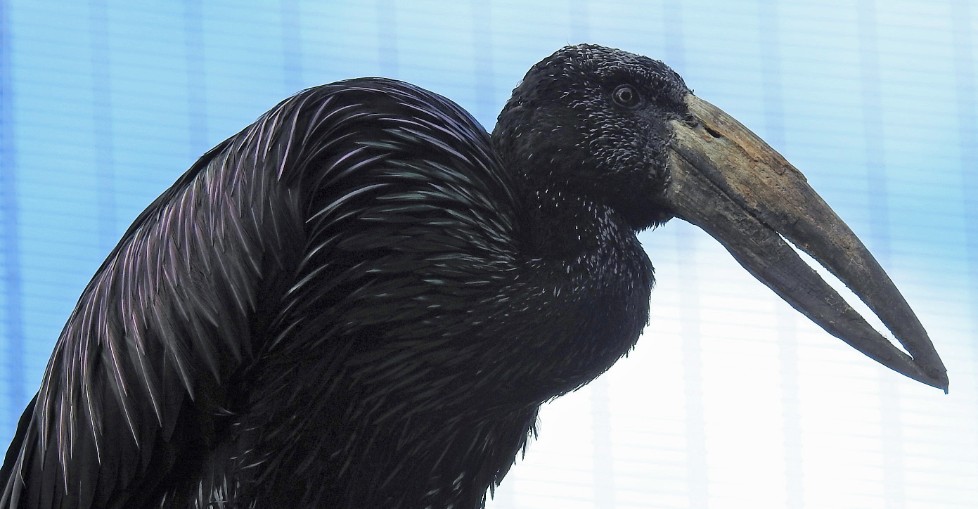
The African Openbill measures about 31–37 inches (80–94 cm) bill to tail, and weighs about 22–49 ounces (1.4–3 pounds; 628–1400 g), with males somewhat larger than females. The bill is about 5.3–7.7 inches (13.5–19.6 cm) long, with males’ bills slightly longer and heavier. The most notable feature of the bill is the gap between the lower mandible and the upper maxilla, which can be ¼ inch (0.6 cm) — quite noticeable from most angles. Both its common name and its scientific name refer to this distinctive bill. As mentioned previously, unlike Asian Openbills, African Openbills have lamellae lining the roof of the upper bill, presumably to help hold the prey to be eaten. When African Openbill chicks hatch, their bills are nearly straight; the curvatures develop as they mature.
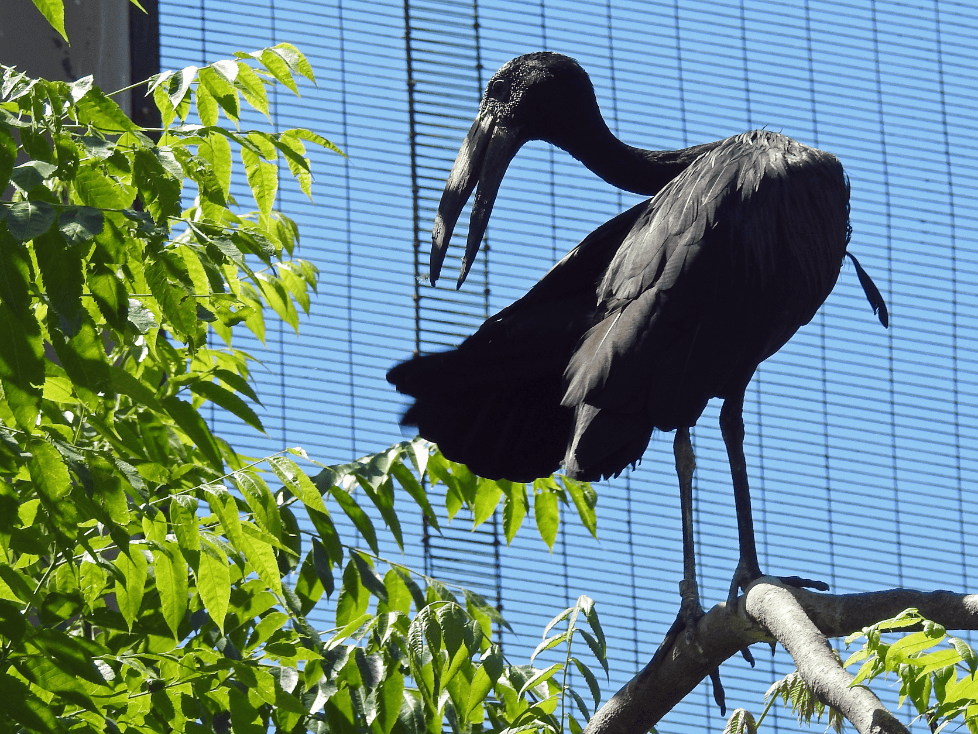
Figure 03. It’s often easy to notice the gap between the upper maxilla and the lower mandible of this African Openbill’s bill. (This African Openbill was photographed at the “Wings of the World” exhibit at the San Diego Zoo’s Safari Park.)
Even the all-black plumage of the African Openbill is distinctive. On its mantle, scapular feathers, wing coverts, and chest, its feathers shimmer in iridescent green, purple, or brown, depending on the angle of the light.
- A bird’s mantle is the top of its back
- The scapular feathers cover the wings from the base to the wing’s bend (“elbow”), on either side of the mantle, similar to shoulders (in humans, the scapula means “shoulder blade”)
- On birds, a covert is one of a set of feathers that covers underlying feathers; covert feathers form a smooth surface, facilitating the flow of air over the wing (wing coverts) or tail (tail coverts); they’re not only on the top surface, but also on the bottom surface (underwing coverts, undertail coverts).
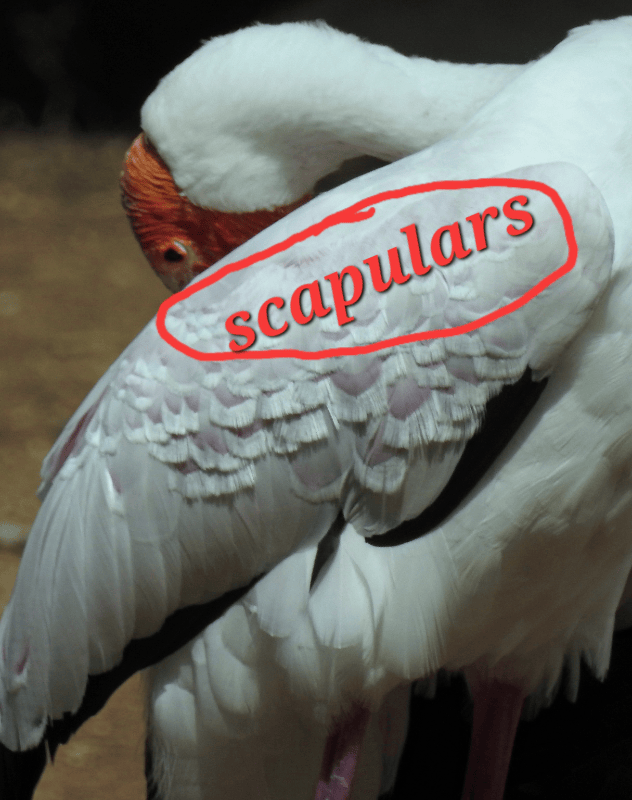
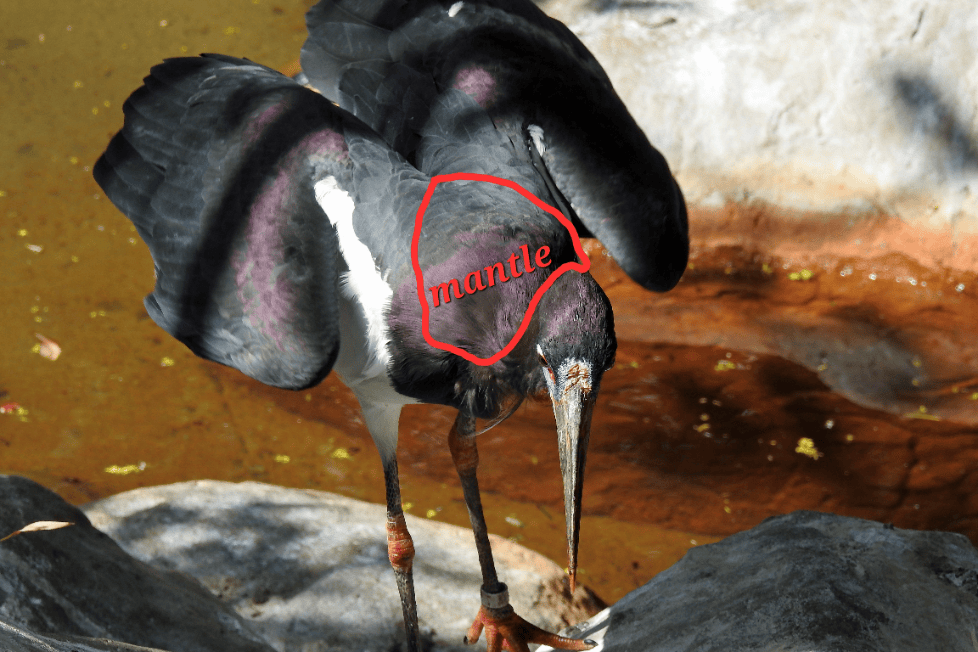
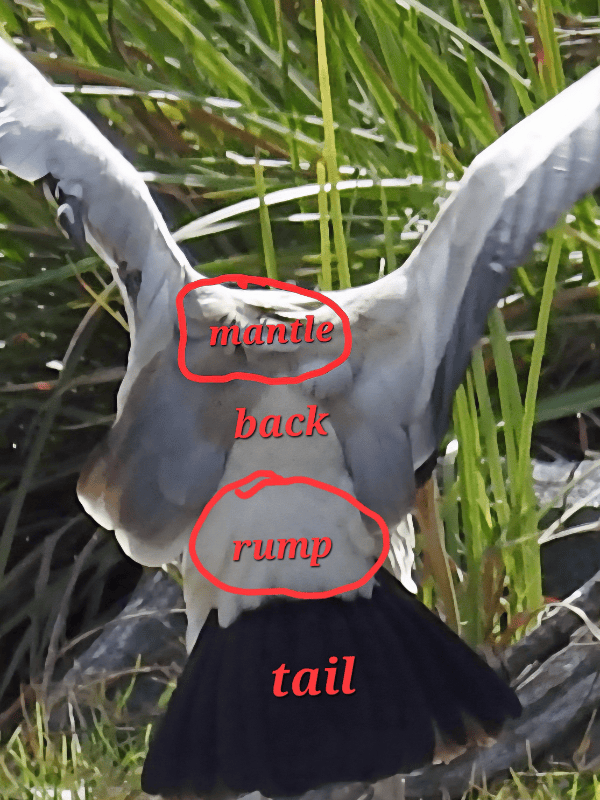
Figure 04. (a) This Yellow-billed Stork’s scapular feathers form the top layer of feathers from the inner edge (base) of the wing to the bend of the wing; (b) this Abdim’s Stork’s mantle is at the top of the back, between the two wings; (c) a rear view of this Yellow-billed Stork shows the parts of its back, from its mantle to its rump and its tail.
The iridescence isn’t due to some special pigment in the feathers. Rather, it arises because the feather’s structure reflects light to iridesce. The feathers that produce this iridescence are like normal feathers at the base — a rachis (central shaft), with veined barbs and barbules extending out from the rachis; this part doesn’t iridesce. Up higher on each feather, however, the structure changes, such that the rachis flattens to a ribbon, from which fine long stems extend laterally on each side. Somehow, the outer layer of the ribbon structure (its cortex, not the inner core, its medulla) reflects light in a way that observers perceive it as iridescence; the coloration of the iridescence may change with the angle of light. (Have you ever noticed that a Mallard male’s head will suddenly shift from bright shiny green to shiny deep purple?) Scientists don’t all agree about how this happens; multiple physical and perceptual processes may interact. Juvenile plumage is duller and browner, with pale tips, compared with that of adults. In keeping with the black theme, this stork’s legs and toes are black, and its eyes are gray, surrounded by bare gray skin.
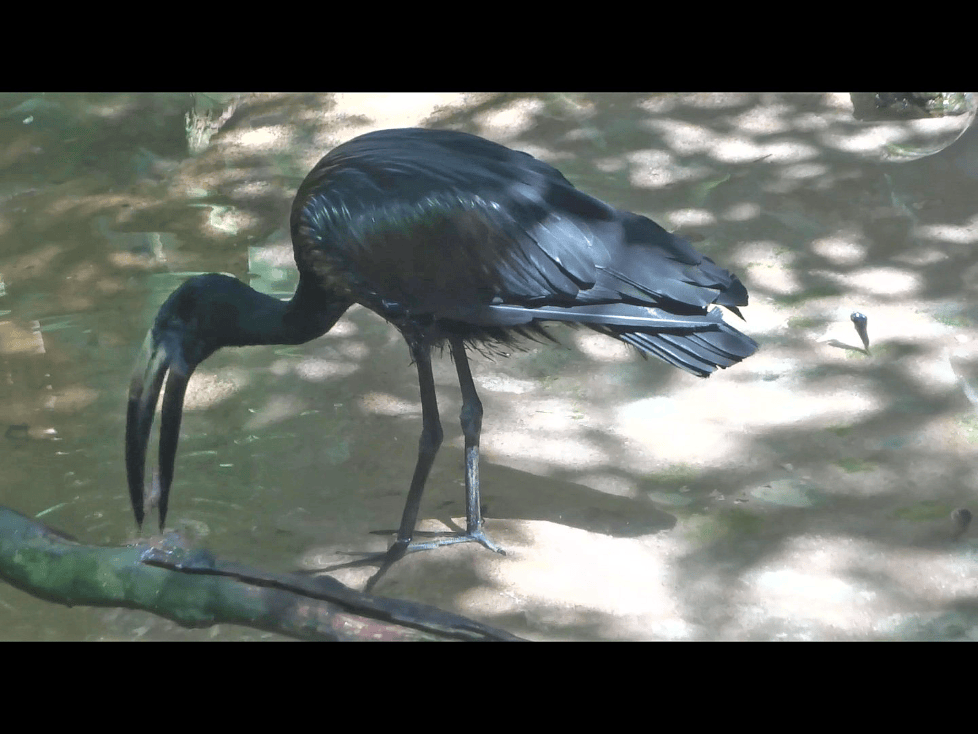
Figure 05. At many angles, the African Openbill’s plumage shimmers in iridescent green, brown, or purple. (This African Openbill was photographed at the “Wings of the World” exhibit at the San Diego Zoo’s Safari Park.)
Vocalizations
Though their bills don’t allow for bill clattering, openbills do make noises, honking or croaking loudly and raucously in their breeding colonies. Their nestlings are noisy, too, incessantly begging for their parents to feed them. If you’d like to listen to an individual honking, chicks begging, or raucous calling by a colony of openbills, please visit https://xeno-canto.org/species/Anastomus-lamelligerus .
Distribution, Habitat, Migration
One subspecies of African Openbills can be found only on the African island of Madagascar. The other (more numerous) subspecies resides in sub-Saharan Africa, where it enjoys wide distribution, especially in the east. It can sometimes be found in western coastal Africa (north of the equator) during the dry season, when flocks descend to take advantage of snail abundance, but it’s uncommon and its population is declining there.
Overall, its distribution can be described as locally abundant but patchy, due to its predilection for freshwater wetland habitats, which can’t be found everywhere. Nonetheless, this openbill may be found in many places with swamps, edges of rivers and lakes, paddyfields, floodplains, or even moist grasslands. The key distinction is whether they can find their favorite freshwater aquatic snails and other mollusks. A second consideration is whether the area has suitable tall trees or shrubs for nesting during breeding season. Toward the end of the wet season and during the dry season, these aquatic snails are abundant, so that’s when these storks are likely to breed. Though most openbills are sedentary (i.e., don’t migrate), especially in southern Africa, weather conditions may prompt some to move in pursuit of more favorable environs.
Food and Foraging
African Openbills specialize in eating aquatic snails, which they usually find in muddy waters or even buried in mud. They also often eat freshwater mussels, and, as needed, they occasionally consume other prey (frogs, crabs, fishes, worms, big insects, and even land-dwelling snails). These storks will forage alone or in large groups; their presence is evidenced by large piles of intact empty snail shells accumulating on the shore.
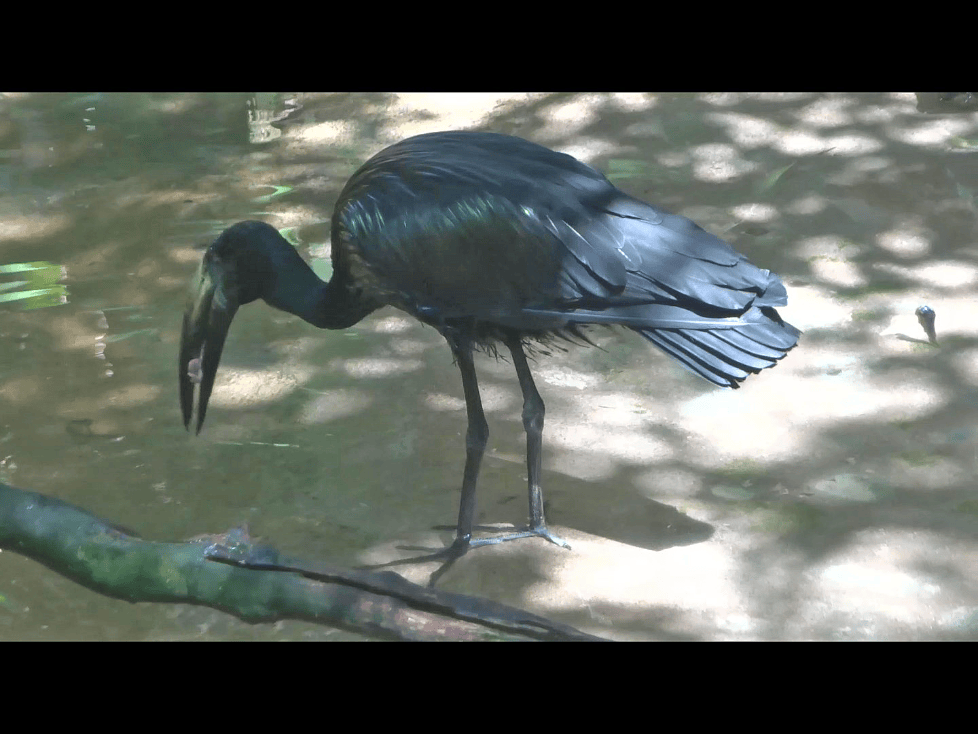
Figure 06. The African Openbill’s curved bill makes it easy to ensure that prey doesn’t slip out and away. (This African Openbill was photographed at the “Wings of the World” exhibit at the San Diego Zoo’s Safari Park.)
When foraging for snails, the African Openbill uses touch to locate its prey (tactilocation), standing or walking slowly in shallow water, repeatedly dipping its partly open bill. When the bill senses prey, it swiftly snaps shut, surrounding the snail with its curved tips. After capturing prey, the openbill carries it to the shore to extract the snail flesh from the shell. At the shore, the openbill holds the snail firmly and uses its lower mandible to slice through the snail’s muscular operculum, designed to keep out potential predators. Oops! After severing the operculum, the openbill may dip the snail underwater and vigorously shake its head to loosen the snail. All the while, the openbill must be careful not to shatter the snail’s fragile shell. After freeing the snail, the openbill discards the intact shell, tosses the whole snail backward into its throat, and swallows it.
When snails aren’t plentiful enough, the openbill will go to its second-choice prey: mussels. These creatures can’t be extracted as easily as snails. Openbills can’t pry open the mussel shell while the living mussel tightly holds its shell shut. Instead, openbills take the living mussels to the shore, piling them up to let the sun’s heat kill them. Dead mussels can’t grip their shells tightly closed, so the openbills can extract the mussels’ flesh.
Though openbills most commonly use touch to sense their prey, they do occasionally spot prey visually, from a perch, then they swoop down to retrieve it. An unusual perch is the back of a hippopotamus. Really. As hippopotamuses wade through aquatic vegetation (e.g., walking on a river bed), they churn up snails clinging to the undersides of aquatic plants. On hippo-back, the openbill will spot the snail, grab it, and take it to the shore to eat it; the openbill may do so repeatedly, as the hippos don’t seem to be bothered by their presence.
Nonsocial Behavior
Openbill storks are lighter and more agile than most other storks, and they’re known for their acrobatics and steep dives. Like other storks, they will soar or glide on thermal air currents or updrafts when available, such as when commuting to and from distant feeding grounds. These storks also use flapping (powered) flight, flapping their wings an average of 200–210 flaps/minute.
Like other storks, they preen, scratch, stretch, and sun themselves (with wings spread). When in the spread-wing posture, they may also use urohidrosis, excreting onto their legs, to thermoregulate (using evaporative cooling). To preen their head feathers, they rub the crown on their backs in a circular motion.
Figure 07. The tip of the open bill can be used for more than catching and eating prey, as this African Openbill is showing. (This African Openbill was photographed at the “Wings of the World” exhibit at the San Diego Zoo’s Safari Park.)
Social Behavior
Flocks of openbills often forage together, but they rarely interact while doing so. Occasionally, a dispute may arise, but when the dominant bird shows a threat display, the subordinate bird typically either shows a submissive display or flies away. During breeding season, there may be more hostile behavior, such as forward thrusts with feathers roused, bill clattering or grabbing, snapping at the intruder. Between partners, courtship displays predominate early in breeding season; other displays are performed at the nest, such as greetings as one partner returns to the nest or copulation bill-clapping.
Breeding
African Openbills are considered to be opportunistic breeders whenever opportune conditions — such as plentiful aquatic snails — arise, regardless of the calendar. They may breed any month of the year, though they’re most likely to do so as the rainy season is ending and the dry season is about to begin — when aquatic snails are most abundant. These openbills form monogamous pairs and breed in colonies of up to 60 pairs — perhaps also including herons, spoonbills, darters, other stork species, or cormorants.
Typically, the males of the colony will pick out a spot on a nesting tree (often located over water) and will display on it. The females will then flit from tree to tree, spot to spot. Surprisingly, at first, the males seem to reject all the females. Eventually, however, he chooses a potential mate and lets her come into his nest spot to copulate. At that point, both partners use sticks and twigs to build a platform nest (about 20 inches, 50 cm wide), lining it with both terrestrial and aquatic plant matter, taking about a week to complete it.
Figure 08. This African Openbill was videorecorded building a nest at the “Wings of the World” exhibit at the San Diego Zoo’s Safari Park.
The female lays 3–4 chalky white oval eggs, which both parents incubate for 25–30 days. The parents occasionally regurgitate water over the eggs, believed to cool them in the heat of the dry season.
When the chicks hatch, they are covered in black down and have straight bills, which only gradually develop their curvature over several years. Both parents feed and care for the nestlings — only mollusks, as the nestlings will refuse to eat anything else — which the parents regurgitate for the nestlings. Nestlings have flexible lower mandibles and loose, elastic gular (throat) skin, so they can readily swallow large food items, despite the chicks’ small size. Their esophagus expands easily to store large amounts of food, in case they have to wait a long time between feedings, as they’re entirely reliant on their parents for food and water — as well as protection from predators. If threatened by an intruder, nestlings rouse their feathers, hold their wings out to the side, and make high-pitched screams. Nestlings also beg their parents for food, and they guard their food by holding their wings over their heads while eating. Nestlings preen, scratch, and stretch, and they also do spread-wing sunning and urohidrosis, just like their parents. At about 50–55 days after hatching, the nestlings fledge and leave the parents’ nest. It’s thought that African Openbill pairs successfully rear just one youngster per year.
Conservation Status and Threats
Though the eggs of African Openbills are often preyed on, adults have few predators. Humans are the main threats to this species. Threats include habitat loss and disturbances of their foraging grounds, as well as poaching (mostly for meat, but also for uses in traditional medicine), pollution due to antimalarial (anti-mosquito) pesticides, and entanglement in fishing lines.
Though the African Openbill population is believed to be declining globally, its IUCN Red List conservation status is LC, Least Concern. Some areas have stable populations, and it’s common in suitable habitat in many locations throughout its range. Even so, its relatively low reproductive success and the effects of human activities remain a concern.
Observations
The Cornell Lab of Ornithology’s eBird app and website (https://ebird.org/species/afrope1 ) has received 38,690 observations, 3,594 with photos, and 6 with audio recordings. Also, the lab’s Macaulay Library website (https://search.macaulaylibrary.org/catalog?taxonCode=afrope1 ) holds 5,715 photos, 6 audio recordings, and 49 videos of this stork species.
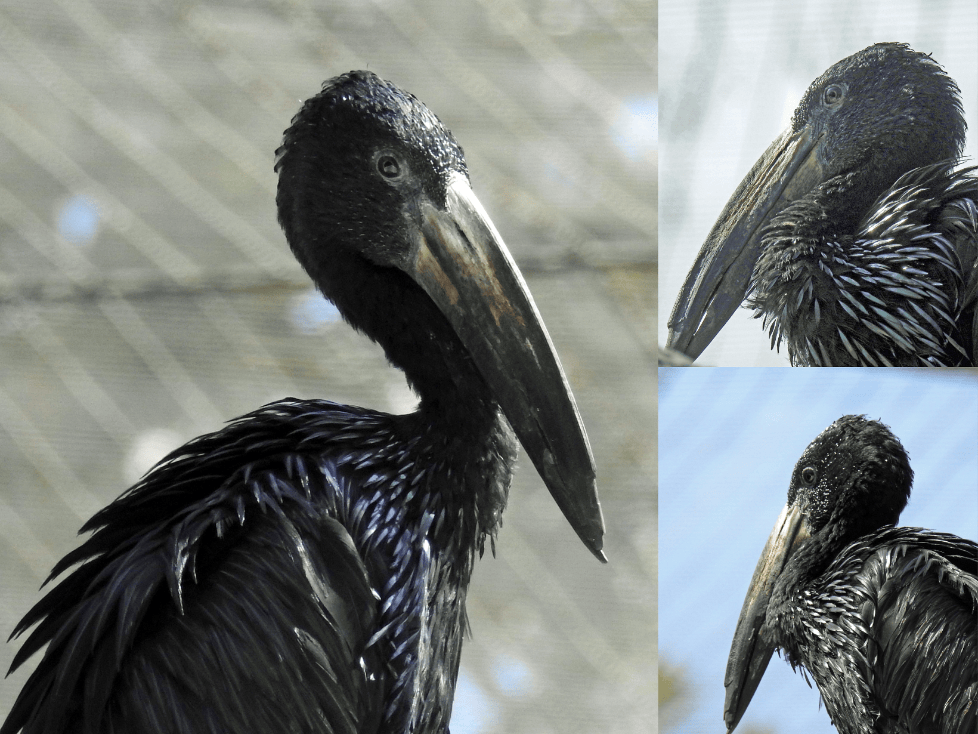
Figure 09. These African Openbills were photographed at the “Wings of the World” exhibit at the San Diego Zoo’s Safari Park.
References
African Openbill (Anastomus lamelligerus)
- Elliott, A., E. Garcia, and P. F. D. Boesman (2020). African Openbill (Anastomus lamelligerus), version 1.0. In Birds of the World (J. del Hoyo, A. Elliott, J. Sargatal, D. A. Christie, and E. de Juana, Editors). Ithaca, NY: Cornell Lab of Ornithology. https://doi.org/10.2173/bow.afrope1.01 ; https://birdsoftheworld.org/bow/species/afrope1/cur/introduction
- Anastomus genus, openbills, https://en.wikipedia.org/wiki/Openbill_stork
- African Openbill, https://en.wikipedia.org/wiki/African_openbill
- Bonnaterre, Pierre Joseph, zoologist and naturalist, https://en.wikipedia.org/wiki/Pierre_Joseph_Bonnaterre
- Boddaert, physician and naturalist Pieter, https://en.wikipedia.org/wiki/Pieter_Boddaert
Etymology
- Gotch, A. F. [Arthur Frederick]. Birds—Their Latin Names Explained (348 pp.). Poole, Dorset, U.K.: Blandford Press.
- Gruson, Edward S. (1972). Words for Birds: A Lexicon of North American Birds with Biographical Notes (305 pp., including Bibliography, 279–282; Index of Common Names, 283–291; Index of Generic Names, 292–295; Index of Scientific Species Names, 296–303; Index of People for Whom Birds Are Named, 304–305). New York: Quadrangle Books.
- Lederer, Roger, and Carol Burr. (2014). Latin for Bird Lovers: Over 3,000 Bird Names Explored and Explained (224 pages). Portland, OR: Timber Press.
Text and images by Shari Dorantes Hatch. Copyright © 2026. All rights reserved.
Images were recorded in at the San Diego Zoo’s Safari Park.


Leave a Reply