
The Point of the Needle: Why Sewing Matters, Part 1
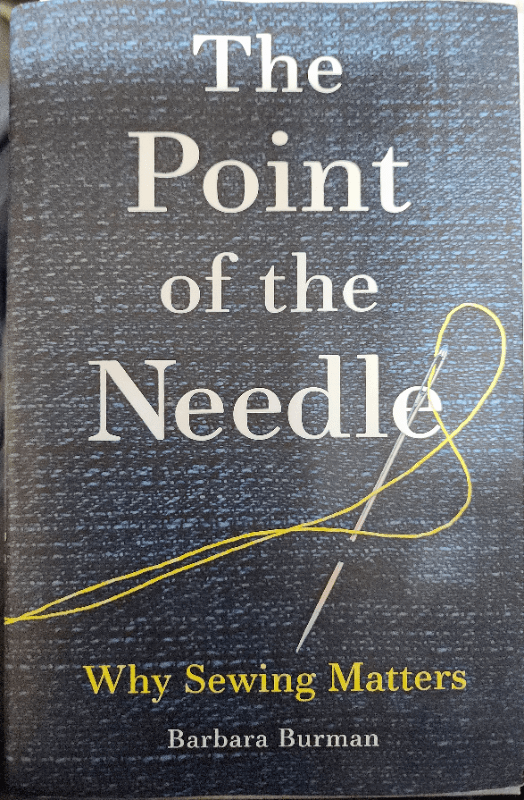
Burman, Barbara. (2023). The Point of the Needle: Why Sewing Matters. London, UK: Reaktion Books Ltd.
This is the first of three blogs about Barbara Burman’s book, The Point of the Needle: Why Sewing Matters (2023). This blog discusses her Introduction, in which she lays out her plan for her book; Chapter 1, Hands, Hearts and Needles, about the experience of sewing; Chapter 2, Learning to Sew; and Chapter 3, A Material World, about fabric used for sewing.
Introduction, 7–19
In North America, 9–11 million home quilters spend $4.2 billion on quilting. “Home sewing and crafting are enjoying a lively renaissance” (p. 7). Even before the COVID-19 lockdowns, the sales of sewing machines had been rising, but the lockdown prompted a surge in sales.
“The manufacturing of textiles and clothing constitutes one of the world’s largest industries with the fourth heaviest environmental impact” (p. 7). Around the world, about 60–75 million workers — mostly females — sew our clothes. Fast-fashion trends mean that wealthy nations rapidly consume and then discard cheap factory-made clothes. Inexpensive clothing is often discarded after it’s worn just 7–8 times.
Sewing is undervalued largely because it has mostly been done by women. Ever since factory-made clothes have become readily available, hand sewing in the home has been even less valuable, with hand-sewn items often disparaged as amateurishly made, unfashionable, even dowdy.
Another reason hand sewing is underappreciated is because it is made by hand, rather than originating from the mind. Most work with the hands is valued less than work with the mind. Even sculpture has been valued less than painting, as sculpture involves more physical labor than painting.
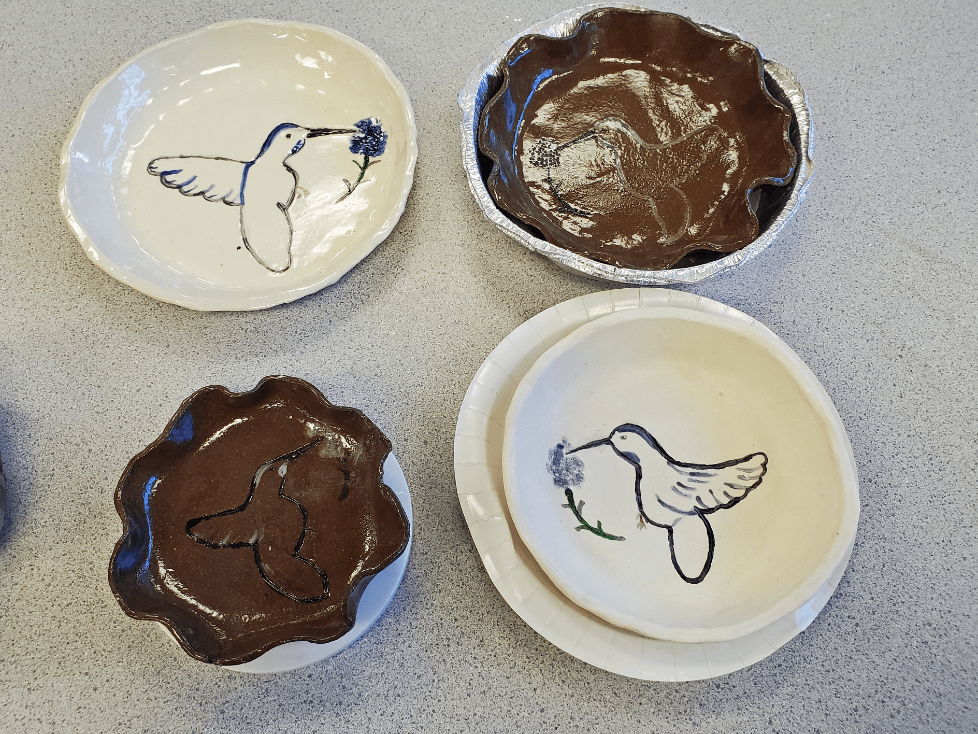
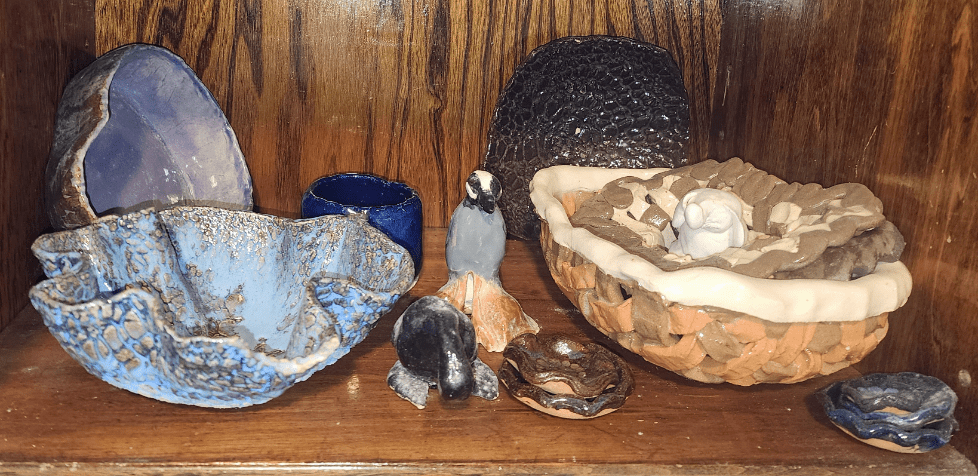
Figure i-1. Ceramics are often under-appreciated as simply a “craft,” rather than “true art.” San Diego Community College offers free ceramics classes for old folks (I think the cutoff might be 60 years), so for several years I took advantage of this opportunity. I’m not under the mistaken impression that my pieces are artistic, but I sure had fun making them.
Studies show that sewing and many other hand crafts substantially contribute to improvements in health and well-being. In addition, many home seamsters are responding to the appalling social injustices and ecological devastation caused by fast-fashion clothing. Home seamsters are buying naturally sustainable fabrics and are upcycling old clothes — their own or those from a second-hand source — to create original clothes and other textiles.
The term seamstress doesn’t apply well to both men and women who sew, and sewer has undesirable connotations, so sewist and seamster, and sometimes the more generic stitcher, are increasingly used as less sexist terms. For no particular reason, I prefer seamster, which I’ll use in most instances in these blogs about Burman’s book.
Burman acknowledges the skill, creativity, and effort that underlie quilting, tailoring, embroidery, appliqué, and other creative uses of sewing. In this book, however, she turns her attention to what she calls unadorned “plain or structural” sewing — the making of clothes (or linens) to be worn (or used) by the seamster or by those to whom she (or sometimes he) wishes to give them. She further underscores that the reader will not find how-to tips for seamsters in her book. Instead, she focuses on the history of the plain sewing of clothing, quoting a historian, that the “history of needlework and textiles is deliciously complex” (p. 13).
She gathered much of the information for this book by garnering oral histories from living seamsters (some of them in their 80s and 90s at the time). For some of them, their motivation to sew stemmed from being “not a standard body size” or from enjoying “the pleasures of choosing their own styles and fabrics” or from “applying and advancing their [own] skills” (p. 14). Oral histories from a second group of seamsters reported greater emphasis on their wish to reduce their consumption of ready-made factory-produced goods. The age ranges for this second group were 5–99 years of age. In addition to these fresh oral histories, Burman drew on historical research; though sewing is older than human society, the written record on sewing is nearly nonexistent before the 1700s or so.
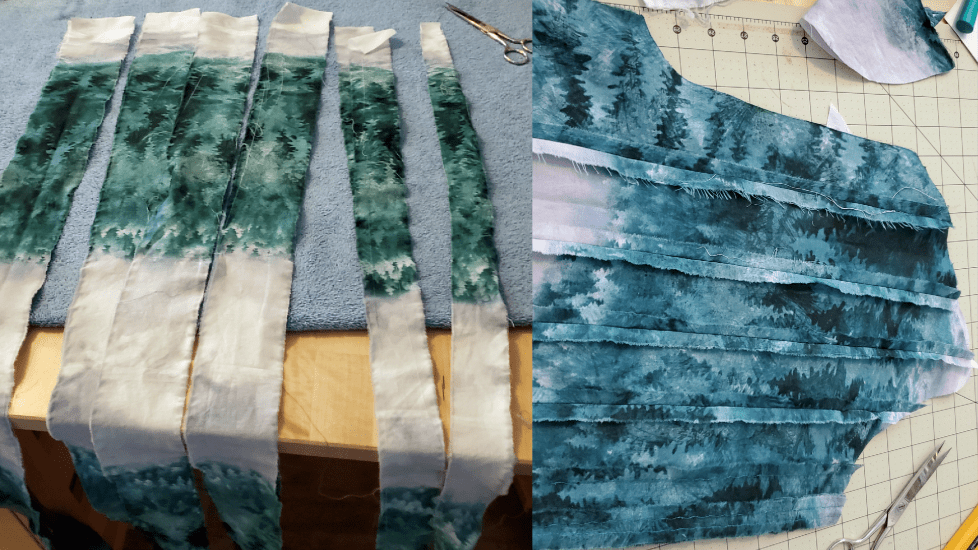
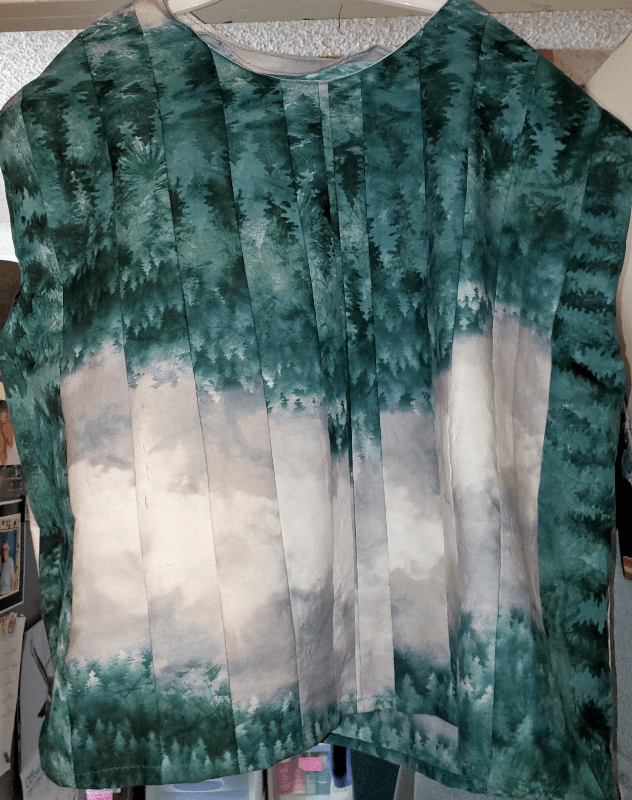
Figure i-2. A dear friend gave me some lovely fabric, but I had a tough time figuring out what to do with it until I decided to cut it into strips, arrange it in a bargello-inspired pattern, and stitch it together as a top. It’s now my fanciest top. (See https://en.wikipedia.org/wiki/Bargello_(needlework) about bargello needlepoint embroidery.)
Burman organized her book as an exploration of the experience of using hands and brain to sew, learning how to sew, the fabric and the sewing tools needed for sewing, the varied uses for sewing, and mending or recycling textiles, especially clothes.
She closes this chapter by noting how her own father appreciated her mother’s handiwork as a seamster who sewed for her family, including the author and her three brothers.
1 Hands, Hearts and Needles, 20–44
Nature offers multiple examples of animals doing “crafting”:
- birds weaving exquisitely complex nests
Figure 01-1. Using just its bill, this Taveta Golden Weaver is weaving a complex nest for raising its young; few humans could rival this nest’s exquisite design, even when using hands with opposable thumbs. Photographed at the San Diego Zoo’s Africa Rocks Aviary.
- parasitoid wasps “felting”
- Australian green ant sticking leaves together to make a nest
- Asian Common Tailorbird, “working alone, uses its sharp beak to pierce holes in leaves and systematically pull through plant fibres [sic], insect silk or even stolen household thread to stitch them together to form a sheltered cradle, in which it then builds its nest” (p. 20).
Evidence shows that humans have been sewing longer than we have been writing. Having opposable thumbs makes crafting easier. The human brain dedicates a huge amount of space to sensing touch, through which we “know, explore, frame, express and remember our world” (p. 21).
Crafters revel in the quietude and solitude of crafting, and in the feelings of being productive.
Burman misquotes the Shaker motto, “Put your hands to work and hearts to God,” saying instead “Hands to work and eyes to God,” and she inaccurately attributes it to the Religious Society of Friends (p. 23).
“Stitching by hand is a process that employs the simplest of tools that need no further mediation to achieve functional stitches. The fingers grip and push a threaded needle through the cloth and pull it out again at an appropriate distance from the point of entry and repeat that as often as required” (p. 24). There’s nothing mysterious or tricky about the process. It may be the simplest of crafts.
“It is curiously difficult to sew standing up . . . working without overt muscularity in more or less silent concentration,” more like a writer or an illustrator than like many other crafters (p. 25).
“It invokes skill and resourcefulness [and can] signal a desirable immersion in slowness” (p. 25).
To Burman, sewing is “one of the purest connections imaginable between hand and tool” (p. 26). “This immediacy of contact between hand, cloth and needle lies at the root of the pleasure and absorption so many ascribe to sewing, something akin to hand knitting” (p. 26).
In contrast, the sewing machine requires coordination of hand, eye, and foot to control the speed and the direction of the stitching. Many machine stitchers feel the same immediacy of connection between brain and (machine) needle. However, when first learning to use a sewing machine, the user may be befuddled by “the number of decisions and actions needed to thread it up and set the required stitch properties and tension even before stitching begins” (p. 27). The coordination of hand, eye, and foot must be learned.
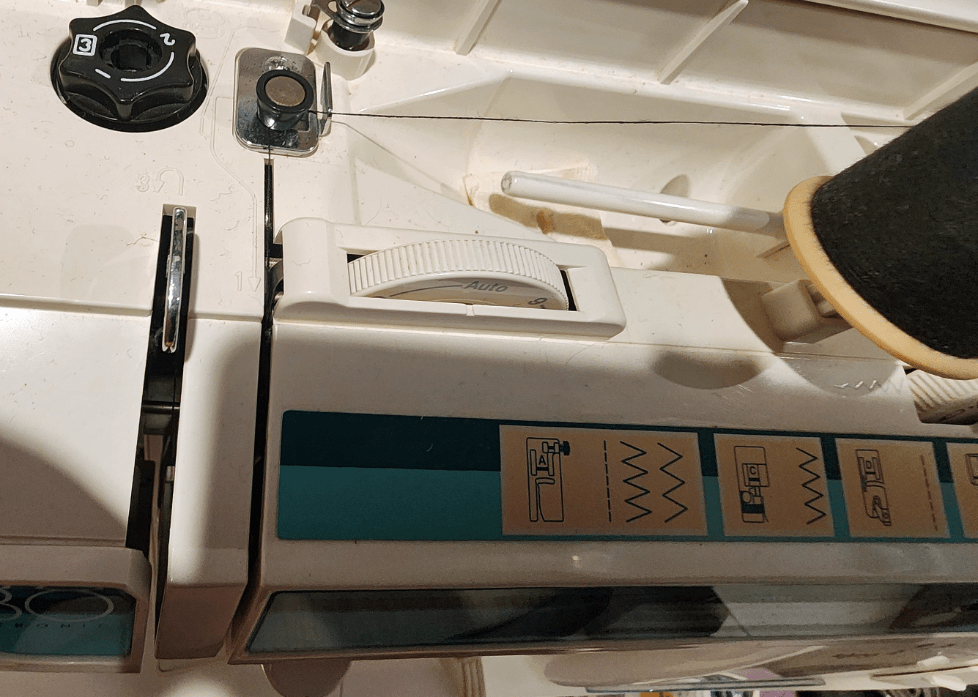
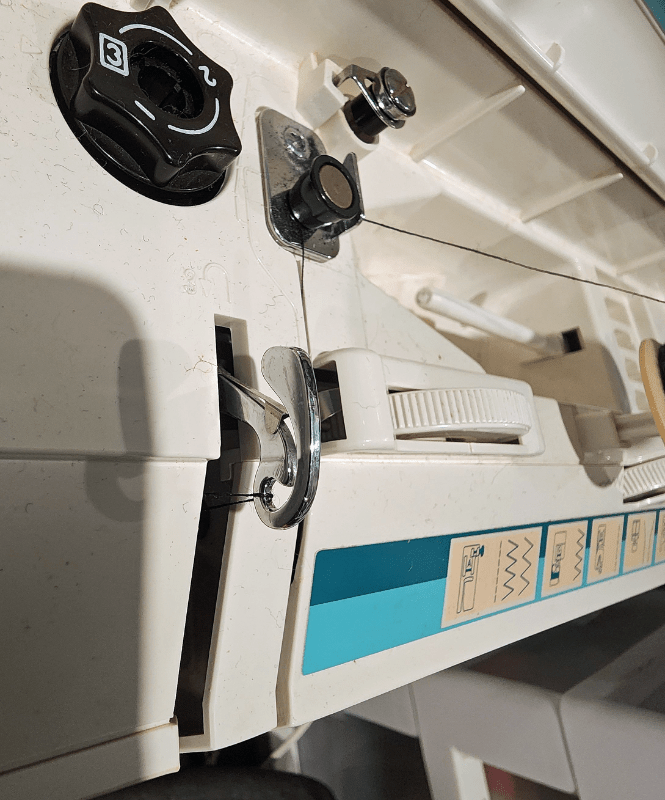
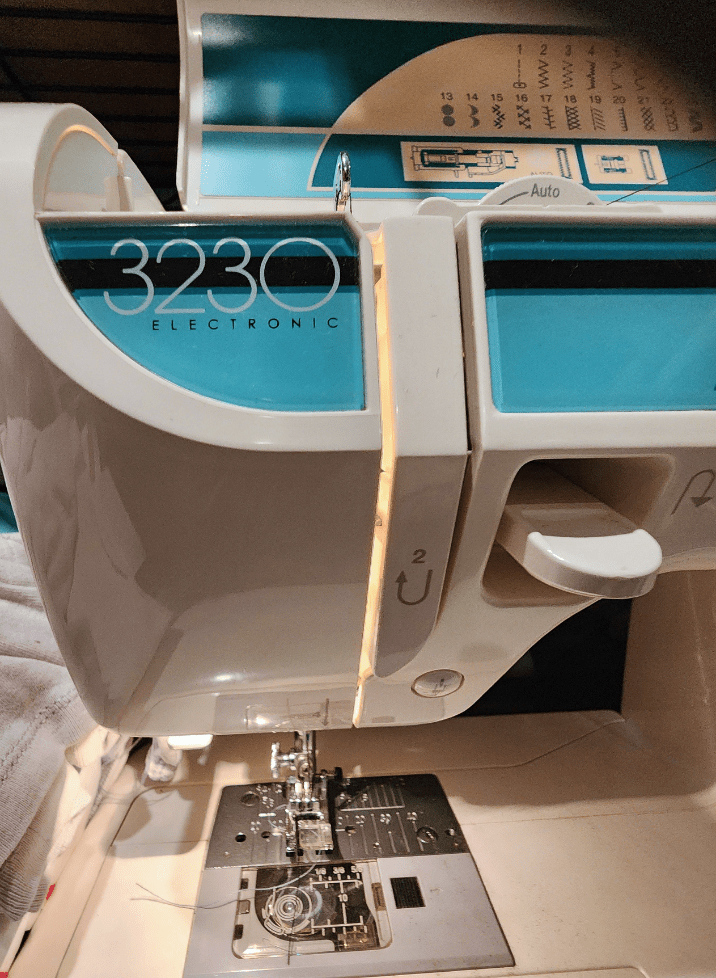
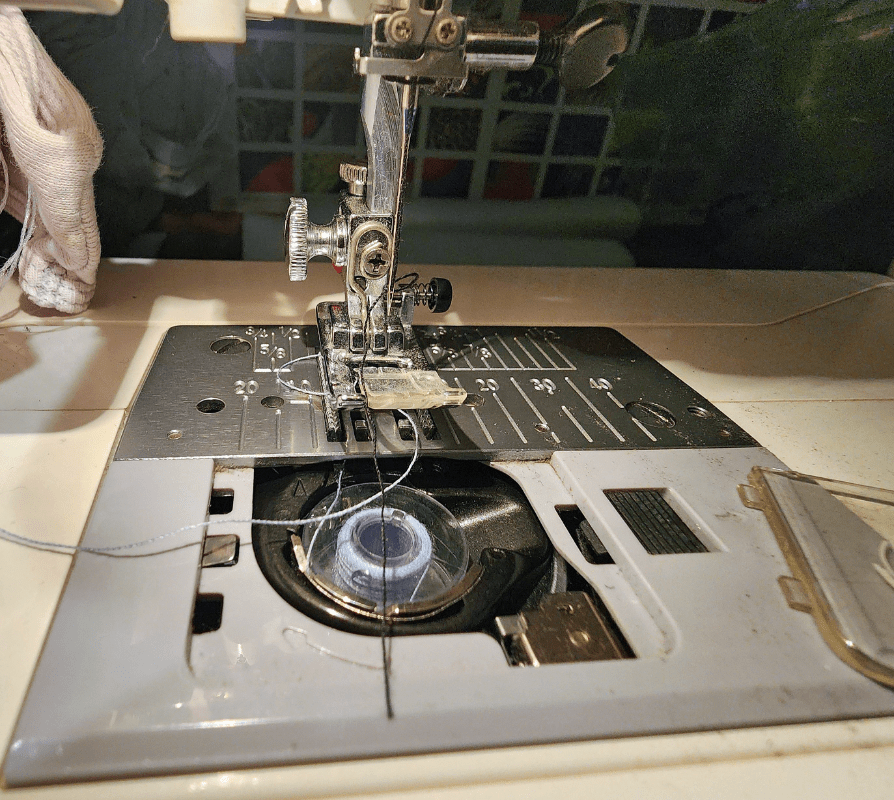
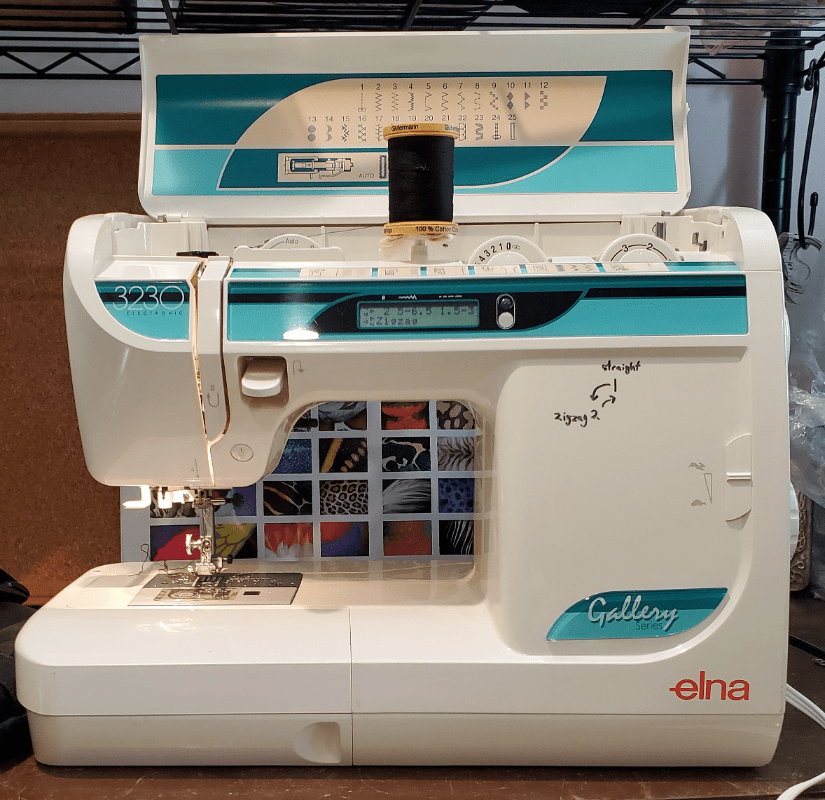
Figure 01-2. When preparing to sew with a machine, the seamster first has to set up the machine for sewing, threading through the various parts from spool through needle, then threading the bobbin and fiddling with raising the bobbin thread through a hole beneath the needle. Then the seamster must choose a stitch length and width (if not a straight stitch), as well as the machine’s tension — how tightly the stitches will pull from the needle and from the bobbin. That’s before turning on the machine or sewing a single stitch.
Burman exalts the superlative capabilities of the human hand, especially its mastery of infinitely various tools.
Our knowledge of our hands is mediated by our skin — our largest bodily organ; thin, expansive, flexible, self-renewing, both protective barrier and means of communication, it exquisitely sheaths the bones, cartilage, muscles, blood vessels, and nerves (which link to brain receptors for sensation).
Our opposable thumb and forefinger form a partnership for precisely handling needle and thread, occasionally bolstered by the second finger for added oomph with thick fabrics. The sewing hand is a thinking hand, not only for plying thread to fabric, but also to detect the subtle qualities of the fabric in hand.
Unfortunately, most sewing tools (e.g., scissors) and instructions are designed for right-handed seamsters, so left-handed seamsters are often at a disadvantage. Other prospective seamsters simply don’t readily become comfortable with sewing and sewing tools. Despite their efforts, it doesn’t come to feel natural to stitch.
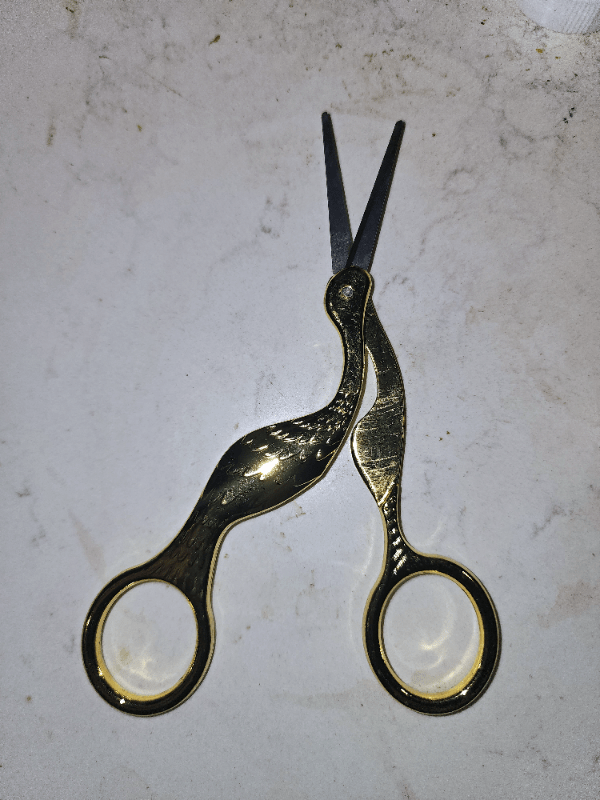
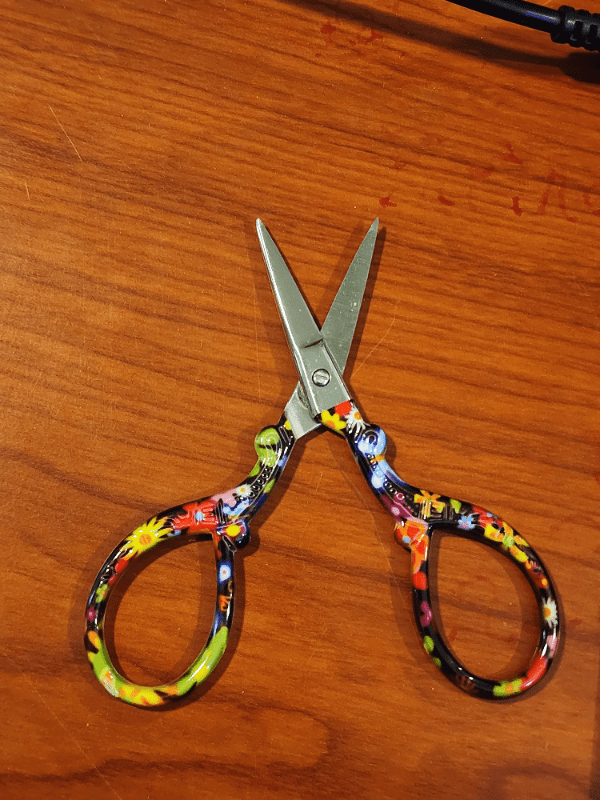
Figure 01-3. I had to special-order embroidery scissors (left) for my left-handed granddaughter (which took 2 weeks to arrive), but when ordering embroidery scissors (right) as holiday gifts for my many right-handed cousins, I was able to choose among myriad beautiful scissors (which arrived in numerous locations the next day).
Even experienced stitchers may express their emotions through their stitching: hasty, uneven, sloppy, erratic, too tight or too loose; or careful, perfectly even, deliberate; or fluent, effortless. Stitches reflect the mental state of the stitcher, as well as her (usually her) skill and experience.
Psychologist Sherry Turkle has said, “We think with the objects we love; we love the objects we think with” (p. 31). Stitchers have a heightened engagement with their tools while stitching. Often, particular tools are imbued with feelings of nostalgia.
Many seamsters enjoy social crafting, such as in workshops, classes, coursework, informal or formal get-togethers, and so on.
Many stitchers have a sense of flow while sewing, a be-here-now total engagement with their craft. Many who sew find it comforting, a source of solace, even recuperative. The repetitive nature of the needlework may be soothing. When sewing alone, it can offer time for quiet reflection; when sewing with others, it can ease conviviality while lessening the pressure to converse.
Some seamsters take pleasure in providing a useful service for others and enjoy being able to do so. On the other hand, those for whom it has been an ever-present chore — such as an ever-growing basket full of mending for a large family — find sewing a source of misery and frustration. Some who enjoy sewing (or quilting) may also feel guilty for taking time away from family or from other pursuits.
Some seamsters also point to the added benefits of sewing, such as improving fine-motor skills, hand–eye coordination, and mental agility, while reducing anxiety and releasing dopamine. Some therapists even recommend sewing as a form of art or craft therapy.
Seamwork Purpose (an online membership group encouraging home sewing) is forthright about its values and makes strong claims for what sewing can mean.
“‘It is a way to infuse creativity deeply into our everyday lives and feel connected to who we are and our impact on the world. We each have a limited amount of time in our lives. . . . But we can choose what to do with it. We can make a choice to place our attention on the acts of creativity that fill us up and bring beauty into our lives. . . . We can connect around our passion, encouraging each other to become more thoughtful, aware, and self-sustaining.’” — Seamwork Purpose, in Burman, p. 40
Another delight of sewing is its intrinsic tangibility in a world that increasingly relies on the virtual, intangible, ephemeral.
Fabrics have widely various characteristics — natural/synthetic, heavy/light, thick/thin, silky/coarse, drapey/stiff, and so on.
Sewing can also be a connection with family, friends, schoolmates. The paraphernalia of sewing can also affirm a connection with others, past or present.
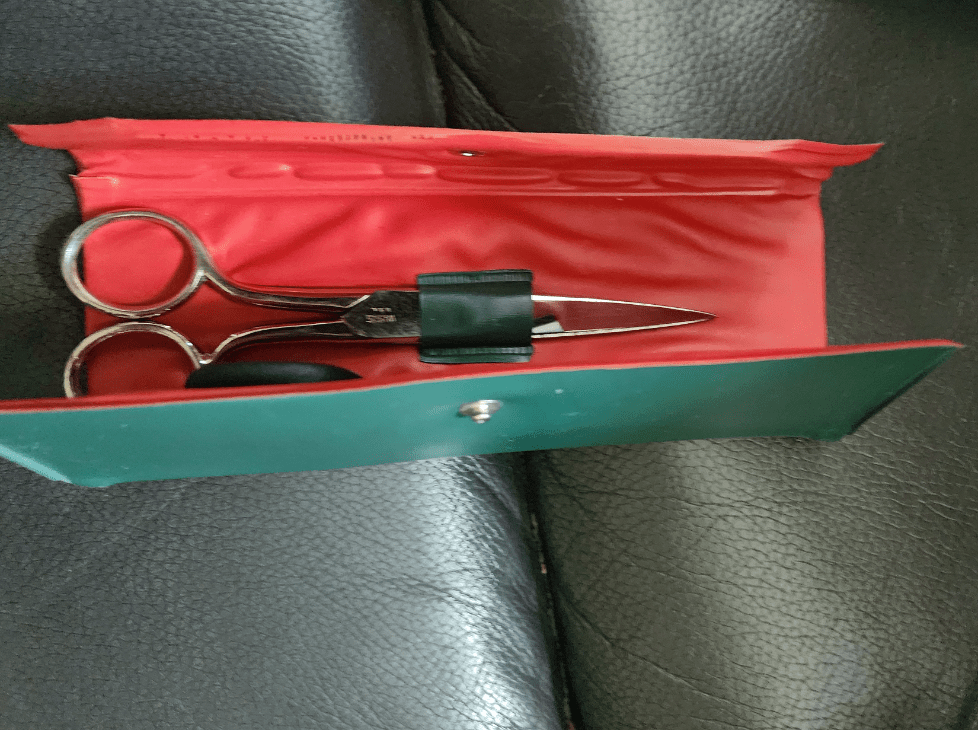
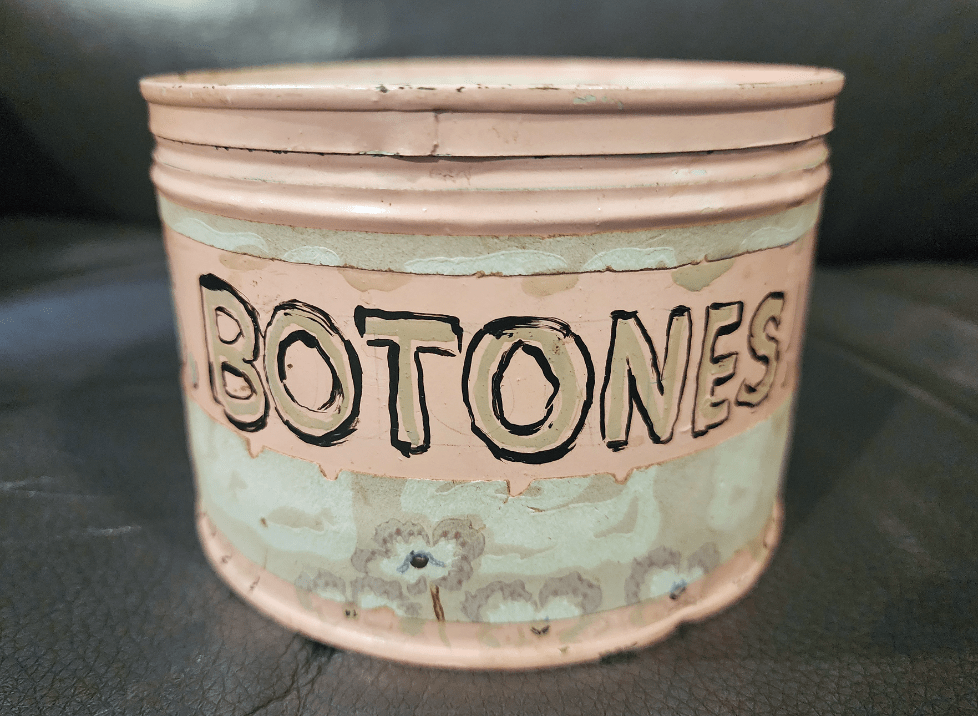
Figure 01-4. I still cherish my mom’s sewing scissors in this red-and-green plastic case, and even now, when I see her “Botones” tin, I feel a visceral delight recalling how I reveled in running my child-sized hands through those buttons. If you love a seamster, her (or his) sewing tools and supplies have special meaning.
“Making things with needle and thread can bring a satisfying convergence of past, present and future. . . . It draws on that intangible inner urge to make” (p. 44).
2 Learning to Sew, 45–74
Learning to sew is most rewarding when taught by encouraging teachers, using age-appropriate methods and materials. Typically, children are eager to learn new things if taught in an engaging way. When a child learns to sew, the child gains a valuable skill that can be used across a lifetime.
At one time, families almost universally taught young girls to sew in the home. When education for girls was formalized, sewing was often taught at school, as well. Unfortunately, the teaching of sewing was often associated with an emphasis on practical skills over intellectual knowledge. This duality led to a depreciation of sewing as mere practicality, not as a worthy cognitive enterprise.
Socioeconomic class distinctions helped to perpetuate this duality, as wealthy girls and women handed off practical sewing tasks, such as mending clothing and linens, to impoverished servant women and girls. For centuries, through World War II, wealthy families hired professional dressmakers to live with a family long enough to measure all the family members, then cut and sew tailored garments for each member of the family.
In most middle-class households, however, mothers, aunts, neighbors, and friends would sew clothing and linens for their families, perhaps as a social activity, perhaps in solitude. Girls grew up observing, then participating in these sewing activities. Adults might help a girl to make clothes or accessories for her dolls, using a running stitch, then maybe a back stitch (for seams).
As the girls gained skill and experience, they might learn additional stitches, making more complex clothes, with sleeves, collars, cuffs, buttonholes, hems, gathered skirts and ruffles, waistbands, casings for drawstrings. The complexity of the clothing increased with the girl’s skill.
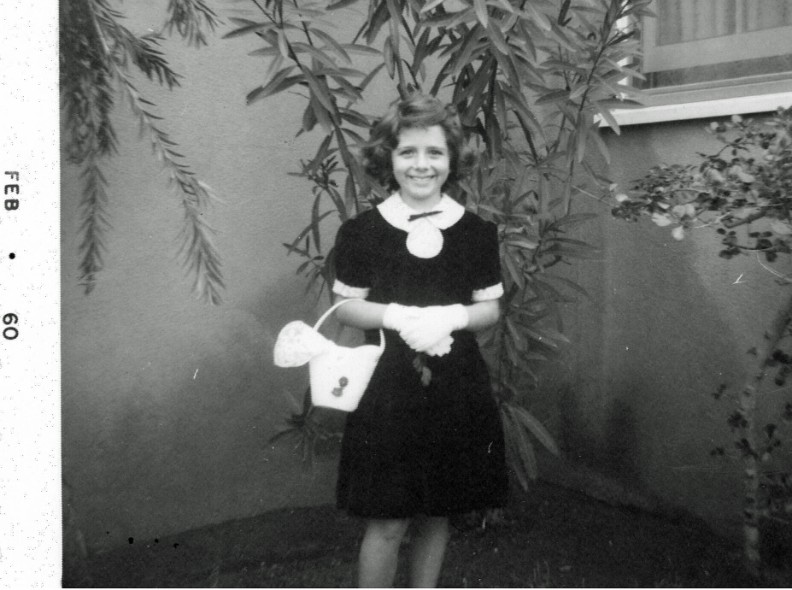
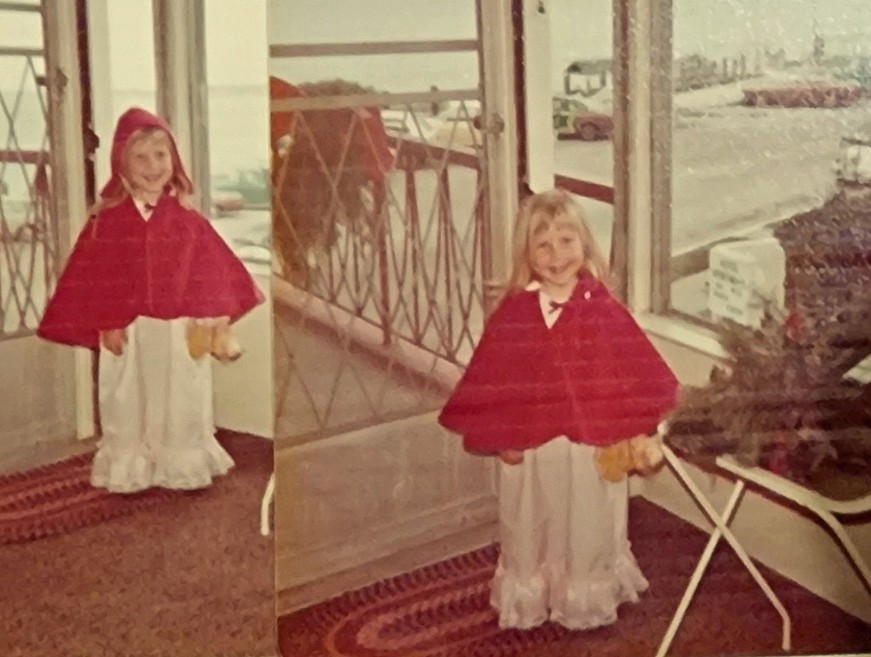
Figure 02. (left) When I was in elementary school, girls were required to wear dresses, and almost all of my dresses were made for me by my father’s mother, who was a superlative dressmaker. Sadly, I didn’t appreciate the beautifully crafted dresses she made, pining instead to wear brightly colorful store-bought dresses that were more fashionable at that time. (right) By the time my daughter was 4 years old, my grandmother had slowed down in her sewing, but she had brightened up her fabric choices, sewing a Little Red Riding Hood cape perfect for a little girl.
In low-income households, sewing was mostly focused on mending and on repurposing old garments and linens for new uses. Foremost was the need to keep the main wage earner clothed, then the other members of the household. The repurposing might involve re-sizing garments from an older child for a younger one, but it might also mean repurposing garments obtained from family or friends, charities, or second-hand retailers. In some households, one or more of the women might be engaged in sewing as paid labor, and their children grew up observing and eventually perhaps participating in sewing as an occupation.
For some children, helping with the household’s sewing tasks meant forgoing hours or days from school — or forgoing it altogether. In previous centuries, schools often taught children utilitarian sewing, such as mending and repurposing. Often, students weren’t given the satisfaction of making something that they could keep for themselves. Rarely did being obliged to sew for others — using poor-quality tools, in cramped, dingy rooms — lead to a lifelong love of sewing, but it may have led to an ability to sew whenever it was needed. When children are allowed to sew something of their own, to keep for themselves, they’re more likely to enjoy sewing.
Ever since ready-made clothing and linens have become more affordable than the wherewithal to make clothing or linens, those who do not want to sew clothing or linens will have little need to do so. Considering also the second-hand market for clothing and linens, sewing is optional for most people. On the other hand, people with specialized needs are still motivated to sew distinctive garments (e.g., a person with physical disabilities, a man wishing to wear women’s clothing, a person with out-of-the-mainstream body size or body proportions, someone with a distinctive sense of personal fashion). In addition, many people continue to sew because they enjoy sewing.
Children (boys and girls) who grow up in households with an adult who sews often will learn to sew, almost without any awareness of learning. Often, sewing-related books, magazines, and so on also permeate the sewing-friendly environment. “In those families where sewing is second nature, it can flow across generations” (p. 52).
The frequency of hand sewing and even of mending has declined over time. A 2017 British survey found that a third of respondents never learned to sew at all, a quarter can’t sew to replace a button, but more than half of respondents — men and women — said they would like to learn how to sew. Up to the 1970s, most girls — but few boys — learned the basics of how to sew in school “home economics” classes. About the time public educators were adding computer skills to their curricula, they were de-emphasizing various hand-craft skills, including sewing, woodshop, and others.
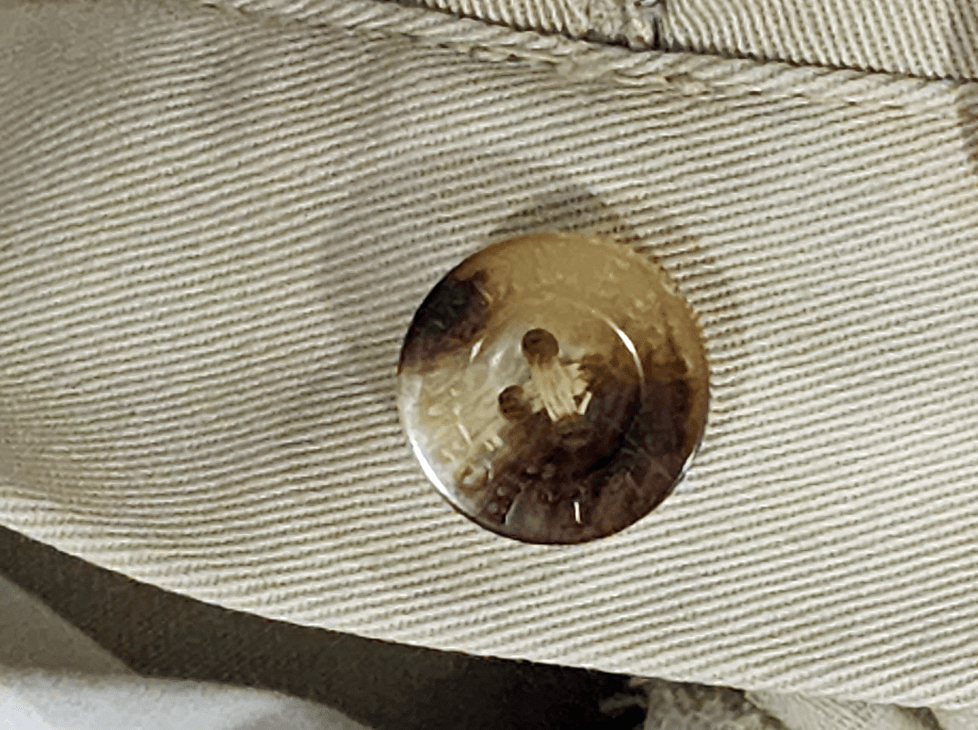
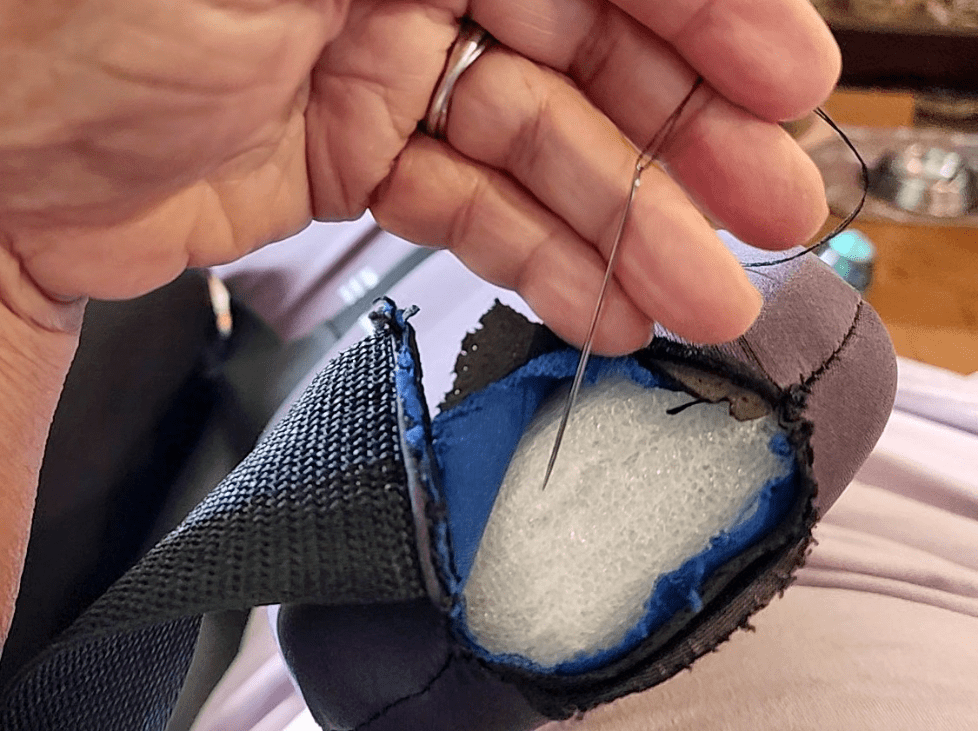
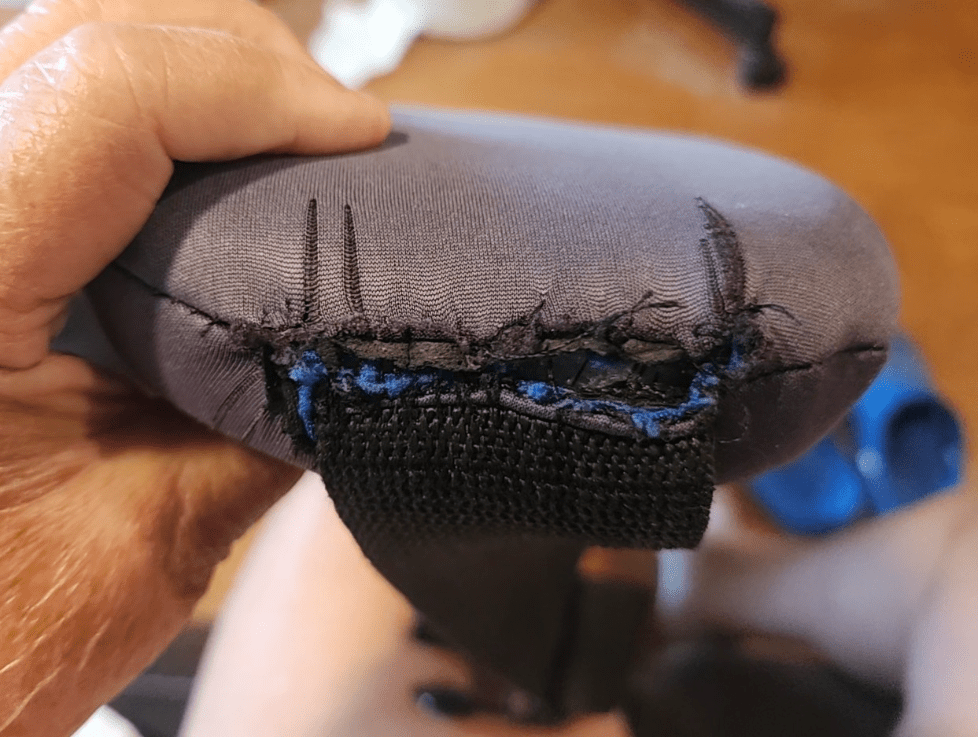
Figure 02-2. From sewing on buttons to stitching up a floatie belt, being able to mend household goods greatly extends the useful life of those things.
Unlike many other kinds of learning, hand skill requires em-bodied knowledge, which can’t be gained from books, diagrams, demonstrations, videos, or other less tangible media. To acquire a hand skill, the learner must use her or his hands directly to gain the needed skills. Though some of the knowledge can be gained through explicit means, most must be gained tacitly, through direct hands-on experience — feeling the fabric, using the tools, exploring the techniques, seeing the effects of hands and tools on fabric and sewn items.
For sewing garments, the learner must also think about and learn how to convert two-dimensional fabric into things that fit onto a three-dimensional human body. For machine sewing, additional knowledge is needed: how to set up the machine for sewing (thread the machine and the needle, set the type of stitch needed, adjust the tension, etc.), as well as how to operate the machine (controlling the speed, holding the fabric firmly but not tightly, moving the fabric beneath the needle in the right direction, etc.).
Despite the depth of cognitive understanding involved in sewing, society devalues it and other hand work as menial, less valuable than intellectual pursuits not involving the hands. In contrast, “Numerous experts on education, learning and human intelligence argue that hand work is central to a properly integrated and mutually reinforced approach to learning. . . . ‘ . . . to awaken the curiosity of a child, . . . head for the hands’” (p. 60).
On the other hand, as with learning any skill, repetition and practice are essential to skill acquisition. To reach a point where use of the skill allows for creativity, the learner must practice a great deal. A key to practicing enough to gain mastery is to find pleasure in accomplishments along the way. To ensure that practice is meaningful and pleasurable, the items being sewn should be chosen by the practitioner and should lead the learner to a sense of satisfaction when finished sewing.
Too often, the teacher chooses the items to be sewn, which the learner hasn’t chosen, won’t enjoy sewing, and won’t be pleased to have made. (In the late 1960s, when no one was wearing gathered skirts, our home economics teacher required all of us to buy yards of fabric and to make ourselves gathered skirts, which not one class member wore after we had made them. I’m guessing that each December and June, local thrift shops were flooded with never-worn gathered skirts.)
During the COVID-19 lockdown, sales of sewing machines skyrocketed, and one manufacturer claimed slightly more men than women were buying the machines. Contemporary teaching methods are much more user-friendly, too. One teacher commented, “‘I think the best trait you can have to be good at sewing is not being afraid of failing. Sewing is a lot about trial and error. Things don’t need to be perfect and you’ll get there with practice’” (p. 64).
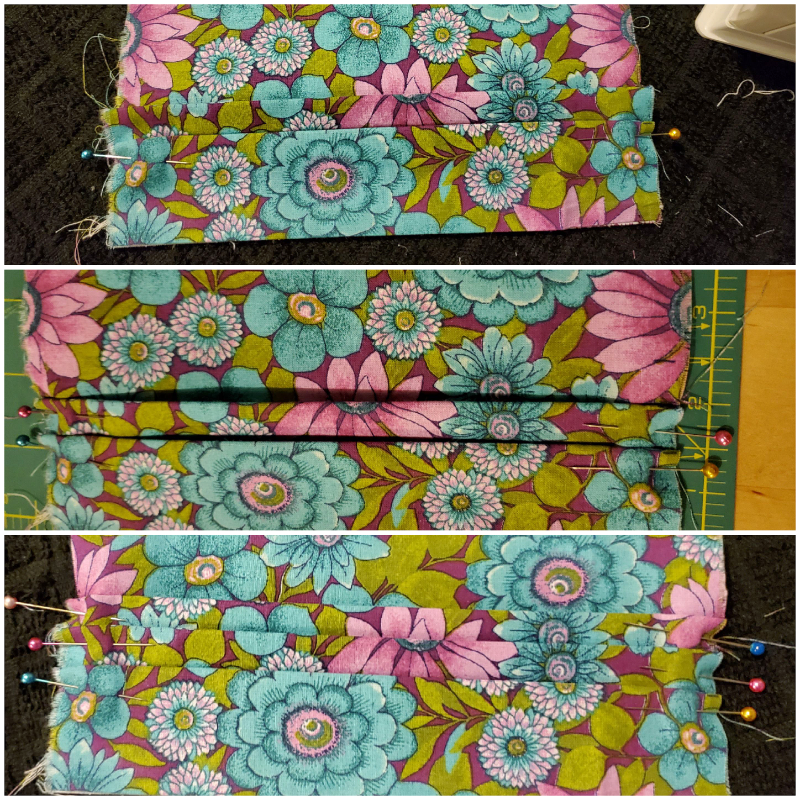
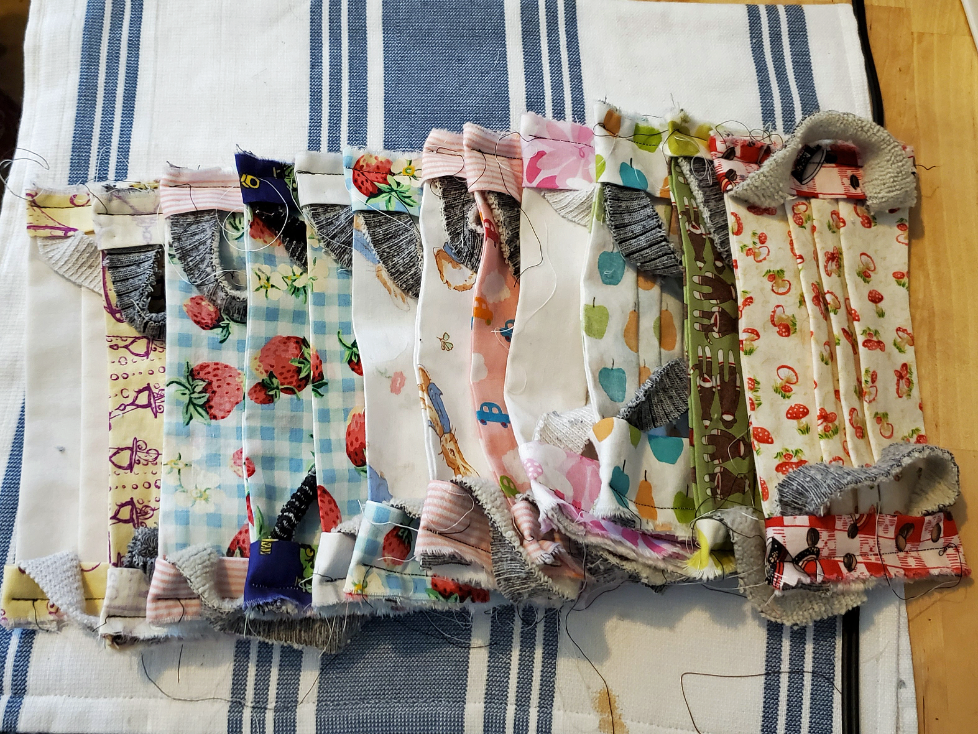
Figure 02-3. During the COVID-19 pandemic, many home seamsters made fabric face masks, for hospital personnel to use with disposable masks, extending each mask’s usefulness at a time when they were in short supply. Some non-seamsters donated fabric and elastic to those who sewed these masks; eventually, elastic wasn’t available for sale, so seamsters used alternative elastic ear loops.
Research in the 1920s U.S.A. found that low-income rural women were more likely to sew because it was cheaper to make clothes than to buy them; as women’s incomes and community sizes increased, women were more likely to say that they sewed in order to have better fitting clothes of better quality. “By 1958 in the USA 20 per cent of all female clothing was made at home” (p. 65). More recently, older seamsters tend to value thrift and fit more than younger seamsters. By the 1990s, for all seamsters, “enjoyment [was] ‘significantly more important’ than sewing for economy or fit” (p. 65). A 2020 study found that “thrift no longer played any part at all for any of the diverse [study] participants, indicating a significant break with previous generations” (p. 66). Burman’s study (2020–2022) of seamsters found that “home sewing was not a way to save money” (p. 66). On the other hand, some young seamsters take pride in buying second-hand fabric (or garments or linens), partly for thrift, but also for environmental reasons.
Contemporary seamsters also form social groups, take classes, enjoy sewing retreats, and other means for sewing with a community of fellow seamsters. Successful workshop leaders offer a variety of classes and workshops, from beginners to semiprofessionals, intensive courses lasting multiple days or afternoon workshops yielding a small take-home project, specialized skills (tailoring, dressmaking, ornamentation, etc.), quilting, and so on. With online resources, the opportunities seem limitless. The USA alone has 9–11 million quilters, 46% of whom use online resources for classes, tools, supplies, and so on (by 2022; the percentage has probably increased since then).
For seamsters of all kinds, a seemingly infinite number of books and other media are available for almost any imaginable audience. Sewing patterns, too, come in endless varieties. Some skills still require in-person teaching for imparting the seamster’s embodied knowledge. The novice seamster must be guided how to use hands and mind to sew. Furthermore, the novice seamster must concentrate fully on how to learn. Children are “built for learning, making, doing and exploring the world around them” (p. 73).
Burman urges us to learn to sew and to become comfortable using the tools of sewing. Even those who will not go on to create many garments and other sewn items for themselves or others will profit from having this knowledge. They will be empowered by knowing how to sew, and they’ll appreciate knowing how sewn items are made.
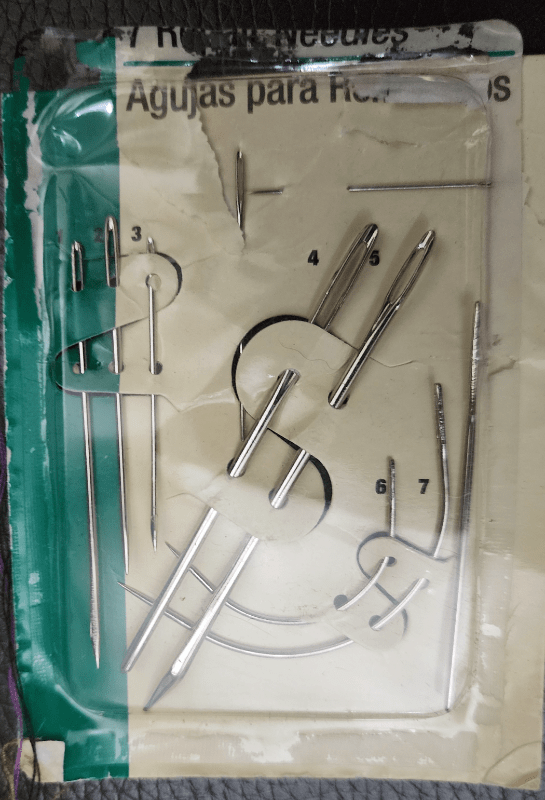
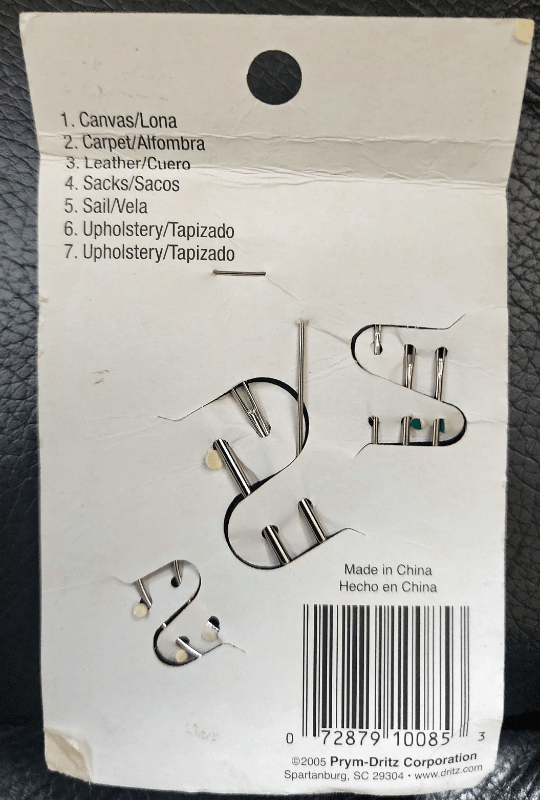
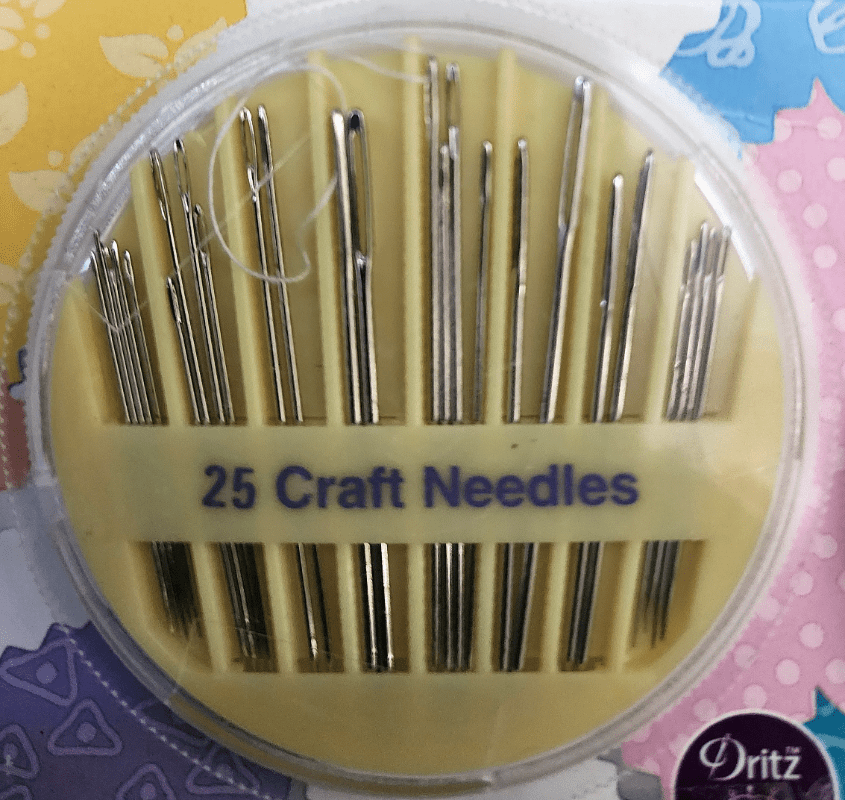
Figure 02-4. This small assortment needles shows just some of the varied types of needles, for differing purposes (e.g., upholstery, carpet, leather, sail, embroidery, tapestry, beading, yarn stitchery, ) and differing seamster preferences (e.g., big/small eye, short/long shaft, thick/thin shaft).
3 A Material World, 75–102
Throughout this book, Burman uses the terms fabric, cloth, textiles interchangeably. The origins of cloth aren’t known, but it resembles words of Old English, Germanic, and Dutch origin. Fabric is tied to Latin fabricare, “to make” or “to fashion.” Textile and text both come from Latin texere, “to weave.” Burman also points out that textiles are woven from yarn, which also has the meaning of “story.”
Even as infants, we form attachments to cloth objects, such as a special blanket or a cloth-covered stuffed toy. Perhaps one aspect of this attachment is the way in which cloth retains the smells of those with whom it comes into contact. Similarly, many adult seamsters admit that one of the reasons they enjoy sewing is because they love working with cloth. Cloth delights not only the eyes (and the sense of smell), but also the senses of touch and even hearing, as we listen to the rustle of fabric rubbing against itself. The fabric’s aesthetic qualities affect how a seamster responds to it. Many seamsters sew only with particular kinds of fabrics because those fabrics strongly appeal to their senses. Many also avoid particular kinds of fabrics because they dislike the fabric’s coolness or warmth, silkiness or fuzziness, or other characteristics.
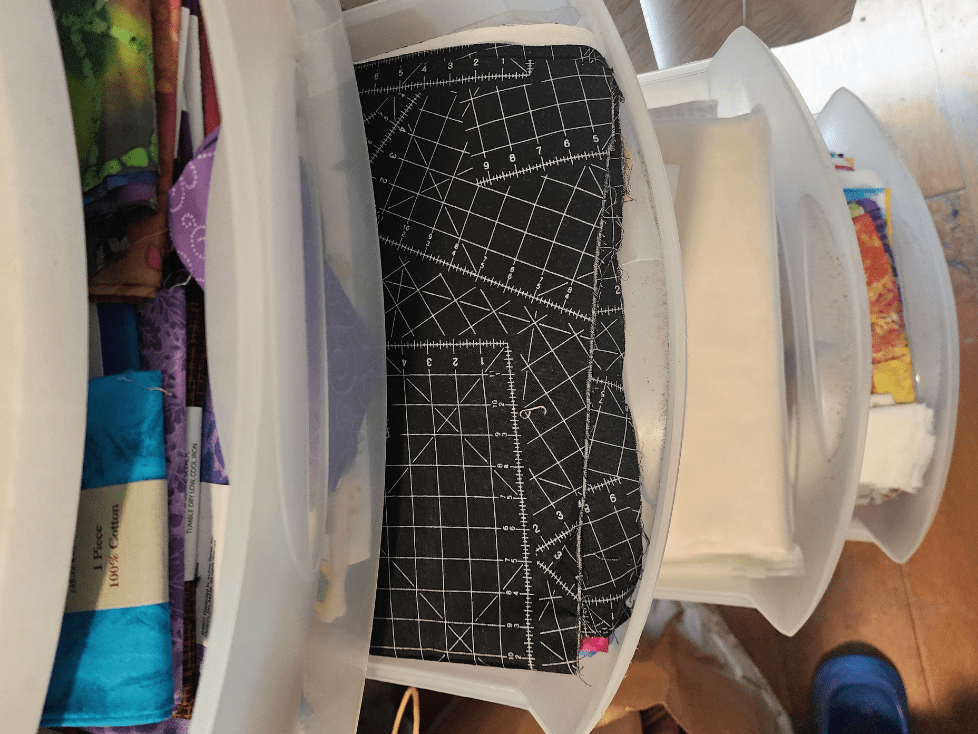
Figure 03-01. Even after moving into my 10 × 30 feet home, I managed to hang onto a drastically reduced stash of fabrics, from which I can choose for spur-of-the-moment projects — such as my urgent need to insert pockets into clothing seams. (I have a plastic bin of denim and some other sturdy fabrics in my daughter’s garage, too.)
In addition, many fabrics offer various utilitarian values — water resistance or repellence, insulation from cold, absorption of odors or of liquids, quick evaporation, sturdiness, ethereality, drapiness, firmness, biodegrability, endurance, and many more features. Silk is light, luxurious to touch, and insulates well, but it’s slippery to work with; linen and cotton are easy to sew with but not resilient if stretched out; wool insulates well but shrivels if accidentally washed in hot water (and triggers allergies in some who touch it). Natural fibers of all kinds are sturdy, biodegradable, and environmentally friendly but more expensive than most synthetics. In addition, throughout history, fabric has been used to communicate societal status, gender, age, religion, ethnicity, occupation, and more. For instance, St. Francis of Assisi (1181?–1226) and members of his religious order wore undyed simply woven cloth garments; the Buddha is said to have sewn his own robe from bits of discarded rags; European royalty wore silk brocades dyed in colors others were forbidden to wear.
Artist Henri Matisse (1869–1954) came from generations of weavers, and he appreciated fabric, not only in his paintings, but also in his personal collections of new or used fabrics from around the world — Pacific Island barkcloth, African Kuba cloth, North African carpets, as well as screens, costumes, home furnishings, and so on. He called his textile collection his “working library” (p. 81).
“With all crafts there seems to be something about buying materials as a statement of intent — perhaps an optimism about a project that might be realised [sic] but often isn’t” (p. 82).
Quilters and other home seamsters probably easily relate to Matisse’s stash, some referring to themselves as “fabricaholics” or “hoarders.” The stash may contain fabrics collected over decades until — SNAP! — the perfect project for it comes to mind. For many, the stash exceeds the lifetime expectancy of the seamster to use all of it; if so, it still offers satisfying reward to the stasher just knowing it exists. (Somewhere, I heard the acronym SABLE — Stash Above and Beyond Lifetime Expectancy.)
The stash offers insurance that even in challenging times, fabric is on hand if needed. Often, the stash holds just the right fabrics for the right project at the right time. “It is cloth-in-waiting, not cloth forgotten. One day its time will come” (p. 83). The need for a stash is particularly great for quilters, who need fabrics of a “variety and carefully managed colour [sic] ranges which need to be on hand if the project is not to stall” (p. 83)
At least as fun as having a stash of fabric is acquiring each one. Visiting a fabric store can be exquisite delight — not just choosing a particular fabric for a particular project but also rummaging through bins of remnants in assorted colors, textures, and sizes. The joys of inheriting the stash of a loved one may be matched by the joy in contemplating a loved one inheriting your own stash.
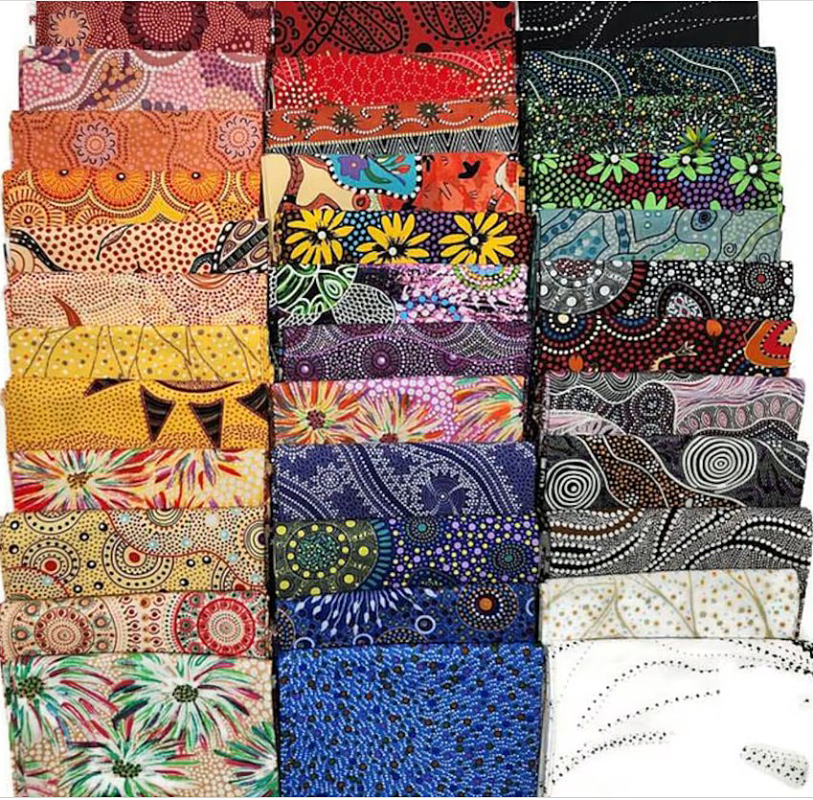
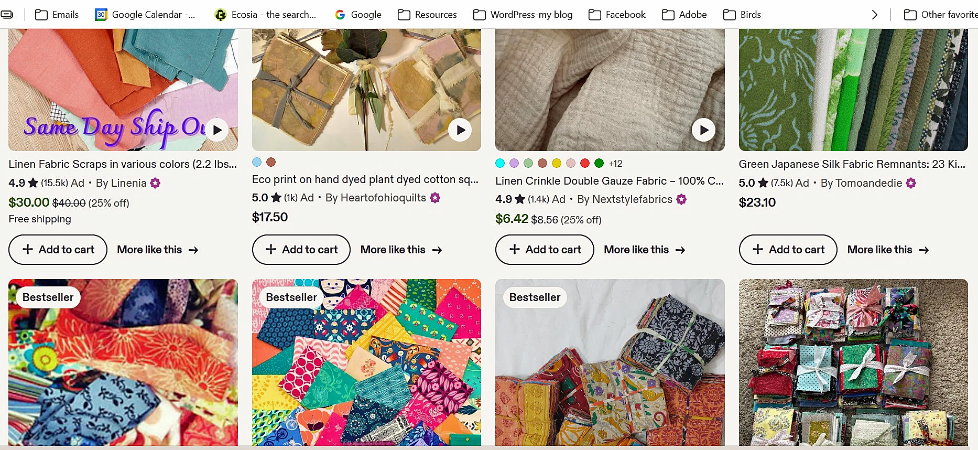
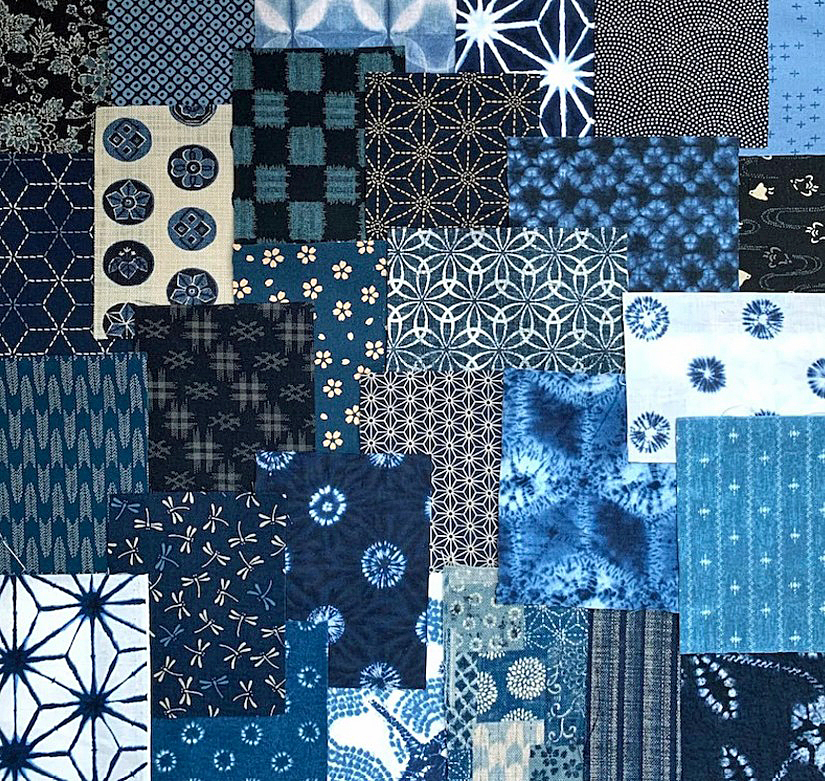
Figure 03-2. Seamsters have a seemingly limitless variety of fabrics to choose from online (e.g., these options from the online retailer Etsy), and mostly true colors and approximate textures can be gleaned from viewing fabrics online, but for most seamsters, nothing beats feeling the fabric, touching it to your skin, listening to how it rustles against itself, seeing how it drapes across your arm. Unfortunately, for many of us, however, brick-and-mortar fabric stores aren’t always available, and the few still standing may offer a wide ranges of colors and patterns, but their selection of fibers may be limited. (These are screenshots from the Etsy website, https://www.etsy.com/ , June 2026.)
Online purchase of fabric doesn’t offer the sensory pleasures of in-store purchases. “When the fabric is in your hand, it reveals the character of its surface and handling qualities” (p. 86). As fabric stores grow fewer, seamsters are seeking fabric from thrift stores, garage and estate sales, and swap meets. Burman probably submitted the manuscript for her 2023 book in 2022; it will be interesting to see how seamsters respond when most fabric sales are conducted online, such as through Etsy and other small craft sources, as well as the big online retailers.
Looking at fabric through a microscope lens, it transforms from a flat surface to a bumpy interweaving of individual threads, each thread characterized by the nature of the fiber. “Silk fibres [sic] seem glassy and translucent, wool ones are scaly” (p. 87). Experienced seamsters respond to each fabric distinctively — what weight of thread and size of needle to use, whether to cut and sew on the grain (e.g., cotton) or on the bias (45 degrees off the grain, e.g., for silk or satin), and so on. Some fabrics can be easily mastered and made to bend to the seamster’s will; others resist and require special techniques to shape them and make them fit; others simply won’t work for particular purposes (e.g., denim negligee, fine-silk suit jacket, corduroy gardening pants).
“Cloth both covers and reveals us . . . textiles in clothing marking a threshold between our bodies and the outer world . . . a threshold between private and public space” (p. 91).
Though many seamsters now are returning to an appreciation of natural fibers, a huge variety of synthetics are available, offering distinctive benefits — nylon, acrylic, acetate, polyester, viscose, Tencel, and newly made fibers from natural sources, such as bamboo. And let’s not forget nylon’s prolific offspring, Velcro, used in myriad vital applications. At present, 70% of the world’s manufactured fibers are synthetics, most of which are produced in China.
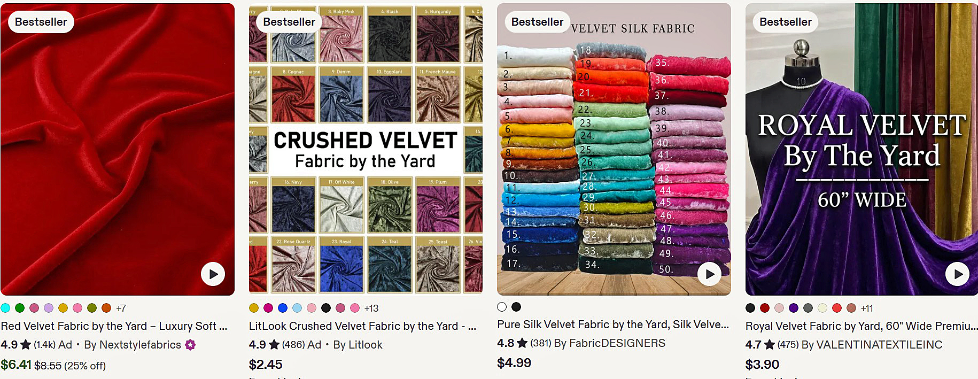
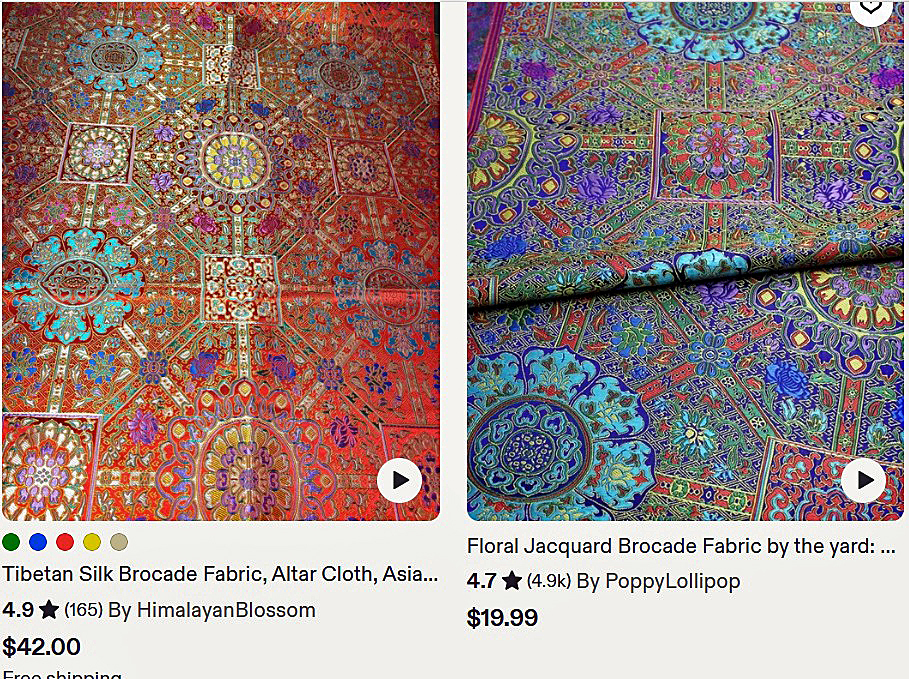
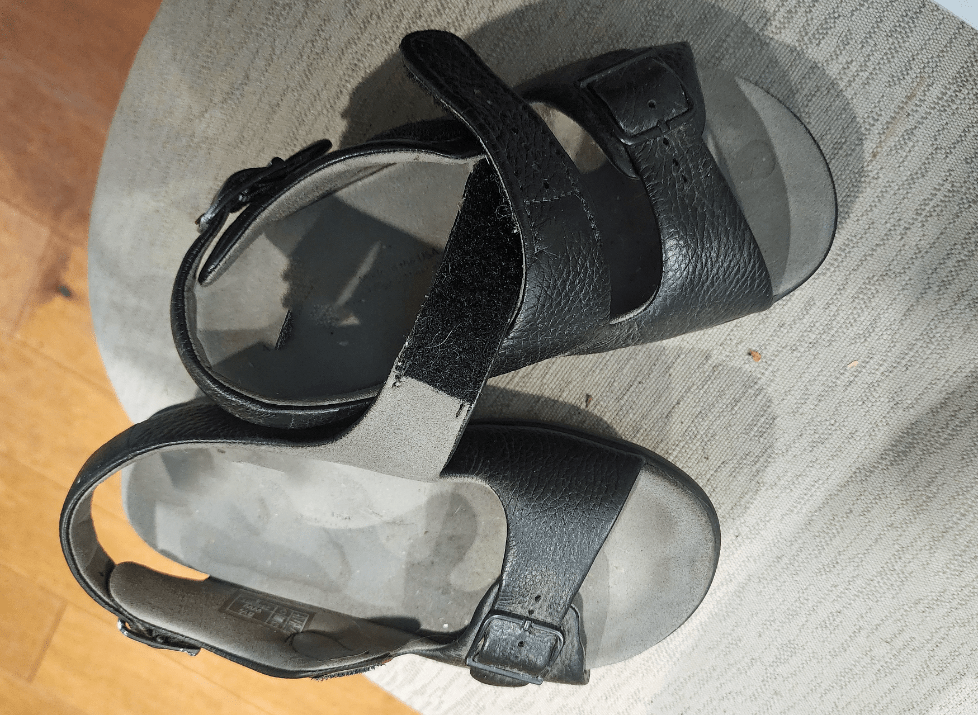
Figure 03-3. Fabrics of almost any texture, color, or fiber can readily be found online; synthetic fibers are among the most widely available. And who among us can go a week — or a day! — without using Velcro (such as these straps my cobbler attached to my sandals)? (The images at the left and center are screenshots from the Etsy online website, https://www.etsy.com . The Velcro-strapped sandals are photographed by me.)
Right now, manufacturers are making fibers in laboratories, using fungal mycelia or food waste. Burman pointed to “3D scratch denim that permits surface patterning of all kinds” (p. 92). Fabrics are already in use inside us and on our skin, as artificial skin, tissue scaffolds, organ replacement parts, sutures, and more. The future of textiles seems limitless and almost certainly beyond our current imaginations.
Burman gives special attention to cotton fabric — almost ubiquitous, “available in an infinite number of weights, weaves, finishes, colours [sic] and patterns. It is soft, breathable and comfortable to wear, strong and supple. It washes and irons well, it isn’t costly and eventually it can biodegrade. It is stable when being sewn. . . . globally today the livelihoods of 350 million people are tied to cotton at all its stages from growing to sewing. In 2020–21 almost [84 million acres] 35 million hectares of land around the globe were devoted to the cultivation of cotton . . . across [>90] countries, producing [>29.2 million tons, >58.4 billion pounds, >26.5 million] metric tonnes of the crop” (p. 93).
Cotton has also played a role in national and international politics. For instance, Mahatma Gandhi subverted the British cotton industry in India by spinning and weaving his own cloth, khadi, and urging his followers to do likewise. His nonviolent revolution succeeded, and today, India is second only to China in the world’s production of cotton.
Cotton denim blue jeans have also been associated with cultural and political change. Cotton and indigo dye had been in use for centuries before it emerged as the iconic blue jeans in the U.S. in the 1800s, originally intended as workwear. Nowadays, most blue cotton denim is made in Japan.
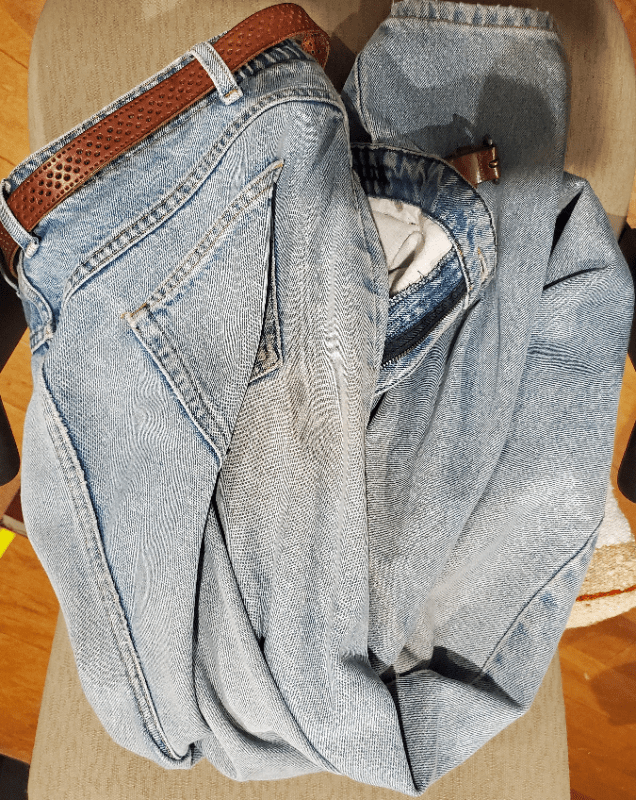
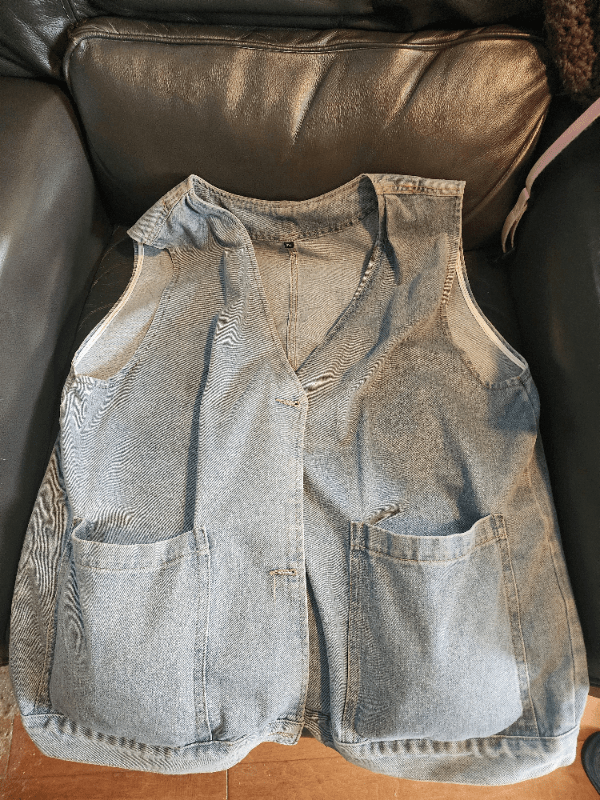
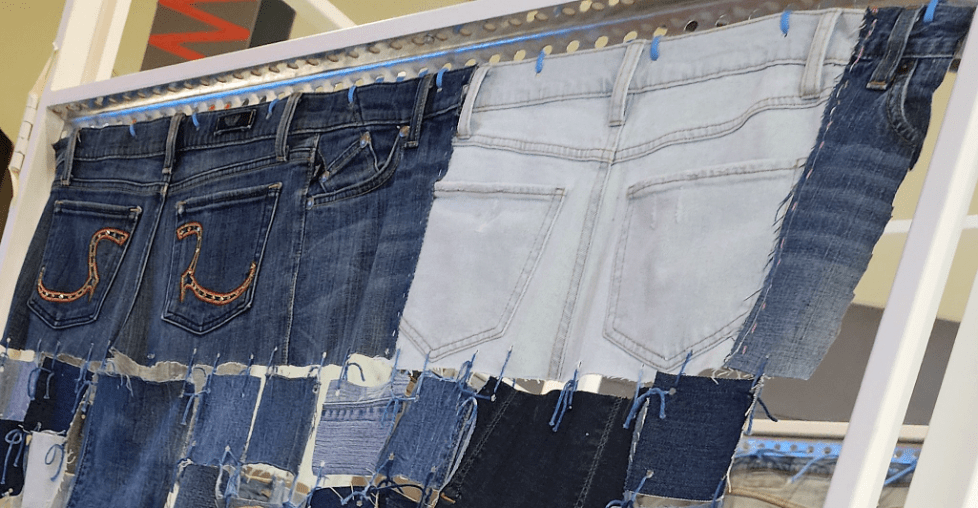
Figure 03-4. For decades, denim jeans have been not only practical for their comfort and sturdiness, but also often symbolic of the freedom to choose what to wear, especially for many women who are rebelling against or emerging from oppression. Whenever I leave the house in winter, I typically wear my “uniform” of denim jeans (left), a denim vest (middle), and a t-shirt (not shown). In San Diego, in 2024, the Mingei International Museum celebrated “Indigo” fabric dyes, including this exhibit inviting participants to add denim to this display (right).
Both cotton and indigo have historically been tied to colonialism, slavery, and exploitation in Asia (India), Africa (western coast), and the Americas (West Indies and both colonial and postcolonial southeastern United States). Sadly, cotton continues to be linked to exploitation, with Chinese Uyghur Muslims forced to pick cotton under inhumane conditions. Forced labor also characterizes cotton production in Turkmenistan, another major cotton producer. Despite efforts to distinguish the sources of cotton and to boycott inhumanely produced cotton, these efforts have so far failed. “Raw cotton from different sources is often mixed together at the earliest stages of production, even before spinning and textile manufacturing,” using fiber from multiple countries, with differing labor practices and environmental policies (pp. 97–98).
In addition to being a source of inhumane labor practices, textile production also negatively impacts our ecological environment. “The textile supply chain is estimated to be responsible for 20 per cent of global water pollution through textile dyeing and finishing.” Synthetic fibers are particularly destructive. “Polyester, the most common synthetic, requires ‘more than 70 million barrels of oil each year.’” About “‘3,500 chemical substances are used in making textiles,’” 750 of which are “hazardous for human health,” and 440 of which are “hazardous for the environment.” Furthermore, when we wash our synthetic-fiber garments and linens, we release “about half a million tonnes of plastic microfibres . . . into the ocean annually” (p. 99).
Some nonprofits are trying to address this issue. “Fibershed is a California-based non-profit with affiliates across the USA, Canada and around the world that aims to create a new regenerative textile economy,” in which people would buy yarn, cloth, and clothing that originate from naturally grown, locally sourced materials. Consumers would wear the clothing, mend it, repurpose it, and use it until it couldn’t be reused at all, when they would compost the remnants. For-profit businesses such as Stony Creek Colors are finding ways to grow indigo sustainably. Burman also mentioned EcoVero fabric, produced by Lenzing, as environmentally friendly.
As consumers of cloth, we can look for certifications for cotton, such as by Organic Content Standard (OCS) and Global Organic Textile Standard (GOTS). We can even look for organic cotton thread. (I recently bought some organic cotton thread — one 300-yard spool of white thread for $14; three 300-yard spools of white, black, and gray thread for $29. Pricey, but affordable if not sewing large volumes of items.) Recycled polyester and other options are available, too. We can hope that ongoing research will yield more practical alternatives for large numbers of seamsters to enjoy sewing while using environmentally sustainable, socially righteous cloth and other materials. Mending and repurposing also help in this regard.
Forthcoming are two more blogs about Barbara Burman’s book, The Point of the Needle: Why Sewing Matters (2023). The second blog will discuss Chapters 4–6, sewing tools, home sewing, and sewing to earn money. The third and final blog will discuss Chapters 7–8, about sewing to effect change and about mending, as well as the back matter of Burman’s book.
Text and images by Shari Dorantes Hatch, Copyright © 2026. All rights reserved.
Introduction, Chapters 1 and 2 images by Shari Dorantes Hatch, Copyright © 2026.
Figures 3-2 (a–c) and 3-3 (a,b) are edited screenshots from the Etsy retail website.
Figures 03-1, 03-3c, and 03-4 are by Shari Dorantes Hatch, Copyright © 2026.


Leave a comment