
Bucerotiformes order, Phoeniculidae family, Phoeniculus purpureus species
The Bucerotiformes order of birds includes four (most ornithologists say three) families of birds. Visitors to the San Diego Zoo or its Safari Park can see representatives of three of these families: woodhoopoes, Phoeniculidae; ground hornbills, Bucorvidae; and tree-dwelling hornbills (smaller than the ground hornbills), Bucerotidae.
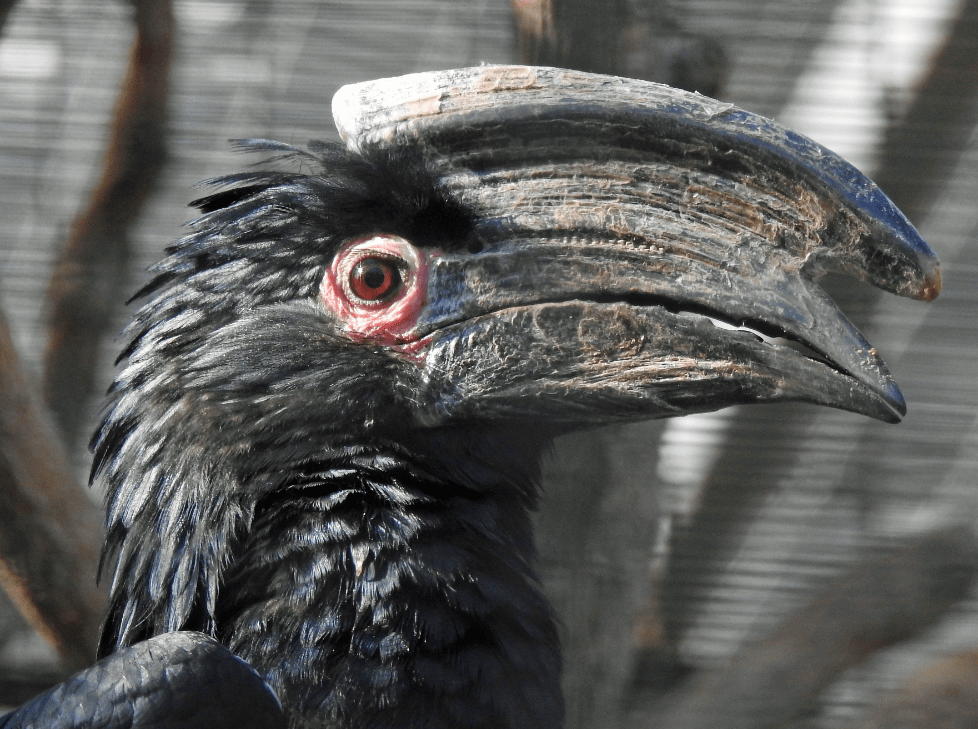
Figure 01. The Bucerotiformes order of birds includes four families: Bucorvidae ground hornbills, Bucerotidae hornbills (e.g., Trumpeter Hornbill, shown here), Phoeniculidae woodhoopoes, and Upupidae hoopoes.
The fourth family, hoopoes, Upupidae, includes one genus (Upupa) and two species: Upupa epops, the Eurasian Hoopoe, which — SURPRISE! — is found across Europe and Asia; and Upupa africana, the African Hoopoe. Neither hoopoe can be seen at the San Diego Zoo (as far as I know), but you can see a photo of a hoopoe at https://commons.wikimedia.org/wiki/File:Hoopoe_with_insect.jpg . For more information about the hoopoe family, you can visit https://en.wikipedia.org/wiki/Hoopoe .
The Bucerotiformes order also included two now-extinct bird families: Messelirrisoridae (1 genus, 3 species) and Laurillardiidae (1 genus, 3 species) — which are thought to be more closely related to the hoopoes (Upupidae) than to other Bucerotiformes.
This blog focuses on the woodhoopoes, Phoeniculidae. Future blogs will focus on the ground hornbills, Bucorvidae (1 genus, 2 species), and on the family of smaller hornbills, Bucerotidae (15 genera, 62 species). The Cornell Lab of Ornithology and many other ornithologists subsume the ground hornbills within the family Bucerotidae, as they have much in common. For my convenience, I’m separating out the ground hornbills into Bucorvidae as a separate blog. Clearly, the Cornell Lab knows much more than I do, however.
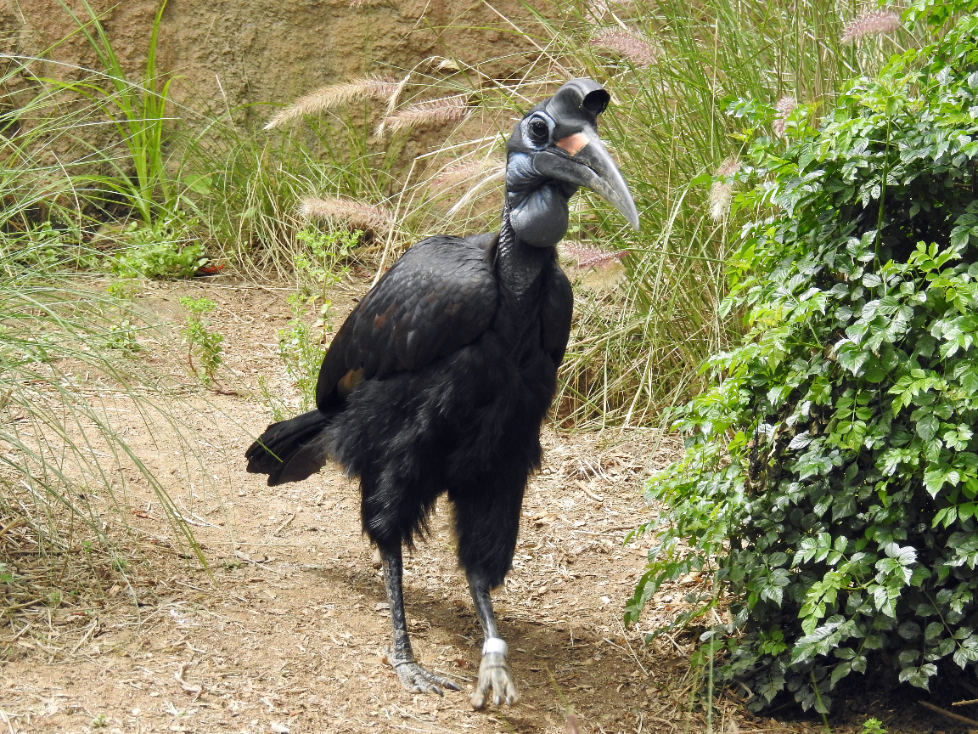
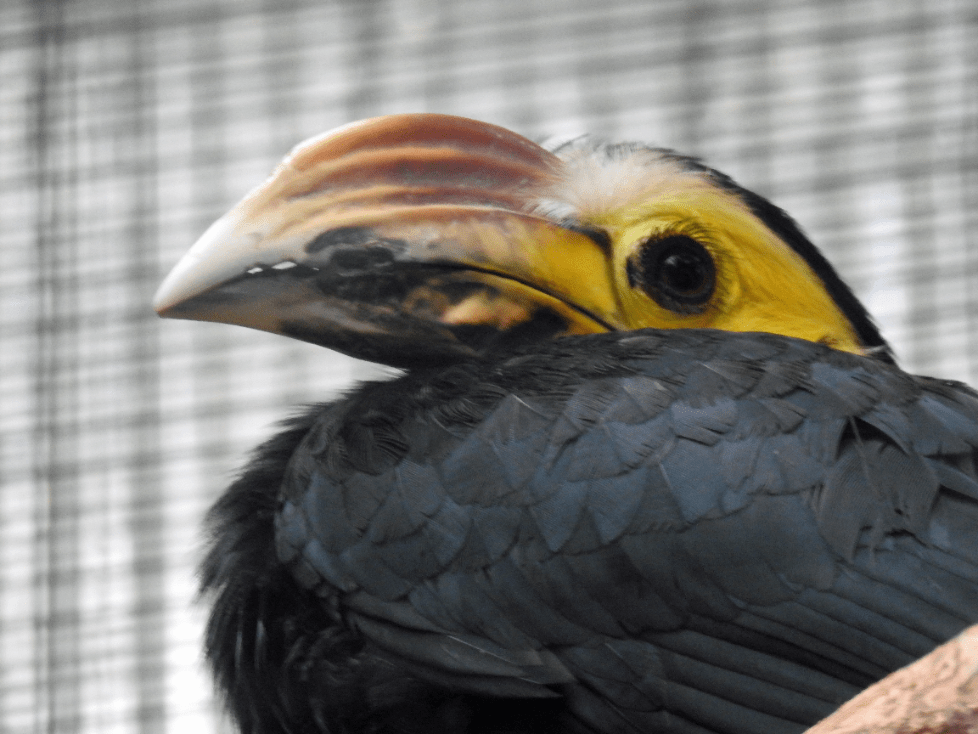
Figure 02. The Abyssinian Ground Hornbill (left) is a member of the Bucorvidae family of huge birds that live on the ground, not in trees; they can fly, but small trees would probably break under their weight if they tried to roost in them. The Southern Sulawesi Hornbill (right) is a member of the Bucerotidae family of smaller tree-dwelling hornbills.
At one time, ornithologists had included the Bucerotiformes families within the Coraciiformes order (which includes kingfishers and rollers) because of some similarities in their appearance — especially their syndactyl feet — with two of their toes at least partially connected. For hundreds of years, ornithologists have used morphological similarities (e.g., appearance) to figure out which birds are related to one another. More recently, DNA evidence has clarified these relationships and is leading to many changes in the hierarchical taxonomy of birds, based on genetic similarities, rather than morphological ones. Within the Bucerotiformes order, the Phoeniculidae family of woodhoopoes is more closely tied to the Upupidae family of hoopoes than to either family of hornbills.
The order name Bucerotiformes — and the family names Bucorvidae and Bucerotidae — come from Greek boukerōs, “oxen” or “huge,” presumably referring to their large bills (or perhaps their large casques in the case of hornbills).
Description
Most of the birds in this order are sexually monomorphic (males and females look alike), with brown, black, gray, or white plumage. Their body size varies widely, but most have ovoid bodies, with long, broad, rounded wings, and long, square-tipped tails. Most have big bills, and pretty much all Bucerotiformes birds have long bills, often curved slightly or moderately downward (i.e., decurved). Their legs are short, with thick feet and syndactyl toes. Hornbills also have casques atop their heads, bare skin around their eyes, and long “eyelashes” (actually, barbless feathers); some observers have mistakenly thought these birds are related to toucans (Ramphastidae), which also have large bills.
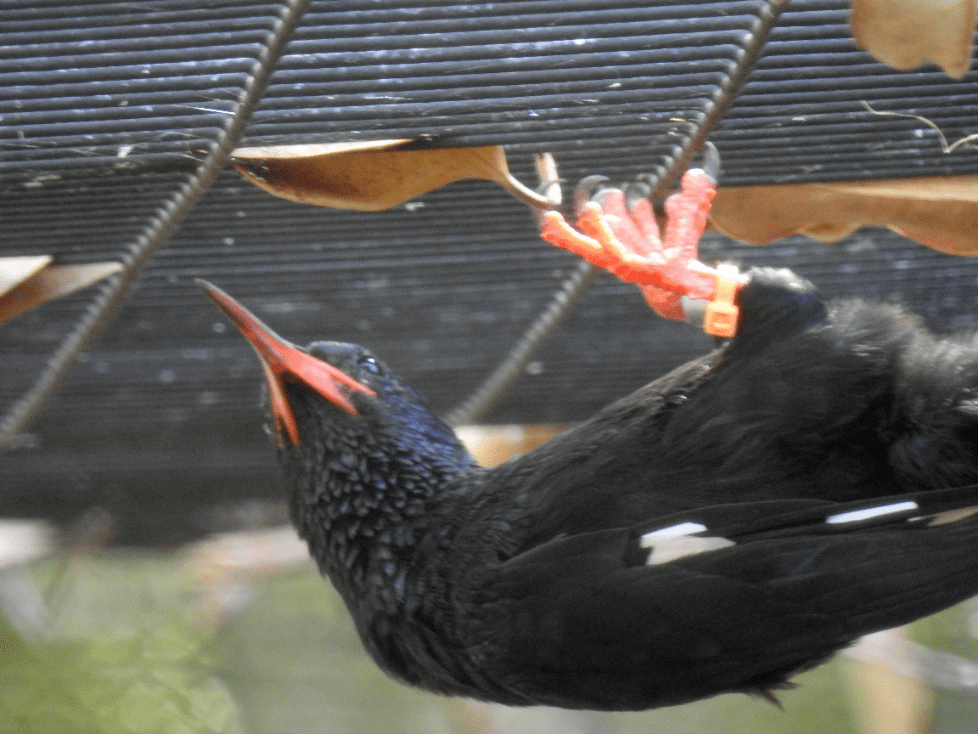
Figure 03. Green Woodhoopoes and most other Bucerotiformes specialize in big or at least long bills, short legs, and long, syndactyl toes.
Distribution and Habitat
Bucerotiformes can be found in Africa, Asia, Europe, and islands in the southwestern Pacific Ocean (from New Guinea to New Caledonia). Their choices of habitat may range from open savannas to woodlands to tropical rainforests, though a wooded lifestyle is most common.
Food and Foraging
Members of the Bucerotiformes order are omnivorous. In general, wherever fruit is abundant (e.g., rainforests), the species prefer fruits and seeds; where fruits are less widely available (e.g., savannas), the species specialize in eating invertebrates, perhaps also some small vertebrates.
Breeding
Both woodhoopoes and hornbills are generally monogamous, with biparental care (both parents care for their young). Most woodhoopoe species also engage helpers (typically male offspring from previous clutches), as do some hornbill species. All but the ground hornbills nest in tree cavities (usually excavated by other birds, not by the bucerotids). In general, the female incubates the eggs, but the male (perhaps with helpers) feeds her throughout incubation. Among hornbills (not ground hornbills), the female is even sealed into the nest cavity and is fed through a narrow slit in the cavity during incubation. For many hornbill species, this isolation continues even after the eggs hatch and sometimes even until the chicks are ready to fledge. Clutch sizes for this order of birds can be 1–8 eggs — typically, smaller birds have more eggs.
Conservation Status
While the woodhoopoes have no immediate conservation concerns, the two ground hornbill species are both VU, Vulnerable, and many of the other hornbills are at risk (from NT, Near Threatened, to CR, Critically Endangered). Most of the threat to these species arises from habitat destruction.
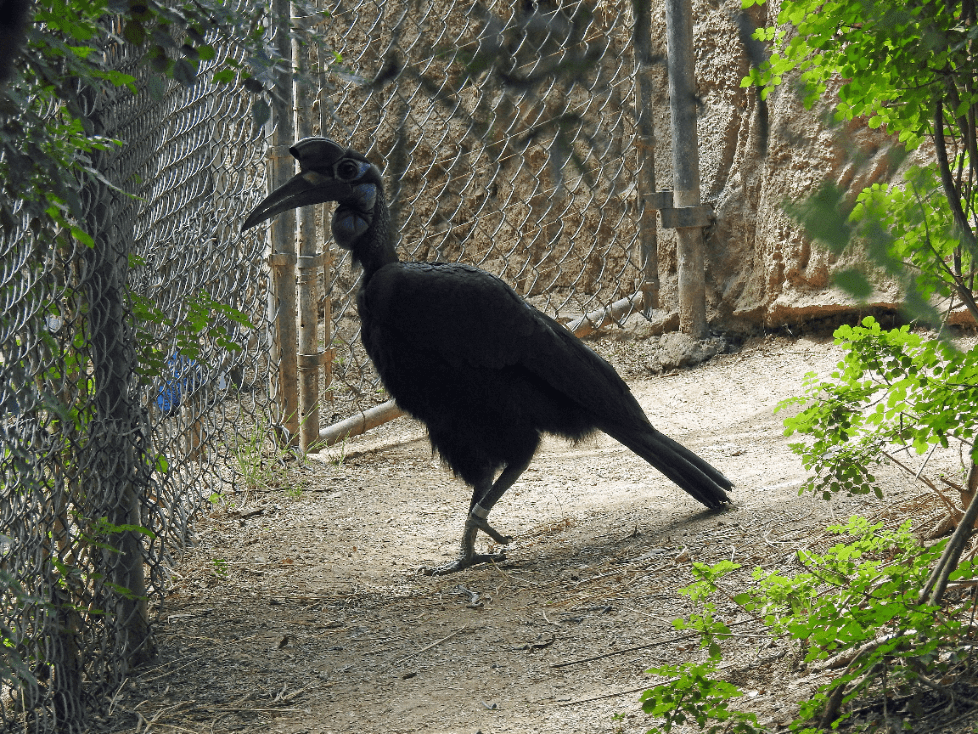
Figure 04. Though the future looks bleak for many species of hornbills and ground hornbills, this Abyssinian Ground Hornbill has a promising future at the San Diego Zoo’s Safari Park. Conservationists around the world are trying to help protect these and other species of endangered birds.
Phoeniculidae: Woodhoopoes and Scimitarbills
Taxonomy and Etymology
The Phoeniculidae family includes two genera, each of which includes four species: The Phoeniculus genus includes the Green Woodhoopoe, Phoeniculus purpureus (discussed later); Violet Woodhoopoe, Phoeniculus damarensis; Black-billed Woodhoopoe, Phoeniculus somaliensis; and White-headed Woodhoopoe, Phoeniculus bollei. The Rhinopomastus genus of scimitarbills includes the Black Scimitarbill, Rhinopomastus aterrimus; Common Scimitarbill, Rhinopomastus cyanomelas; Abyssinian Scimitarbill, Rhinopomastus minor; and Forest Scimitarbill, Rhinopomastus castaneiceps. Though the two genera look very similar, their genetics actually differ greatly, probably having diverged about 10 million years ago.
This family is more closely related to the hoopoe family, Upupidae, sharing not only some skeletal features (wings and bill), but also genetic ties. Based on appearance only, members of this family are thought to resemble the Meliphagidae family of honeyeaters (195 species), and the Meropidae family of bee-eaters (31 species).
Both Phoeniculidae and Phoeniculus come from Greek, phoinikos, meaning “red” or “crimson.” It’s thought that phoinikos also gives rise to Phoenicians, who were believed to be the first to have started using red dyes. Even the legendary phoenix arose from red flames. The suffix -idae is used for family names, and the suffix -culus (Latin) indicates a diminutive (“little red”). The common name “woodhoopoe” refers to their preference for woodsy habitats and their resemblance to hoopoes, probably their closest living relatives.
Description
Woodhoopoes are small- to medium-sized birds, about 8–18 inches long (21–46 cm), including a long, stiff tail with graduated feathers (central feathers longer than feathers on either side). Their wings are medium length and rounded. Their bodies are ovoid and somewhat elongated, weighing about 0.6–3.5 ounces (18–99 g). Their necks are relatively thick, and their heads are slightly elongated. Their short thick, strong legs end in long toes, with long curved claws, well adapted to living in the trees. Three of their four toes (on each foot) face forward, one faces backward. Phoeniculus species have bright red legs, Rhinopomastus species have black legs.
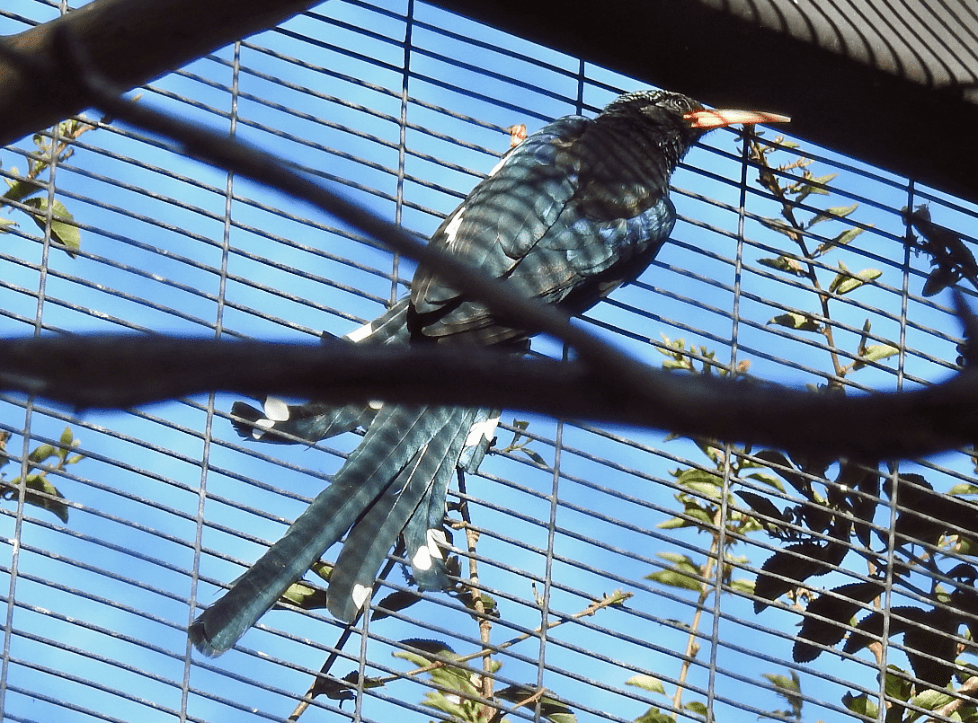
Figure 05. This photo shows the graduated tail of a Green Woodhoopoe, with the central feathers much longer than the outer tail feathers.
In most species, males look similar to females, though males may be larger than females. Their plumage is black, sleek, and glossy, with iridescent black, purple, blue, or green feathers on much of the body. There may be white bars on the wings and tails of some species. Two woodhoopoe species have white or chestnut-colored heads. It’s been suggested that the bright white may make it easier to see in dark forest settings.
The most prominent feature of all of these species is their long, slender bills, which are slightly to markedly decurved (downward). Most species have bright-red bills, but some have black bills.
Vocal Behavior
The Phoeniculus woodhoopoes are highly sociable, highly vocal, and loud; their voices can carry a long way. Most chatter or cackle loudly, especially when calling to or with one another, chorally (up to 12 birds together in flocks that breed cooperatively). They may also quack, whistle, twitter, and growl. Territorial displays provoke not only vocalizations but also tail-lowering and -raising, wing-opening and -closing, and rocking back and forth. Males and females may have call repertoires that are distinctive for each sex. The Rhinopomastus species vocalize, but less loudly, less noticeably, and less frequently.
Distribution, Habitat, and Migration
Woodhoopoes are among the very few bird families endemic to Africa, residing in wooded savannas, scrublands, acacia woodlands, and forests of sub-Saharan Africa. Woodhoopoes need big trees for food, for roosting (at night), and for nesting (in tree cavities), but they’ll accommodate to various habitats, even thornbush, palm groves, and gardens. Neither the Forest Scimitarbill nor the White-headed Woodhoopoe can be found outside of rainforests, but the other six species don’t require rainforests. No woodhoopoes migrate.
Food and Foraging
Woodhoopoes eat almost entirely invertebrates, especially adults, larvae, and eggs of arthropods, such as insects, spiders, millipedes, centipedes. Some supplement this diet with berries and seeds, and bigger species also eat small lizards, as well as bird eggs (e.g., small weaver birds’ eggs).
They’re well-built for foraging in the trees. Short legs with long toes and claws enable them to scamper up and down trees easily. Stiff tails (like woodpeckers) give them support and leverage when rooting out arthropods. Long slender bills can probe deeply into crevices or holes in tree bark, to extract their prey. When they do descend to the ground, they hop (not walk) among the leaf litter, searching for prey. (Phoeniculus species occasionally go to ground; Rhinopomastus species rarely do.)
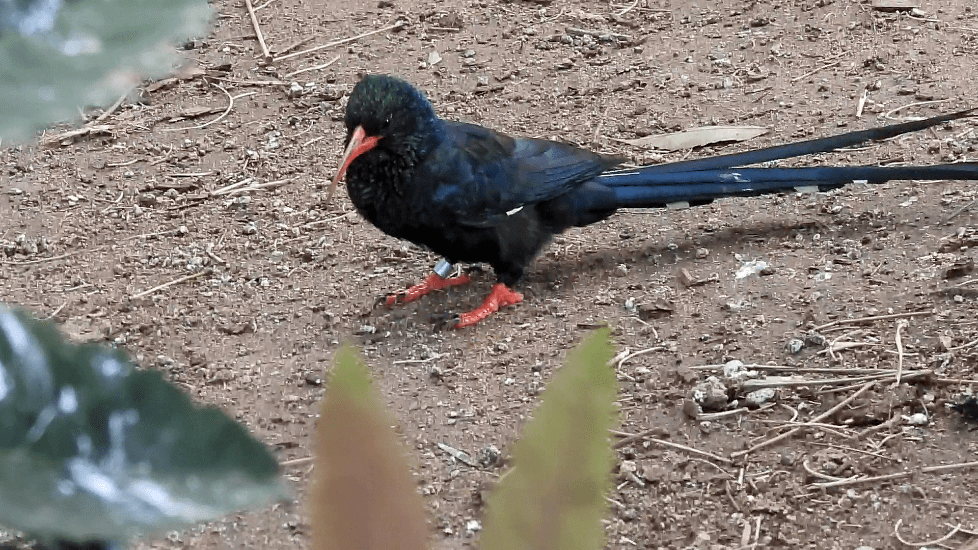
Figure 06. Though woodhoopoes spend most of their time on trees, they also occasionally hop along the ground, looking for potential prey.
Social Behavior and Breeding
All woodhoopoes are monogamous breeders. Rhinopomastus species breed as solitary pairs, unlike Phoeniculus species, which are highly sociable, living in groups year-round. Phoeniculus woodhoopoes typically breed cooperatively (up to 12 birds), with the primary monogamous pair having extra helpers (males and females) from previous clutches. These groups vocalize to strengthen their group cohesion. Outside of breeding season, Rhinopomastus woodhoopoes tend to be solitary, though sometimes in pairs or perhaps briefly hanging out in family groups.
All woodhoopoes are cavity nesters, using unlined tree cavities previously excavated by other birds. When these cavities aren’t available, they’ll find alternative spots, occasionally even nesting in hidden locations on the ground — a hazardous choice. The female lays two to five eggs — blue, turquoise, gray, or greenish, often with no markings or perhaps scattered small chalky pits. The eggs of one species is covered with brown spots and splotches. Only the breeding female incubates the eggs, but the breeding male and any additional helpers feed her throughout incubation, which lasts about 17–18 days.
While nesting, some woodhoopoe parents (like hoopoe parents; see https://bird-brain.org/2025/03/03/birds-smell/#Hoopoe ) secrete stinky compounds, which deter predators and parasites from bothering the nest.
Woodhoopoe chicks hatch with long white down, fed by the mother, who has the food delivered to her by the father (and perhaps helpers). As the chicks get closer to fledging, the father (and helpers) also feed the chicks directly. About 28–30 days after hatching, the youngsters fledge and leave the nest, though they continue to gain weight even after fledging.
Conservation Status
All species of woodhoopoes have an IUCN Red List status of LC, Least Concern.
Green Woodhoopoe, Phoeniculus purpureus
Here’s the taxonomic rundown of the Green Woodhoopoe: Kingdom, Animalia; Phylum, Chordata; Class, Aves; Order, Bucerotiformes; Family, Phoeniculidae; genus Phoeniculus; species, Phoeniculus purpureus. It was first identified to ornithologists in 1784, when illustrator John Frederick Miller included a hand-colored plate of it in a publication. The genus Phoeniculus wasn’t introduced until 1821, by zoologist Feliks Paweł Jarocki. As mentioned before, Phoeniculidae and Phoeniculus both come from Greek, phoinikos, meaning “red” or “crimson.” The second part of its binomial species name, purpureus, comes from Latin, usually meaning “purple,” but also referring to any shining color, and when you catch a glimpse of the iridescent feathers of this woodhoopoe, they do shine.
Figure 07. The Green Woodhoopoe, Phoeniculus purpureus, has been exhibited at the San Diego Zoo’s Africa Rocks Aviary and at the zoo’s Safari Park.
Description
The Green Woodhoopoe (Phoeniculus purpureus) is a medium-large bird, typically 12.8–15.7 inches long (32.5–40 cm), but up to 17 inches long (44 cm). Much of that length is tail: 6–9.8 inches (15.2– 24.8 cm); the central tail feathers are the longest. These woodhoopoes can fly well, but their wing length isn’t impressive: 4.8–5.7 inches long (12.2–14.5 cm). Typically, males (1.9–3.5 ounces; 54–99 g) outweigh females (1.8–2.6 ounces; 52–75 g), but their weights overlap a great deal; the heaviest bird cited weighed 3 ounces (87 g). Not rivaling a ground hornbill, but big for a woodhoopoe!
Because much of their plumage is iridescent, they can often appear black, yet in the right light, they shimmer with iridescent green (and perhaps purple). On top, their head, throat, and upper mantle (around the shoulders) can look bluish, with a purplish nape (back of the neck). Beneath the tips of their tails are white stripes, and their wings have three white curved bars on the primary (outer) feathers. Plumage is similar for females and males; some subspecies show slight plumage differences; juvenile plumage doesn’t iridesce.
Juveniles have a black bill, whereas adults have bright red bills. Females tend to have shorter bills than males, and juveniles have even shorter bills. The average bill length is 1.6–2.4 inches (4–6 cm); bill depth (top to bottom) is 0.3–0.4 inches (0.8–1 cm), and bill width (side to side) is 0.2 inches (0.55 cm). So basically, a long, slender bill, which is also curved downward.
Green Woodhoopoes have short red feet (tarsus, 0.8–1 inches, 2–2.6 cm), which keep their bodies close to tree trunks, and long red claws, which help them grasp tree trunks. Juveniles have dark feet, which may make them less visible.
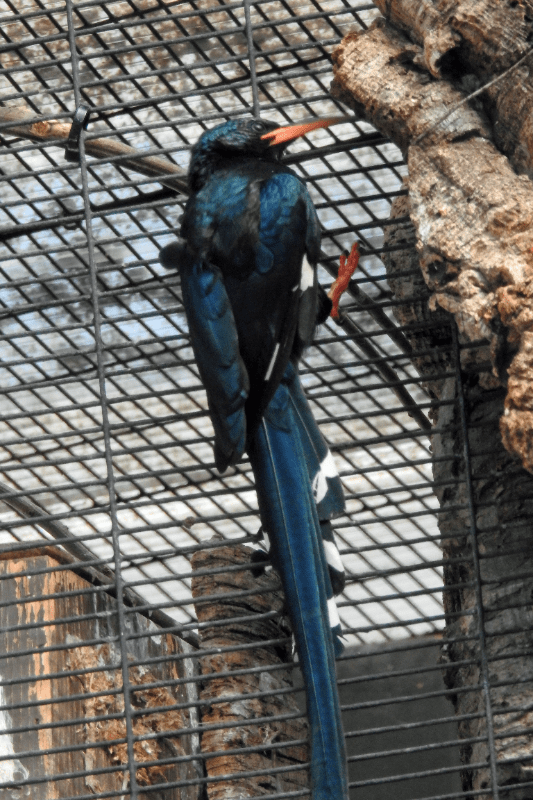
Figure 08. With their short legs, long toes and claws, long stiff tails, and long slender bills, woodhoopoes are well equipped for climbing about in trees, searching for prey by poking into crevices and holes.
Vocal Behavior
The Green Woodhoopoe is “credited” with being among the noisiest African birds. The xeno-canto website, https://xeno-canto.org/species/Phoeniculus-purpureus , lists more than 6 full pages of recordings of this species. An example of these woodhoopoes interacting may be heard at https://xeno-canto.org/353954 or https://xeno-canto.org/659029 . Their calls are often described as “loud, high-pitched cackling or chuckling,” which one bird may initiate, but which usually prompts others to join in chorus. They sometimes also vocalize just before taking flight, when raising alarm, or for no obvious reason (at least not known to the human listener). Other calls have been described as growling, twittering, or chittering.
Distribution, Habitat, and Migration
The xeno-canto website also shows a range map; eBird’s range map — https://ebird.org/map/grewoo2 — is based on reports to the eBird app or website. In general, the Green Woodhoopoe is a tropical bird native to Africa, but its range extends far south of the tropical zone (as far north as 17.38 degrees latitude, but as far south as -34.21 degrees). In fact, this species is by far the most widespread woodhoopoe, and it’s common in many parts of its range.
An alphabetical list of the countries where it resides are Angola, Benin, Botswana, Burkina Faso, Burundi, Cameroon, Central African Republic, Chad, Côte d’Ivoire, Democratic Republic of the Congo, Eritrea, Eswatini, Ethiopia, Gambia, Ghana, Guinea, Guinea-Bissau, Kenya, Lesotho, Malawi, Mali, Mauritania, Mozambique, Namibia, Niger, Nigeria, Rwanda, Senegal, Sierra Leone, South Africa, South Sudan, Sudan, Tanzania, Togo, Uganda, Zambia, and Zimbabwe. It has also been observed as a vagrant (nonbreeding) in Somalia.
Throughout its enormous range (4.7–8.8 million square miles; 12.3–22.7 million km2), it can be found from sea level to 7000 feet (2100 m), in a wide variety of habitats, including savannas, various woodlands, palm groves, riverine forests among arid thornbush, riparian and gallery forests, and even wooded suburban gardens. The main requirement is the presence of enough large trees to offer nightly roosting and breeding-season nesting.
Green Woodhoopoes don’t migrate, though they do engage in some seasonal movements in some locations (e.g., in western Africa). In fact, most males and females breed either in their natal territories (where they hatched) or in a location no more than four territories away from there. In general, territories seem to be stable across seasons, even when the size of the family group fluctuates.
Figure 09. Green Woodhoopoes don’t really migrate, but they do enjoy moving around.
Food and Foraging
According to Avibase, about 80% of the Green Woodhoopoe’s diet is invertebrates, with another 10% or so vertebrates (typically, small lizards), and the last 10% various small fruits (and seeds). It eats mostly adult and larval arthropods, especially insects and spiders.
While searching for prey, Green Woodhoopoes use their long curved claws to cling to the underside of branches or to tree trunks (mostly living trees). Their foraging style has been described as “acrobatic,” as they often hang beneath or on the sides of tree branches while probing crevices and holes. In pursuit of prey, they’ll sometimes hammer the bark loose, or they’ll poke their bill into a gap and open their gape to spread it apart.
Because males tend to have longer bills than females or juveniles, these birds tend to sexually segregate on the trees, with males hunting by probing mostly on large branches and lower on the tree trunks, and females and juveniles foraging by pecking mostly on smaller branches and higher on the tree trunk. Male–female pairs tend to forage together, and subordinate members of the family group are more likely to forage alone. They also feed at termite mounds, when available.
Figure 10. Green Woodhoopoes are well suited to finding prey on trees. Once they catch prey, they make sure it’s dead before eating it. (These woodhoopoes also seem quite fastidious about keeping their bills clean, by feaking them against a branch.)
Once these woodhoopoes grab their prey, they may pound it (presumably to ensure it’s dead) and rub it against a branch (presumably to remove any noxious substance from the exterior). Small prey are swallowed whole.
Social Behavior and Breeding
Outside of the breeding season, Green Woodhoopoes often forage socially, in groups of 4–8, sometimes even up to 16 fellow Green Woodhoopoes (about equal numbers of males and females). Given the large range of this species, observers have recorded breeding activity in every month of the year, often in association with food availability, due to local weather and seasonality. These birds typically have just one clutch per year, though occasionally a pair may make up to three attempts, probably depending on breeding success.
Green Woodhoopoes nest in tree cavities, which may be in dead or living wood, in natural cavities or in abandoned nests of woodpeckers or barbets. No cavity lining is added. Typically, the nests are 3–72 feet (0.9–22 m) above the ground. They’ll readily reuse nest cavities year after year, sometimes as many as seven consecutive years. Occasionally, if no tree cavities are available, they may nest in odd locations, such as a house’s roof cavity, or even on the ground beneath abandoned farm machinery.
Figure 11. Though Green Woodhoopoes always try to nest in tree cavities, they’ll make do with nestboxes or other cavities for rearing their young, as their long slender bills aren’t at all suited to excavating their own nest cavities.
Green Woodhoopoes are monogamous, both parents contribute to the care of their young, and they breed cooperatively, aided by their own young from previous broods (up to 10 helpers per one monogamous pair of parents). The female lays 2–6 light-greenish-blue or turquoise eggs, 3–4 being common and 6 being extremely rare. She lays one egg/day on successive days. After she lays either the penultimate or the final egg, she incubates the eggs — alone, while her mate and their helpers feed her — for 17–18 days.
After the altricial (dependent) nestlings hatch, the male and the helpers feed both the nestlings and the female, who continues to stay with the nestlings. Though they feed invertebrates to both mom and the kids, they also feed mom small vertebrates. The male and the helpers fiercely do their best to defend the nestlings against predators, but they don’t always succeed. Nestlings of Green Woodhoopoes are not only preyed upon by carnivorous birds and mammals, but also parasitized by two species of honeyguides (African birds). After about 28–30 days, the youngsters fledge (take their first flight), but they continue to be fed for several more weeks, with mom helping to feed them, too. After this time, they may stay with their family group for up to five years, becoming helpers themselves. Age at first breeding is about 2.4–3 years. Generation length is about 5.7 years; some have estimated it at 4.6–5.3 years.
Breeding success varies widely, not just from family to family or place to place, but also year to year. Likewise, annual survival rates vary. Though it’s 69% overall, about 55% of breeding males and 66% of breeding females survive annually, with slightly higher survival among helpers and juveniles. The maximum known age has been 9.8 years.
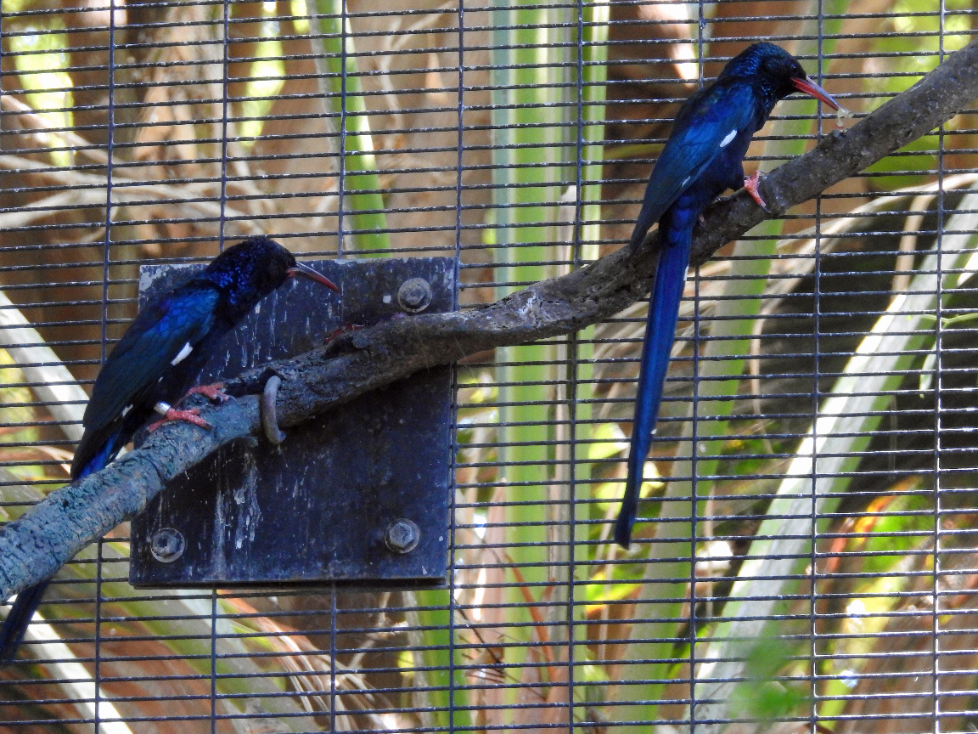
Figure 12. Green Woodhoopoes are sociable birds, enjoying the company of their group members, whether in breeding season or just foraging together.
Conservation Status
IUCN Red List conservation status of the Green Woodhoopoe is LC, Least Concern, not globally threatened. It’s widespread and common throughout its huge geographic range. Nonetheless, its population is declining, and it is threatened locally in some areas of its range, largely due to habitat destruction (e.g., removal of trees to use as fuel). Few conservation actions have been taken for this species, but it is present in numerous national parks, including in Cameroon, Ghana, Kenya, Malawi, South Africa, and Tanzania.
Observations
The Cornell Lab of Ornithology’s eBird website (https://ebird.org/species/grewoo2 ) and app have recorded 53,134 observations, 2,758 with photos, and 177 with audio recordings of the Green Woodhoopoe. For a range map of its distribution, generated from eBird observations, see https://ebird.org/map/grewoo2 . The Cornell Lab’s Macaulay Library website (https://search.macaulaylibrary.org/catalog?taxonCode=grewoo2 ) includes 4,888 photos, 206 audio recordings, and 49 videos of the Green Woodhoopoe.
Unrelated to the Cornell Lab is the iNaturalist website (https://www.inaturalist.org/observations?taxon_id=20934 ), which has received postings of 3,116 observations of the Green Woodhoopoe. A particularly striking photo of a pair of Green Woodhoopoes from iNaturalist is https://www.inaturalist.org/observations/340053331 ; a frontal view, revealing the underside of the tail and a distinctive view of the bill is https://www.inaturalist.org/observations/256339814 ; flight shots are https://www.inaturalist.org/observations/254460539 and https://www.inaturalist.org/observations/140293603; a bird with its bill open is https://www.inaturalist.org/observations/208280619 ; and birds gorging at a feeder is https://www.inaturalist.org/observations/179113735 .
Figure 13. Hasn’t Mother Nature (with help from evolution) done a spectacular job of designing Green Woodhoopoes?
References
Bucerotiformes, Phoeniculidae
- Elphick, Jonathan. (2014). The World of Birds. Buffalo, NY: Firefly Books.
- Lovette, Irby, & John Fitzpatrick (eds.), (2016). The Cornell Lab of Ornithology Handbook of Bird Biology (3rd ed.). Hoboken, NJ: Wiley.
- Winkler, David W., Shawn M. Billerman, and Irby J. Lovette. (2015). Bird Families of the World: An Invitation to the Spectacular Diversity of Birds. Barcelona: Lynx, Cornell Lab of Ornithology.
- Winkler, D. W., S. M. Billerman, and I. J. Lovette (2020). Woodhoopoes and Scimitarbills (Phoeniculidae), version 1.0. In Birds of the World (S. M. Billerman, B. K. Keeney, P. G. Rodewald, and T. S. Schulenberg, Editors). Ithaca, NY: Cornell Lab of Ornithology. https://doi.org/10.2173/bow.phoeni2.01
- https://en.wikipedia.org/wiki/Bucerotiformes
- https://en.wikipedia.org/wiki/Wood_hoopoe
Green Woodhoopoe, Phoeniculus purpureus
- Ligon, J. D. and G. M. Kirwan (2020). Green Woodhoopoe (Phoeniculus purpureus), version 1.0. In Birds of the World (J. del Hoyo, A. Elliott, J. Sargatal, D. A. Christie, and E. de Juana, Editors). Ithaca, NY: Cornell Lab of Ornithology. https://doi.org/10.2173/bow.grewoo2.01
- https://avibase.bsc-eoc.org/species.jsp?lang=EN&avibaseid=28CACA8FA9A07018
- https://avibase.bsc-eoc.org/species.jsp?lang=EN&avibaseid=28CACA8FA9A07018&sec=lifehistory
- https://ebird.org/map/grewoo2
- https://ebird.org/species/grewoo2
- https://en.wikipedia.org/wiki/Green_wood_hoopoe
- https://search.macaulaylibrary.org/catalog?taxonCode=grewoo2
- https://www.inaturalist.org/observations?taxon_id=20934
- https://www.iucnredlist.org/species/22682667/263635782
- https://xeno-canto.org/species/Phoeniculus-purpureus
Etymology
- Lederer, Roger, and Carol Burr. (2014). Latin for Bird Lovers: Over 3,000 Bird Names Explored and Explained (224 pages). Portland, OR: Timber Press.
- Gotch, A. F. [Arthur Frederick]. Birds—Their Latin Names Explained (348 pp.). Poole, Dorset, U.K.: Blandford Press.
- Gruson, Edward S. (1972). Words for Birds: A Lexicon of North American Birds with Biographical Notes (305 pp., including Bibliography, 279–282; Index of Common Names, 283–291; Index of Generic Names, 292–295; Index of Scientific Species Names, 296–303; Index of People for Whom Birds Are Named, 304–305). New York: Quadrangle Books.
Text and images by Shari Dorantes Hatch. Copyright © 2026. All rights reserved.
All images were taken at the San Diego Zoo or its Safari Park.
 Bird Brain

Leave a comment