
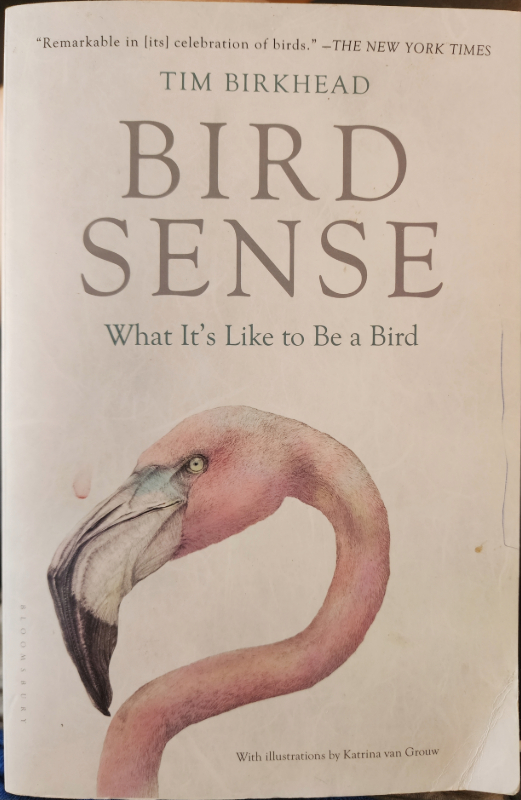
Tim Birkhead (2012). Bird Sense: What It’s Like to Be a Bird. New York: Bloomsbury.
“Bird Sense is about how birds perceive the world. It is based on a lifetime of ornithological research and a conviction that we have consistently underestimated what goes on in a bird’s head” (p. xx).
- Preface, vii-xxii
- Chapter 1. Seeing, pp. 1–32
- Studying Bird Senses
- Eye Size
- Eye Position
- Pecten
- Fovea
- Rods and Cones, Sensitivity and Acuity
- Nictitating membrane
- Color Vision
- Brain Lateralization
- Chapter 2. Hearing, pp. 33–71
- Ear Anatomy
- Auditory Abilities
- Chapter 3. Touch, pp. 73–107
- Temperature Detection
- Chapter 4. Taste, pp. 109–125
- Taste Detection
- Location of Taste Receptors
- Chapter 5. Smell, pp. 127–161
- Anatomy
- Physiology and Genetics
- Chapter 6. Magnetic Sense, pp. 163–178
- Chapter 7. Emotions, pp. 179–202
- Basic Emotions: Fear and Pain
- Caring
- Postscript, pp. 203–209
- Back Matter
- Additional Resources
- Birds of the World (online paid subscription)
- Wikipedia

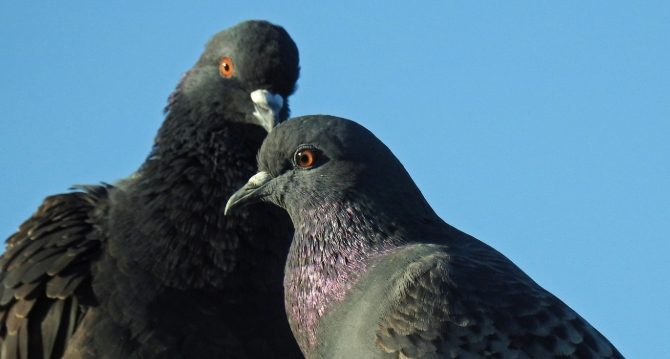
Seemingly ordinary Rock Pigeons have an extraordinary array of sensory abilities.
Preface
Birkhead views birds’ senses from a biologist’s perspective. We humans often focus more on how our senses are similar to birds’ senses, rather than trying to discover how birds’ senses may differ from ours. In this book, Birkhead highlights not only their similarities, but also their differences, such as how many birds can see ultraviolet light, detect Earth’s magnetic field, and echolocate in the dark. He gives several examples of the amazing sensory abilities of birds. For instance, an Emperor Penguin can dive 1,300 feet (400m) below the Antarctic seas and find prey in the dark; a flamingo can sense the presence of rain hundreds of miles away.
Biologists and other scientists sometimes make assumptions about bird behavior based on their own orientation and experiences, without considering other possibilities based on the worldview and experiences of the birds. Scientific research builds on past discoveries and revelations, including those by giants such as Darwin, Einstein, Newton. Nonetheless, “Research is full of blind alleys, and scientists constantly have to judge whether to persist in what they believe to be correct, or to give up and try a different line of enquiry” (p. xvi). Scientific ideas and outlooks must change in light of new evidence.
Often, the best way to try to understand the sensations of birds is simply to observe the bird’s behavior. According to Nobel Laureate Niko Tinbergen, there are 4 ways to study animal behavior: Consider the behavior’s (1) adaptive significance, (2) causes, (3), development, and (4) evolutionary history. Each way of studying has merit.
Nowadays, we can sometimes enhance our observations by using sophisticated technology, which offer new revelations. For instance, birds that appear sexually monomorphic (males and females looking alike) using our human vision may actually be dimorphic (males and females looking different) when viewed in the ultraviolet spectrum. Tracking studies and lab studies show that many migrating birds use a highly developed magnetic sense, which other birds may also use.
Chapter 1. Seeing
Fun fact: “The wedge-tailed eagle has the largest eye relative to body size of any bird” (p. 2). “The Australian wedge-tailed eagle has enormous eyes, both in absolute terms and compared with most other birds, and as a result has the greatest visual acuity of any known animal” (p. 11)
Studying Bird Senses
According to Birkhead, there are two basic ways that we can learn about a bird’s senses: (1) study its anatomy and physiology (in dead birds or in live captive birds), (2) observe its behavior. From studies of bird anatomy, we know that birds’ eyes are even bigger than they look to us, and their bigger eyes offer better vision. Most of the bird’s eye is covered with skin and feathers, so we don’t see their enormous relative size, which is almost twice as big as the eyes of most mammals.
Eye Size
Of course, bigger birds generally have bigger eyes, with Ostriches having the largest eyes, and hummingbirds having the smallest. Relative to body size, kiwis have tiny eyes, both relatively and absolutely, <1/3″ (8mm) diameter. In general, the largest eyes are found in raptors such as eagles, hawks, falcons, and owls, who need keen vision to spot prey from great heights.
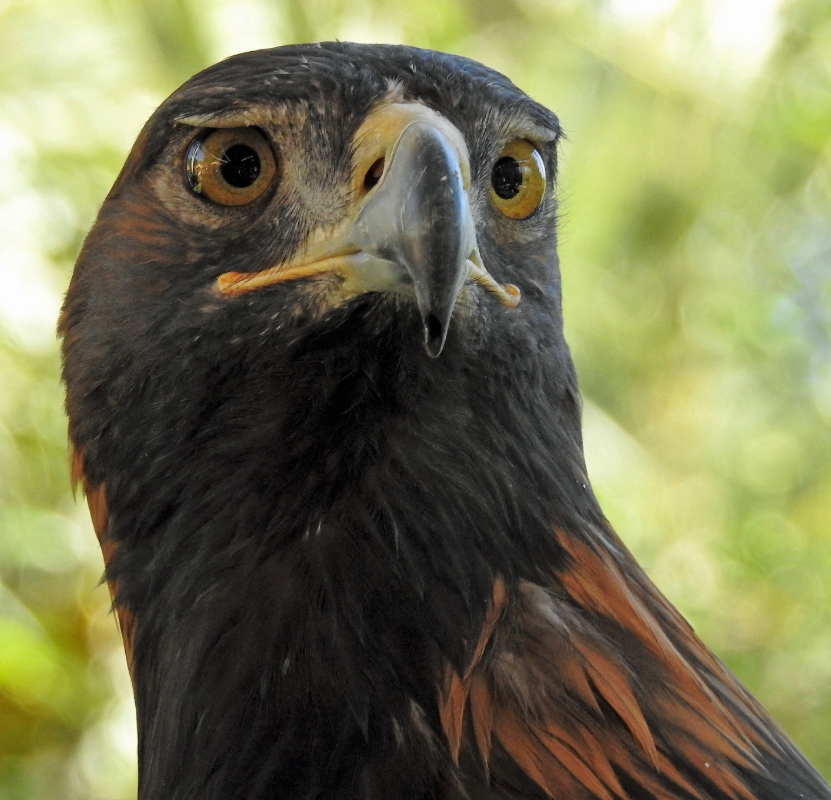
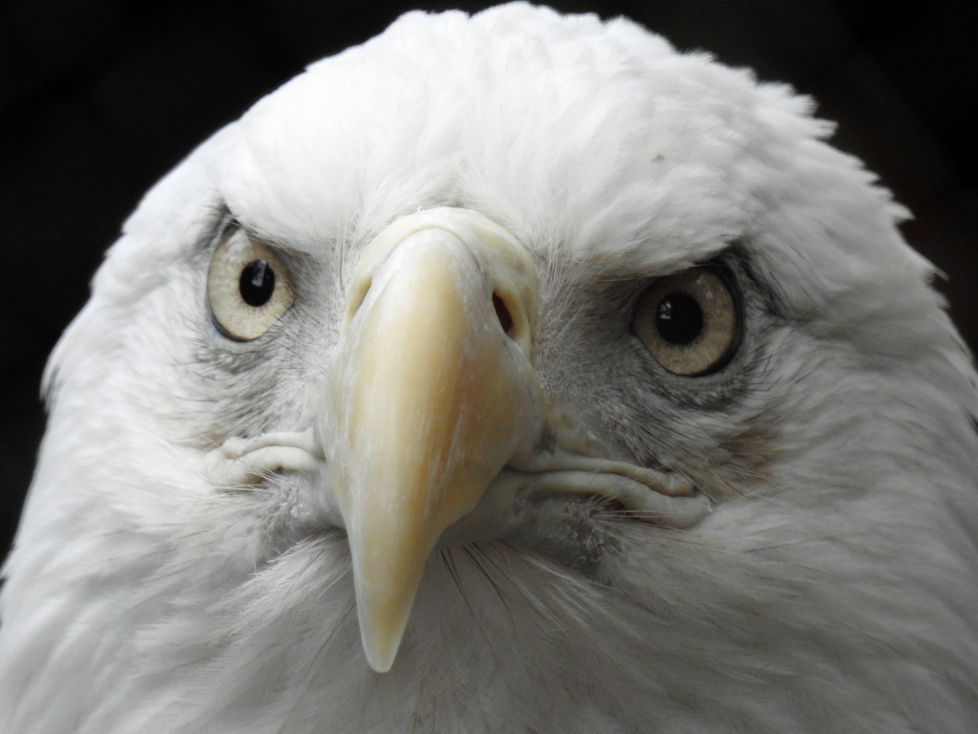
Figure 01. Raptors such as this Golden Eagle (left) and this Southern Bald Eagle (right) have large eyes, both absolutely and relative to the size of their bodies.
Why does size matter? The bigger the eye, the larger the area of the retina receiving the visual information, and a bigger area can hold more photoreceptor cells (which receive the light images). Typically, birds that are nocturnal (foraging at night) or crepuscular (foraging at dawn and dusk) have larger eyes than most diurnal birds (foraging in the middle of the day). For instance, most shorebirds and owls that forage at night have relatively large eyes, compared with most sparrows. A major exception is the nocturnal kiwi, whose tiny eyes play only a small part in its ability to forage.
What limits the eye size of birds? Chiefly, flight-worthiness. Fluid-filled eyes are HEAVY, making it harder to lift off the ground. To make matters worse, eyes are positioned far from the bird’s center of gravity, front-loading the weight, making flight even more challenging. Hence, birds can’t afford to have eyes any bigger than they need for the acuity they need to catch prey or otherwise find food and to avoid becoming another animal’s prey. (Birds have many other flight-ready body adaptations, such as exchanging heavy front-loaded teeth for lightweight bills and using a powerful gizzard for grinding food, positioned at their center of gravity.)
In general, birds that fly swiftly (e.g., Ospreys) see better than birds with “a slower, more meandering flight” (p. 9). Better vision for speedy flyers helps them to avoid collision and to capture small or large prey (which may also be in motion). For instance, American Kestrels (small species of falcon) can detect an insect less than 1/10th of an inch (2 mm) long, from 60 feet (18 m) away.
Figure 02. Birds who fly swiftly — such as this Osprey — need better vision than nonflying birds or birds who fly relatively slowly.
Eye Position
The position of the eyes on the head also affects what birds see. In general, there are three main kinds of visual fields observed by different animals:
- Animals with eyes on the sides of the head (most birds): have excellent lateral (sideways) vision, some forward vision, but no vision behind the bird — These birds can’t even see the tip of their own bill, but they see just enough overlapping binocular vision to be able to perform some tasks requiring depth perception, such as feeding their chicks and building a nest
- Animals with eyes positioned very high on the sides of the head (e.g., ducks and woodcocks): have good panoramic vision on the sides, above, and behind them, but poor forward vision
- Animals with forward-facing eyes (e.g., owls): have very good binocular vision, good depth and distance perception, but they can’t see behind themselves, and their sideways vision isn’t as good as in birds with sideward-facing eyes. (Owls’ vision is further limited by their physiological tube-shaped structure, which keeps their eyes from moving sideways.)

Figure 03. The eyes of this Burrowing Owl face forward, offering it binocular vision unavailable to birds whose eyes face sideward.
Pecten
Unlike human eyes, each bird eye has a pecten, “a dark structure with a pleated [3–30 pleats] appearance . . . inside the rear chamber of the eyeball” (p. 16). The pecten is typically the largest and the most complex in raptors and other birds with highly acute vision. It’s positioned in the eye so that its “shadow falls on the optic nerve — or blind spot of the retina — and therefore does not interfere with vision” (p. 16). Its importance seems to be that it provides oxygen and other nutrients to the back of the eye, so the bird retina doesn’t need other blood vessels, which would impede vision. The extensive pleating maximizes the pecten’s surface area, thereby optimizing the retina’s exchange of CO2 and O2.
Fovea
From their behavior, we know that raptors have extraordinarily keen eyesight. From studies of their physiology, we can understand how. For one thing, falcons and other raptors have two foveas — areas on the retina (at the back of the eye), where photoreceptor cells are densest. This density of photoreceptors gives the fovea higher visual resolution, the sharpest sight of any area of the retina. About half of all birds have two foveas per eye; the other half have one fovea per eye, as we humans do.
In birds with two foveas, one fovea is like that of birds with one fovea: It is monocular (one-eyed), typically faces sideward, and works well for close vision. The second fovea is more convex and works like a telephoto lens, providing high resolution and magnification for distance vision. It is positioned to look less sideward and more forward, allowing for better binocular (two-eyed) vision. When raptors seem to be moving their heads side to side, up and down, they may be alternating the images in their eyes, taking advantage of the two foveas (close-up, distance).
Rods and Cones, Sensitivity and Acuity
Birds and humans (and other animals) have two types of photoreceptors for vision: rods, which are highly sensitive to sensations under low-light conditions, and cones, which offer greater acuity and higher resolution in bright-light conditions. In the fovea of the eye, each photoreceptor has its own neural connection to the brain’s visual cortex, providing maximal visual resolution. Elsewhere in the retina, photoreceptors (both rods and cones) must share neural connections to the visual cortex. Birds with a higher density of cones in the fovea (e.g., raptors) have greater visual acuity. Birds with fewer cones and proportionately more rods sacrifice visual acuity in bright light for visual sensitivity in dim light. For instance, nocturnal owls need much greater visual sensitivity to avoid obstacles while flying at night, as well as to detect prey (which they mostly find through their superlative hearing). The opposite is true of birds with more cones and proportionately fewer rods: greater visual acuity in bright light but less visual sensitivity in dim light. Diurnal raptors (e.g., American Kestrels) rarely hunt in low light, as their eyes have low visual sensitivity.
In general, birds with bigger eyes, bigger eyes relative to body size, and more photoreceptors can see better than other birds. Having more photoreceptors can mean both greater density (more packed into the tiny fovea) and greater distribution (more spread out over the entire retina).
Nictitating Membrane
Unlike humans, birds have a nictitating membrane on each eye. Transparent, or at least translucent, this membrane acts like an extra pair of eyelids, protecting, moistening, and cleaning the eye’s surface. Each bird can control its own nictitating membrane, such as when a raptor uses this membrane while speeding toward prey, or a woodpecker uses it to protect the eye from the impact of striking bark and from flying debris.

Figure 04. The nictitating membrane on this Crowned Eagle is sliding sideways from the inside corner of its eye, across its eye toward the outer corner.
Color Vision
Many male birds use brilliant plumage to attract a mate. For instance, male Satin Bowerbirds (Australia), some Birds of Paradise (New Guinea), and Andean Cocks-of-the-Rock (South America) compete with each other in courtship display leks, which they position in brightly sunny spots, to highlight their brilliant plumage. The females must have superlative color vision to appreciate the fine distinctions among males during these courtship displays.

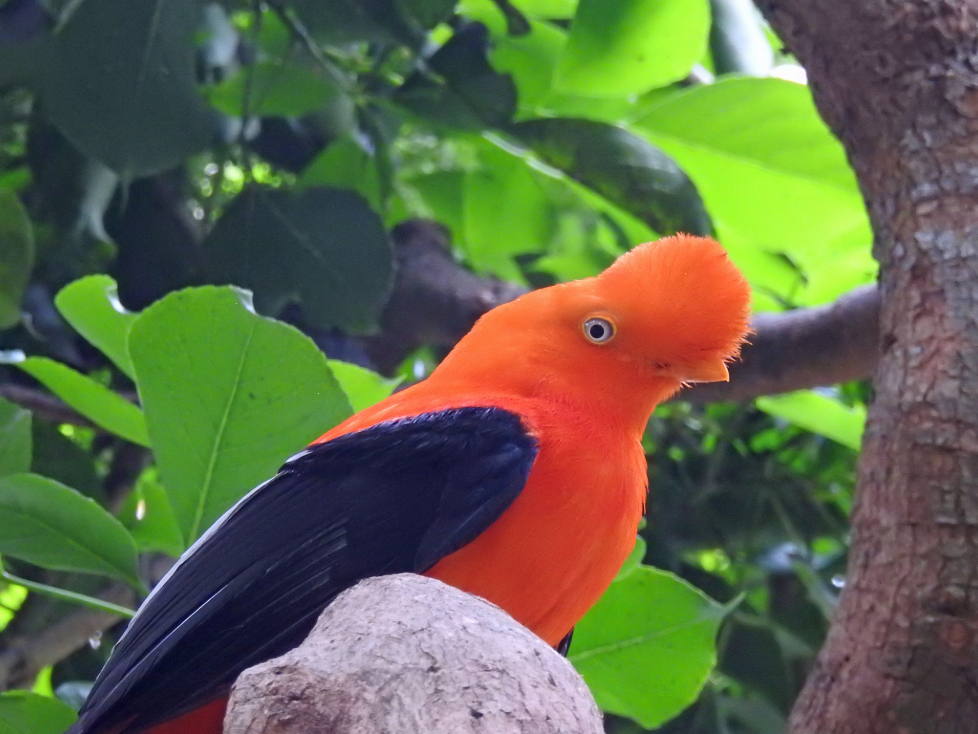
Figure 05. Andean Cock-of-the-Rock females (left) have superlative color vision to keenly assess the plumage of the males (right).
Birds (and other animals) perceive color (wavelengths of light) because of an interaction between the color properties reflected by the object and “the perceiver’s nervous system that analyses its image thrown upon the retina” (p. 23). Beauty is in the brain of the beholder.
Most mammals (including dogs) see using only two types of color cone photoreceptors in the retina. Humans (and other primates) have three types of cones in the retina — red, green, and blue — which absorb light wavelengths in these colors. Many (perhaps most) birds also have a fourth type of cone: ultraviolet (UV). In addition, the retinas of most birds typically have more color-receptor cones packed into each square millimeter, compared with humans. Also, “birds’ cone cells contain a coloured oil droplet, which may allow them to distinguish even more colours” (p. 24). These boosts to their color vision make it much easier for birds to sense a richer visual world than we humans can. For instance, the plumage of hummingbirds, European Starlings, American Goldfinches, and Blue Grosbeaks at least partly reflects UV light, with males’ plumage often reflecting more UV light than females’.

Figure 06. The plumage of European Starlings reflects ultraviolet light, which they and many other birds can see.
Brain Lateralization
Birkhead also describes brain lateralization in birds, with different sides of the brain processing different information. For instance, domestic fowl “typically use their left eye to scan for aerial predators” (p. 27), meaning that the right side of the brain is paying attention to the sky while the left side of the brain and right eye are processing close-up visual information, such as where to peck at the ground for seeds. These differences may begin developing in the eggshell. Raptors may develop differently. For instance, “When peregrine falcons are hunting they home in on their prey in a wide arc, rather than in a straight line, and mainly use their right eye” (p. 29). Parrots consistently prefer one foot or the other, and the greater their handedness (“footedness”?), the more readily they can solve tricky puzzles, so brain lateralization may improve functionality.
Figure 07. This video of a Peregrine Falcon in flight is actually slowed down; when diving in flight, they’re the speediest animals on the planet.
Brain lateralization may also explain why many birds (e.g., ducks, gulls, chickens) can sleep with one eye open. This appears to be especially true for birds who sleep on the ground, rather than in trees. For birds sleeping in a group roost, the birds on the outer edge are more likely to sleep with one eye open than the birds in the middle, so it may be that this behavior relates to watching for predators. Some birds can even sleep with one eye open while migrating.
Figure 08. If these Western Gulls roost together, the gulls on the outside edge of the group may sleep with one eye open.
Chapter 2. Hearing
“It cannot be doubted that the faculty of hearing is highly developed in birds, not only the mere perception of sound, but also the power of distinguishing or understanding pitch, notes and melodies, or music.”
From Alfred Newton, 1896, A Dictionary of Birds, A. & C. Black
Quite a few birds are noted for their loud vocalizations: European Bitterns, New Zealand’s Kakapo (a huge flightless parrot), and corncrakes, all of which are nocturnal, dwelling in dense vegetation, so they rely on loud vocalizations to announce their presence. Not all loud vocalizers are nocturnal. “One of the loudest of all songbirds is the nightingale. . . . nightingales sing at around 90 dB” (p. 39).
Figure 09. The vocalizations of Screaming Pihas are among the loudest of any birds.
Ear Anatomy
Researchers often study captive birds (e.g., zebra finches, canaries, budgerigars) to investigate behavioral responses to sound. Study of the anatomy of bird ears began in the 1500s and 1600s. We now know that both birds and humans have three main parts to our ears:
- outer ear — the auditory canal (covered by feathers in most birds, but surrounded by an external pinna on humans, which funnels sound toward the auditory canal);
- middle ear — the eardrum and bone(s) (one bone in birds, three bones in mammals); and
- inner ear — fluid-filled cochlea, which has a basilar membrane that holds tiny hair-cell sensory receptors.


Figure 10. The ears of most birds are covered with ear-covert feathers, but you can see the ear holes of bare-headed birds such as this Lappet-faced Vulture (left) and this Hooded Vulture (right).
Sounds (acoustic pressure waves) travel from the outer environment to the outer ear, then down the auditory canal to the eardrum. The eardrum sets into motion the teensy ear bones, which send vibrations to the inner ear, where they cause the cochlear fluid to vibrate. This vibrating fluid triggers microscopic hair-cell sensory receptors to send signals to the auditory nerve, which transports the signals to the brain, where the signals are interpreted as “sound.”
Unlike mammal cochleas, bird cochleas are linear, not spiral shaped. Typically, larger birds have longer cochleas (and longer basilar membranes). For instance, a 15-g Zebra Finch’s basilar membrane is about 1.6 mm long; a 60 kg (60,000 g) emu’s is about 5.5 mm long. Not always, though. Even small owls, who heavily rely on hearing, have conspicuously long cochleas. Also, larger birds are more sensitive to low-frequency (low-pitched) sounds, and smaller birds are more sensitive to high-frequency (high-pitched) sounds.
Another factor affecting cochlear length seems to be musicality. For instance, highly musical thrushes have especially long cochleas; lapwings and nutcrackers have medium-length cochleas; and nonmusical geese have short cochleas.
Figure 11. This Spur-winged Lapwing has a medium-length cochlea, so it’s probably sensitive to frequencies in the middle of the range (i.e., neither very high-pitched nor very low-pitched sounds).
Auditory Abilities
Probably the most distinctive difference between bird ears and mammal ears is that birds regularly replace the hair-cell sensory receptors on their basilar membranes, but mammals don’t. Therefore, as we mammals age, undergo injuries, or simply experience wear and tear, we lose these hair-cell sensory receptors, especially those that detect high frequencies. Birds don’t.
A particularly surprising feature of birds’ hearing is that the auditory abilities of birds fluctuate during the year, particularly for male songbirds who breed seasonally. At the end of each breeding season, the brain region that controls the acquiring and voicing of songs shrinks until the approach of the following breeding season. As the next breeding season approaches, these brain regions expand again. Why? Because brains consume a lot of energy. In humans, “the brain uses ten times as much energy as any other organ” (p. 48). Birds can’t afford to waste a lot of energy maintaining parts of the brain that they won’t need for many months. These changes are linked to the timing of breeding, not to other changes in seasonality. Female brains may change seasonally, as well, as they need to keenly detect male songs during breeding season but not the rest of the year.
Figure 12. Song Sparrow males sing more and more often than females, and the males sing more just before and during breeding season than at other times of the year. Research suggests that their brains change seasonally to accommodate the brain-power needed for singing.
Chapter 3. Touch
Temperature Detection
Incubating birds must be highly attuned to even slight changes in temperature. Incubating embryos must be maintained within the Goldilocks zone — not too cold and not too hot. Temperature can fluctuate within that zone, but even brief periods of overheating can be perilous. Slight cooling can be tolerated, but not extreme cold.
Incubating parents can readily detect temperature in their brood patches, one or more bare areas of skin in direct contact with the developing eggs. The incubating parent can actually draw off excess heat while incubating the eggs, by decreasing blood flow to the brood patch, as well as transfer more heat to the eggs by increasing blood flow.
Figure 13. This Wattled Jacana dad is carefully regulating the temperature of his four eggs.
Megapode parents (Maleos, Brush Turkeys, Malleefowl, etc.) don’t incubate their offspring with their own body heat. Rather, the parent (typically the male) creates mounds of volcanic ash, hot sand, or decaying plant matter, and the female lays eggs inside it. The parent must frequently monitor the temperature by poking the whole head or just the bill into the mound. Acute temperature sensors inside the mouth (palate or tongue) detect whether the temperature is just right, too hot (requiring the parent to open the mound to let heat escape), or too cold (requiring the parent to add more material). Maleo eggs can take months to incubate, which means these parents spend months monitoring the temperature of the mound.
Figure 14. Maleo parents are monogamous and they may also share in monitoring the incubation mounds (“burrows”) where the female lays their eggs.
“It is clear that the sense of touch in birds is better developed than we might imagine,” but researchers need to do much more to learn more (p. 107).
Chapter 4. Taste
Taste Detection
People who have hummingbird feeders know that hummingbirds can readily taste nectar’s sweetness. Similarly, frugivorous (fruit-eating) birds can detect the relative sweetness of ripe versus unripe fruit, preferentially eating sweeter riper fruits. Observers have also noticed birds’ sensitivity to taste while watching birds eat caterpillars, other larvae, and other arthropods. They immediately reject any prey they deem literally distasteful. “Taste is essential for discriminating between edible and nonedible (or dangerous) food items” (p. 115). Taste can also aid in detecting prey; for instance, shorebirds such as sandpipers can taste whether worms are present in wet sand.
Figure 15. This female Allen’s Hummingbird can taste the sweetness of the nectar inside her palate as she sips.
Location of Taste Receptors
Surprisingly to us humans, in most species of birds, their tongues (usually located within the lower jaw) lack taste receptors. “In most birds species the taste buds are located at the base of the tongue, in the palate and towards the back of the throat. Since saliva (or, at least, moisture) is crucial for the perception of taste, many taste buds are, not surprisingly, located near the openings of the salivary glands” (p. 118).
For Mallards and probably other ducks, taste receptors are located in the tips of the duck’s bill. Within the Mallard’s mouth are about 400 taste buds: four receptor locations in the upper jaw and one in the lower jaw. In particular, the duck’s bill tip is where the duck first comes in contact with food. In addition to observational studies, experimental studies show that Mallards can readily taste and have taste preferences.
Figure 16. While these Mallards are foraging here, they’re able to taste their food with taste receptors on the tips of their bills.
The number of taste buds varies across birds. For instance, Mallards have 400, African Gray Parrots have at least 300–400, chickens have 300, and Japanese Quails have 60. Information on other species is inadequate. It’s not even clear that the number of taste buds reveals much about what birds can taste or whether they can discriminate among different taste sensations. In any case, however many taste buds they have, birds seem able to respond to salt, sour, bitter, and sweet tastes, the same four basic taste sensations as we do. (Birkhead didn’t mention umami, the fifth taste sensation, recently identified.)
Chapter 5. Smell
Anatomy
Betsy Bang, a medical illustrator, revolutionized our understanding of avian olfaction by dissecting and illustrating the nasal cavities (and brains) of various birds. Previously, most people who studied birds had believed that birds lacked a sense of smell, partly due to faulty observations and inadequate study. She revealed that many birds have superlative anatomy for being able to smell. Inhaled air passes through nasal conchae, coiled rolls of cartilage or bone covered with moist tissue that holds myriad odor-detection cells. These receptors transmit electrochemical signals to the olfactory bulb, the part of the brain where these signals are interpreted as distinct odors.
Bang noted that three birds are particularly well-endowed with olfactory sensors: Turkey Vultures (which detect fresh carrion by smelling it), Black-footed Albatrosses (which detect the location of squids and other marine life), and Oilbirds (nocturnal frugivores who nest and roost in dark caves). Bang then hooked up with retired neuropsychiatrist Stanley Cobb, with whom she measured the sizes of olfactory bulbs in 107 bird species. Their studies found that the relative size of the olfactory bulb to the total brain length was greatest in petrels and kiwis (with nostrils at the bill’s tip) and smallest in many songbirds, with the largest relative size about 12 times as large as the smallest. They inferred that the relative size of the olfactory bulb correlated with the sense of smell, an inference that has been confirmed, though with numerous exceptions.
Bang and Cobb concluded, “Our survey suggests that in kiwis, in the tube-nosed marine birds, and in at least one vulture [Turkey Vulture], olfaction is of primary importance, and that most waterbirds, marsh dwellers, and possibly echo-locating species, have a useful olfactory sense. In other species it may be relatively unimportant” (p. 140).

Figure 17. Shorebirds such as this Whimbrel can use their sense of smell, as well as their other senses, to find prey.
Physiology and Genetics
Further research found that though Bang and Cobb’s conclusions about individual species may have been inaccurate, their overall findings were on point. Also, it turns out that birds who are nocturnal or crepuscular are more likely to have large olfactory bulbs and well-developed senses of smell. While anatomy reveals quite a bit about birds’ physiology, the study of living birds’ brains reveals even more. For instance, brain imaging has shown that the olfactory sensors in kiwi brains are structurally different from those of other birds — more like a big sheet of tissue than a bulb.
Genetic studies have further added to our understanding, and in general, the more olfactory genes a bird has, the larger is the size of its olfactory bulb. Kiwis and Kakapos (both nocturnal, with large olfactory areas in the brain) have three to four times as many genes as canaries and blue tits (diurnal songbirds with relatively small olfactory bulbs). A glaring exception to this rule is the Snow Petrel, a diurnal seabird with a huge olfactory bulb, which has about a third as many olfactory genes as the Kakapo. Perhaps as a diurnal seabird, it doesn’t need to detect as wide a range of odors, but it’s not now known why this difference.
Kiwis, most seabirds, many shorebirds, Turkey Vultures, and American Woodcocks have superlative senses of smell. Even pigeons seem to use olfactory cues (as well as vision and magnetic sensations) when finding their way home.
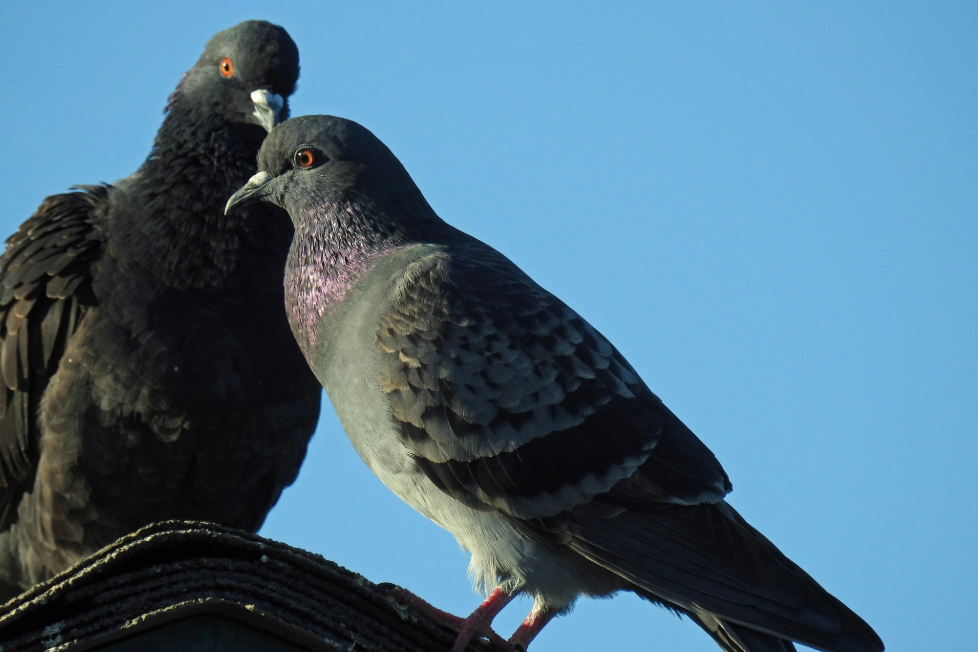
Figure 18. Pigeons use a broad array of senses for navigation, including a good sense of smell.
Chapter 6. Magnetic Sense
In banding studies, researchers and other dedicated bird-lovers go out into natural areas, trap birds (often in mist nets), take various measurements of the birds’ size and health, and pinch numbered bands onto the birds’ legs. Through the years, these careful, time-consuming studies have revealed a great deal about the health of individual birds, the relative populations of birds (increasing? decreasing?), and their locations. Through these studies, researchers can also infer a lot about bird migrations and other movements.
More recently, these bands have been augmented by using geolocators, devices that track every movement of each bird, often in real time (e.g., every 10 minutes). Just some of the birds tracked in this way have been shrikes, nightingales, and seabirds (e.g., albatrosses, guillemots, shearwaters). Research shows that Arctic Terns fly about 11,000 miles (17,703 km) or more each way between their summer and their winter homes (see https://bird-brain.org/2025/04/27/the-minds-of-birds-by-alexander-skutch/#15). Typically, migrant birds include stopovers during their journey, sometimes stopping for up to a couple of weeks to rest, refuel, and re-energize before continuing. Probably the most impressive migrant shorebird is the Bar-tailed Godwit, who takes just 8 days to travel 6,800 miles (11,000 km) — nonstop! — from Alaska to New Zealand.

Figure 19. Each year, migrant Redheads (diving ducks) return to San Diego, California, many of them traveling from inland marshes and lakes where they nest.
In addition to these field observations, scientists study captive birds to discover how they navigate en route. With captive birds, researchers can control what the birds see (e.g., night sky, sunlit sky, darkness) and can watch how the birds orient themselves. For many birds, visual features help greatly with navigation — stars and other features of the night sky for nighttime flying, and terrestrial landmarks for daytime routes over land. Even the sun itself can aid in navigation during daytime flying, by observing the sun’s location at dawn, midday, and dusk.
Surprisingly, though, even when migrant birds are prevented from seeing anything at all, many birds still correctly orient their bodies for their migration route. When researchers manipulated the magnetic field of the area surrounding the captive birds, they discovered that these birds can directly sense Earth’s magnetic field, using their own magnetic senses.
Migration requires two kinds of knowledge: (1) Where am I? (an internal map) (2) Where am I going? (an internal compass). The Earth’s magnetic field can actually provide both. Inside the bird’s head or neck (usually inside the bill) are tiny magnetic receptors involving minute crystals of magnetite. Because Earth’s magnetic field is stronger in some places than in others, these magnetite receptors indicate the strength of the magnetic field, which tells the bird its geographic location — the Where am I? question.
Additionally, magnetic receptors in the eyes of some birds have a chemical reaction to the direction of Earth’s magnetic field, so it could be said that these birds “see” Earth’s magnetic field — the Where am I going? question. (In pigeons and robins, one eye appears more sensitive to these magnetic sensations and is more important in navigation; it’s also possible that other birds may have a lateralized magnetic sense, too.) In addition, because magnetic fields “can pass through body tissues. . . . it is possible for a bird (or other organism) to detect magnetic fields via chemical reactions inside individual cells throughout its entire body” (pp. 175–176).
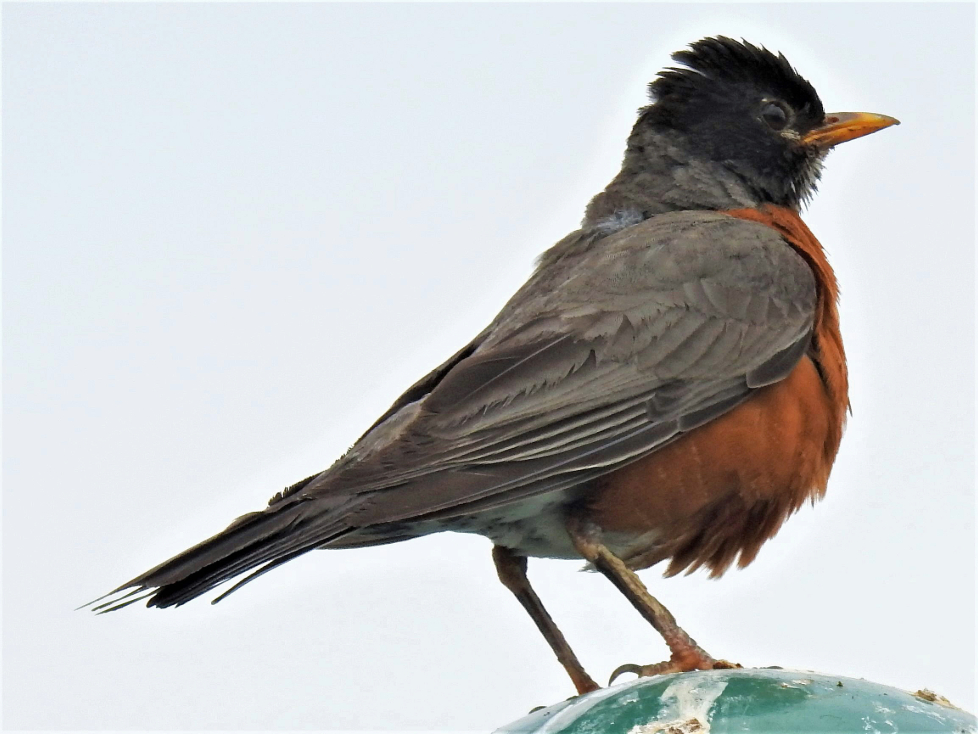
Figure 20. American Robins, pigeons, and perhaps other birds can “see” Earth’s magnetic field more readily in one eye than in the other.
Chapter 7. Emotions
Basic Emotions: Fear and Pain
Why have emotions? “Emotions have evolved from basic physiological mechanisms that, on the one hand, allow animals to avoid harm or pain and, on the other, allows them to obtain things they need, a ‘reward’, such as a partner or food” (p. 186). For instance, birds experience fear — as shown by physiological stress responses — such as when avoiding predators. Fear is highly adaptive, helping birds to avoid and escape risky situations.
Emotional responses to pain are also well documented. Initially, all animals respond to pain reflexively, withdrawing from painful stimuli. Soon after this unconscious reflexive response, a conscious response emerges, which is tinged with emotion and can be documented through studies of electrical and neurochemical changes in the brain.
Caring
Probably the clearest evidence of birds’ emotions is their devotion to their offspring, both their eggs and their nestlings, “feeding them, allopreening them, removing their faeces and protecting them from predators. The injury-feigning display performed by ground-nesting birds like plovers and partridges provides a dramatic example of parental protection” (p. 182). (In allopreening, one bird preens another, such as a parent preening a chick, mates preening each other, or group members preening each other.) Nest parasites such as cuckoos might seem to argue against birds’ emotions related to parenting, but the parents who host the parasite’s egg and chick show the potent parenting impulse to care for needy youngsters. Also, chicks often show emotional responses to their parents.
Figure 21. These Mallard ducklings are closely following their mama, having imprinted on her immediately after hatching.
In addition to emotional attachment to their offspring, most birds form other strong social bonds, whether with a mate, a small group, or a larger society. Their behavior suggests that these relationships have an emotional component, whether we call it love, affection, or something else. Birds show their emotional attachments to one another, from the cooperative-breeding colonies of many Australian birds to the lifelong faithful partnerships of Mute Swans, Snow Geese, and many other birds.

Figure 22. This pair of Canada Geese (left) may well have formed a lifelong pair bond. Canada Goose parents (right) share the care of their goslings.
The vast majority of birds are socially monogamous. A tiny minority of birds are either polygamous (mostly polygynous, but sometimes polyandrous) or promiscuous, without any true bonds between male and female. Social monogamy doesn’t necessarily mean sexual monogamy, though, and many birds are not sexually monogamous. It’s not uncommon for birds to copulate outside the bonded pair or even for some of the pair’s offspring to have different biological fathers.
Among sexually monogamous birds, Snow Geese can live up to about 28 years, and they typically choose a mate by the time they’re 2 years old, so for them, lifelong partnership lasts a long time. When reunited after even a brief separation, these mates ceremoniously greet one another (as do penguins, gannets, guillemots, and many other pair-bonded birds). “Strikingly, the duration and intensity of these greetings is closely tied to the length of time the pair members have been apart” (p. 200).
Many birds enhance their social bonds in numerous ways: offering food to one another, allopreening, ceremonies such as greetings, or vocalizations such as antiphonal singing (call-and-response) or duetting. Many pairs, families, or small flocks maintain vocal contact when they can’t easily see one another, such as while foraging in dense vegetation. Sometimes, it’s nice just to have a group chat, such as when 6–8 cooperative-breeding Australian Magpies gather on the ground and carol back and forth to one another.
Many birds spend a lot of time allopreening their mates or other members of their social group. Allopreening stimulates their brains to release endorphins, prompting feelings of well-being and pleasure. Captive birds may also seek to be “allopreened” (aka “tickled”) by their caregivers. For instance, Irene Pepperberg’s African Gray Parrots even ask to be “tickled.”
Figure 23. These American Crows are allopreening, strengthening their pair bond.
Postscript
As human observers of birds, it’s hard to know just what may be prompting birds to behave as they do. What are they sensing and thinking? This understanding is further complicated because like humans, “birds must also integrate information from their different sense organs” (p. 203). For instance, when chickens, turnstones, and pigeons recognize one another as individuals, are they doing so by sight, by sound, or by some other sensory system? When an insectivore is hunting, it’s looking, listening, perhaps smelling, and maybe also sensing vibrations through touch receptors in its toes, feet, and legs. When Greater and Lesser Flamingos seem to detect distant rain (hundreds of miles away), are they hearing thunder, seeing rain clouds, sensing changes in barometric pressure, or are they tuning into their senses in some other way we don’t yet know about?
Figure 24. How are Lesser Flamingos (and Greater Flamingos, not shown) able to sense that a rainstorm has ended a drought, hundreds of miles away? They may be responding to multiple sensations. (These Lesser Flamingos, as well as Greater Flamingos, can be seen at the San Diego Zoo’s Safari Park.)
“It is inevitable that what we discover about the senses of humans will allow us to make similar studies of birds. . . . what we discover about birds (and other animals), including their seasonal remodelling of the brain, or their regeneration of hair cells in the inner ear, have huge implications for humans. . . . the best is yet to come” (p. 209).
Back Matter
Notes, pp. 211–230
Bibliography, pp. 231–251
Glossary, pp. 252–255
Index, pp. 256–265
Additional Resources
For some of the photo captions and other examples used here, I double-checked the information in other sources. These are the resources I used.
Birds of the World (online paid subscription)
- Bare-throated Bellbird (Procnias nudicollis) — Jahn, A. E., M. Bettio, J. Cereghetti, C. Suertegaray Fontana, M. Repenning, and T. B. Ryder (2020). Bare-throated Bellbird (Procnias nudicollis), version 1.0. In Birds of the World (T. S. Schulenberg, Editor). Cornell Lab of Ornithology, Ithaca, NY, USA. https://doi.org/10.2173/bow.batbel1.01
- Cotingas (Cotingidae) — Winkler, D. W., S. M. Billerman, and I. J. Lovette (2020). Cotingas (Cotingidae), version 1.0. In Birds of the World (S. M. Billerman, B. K. Keeney, P. G. Rodewald, and T. S. Schulenberg, Editors). Cornell Lab of Ornithology, Ithaca, NY, USA. https://doi.org/10.2173/bow.coting1.01
- Sandpipers and Allies (Scolopacidae) — Winkler, D. W., S. M. Billerman, and I. J. Lovette (2020). Sandpipers and Allies (Scolopacidae), version 1.0. In Birds of the World (S. M. Billerman, B. K. Keeney, P. G. Rodewald, and T. S. Schulenberg, Editors). Cornell Lab of Ornithology, Ithaca, NY, USA. https://doi.org/10.2173/bow.scolop2.01
- Screaming Piha (Lipaugus vociferans) — Suzuki, I., N. Fearnside, W. Tori, and J. I. Pareja (2020). Screaming Piha (Lipaugus vociferans), version 1.0. In Birds of the World (T. S. Schulenberg, Editor). Cornell Lab of Ornithology, Ithaca, NY, USA. https://doi.org/10.2173/bow.scrpih1.01
- Snow Goose (Anser caerulescens) — Mlodinow, S. G., T. B. Mowbray, F. Cooke, and B. Ganter (2024). Snow Goose (Anser caerulescens), version 2.0. In Birds of the World (P. G. Rodewald and N. D. Sly, Editors). Cornell Lab of Ornithology, Ithaca, NY, USA. https://doi.org/10.2173/bow.snogoo.02
- Snow Goose (Anser caerulescens) — https://avibase.bsc-eoc.org/species.jsp?lang=EN&avibaseid=D3A260BCA65503C6&sec=lifehistory
- Three-wattled Bellbird (Procnias tricarunculatus) — Brant, A. S., M. R. Emberling, C. E. Scott, and M. T. Davie (2020). Three-wattled Bellbird (Procnias tricarunculatus), version 1.0. In Birds of the World (S. M. Billerman, B. K. Keeney, P. G. Rodewald, and T. S. Schulenberg, Editors). Cornell Lab of Ornithology, Ithaca, NY, USA. https://doi.org/10.2173/bow.thwbel.01
- Whimbrel (Numenius phaeopus) — Skeel, M. A. and E. P. Mallory (2020). Whimbrel (Numenius phaeopus), version 1.0. In Birds of the World (S. M. Billerman, Editor). Cornell Lab of Ornithology, Ithaca, NY, USA. https://doi.org/10.2173/bow.whimbr.01
- White Bellbird (Procnias albus) — Snow, D. and C. J. Sharpe (2020). White Bellbird (Procnias albus), version 1.0. In Birds of the World (J. del Hoyo, A. Elliott, J. Sargatal, D. A. Christie, and E. de Juana, Editors). Cornell Lab of Ornithology, Ithaca, NY, USA. https://doi.org/10.2173/bow.whibel2.01
Wikipedia
- https://en.wikipedia.org/wiki/Bare-throated_bellbird
- https://en.wikipedia.org/wiki/Bearded_bellbird
- https://en.wikipedia.org/wiki/Neotropical_bellbird
- https://en.wikipedia.org/wiki/Three-wattled_bellbird
- https://en.wikipedia.org/wiki/White_bellbird
Copyright © 2025. Photos and text by Shari Dorantes Hatch. All rights reserved.
As always, I welcome your comments, suggestions for improvement, and other ideas.

 Bird Brain
Leave a reply to Sight of San Diego Shorebirds – Bird Brain Cancel reply