
Sunday, March 2, 2025, I took a one-hour stroll through the San Diego Zoo Safari Park’s “Wings of the World” aviary. Today, I’m posting images and information about 10 of the 20 species I captured there. Another day, I’ll post about the remaining 10 of 20. I hope you enjoy this oddball post. Please let me know what you think, and I’ll either do more of these or fewer.
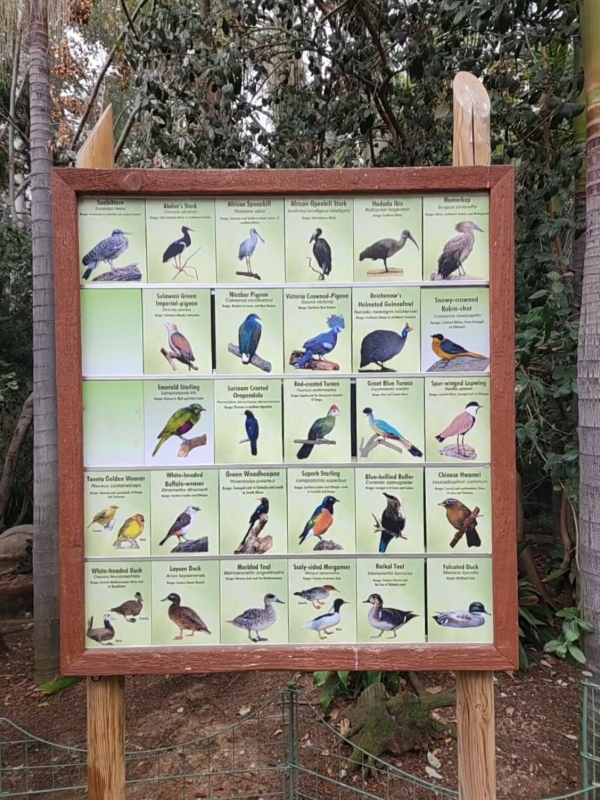
According to the signage, there are actually 28 species of birds in the San Diego Zoo Safari Park’s “Wings of the World” aviary. In my one-hour stroll through the aviary, I captured images of only 20, 10 of which appear in this blog. Looks like I’ll have to return, right?
- Passeriformes
- Sturnidae
- Muscicapidae
- Anseriformes
- Eurypygiformes
- Eurypygidae
- Sunbittern (Eurypyga helias)
- Eurypygidae
- Resources
Passeriformes
Members of this order are “passerines.” Their anisodactyl arrangement of toes (three forward, one backward facing) make it easier to perch on a tree branch, so they’re also called “perching birds.” This order comprises about 60% of all bird species (and all birds), including 140 bird families and about 6,500 species (of the 10,000+ species in the whole world). One of the three main groups of passerines is the “songbirds,” who are physiologically able to “sing” — bearing in mind that “songbirds” include crows and ravens, not well known for their melodic vocalizations.
Sturnidae
The Sturnidae family of starlings includes 128 species (sorted into 36 genera; genera is plural for genus). Starlings are highly sociable, and some starlings form massive flocks, which move in unison, creating fascinating “murmurations.” (See https://www.youtube.com/watch?v=FlbWQhl87cY.) All starlings have complex vocalizations, and many species use mimicry. You might enjoy my blog about a starling who was a muse to Mozart.
Superb Starling (Lamprotornis superbus)
The exquisite iridescence of this species’ plumage arises from the structure of the feathers, not from colorful pigments. Superb Starlings inhabit a wide range of African savannahs and arid woodlands, where they mix with other starlings and some weavers when not in breeding season. During breeding season, however, they’re highly territorial. Forming large sociable flocks helps protect them against predators while they’re eating. They eat various insects on the ground, as well as some small fruits, seeds, and even some nectar from sisal flowers. To hear this starling’s vocalizations, visit https://xeno-canto.org/species/Lamprotornis-superbus
Figure 01. Both partners in a pair participate in making a nest, but only the female incubates their eggs. After the eggs hatch, both parents feed whole insects directly to the nestlings, carrying the insects in their bills (not regurgitating them). Some other adults from the flock may help with feeding, too.
Muscicapidae
The name comes from musca (“a fly,” Latin) and capa (“capture, catch,” Latin), an apt name for these insectivores that capture their insect prey in midair. This family includes 357 species (sorted into 54 genera).
Snowy-crowned Robin-Chat (Cossypha niveicapilla)
Like other muscicapids (flycatchers), this Robin-chat eats mostly arthropods (insects, small mollusks, caterpillars), but also eats some small fruits. This species doesn’t really migrate, enjoying savanna, scrub, forest, garden, and mangrove habitats. (Anywhere insects are plentiful!)
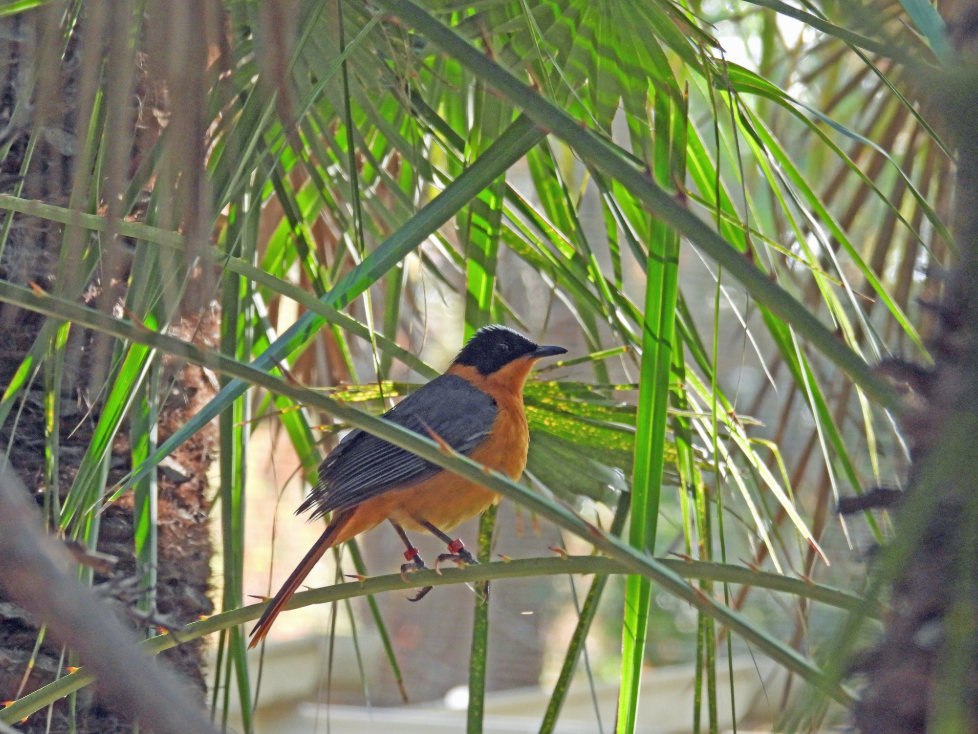
Figure 02. The Snowy-crowned Robin-Chat certainly justifies being called a songbird and has been heard to sing continuously for up to 15 minutes, incorporating whistles, brief mimicry of other birds, and other sounds. Check out some of this bird’s vocalizations at https://xeno-canto.org/explore?query=Cossypha%20niveicapilla
Anseriformes
Anseriformes includes more than 170 species of water-adapted birds, within three families: Anseranatidae (1 species of goose), Anhimidae (3 species of screamers), and Anatidae (>170 species of ducks, geese, and swans).
Anseranatidae
The Anseranatidae family includes exactly one species: Australia’s Magpie Goose.
Magpie Goose (Anseranas semipalmata)
Though not truly migratory, this species does wander around northern Australia during the wet season. Vegetarians, Magpie Geese eat mostly grass blades and seeds (especially wild rice), as well as bulbs, rhizomes, and tubers, which they uproot with the hook at the tip of the bill.
Their breeding style is polygamous, with mostly lifelong trios of one male and two females, all of whom both incubate their eggs and care for their young.
Figure 03. The Magpie Goose’s bright orange-yellow toes (and legs) are only partially webbed, unlike most other geese. To hear its distinctive honking vocalizations, see https://xeno-canto.org/species/Anseranas-semipalmata
Anatidae
The Anatidae family includes about 174 species of ducks, geese, and swans, classified into 43 genera. These aquatic birds range from small (Cotton Pygmy Goose, 10.5″ long, 5.8 oz.) to large (Trumpeter Swan, 72″ long, 608 oz. [38 lb.]). They have powerful muscles to beat their short, pointed wings rapidly to stay aloft. Most have long necks and strong, short feet, which are widely set toward the back of the body, making swimming easier but walking can appear awkward. Most have webbed toes.
Anatids preen their feathers with water-resistant oils, so water does fall off their backs. Most eat entirely or mostly plant matter, and most have flattened bills with a sensitive layer of skin on top. Inside their bills are serrated lamellae, ridges that make it easier to filter and to grasp when eating.
Most species construct simple nests from materials that are readily available, and most moms do all the incubating of the eggs. Most hatchlings are precocial, able to feed themselves soon after hatching, though one or both parents typically provide some protection until the youngsters fledge (start to fly).
Falcated Duck (Mareca falcata)
Falcated Ducks eat aquatic vegetation, grasses, and assorted seeds, as well as some aquatic invertebrates (insects, mollusks, larvae). Mostly dabblers (upending their rumps while feeding with their bills underwater), they also graze. Falcated Duck parents are monogamous, making their nests on vegetation on the ground. As soon as the mom lays eggs, she incubates them alone, and the dad leaves.
Figure 04. Male Falcated Ducks have distinctively handsome plumage.
Laysan Duck (Anas laysanensis)
Natives of Hawaii, Laysan Ducks catch their favorite food, brine flies, by snapping their bills while sprinting through swarms. They drink freshwater using the typical duck style of sipping (head down to lap up water, head up to swallow it). They can walk and run better than most ducks, but they fly and swim less often, though they can do both. They do more foraging late in the day, and more resting at midday. The monogamous female builds a nest hidden in vegetation, and like most other ducks, she both incubates the eggs and broods the hatchlings.
Figure 05. Like most Laysan Ducks, these two females do more running and walking than flying or swimming.
Freckled Duck (Stictonetta naevosa)
In the wet season, Freckled Ducks hang out on the Australian mainland, but in the dry season, they move to coastal and near-coastal wetlands. Though they enjoy eating lots of aquatic vegetation, they also eat arthropods (insects, crustaceans, larvae). Freckled Duck moms are responsible for incubating the eggs (for about 35 days), but dads guard the family. Also, some moms dump some of their eggs into the nests of other females. After the eggs hatch, the hatchlings are precocial, able to feed themselves, but mom still protects them and teaches them how to behave like proper Freckled Ducks, for their best chance of surviving. After a little more than two months, the ducklings fledge, and they and their mom rejoin a larger flock of ducks.
Figure 06. The male and female of this Australian duck appear similar, but the male is slightly larger and has a bright red culmen at the base of the bill, as you can see on the male here.
Radjah Shelduck (Radjah radjah)
Radjah Shelducks reside mostly in mangrove forests along the coast of northern Australia, New Guinea, and other Pacific islands north of Australia. They eat mostly an assortment of invertebrates (mollusks, insects, worms) and some vegetation (algae, aquatic weeds, sedge). Radjah Shelduck parents form long-term (lifelong?) bonds; parents search for nesting sites together, usually near where food is abundant. Though the mom incubates their eggs, the dad stands guard.
Figure 07. Both male and female Radjah Shelducks have mostly white plumage and eyes, dark backs, and pinkish feet, toes, and bills.
Baikal Teal (Sibirionetta formosa)
Baikal Teals seek aquatic homes in rivers, lakes, marshes, and wetlands in Siberia and Asia (Japan, Korea, mainland China). Mostly herbivorous (seeds, grasses, aquatic plants, etc.), this teal also eats aquatic invertebrates (insects, mollusks). It mostly eats by dabbling (rump up, head beneath the water), but it also forages on land, especially at night. These teals hide their nests in vegetation, usually near water.
Figure 08. The male Baikal Teal’s plumage grabs your attention, but the female’s plumage is subtly beautiful, too.
Spotted Whistling-Duck (Dendrocygna guttata)
These whistling ducks inhabit humid lowland aquatic environments, especially small lakes and marshes surrounded by grasslands and some trees, from northern Australia to New Guinea and the Philippine Islands. To find food (grass seeds and small invertebrates, especially snails), they dabble, dive, and use their bills to filter water at the surface — mostly at night. Unlike most other ducks, whistling ducks share parenting duties. Both male and female construct their nests in hollow trees, and both parents take turns incubating their eggs. (They’re sometimes called “tree ducks.”) After the chicks fledge, they remain with their parents, and the dad has been observed positioning himself between a potential threat and his juveniles, though males actually weigh a bit less than females. In managed care, these ducks have lived up to 14 years.
Figure 09. Whistling Ducks have unusually long legs and necks for ducks, but their most distinctive feature is their whistling vocalizations (see https://xeno-canto.org/species/Dendrocygna-guttata). This Whistling Duck is showing proper duck etiquette for sipping water: Bend head forward, sip up water, tilt head upward, swallow.
Eurypygiformes
Eurypygidae
The Eurypygiformes order includes Eurypygidae and just one other family. Each of the two families has just one member, so this order of birds comprises two families, two genera, two species. Total.
Sunbittern (Eurypyga helias)
Sunbitterns thrive in humid neotropical lowland forests in the Americas, near freshwater streams, rivers, ponds, or lagoons. Sunbitterns make an array of vocalizations, which you can hear by visiting https://xeno-canto.org/species/Eurypyga-helias. To learn more about Sunbitterns, please see my blog about them,
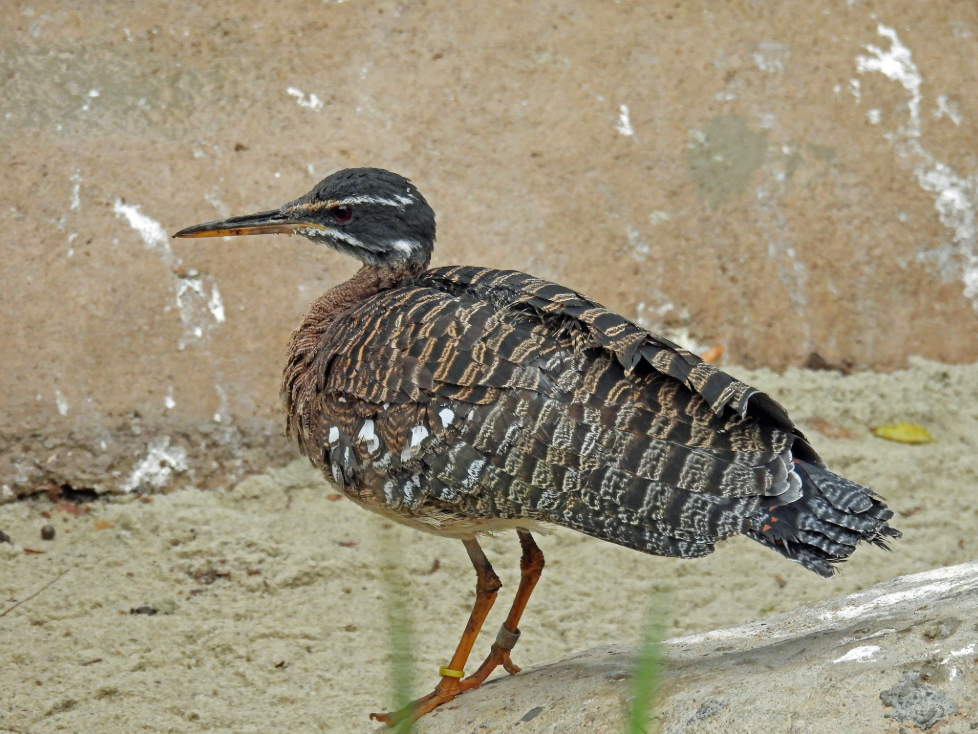
Figure 10. Sunbitterns forage slowly and deliberately along muddy banks, looking for edible insects and other invertebrates, as well as small vertebrates. To see more images of Sunbitterns, please see https://bird-brain.org/2025/02/06/exotic-birds-sunbittern/
Resources
- Passeriformes — https://en.wikipedia.org/wiki/Passerine?wprov=sfla1/
- Sturnidae — https://en.wikipedia.org/wiki/Starling?wprov=sfla1
- Superb Starling (Lamprotornis superbus)
- Craig, A. J. F. & C. J. Feare (2020). Superb Starling (Lamprotornis superbus), version 1.0. In Birds of the World (J. del Hoyo, A. Elliott, J. Sargatal, D. A. Christie, & E. de Juana, Editors). Cornell Lab of Ornithology, Ithaca, NY, USA. https://doi.org/10.2173/bow.supsta1.01
- https://en.wikipedia.org/wiki/Superb_starling?wprov=sfla1
- Superb Starling (Lamprotornis superbus)
- Muscicapidae
- ** https://en.wikipedia.org/wiki/Old_World_flycatcher?wprov=sfla1
- ** https://www.britannica.com/animal/Muscicapidae
- Snowy-crowned Robin-chat (Cossypha niveicapilla)
- Collar, N. (2020). Snowy-crowned Robin-Chat (Cossypha niveicapilla), version 1.0. In Birds of the World (J. del Hoyo, A. Elliott, J. Sargatal, D. A. Christie, & E. de Juana, Editors). Cornell Lab of Ornithology, Ithaca, NY, USA. https://doi.org/10.2173/bow.scrcha1.01
- https://en.wikipedia.org/wiki/Snowy-crowned_robin-chat?wprov=sfla1
- Sturnidae — https://en.wikipedia.org/wiki/Starling?wprov=sfla1
- Anseriformes — https://en.wikipedia.org/wiki/Anseriformes?wprov=sfla1
- Anseranatidae — https://en.wikipedia.org/wiki/Anseranatidae?wprov=sfla1
- Magpie Goose (Anseranas semipalmata)
- Carboneras, C. & G. M. Kirwan (2020). Magpie Goose (Anseranas semipalmata), version 1.0. In Birds of the World (J. del Hoyo, A. Elliott, J. Sargatal, D. A. Christie, & E. de Juana, Editors). Cornell Lab of Ornithology, Ithaca, NY, USA. https://doi.org/10.2173/bow.maggoo1.01
- https://en.wikipedia.org/wiki/Magpie_goose?wprov=sfla1
- Magpie Goose (Anseranas semipalmata)
- Anatidae — https://en.wikipedia.org/wiki/Anatidae?wprov=sfla1
- Freckled Duck (Stictonetta naevosa)
- Carboneras, C. & G. M. Kirwan (2020). Freckled Duck (Stictonetta naevosa), version 1.0. In Birds of the World (J. del Hoyo, A. Elliott, J. Sargatal, D. A. Christie, & E. de Juana, Editors). Cornell Lab of Ornithology, Ithaca, NY, USA. https://doi.org/10.2173/bow.freduc1.01
- https://en.wikipedia.org/wiki/Freckled_duck?wprov=sfla1
- Radjah Shelduck (Radjah radjah)
- Carboneras, C. & G. M. Kirwan (2020). Radjah Shelduck (Radjah radjah), version 1.0. In Birds of the World (J. del Hoyo, A. Elliott, J. Sargatal, D. A. Christie, & E. de Juana, Editors). Cornell Lab of Ornithology, Ithaca, NY, USA. https://doi.org/10.2173/bow.radshe1.01
- https://en.wikipedia.org/wiki/Radjah_shelduck?wprov=sfla1
- Falcated Duck or Falcated Teal (Mareca falcata)
- Carboneras, C. & G. M. Kirwan (2020). Falcated Duck (Mareca falcata), version 1.0. In Birds of the World (J. del Hoyo, A. Elliott, J. Sargatal, D. A. Christie, & E. de Juana, Editors). Cornell Lab of Ornithology, Ithaca, NY, USA. https://doi.org/10.2173/bow.falduc.01
- https://en.wikipedia.org/wiki/Falcated_duck?wprov=sfla1
- Laysan Duck (Anas laysanensis)
- Moulton, D. W. & A. P. Marshall (2020). Laysan Duck (Anas laysanensis), version 1.0. In Birds of the World (A. F. Poole & F. B. Gill, Editors). Cornell Lab of Ornithology, Ithaca, NY, USA. https://doi.org/10.2173/bow.layduc.01
- https://en.wikipedia.org/wiki/Anas?wprov=sfla1
- Baikal Teal (Sibirionetta formosa)
- Carboneras, C. & G. M. Kirwan (2020). Baikal Teal (Sibirionetta formosa), version 1.0. In Birds of the World (J. del Hoyo, A. Elliott, J. Sargatal, D. A. Christie, & E. de Juana, Editors). Cornell Lab of Ornithology, Ithaca, NY, USA. https://doi.org/10.2173/bow.baitea.01
- https://en.wikipedia.org/wiki/Sibirionetta?wprov=sfla1
- Spotted Whistling Duck (Dendrocygna guttata)
- Carboneras, C. & G. M. Kirwan (2020). Spotted Whistling-Duck (Dendrocygna guttata), version 1.0. In Birds of the World (J. del Hoyo, A. Elliott, J. Sargatal, D. A. Christie, & E. de Juana, Editors). Cornell Lab of Ornithology, Ithaca, NY, USA. https://doi.org/10.2173/bow.spwduc1.01
- https://en.wikipedia.org/wiki/Spotted_whistling_duck
- Freckled Duck (Stictonetta naevosa)
- Anseranatidae — https://en.wikipedia.org/wiki/Anseranatidae?wprov=sfla1
- Eurypygiformes, Eurypygidae, Sunbittern — see resources at https://bird-brain.org/2025/02/06/exotic-birds-sunbittern/#resources
I wasn’t sure about writing and posting this blog. It’s really just a random sample of some birds I saw in a one-hour stroll through an aviary. Please let me know what you think about it. Would you like to see more like this, or was one plenty enough? Or perhaps even one too many?
Copyright 2025, text and photos, Shari Dorantes Hatch. All rights reserved.

 Bird Brain
Leave a comment