
Sunbittern
(not local to San Diego, California)
- Eurypygiformes → Eurypygidae
- Sunbittern, Eurypyga helias
- Distribution and Habitat
- Description
- Locomotion
- Diet and Foraging
- Breeding
- Conservation Status
- Sunbittern vs. other birds in the San Diego Zoo’s Parker Aviary
- Length (bill to tail, not height when standing)
- Weight
- Generation Length
- Resources
- General References
- Etymology
- Generation Length
- IUCN Red List Status
- Longevity Data and Life Histories
- Vocalizations
- Eurypygiformes
- Eurypygidae, Sunbittern, Eurypyga helias

Figure 1. The Sunbittern is 1 of only 12 bird species in the entire world (of 10,000+ species!) who has been seen using a tool to catch prey. The Sunbittern can use bait or another lure to attract prey within striking distance of its deadly bill.
Scientists group animals into a hierarchy, to more easily see which ones are more closely related to each other. Here’s the hierarchy for Sunbitterns, starting with the animal kingdom:
- kingdom Animalia
- phylum Chordata
- class Aves, all living birds, including about 45 orders of birds
- order Eurypygiformes
- family Eurypygidae
- genus Eurypyga
- species helias
- genus Eurypyga
- family Eurypygidae
- order Eurypygiformes
- class Aves, all living birds, including about 45 orders of birds
- phylum Chordata
Eurypygiformes → Eurypygidae
The Eurypygiformes order includes one other family: Rhynochetidae, the only member of which is the Kagu (which wanders in the San Diego Zoo’s Bus Tour Aviary). One order, two families, each with one genus, one species. The other thousands of bird species belong to the other 44 orders and numerous families of birds. In addition to having similar DNA, the Sunbittern and the Kagu have similar wing displays and body shape. Eurypyg- refers to “wide rump”: eurus, “wide”; pugē, “rump” (Greek). Not an especially flattering name for these lovely birds.
Sunbittern, Eurypyga helias
Distribution and Habitat
Sunbitterns thrive in humid neotropical lowland forests (up to 6000 feet) near freshwater streams, rivers, ponds, or lagoons, from southern Mexico to southern Brazil.
Description
The Sunbittern’s unfeathered parts grab attention. Its 2.5″ pointed bill (almost 13% of its 18″ body length) is black on top and orange on the bottom. Adding to its distinction are bright-red eyes and long orange legs, feet, and anisodactyl toes (three forward, one backward). Its plumage tops off the look: On its head, white stripes underline and overline its eyes. With wings folded, its barred black, brown, and white body plumage and long tail (6.25″, more than 1/3 of its body length) are impressive.
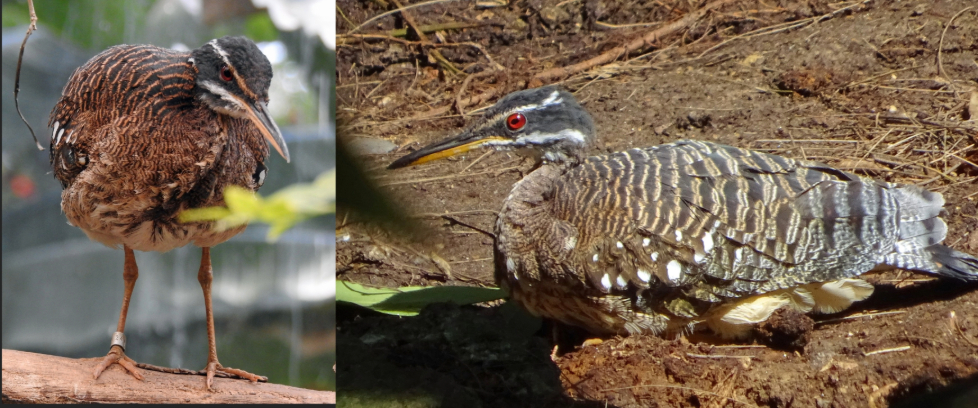
Figure 2. The Sunbittern’s distinctive appearance grabs attention, but it can also blend into its environment.
Then the Sunbittern spreads its wide wings to reveal a shimmering gold, red, and black sunburst-patterned semicircle, with a smaller arc of exquisitely patterned tail feathers.
Figure 3. As if the Sunbittern weren’t impressive enough with wings folded, when it spreads its wide wings, its shimmering arcs of wing and tail feathers can astonish those who see it.
The wing display increases the apparent size of this medium-sized bird (6.6–10.4 ounces, about 2 sticks of butter), which can startle predators or attract potential mates. Forest raptors are the main predators to avoid, but nest predators (snakes, small mammals) also concern them. Juvenile Sunbitterns soon have adult plumage and quickly learn how to display their wings, too.
Figure 4. Even when viewed from beneath, the Sunbittern’s outspread wings can be impressive.
Sunbitterns make an array of vocalizations, most hauntingly a descending whistle. Other vocalizations have been described as growls, hoots, trills, rattles, yowls, and hisses. They sometimes clack their bills while trilling or rattling. To hear their various vocalizations, visit https://xeno-canto.org/species/Eurypyga-helias.
Figure 5. The Sunbittern doesn’t just look beautiful; it also has command of various vocalizations and noises, among which is this whistling call.
Locomotion
While walking, the Sunbittern’s head and neck lead, and its body follows. Sunbitterns infrequently wade; they can swim, but they rarely do. They typically fly by making 1 or 2 deep wing beats then gliding.
Figure 6. Like pigeons and many other birds, Sunbitterns lead with their head and neck while walking, and their bodies and feet seem to follow.
Diet and Foraging
Sunbitterns forage slowly and deliberately along muddy banks, looking for edible insects (e.g., flies, beetles, dragonflies, moths) and other invertebrates (e.g., spiders, crabs, shrimp, molluscs, snails, worms), as well as vertebrates (e.g., frogs, lizards, eels, small fish). When feeding chicks, they’re willing to stray farther from a river in order to find food.
To nab prey, the Sunbittern can thrust its scrawny neck, small head, and narrow bill in almost any direction. Other techniques: Sunbitterns will glean prey from rocks or from streamside plants. They sometimes use a tool to catch prey, such as by using bait or other lures to attract prey within striking distance. This luring behavior is found in only 11 other species of birds in the world. (These birds include 7 species of herons, e.g., San Diego’s Green Heron, and 4 other species of birds in 3 other bird families.)
Figure 7. Sunbitterns may be lightweights, but they can be striking predators, too.
Breeding
Sunbitterns prefer being alone or with a mate. When ready to breed, they sometimes do a “flight display,” accompanied by a “kak-kak-kak” and a trill. The Sunbittern flies upward about 30–50 feet, then glides down, showcasing the wings’ sunburst pattern.
Sunbitterns keep their nests at least 1500 feet away from other nests. Both monogamous parents work together to build a cup-shaped nest on bare horizontal branches of trees, using mud and decayed leaves, sticks, and other vegetation. They build the nest near water, but they don’t position it directly above water.

Figure 8. Sunbittern parents are monogamous and share in making a nest, incubating the eggs, and caring for their hatchlings. While one parent is on the nest, the other stays close by and vocalizes to keep in contact.
In the wild, the female lays 2 or 3 pale brownish (or pinkish) blotchy eggs, but in managed care, she lays just 1 egg. The eggs incubate about 27–30 days, with each parent sitting on the nest for 2 days at a time during the first 12 or so days, then for the rest of the time, each parent incubates the eggs for 1 day at a time. The nesting parent occasionally stands up to turn the eggs during its shift, and the parents change the guard in the morning.
Figure 9. Sunbittern parents are devoted to one another and to the care of their young.
After the eggs hatch, the parents share brooding duties, too. The parents keep in contact vocally and don’t stray more than 300 feet from the nest. They may also engage in some behaviors to strengthen their pair bond: When a parent returns to the nest, the brooding parent may beg for food; the male may initiate a head-tilting display, with rattling, and the female may join him, in synchrony; or they may repeatedly dip their heads, while rattling and trilling. If a threat approaches the nest, the parent away from the nest will fake a broken-wing display to draw the predator (such as large raptors) away from the nest.

Figure 10. Sunbitterns use gestures and vocalizations to strengthen their pair bond.
Though the chicks are precocial (open eyes, fluffy down feathers), they stay in the nest for several weeks after hatching. They hatch asynchronously, but they don’t seem to compete aggressively to be fed. The chicks beg for regurgitated food or simply poke their bills into their parents’ bills to extract the food. By 4 or 5 days of age, the chicks can already eat frogs, lizards, and other large prey. Luckily, the chicks defecate over the side of the nest, not in it. By Day 10, they’re already flapping their wings and starting to practice wing displays. By Day 24, they’re able to fly, though they still haven’t reached adult weight. At about that time, the parents leave the chicks unattended most of the day. By Day 60, the juvenile looks just like its parents. Male and female Sunbitterns reach sexual maturity at about 1 year old.
Conservation Status
IUCN Red List status is LC, Least Concern. Sunbittern population is estimated at 500,000–4,999,999, but it’s declining. Threats: human encroachment, hunting (for food), and the pet trade. Sunbitterns can live up to 17 years in managed care, and a male Sunbittern in the San Diego Zoo lived at least 24 years. IUCN lists their generation length as 14.2 years.
Figure 11. The Sunbittern’s exquisite feathers require plenty of preening, rousing, and ruffling to maintain.
Sunbittern vs. other birds in the San Diego Zoo’s Parker Aviary
Length (bill to tail, not height when standing)
Common Name
Barbet, Black-spotted
Duck, White-faced Whistling
Sunbittern
Motmot, Blue-crowned
Toucan, Toco
Scientific name
Capito niger
Dendrocygna viduata
Eurypyga helias
Momotus momota
Ramphastos toco
Length (inches)
6.9
16.9
17.9
18.5
22.1
Weight
Common Name
Barbet, Black-spotted
Tern, Inca
Sunbittern
Macaw, Blue-headed
Trumpeter, Grey-winged
Scientific name
Capito niger
Larosterna inca
Eurypyga helias
Primolius couloni
Psophia crepitans
Weight (oz.)
1.5
6.9
8.7 (m); 7 (f)
8.8
32 (m); 40 (f)
Generation Length (GL; time between generations, in years)
Common Name
Cacique, Yellow-rumped
Toucan, Toco
Sunbittern
Scientific name
Cacicus cela
Ramphastos toco
Eurypyga helias
Longevity* (years)
20, max, m.c. (GL, 3.6)
16.2, max, m.c. (GL, 11.5)
24, max, SD Zoo (GL, 14.2)
* “max” maximum recorded and verified longevity. “m.c.” managed care.
Resources
General References
- Elphick, Jonathan. (2014). The World of Birds. Buffalo, NY: Firefly Books.
- pp. 32–35, feet and toes
- Lovette, Irby, & John Fitzpatrick (eds.), (2016). The Cornell Lab of Ornithology Handbook of Bird Biology (3rd ed.). Hoboken, NJ: Wiley.
- General
- pp. 178–183, skeleton, feet, toes, dactyly
- pp. 274–286, foraging, diet
- pp. 43–59, bird orders and families
- Morrison, Michael, Amanda Rodewald, Gary Voelker, Melanie Colón, & Jonathan Prather (eds.), (2018). Ornithology: Foundation, Analysis, and Application. Baltimore: Johns Hopkins Press.
- p. 147, dactyly, toes
- Winkler, David W., Shawn M. Billerman, & Irby J. Lovette. (2015). Bird Families of the World: An Invitation to the Spectacular Diversity of Birds. Barcelona, Spain: Lynx, Cornell Lab of Ornithology.
Eurypygiformes
- Winkler, David W., Shawn M. Billerman, & Irby J. Lovette. (2015). Bird Families of the World: An Invitation to the Spectacular Diversity of Birds. Barcelona, Spain: Lynx, Cornell Lab of Ornithology.
- pp. 156, 158, Eurypygiformes
- https://birdsoftheworld.org/bow/species, “Orders and Families,” 11,017 species
Eurypygidae, Sunbittern, Eurypyga helias
- Elphick, Jonathan. (2014). The World of Birds. Buffalo, NY: Firefly Books. (p. 343)
- Ruxton, Graeme D., & Michael H. Hansell (2010). “Fishing with a Bait or Lure: A Brief Review of the Cognitive Issues.” Ethology, 117(1), pp. 1–9. https://onlinelibrary.wiley.com/doi/10.1111/j.1439-0310.2010.01848.x
- Winkler, D. W., S. M. Billerman, & I. J. Lovette (2020). Sunbittern (Eurypygidae), version 1.0. In Birds of the World (S. M. Billerman, B. K. Keeney, P. G. Rodewald, & T. S. Schulenberg, Editors). Cornell Lab of Ornithology, Ithaca, NY, USA. https://doi.org/10.2173/bow.eurypy1.01
- https://avibase.bsc-eoc.org/species.jsp?lang=EN&avibaseid=900C590B5EEE5157&sec=lifehistory
- https://genomics.senescence.info/species/entry.php?species=Eurypyga_helias
- https://www.inaturalist.org/taxa/19-Eurypyga-helias
- https://www.iucnredlist.org/species/22691893/163625651
- https://nationalzoo.si.edu/animals/sunbittern
- https://xeno-canto.org/species/Eurypyga-helias
Additional Resources
- https://aqua.org/explore/animals/sunbittern
- https://animals.jrank.org/pages/638/Sunbittern-Eurypygidae-BEHAVIOR-REPRODUCTION.html
- https://seaworld.org/animals/facts/birds/sunbittern/
- https://www.theanimalfacts.com/birds/sunbittern/
Generation Length
IUCN Red List Status
Longevity Data and Life Histories
Vocalizations
Etymology
- Gotch, Arthur Frederick. (1980). Birds—Their Latin Names Explained. Dorset, UK: Blandford Press.
- Gruson, Edward S. (1972). Words for Birds: A Lexicon of North American Birds with Biographical Notes. New York: Quadrangle Books. 305 pp., including Bibliography (pp. 279–282), Index of Common Names (pp. 283–291), Index of Generic Names (pp. 292–295), Index of Scientific Species Names (296–303), Index of People for Whom Birds Are Named (pp. 304–305).
- Lederer, Roger, & Carol Burr. (2014). Latin for Bird Lovers: Over 3,000 Bird Names Explored and Explained. Portland: Timber.
Copyright © 2025, text and photos, Shari Dorantes Hatch. All rights reserved.
I would welcome your suggestions for improving this blog, your ideas for future blogs, or your insights about anything else you’d like to add.

 Bird Brain
Leave a reply to Sunday Stroll: Wings of the World, Part 1 – Bird Brain Cancel reply