
Keep Cool (Thermoregulation)
- Sweat
- Other Fluids for Evaporative Cooling
- Panting
- Cool Dads
- Cool Body: Colors, Structures, Shapes, Positions, Insulation
- Location, Location, Location
- Timing
- Resources
- Book
- Birds of the World (Online, paid subscription, Cornell Lab of Ornithology)
- Web Pages, Articles, and Sites
- Wikipedia
- Figures List
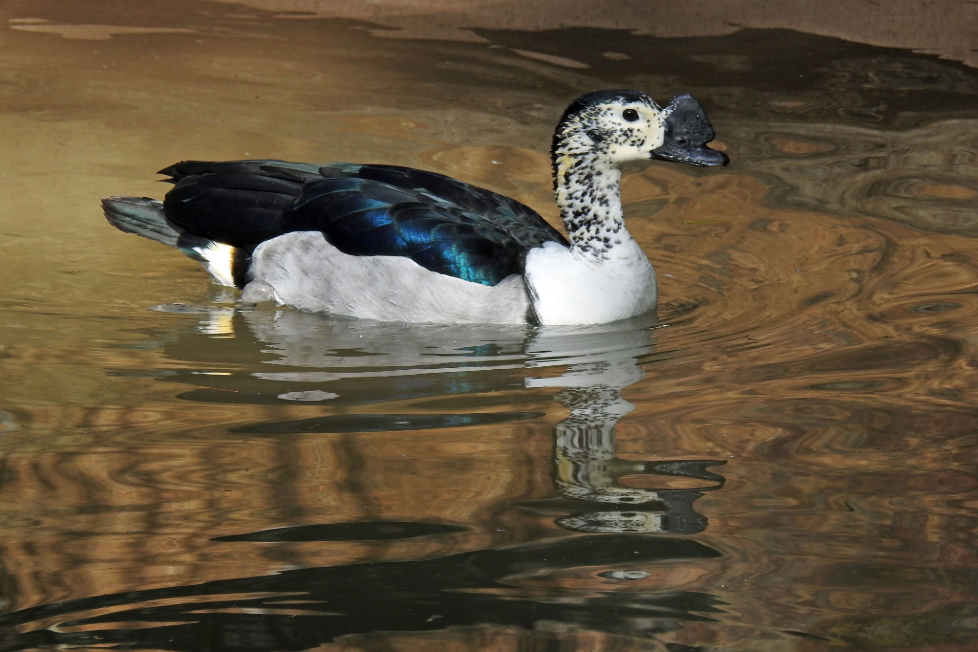
African Comb Duck cooling off
We Homo sapiens have several advantages to keep us from overheating. Starting early in our evolutionary history, our big brains helped us to find shade, watering holes, and other ways to cool off. To catch prey, our brains alone couldn’t keep us from overheating while hunting over long distances. We also had these physiological advantages that our overheated prey lacked:
- We’re bipedal (two-legged), so only the tops of our heads and shoulders get direct sun in the heat of the day; our quadripedal (four-legged) prey have direct sun heating their entire backs and heads.
- We had poofy Afros, which kept the sun’s rays from scorching the skin on the tops of our heads.
- Our skin sweats plenty of moisture, which our thin fur allows to evaporate, cooling us.
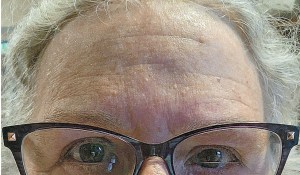
Figure 1. Humans sweat to cool down. Even old ladies get sweaty brows when overheated.
Sweat
No other animal is as good at sweating as we humans are. We mammals actually have two types of sweat glands: (1) eccrine sweat glands, which secrete water and salty minerals, and (2) apocrine glands, which secrete an oily fluid containing lipids (e.g., fats) and proteins. Both eccrine and apocrine fluids are odorless, but apocrine sweat attracts bacteria that eat the fluids and secrete stinky waste.
We humans have myriad eccrine glands over our entire bodies, far more than other animals. Apes and Old World monkeys have some eccrine glands, but their thick fur prevents their sweat from evaporating much. Most other mammals have relatively few eccrine glands, chiefly on the bottoms of feet (or hands).
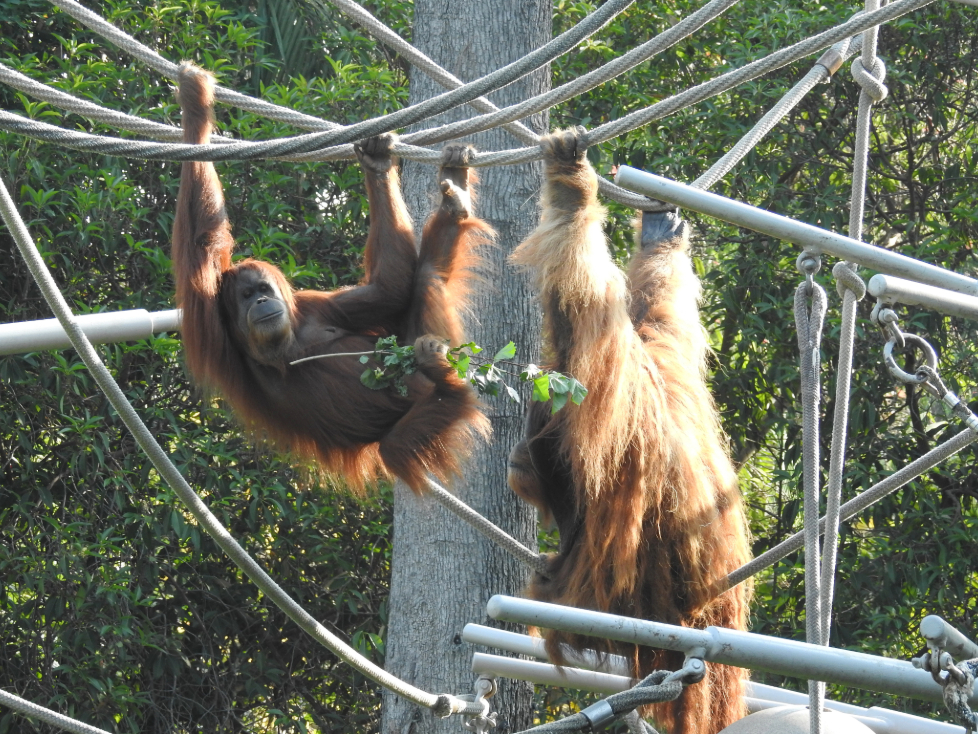
Figure 2. These Orangutans (and other apes) have some eccrine glands on their torsos, limbs, and faces, but their sweat doesn’t evaporate through thick fur.
We humans have fewer apocrine glands, mostly under our arms and a few other strategic places. Most other mammals have apocrine glands over much of their bodies. A few mammals (marsupials and some hoofed animals) can enjoy evaporative cooling through sweating from their apocrine glands when overheated. Most other mammals (and birds) can’t sweat at all or can’t sweat well enough to be cooled by it. They need other ways to cool off.
Other Fluids for Evaporative Cooling
Extracellular Fluids
We multicellular organisms have interstitial fluid outside of and between the cells of our bodies. Almost invariably, it’s a good idea to keep this fluid inside our bodies. However, under some circumstances, some animals allow this fluid to leak out. In particular, some heat-acclimated Rock Pigeons and other desert pigeons can leak fluid through their skin. This is not sweat, as they have no sweat glands; their skin literally leaks the interstitial fluid, cooling the bird as the fluid evaporates. During this “cutaneous water evaporation,” the pigeon increases blood flow through the skin. Other leaky critters that lack true sweat glands: some kangaroos, many species of frogs, and a desert cicada (invertebrate).

Figure 3. Some birds (e.g., this Rock Pigeon) and frogs (e.g., these Australian Green Tree Frogs) can leak interstitial fluid through their skin, to cool via evaporation.
Pee
If you can’t sweat or leak, another bodily fluid might cool you down: urine. Many seals urinate on their hind flippers while basking in the sun. Male South Australian fur seals have modified this behavior: If a male is overheating on his chosen rock, he pees onto the rock, flops his belly and rear flippers onto the pee, and rolls onto his side to let the pee cool him off. Local females find him quite alluring, especially if his rock is in a prime location. Other seals cool off in other ways (e.g., Northern Fur Seals pant; Monk Seals cover themselves with sand).
Pee/Poop Cocktail
Birds’ feathers insulate so well that birds have the highest body temperatures of all vertebrates, so they need effective ways to cool off. They don’t really urinate, though. (Water is heavy, impeding flight.) Instead, bird waste is a concentrated pee-poop mixture, which dries out in the sun. (Check out Ron Dudley’s superlative article on bird poop at
https://www.featheredphotography.com/blog/2023/01/13/the-cloaca-and-a-lesson-in-bird-poop-2/.) Vultures, storks, and quite a few other birds excrete this watery waste onto their legs, to cool through evaporation. To enhance the cooling effect, birds can increase blood circulation to their unfeathered legs, boosting the amount of cooled blood circulating to the rest of their bodies.
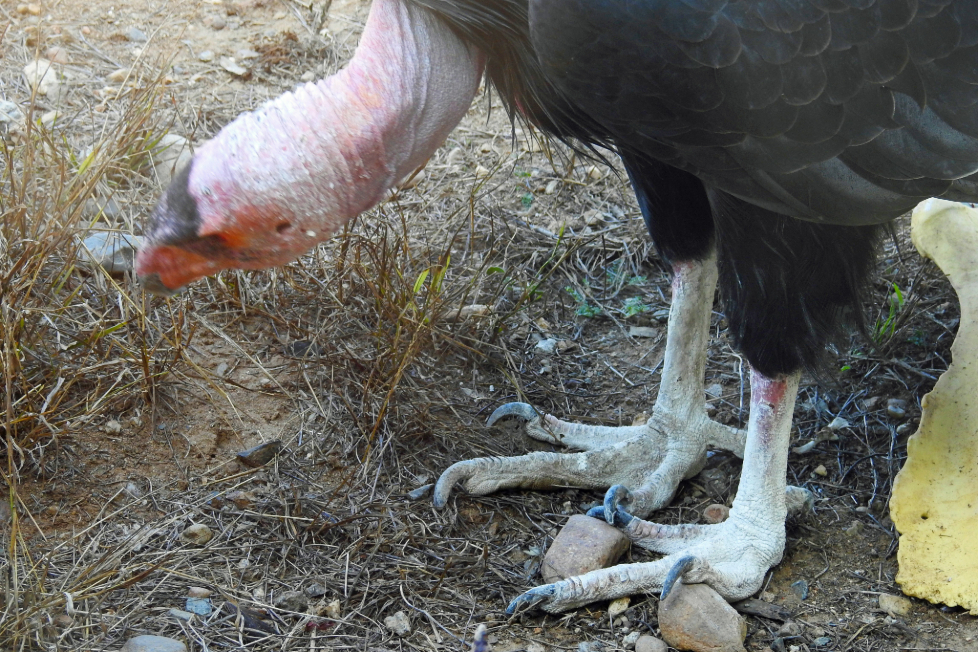
Figure 4. Vultures (e.g., this California Condor) excrete watery waste onto their legs. By also increasing the volume of blood circulating through the legs, they cool off more effectively.
Puke
Vomiting isn’t a strategy to be used often. Nonetheless, an overheated honeybee can regurgitate the contents of its stomach into its mouth and then use its forefeet to spread that liquid over the rest of its body to cool off.
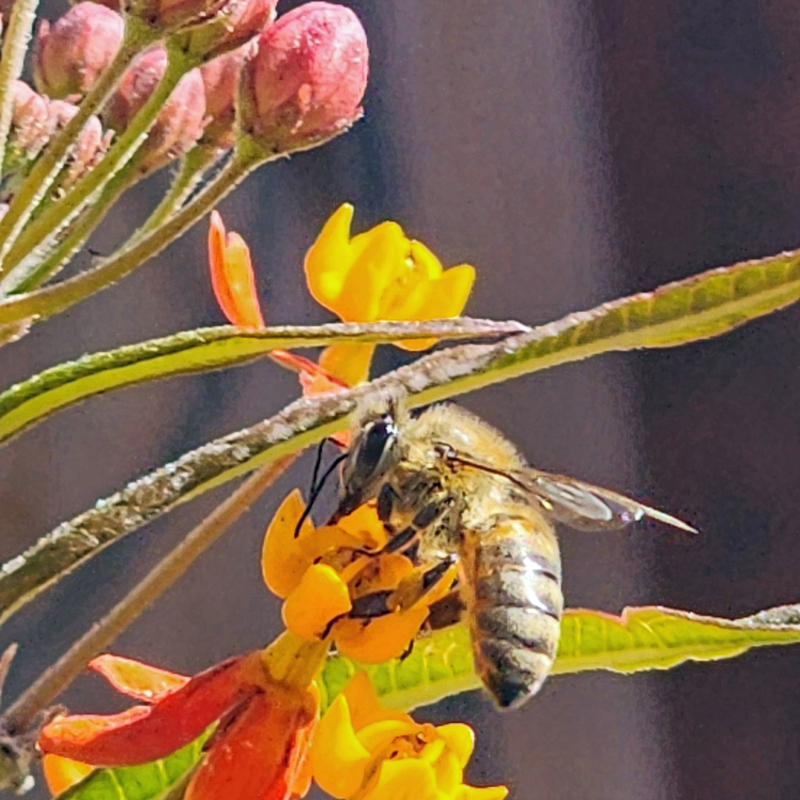
Figure 5. Hot honeybees (e.g., this Western Honeybee) regurgitate stomach contents into their mouths, then use their front feet to spread the moisture onto their bodies, to cool off. To cool their hives, honeybees use their wings to fan watery nectar, providing evaporative cooling. Photo by Sarah Haffey. All rights reserved.
Spit
Relative to other bodily fluids, most animals don’t produce much saliva, but the little they have can be used to create a cooling effect. For instance, kangaroos can lick their skinny, richly veined forelimbs to evaporatively cool a lot of blood, which circulates to the rest of their bodies. For most other mammals, however, thick fur makes it impractical to cool off via evaporation.
Figure 6. Kangaroos cool themselves with saliva by licking their forelimbs, where a dense network of veins cools their blood.
Panting
Many mammals and birds use a different method of evaporative cooling, exploiting the moist surfaces in their mouths and nasal passages by panting. If they can move lots of air over their tongues, throats, and nasal passages, evaporation can cool them.
Many mammals (e.g., dogs, horses) and some birds (e.g., emus) have specialized bony structures (“respiratory turbinates,” aka “nasal concha”) inside their noses, which create an intricate array of moist, narrow air passages, to maximize the amount of evaporative cooling they get from panting. Species with these structures can cool the blood flowing through tiny vessels in these structures, yet retain the moisture, reabsorbing most of it.
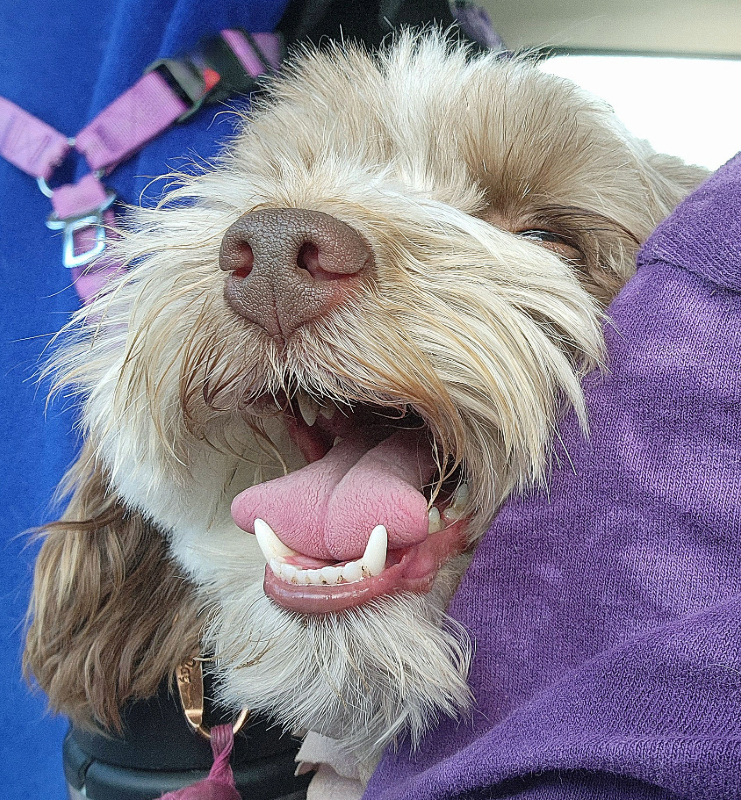
Figure 7. The noses of some mammals (e.g., this adorable dog!!!) and some birds have networks of moist, narrow airways, which maximize the cooling effects of panting.
On the plus side, panting animals lose water, but not the salts or other substances lost in sweat. On the minus side, however, panting takes energy and effort, producing extra heat. In addition, deep, heavy panting can affect relative levels of CO2 and O2 in the lungs (like hyperventilating).
Most birds can pant. Some birds can pant at a variable rate, depending on the ambient temperature. (For instance, Tawny Frogmouths can pant up to 100 times/minute in extreme heat; hot hens can pant even faster.) The most efficient panters, however, are birds with “gular pouches” (e.g., pelicans, cormorants) at their throats. These birds can open their mouths just slightly while almost effortlessly fluttering their moist gular pouches, wafting volumes of air in and out.
Figure 8. These cormorants (Brandt Cormorant adult and juvenile; Double-crested Cormorant), this Reddish Egret, and some other birds have flexible gular pouches below their bills. By fluttering their pouches, they increase evaporative cooling when breathing in and out.
Some desert-dwelling pigeons/doves (e.g., Rock Dove, Columba livia) can cool their own bodies up to 10–20̊ F. or more below the ambient temperature. To cool off, they flutter their gular pouches, and they convect heat away from their bodies by holding their wings out, exposing less-feathered areas. They also erect their auricular (ear) feathers to cool their brains; even the corneas of their eyes help with cooling. As parents, these birds can “incubate” their eggs to be cooler by sitting on them. (Dads incubate the eggs during the heat of the day; moms sit on the eggs in the cooler hours.)
Cool Dads
An even more remarkable bird is the Namaqua Sandgrouse dad. The sandgrouse’s nest may be a half-hour flight from a watering hole, but his chicks need to drink and to cool off. So, Dad flies to the watering hole and plops his belly into the water. His belly feathers soak up the water, absorbing up to 15% of his body weight. While flying back to his chicks, Dad loses up to half of the water he soaked up, but there is still plenty left for his chicks. When he arrives, they scrunch under his belly and suck the water from his feathers.
An episode of BirdNotes describes this behavior:
https://www.audubon.org/news/why-would-bird-carry-water-its-feathers.
For more explanation, see also
https://news.mit.edu/2023/scientists-uncover-sandgrouse-hold-water-feathers-0411
A video of this behavior is available at https://www.youtube.com/watch?v=BAf4KNUDkFc.
Dad continues to make these trips repeatedly for the first few weeks of his chicks’ lives. The trick to the absorbency of these feathers is their structure: When dry, the feather barbs are coiled close to the shafts, but when immersed in water, the barbs uncoil, capturing water inside the hooked barbules of the feathers. To watch how these feathers can do so, see https://www.youtube.com/watch?v=GMMcPsy4k-U.
Cool Body:
Colors, Structures, Shapes, Positions, Insulation
Color Changes
Some reptiles and amphibians can change their skin color to affect how much sunlight their skin reflects or absorbs. Lighter skin reflects more sunlight and heat; darker skin absorbs more. Chameleons, well-known for near-instantaneous color changes to create camouflage, can lighten their skin to lower their body temperatures, or can darken their skin to absorb more light and heat. Some other reptiles and some amphibians (e.g., the Bokermannohyla alvarengai frog) can also change colors to cool down or to warm up.
Radiators
Many animals have one or more body parts they can use to absorb body heat and to radiate it away. The big, bulky bills of toucans soak up body heat and then radiate it; so do the thin jumbo-sized ears of elephants. These biological radiators are often enhanced by the animals increasing the blood flow to where this radiation occurs. Elephants can further enhance this radiation by flapping their ears in the breeze.
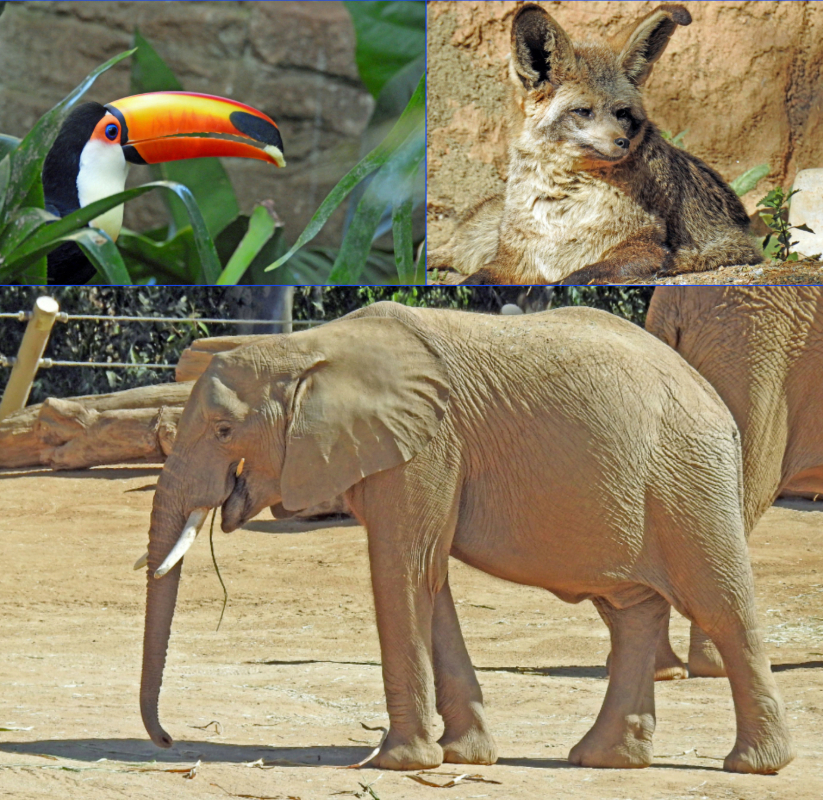
Figure 9. Toucans can radiate heat from their ginormous bills. Similarly, Bat-eared Foxes and elephants can radiate heat from their oversized ears.
Most biological radiators aren’t covered with dense feathers, hair, or other insulation. Among birds, their legs (especially their feet) are typically the largest non-feathered (“glabrous”) areas of their bodies. Bare legs offer birds a way to cool off. Typically, birds’ legs contain dense networks of myriad tiny blood vessels, circulating blood close to the skin surface. When overheated, birds can boost the circulation through their bare-skinned legs, cooling large volumes of blood. In addition, they can cool off by increasing circulation to their bills, and in extreme heat, their wattles, combs, and even cloacas can also help to dissipate heat. To maximize heat dissipation, birds may stretch their necks and legs, the opposite of scrunching down when trying to conserve heat.
Body Shape and Position
Being bipedal isn’t the only way to keep most of your body out of direct sunlight. Having a tall, slender upright body (“dolichomorphic”) can help, too. For instance, giraffes have long necks and long legs, so only a relatively small proportion of their bodies gets direct sunlight at noon. Other tall, slender animals have a similar strategy.
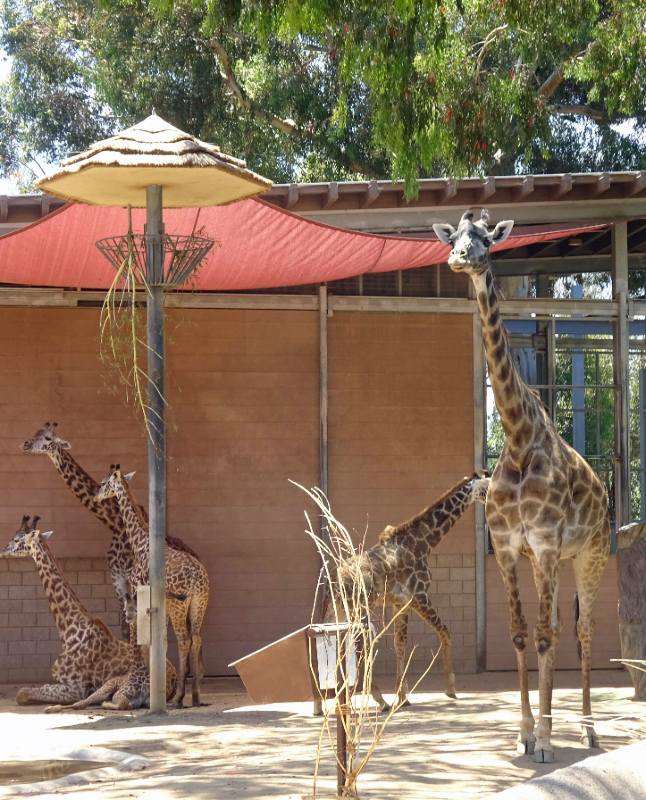
Figure 10. Tall animals, such as giraffes, seek shade, but when shade isn’t available, they don’t have a large surface area exposed to direct sunlight. That minimizes how much the sun heats their bodies.
Some animals also shift their body’s position to minimize the amount of body area heated by sunlight. For instance, the Giant Golden Orb Weaver spider (Nephila pilipes) positions its body to align with the direction of the sun, so that as little of its body as possible receives the sun’s direct rays.
Insulation
Feathers and hair are not the only insulation animals have. Camels store lots of fat in the humps on their backs, shielding their internal organs from the sun’s intense heat; their thick coats insulate the exterior of their bodies; and their coats get less dark in summer. Camels also use these heat-resisting strategies:
- They have long legs that suspend their bellies far from the sweltering ground,
- Their heads have a complex network of vessels that cools the blood flowing to their brains,
- Their nasal passages trap water and reabsorb it before can be exhaled,
- Their kidneys and intestines efficiently reabsorb water as it passes through,
- They radiate body heat at night, when the air temperature lowers,
- They sweat from apocrine glands.

Figure 11. Camels have several ways to cool off: insulating with body fat and a thick coat, long legs elevating the belly, cooling blood going to the brain, trapping water in their nasal passages, highly efficient waste-disposal system, radiating body heat at night, and sweating. Of course, they also look for shade whenever it’s available.
Many animals don’t have much physiological insulation; instead, they use mud or other insulating materials from the environment to shield themselves from the intensity of the sun’s rays.
Location, Location, Location
What other options do animals have for cooling? Find somewhere to cool down.
Migration
Many birds and mammals flee from extreme heat or extreme cold by migrating, sometimes over thousands of miles, sometimes just up or down a mountainside. Some marine animals also migrate, and aquatic animals of all kinds can move to cooler or warmer water, rising to be closer to the sun or diving to be farther from it.
Shade
Both vertebrates and invertebrates seek out shady spots during the heat of the day, whenever possible.
Water and Mud
Hippopotamuses (Greek for “river horse”) don’t sweat, but their skin secretes a reddish-pink fluid that acts as a sunscreen, a skin moisturizer, and an antibiotic. To cool off, though, “river horses” plunge into water. So do capybaras and many other mammals, as well as birds, reptiles, and amphibians, too numerous to mention individually. Pigs notoriously enjoy wallowing in mud to cool off, and elephants revel in doing so, too.
Figure 12. Who doesn’t relish watching assorted animals bathing, such as this Hooded Merganser male and this American Flamingo? They’re having tons of fun!
Even on a hot day, the temperature of most bodies of water is cooler than the body temperature of a mammal or bird, so the animal’s heat will be transferred away from the body and into the water. Even when the water temperature is similar to the air temperature, water’s high density can more efficiently conduct heat, so water can cool more efficiently than air can. A bonus: Afterward, the water evaporates from the wet skin, further cooling it.
Cool Surfaces for Conducting Heat
Many mammals and reptiles conduct heat away from their bodies by sprawling out, resting their bellies against shaded earth, a shaded rock, or a shady tree. In hot weather, koalas prefer hugging a tree, pressing their slightly-less-furry abdomens against the cool bark, rather than leaning up against it.

Figure 13. Furry Koalas hug trees, letting the bark cool their bellies. They prefer lower, cooler branches rather than warmer ones higher in the tree canopy.
Burrows and Other Underground Spots
Meerkats, naked mole-rats, wombats, platypuses, and many other mammals flee underground for relief from the heat. Some amphibians (e.g., mole salamanders) and reptiles (e.g., many tortoises) burrow, too. A few birds, such as Burrowing Owls, seek burrows both to escape the heat and to hide from aerial predators. Burrowing Owls don’t typically dig their own burrows; they take over burrows dug by prairie dogs or other animals. Birds who dig their own burrows include bee-eaters, kingfishers, puffins, and some penguins.
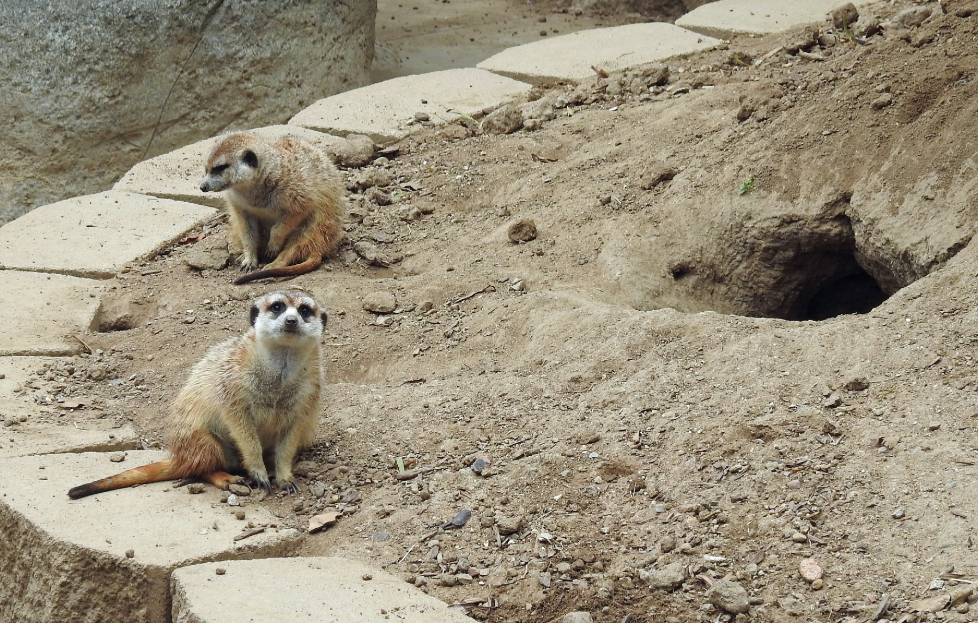
Figure 14. Meerkats and numerous other animals dig burrows to escape the heat, as well as to hide from predators.
Quite a few invertebrates burrow, too: some clams and other mollusks; many bees, wasps, beetles, termites, and other insects; many species of spiders and other arachnids.
Caves
Quite a few animals, such as most bats, spend hot days in cooler caves.
Timing
Estivation
Some ectothermic (“cold-blooded”) vertebrates and some invertebrates change their behavior and even their metabolism in extremely hot seasons. For instance, in places with searing summers, some reptiles (e.g., crocodiles), amphibians (e.g., salamanders), and invertebrates (e.g., Ladybugs, some snails, some crustaceans) become inactive, lowering their metabolic rate for weeks or even months at a time. (Estivation is similar to hibernation, except that it occurs during hot summers, not cold winters.)
Nocturnal
Most bats escape the heat of day by resting during the daylight (in a state of torpor), then foraging at night, when it’s cooler. Many other mammals are nocturnal, such as honey badgers, tarsiers, bushbabies, and many cats, rodents, and ferrets.
Kiwis are nocturnal, but the best-known nocturnal birds are owls. Though a few species of owls are diurnal (hunting in the daytime), most hunt at night, when it’s cool. Some reptiles (e.g., sea turtles) and amphibians (e.g., Hamilton’s Frogs) also prefer being active at night. Moths are nocturnal invertebrates, as are many beetles and thrips.

Figure 15. Most owls are nocturnal, such as this Great Horned Owl and this Barn Owl (inset). Their thick downy feathers insulate them well while they’re resting, and by hunting at night, they avoid the sun’s heat.
Cathemeral
Some animals, such as lions, are cathemeral, alternating their activity and sleep throughout the 24-hour day. Lions particularly enjoy hunting at night, when their favorite prey can’t see as well as they can. Daytime temperature also affects the timing of their activity. (Even within animal families, different species behave differently. For instance, Common Brown Lemurs are cathemeral, but Ring-tailed Lemurs are diurnal.)

Figure 16. Lions and a few other species are cathemeral, sleeping for awhile, then active for awhile, then sleeping again, and so on, around the clock.
Crepuscular
A third timing strategy is to be crepuscular, active at dawn and dusk, but
inactive at midday and midnight. Both predators (e.g., cats, foxes) and prey (e.g., wallabies,
rabbits, deer) prefer to be active at dawn and dusk. Quite a few birds (e.g., nightjars, woodcocks)
are crepuscular, too.
In desert climes, reptiles (e.g., snakes, lizards) and amphibians (e.g., frogs) tend to be
crepuscular, avoiding both daytime heat and nighttime cold. These ectothermic animals don’t get
enough warmth at night to be active; they need the warmth available at dawn and dusk, but they
still avoid the hot midday sun.
Crepuscular invertebrates include many moths, mosquitoes, beetles, flies, and other insects.
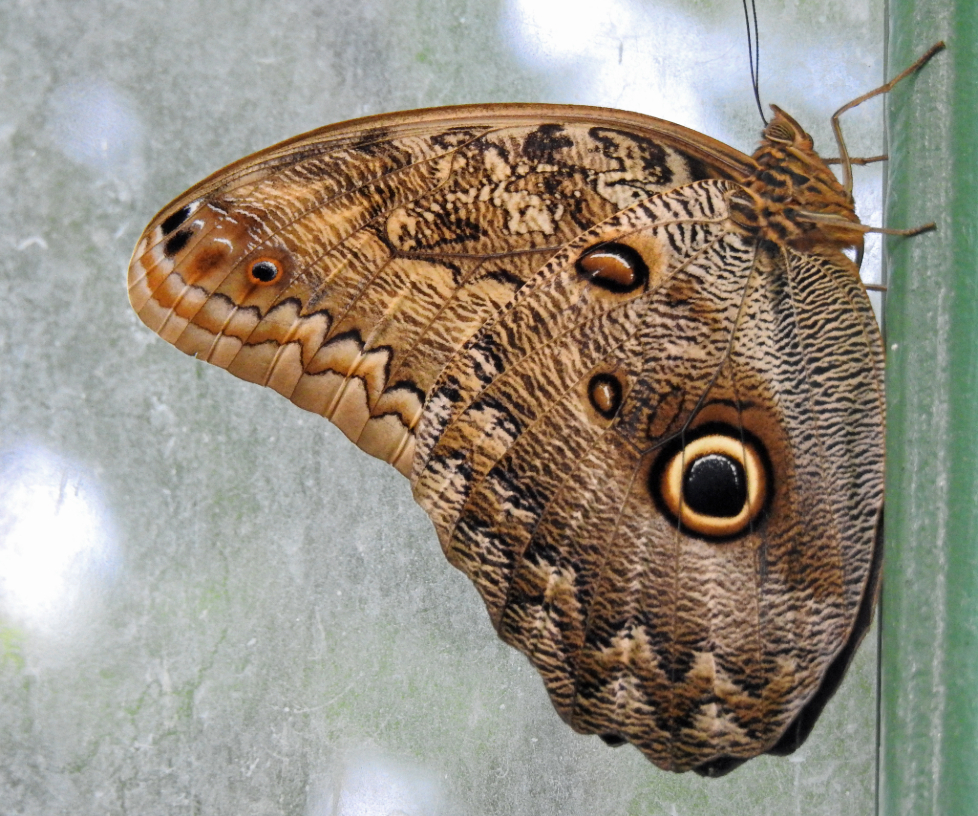
Figure 17. Many species of invertebrates, such as this Giant Owl butterfly, are crepuscular, most active at dawn and dusk.
For some animals, their physiology has provided them superlative ways to modulate their body temperature. Other animals adapt their behavior to regulate their body temperature. Some lucky critters do both.
Text and images by Shari Dorantes Hatch. Copyright © 2025. All rights reserved.
Resources
Book
- Everts, Sarah (2021). The Joy of Sweat: The Strange Science of Perspiration. New York: W. W. Norton & Company.
Birds of the World (Online, paid subscription, Cornell Lab of Ornithology)
- (American) Barn Owl, Marti, C. D., A. F. Poole, L. R. Bevier, M.D. Bruce, D. A. Christie, G. M. Kirwan, J. S. Marks, & P. Pyle (2024). “American Barn Owl (Tyto furcata),” version 1.1. In Birds of the World (S. M. Billerman, B. K. Keeney, & M. G. Smith, Editors). Cornell Lab of Ornithology, Ithaca, NY, USA. https://doi.org/10.2173/bow.brnowl.01.1. https://birdsoftheworld.org/bow/species/brnowl/cur/introduction
- American Flamingo, del Hoyo, J., P. F. D. Boesman, & E. Garcia (2024). American Flamingo (Phoenicopterus ruber), version 1.1. In Birds of the World (J. del Hoyo, A. Elliott, J. Sargatal, D. A. Christie, E. de Juana, & M. G. Smith, Editors). Cornell Lab of Ornithology, Ithaca, NY, USA. https://doi.org/10.2173/bow.grefla2.01.1. https://birdsoftheworld.org/bow/species/grefla2/cur/introduction
- Brandt’s Cormorant, Wallace, E. A. & G. E. Wallace (2021). Brandt’s Cormorant (Urile penicillatus), version 1.1. In Birds of the World (A. F. Poole & F. B. Gill, Editors). Cornell Lab of Ornithology, Ithaca, NY, USA. https://doi.org/10.2173/bow.bracor.01.1. https://birdsoftheworld.org/bow/species/bracor/cur/introduction
- Burrowing Owl, Poulin, R. G., L. D. Todd, E. A. Haug, B. A. Millsap, & M. S. Martell (2020). Burrowing Owl (Athene cunicularia), version 1.0. In Birds of the World (A. F. Poole, Editor). Cornell Lab of Ornithology, Ithaca, NY, USA. https://doi.org/10.2173/bow.burowl.01. https://birdsoftheworld.org/bow/species/burowl/cur/introduction
- California Condor, Finkelstein, M., Z. Kuspa, N. F. Snyder, & N. J. Schmitt (2020). “California Condor (Gymnogyps californianus),” version 1.0. In Birds of the World (P. G. Rodewald, Editor). Cornell Lab of Ornithology, Ithaca, NY, USA. https://doi.org/10.2173/bow.calcon.01. https://birdsoftheworld.org/bow/species/calcon/cur/introduction
- Cormorant, Winkler, D. W., S. M. Billerman, & I. J. Lovette (2020). Cormorants and Shags (Phalacrocoracidae), version 1.0. In Birds of the World (S. M. Billerman, B. K. Keeney, P. G. Rodewald, & T. S. Schulenberg, Editors). Cornell Lab of Ornithology, Ithaca, NY, USA. https://doi.org/10.2173/bow.phalac1.01. https://birdsoftheworld.org/bow/species/phalac1/cur/introduction
- Double-crested Cormorant, Dorr, B. S., J. J. Hatch, & D. V. Weseloh (2021). Double-crested Cormorant (Nannopterum auritum), version 1.1. In Birds of the World (A. F. Poole, Editor). Cornell Lab of Ornithology, Ithaca, NY, USA. https://doi.org/10.2173/bow.doccor.01.1. https://birdsoftheworld.org/bow/species/doccor/cur/introduction
- Great Horned Owl, Artuso, C., C. S. Houston, D. G. Smith, & C. Rohner (2022). “Great Horned Owl (Bubo virginianus),” version 1.1. In Birds of the World (N. D. Sly, Editor). Cornell Lab of Ornithology, Ithaca, NY, USA. https://doi.org/10.2173/bow.grhowl.01.1. https://birdsoftheworld.org/bow/species/grhowl/cur/introduction
- Hooded Merganser, Dugger, B. D., K. M. Dugger, & L. H. Fredrickson (2020). Hooded Merganser (Lophodytes cucullatus), version 1.0. In Birds of the World (A. F. Poole, Editor). Cornell Lab of Ornithology, Ithaca, NY, USA. https://doi.org/10.2173/bow.hoomer.01. https://birdsoftheworld.org/bow/species/hoomer/cur/introduction
- Kiwis (Apterygidae), Winkler, D. W., S. M. Billerman, & I. J. Lovette (2020). Kiwis (Apterygidae), version 1.0. In Birds of the World (S. M. Billerman, B. K. Keeney, P. G. Rodewald, & T. S. Schulenberg, Editors). Cornell Lab of Ornithology, Ithaca, NY, USA. https://doi.org/10.2173/bow.aptery1.01. https://birdsoftheworld.org/bow/species/aptery1/cur/introduction
- Namaqua Sandgrouse, de Juana, E. & P. F. D. Boesman (2020). Namaqua Sandgrouse (Pterocles namaqua), version 1.0. In Birds of the World (J. del Hoyo, A. Elliott, J. Sargatal, D. A. Christie, & E. de Juana, Editors). Cornell Lab of Ornithology, Ithaca, NY, USA. https://doi.org/10.2173/bow.namsan1.01. https://birdsoftheworld.org/bow/species/namsan1/cur/introduction
- Reddish Egret, Koczur, L. M., M. C. Green, B. M. Ballard, P. E. Lowther, & R. T. Paul (2020). Reddish Egret (Egretta rufescens), version 1.0. In Birds of the World (P. G. Rodewald, Editor). Cornell Lab of Ornithology, Ithaca, NY, USA. https://doi.org/10.2173/bow.redegr.01. https://birdsoftheworld.org/bow/species/redegr/cur/introduction
- Rock Pigeon, Lowther, P. E. & R. F. Johnston (2020). Rock Pigeon (Columba livia), version 1.0. In Birds of the World (S. M. Billerman, Editor). Cornell Lab of Ornithology, Ithaca, NY, USA. https://doi.org/10.2173/bow.rocpig.01. https://birdsoftheworld.org/bow/species/rocpig/cur/introduction
- Toco Toucan, Sedgwick, C. W. (2020). Toco Toucan (Ramphastos toco), version 1.0. In Birds of the World (T. S. Schulenberg, Editor). Cornell Lab of Ornithology, Ithaca, NY, USA. https://doi.org/10.2173/bow.toctou1.01. https://birdsoftheworld.org/bow/species/toctou1/cur/introduction
- Toucans (Ramphastidae), Winkler, D. W., S. M. Billerman, & I. J. Lovette (2020). Toucans (Ramphastidae), version 1.0. In Birds of the World (S. M. Billerman, B. K. Keeney, P. G. Rodewald, & T. S. Schulenberg, Editors). Cornell Lab of Ornithology, Ithaca, NY, USA. https://doi.org/10.2173/bow.rampha1.01. https://birdsoftheworld.org/bow/species/rampha1/cur/introduction
Web Pages, Articles, and Sites
- Dudley, Ron, “The Cloaca and a Lesson in Bird Poop,” https://www.featheredphotography.com/blog/2023/01/13/the-cloaca-and-a-lesson-in-bird-poop-2/, posted January 13, 2023; retrieved January 15, 2025.
- Ferns, Peter N. (1992). “Thermoregulatory Behavior of Rock Doves Roosting in the Negev Desert,” Journal of Field Ornithology, 63(1, Winter), pp. 57–65. https://www.jstor.org/stable/4513662
- Mota-Rojas, Daniel; Cristiane Gonçalves Titto; Ana de Mira Geraldo; Julio Martínez-Burnes; Jocelyn Gómez; Ismael Hernández-Ávalos; Alejandro Casas; Adriana Domínguez; Nancy José; Aldo Bertoni; Brenda Reyes; &Alfredo M F Pereira. (2021, Dec 6). “Efficacy and Function of Feathers, Hair, and Glabrous Skin in the Thermoregulation Strategies of Domestic Animals.” Animals (Basel), 11(12):3472. doi: 10.3390/ani11123472. https://www.ncbi.nlm.nih.gov/pmc/articles/PMC8697956/
- Ophir, E., Y. Arieli, J. Marder, & M. Horowitz (2002). “Cutaneous Blood Flow in the Pigeon Columba Livia: Its Possible Relevance to Cutaneous Water Evaporation,” Journal of Experimental Biology, 205(17), pp. 2627–2636. https://doi.org/10.1242/jeb.205.17.2627. https://journals.biologists.com/jeb/article/205/17/2627/9072/Cutaneous-blood-flow-in-the-pigeon-Columba-livia
- Smith, Eric Krabbe; Jacqueline O’Neill; Alexander R. Gerson; & Blair O. Wolf (2015). “Avian Thermoregulation in the Heat: Resting Metabolism, Evaporative Cooling and Heat Tolerance in Sonoran Desert Doves and Quail.” Journal of Experimental Biology, 218(22): 3636–3646. https://journals.biologists.com/jeb/article/218/22/3636/14203/Avian-thermoregulation-in-the-heat-resting. https://doi.org/10.1242/jeb.128645
Wikipedia
Topics
- Animal coloration (e.g., chameleons), https://en.wikipedia.org/wiki/Animal_coloration?wprov=sfla1
- Apocrine sweat gland, https://en.wikipedia.org/wiki/Apocrine_sweat_gland?wprov=sfla1
- Cathemerality, https://en.wikipedia.org/wiki/Cathemerality?wprov=sfla1
- Eccrine sweat gland, https://en.wikipedia.org/wiki/Eccrine_sweat_gland
- Estivation, https://en.wikipedia.org/wiki/Aestivation
- Gular skin (i.e., gular pouches), https://en.wikipedia.org/wiki/Gular_skin?wprov=sfla1
- Interstitial fluid, aka Extracellular fluid, https://en.wikipedia.org/wiki/Extracellular_fluid#Interstitial_fluid?wprov=sfla1
- Nasal concha (i.e., respiratory turbinates), https://en.wikipedia.org/wiki/Nasal_concha?wprov=sfla1
- Perspiration, https://en.wikipedia.org/wiki/Perspiration?wprov=sfla1
- Thermoregulation, https://en.wikipedia.org/wiki/Thermoregulation?wprov=sfla1
- Urohidrosis (peeing on legs to cool off), https://en.wikipedia.org/wiki/Urohidrosis?wprov=sfla1
Species
- (American) Barn Owl, https://en.wikipedia.org/wiki/American_barn_owl?wprov=sfla1
- Australian Green Tree Frog (aka White’s Tree Frog, per SD Zoo) https://en.wikipedia.org/wiki/Australian_green_tree_frog
- Bokermannohyla alvarengai, color-changing frog, https://en.wikipedia.org/wiki/Bokermannohyla_alvarengai
- California Condor, https://en.wikipedia.org/wiki/California_condor?wprov=sfla1
- Camel, https://en.wikipedia.org/wiki/Camel?wprov=sfla1
- Chameleon, https://en.wikipedia.org/wiki/Chameleon?wprov=sfla1
- Columbidae (pigeons and doves), https://en.wikipedia.org/wiki/Columbidae?wprov=sfla1
- Giant Golden Orb Weaver spider (thermoregulatory behavior described in Thermoregulation article, not here), https://en.wikipedia.org/wiki/Nephila_pilipes
- Giant Owl Butterfly, Caligo telamonius memnon, https://en.wikipedia.org/wiki/Caligo_telamonius_memnon?wprov=sfla1
- Owl Butterfly, https://en.wikipedia.org/wiki/Owl_butterfly?wprov=sfla1
- Giraffe, https://en.wikipedia.org/wiki/Giraffe?wprov=sfla1
- Great Horned Owl, https://en.wikipedia.org/wiki/Great_horned_owl?wprov=sfla1
- Hippopotamus, https://en.wikipedia.org/wiki/Hippopotamus?wprov=sfla1
- Hominidae, https://en.wikipedia.org/wiki/Hominidae?wprov=sfla1
- Honey bee, https://en.wikipedia.org/wiki/Honey_bee?wprov=sfla1
- Western Honey Bee, https://en.wikipedia.org/wiki/Western_honey_bee#Thermoregulation
- Kangaroo, https://en.wikipedia.org/wiki/Kangaroo
- Kiwi (bird), https://en.wikipedia.org/wiki/Kiwi_%28bird%29?wprov=sfla1
- Koala, https://en.wikipedia.org/wiki/Koala?wprov=sfla1
- Meerkat, https://en.wikipedia.org/wiki/Meerkat?wprov=sfla1
- Namaqua Sandgrouse, https://en.wikipedia.org/wiki/Namaqua_sandgrouse?wprov=sfla1
- Orangutan, https://en.wikipedia.org/wiki/Orangutan?wprov=sfla1
- Pinniped (e.g., seals, sea lions), https://en.wikipedia.org/wiki/Pinniped?wprov=sfla1
- Rock Dove, https://en.wikipedia.org/wiki/Rock_dove
- Toucan, https://en.wikipedia.org/wiki/Toucan
- Toco Toucan, https://en.wikipedia.org/wiki/Toco_toucan
Pin-tailed Whydah, bathing with gusto!
Figures List
- Figure 1. Humans sweat to cool down. Even old ladies get sweaty brows when overheated.
- Figure 2. These Orangutans (and other apes) have some eccrine glands on their torsos, limbs, and faces, but their sweat doesn’t evaporate through thick fur.
- Figure 3. Some birds (e.g., this Rock Pigeon) and frogs (e.g., these Australian Green Tree Frogs) can leak interstitial fluid into their skin, to cool via evaporation.
- Figure 4. Vultures (e.g., this California Condor) excrete watery waste onto their legs. By also increasing the volume of blood circulating through the legs, they cool off more effectively.
- Figure 5. Hot honeybees (e.g., this Western Honeybee) regurgitate stomach contents into their mouths, then use their front feet to spread the moisture onto their bodies, to cool off.
- Figure 6. Kangaroos cool themselves with saliva by licking their forelimbs, where a dense network of veins cools their blood.
- Figure 7. The noses of some mammals (e.g., this adorable dog!!!) and some birds have networks of moist, narrow airways, which maximize the cooling effects of panting.
- Figure 8. These cormorants (Brandt Cormorant adult and juvenile; Double-crested Cormorant), this Reddish Egret, and some other birds have flexible gular pouches below their bills. By fluttering their pouches, they increase evaporative cooling when breathing in and out.
- Figure 9. Toucans can radiate heat from their ginormous bills. Similarly, Bat-eared Foxes and elephants can radiate heat from their oversized ears.
- Figure 10. Tall animals, such as giraffes, seek shade, but when shade isn’t available, they don’t have a large surface area exposed to direct sunlight. That minimizes how much the sun heats their bodies.
- Figure 11. Camels have several ways to cool off: insulating with body fat and a thick coat, long legs elevating the belly, cooling blood going to the brain, trapping water in their nasal passages, highly efficient waste-disposal system, radiating body heat at night, and sweating. Of course, they also look for shade whenever it’s available.
- Figure 12. Who doesn’t relish watching assorted animals bathing, such as this Hooded Merganser male and this American Flamingo? They’re having tons of fun!
- Figure 13. Furry Koalas hug trees, letting the bark cool their bellies. They prefer lower, cooler branches rather than warmer ones higher in the tree canopy.
- Figure 14. Meerkats and numerous other animals dig burrows to escape the heat, as well as to hide from predators.
- Figure 15. Most owls are nocturnal, such as this Great Horned Owl and this Barn Owl (inset). Their thick downy feathers insulate them well while they’re resting, and by hunting at night, they avoid the sun’s heat.
- Figure 16. Lions and a few other species are cathemeral, sleeping for awhile, then active for awhile, then sleeping again, and so on, around the clock.
- Figure 17. Many species of invertebrates, such as this Giant Owl butterfly, are crepuscular, most active at dawn and dusk.


 Bird Brain
Leave a reply to Sunday Stroll: Wings of the World, Part 2 – Bird Brain Cancel reply