
Virginia Postrel’s The Fabric of Civilization, Part 2
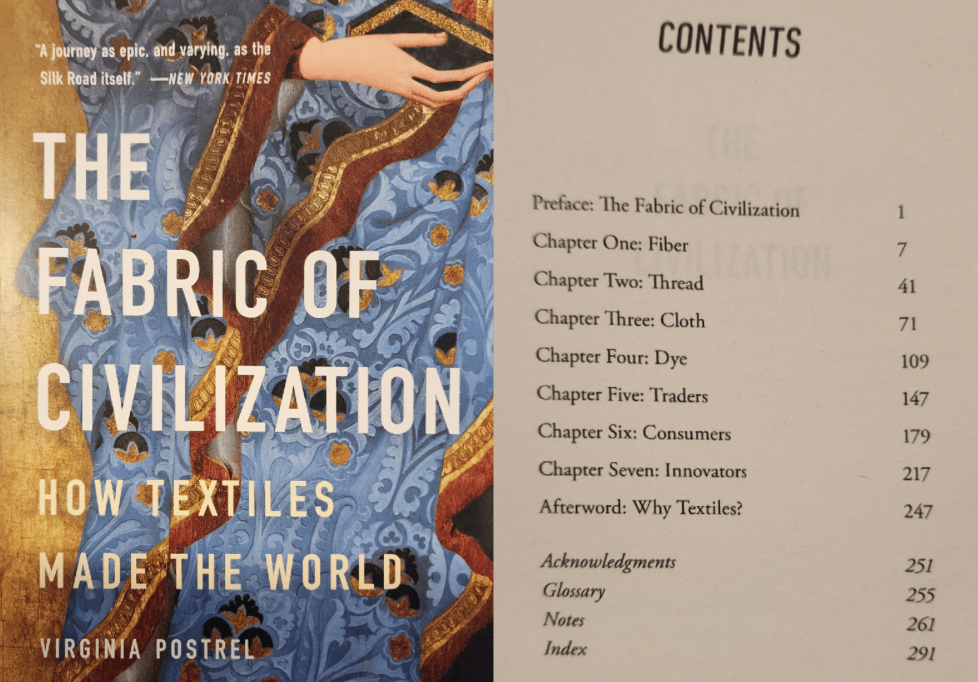
Virginia Postrel. (2020). The Fabric of Civilization: How Textiles Made the World. New York: Basic Books. This is my second blog about her delightful book. The first may be found here: “Fiber” – Bird Brain .
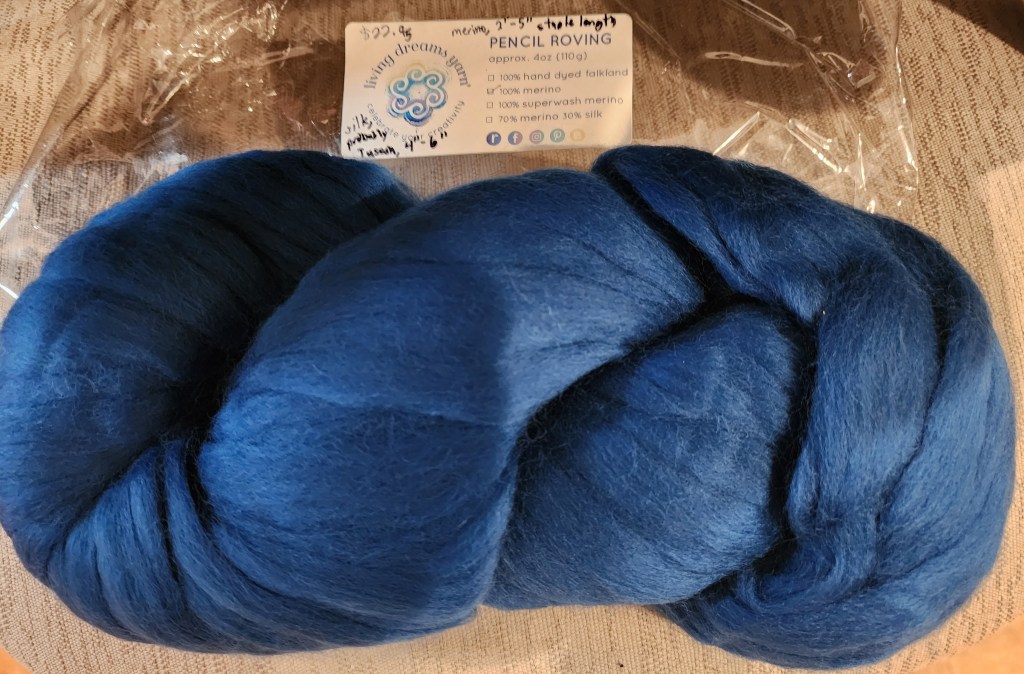
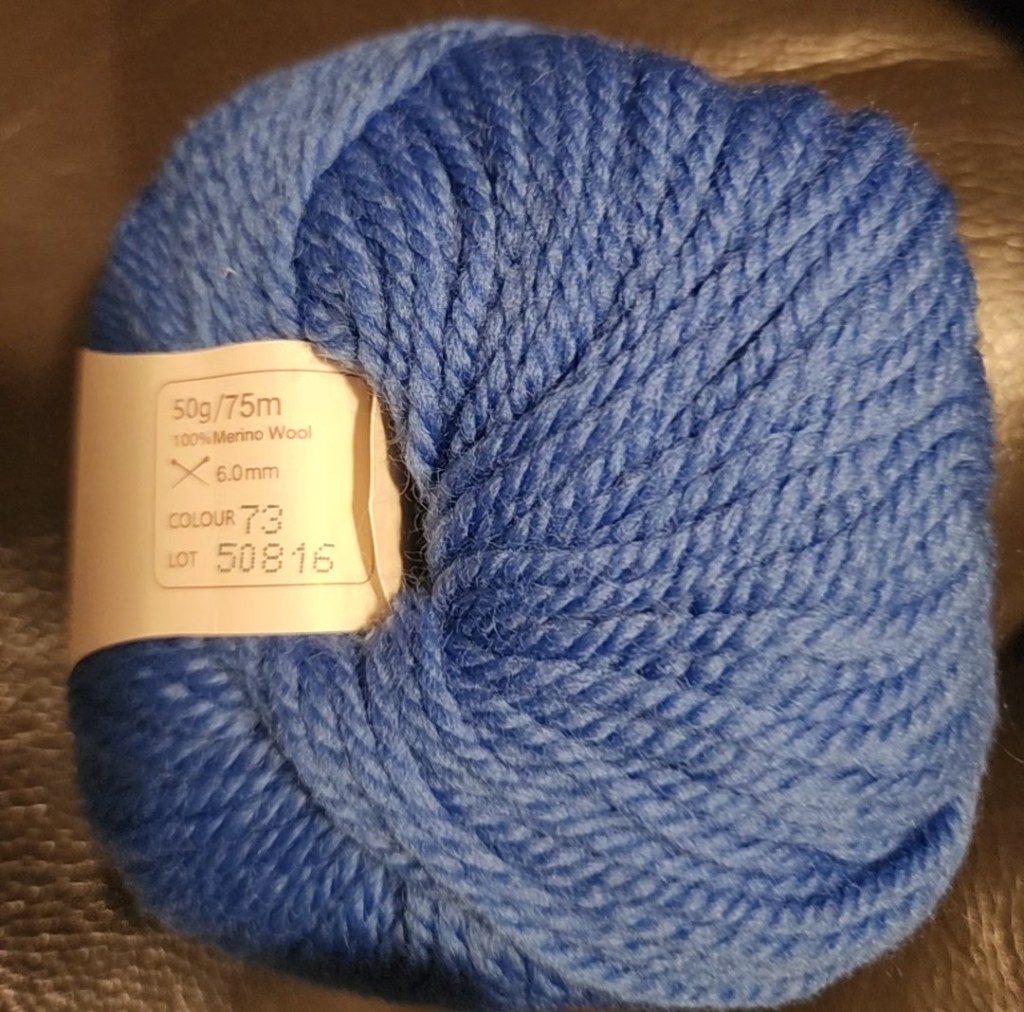
Figure 2-01. After wool fiber has been harvested, cleaned, and combed to align the fibers (and perhaps dyed) (left), it’s ready to be spun into yarn (right).
Postrel opens Chapter 2 by introducing a 1529 painting of Anna Codde, turning her spinning wheel with one hand while twisting wool fiber with her other hand. (To view this painting, see https://www.wga.hu/frames-e.html?/html/h/heemsker/1/1portrai.html .) Patricia Baines, an expert on the history of spinning, described the painting, saying, the long fibers “are drafted by the index finger and thumb, and a tension is kept on the thread between the third finger and the [opening where the yarn winds onto the bobbin of the spinning wheel.] One can see how the thumb is perfectly poised to roll along the index finger, and how the wrist is turned as the thread is smoothed before a few more [fibers] are selected” (p. 43). Anna Codde wasn’t posing for the painter; rather, the painter was capturing her in the process of spinning.
From time immemorial, spinning has been vital to human civilization — and for most of that time, it’s been a deeply time-consuming activity. At the onset of the Industrial Revolution, the first technology to be mechanized was machines for spinning. For the first time, people (mostly women) could be freed from spending an inordinate amount of time spinning thread or yarn, to be woven (or knitted or knotted) into fabric.
For hand spinning, the simplest tool is a spindle (rod or stick) with a spindle whorl (weighted disk into which the spindle fits). The spinster literally spins the spindle and spindle whorl, while she (or maybe he) twists fibers and winds them onto the whirling spindle. The weight of the spindle whorl keeps the spindle rotating longer than it would if simply rotated without the whorl. According to textile historian (and weaver and linguist) Elizabeth Wayland Barber, a spindle whorl “was the first wheel,” preceding the weight-bearing wheel used for transportation. What’s more, Barber opines that the production of textiles “is older than pottery or metallurgy” and perhaps even older than agriculture or the domestication of animals. Given that textiles can’t be produced without spun fibers, spinning precedes all of those technologies.
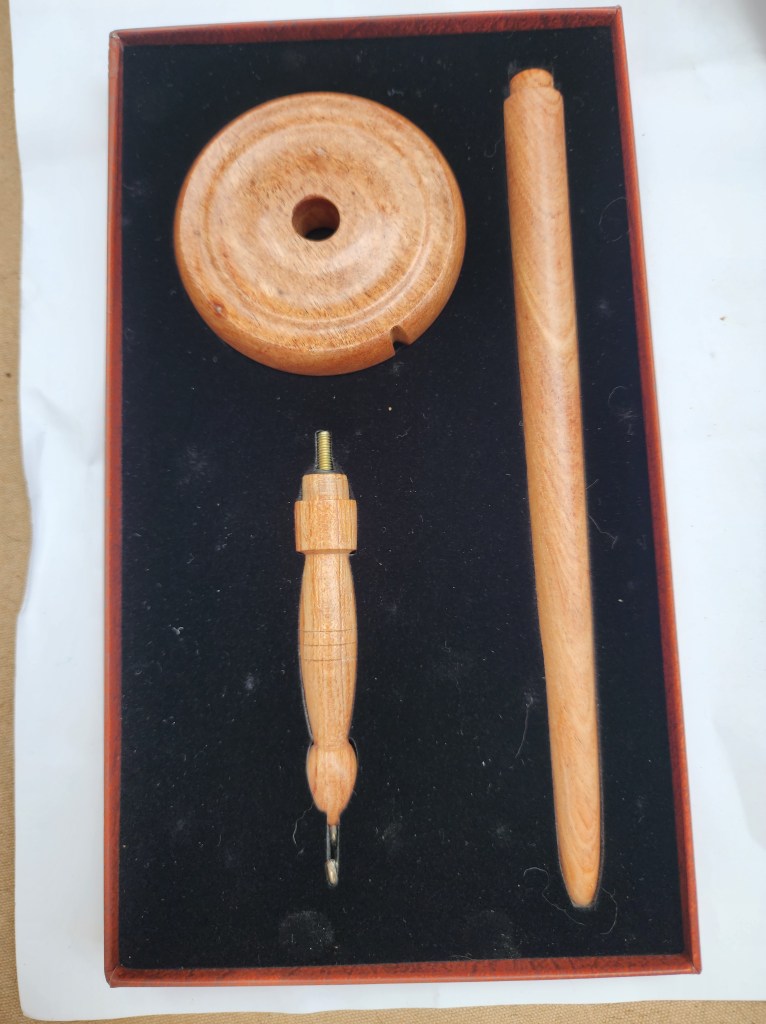
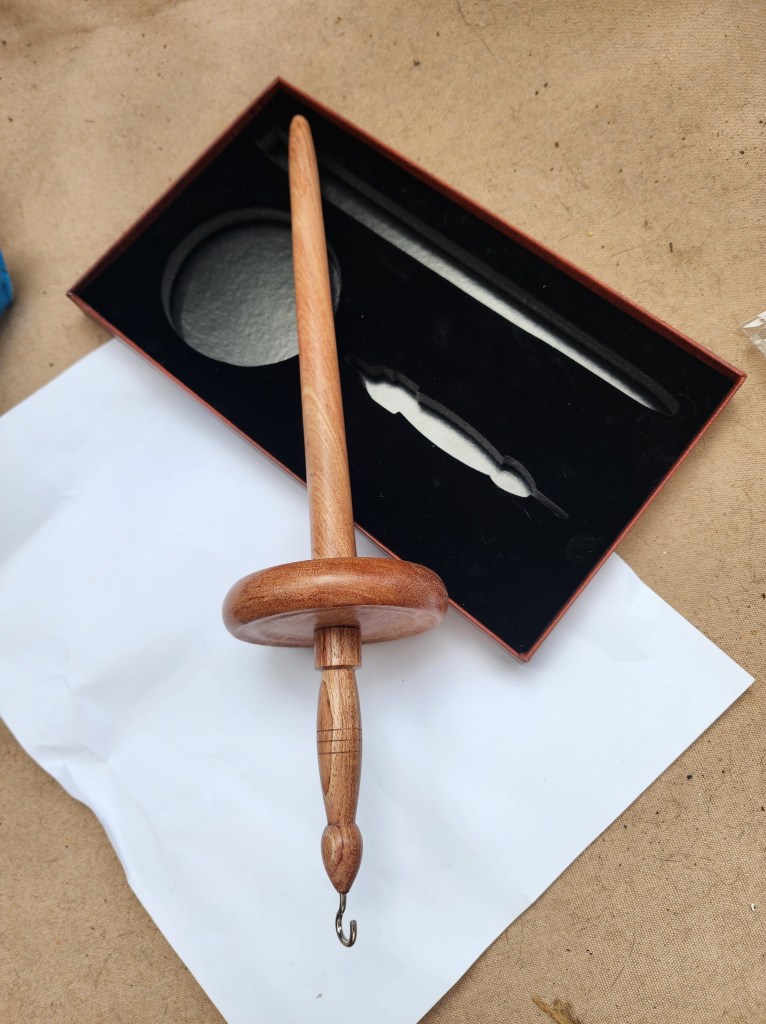
Figure 2-02. Though the technology of the drop-spindle and spindle whorl are among the earliest technologies used by humans, it continues to be used by modern-day crafters and artisans, such as this beautiful example.
Why must fibers be spun to make thread or yarn? Other than silk (which has its own requirements, discussed here later), individual strands of fiber are short, often very short. Flax fibers don’t reach more than 1–2 feet, wool fibers are typically about 6″ long, and cotton fibers can be less than 1/8″ and at most, 2½” long. The length of a given fiber is called its “staple length.” Even using flax fibers with a 2-foot staple length, the fibers are too short to weave cloth. Somehow, these short-staple-length fibers must be twisted together to make a long, continuous strand.
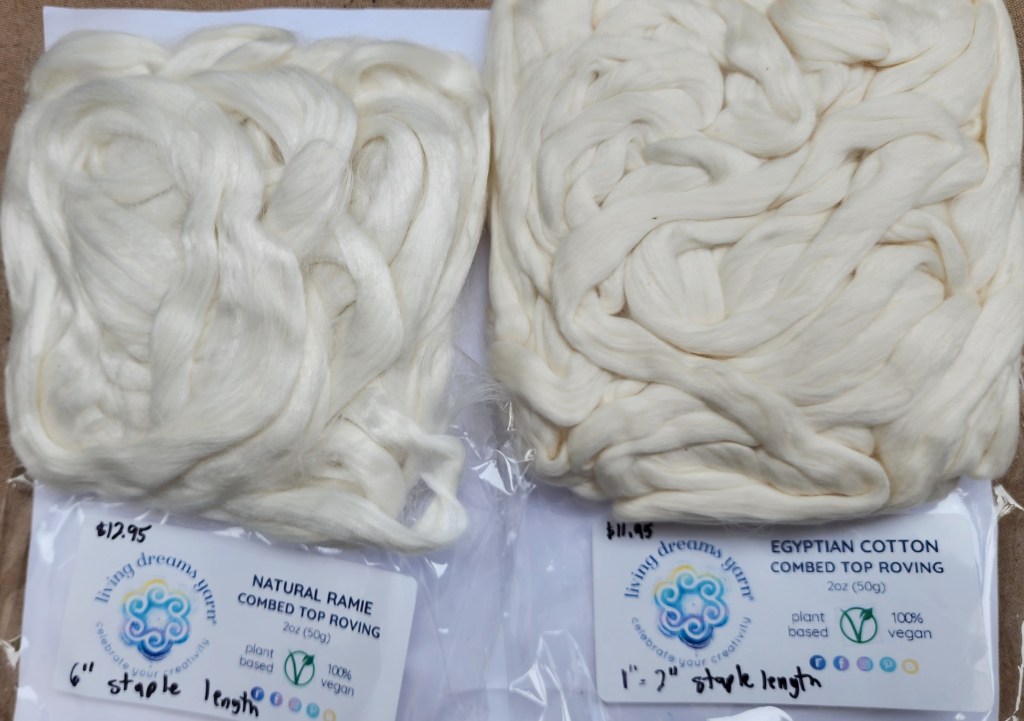
Figure 2-03. Even nowadays, cotton, at its best, has a staple length of about 1–2″, whereas ramie has staple length of 6″. Which would you prefer to spin into thread?
Before the spinning process begins, the fibers are combed, brushed, or otherwise aligned so that they’re all running in the same direction, for the most part. Typically, the aligned fibers are gathered onto a distaff — long rod or stick that holds the fiber, often loosely tied to the distaff. Next, the spinster hand-twists some of the fibers and wraps them around the spindle rod then rotates the spindle and drops it so it will continue spinning. The weight of the spindle whorl keeps the rod spinning for awhile, and spinning begins.
The steps for spinning are
- drafting — pulling out some wool or other fiber from a clean, aligned clump of fiber;
- twisting — hand-twisting the fibers together, to form a long continuous fiber thread from the shorter fiber strands; and
- winding — winding the twisted continuous fiber thread around the spindle, transferring it from hand to spindle.
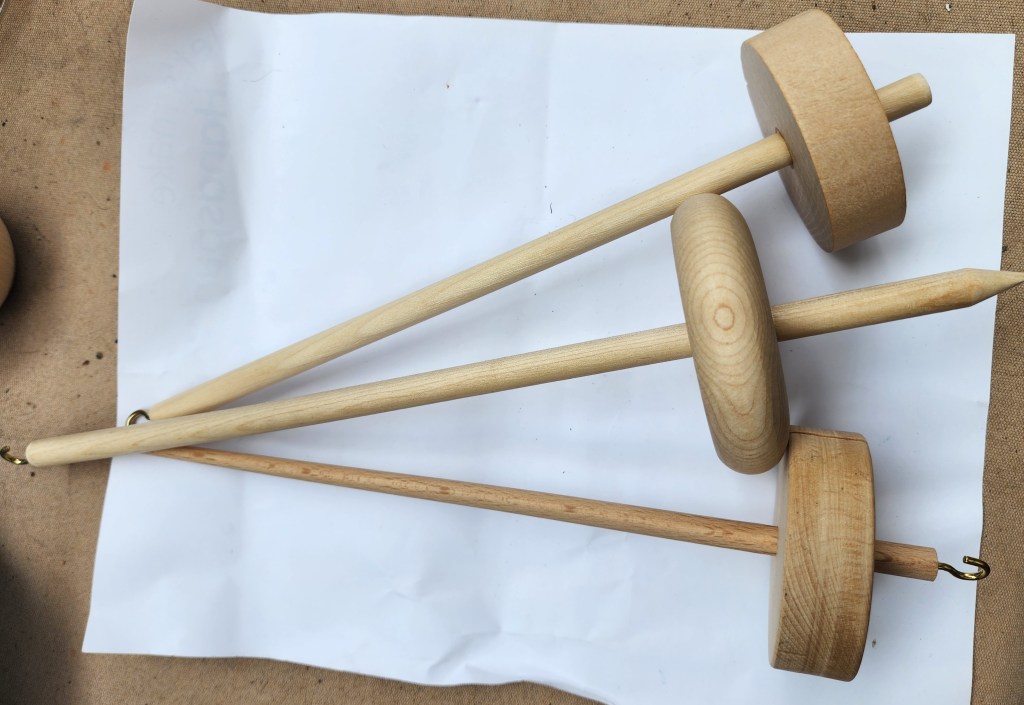
Figure 2-04. Most spinsters use bottom-whorl drop-spindles with the whorl at the bottom of the spindle, but some prefer having the whorl at the top. No matter what, it takes experience to spin fibers onto the spindle so that they’re of uniform thickness and strength.
Spinning requires skill, based on extensive practice and experience. The spinster must twist the short fibers, rubbing them together, creating friction so they stick together; meanwhile, the spinster pulls and stretches the fibers, creating tension that lengthens and strengthens the thread. If she doesn’t twist enough (almost always a “she” during millennia of hand spinning), the fibers won’t adhere to each other, creating a weak spot in the thread. While twisting with one hand, the other hand keeps the whorl spinning, keeping just the right amount of tension on the thread. To get the right tension while twisting the fibers, the spinster must pull on the thread enough to stretch and strengthen it, yet not so much that the thread breaks.
Postrel took a 6-hour drop-spinning workshop, which yielded 10 yards of uneven two-ply yarn. (Presumably, weak one-ply yarn would have yielded 20 yards in 6 hours.) When making cloth, 10 yards of yarn won’t go very far. While Postrel was learning to spin, she focused all her attention on spinning. For an experienced spinster, however, spinning requires little physical or mental effort, but it still consumes time. Before the invention of spinning wheels, spinsters could spin while minding children, flocks, and stew pots. A spinster, a distaff full of fiber, and a spindle occupy little space; a spinster can spin almost anywhere, barring hazardous conditions or extreme weather events. Ancient Greek pottery depicts spinning as something done by “the good housewife and something prostitutes do between clients” (p. 46). Modern-day spinsters can spin while standing in a line or riding in a car.
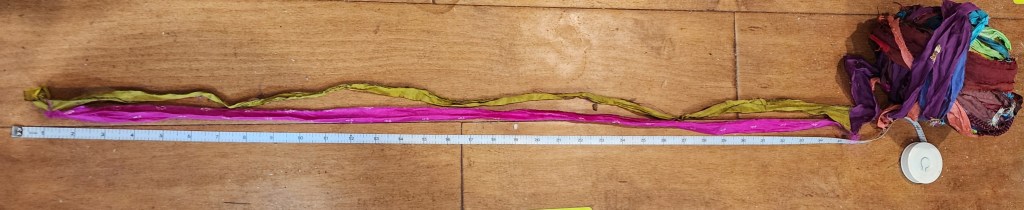
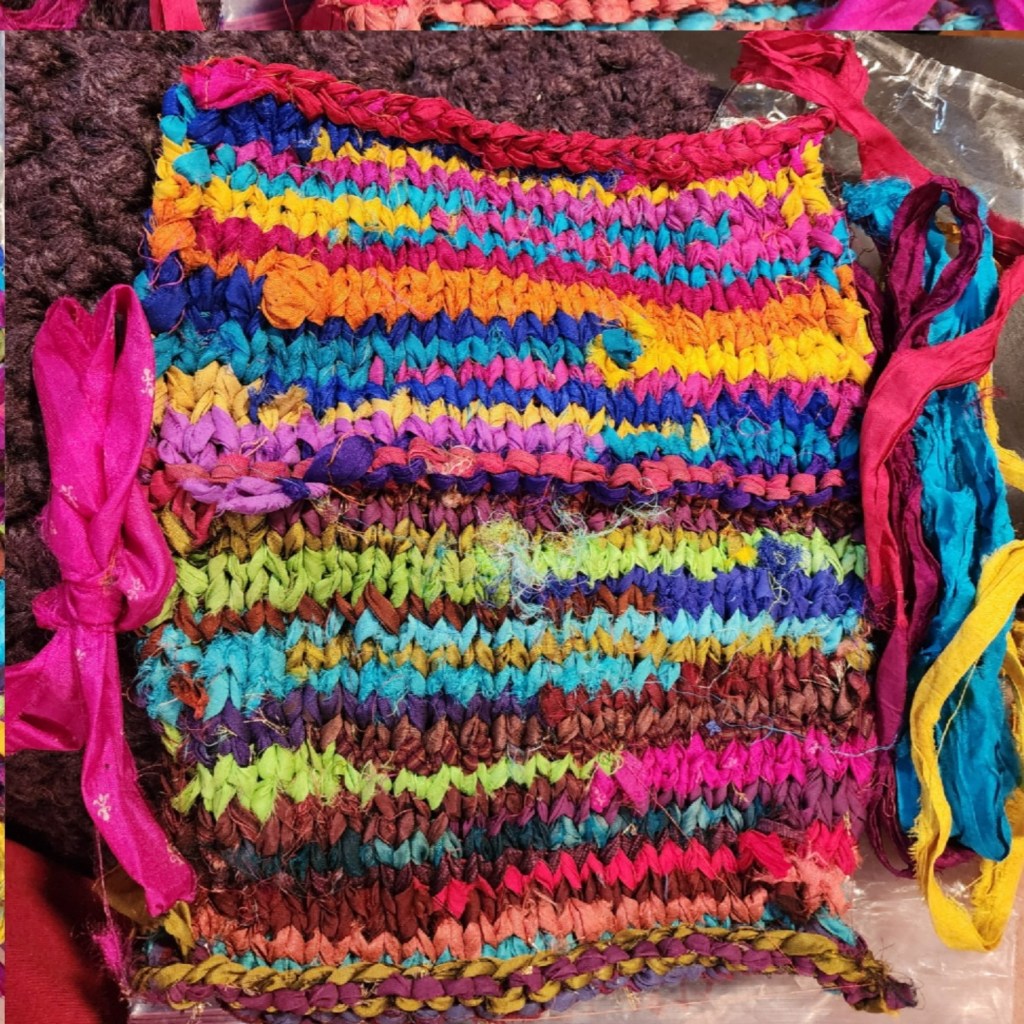
Figure 2-05. Woven fabric is more dense than knitted fabric, but this 50-yard ball of thick recycled sari-silk yarn yielded a 9.5″ × 10.5″ knitted fabric. If it were woven instead of knitted, the resulting fabric may have been even smaller — with 50 yards of very thick yarn!
Before the mechanization of spinning, almost all women incorporated spinning into their everyday lives. Though only some women wove or dyed fabric, or raised their own sheep, almost all women (and occasionally some men) were spinsters, just as they were cooks, cleaners, and carers for children. As the name now suggests, unmarried, childless women were spinsters, too. Even young girls were taught to spin, given the ever-present demand for spun thread. Fabric can’t be woven (or knitted) without thread/yarn, and it takes much more time to spin enough thread/yarn for a garment than it takes to weave or knit the garment. Spinning skills were constantly in demand.
The need for spinning was global. Aztec girls were shown how to spin cotton fibers at age 4 and were expected to start making cotton yarn by age 6. Aztec emperors taxed their citizens by demanding exorbitant amounts of cotton cloth. Across the Atlantic, women in Florence, India, and England needed to spin countless yards of yarn/thread, as well.
Why was so much spinning (and thread) needed? To make a single pair of coarse-threaded denim jeans “requires more than six miles, or nearly ten kilometers, of cotton yarn. Working eight hours a day, a spinster using a traditional Indian charkha [spinning wheel] would take about twelve and a half days to produce that much thread—not including the time to clean and comb the fibers for spinning” (p. 48). When using a finer thread, the length of the needed thread multiplies. For instance, an ordinary twin-sized bedsheet requires 29 miles of thread, taking 60 days to spin, almost 5 times as many days as the jeans. Meanwhile, the spinster also needed to cook the meals, launder the clothes (no washing machine!), tend the garden, the children, the household animals, and more.
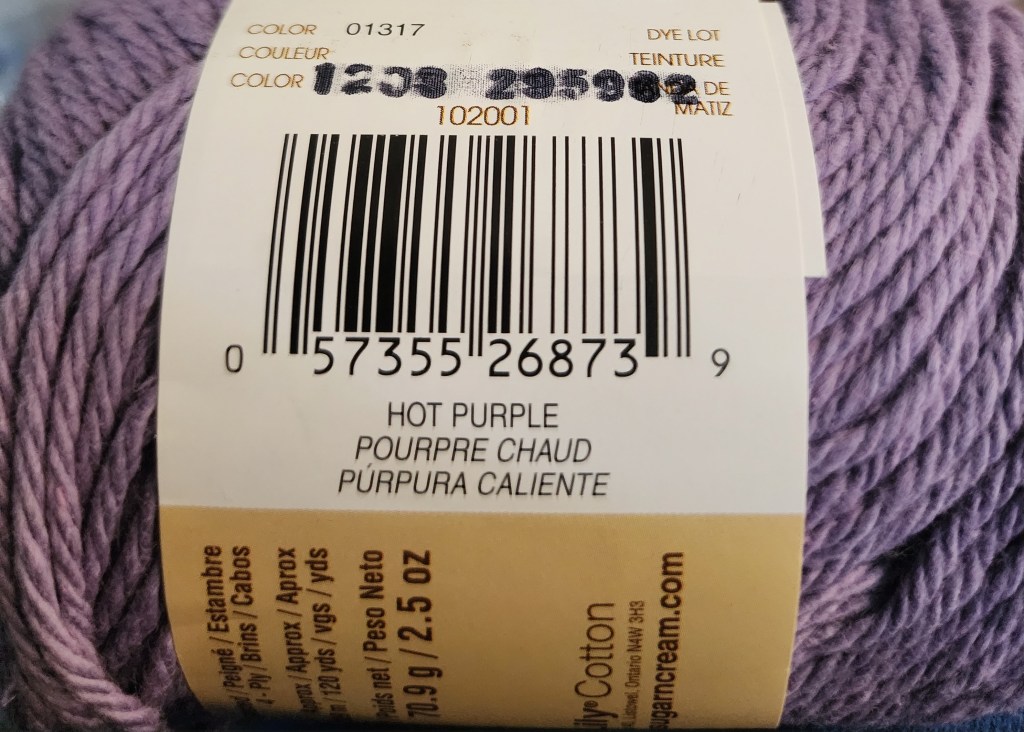
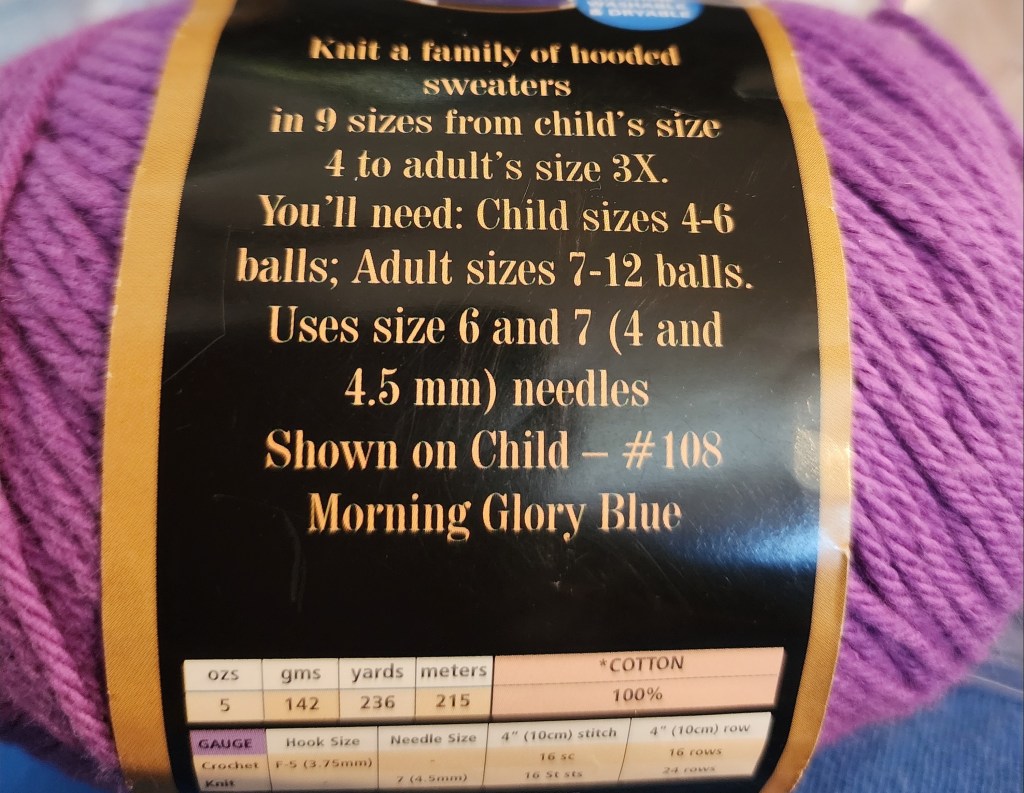
Figure 02-06. Today, anyone who wants a skein or ball of cotton yarn can walk into a local store and choose from various colors and thicknesses of yarn (left, 120 yards/skein; right, 236 yards/skein). Aztec, Florentine, Indian, and English women of yore would have been gob-smacked by our ease in getting it.
Postrel noted that the Indian charkha spinning wheel has a large wheel for turning the spindle many times with each rotation, making it one of the speediest ways to spin by hand. Most other hand-spinning methods are much slower. While the charkha produces about 100 meters/hour of yarn, Andean spinsters produce about 90 meters/hour; Viking spinsters produced about 50 meters/hour; and Bronze Age spinsters spun about 34 meters/hour for coarse threads. (To see a modern-day Indian charkha, see https://www.etsy.com/listing/860867755/handcrafted-wooden-charkha-indian? .)
Andean spinsters using drop spindles produce almost as much as Indian charkha spinsters — about 98 yards/hour (90 meters/hour). At 98 yards/hour, it would take about a week for the Andean spinster to make enough yarn to weave a square yard of fabric. It probably wouldn’t surprise you that today’s most skilled Andean spinsters buy ready-made garments and household textiles, saving their precious yarn and weavings for more valuable items, including those they sell in order to buy ready-made textiles.
Vikings needed thread not only for producing garments but especially for producing sails for their ships. A single Viking Age sail was about 100 square meters; to make 100 square meters of sailcloth, a weaver would use 154 kilometers (60 miles) of relatively coarse yarn. If a spinster worked 8 hours/day, using the Viking technology of a heavy spindle whorl, the spinster would have to spin for 385 days (1 year + 20 days!) to spin enough yarn for one sail. Add to that another 600 days to pluck (not shear!) wool from the sheep and to clean, comb, and prepare the wool for spinning. Altogether, it took much longer to make each Viking sail than to build a Viking ship. (For pictures and information on Viking ships, see https://en.wikipedia.org/wiki/Viking_ship .) Now consider that in the early 1000s, Viking King Canute’s fleet of ships waved about 1 million square meters of sailcloth. Postrel estimates that the spinning alone would have required about 10,000 work years.
Bronze Age spinsters would have taken almost three times as long as the Indian charkha spinsters to produce the same amount of yarn as the Indians did. To produce enough thread for a pair of denim jeans would have taken more than a month. Not that Bronze Age folks wore jeans. What’s more, based on re-creating Bronze Age spinning techniques with Bronze Age tools, spinsters were estimated to have taken about 50 hours to produce just 109 yards (328 feet, 100 meters) of thread.
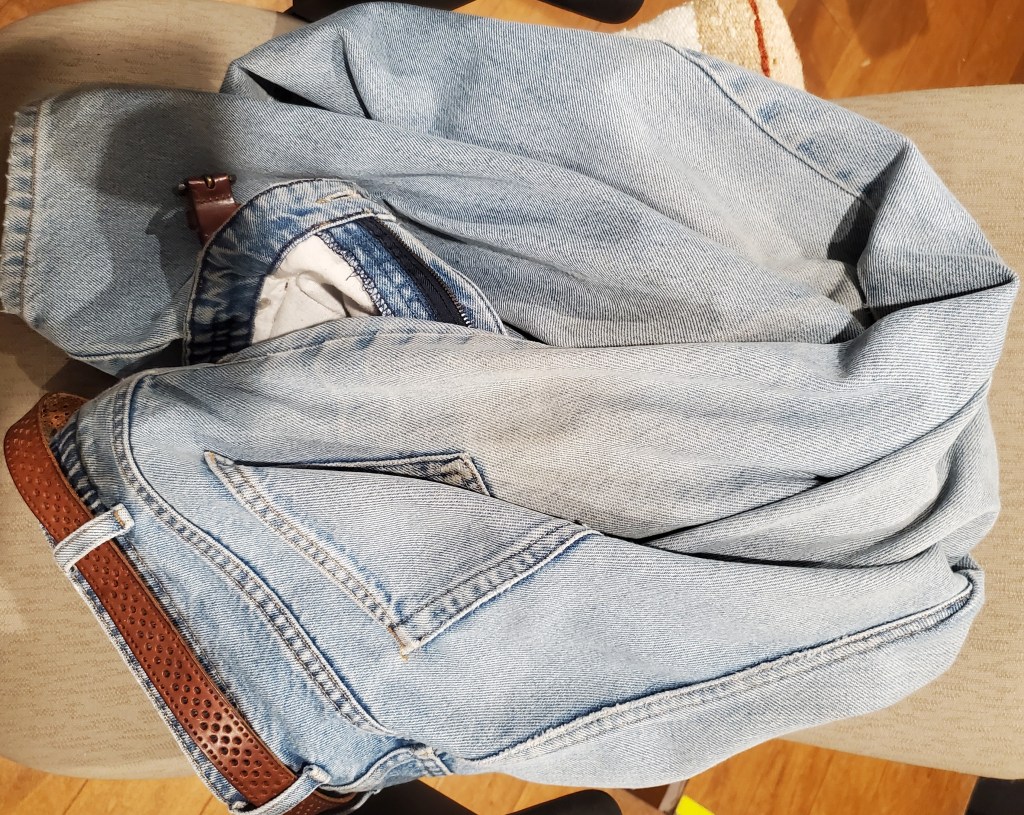
Figure 02-07. In the Bronze Age, spinsters would take about 50 hours to spin a little more than 100 yards (<100 m) of thread. Contemporary Andean spinsters can spin thread much more quickly than that. Nonetheless, when it’s so easy to buy ready-made jeans and other garments, even skilled spinsters typically save their handmade yarn for special textiles; they buy their bedsheets, clothing, and towels ready-made.
More recently, in the Incan Empire (1438–1533), an elite Incan would wear a qompi tunic, finely woven with strong, fine thread; it would take a spinster 400 hours to spin the thread, then a weaver could weave the cloth, and a seamstress could sew the tunic, each taking much less time than used by the spinster.
A world away, Chinese artisans were working with the only natural biological fiber that originates as a long continuous filament, rather than as short staple-length fibers that must be twisted together and spun into thread. A single silkworm cocoon contains a filament that can be extended for hundreds of yards, simply by reeling the filament out from the cocoon. Though theoretically, a single filament can be reeled out from a single cocoon, silk workers typically work with two or more (often three, sometimes seven) cocoons at a time.
First, the cocoons are submerged in warm water, loosening the gum holding each filament in place within each cocoon. Then two workers collaborate to extrude and wind the filaments. One worker handles the filament from the cocoons, while the other worker controls the reel onto which the filament is wound. The reel may be a wide four-sided open box shape with cross-secting spokes (see https://en.wikipedia.org/wiki/Silk_reeling#/media/File:Everyday_Life_in_Old_China_14.jpg ), or a wheel with spokes that connect in the center. However it is configured, the reel must be wide enough and large enough so that while the filament is winding around the outside of the reel, none of the sticky fibers touch each other, staying separated. One of the workers rotates the reel, presumably with a handle of some sort. The other worker delicately strokes the two or more filaments (with fingers, a brush, or chopsticks) from the cocoon; the filaments fuse together, creating a denser, stronger unified filament, which the first worker feeds onto the rotating reel.
After the multi-filament thread has been wound around the reel, it’s allowed to dry. Next, the reeled, dried thread is wound onto bobbins. That may be the end of the process until the thread is used, such as to weave cloth. Alternatively, more than one thread may be “thrown,” twisted together to make even stronger yarn. That’s what happens to the best silk filaments.
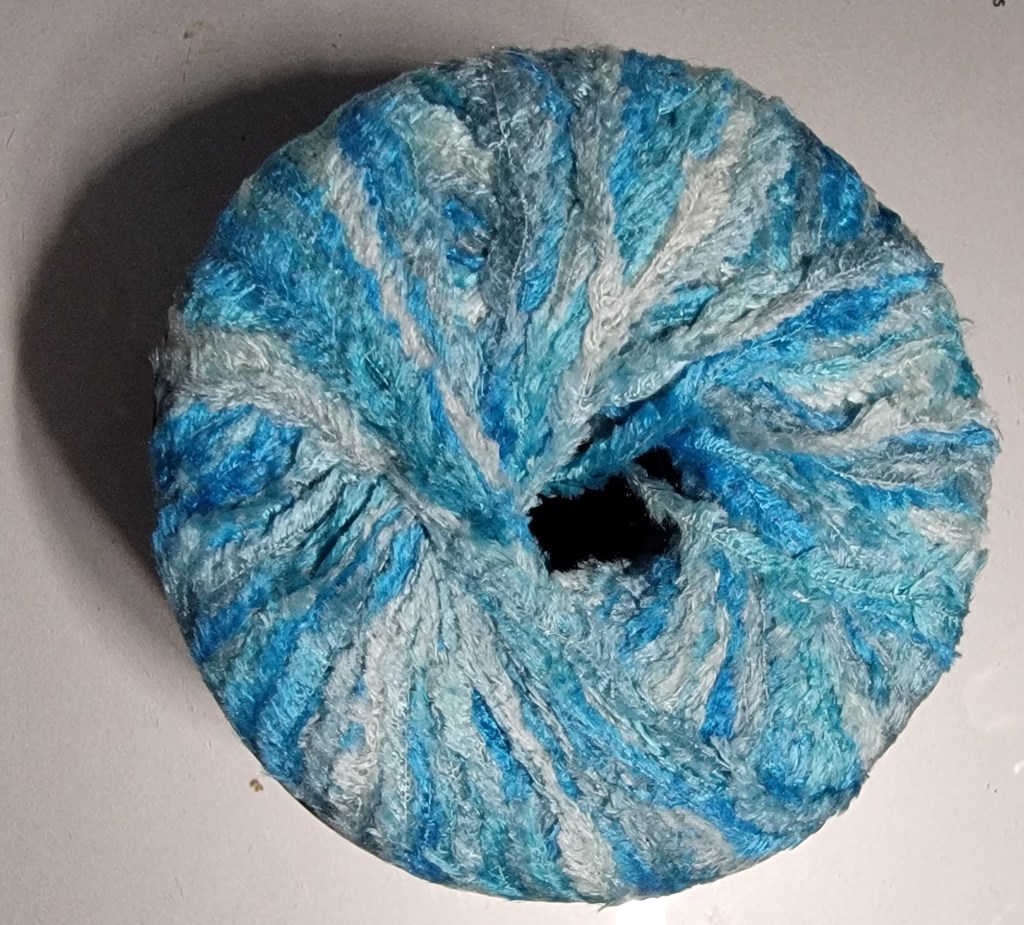
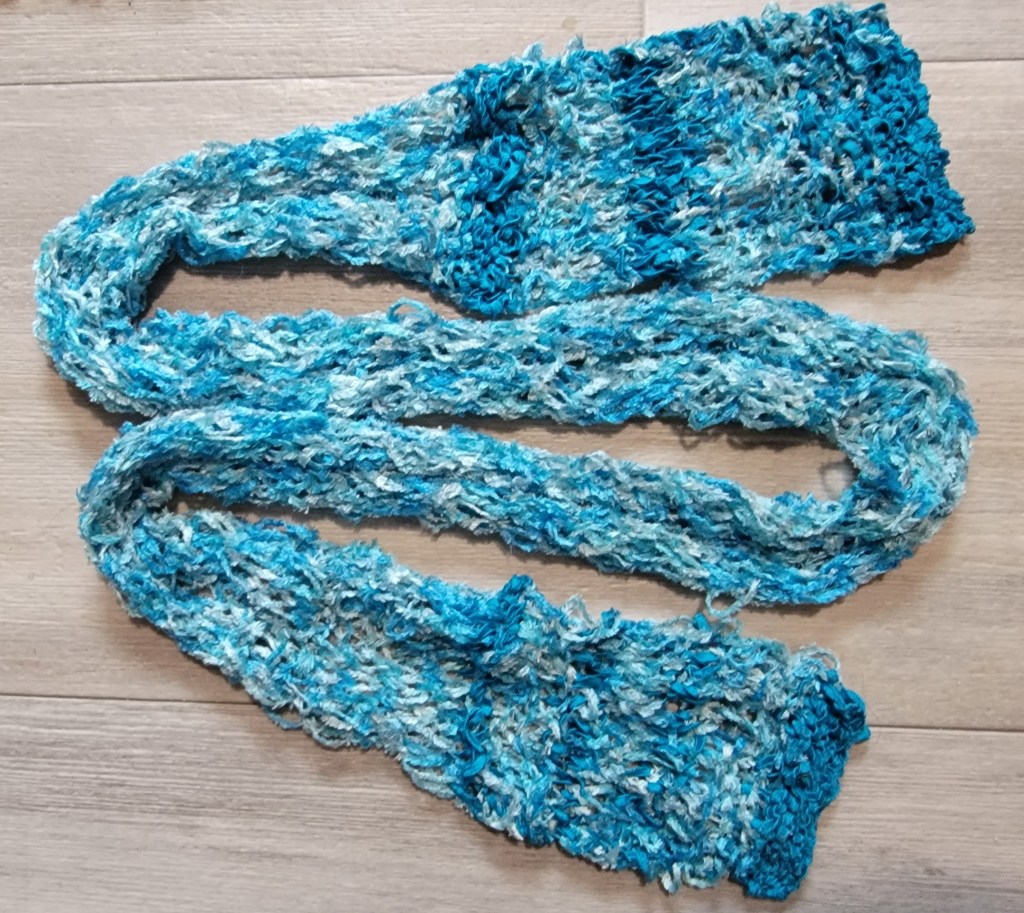
Figure 02-08. Silk yarn is still pretty pricey, but for the 100th birthday of my dear friend Joye, I bought two skeins of 100% silk yarn and made her this scarf. (She loved it! She was always so very appreciative of any kindness anyone showed to her.)
But what happens to the leftover silk after multiple filaments are reeled; or to the filaments from the larvae that are allowed to hatch, to lay more silkworm eggs; or to other bits and bobs of silk filaments not long enough to be reeled? It’s inconceivable to discard these precious leftovers, given the effort needed to nurture silkworm larvae and to harvest the silk filaments. These leftover strands — some estimates suggest these leftovers account for one fourth of all silk — must be treated like any other short-staple fiber: carded to align the strands, then spun into thread.
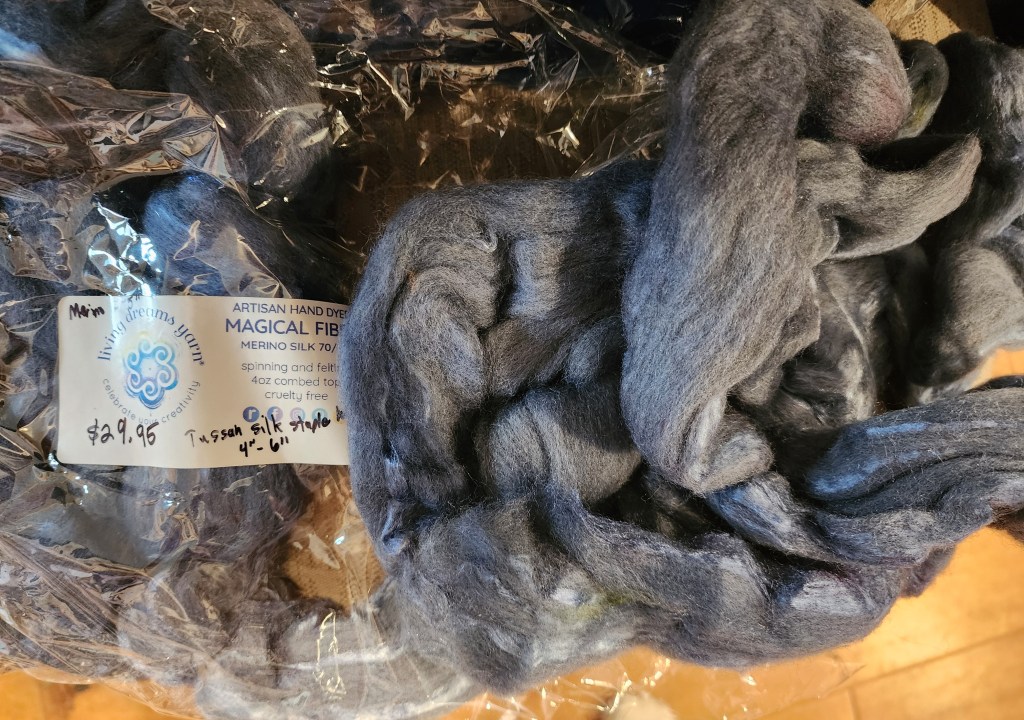
Figure 02-09. This roving was made with merino wool fiber, blended with the Tussah silk filaments from wild silkworms of the Antheraea genus, not from domesticated Bombyx mori silkworms. In addition, for some Tussah silk, the silkworms aren’t killed in the cocoons. Instead, the silkworm moths are allowed to leave their cocoons before the silk filament is extracted. The silkworms live in the wild, so not all feed on mulberry leaves. Because the silkworms are allowed to make their own way out of the cocoon, the filaments aren’t as long, so Tussah silk isn’t as strong as silk made with domesticated silkworms. (For more about Tussah silk, see https://en.wikipedia.org/wiki/Tussar_silk . For more about other kinds of wild silk, see https://en.wikipedia.org/wiki/Wild_silk . For more on domesticated silkworms, see https://en.wikipedia.org/wiki/Bombyx_mori . Also on that topic, https://en.wikipedia.org/wiki/Sericulture .)
Thus, Chinese artisans — who worked with the only natural biological long-filament fiber — still needed to spin fibers into thread. It’s thought that the reels used for drawing out silk filaments may have inspired the invention of the spindle wheel, which could spin threads much more quickly and easily than could a drop-whorl spindle. Essentially, a string or belt was wrapped around the big wheel of the reeler, which was attached a smaller whorl, so that each time you spun the big wheel, it turned the smaller whorl numerous times. This “marked the first use of the drive belt, an essential component of many later machines” (p. 53).
The spindle wheel not only made it easier to spin leftover “waste” yarn, but also to wind reeled silk onto a bobbin, or to twist multiple silk filaments into a stronger thread. Before the invention of the spindle wheel, to supply enough thread for 1 weaver with 1 loom, 20–30 spinsters would need to spin using drop spindles. After the invention of the spindle wheel, a single weaver would need to employ about one third as many spinsters — about 7–10 spinsters spinning thread. The spindle wheel showed how mechanical technology can dramatically speed up the process of making thread.
This Chinese invention arose circa 400–300 B.C.E., about 1000 years before the Indian invention of the charkha spindle wheel. Once the Indian spindle wheel spread to Europe, spinsters there modified it to become the spinning wheel with which we’re now familiar.
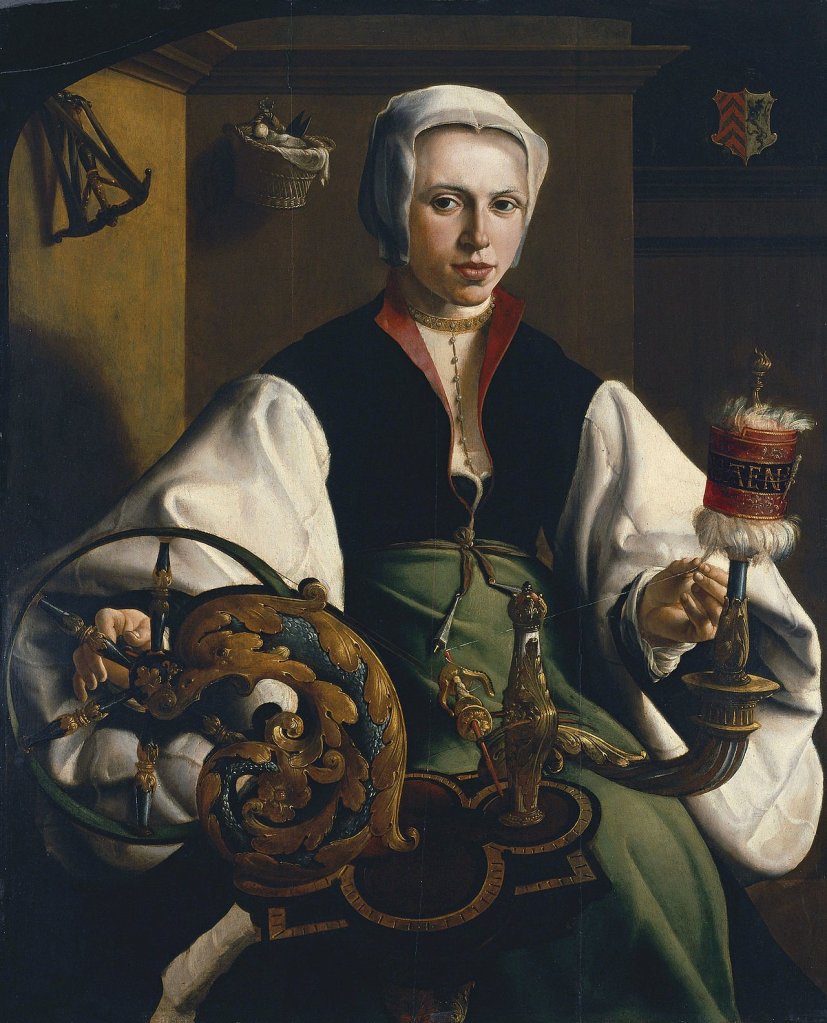
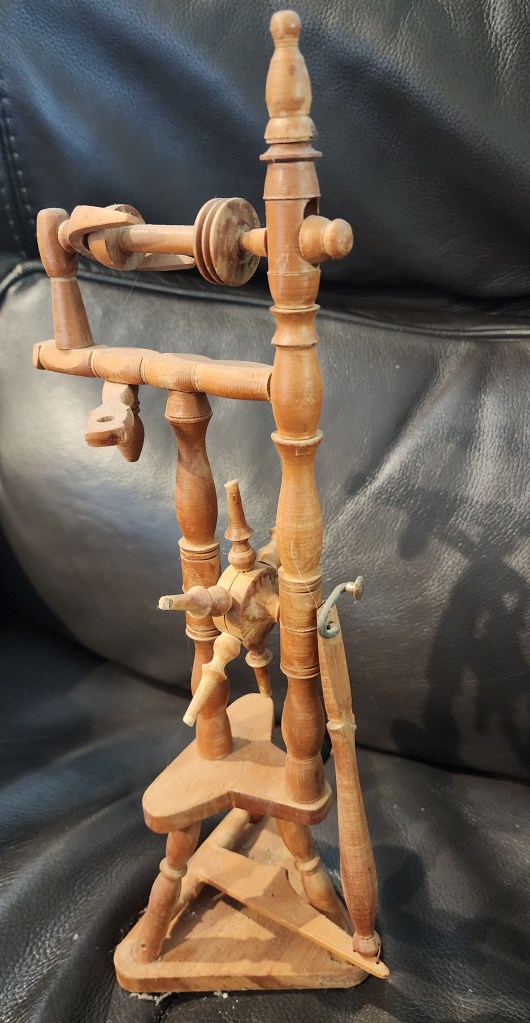
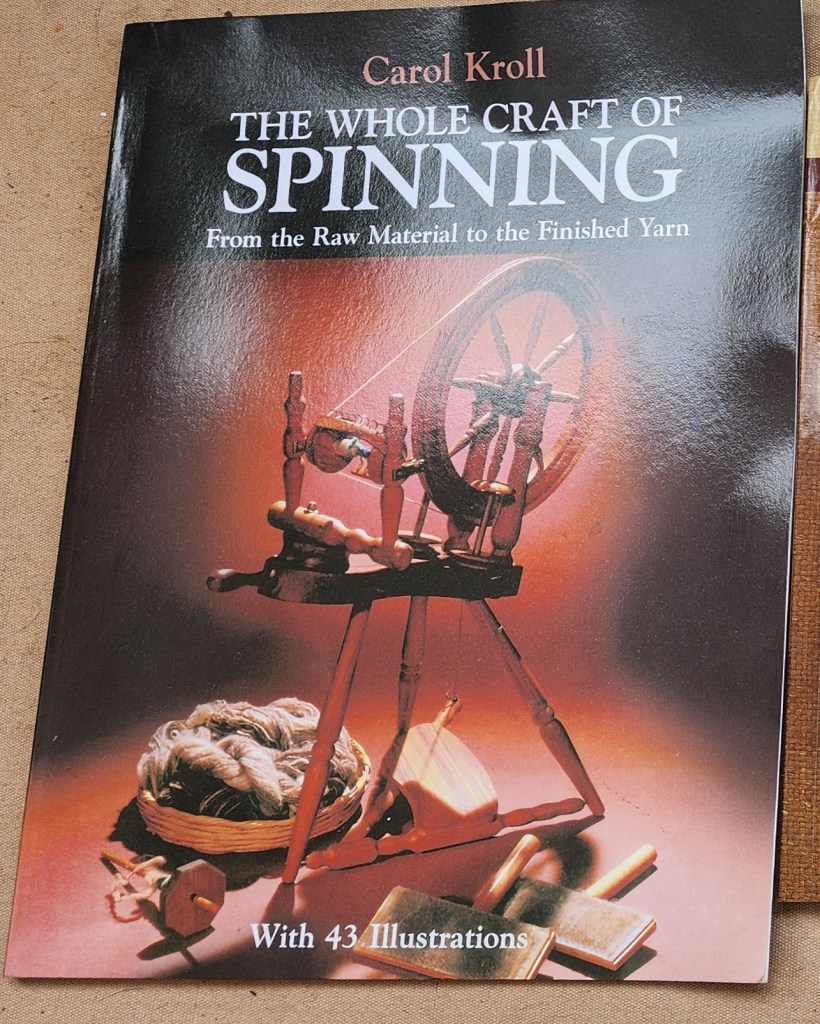
Figure 02-10, a,b,c. For most of us, the closest we will ever come to seeing a spinning wheel will be in a work of art (left), in a craft-history exhibit in a museum (or a questionably authentic model, middle), or on a book cover (right). (This portrait is now in the public domain and may be used without special permission. https://en.wikipedia.org/wiki/Maarten_van_Heemskerck#/media/File:Maerten_van_Heemskerck–Portrait_of_a_Lady_spinning(Museo_Thyssen-Bornemisza).jpg )
The spinning wheel continued to dominate the production of thread for almost another millennium, until the next major innovation. “Writing in 1481, the Bolognese humanist Benedetto Morandi took pride in his city’s industry, praising the twisting mills that ran ‘without human assistance except to watch over the silk.’ In a twelve-hour day, a silk worker throwing by hand might produce a single spindle of thread. A water-powered machine, by contrast, could fill a thousand spindles, with just two or three minders to keep the base lubricated and to repair broken threads” (p. 57). Though these “throwing machines” originated in Bologna, many more water-powered hydraulic throwing mills spread through northern Italy, where both water and raw silk fiber were abundant, needed for spinning silk thread.
One such mill, a towering factory in Caraglio, Italy (between Turin and Nice), used water-wheel-powered machinery to spin silk thread on two-story-high machinery. After the initial spinning of the threads, these machines redoubled the threads to create superstrong warp threads. Warp threads are held taut, lengthwise (or vertically) from the front to the back of the loom. Warp threads must be strong enough to stand up to the rigors of the weaving process until the fabric is completed. The weft threads are woven over and under, back and forth across the warp threads; they aren’t held taut, and once a row of weft has been woven, it’s not disturbed again.
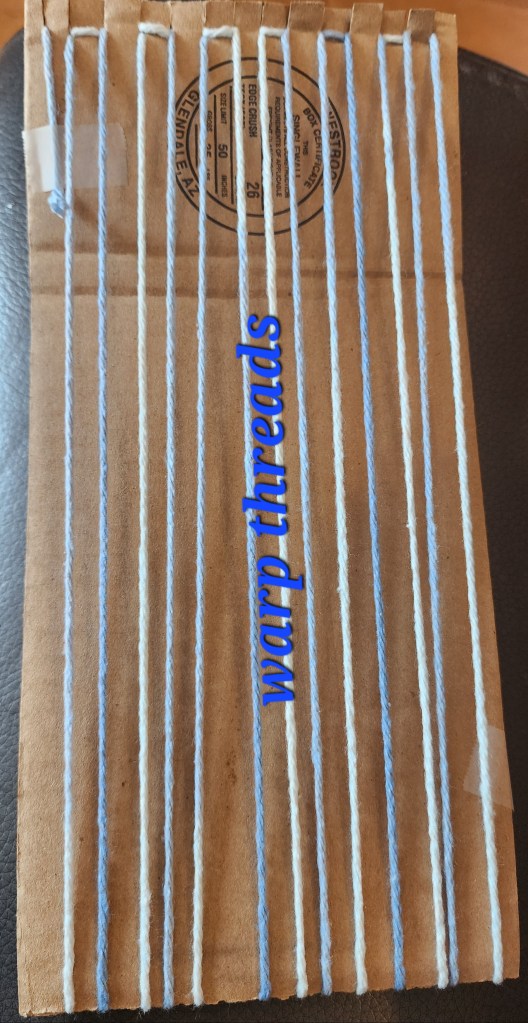
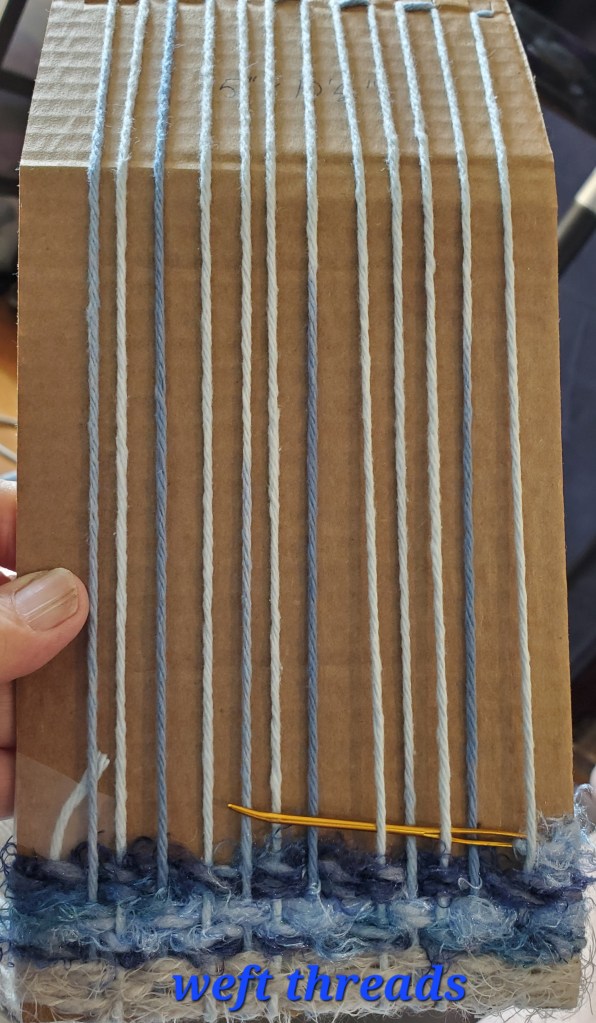
Figure 02-11. Warp threads (left) run from front to back (or top to bottom) of the loom and are held under tension, so they need to be strong. Weft threads (right) are interlaced across the width of the loom and need only enough strength to be moved over and under across the woven fabric.
Many of these factories spawned factory towns, not only spinning (“throwing”) the silk thread, but also handling all aspects of production, from silkworm larvae to silk thread. Over time, all aspects of production were being continually improved and refined — two centuries before the Industrial Revolution in England. Supervising all aspects of production were maestre, master spinsters who could detect tiny variations in the filaments and the threads, and carefully controlling the quality. Despite the economic value of these factories, they weren’t as widely known as the subsequent factories of the Industrial Revolution. Silk thread was used for making luxury fabrics, not the stuff of everyday life and of everyday textiles made from wool, flax, or cotton.
In England, in the mid-1700s, wool, flax, cotton, and other everyday fibers were spun by hand. To supply just 1 weaver with enough thread, 20 spinsters were needed. The pay rate differed dramatically, too. A full-time spinster could earn about 1 shilling/week; a female weaver could earn about 5 shillings/week, and a male weaver could earn about 9 shillings/week. One reason for the lower pay for spinsters (nearly always women) was that they had fewer other options for earning money.
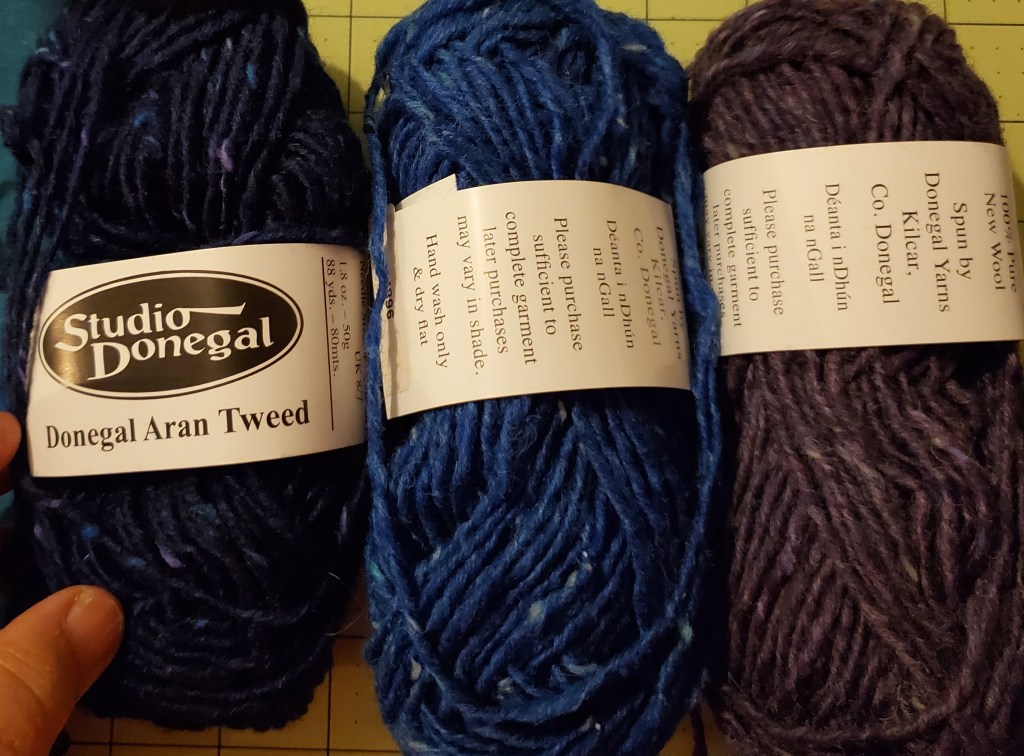
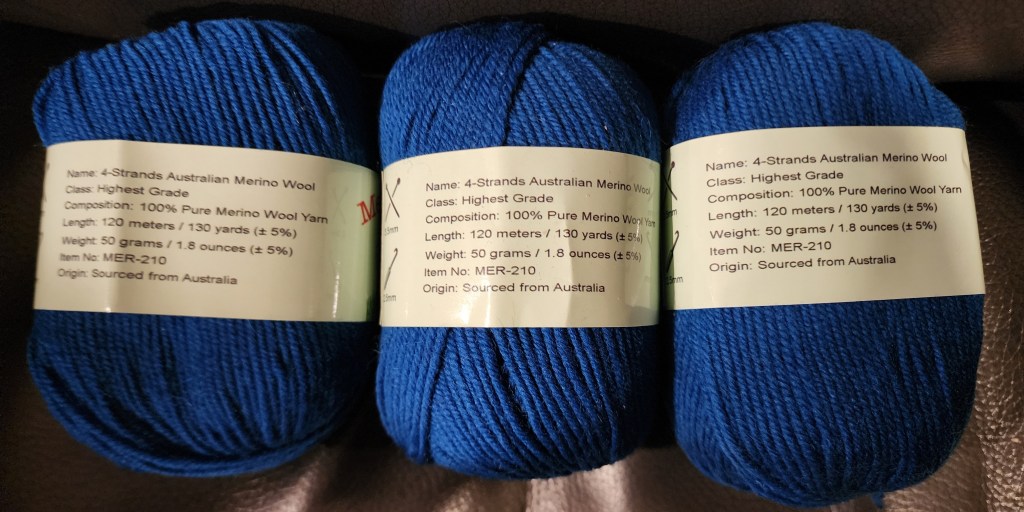
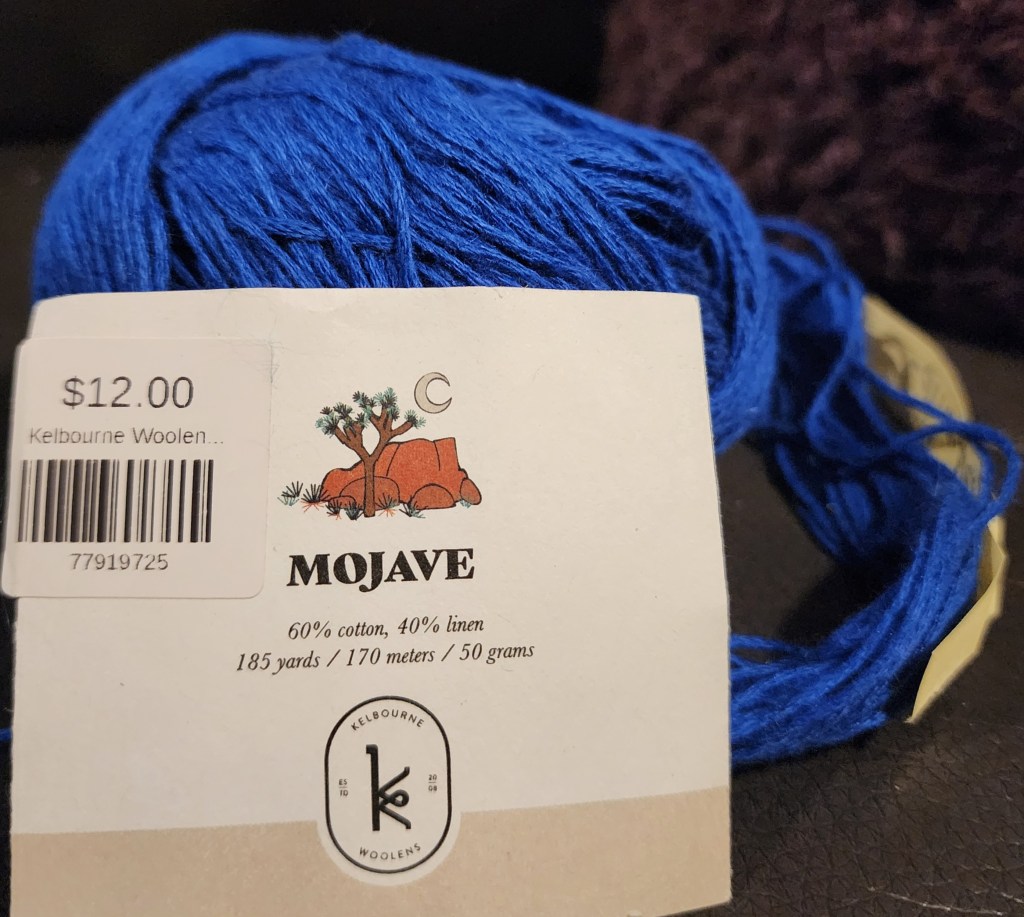
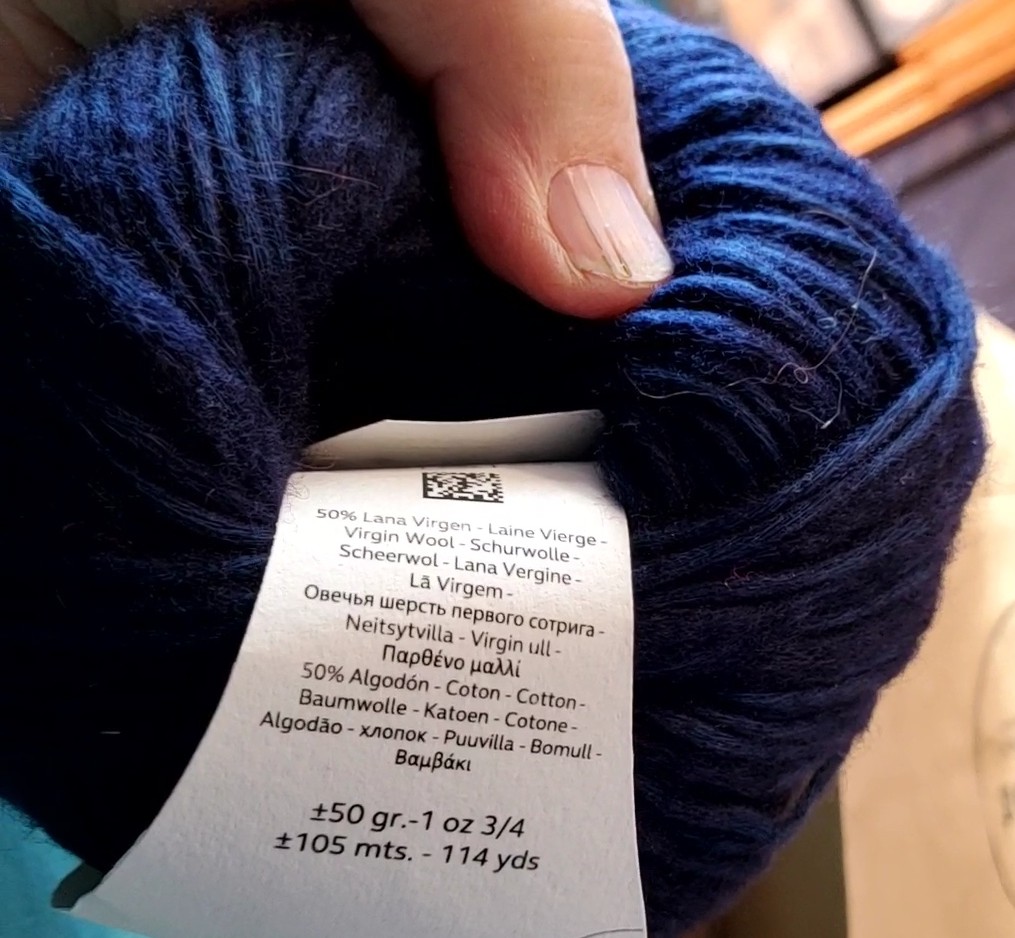
Figure 02-12, a–d. Prior to the Industrial Revolution, women (almost invariably) spent countless hours spinning a skein of yarn, for which they were paid very little. These yarn skeins would have taken huge amounts of time to spin. These machine-spun skeins of plied yarn probably took just minutes to produce: (a) wool, 88 yards/skein, top left; (b) wool, 130 yards/skein, top right; (c) cotton-linen, 185 yards/skein, bottom left; and (d) cotton-wool, 114 yards/skein, bottom right. (Recall that Postrel spent 6 hours spinning just 10 yards of plied yarn.)
Another reason was simply that it took so many hours to produce a relatively small amount of thread. Even with spinsters earning meager pay, the cost of the thread was nearly the same as the cost of the wool and was about twice the cost of weaving. At one time, for a piece of worsted woolen cloth, the raw wool cost 12 shillings, the spinsters’ earnings were almost 12 shillings, the weaver earned about 6 shillings, and the manufacturer kept a little more than 2 shillings. Consumers of fabric couldn’t afford to pay spinsters’ adequately for their time, given the huge amount of time needed to spin the thread. As long as thread was being produced by hand, even with a spinning wheel, the spinning of thread caused a bottleneck in the production of fabric.
In the 1760s, the invention of the spinning jenny allowed a single spinster to produce 8 times as much thread as she could without it. Soon, her productivity increased further, and additional innovations made the resulting thread stronger and more uniform. The spinning jenny worked well for wool fibers, but for short-staple cotton fibers, though it could produce adequate weft thread, the thread was too weak to use for warp threads. Weavers could make do by using linen threads for the warp and cotton threads for the weft, but the resulting fabric felt rough. (If interested in the jenny, see https://en.wikipedia.org/wiki/Spinning_jenny .)
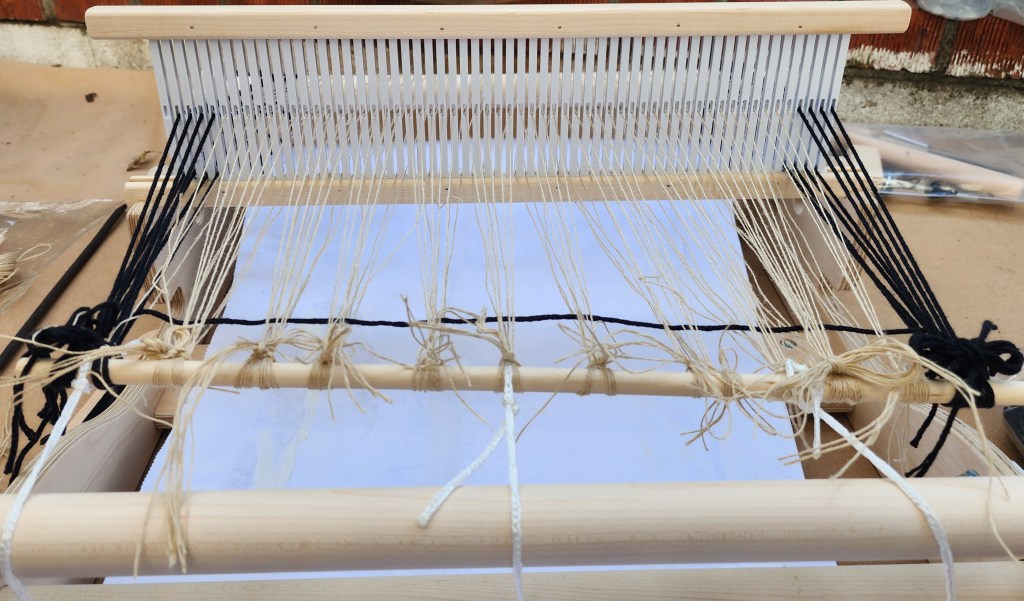
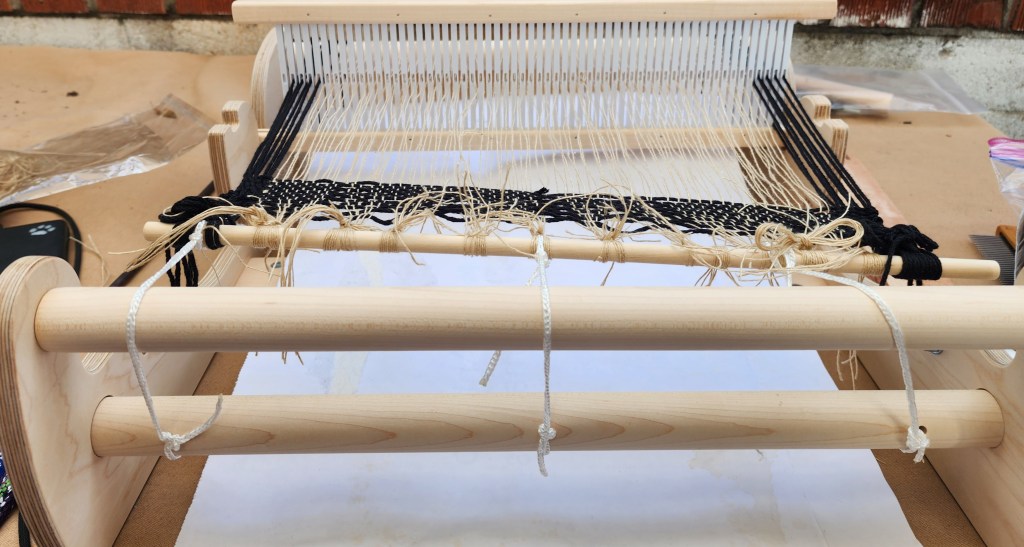
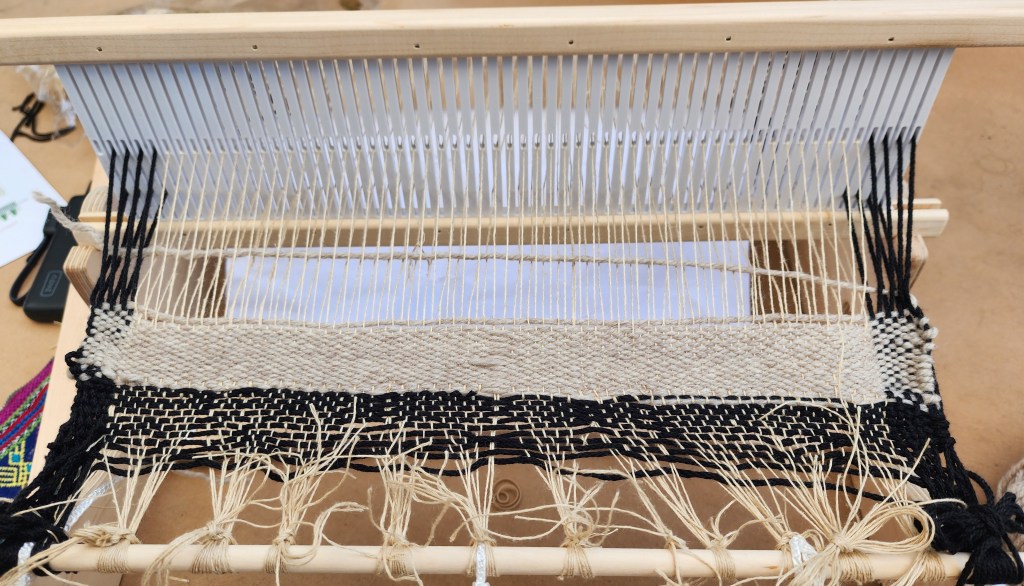
Figure 02-13. I’m trying to teach myself how to weave cloth. I’ve woven smaller items on smaller looms, but the weaving shown here is my biggest undertaking to date, so I wanted to take advantages of the strengths of linen, cotton, and wool fibers. I set up my loom mostly with linen yarn — the strongest yarn — as the warp (left), although I used a little cotton yarn at the side edges of the warp. Then I used cotton yarn (middle) for the first several rows; cotton isn’t as strong as linen, but it’s relatively rigid and will provide a solid start to the fabric. For the remainder of the weaving (until I get to the end), I’m using wool (right), which is a very forgiving, flexible, yet sturdy fiber.
Luckily, some industrial espionage discovered the great success of Italian silk-spinning mills and illicitly carried the technology back to England. Innovators in England figured out how to adapt these mills to spin cotton fiber, and by the time of the American Revolution, England’s spinning revolution had begun. A key innovator was Richard Awkright, who also had the brilliant idea to pay his workers well. Another invention, the spinning mule, produced cotton thread that was consistently fine and strong enough to stand up to use as warp thread. At long last, spinning and thread no longer caused a bottleneck in the production of textiles. Weavers had all the thread they needed — and more. For almost a quarter of a century, weavers enjoyed high pay and all the work they wanted.
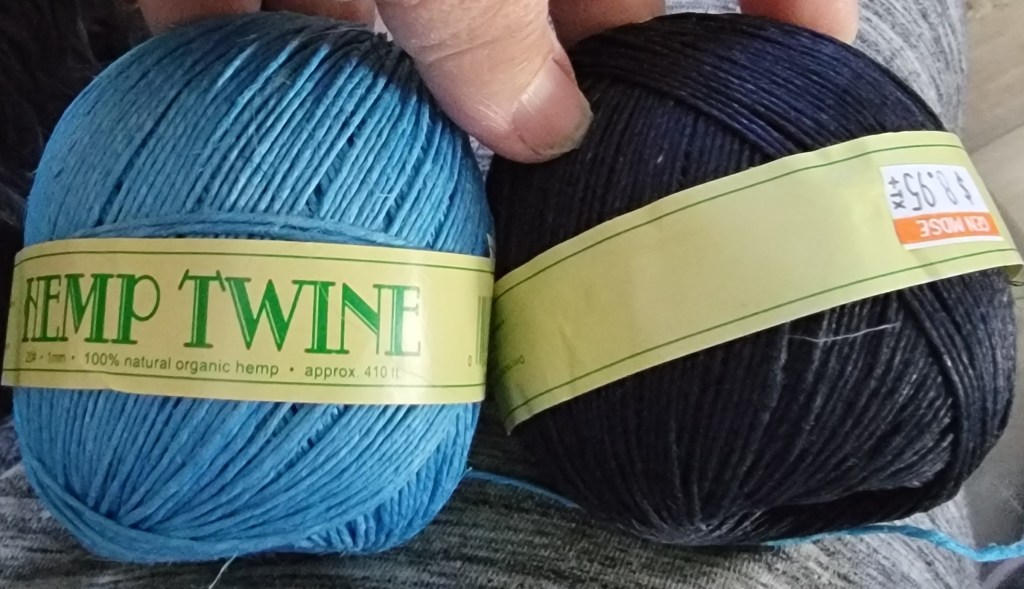
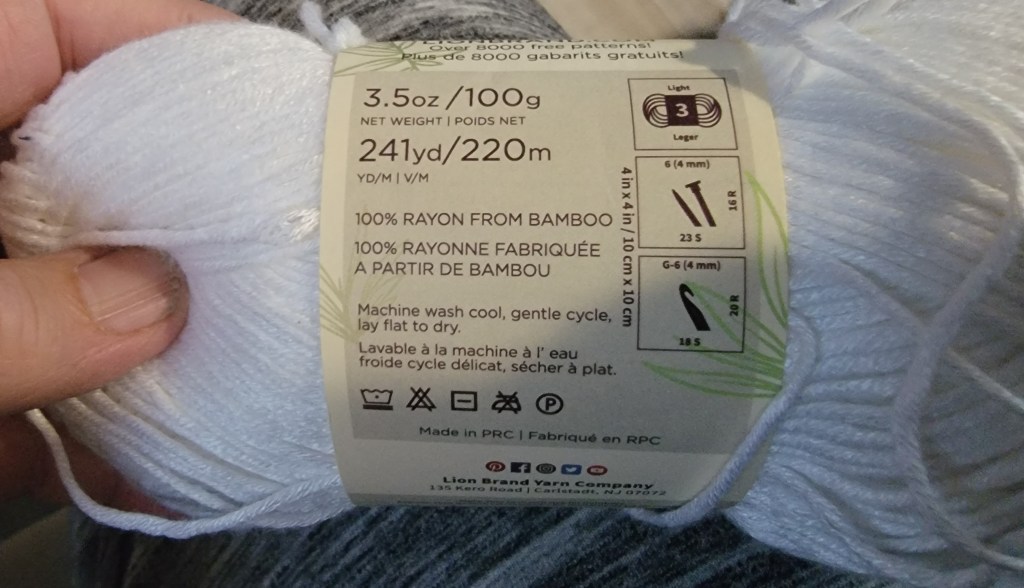
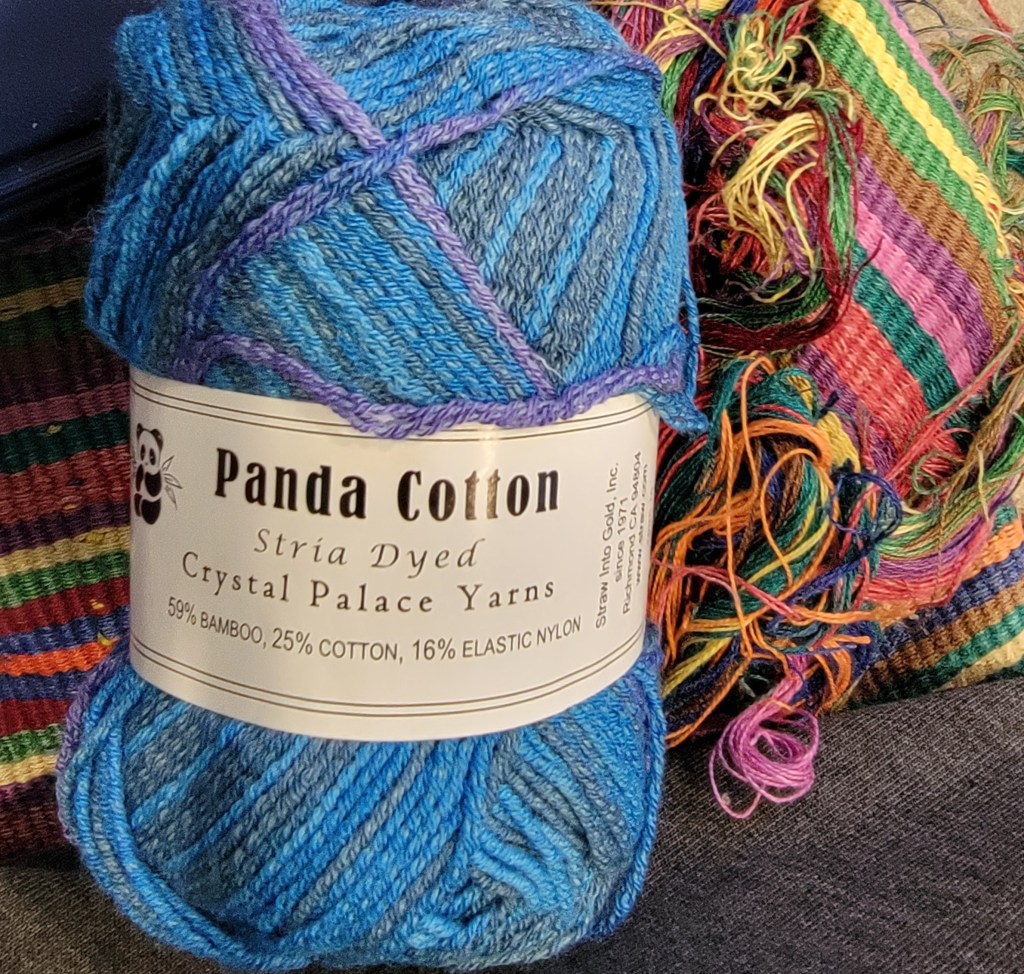
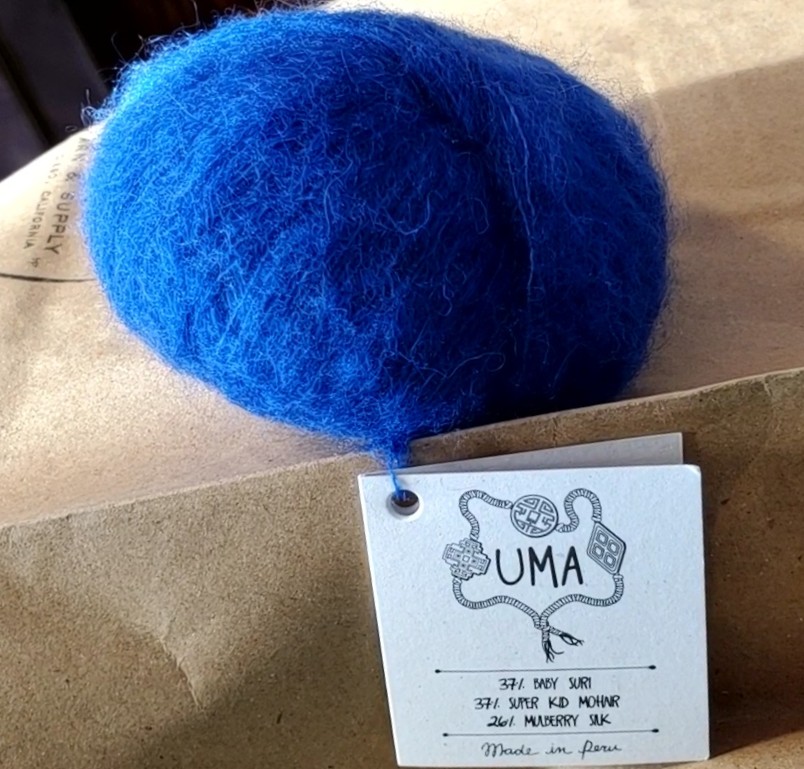
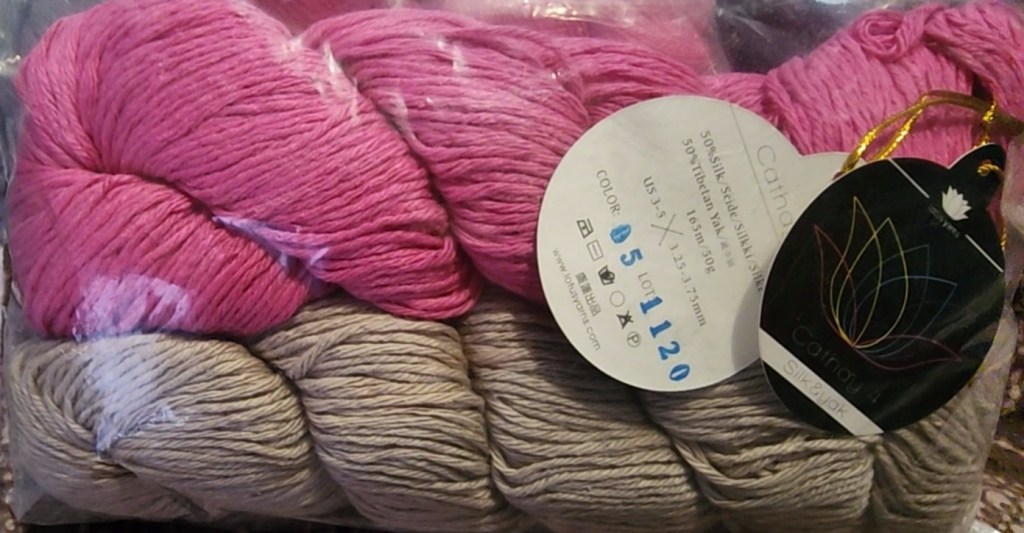
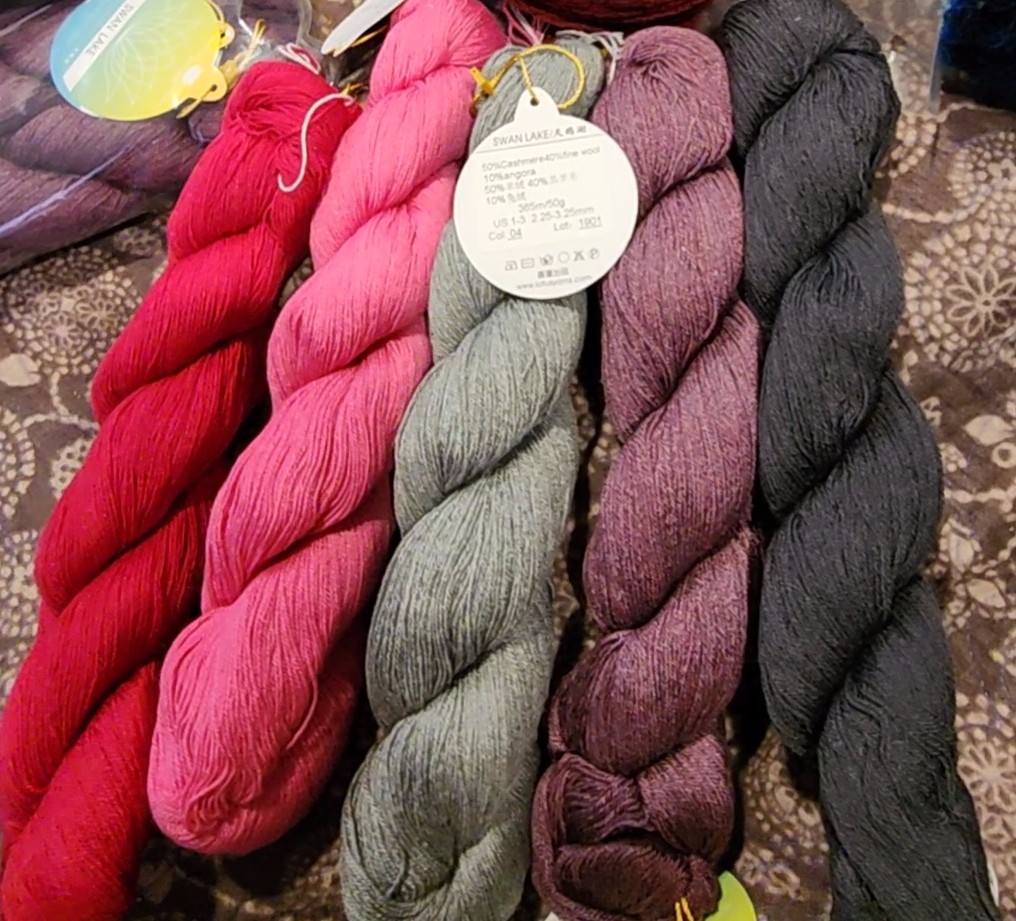
Figure 02-14, a–f. Contemporary hobbyists, amateurs, artisans, crafters, and dabblers can enjoy a wide array of fibers. Just a few options: sturdy hemp (top left), soft antibacterial bamboo (top middle), versatile bamboo-cotton-elastic blend (top right), or even luxurious alpaca-mohair-silk (bottom left), silk-yak (bottom middle), or cashmere-wool-angora blends (bottom right).
But that heyday wasn’t to last long. In the early 1800s, power looms started replacing hand weaving for most fabrics. Many displaced weavers launched the Luddite movement, protesting against the weaving machinery, with some confrontations turning violent. As often happens with new technologies, many craftspeople lost their earnings, but other workers (e.g., machine repairers, garment workers) gained employment, and other benefits accrued. Women were freed from spending inordinate amounts of time spinning; consumers were able to buy fabric and other textiles at greatly reduced prices; lower costs for textiles also reduced the costs of goods sold in textile sacks (e.g., flour).
Postrel concludes the chapter with a contemporary company that uses “air-jet spinning” technology to produce high-quality cotton thread. Each worker at the factory produces about 60,000–75,000 pounds of yarn each year—a yield inconceivable to a hand spinster with the fastest of spinning wheels or spindle whorls.
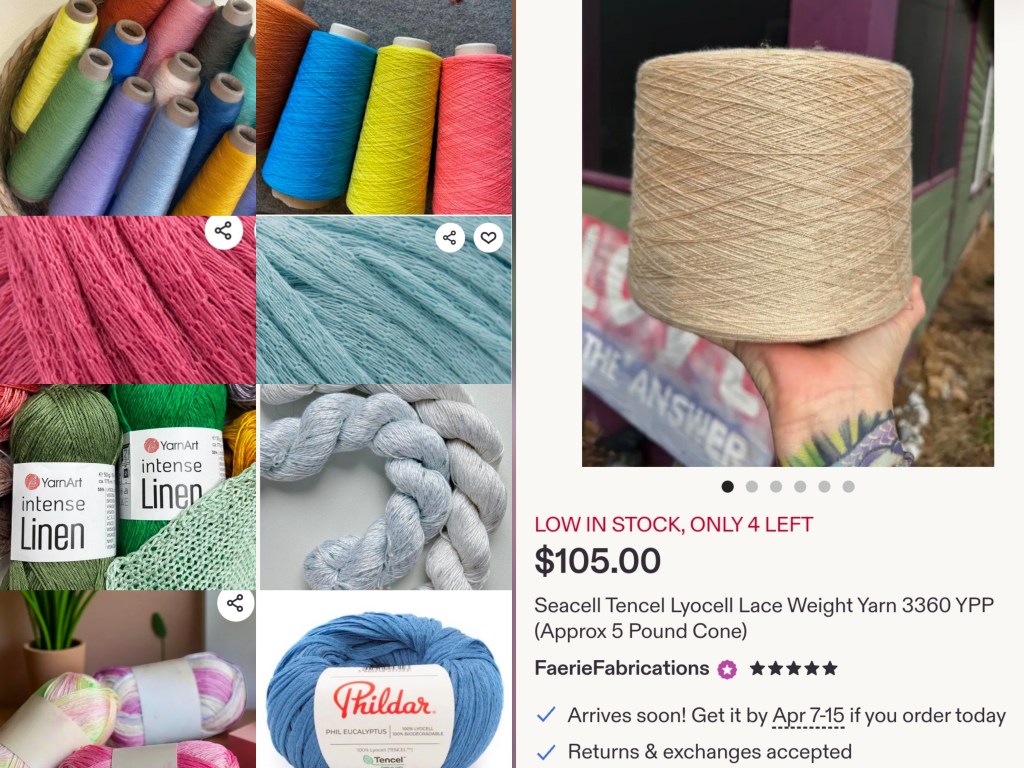
Figure 02-15. I haven’t noticed Lyocell (aka Tencel) yarns in my local yarn or craft shops, so I wondered whether they’re available to amateur crafters. I started out by looking at the Etsy marketplace, and these are the ones I found. I featured the Seacell here (right), as a lark, as I’m guessing most of us aren’t ready to plunk down $105 + tax + shipping to have Seacell delivered to our door. The other yarns (left) were reasonably priced, though, and most offer free shipping if you spend over a given amount of money on their goods. By the way, I’m not getting a kickback for posting this. ;~)
Postrel’s book still has much more to offer than what I’ve shown here. More to come!
Further Resources
- https://en.wikipedia.org/wiki/Bombyx_mori
- https://en.wikipedia.org/wiki/Distaff
- https://en.wikipedia.org/wiki/Luddite
- https://en.wikipedia.org/wiki/Sericulture
- https://en.wikipedia.org/wiki/Silk
- https://en.wikipedia.org/wiki/Silk_reeling
- https://en.wikipedia.org/wiki/Spinning_jenny
- https://en.wikipedia.org/wiki/Spinning_(textiles)
- https://en.wikipedia.org/wiki/Spindle_whorl
Text and images (unless otherwise indicated in the caption) by Shari Dorantes Hatch.
Copyright © 2026. All rights reserved.
 Bird Brain

Leave a comment