
Musophagidae: Two Notable Turacos
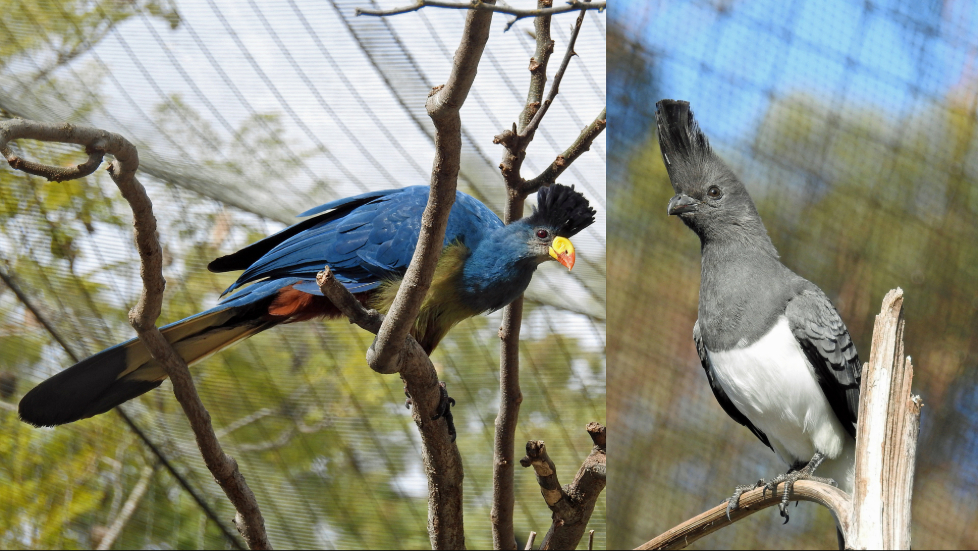
Figure 01. Taxonomically, turacos are in the kingdom Animalia, phylum Chordata, class Aves, and order Musophagiformes, which contains only the family Musophagidae. This blog highlights two turacos: the Great Blue Turaco, Corythaeola cristata, and the White-bellied Go-away Bird, Crinifer leucogaster.
This blog is the second of two blogs about the Musophagidae family of turacos. Part 1 (https://bird-brain.org/2026/03/15/turacos-part-1-of-2/ ) described the family and provided information about three species in the Tauraco genus:
- Ross’s Turaco, Tauraco rossae
- White-crested Turaco, Tauraco leucolophus
- Red-crested Turaco, Tauraco erythrolophus
This blog discusses two other species of turacos in two other genera:
- Corythaeola genus includes just one species, the Great Blue Turaco, Corythaeola cristata
- Crinifer genus includes five species, one of which is the White-bellied Go-away Bird, Crinifer leucogaster
Great Blue Turaco, Corythaeola cristata
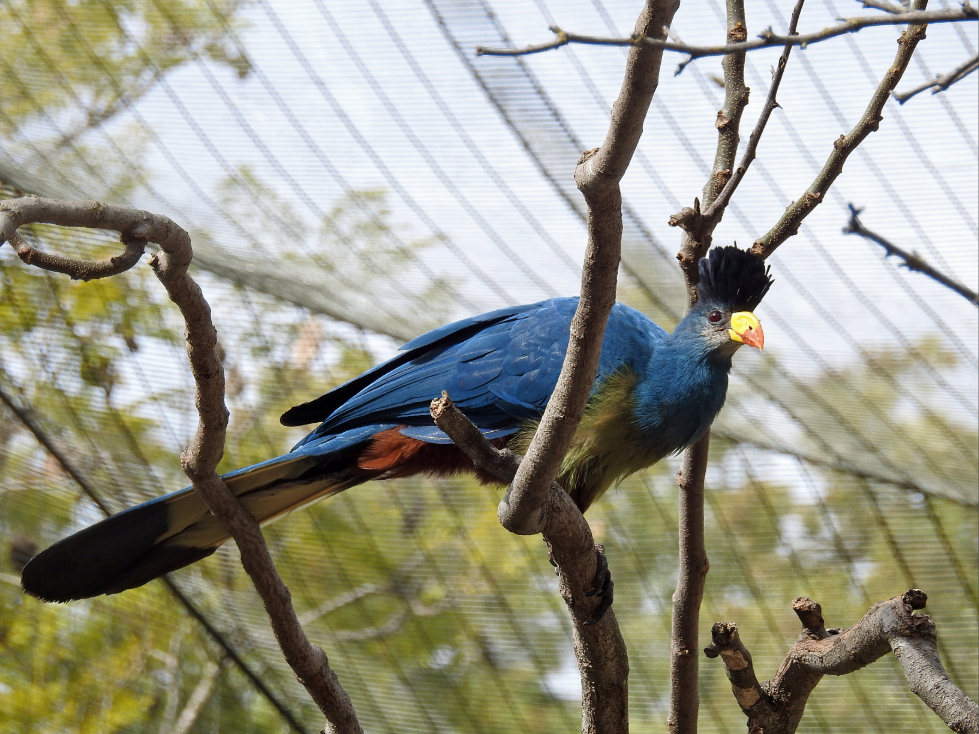
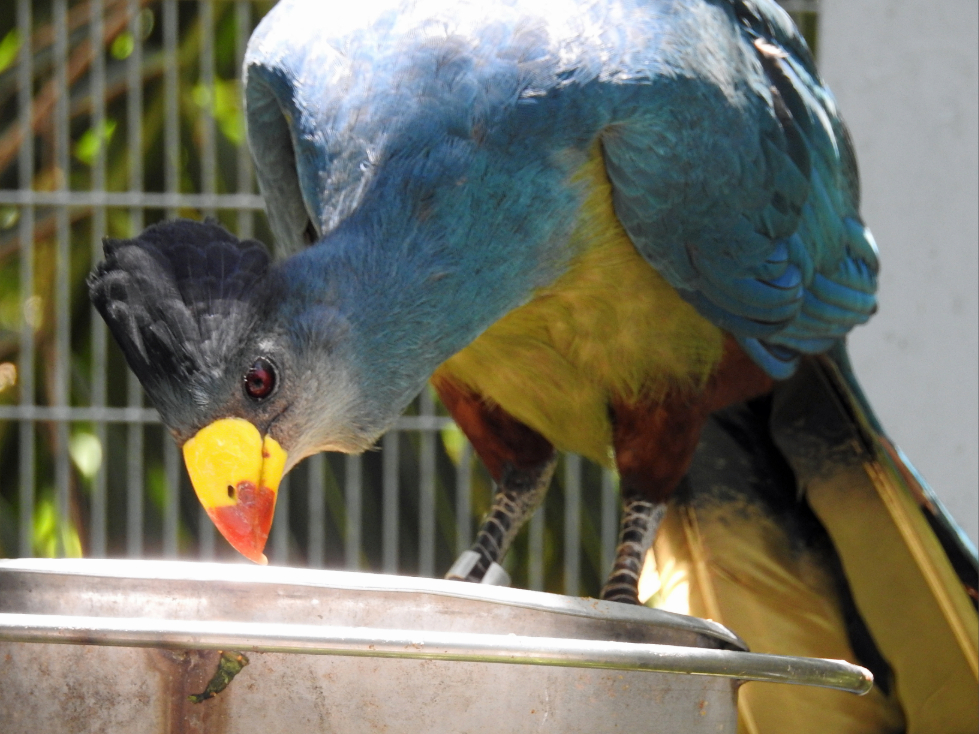
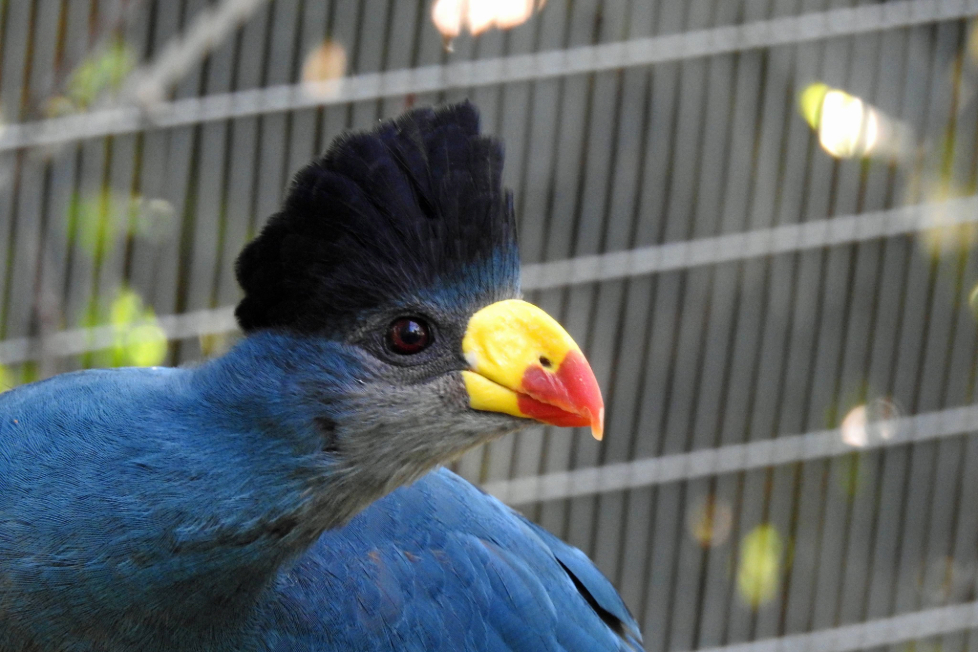
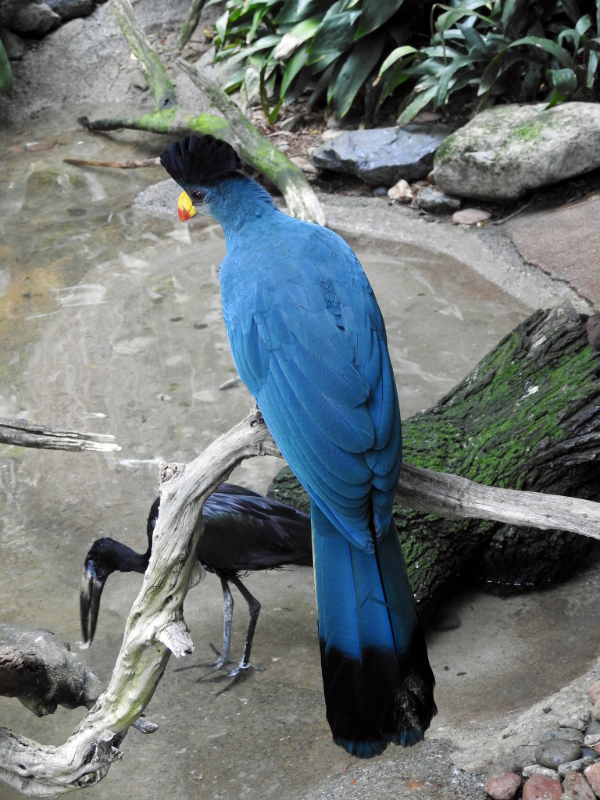
Figure GT-01, a–d. The Great Blue Turaco, Corythaeola cristata, is the largest turaco species, by far, more than twice the size of many other turacos.
As mentioned in Part 1 of these two blogs about turacos, the name turaco comes from an African name for these birds, said to be imitative of the bird’s call. The International Ornithologists’ Union officially designated this species “Great Blue Turaco”; some also call it the Blue Plantain Eater. This species is the only one in the genus Corythaeola, which comes from Greek, korus for “helmet” (its crest, which looks like a plumed military helmet), and koruthaix, for helmet shaking, presumably referring to when these birds move their crests. The species name, cristata, is Latin for “crested” — also pointing to this bird’s distinctive black crest. The Spanish name for this species is Turaco Gigante, acknowledging that this species is the largest of turacos.
Figure GT-02. In 1816, ornithologist Louis Pierre Vieillot first identified this species, and in 1860, ornithologist Ferdinand Heine distinguished this species as deserving its own genus. The turacos to which it’s most closely related are in the genus Crinifer — the go-away birds and the plantain eaters.
Description
Great Blue Turaco, Corythaeola cristata, the largest member of the turaco family, is more than two or three times as heavy as other turacos, weighing about 36 ounces (range 28.9–43.4 ounces, 1.8–2.7 pounds, 820–1230 g). The average female weighs more than the average male, though there’s a lot of overlap in weight. This turaco is about 28–30″ (70–75 cm) long, bill to tail, with the tail alone about 13–15.6″ (33.2–39.5 cm) of that length. Its wings are shorter than its tail, at about 11.5–14.3″ (29.2–36.2 cm). According to one source, its blackish legs and feet have yellow soles; its tarsus length (ankle to toes) is about 1.4–2.5″ (3.46–6.35 cm).
Figure GT-03. Turacos have semi-zygodactyl toes; usually, the first and fourth toes point backward and the second and third toes point forward, but it can switch the orientation of the fourth toe to point forward whenever it wants to.
The plumage on its upperparts — neck, back, and wings — has been described as grayish blue, but it looks more marine-blue, with gray accents to me. Its breast feathers are yellowish green (or greenish yellow), which switch to cinnamony chestnut brown from its belly to its tail. The top of its long, wide tail is mostly the same color as its upperparts, but with a black band at the tip; under its tail are bands of black and pale yellow-green. Both sexes have similar plumage.
Figure GT-04. Great Blue Turacos keep their exquisite feathers aligned beautifully through careful preening of each feather.
Atop its head is a tall upright black crest (about 4″ / 10 cm high); it’s narrow side to side but curves over its head from its forehead to the back of its head. Its chin is pale gray, extending in a narrow band up and over its bill. The bright-yellow curved bill is about 1 ½” long (1.4–1.6″, 3.64–4.06 cm), 3/4″ deep (0.7–0.8″, 1.74–1.99 cm), and 1/3″ wide (0.3–0.4″, 0.7–1.05 cm), with a bright red-orange tip. Its brown eyes are surrounded by an oval of bare black (orbital) skin and topped with lash-like feathers. The plumage of immature birds isn’t as colorful, and the crest is smaller.
Figure GT-05. This Great Blue Turaco shows why its scientific name focuses on its crest. (In case you’re wondering, the other two birds are a Southern Bald Ibis and a Hamerkop, both seen at the Wings of the World Aviary of the San Diego Zoo’s Safari Park.)
Sounds and Vocal Behavior
This species utters a wide variety of vocalizations (three full pages of recordings available at https://xeno-canto.org/species/Corythaeola-cristata ). They have been descrived as “a deep gobbling resonant trill,” “a series of loud, fast, rattling . . . notes,” or caws, whistles, trumpets, and soft whistles. Once one bird starts calling, others “almost invariably join in” (Birds of the World). (The xeno-canto website also includes a range map of their distribution.)
Distribution and Habitat
This species of turaco is widespread throughout equatorial and tropical Africa (from 11.7 degrees north to 11 degrees south of the equator). These distribution data are confirmed by eBird observations, https://ebird.org/species/grbtur1 . Among the nations where it is found are Guinea Bissau, Guinea, Sierra Leone, Liberia and Ivory Coast E to Nigeria, Central African Republic, Cameroon, Equatorial Guinea, Gabon, Angola, Congo, Democratic Republic of Congo, South Sudan, Uganda, Rwanda, Burundi, Tanzania and Kenya. Some sightings have also been found in Benin, Côte d’Ivoire, Ghana, Sudan, and Togo. Its range has been estimated at 1.5–3.2 million square miles (3.9–8.2 million km2).
Figure GT-06. Across equatorial and tropical Africa, the Great Blue Turaco dwells in dense forests, wherever it can find fruits, some other plant matter, and a sprinkling of invertebrates to sustain its large body.
It can be found in rain forests and heavy gallery forests (along waterways) from sea level to 8,858 feet (2700 m) — that is, from lowlands to montane forests, primary forests to secondary forests, swamp forests to evergreen forests. It has even adapted to areas where humans have intervened. Though it doesn’t migrate, it will travel to find trees with favored fruits.
Diet and Foraging
According to Avibase, fruits make up about 60% of its diet, other plant material (e.g., buds, shoots, leaves, flowers) about 30%, and invertebrates (e.g., insects) about 10%. They also eat aquatic plants (e.g., filamentous algae); algae may be eaten for the protein content or because algae can detoxify some of the compounds in other plants. They’re more likely to eat leaves in the evening (up to 25% of their diet in some locations), and they’re more likely to eat other plant parts when fruits aren’t as plentiful. They typically consume fruits whole, so they play a key role in seed dispersal through their feces, deposited (with fertilizer) far from the mother fruit trees.
Figure GT-07. Fruits and seeds (e.g., nuts) are among the favorite foods of the Great Blue Turaco.
Great Blue Turacos prefer the company of conspecific (same-species) flockmates, with groups of six or seven turacos sharing a territory year-round and foraging together each day. Where one turaco is found, others are probably nearby. When a large fruiting tree is at the territorial boundaries of multiple groups, the groups will congregate there, typically approaching the tree silently, then leaving it one by one.
Breeding
Turacos have never been observed to be brood parasites or polygynous breeders. They form monogamous pairs who engage in mating displays, both on the ground and in the air (though not acrobatically). It takes the twosome about 6–9 days to build their nest, typically in a tree with dense foliage, between 26 and 82 feet (8–25 m) above the ground, often over water. The nest is a shallowly rimmed platform made of sticks. Sometimes, up to three pairs of turacos will build nests in the same tree, and occasionally, the pair is helped by a third adult.
Figure GT-08. These two Great Blue Turacos are strengthening their pair bond by feeding one another.
Within a day after the nest is completed, the female lays the first of two white (or pale greenish-blue) almost-spherical eggs (rarely, one or three), laying the second on the following day. Immediately, both parents start to share incubating duties for about 29–31 days. After the nestlings hatch, both parents protect and feed them (e.g., regurgitated leaves), with at least one parent always attending to them day and night, for an additional 27–29 days; often, a third adult helps the couple. After that time, the nestlings start climbing in and out of the nest, and by 33 days, they fledge, making short flights within the tree’s canopy. At about 31–38 days old, they leave the nest for good, but they continue to be attended to by their parents until they’re 45 days old, when they can more ably fly. The parents continue to feed their young for up to three months.
Figure GT-09. Great Blue Turaco parents both incubate their eggs and feed and protect their nestlings until the youngsters are fully independent.
The productivity for each pair of Great Blue Turacos is about 0.6 young per year. A Kenyan study found that of 18 attempted clutches (37 eggs total), only 14 eggs hatched, and of them, only 11 survived to fledge. All others were preyed upon by goshawks, monkeys, and snakes. Their age at first breeding is 2.7 years, and their generation length is 6.8–7.8 years.
Conservation Status
The IUCN Red List conservation status of Great Blue Turacos is LC, Least Concern. Their populations are decreasing, but they’re not globally threatened. In fact, they’re actually the most widespread of all turacos, common in most of their range (e.g., in Uganda). Nonetheless, deforestation has imperiled them in some locations, and they may have been extinguished locally in parts of their range. In addition, in some locations, they’re hunted for their meat, considered a delicacy by some humans; their tail feathers are also valued as decorations. Another major threat is the pet trade, for which too many are trapped and exported. The annual survival rate of adults is 84%, and the maximum recorded age is 20 years. The only conservation action reported by IUCN is that at least one conservation site has been identified over its range.
Figure GT-10. Great Blue Turaco chicks don’t have good odds of surviving to adulthood, but once they reach adulthood, they’re survival rate is 84%, and their lives may be quite long, perhaps 20 years.
The Cornell Lab of Ornithology’s eBird app and website (https://ebird.org/species/grbtur1 ) lists 16,068 observations, including 1093 with photos and 107 with audio. The lab’s Macaulay Library (https://search.macaulaylibrary.org/catalog?taxonCode=grbtur1 ) includes 1,981 photos, 132 audio recordings, and 28 videos.
White-bellied Go-away Bird, Crinifer leucogaster
This bird’s genus name, Crinifer, comes from Latin crinis, for “hair,” and -fer for “bear,” referring to its pronounced crest. Its species name, leucogaster comes from Greek leuko, “white” and gaster, “belly” or “abdomen,” also referenced in its common name, White-bellied. Its Spanish name, Turaco Ventriblanco, also points to its white belly. The second part of its common name, “Go-away Bird” is said to be based on its “loud nasal cry ‘g’way gwaay’” — not everyone agrees about that call.
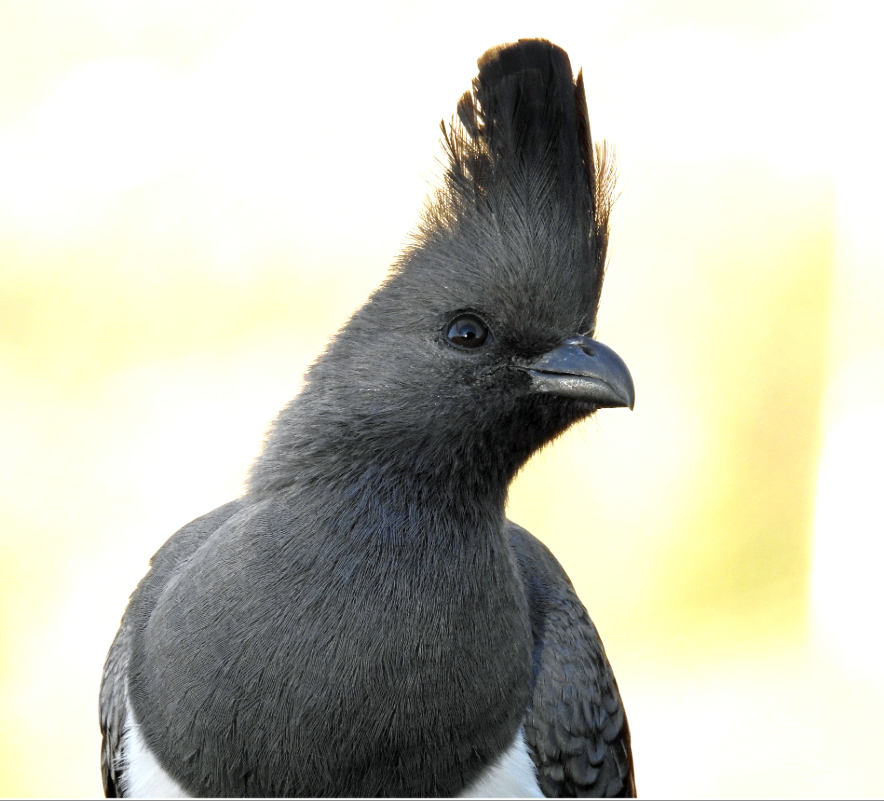
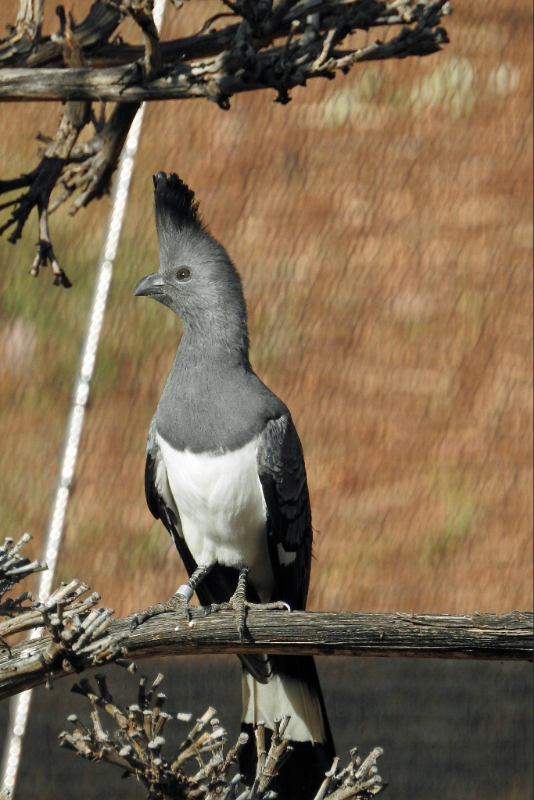
Figure WG-01, a,b. These two images show the two namesake features that distinguish the White-bellied Go-away Bird: (a) its tall crest (Crinifer) and (b) its white belly (leucogaster).
In 1842, noted naturalist Eduard Rüppell described this species in a report to the Proceedings of the Zoological Society of London; at that time, he included it in the genus name Chizaerhis, no longer in use. Originally (in 1821), the Crinifer genus included only two species of plantain-eaters, but in 2021, three species go-away birds were subsumed into this genus, too.
The five species of the Crinifer genus:
- White-bellied Go-away Bird, Crinifer leucogaster
Figure WG-02. This male White-bellied Go-away Bird lacks the colorful plumage of most other turacos, but his looks still catch your attention.
- Gray Go-away Bird, Crinifer concolor
- Bare-faced Go-away Bird, Crinifer personatus
- Western Plantain-eater, Crinifer piscator
- Eastern Plantain-eater, Crinifer zonurus
All five Crinifer turaco species have less colorful plumage than other turacos — typically grays, whites, or browns, with both sexes having similar plumage. Nonetheless, they’re impressive-looking long-tailed birds, known for their noisiness. Unlike the brightly plumed forest-dwelling turaco species, the Crinifer turacos live on savannas or acacia woodlands, which lack dense foliage. All five eat mostly fruits (especially figs) and seeds, as well as some other plant matter.
Figure WG-03. This female White-bellied Go-away Bird is feaking her bill (cleaning it by wiping it against a hard surface); she also hints at why her species has a reputation for being noisy.
Description
Turaco toes are semi-zygodactylous, in that the fourth toe can be switched to the back, aligning with the first toe, or to the front, aligning with the second and third toes. These go-away birds average 20″ (51 cm) long, bill to tail, with tails about 9.6″ (24.5 cm) or longer, about half their total length. Wings are only 8.4–9.1″ long (21–23 cm). Females (weighing 7.9–8.8 ounces, 225–250 g) tend to be heavier than males (weighing 6–7.9 ounces, 170–225 g).
Figure WG-04. The larger female White-bellied Go-away Bird has a pale green bill (front right), and the smaller male White-bellied Go-away Bird (left, rear) has a black bill.
Despite their size differences, females and males have very similar plumage — rich grays on head, breast, and upperparts; white belly; charcoal black tail with a white band crossing the middle of the tail. In flight, white extends under the wings to a band of charcoal black wing tips (see https://macaulaylibrary.org/asset/649073448 ). Atop the wings, a smaller patch of white can be seen crossing the primary flight feathers (see https://macaulaylibrary.org/asset/649124682 and https://macaulaylibrary.org/asset/647567271 ; for a comparison of above and below the wings, see https://macaulaylibrary.org/asset/641960405 ). Its legs and feet are unfeathered, black.
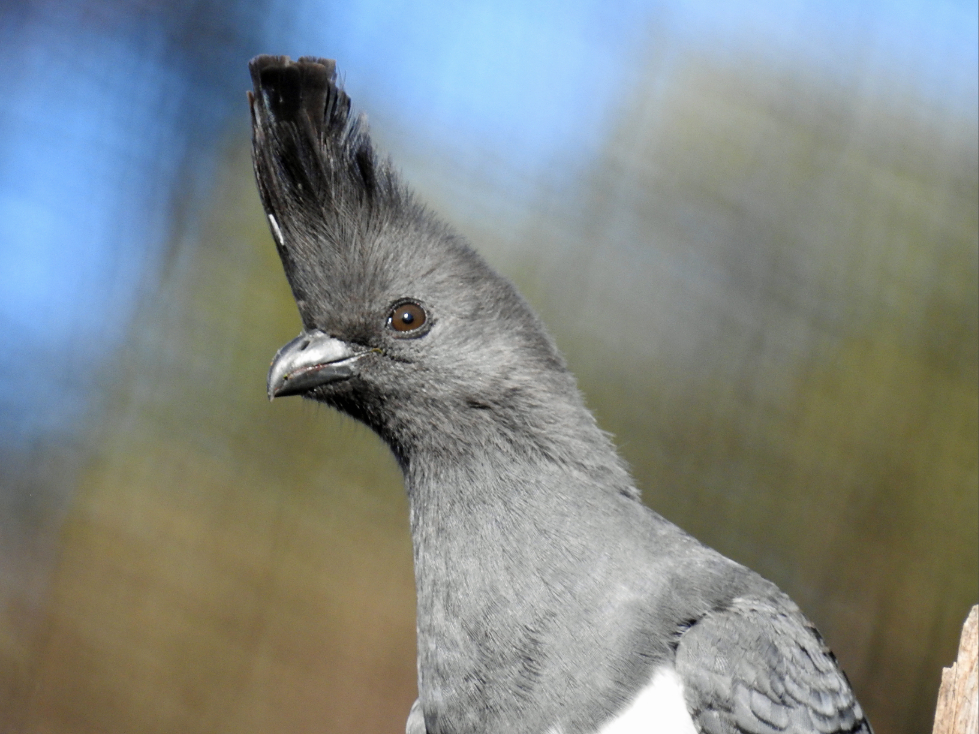
Figure WG-05. The White-bellied Go-away Bird’s chocolate-brown eyes are encircled by an unfeathered orbital ring bordered by tiny rictal bristles (feathers).
Its gray head is topped by a gray crest (about 2.4″, 6 cm), which it can raise or lower — as can other go-away birds. Its 1″ bill (0.9–1.3″, 2.25–3.26 cm) is black in males, pale green in females; it’s slightly deeper (top to bottom, 0.45″, 1.1 cm) than it is wide (side to side, 0.35″, 0.85 cm). Its dark-brown eyes are surrounded by a narrow dark-gray orbital ring, with tiny rictal bristles (facial feathers; these look like eyelashes).
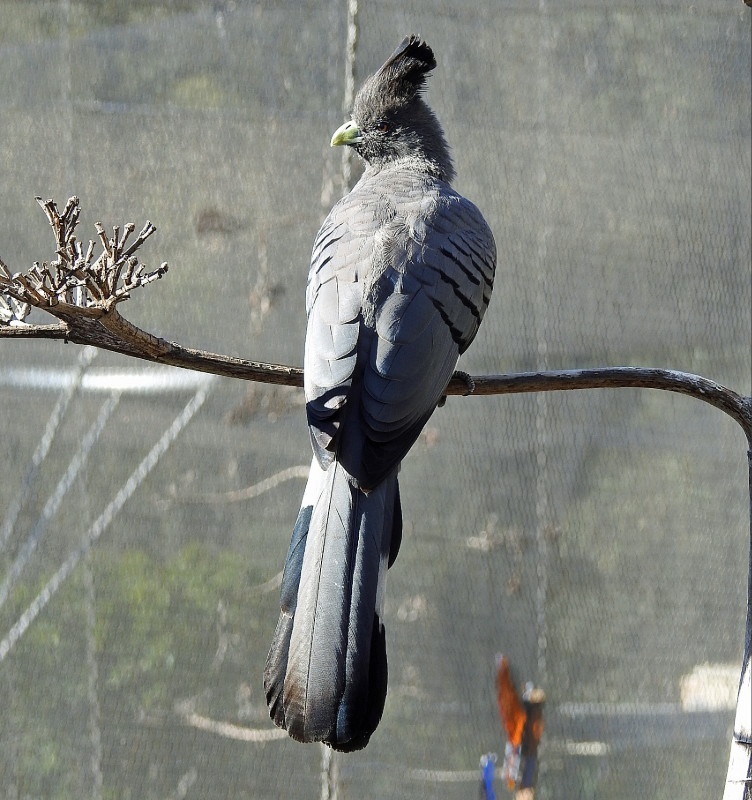
Figure WG-06. The pale green color of this White-bellied Go-away Bird’s bill tells us that she’s a female. She’s also probably somewhat larger than her mate.
Juveniles of this species have a similar plumage pattern, but with more brown tones, especially on the wing coverts (feathers on top).
Sounds and Vocal Behavior
Reportedly, go-away birds were so-named for their short, nasal calls, reputed to sound like “gorrwAAay”; a little more than two full pages of vocalizations may be found at https://xeno-canto.org/species/Crinifer-leucogaster . (I especially enjoyed this one: https://xeno-canto.org/449363 .) Judge for yourself what they sound like.
Figure WG-07. To me, the vocalizations of White-bellied Go-away Birds sound like squawks, but I lack auditory skills for identifying bird sounds. In any case, they are chatty birds, who frequently call loudly to one another.
Distribution and Habitat
Birds in the Crinifer genus prefer somewhat arid savannas, grasslands, and acacia woodlands, rather than the dense forests preferred by other species of turaco. Because of this preference, their need for access to water limits their range. Nonetheless, they occupy a large area in and around the equatorial and tropical Horn of Africa, including Eritrea, Djibouti, Ethiopia, South Sudan, Rwanda, Somalia, Tanzania, Burundi, Uganda, and Kenya. These distribution data are confirmed by eBird observations, as can be seen at https://ebird.org/species/wbgbir1 — between about 15 latitude degrees north of the equator and 9 degrees south of the equator. They can be found between sea level and 6700 feet (2,040 m) above sea level, with an overall territorial range of about 888,000–1,332,000 square miles (2,300,000–3,450,000 km2). White-bellied Go-away Birds don’t migrate, but they do wander locally, in search of water and food.
Diet and Foraging
According to Avibase, the diet of White-bellied Go-away Birds is about 80% fruits, 10% seeds, and another 10% other plant matter (e.g., flowers, acacia buds, nectar). If a bird happens to come across winged termites or some other invertebrates while foraging, it will also eat those. Adept at climbing, these birds mostly forage in the tree tops. When near agricultural orchards or plantations, it’s a pest, eating fruit and vegetable crops.
Figure WG-08. White-bellied Go-away Birds enjoy eating fruits, as well as seeds and some other plant matter.
Social Behavior and Breeding
A monogamous breeding pair will maintain their territory year round, but they’re also sociable, foraging in family groups of up to 10 birds during the day. Breeding usually begins during the local rainy season, when they become even more vocal. Mated pairs court by chasing one another from tree to tree and engaging in displays with bows, crest raising/lowering, and tail flicks. The couples also mutually feed one another (see https://macaulaylibrary.org/asset/649195112 for two appearing to exchange food).
Figure WG-09. In addition to mutual feeding, another way White-bellied Go-away Birds strengthen their pair bonds is through allopreening — preening each other’s feathers, but sometimes one mate isn’t as enthusiastic as the other.
Their nests are smallish twig platform structures, usually placed in an acacia or similar tree, about 10–40 feet (3–12 m) above the ground. The female lays two or three oval, glossy, pale bluish eggs. Both parents incubate the eggs for about 4 weeks. After the chicks hatch, both parents feed them for several weeks; by about 4–5 weeks, the youngsters fledge, taking their first flight. They reach sexual maturity at about 1.8 years; average generation length is about 4.3–4.9 years.
Conservation Status
The IUCN Red List conservation status of White-bellied Go-away Birds is LC, Least Concern. Though their population has not been quantified, they’re not considered globally threatened, and they’re generally common throughout their range and abundant in many areas. Unlike some other turaco species, it’s believed to have a stable population, not declining. Like other turacos, it does experience some threats due to the pet trade and to human agriculture. Nonetheless, the annual survival rate of adults is about 76%. The maximum recorded age is 14.9 years. Few conservation measures have been taken for this species, but at least one protected area has been identified in its range.
Figure WG-10. This female White-bellied Go-away Bird is carefully preening each of her feathers.
The Cornell Lab of Ornithology’s eBird app and website (https://ebird.org/species/wbgbir1 ) lists 19,396 observations, including 1510 with photos and 61 with audio recordings. The lab’s Macaulay Library (https://search.macaulaylibrary.org/catalog?taxonCode=wbgbir1 ) includes 2,419 photos, 76 audio recordings, and 24 videos.
References
Great Blue Turaco (Corythaeola cristata)
- Turner, D. A. and G. M. Kirwan (2020). Great Blue Turaco (Corythaeola cristata), version 1.0. In Birds of the World (J. del Hoyo, A. Elliott, J. Sargatal, D. A. Christie, and E. de Juana, Editors). Ithaca, NY: Cornell Lab of Ornithology. https://doi.org/10.2173/bow.grbtur1.01 https://doi.org/10.2173/bow.grbtur1.01
- https://avibase.bsc-eoc.org/species.jsp?avibaseid=002445CB
- https://avibase.bsc-eoc.org/species.jsp?lang=EN&avibaseid=002445CB031D320A&sec=lifehistory
- https://ebird.org/species/grbtur1
- https://en.wikipedia.org/wiki/Great_blue_turaco
- https://www.iucnredlist.org/species/22688425/264142930
White-bellied Go-away Bird (Crinifer leucogaster)
- Turner, D. A. and P. F. D. Boesman (2023). White-bellied Go-away-bird (Crinifer leucogaster), version 1.1. In Birds of the World (J. del Hoyo, A. Elliott, J. Sargatal, D. A. Christie, and E. de Juana, Editors). Ithaca, NY: Cornell Lab of Ornithology. https://doi.org/10.2173/bow.wbgbir1.01.1 https://birdsoftheworld.org/bow/species/wbgbir1/cur/introduction
- https://avibase.bsc-eoc.org/species.jsp?avibaseid=2AA4BC58
- https://avibase.bsc-eoc.org/species.jsp?lang=EN&avibaseid=2AA4BC589D77CE49&sec=lifehistory
- https://ebird.org/species/wbgbir1
- https://en.wikipedia.org/wiki/Crinifer
- https://en.wikipedia.org/wiki/White-bellied_go-away-bird
- https://www.iucnredlist.org/species/22688410/263731426
- https://www.biodiversitylibrary.org/item/96442#page/161/mode/1up: Ruppell, E. (1842). On two New Species of Chizaerhs from Abyssinia. Proceedings of the Zoological Society of London, 10(01–11), 8–9. https://www.biodiversitylibrary.org/part/387670
- Ruppell, E. (1842). On two New Species of Chizaerhs from Abyssinia. Proceedings of the Zoological Society of London, 10(01–11), 8–9. https://www.biodiversitylibrary.org/part/387670. pt. 9–11 (1841)
A memoir on the family of Touracoos, by Dr. E. Ruppell, was next read. In this memoir the author characterizes the following two new species of the genus Chizerhis from Abyssinia ;
The most characteristic peculiarity in the present species, observes Dr. Rüppell, consists in the absence of feathers on the face and throat. the skin of these parts presenting only small scattered hairs, and apparently being of a blackish purple colour. The feathers of the upper surface of the head are elongated, and have the plumelets soft and flowing ; they no doubt are erectile, and form a crest at the will of the bird. The two sexes agree perfectly, both in size and colouring. The dimensions in French measure are as follow:
Total length from the tip of the beak to the tip of tail 19 in. 0 lin.
Length of the beak, measuring along the upper curvature 10 in. 0 lin.
Greatest height of the two mandibles 0 in. 7½ lin.
Length of the wing from the bend to the extremity of the fourth wing-feather, which is the longest 8 in. 0 lin.
Length of the tarsus 1 in. 6 lin.
Length of the middle toe, including the nail 1 in. 10 lin.
A peculiarity in this species consists in the truncated form of the feathers which constitute the crest. Both sexes agree in size and colouring. The dimensions are as follow :
Total length 18 in. 9 lin.
Tail 9 in. 9 lin.
Beak 0 in. 11 1/2 lin.
Height of beak 0 in. 6 1/2 lin.
Length of the wing to the end of the fifth wing-feather 7 in. 9 lin.
Tarsus 1 in. 8 lin.
Middle toe, including the nail 1 in. 10 lin.
Contributed by Natural History Museum Library, London
Figure WG-11. White-bellied Go-away Birds ably hop among the trees, easily taking flight from them, too.
Etymology
- Lederer, Roger, and Carol Burr. (2014). Latin for Bird Lovers: Over 3,000 Bird Names Explored and Explained (224 pages). Portland, OR: Timber Press.
- Gotch, A. F. [Arthur Frederick]. Birds—Their Latin Names Explained (348 pp.). Poole, Dorset, U.K.: Blandford Press.
- Gruson, Edward S. (1972). Words for Birds: A Lexicon of North American Birds with Biographical Notes (305 pp., including Bibliography, 279–282; Index of Common Names, 283–291; Index of Generic Names, 292–295; Index of Scientific Species Names, 296–303; Index of People for Whom Birds Are Named, 304–305). New York: Quadrangle Books.
Text and images by Shari Dorantes Hatch. Copyright © 2026. All rights reserved.
All images were taken at the San Diego Zoo or the San Diego Zoo’s Safari Park.
 Bird Brain
Leave a comment