
Casuariiformes, Casuariidae
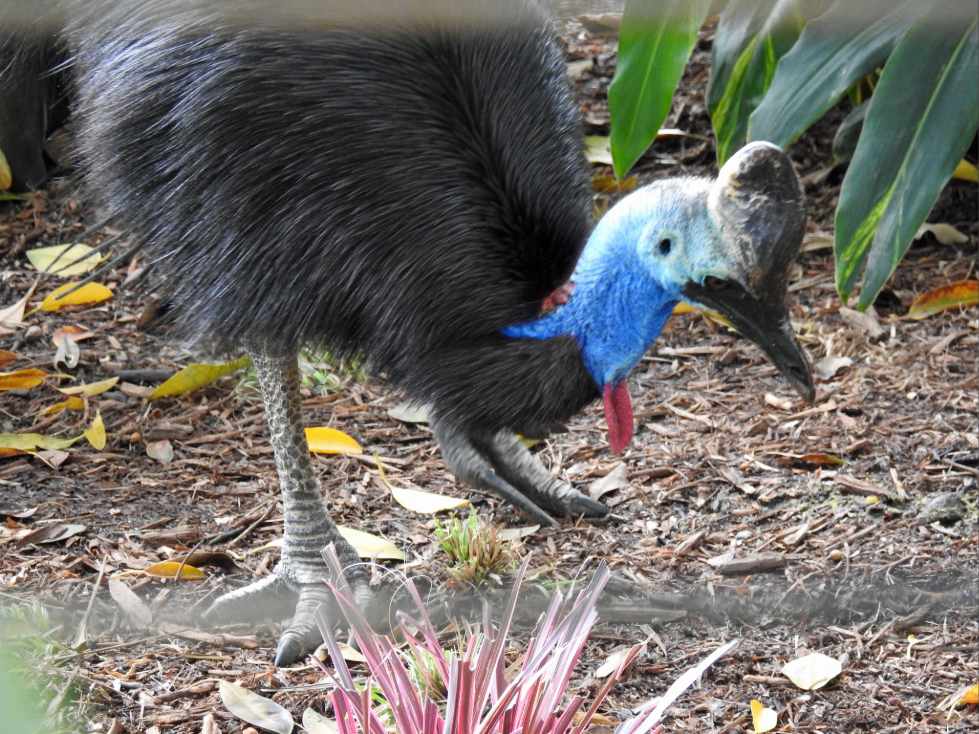
Figure 01. Cassowaries and emus, huge flightless birds, can run, leap, and swim; the dads incubate the eggs and rear the youngsters. (Shown here is a Southern Cassowary, which probably stands about 5–6 feet tall.)
At one time, the Casuariidae family of cassowaries (3 species) and emus (1 species) was included in the Struthioniformes family, which also includes ostriches (Struthionidae), another ratite family of big flightless birds. Ratites are a loose collection of birds that can’t fly and that lack the physiological structure needed for flight — specifically, a keel (aka “carina,” an extension of the breastbone, sternum, that would connect to flight muscles in the wings). Like ratites, penguins can’t fly, but they have a keel; they can’t fly because their wings are too small for flying, but great for swimming underwater. (For more information on penguins, please see my blog, https://bird-brain.org/2026/02/16/penguins/ .)
Evidence suggests that the closest ratite relative of cassowaries is the kiwi; their two families diverged from a common ancestor about 40 million years ago. (The largest living species of kiwi, the Great Spotted Kiwi, Apteryx haastii, weighs about 7.3 pounds / 3.3 kg; the smallest cassowary weighs about 51 pounds; New Zealanders are often called “kiwis” for their endemic native birds.)
The names Casuariiformes, Casuariidae, Casuarius, and cassowary come from kesuari, Papuan (New Guinea) for “cassowary”; kasu- means “horned,” and -weri means “head” — pointing to the casqued head of cassowaries. The three living species of cassowary are
- Southern Cassowary, Casuarius casuarius (discussed more later);
- Northern Cassowary, Casuarius unappendiculatus (Latin unus-, “one”; appendicis, “appendage”; -atus, providing with; one-wattled cassowary, unlike the two-wattled Southern Cassowary); and
- Dwarf Cassowary, Casuarius bennetti (honoring Australian naturalist George Bennett).
Only one species of emu is alive today, Dromaius novaehollandiae — dromaios, Greek for “swift runner”; novaehollandiae, Latin for “New Holland,” former name for Australia. (Some taxonomists separate emus from Casuariidae into their own Dromaiidae family; most include emus with cassowaries in the Casuariidae family.)
All Casuariidae have dark plumage — grayish-brown, soft, and fluffy in emus; black, coarse and glossy in cassowaries. According to the San Diego Zoo, emu plumage starts out entirely black, but exposure to the sun fades most of each feather to brown, leaving just the shafts and tips black.
On almost all birds, each skin follicle gives rise to just one feather (likewise, you have just one hair follicle for each of your hairs). The surface feathers that cover the contour of the bird’s body in flight must make a smooth surface for flying through the air, without creating a lot of drag (friction that would slow them down). Therefore, each feather has a central shaft flanked by interlocking barbs on each side of the shaft; the barbs further interlock via tiny barbicels; this tight interlocking ensures a smooth flight surface.
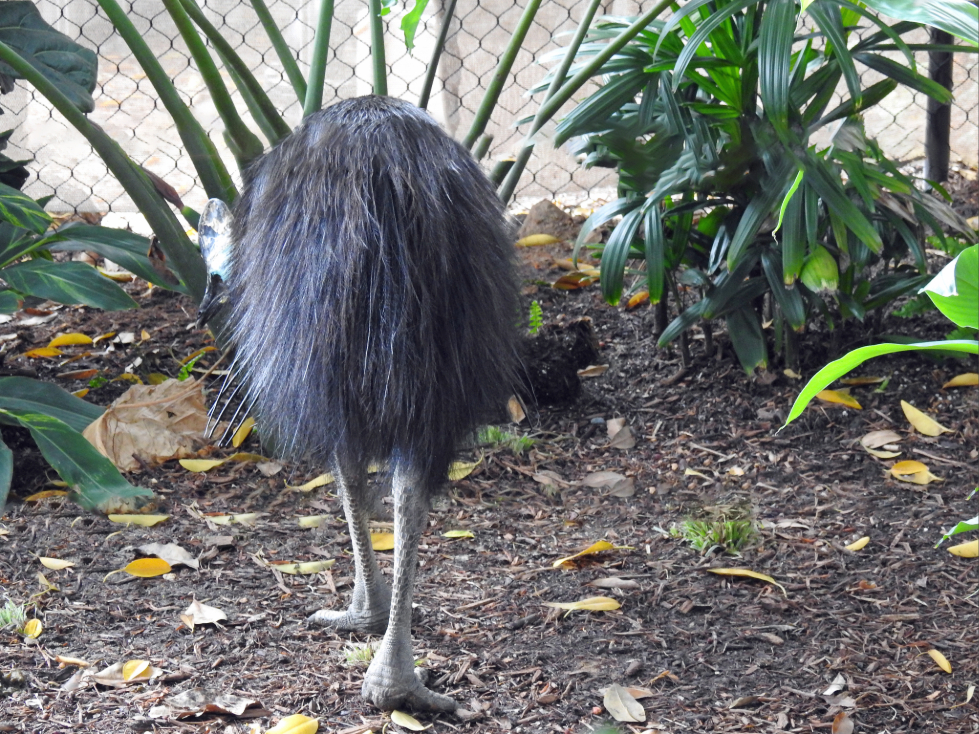
Figure 02. The feathers of Casuariidae members don’t have interlocking barbs, so the feathers look more fluffed out. On this Southern Cassowary, some feather shafts lack barbs entirely — more like hanging quills.
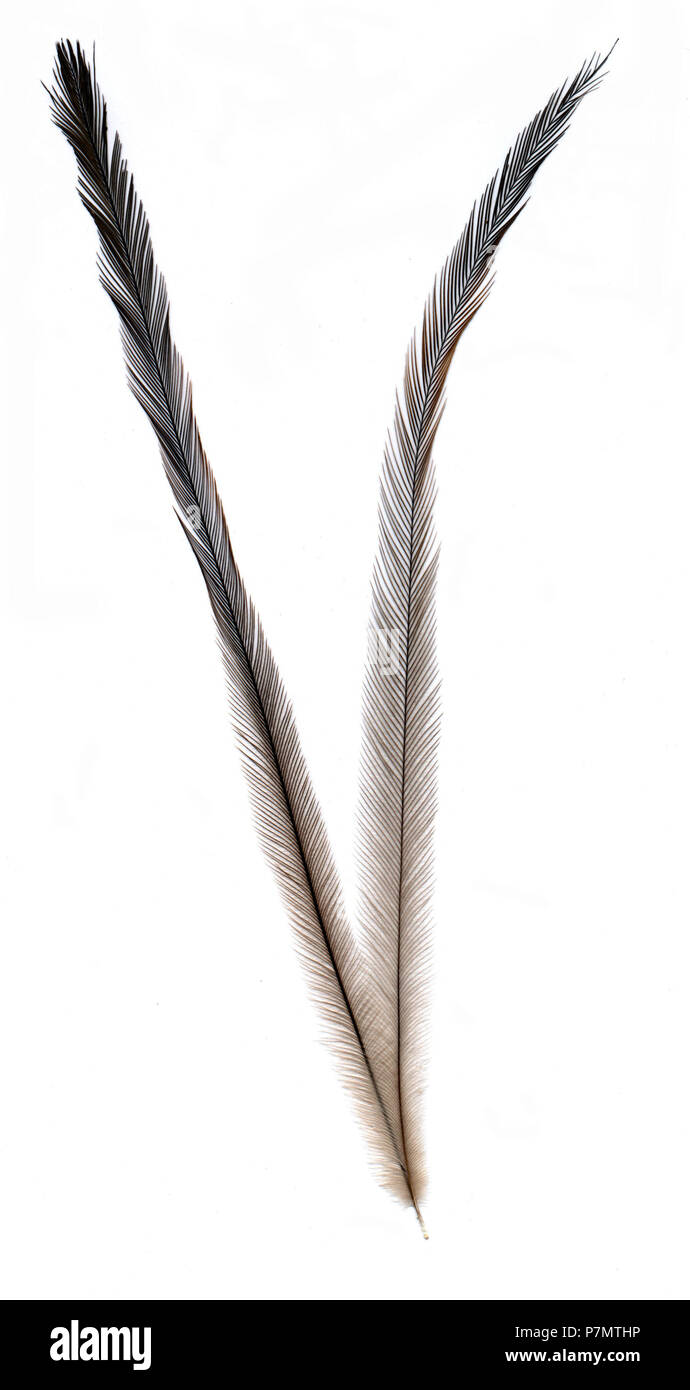
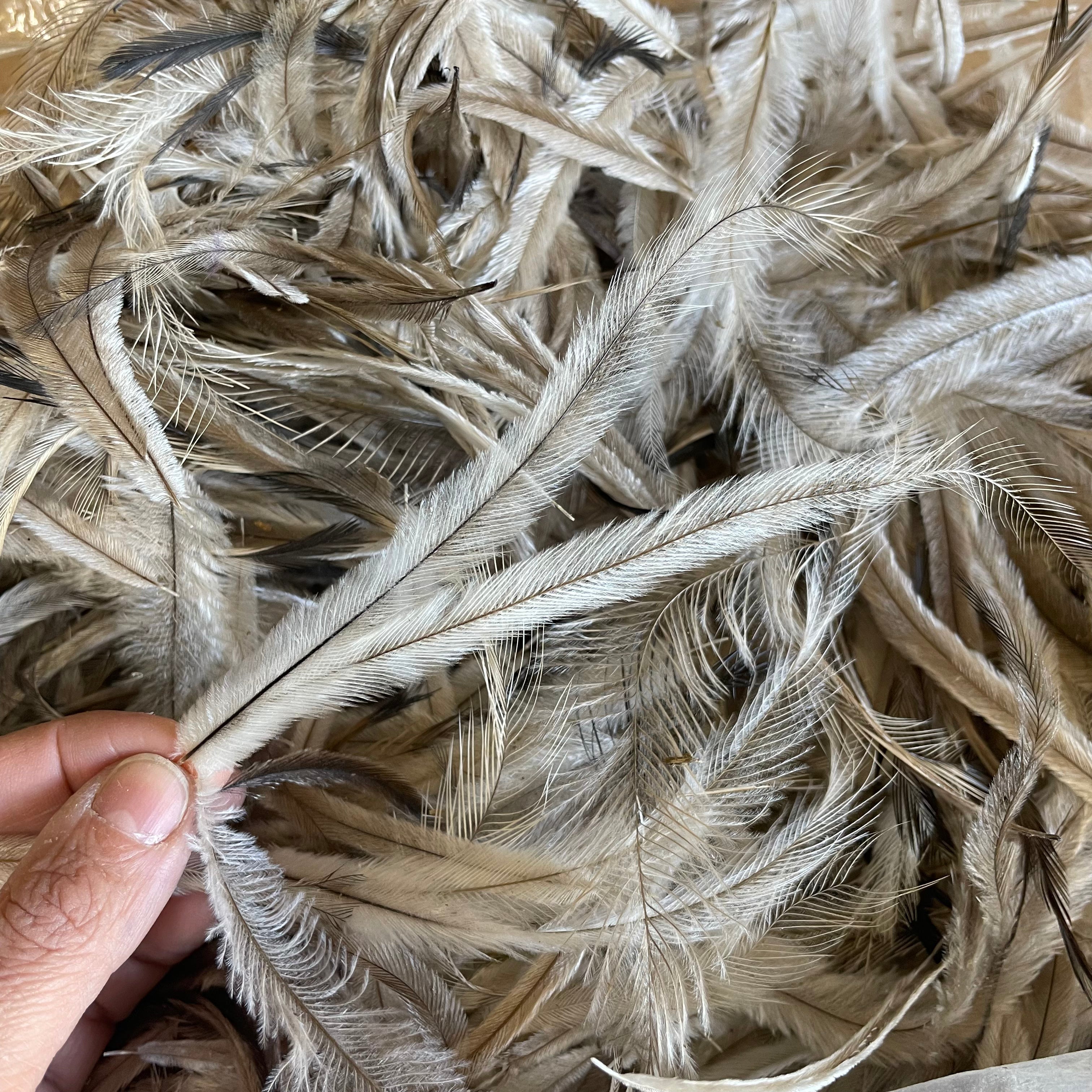
Flightless Casuariidae have a different feather physiology. Their dense feathers are “double-shafted”; that is, two feather shafts emerge from each follicle. To picture how that looks, check out these two images:
https://c8.alamy.com/comp/P7MTHP/feather-of-emu-dromaius-novaehollandiae-P7MTHP.jpg
https://feather.com.au/cdn/shop/files/image_68bf4d02-3b7f-4bec-ae62-404018f44677.jpg?v=1700017144
The feathers of emus and cassowaries also lack the interlocking hooks for linking the barbs. They have no “retrices” (1 retrix, 2 retrices, specialized wing feathers designed for flight) on their tiny wings, and they have few or no “remiges” (1 remex, 2 remiges, specialized tail feathers designed for navigation in flight) on their short tails. (Emus have none, cassowaries have just a few bare shafts on the tail.)
One more thing about their lack of flight feathers: They don’t have a preen gland (“uropygial gland”) for oiling their feathers. They still preen and clean their feathers, just not with preen oil. Their feather structure and their lack of preen oil make their feathers less water-resistant than those of most other birds.
Both emus and cassowaries have a similar body shape: ovoid, tapering at each end, with a horizontal posture. Each thick, long, bare-skinned, scaly leg stands on three toes; on cassowaries, the innermost toe has a long (4″ / 10 cm), sharp, deadly claw.
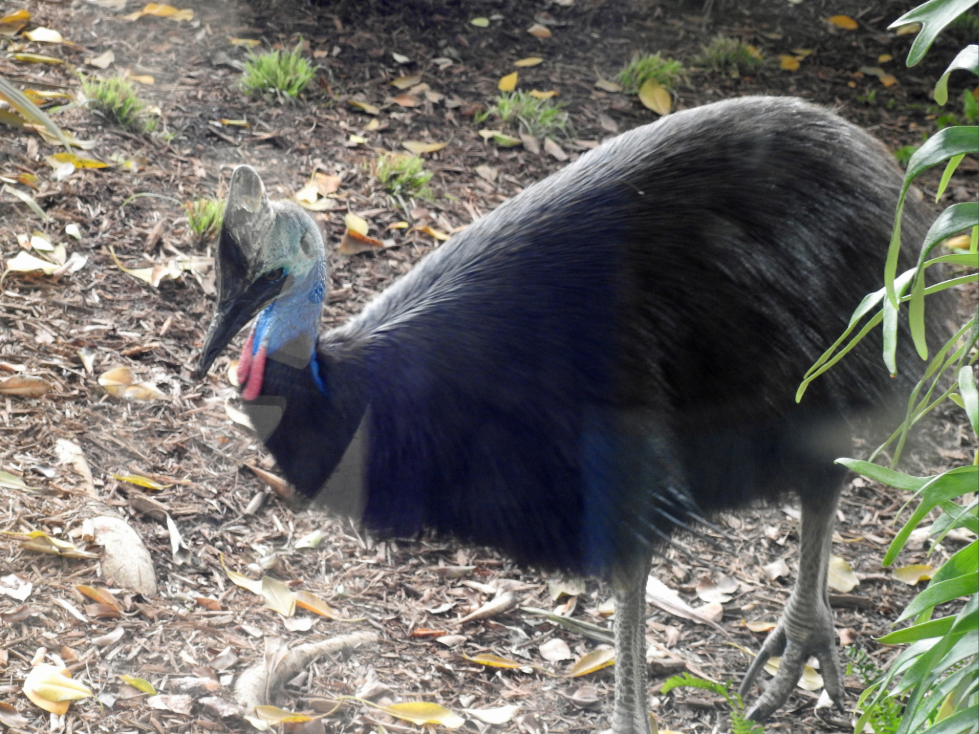
Figure 03. This Southern Cassowary has an elongated body with a horizontal posture. It stands on long, strong legs, ending in three powerful toes on each foot. Note the daggerlike innermost toe.
Casuariidae have long, sparsely feathered necks and small heads with bare, colorful faces. Females have brighter coloring than males. The colors may also serve as social signals, over which the birds may have some control. Young birds lack the bright colors of the adults, having instead more camouflaged plumage, with patterning that matches the dappled lighting of the forest.
Emus are capped and naped with sparse bristly feathers. Emu bills are shorter and flatter than cassowary bills, which are pointed, with a deep (top to bottom) base. Both kinds of Casuariidae have nares (nasal openings) near the tips of their bills. The greatest distinction between emus and cassowaries is that featherless cassowary heads are topped with a distinctive dark casque (sometimes called a “helmet”). Both tall and wide (front to back), the casque is compressed side to side, like a blade. Fused with the skull and fully vascularized (with blood vessels running through it), the casque’s interior has an intricate, spongy casque-shaped framework of calcified cartilage. It’s surprisingly flexible and can even be squeezed in the middle. The surrounding skin is hardened by keratin (the same material as your fingernails, which are also hard but flexible).
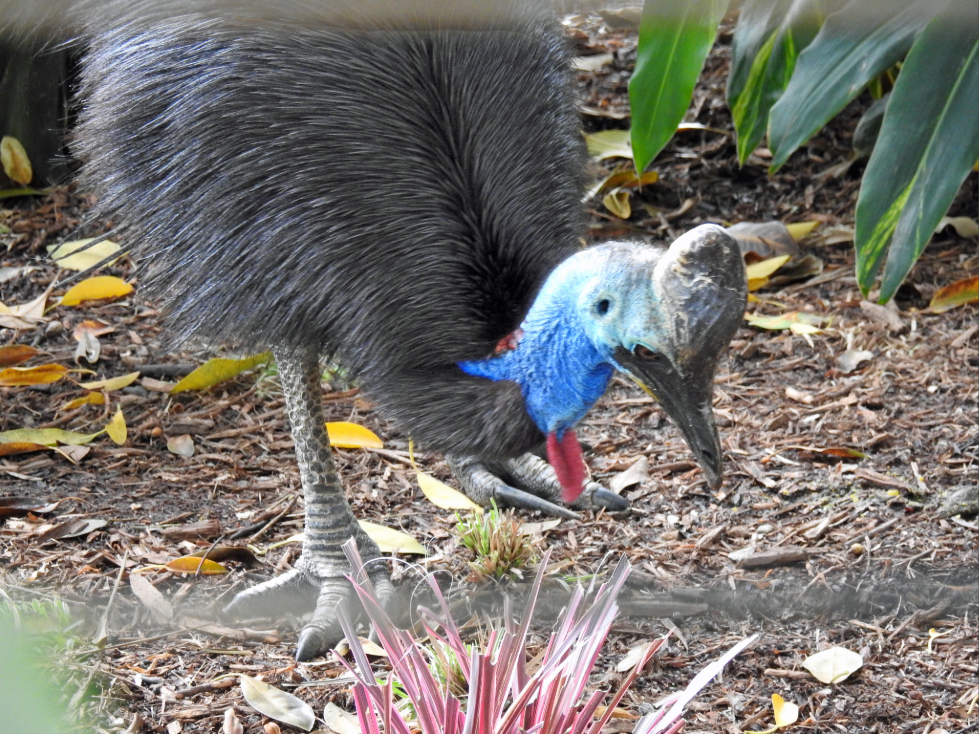
Figure 04. This mature Southern Cassowary has a tall, multipurpose casque atop its head. Several functions have been suggested, and it’s likely that it serves more than one.
Numerous functions have been proposed for the casque: plowing through dense undergrowth, digging for foods, or absorbing shocks when the head strikes a hard surface. The casque may also somehow signal status or readiness for breeding, as the casque doesn’t start developing until about 1–2 years of age, is larger in adults than in younger birds, and is higher in females than in males. Another possibility has received attention more recently, however. The casques may somehow aid in producing and amplifying the low-frequency infrasound vocalizations produced by cassowaries (sometimes called “booms”).
Yet another possibility is that the casque aids in thermoregulation. Having large bodies (with a relatively small ratio of surface area to volume) and dark plumage in a tropical environment would make cooling a particular challenge for cassowaries. Studies using infrared sensors revealed a possible function. When the surrounding air temperature is relatively high, the blood vessels flowing to the cassowary’s casque dilate, increasing blood flow throughout the casque, and cooling the blood before it returns to the rest of the body. When the surrounding air temperature is relatively low, the blood vessels to the casque constrict, decreasing blood flow to the casque, retaining the warmth in the rest of the body. These are just initial data, so further study is needed, but they’re certainly suggestive of a thermoregulatory function.
Figure 05. This Southern Cassowary’s tall casque may be serving numerous functions for the bird.
Both emus and cassowaries can not only hear infrasound, but also produce it themselves. Infrasound can carry long distances, even through dense vegetation. (Elephants also produce and detect infrasound, but this ability is otherwise rare for terrestrial animals.) According to the San Diego Zoo, cassowaries make the lowest known call of any living bird, with their infrasound frequency at the limit of human hearing. Cassowary keepers there have reported sensing the birds’ infrasound vocalizations vibrating their bones. Emus can make deep booms, grunts, and drumming sounds, too; these calls have been heard up to 1.2 miles (2 km) away, and their hisses can be terrifying. Emus, in addition to hearing well, can see remarkably well.
In addition to booms, the vocalizations of Casuariidae include “deep croaks, howls, grunts, snorts, and howls,” as well as hisses and whistles; check out a few on https://xeno-canto.org/explore?query=casuariidae . These vocalizations interested me — emu, XC343777 and XC113130; Northern Cassowary, XC498017; Dwarf Cassowary, XC590323; and Southern Cassowary, XC276905, XC132934. They also clap their bills together to issue a threat.
All Casuariidae are big birds: 3′ 3″–5′ 7″ long (bill to tail), up to 6′ 6.5″ tall (head crown to toes); one species comes in second only to ostriches in size. Even the smallest, the Dwarf Cassowary, is about 3′ 3″ long (0.99–1.5 m, bill to tail), weighing 39–63 pounds (17.6–29 kg), with males and females about the same size. The other two cassowaries are sexually dimorphic, with females quite a bit bigger than males. Northern Cassowaries are similar in height, about 4′ 10.5″ long (1.5m, bill to tail) and standing 4′ 11″–5′ 11″ high (1.5–1.8m, crown to toes); weight differs substantially, though, with males weighing 66–82 pounds (30–37 kg) and females weighing about 128 pounds (58 kg).
Typically, Southern Cassowaries are 4′ 2″–5′ 7″ long (1.27–1.7m, bill to tail), standing 4′ 11″–5′ 11″ tall (1.5–1.8 m), with some females reaching 6′ 6.5″ (2m, crown to toes) tall. In relation to its length, its tail accounts for just 15–16″ (38–42 cm), and its wings are only about 11–12.9″ (29–32.8 cm) long. Southern Cassowary males weigh 64–75 pounds (29–34 kg), but most females weigh about 129 pounds (58.5 kg), some weigh up to 143 pounds (65 kg), with a maximum of 187 pounds (85 kg). The female Southern Cassowary is the third heaviest bird on Earth, with only the two species of ostrich being heavier.
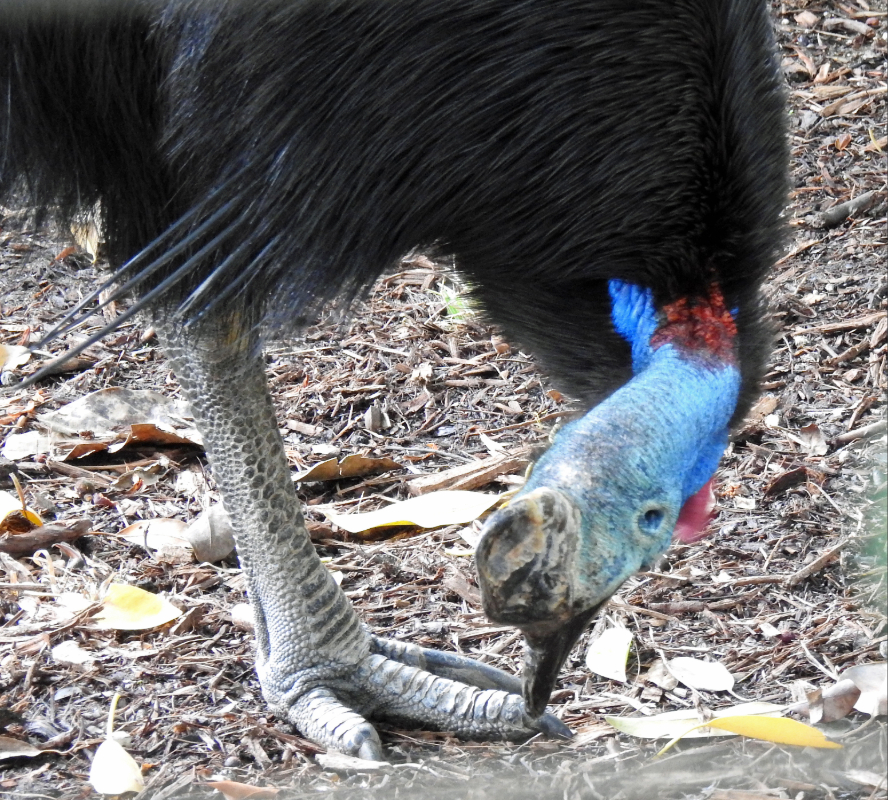
Figure 06. Even just the feet and toes show that the Southern Cassowary is a big bird.
Emus are 55–65″ long (1.39–1.64 m, bill to tail) and stand 59–74.4″ high (1.5–1.9 m, crown to toes), making them the second tallest bird on Earth, second only to the Common Ostrich. Emu males weigh about 69 pounds (31.5 kg), and females weigh about 82 pounds (37 kg), making them the fifth heaviest birds on Earth, after the ostriches and the two heavier cassowary species, though some Emperor Penguins weigh more than some emus. (The San Diego Zoo says emus can weigh 66–121 pounds, 30–55 kg.)
In addition to being larger, females tend to have more brightly colored bare facial skin than males. Southern Cassowaries have two pendulous brilliantly colorful wattles hanging from their necks; Northern Cassowaries have bare skin at the front of their necks, which extends down to a solitary wattle; Dwarf Cassowaries are wattle-less, but their vivid blue bare-skinned necks delight your eyes. The wattle colors may be orange, red, blue, gold, purple, or white, depending on the species or subspecies; some speculate that the wattles relay social cues, such as the bird’s mood. Emus have sweet large-eyed faces with a band of white feathers beneath their chins.
Emus and cassowaries differ in terms of their preferred habitat and diet. Emus prefer more arid, open habitats of Australia, whereas cassowaries prefer wetter, denser habitats of Australia and New Guinea. No Casuariidae migrate, but Dwarf Cassowaries will sometimes travel up or down in elevation. They prefer to forage at dawn and dusk, sleeping overnight and resting at midday — that is, they’re crepuscular.
What emus eat depends on seasonal availability — seeds, fruits, roots, leaves of plants; various invertebrates, both larvae and adults. The seeds eaten by emus are excreted intact, in conveniently fertilized droppings.
Figure 07. For these rainforest giants to sustain themselves, they must spend a lot of time foraging and eating.
Cassowaries eat mostly fruits, especially fruits they find on the ground, as well as fungi and occasional invertebrates (snails, insects) and small vertebrates. Cassowaries have a mutualistic relationship with mature rainforests. The trees and shrubs offer a diverse array of fruits (estimates range from 75 to hundreds of species), ensuring that cassowaries have fruits available year round. In turn, the cassowaries eat fruits whole (without destroying the seeds), digest them quickly in their short digestive tracts, and excrete whole fruit seeds as they wander the forest. The fruits and seeds of many plant species are too big for any other forest animal to swallow them whole and disperse the lightly digested seeds. Intriguingly, the seeds of quite a few plants actually need to pass through a cassowary’s digestive system in order to sprout.
Both emus and cassowaries have long, powerful legs that can trot long distances and can sprint about 30–31 mph (48–50 kph), even through dense vegetation. Because they’re so perfectly bipedal, they expend relatively little energy to run (e.g., an emu’s stride can be nearly 9 feet / >2.5 m). These big birds can also leap 6–7 feet (2 m) into the air. They’re also quite agile and can swim well.
Cassowaries are especially shy, living deep in the forest; they live alone outside of breeding season (and when not caring for their youngsters). When males stumble across each other, they threaten and posture until one of the males departs. If a male comes across a female outside of breeding season, she has only to stretch a bit and stare at him, and he’ll run off.
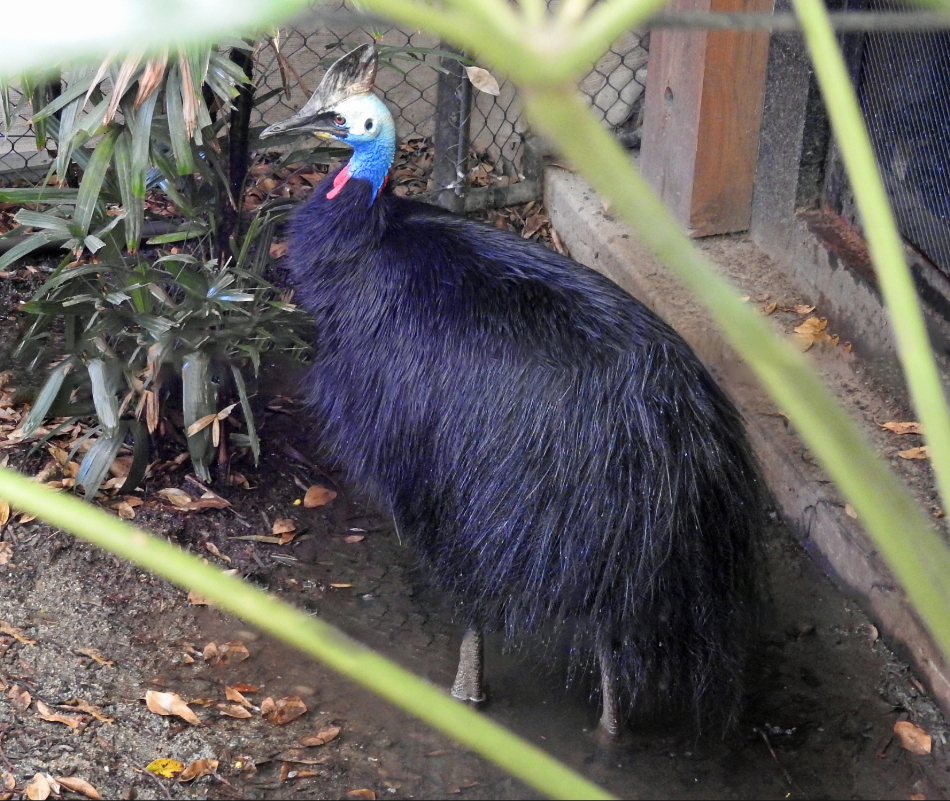
Figure 08. Cassowaries don’t seek company. Most of the time, they’re content to lead a solitary life.
As a family, Casuariidae can be monogamous, but more typically, they’re polyandrous, with females mating with multiple males. For cassowaries, breeding season begins whenever fruit is most abundant. At the start of the breeding season, each male digs a shallow depression in the ground, then lines it with vegetation (e.g., grass, leaves). Having built his nest, the male is ready for a female to visit. When she arrives, he’ll strut around her, making a series of low booming calls. If she chooses him, she’ll mate with him and stay with him long enough to lay 3–5 eggs (usually green) in his nest — typically a few weeks. Then she leaves him alone to care for the eggs and hatchlings, while she looks for a new male with whom to mate. Female emus have similar breeding behavior, laying clutches of 5–15 green eggs per each male’s nest — up to three clutches per year. (Intriguingly, other ratite dads — rhea, kiwi, and ostrich dads— also incubate their eggs, but some have help from a female.)
The first known instance of identical twin birds was found in an emu.
Each dad will incubate his eggs for 7–8 weeks. A male emu may lose up to one third of his body weight during incubation. After the eggs hatch, dad will care for his precocial chicks for many months. (For photos of cassowary eggs and chicks, see https://thepetinfoo.com/cassowary-egg/ .) Within minutes after the cryptically plumed (camouflaged) chicks hatch, they can walk, and after about 3 days, dad shows the chicks where to find food to feed themselves. For about 9 months or more, dad continues to protect and guide them; dad sometimes lets them stay with him up to 16 months or more. Young cassowaries become sexually mature at about 1.5–2 years, or perhaps up to 3 years; emus become sexually mature at 2–3 years of age. Sexual maturity is not synonymous with the start of breeding; first breeding may start years later.
When threatened, an adult cassowary can leap into the air then slash down onto its would-be attacker, using its deadly claws. Even adult emus can leap into the air and use their powerful legs, heavy feet, and strong toes and nails to defend themselves. Young Casuariidae can’t defend themselves well and may be killed by mammal predators, such as feral pigs or dogs. More deadly to all cassowaries, however, is habitat destruction and degradation, especially to make way for cattle grazing, logging, and mining. Hunting, road traffic, disease, and starvation are also imperiling these birds. Similarly, emus have been threatened by human encroachment on their habitat, as well as by drought and wildfires.
Figure 09. This Southern Cassowary receives superlative care at the San Diego Zoo’s Safari Park.
All members of the Casuariidae family have a conservation status of LC, Least Concern, but populations of the three species of cassowaries are declining. Luckily, some conservation organizations are working to restore rainforest habitat for these birds. In addition, various accredited zoos are working to preserve these species. The San Diego Zoo and others currently have a Species Survival Plan (SSP) for Southern Cassowaries; in managed care, these cassowaries have been known to live about 50–60 years; anecdotes suggest they can live up to 40 years in the wild. Emus have a lifespan of 10–20 years in the wild, up to 35 years in managed care.
Southern Cassowary
The most studied cassowary is the Southern Cassowary, Casuarius casuarius, second only to ostriches in weight and almost as tall (crown to toes) as the Emu (Dromaius novaehollandiae), the second tallest bird in the world (second to the Common Ostrich). As in other Casuariidae, females are larger than males and tend to have more colorful bare skin. (For details, please see big birds, noted previously.)
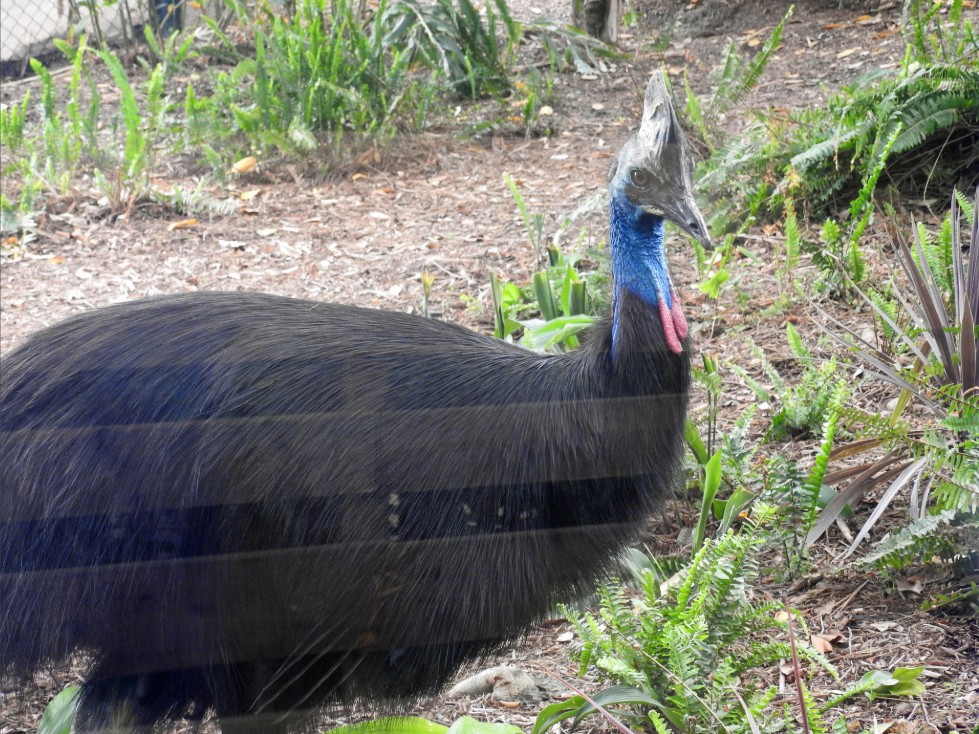
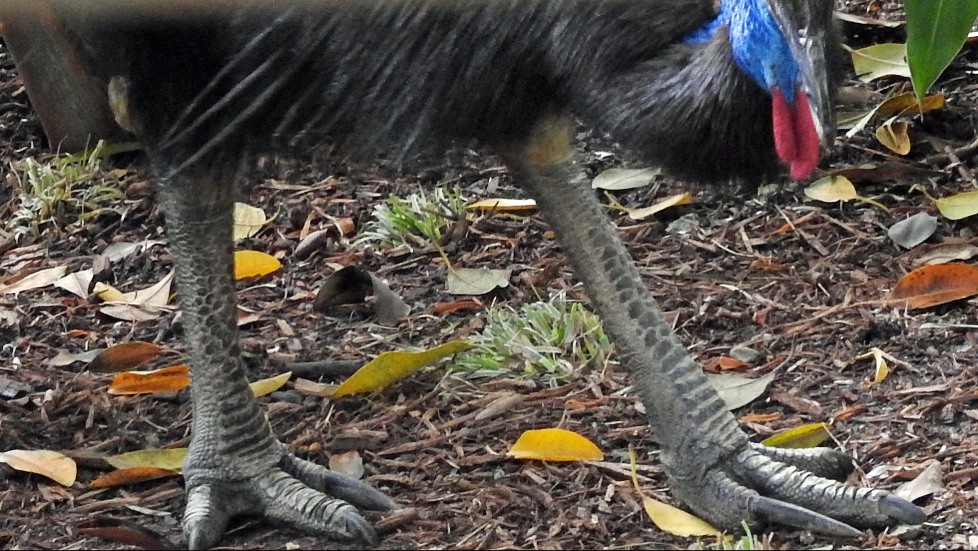
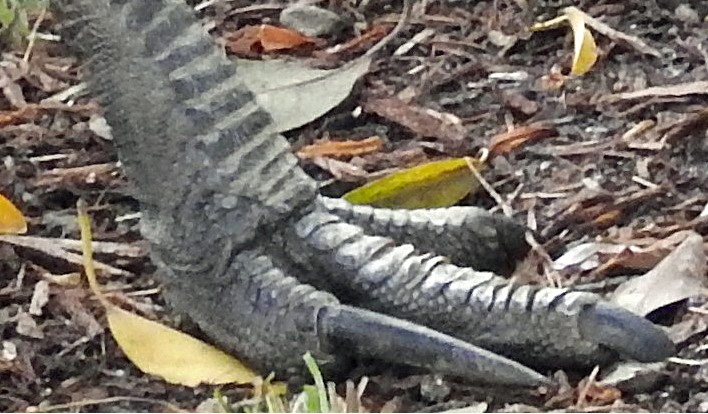
Figure SC01, a–c. This photo (a) can’t really convey the huge size of the Southern Cassowary, but the innermost claw on each foot (b, c) certainly appears to be a powerful weapon (up to 4.7″ / 12 cm long). (Southern Cassowaries are called “Casuario Común” in Spanish.)
Southern Cassowaries live in tropical rainforests throughout New Guinea and Australia, as well as in Indonesia, from sea level to lowlands and up to 1,640 feet (500 m) — occasionally much higher (4,600 feet, 1,400 m, in Australia, per the IUCN). At whatever elevation, they prefer mature rainforests with a wide diversity of fruiting plants. They don’t migrate seasonally, though they do move among desirable areas while foraging, sometimes almost 8 miles within a few days. Occasionally, they’ll make forays into other habitats in pursuit of food — beaches, picnic areas, eucalyptus woodlands, even human settlements. But after these forays, they return to their own rainforest territories.
They’re quite shy, seldom visible in their dense tropical forest habitats. The legends of their deadly assaults with their mighty claws have exceeded the facts. Just two incidents of cassowaries killing a human have been reported since 1900. Assaults by these cassowaries have been either to defend their offspring from intruders or to obtain food after they have been taught that humans will hand feed them.
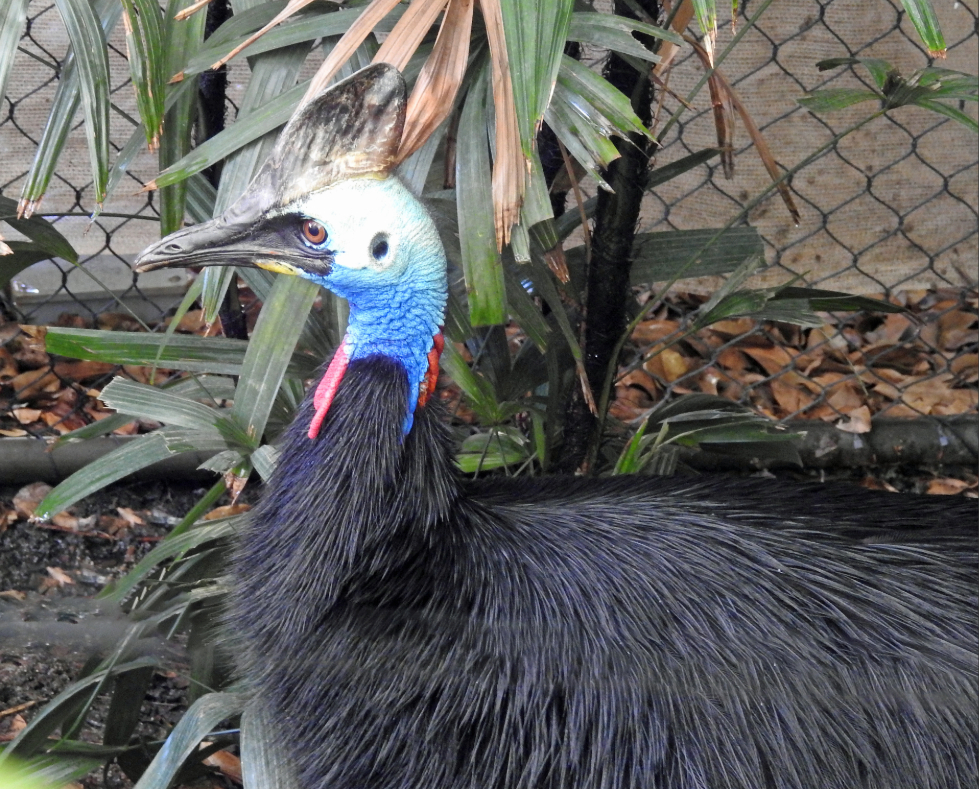
Figure SC-02. Southern Cassowaries avoid contact with others, and incidents of their attacks on humans are negligible.
Trees and rainforests, however, exalt the cassowary as a vital disperser of their fruit seeds, neatly deposited throughout the forest, complete with fertilizer.
To see a photo of cassowary poop, check out https://www.inaturalist.org/observations/333552800
Southern Cassowaries look like their fellow Casuariidae — large birds with colorful bare-skinned faces and with loose, coarse (black) plumage and puny wings (sometimes called “vestigial”), unsuitable for flight. Adult molting seems to occur around March through May (austral autumn), though the exact timing and duration of molting haven’t fully been investigated.
Like the other two cassowary species, Southern Cassowaries have casques, which emerge after 1–2 years of age and continue to grow; the casques of females grow taller than those of males (5.1–6.7″ / 13–16.9 cm). Each Southern Cassowary has two long scarlet wattles, unlike Northern Cassowaries, which have just one somewhat shorter wattle, and Dwarf Cassowaries, which have no wattles at all. The females have longer and more vividly colored wattles (up to about 7″ / 18 cm long), compared with those of males.
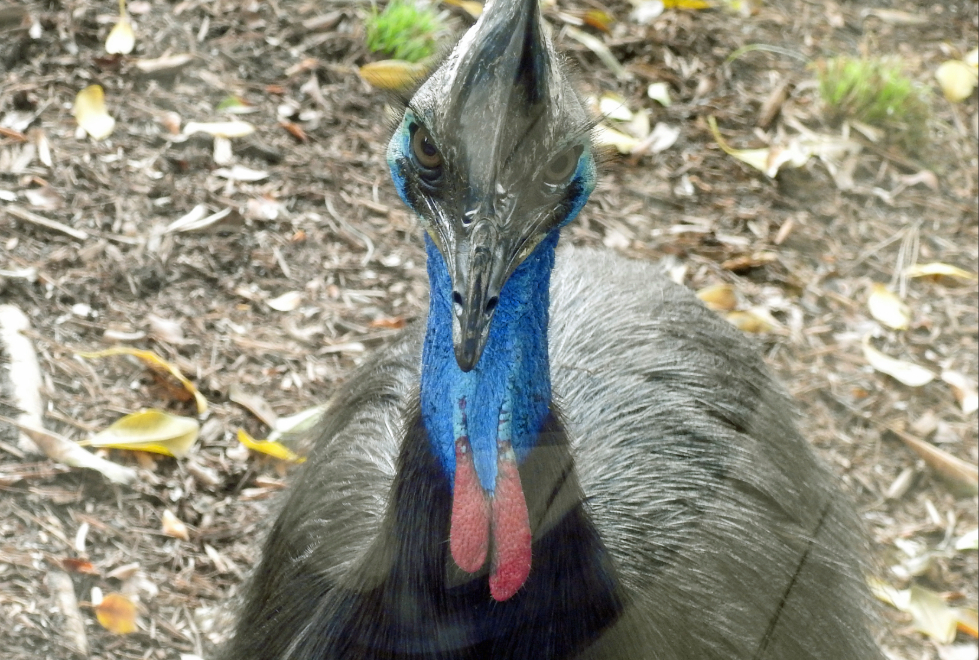
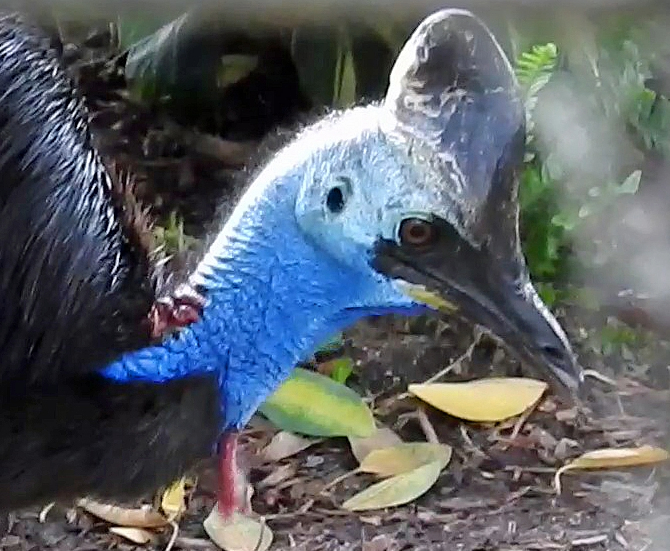
Figure SC-03, a–b. The cassowary’s casque narrows toward the top but is wide and high.
Above their brightly colored wattles, bare blue skin leads up the neck, up the crown to the casque, and around the back of the eyes. The dark coloring of the casque leads downward to the tip of the bill and then back to just above and in front of the eyes (the “lores”). A smattering of bristle-like brow feathers forms a line above each amber-brown eye. Bare blue skin separates each eye from each ear hole on each side of the head. A red patch similar to the color of the wattles adorns the back of the neck, with wispy plumes scattered lightly across the back of the neck and elsewhere, barely visible much of the time.
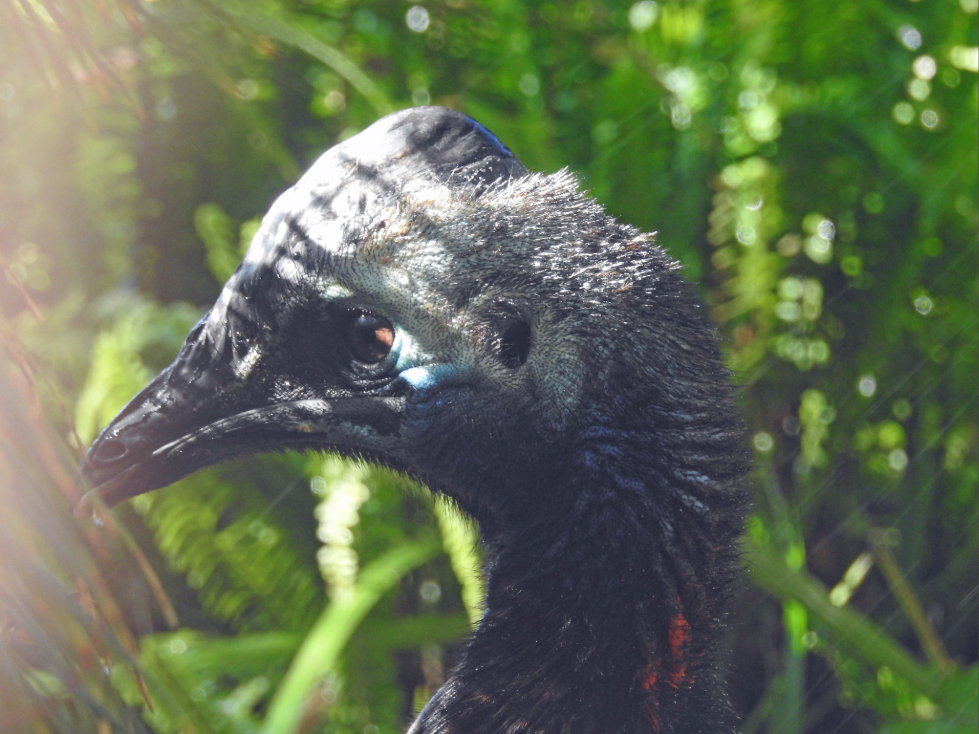
Figure SC-04. Even on this immature Southern Cassowary, its gaping ear hole is easily seen behind its amber eye. The length of the Southern Cassowary bill has been measured at 3.8–7.5″ (9.8–19 cm), with a bit over 4″ (10.5 cm) being common.
Like other Casuariidae, the Southern Cassowary booms, rumbles, grunts, and hisses, including low-frequency infrasound vocalizations, among the lowest frequencies known to be produced by birds. During breeding season (peaking in June and July), both males and females use these low-frequency vocalizations (said to be “thunderous”) to advertise their availability. Just before copulation, the male gives a distinctive call — Is he saying, “Oh, boy!” or “Hey, Baby!”?
Threat displays also include low-frequency calls, often with head and neck outstretched, perhaps while stamping its feet or clapping its bill. To bump it up a notch, the bird may bow its head low and roar loudly. The bird who flinches issues a mewing call while running away. If the threat is posed by another kind of animal, the Southern Cassowary may hiss deeply. Outside of the breeding season or unexpected threats, these birds are pretty quiet. Their chicks’ vocalizations are high-frequency, mostly soft peeps or whistles. Dad will make coughing or bill-clapping sounds to contact his chicks.
Like other cassowaries, the Southern Cassowary eats mostly fruits. This species has been documented to eat fruits from >200 species of plants (and suggestions of hundreds more). An individual bird may consume 75 or more different species in its territory (as documented by fecal samples). These cassowaries can even safely digest fruits and seeds that are toxic to other animals.
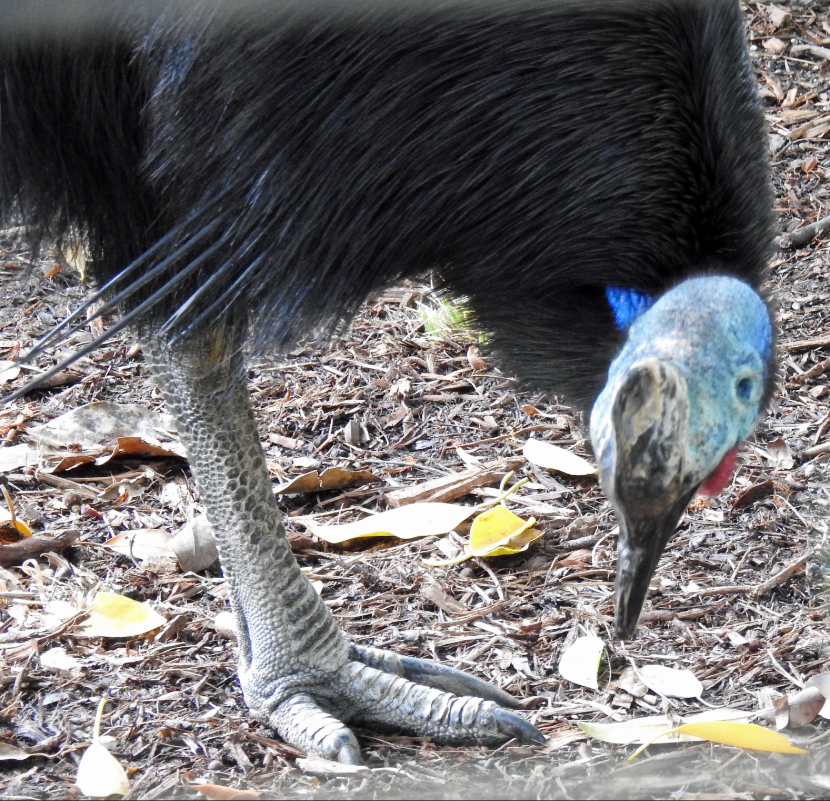
Figure SC05. To maintain its large body, a cassowary must forage much of the day, to find and eat a whole lot of fruit.
This cassowary’s diet and feces also play a key role in its territory, providing vital services to its surrounding ecosystem. They eat an array of fruits over a wide territory, transporting the seeds from one place to another, helping mother trees by carrying her fruit seeds far from where they originated, and providing ample fertilizer to give them a healthy start in life. This cassowary typically disperses seeds more than 0.6 miles (1 km) from where the mother tree dropped it, and occasionally up to 3.4 miles (5.4 km) away from the mother tree.
This symbiotic relationship with fruit trees suggests its nickname as “rainforest gardener.” In fact, some fruit seeds can’t germinate without traveling through a cassowary’s digestive system. Some naturalists have noted that when habitat degradation and fragmentation limits the cassowary population, many fruit trees may be imperiled, too.
This cassowary forages during the day, mostly eating whole fruits and seeds that have fallen to the ground, picking them up with the bill, then tossing them back into the throat with a flick of the head. Even bananas and cassowary plums (4″ / 10 cm × 2″ / 5 cm) are swallowed whole. To unearth unseen food items, it may use its bill, feet, or even casque to toss aside leaf litter whenever it suspects food may be found by doing so. It will also pluck fruits from low shrubs or tree branches, and this cassowary has been known to leap up to 6 feet (2 m) to snatch ripe fruit that hasn’t yet fallen.
Figure SC-06. A cassowary’s bill may not seem large for its body, but it’s highly effective for finding and grasping edibles.
This cassowary also gets some nutrients from eating fungi, invertebrates (insects, snails), and small vertebrates (mammals, fish, frogs, and bird eggs, nestlings, and small adults), as well as roadkill or other carrion — typically on the ground. Only trace amounts of these have been reported in some studies, however, with fruits making up 60% of the diet and seeds making an additional 30%. This species is also known to thieve and scavenge, too, even stealing food from picnickers. Most of this information comes from analysis of fecal droppings, supplemented by some observational studies. Observations suggest that it preferentially chooses more nutritious fruits.
In any case, this cassowary’s appetite and dietary intake varies seasonally. Though data are limited, studies suggest that they eat much more food when breeding or molting (up to 15 times as much!), compared with other times.
The Southern Cassowary also seeks water to drink. It drinks just like most other birds: lowering its head to the water, scooping water into its bill, lifting its head and tilting it back to swallow the water. It may sit or stand to drink.
Figure SC-07. Even a busy Southern Cassowary occasionally needs to rest.
Though the Southern Cassowary’s wings are ineffectual for flying, its long powerful legs and three thick strong toes (per foot) are beautifully adapted for walking (often for long distances, while foraging) and for running (reaching up to 30 mph / 50 kph). At a full run, it may hold its head and neck parallel to the ground. Its legs can also propel it 6.6 feet (2m) up, as needed. These cassowaries are also able swimmers and have been documented swimming 1.6 miles (2.5 km) to an offshore island. Even chicks have been seen accompanying an adult in the water, perhaps to forage or to cool off. It’s not known whether they bathe in water. They do use their bills to preen themselves, though they lack preen glands.
Like other Casuariidae, Southern Cassowaries are mostly solitary — except during breeding season or when dads are continuing to protect their young long after breeding season has ended. Males tend to keep discrete territories, separate from other males. If a male stumbles upon another male, the first response is for each to posture to look as big as possible, while making a low-frequency rumbling vocalization. It that doesn’t prompt one of the males to retreat, they step things up to a bowed head display during which the rumble becomes a loud roar. Still no retreat? They’ll charge at one another with powerful kicks, interspersed with “bouts of agitated preening” (Birds of the World). Posturing, vocalizing, threats, and kicks usually end with one of the males retreating.
Figure SC-08. Cassowaries would much rather retreat than interact with anyone else — including other cassowaries, most of the year.
A female’s territory may overlap with multiple males — a female’s territory may be 32–600% bigger than a male’s territory. If a male comes across a female outside of breeding season, she shows her dominance by standing tall, and the male almost invariably retreats. Territory size varies with the seasonal availability of fruits, and researchers acknowledge that data have been inadequate, but estimates of territory size can be about 0.2 square miles (0.5 km2) to 0.4 square miles (typical for a subadult; 0.96 km2) to almost a square mile (2.35 km2). Of course, those territories aren’t perfect squares, so a given cassowary may walk a few miles within its territory, in one direction.
Like other Casuariidae, Southern Cassowaries are polyandrous, with the female having multiple male mates. Occasionally, a male may mate with multiple females who visit him. In any case, the female stays with the male just long enough to lay her eggs in his nest before moving on to find another male with whom to mate — sometimes mating with up to three males and laying three clutches in a single breeding season.
The timing of breeding is more linked to seasonal fluctuations in the availability of tree fruits than to calendar months, but it tends to be between April and November (austral winter, more or less). As breeding season approaches, the male chooses a favorable nest site, typically a somewhat concealed and sheltered location on the ground in dense forest (e.g., in a tangle of vines, next to a fallen log, near large tree roots). He creates a shallow depression about 39″ (1 m) across then lines it with twigs, leaves, and other plant matter, about 2–4″ thick (5–10 cm). This thick vegetation helps draw moisture away from the developing eggs.
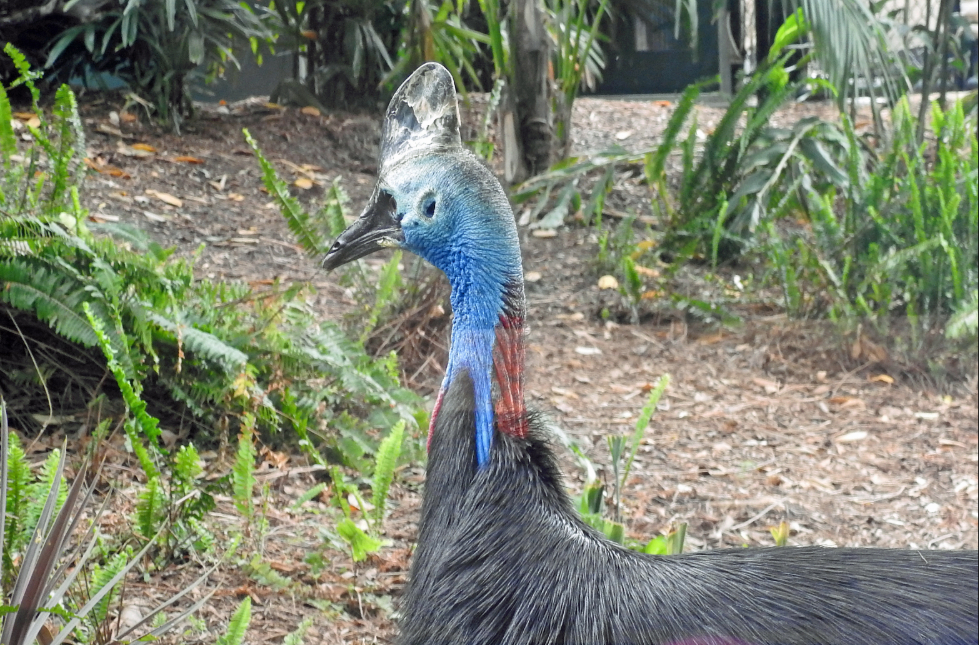
Figure SC-09. Solitary most of the time, a male cassowary will rise to the occasion, as needed, to incubate his eggs and to care for his young.
In general, the female initiates contact with the male, at which time he engages in courtship displays. The pair hangs out together and forages together. The male may preen the female and continue to show courtship displays until she shows she’s ready to mate. She then squats on the ground while he mounts her and they copulate (1–2 minutes). The pair will continue to stay together, occasionally copulating (mostly in the early afternoon), until the female lays her 3–5 elliptical glossy green eggs in his nest. (Up to 8 eggs in a clutch have been reported; see https://animals.sandiegozoo.org/animals/southern-cassowary for a photo of the eggs alongside the dad’s toes, as well as two chicks, showing the faint emergence of their double wattles.) Typically, she lays each egg about 3–7 days apart (usually 4 days). For 3 eggs, that’s a minimum of 9 days total; 5 eggs might take up to 35 days maximum. More typical might be 4 eggs in 16 days. Once mom has laid all her eggs, she moves on, and dad incubates their eggs.
Dad incubates the eggs continuously, often checking them and occasionally turning them. He rarely leaves them alone, and then only to drink. He does so for 47–61 days until the last egg has hatched, typically about 50 days, with smaller eggs hatching more quickly than bigger eggs, even in the same clutch. Once hatching begins, the dad must continue to incubate his remaining eggs while monitoring the hatchlings who have already emerged. He doesn’t try to help the hatching process, and he doesn’t eat the leftover eggshells. It takes a chick about 1–24 hours to break free, from the first pipping of the shell to emerging completely.
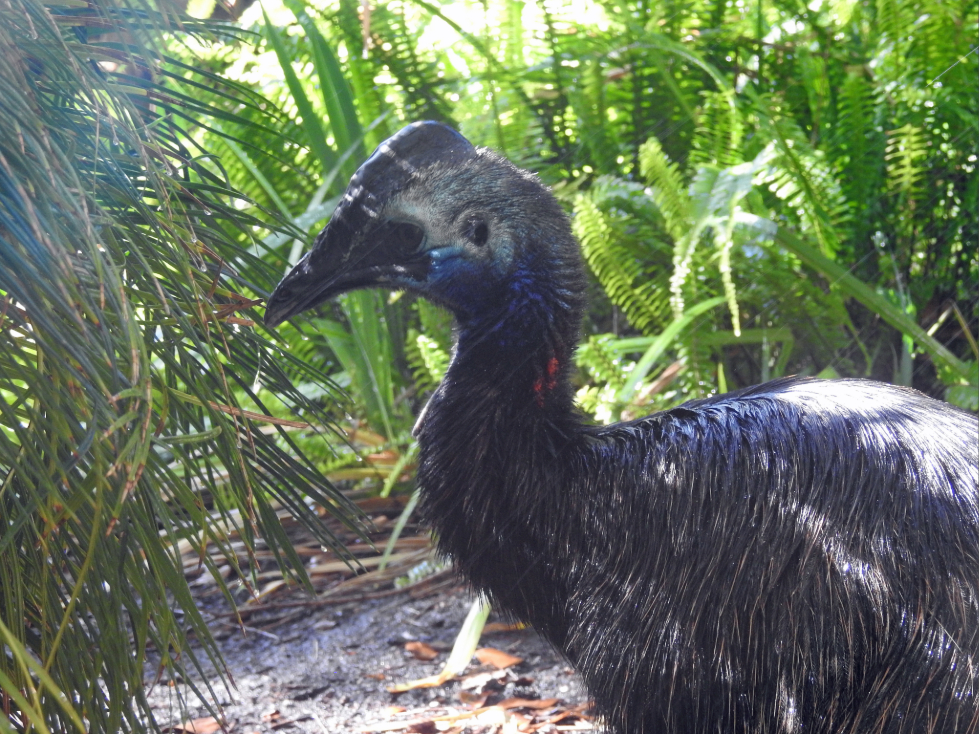
Figure SC-10. Young Southern Cassowaries are sometimes reluctant to leave dad’s protection and care, even after many months.
Within hours after hatching, the fully downy precocial chicks emerge and can move around. Within 2–3 days, they can leave the nest, while dad supervises and protects them. Once all of the chicks have hatched, the family stays together but doesn’t return to the nest. (The term for this practice is nidifugous, from Latin — nidus, “nest”; and fugere, “to flee.”) Their fuzzy plumes are buff-colored, with some tinges and spots of browns, grays, and rufous coloring. Along the sides and back are blackish-brown longitudinal stripes (front to back, more or less parallel with the ground); these stripes extend downward on each leg, to the ankle (see https://www.inaturalist.org/observations/247055302 ). Their rufous-brownish heads have bare skin where a casque will later appear.
Over time, the feathered stripes fade into solid brown, with a texture similar to the parents’. By the end of the first, year, the chicks reach adult size, but it can take years to develop fully black adult plumage, to form a casque and wattles, and to have the facial skin brighten fully. Typically, after about 4–5 years, the young cassowaries have fully developed casques and adult plumage. Though they reach physiological sexual maturity at about 3 years, they don’t successfully breed until about the same time they have adult plumage and casques.
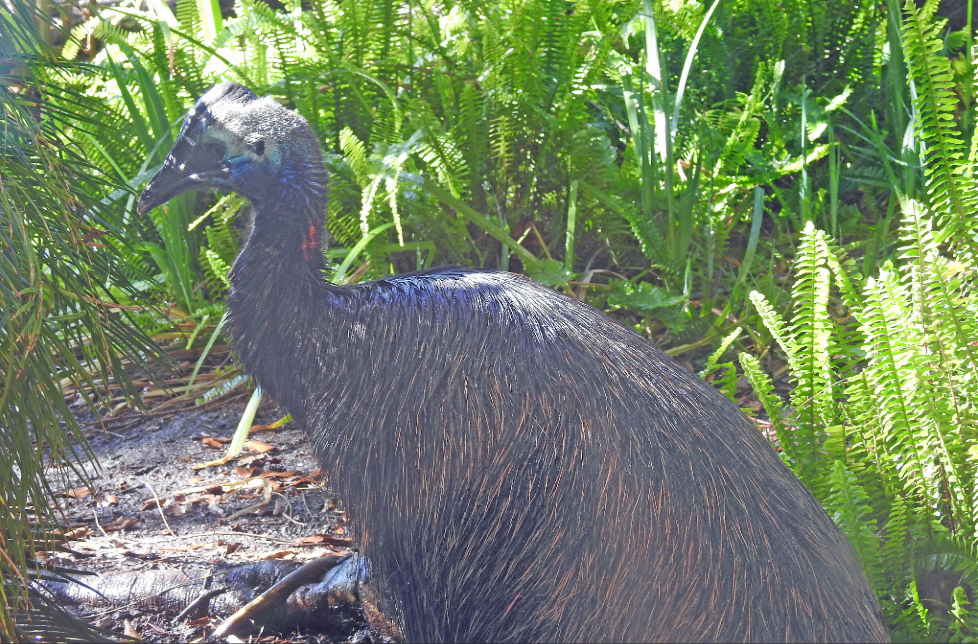
Figure SC-11. The casque of this young Southern Cassowary needs to grow quite a bit before it reaches adulthood.
While his chicks are young, dad will lead them to places with suitable food sources and — ideally — few predators. In addition, for large fruits, he’ll pull pulp away from the seeds and feed the bits to the chicks. He’ll also capture insects and other small prey to feed his young — important sources of nutrients during early development. As needed, he’ll clack his bill to stimulate his chicks to feed.
If a predator threatens his chicks, dad fiercely defends them — even against a big female cassowary (known to have killed cassowary chicks!). When the family strays to the edges of the forest, dad continues to keep watch over his chicks. If a chick wanders out of view of dad, the chick gives a high-pitched squeal until dad finds it.
Gradually, the young gain independence, dad becomes less vigilant, and chicks become less fearful of straying from dad’s view. After about 9–12 months, most youngsters are ready to leave dad’s care, but some youngsters stick around for up to 18 months before dad shoos them off so he can start a new family. Some chicks from one family will stick together for awhile, but eventually, they go off to become the solitary, territorial adults they were destined to become.
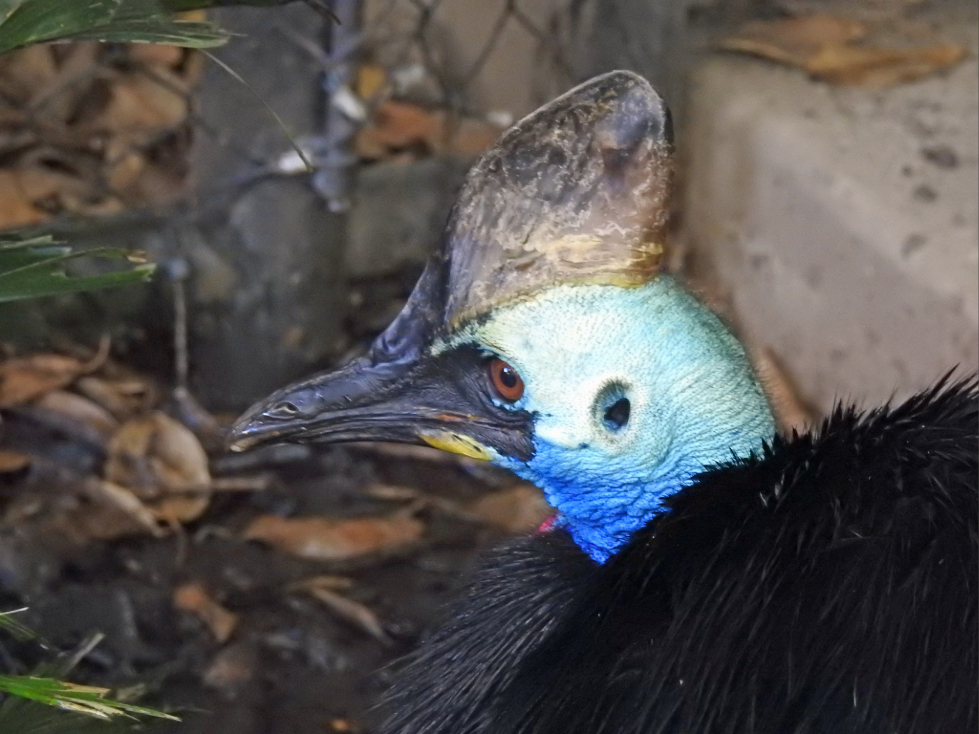
Figure SC-12. What is this Southern Cassowary thinking? Is it worried about habitat destruction, fragmentation, degradation?
In 2018, the International Union for Conservation of Nature (IUCN) Red List assessed Southern Cassowaries as LC, species of Least Concern. In Australia, however, they have been listed as Endangered under both federal and Queensland state legislation. Some recovery plans have been effective in mitigating the population decline. Plans include local habitat management, revegetation, habitat protection, community education, specific responses to high-risk individuals, and temporary feeding stations following climate cataclysms.
The most recent population estimates are 20,000–50,000 adults, with the greatest number in New Guinea, but the data are flimsy at best. This species can be difficult to assess and to monitor; they can be hard to locate, and their nests can be challenging to monitor. Based on limited data, it appears that the mortality of these cassowaries can be quite high before they reach adulthood. Generation length is 10.7–14.2 years, between the hatching of a parent and the hatching of its offspring. It’s thought that Southern Cassowaries can live up to 40 years in the wild, though 12 years is more common; annual survival for adults is about 91%. In managed care, they have been documented to reach 50–60 years of age. Around the world, many zoos have had breeding success with this species, including the San Diego Zoo.
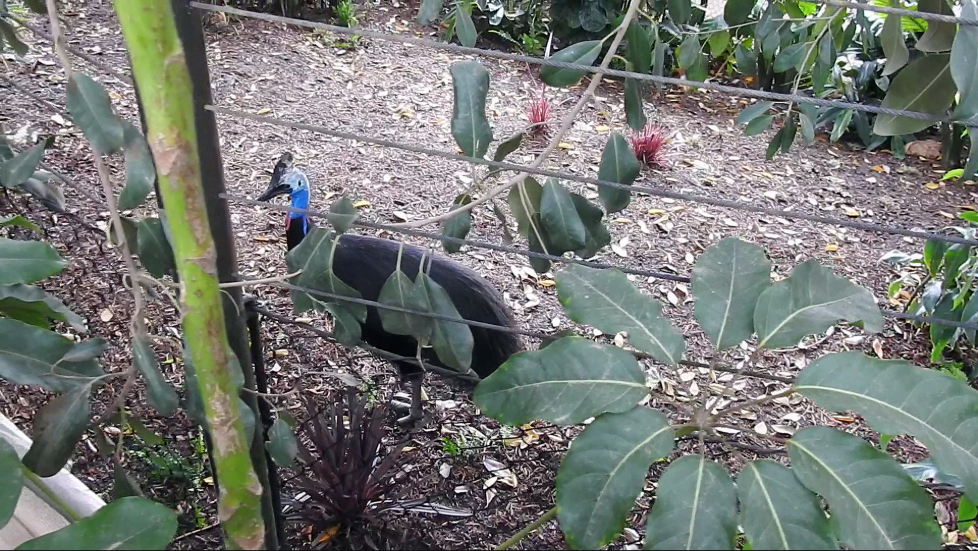
Figure SC-13. This Southern Cassowary, at the San Diego Zoo’s Safari Park, has a Species Survival Plan (SSP).
The most recent estimates of the overall size of their range is 146,000–890,000 square miles (380,000–2.3 million km2). Even so, the greatest threat to this species continues to be habitat loss (e.g., deforestation), degradation, and fragmentation (by roads and other development). Human desires for commercial logging, land development, and road building threaten their habitat. Roads through or near forests also lead to motor-vehicle collisions. In some locations, humans feed cassowaries by hand, not realizing the ultimate impact of having these birds become habituated to humans as a source of food; when these birds anticipate receiving food from humans, they may attack if food isn’t provided. In addition, when cassowaries are motivated to move near urban populations, they’re more likely to be struck by vehicles or attacked by dogs.
In addition, predators pose a grave threat. Some natural predators prey on eggs and young birds, including reptiles such as crocodiles and pythons, and dingoes (wild canids). Both human-introduced feral pigs and feral and domestic dogs also threaten these cassowaries directly, especially the eggs and the youngsters. Human hunters also threaten both young and adult cassowaries, especially in New Guinea, where subsistence communities may resort to killing cassowaries for their meat. Poor documentation and underreporting has probably led to underestimates of the frequency of cassowary injuries and deaths.
Adult cassowaries will respond to potential attacks with threatening vocalizations and postures, and if the attacker doesn’t heed these warnings, the adult will attack, often by leaping into the air and slashing down with its daggerlike claws. These defenses can’t protect them from tinier threats, however, such as disease-causing microbes and parasites.
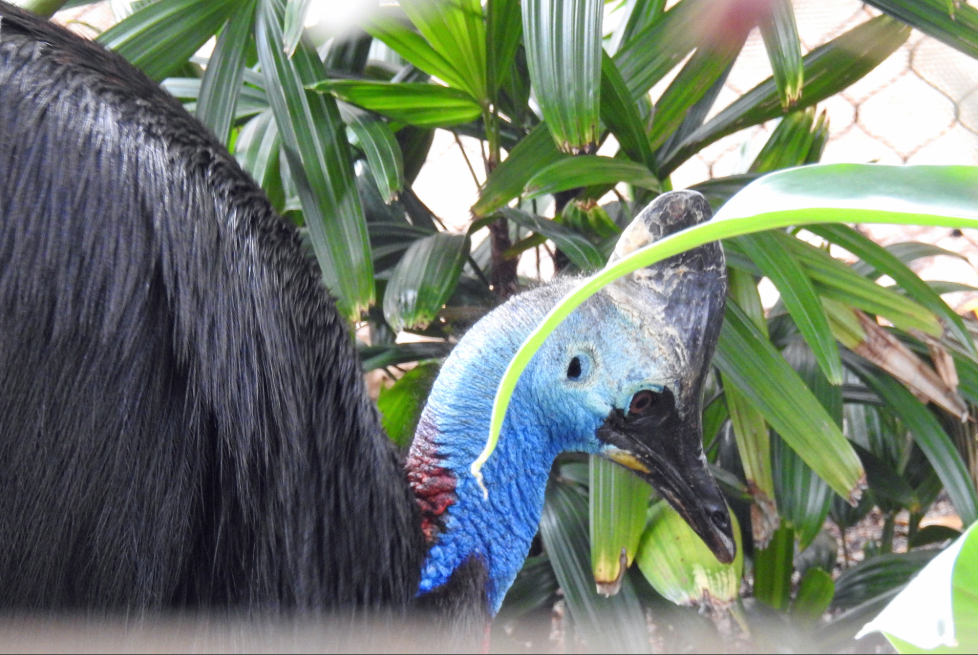
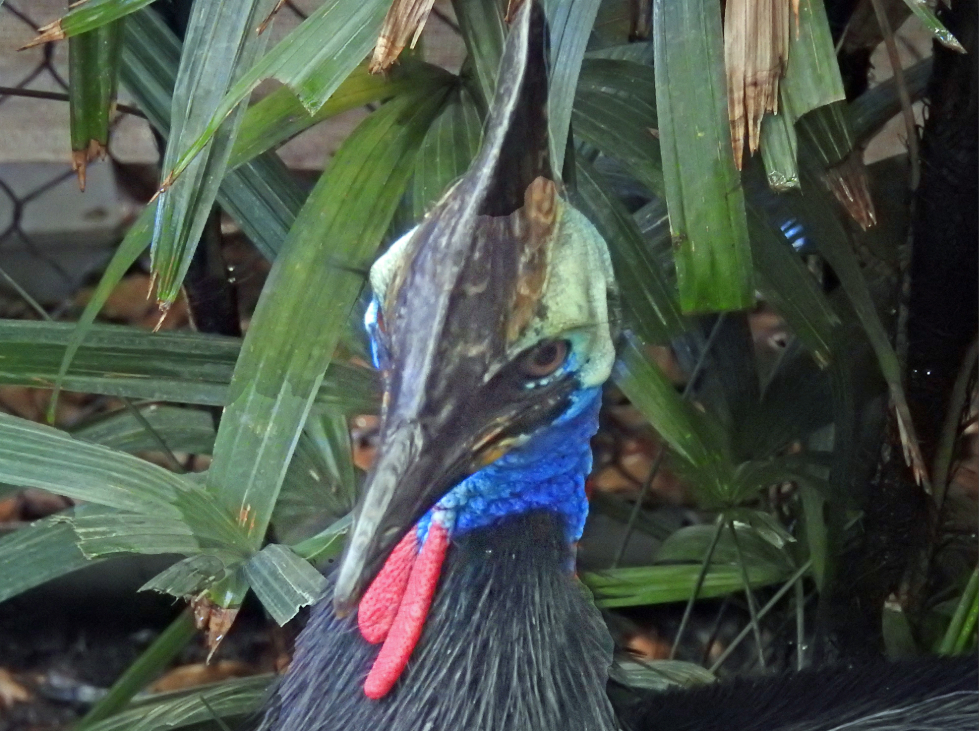
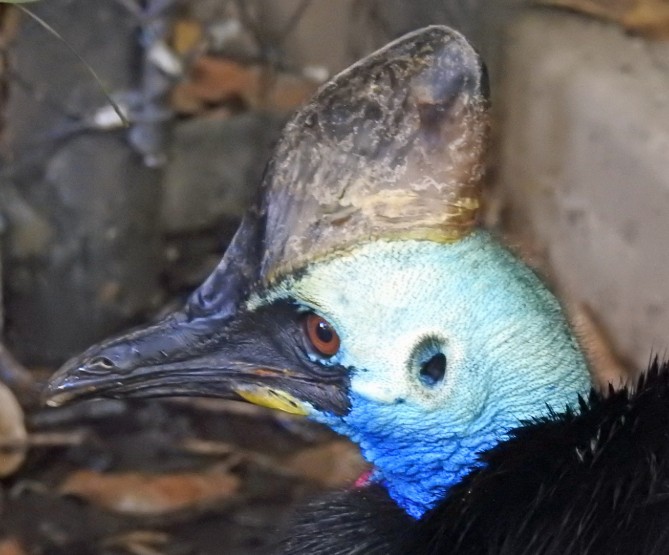
Figure SC-14, a–b. What we do not know about Casuariidae species far exceeds what we do know at present. We can hope that funding for research and for conservation will help us to understand these birds better and to protect them from extinction in the natural world.
The Cornell Lab of Ornithology is currently hoping to investigate many aspects of the life histories of Southern Cassowaries and other Casuariidae. The Lab’s eBird website and app have posted 3,688 observations (https://ebird.org/species/soucas1 ), including 1,743 photos and 18 audio recordings. The Lab’s Macaulay Library (https://search.macaulaylibrary.org/catalog?taxonCode=soucas1 ) has posted 4,083 photos, 23 audio recordings, and 64 videos. In addition, the iNaturalist app and website — https://www.inaturalist.org/observations?taxon_id=20500 — has 2,103 observations by 1,259 observers. Among the photos of youngsters, https://www.inaturalist.org/observations/331215368 shows a striped chick with its sibling, https://www.inaturalist.org/observations/335517805 shows a dad with a chick whose stripes are fading to dark brown, and https://www.inaturalist.org/observations/339437058 shows a dad and his biggish juvenile. In addition, I highly recommend viewing PBS’s Nature show on Parenthood: Jungles, https://www.pbs.org/wnet/nature/about-parenthood-jungles/34402/ , which includes a long segment highlighting a cassowary dad with his two adorable chicks.
References
Casuariiformes, Casuariidae
- Elphick, Jonathan. (2014). “Casuariiformes” (pp. 274–275). The World of Birds. Buffalo, NY: Firefly Books.
- Lovette, Irby, & John Fitzpatrick (eds.), (2016). “Casuariidae.” The Cornell Lab of Ornithology Handbook of Bird Biology (3rd ed.). Hoboken, NJ: Wiley.
- Winkler, David W., Shawn M. Billerman, and Irby J. Lovette. (2015). “Casuariidae,” (pp. 40–41). Bird Families of the World: An Invitation to the Spectacular Diversity of Birds. Barcelona: Lynx, Cornell Lab of Ornithology.
- Winkler, D. W., S. M. Billerman, and I. J. Lovette (2020). Cassowaries and Emu (Casuariidae), version 1.0. In Birds of the World (S. M. Billerman, B. K. Keeney, P. G. Rodewald, and T. S. Schulenberg, Editors). Ithaca, NY: Cornell Lab of Ornithology. https://doi.org/10.2173/bow.casuar1.01 . https://birdsoftheworld.org/bow/species/casuar1/cur/introduction . https://birdsoftheworld.org/bow/species/casuar1/cur/species#genusCasuarius
- https://animals.sandiegozoo.org/animals/cassowary
- https://en.wikipedia.org/wiki/Cassowary
- https://en.wikipedia.org/wiki/Casuariidae
- https://en.wikipedia.org/wiki/Casuariiformes
- https://thepetinfoo.com/cassowary-egg/
- https://xeno-canto.org/explore?query=casuariidae
Southern Cassowary
- Healy, T. P. (2022). Southern Cassowary (Casuarius casuarius), version 2.0. In Birds of the World (S. M. Billerman, Editor). Ithaca, NY: Cornell Lab of Ornithology. https://doi.org/10.2173/bow.soucas1.02 . https://birdsoftheworld.org/bow/species/soucas1/cur/introduction
- https://avibase.bsc-eoc.org/species.jsp?avibaseid=8B9D93D8
- https://avibase.bsc-eoc.org/species.jsp?lang=EN&avibaseid=8B9D93D84AC854E7&sec=lifehistory
- https://en.wikipedia.org/wiki/Southern_cassowary
- https://www.inaturalist.org/observations?taxon_id=20500
Other Casuariidae Species
- https://animals.sandiegozoo.org/animals/emu
- https://a-z-animals.com/blog/baby-emu-pictures-and-incredible-facts/
- https://en.wikipedia.org/wiki/Dwarf_cassowary
- https://en.wikipedia.org/wiki/Emu
- https://en.wikipedia.org/wiki/Northern_cassowary
Other Topics
- cassowary plum, https://en.wikipedia.org/wiki/Cerbera_floribunda?wprov=sfla1
- infrasound, cassowaries, https://www.science.org/content/article/getting-cassowarys-head
- infrasound, emus, https://www.anthropology-news.org/articles/close-encounters-of-the-bird-kind/
- keel, https://en.wikipedia.org/wiki/Keel_%28bird_anatomy%29
- kiwi, https://en.wikipedia.org/wiki/Kiwi_(bird)
- kiwi incubation, https://en.wikipedia.org/wiki/Kiwi_(bird)#Mating_and_breeding
- nidifugous birds, https://en.wikipedia.org/wiki/Nidifugous_and_nidicolous_organisms
- ostrich incubation, https://en.wikipedia.org/wiki/Common_ostrich#Mating
- ratite, https://en.wikipedia.org/wiki/Ratite
- rhea incubation, https://en.wikipedia.org/wiki/Rhea_(bird)#Reproduction
- uropygial gland, https://en.wikipedia.org/wiki/Uropygial_gland?wprov=sfla1
Text and images by Shari Dorantes Hatch. Copyright © 2026. All rights reserved.
 Bird Brain
Leave a comment