
“An Immense World: How Animal Senses Reveal the Hidden Realms Around Us” by Ed Yong

Yong, Ed (2022). An Immense World : How Animal Senses Reveal the Hidden Realms Around Us. NY: Random House.
Part 1 of this three-part discussion of Yong’s book included these chapters: Introduction: The Only True Voyage, 1–16; Chapter 1. Leaking Sacks of Chemicals: Smells and Tastes, 17–52; Chapter 2. Endless Ways of Seeing: Light, 53–83; Chapter 3. Rurple, Grurple, Yurple, 84–116; Chapter 4. The Unwanted Sense: Pain, 117–134
Part 2 discusses these four chapters:
- Chapter 5. So Cool: Heat, 135–155
- Chapter 6. A Rough Sense: Contact and Flow, 156–187
- Chapter 7. The Rippling Ground: Surface Vibrations, 188–209
- Chapter 8. All Ears, Sound, 210–242
Part 3, forthcoming, will discuss these chapters: Chapter 9. A Silent World Shouts Back: Echoes, 243–275; Chapter 10. Living Batteries: Electric Fields, 276–299; Chapter 11. They Know the Way: Magnetic Fields, 300–319; Chapter 12. Every Window at Once: Uniting the Senses, 320–334; Chapter 13. Save the Quiet, Preserve the Dark: Threatened Sensescapes, 335–356; and back matter, 357–453
Chapter 5. So Cool: Heat, 135–155
“All living things are deeply affected by temperature. If conditions are too cold, chemical reactions slow to a useless crawl. If they are too hot, proteins and other molecules of life lose their shape and fall apart. These effects constrain most of life to a Goldilocks zone where the temperature is just right” (p. 137).
Every animal with a nervous system can sense temperature. Cold and heat trigger separate temperature-sensitive neurons. We don’t just have one sensor for detecting a gradient of hot-to-cold; we sense cold separately from heat, and we sense intense heat or intense cold separately from mild temperatures. Intriguingly, chemicals can also trigger these neurons. For instance, capsaicin (the painful chemical in chiles, which can be sensed anywhere on the skin, not just in the mouth) and menthol (the cooling chemical in mints) also trigger temperature-sensitive neurons.
In general, different animals have different temperature ranges within which they must stay. For instance, fish can generally tolerate temperatures near freezing, whereas most frogs can’t. The same applies to heat, and each animal has its own definition of what temperature is too hot. What’s too hot for a penguin isn’t necessarily too hot for a camel — and vice versa regarding what’s too cold. The animal that tolerates the widest range of temperatures is the thirteen-lined squirrel, which can tolerate both extreme heat and extreme cold (near freezing).
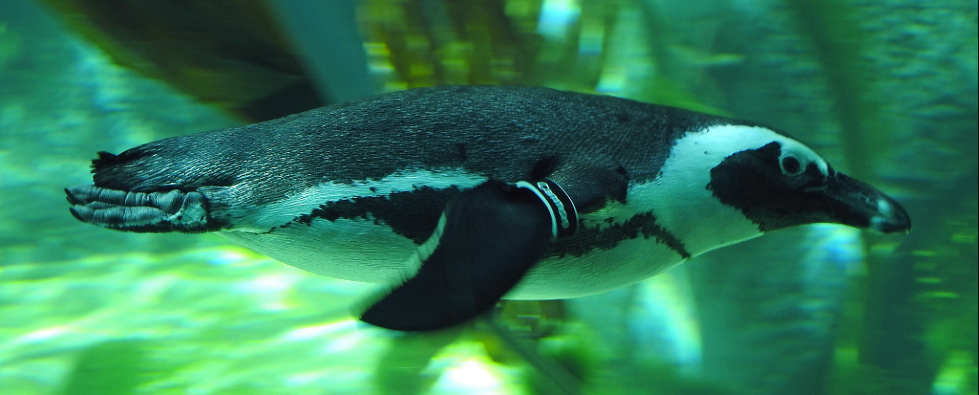

Figure 01 (a,b). What a penguin considers too hot is probably quite nice for a camel, but what a camel might consider too cold is probably just fine for a penguin. (Photos of both the African penguin and the dromedary camel were taken at the San Diego Zoo.)
Extremophiles can be found at each end of the temperature spectrum: Both the Saharan silver ant and the Pompeii worm (which lives near volcanic vents!) can tolerate temperatures up to 127º F. (53º C), whereas snow flies and ice worms live contentedly (presumably!) in freezing temperatures.
Melanophila beetles seek out the warmth of . . . forest fires. Under each beetle’s midsection, it has a pair of heat-detecting pits, which respond to infrared radiation. When these beetles find a burning forest — even from dozens of miles away — they mate like crazy. As soon as the bark has cooled enough, they lay their eggs on it. When the larvae hatch, they consume the defenseless injured tree’s wood, with little fear of predators finding and eating them.
Many other animals can sense temperature, too. For tiny animals, microclimate temperature differences caused by a sunbeam, a shadow, or a breeze can be significant. Flies use thermotaxis to make tiny adjustments in their movements, in response to subtle changes in temperature. Fly antennae operate in stereo, detecting a temperature difference of just 0.1ºC (<0.2º F) between the two antennae; when they detect the slightest temperature difference, they fly toward the more comfortable location. Many other animals use thermotaxis: butterflies, fish and fish larvae, and even turtle eggs will move toward more comfortable temperatures.
Sensitivity to temperature is especially important for ectotherms, “cold-blooded” animals who can’t generate their own heat the way we endotherms (“warm-blooded”) can. They rely on having their environment keep them cool enough or warm enough to survive; their body temperature can vary widely. In contrast, we endotherms expend lots of energy on maintaining our body temperature within a relatively narrow range — unless we’re hibernating. “Hibernation isn’t sleep but a more intense state of inactivity that allows [hibernating animals] to survive” in extreme cold (p. 135). During hibernation, the animal’s metabolism shuts down almost completely, with the heartbeats slowing dramatically and its body temperature dropping to just above freezing — and some species can tolerate even lower temperatures.
Not-so-fun facts: “Parasitism [is] one of the most common lifestyles in nature. It’s likely that the majority of animal species are parasites.” Many parasites use smell to find their target hosts, but many use heat. That makes endotherms especially vulnerable to parasites. About 14,000 animal species have evolved to feed on animal blood, and many of these parasites do so by sensing heat (e.g., bedbugs, mosquitos, tsetse flies).
Vampire bats use other senses to find their targets, but once they get within 6 inches of their host, they use heat to detect the best location for biting. They detect heat through their noses. Ticks, which also suck blood, detect heat on their first pair of legs, which they wave around to detect where to find a host. “Ticks can detect body heat from up to 13 feet away” (p. 148). Interestingly, DEET inhibits their ability to sense a host’s heat.
Several kinds of snakes show extraordinary sensitivity to temperature, detecting infrared radiation. Two constrictors (pythons, boas) and several pit vipers (e.g., rattlesnakes, cottonmouths) have heat-sensitive pits on their faces. In those pits, temperature receptors help these snakes find living prey, which unwittingly radiates heat. The facial pits of vipers have thousands of nerve endings for sensing not only the presence of prey, but also its location and even the location of its head, which the snake can attack in total darkness.
Some scientists view sensations of infrared radiation as part of light detection; infrared is at the opposite end of the color spectrum from ultraviolet light. Some evidence suggests that infrared detection augments snakes’ visual sensations.
In thinking about the senses, vision, sound, and smell can be detected from great distances, whereas heat detection usually can’t be detected from far away. Other senses require direct contact to be detected.
Chapter 6. A Rough Sense: Contact and Flow, 156–187
Somatosensory Cortex
Most vertebrates lack useful sensory receptors for electrical signals or magnetic fields, but an entire area of our brains—the somatosensory cortex—is dedicated solely to our sense of touch. In a mammal’s somatosensory cortex, the body parts that have the most touch receptors occupy more space. For humans, hands, lips, and genitals take up more brain space than bigger parts of the body. For other mammals, other parts dominate the somatosensory cortex: platypuses (marsupials), bills; mice, whiskers; and Naked Mole-rats, teeth. Yes, teeth. These burrowing mammals can manipulate their teeth, grasping with their lower incisors, so their teeth need plenty of brain power for touch sensations.
A sea otter, which has the densest fur of any animal, devotes huge areas of its somatosensory cortex to its paws. In fact, sea otter paws can make fine texture discriminations 30× faster than human hands can. Compared with most other animals, however, human “fingertips are among nature’s most sensitive touch organs” (p. 159). We can even make the same discriminations as sea otters — just much more slowly.
Why does the sea otter need such keen texture senses? This air-breathing mammal must take a breath, dive to the deep dark ocean floor, use touch to swiftly find potential food — clams, urchins, abalone — grab it, and rise to the surface to breathe again. And sea otters must do so repeatedly, eating about ¼ of their own weight each day, to generate enough heat energy to keep warm at sea.
Mechanoreception
For us, otters, and many other animals, a sense of touch involves direct pressure contact. For other animals, however, touch can originate remotely, especially in regard to predators and prey. For instance, through air, crickets can sense the slightest breeze made by the movements of an advancing spider. Through water, seals can sense invisible currents made by swimming fish.
In all animals, our sense of touch relies on various mechanoreceptors, which come in several types, depending on the kind of stimulus:
- Merkel nerve endings respond to light touch (e.g., your clothes on your skin) or to continuous pressure (e.g., while holding a book, wearing eyeglasses, or crossing your legs)
- Ruffini nerve endings (aka bulbous corpuscles) respond to stretching of the skin, important when grasping an object
- Meissner corpuscles (aka tactile corpuscles) respond to vibrations we feel when moving our fingertips across a textured surface, such as Braille writing
- Pacinian corpuscles also respond to vibrations but are more responsive to finer textures (e.g., denim vs. linen) or when sensing texture through a tool (e.g., drawing with chalk on concrete)
As with the five types of taste, these four types of mechanoreceptors interact to yield an overall sense of touch. We don’t sense each type distinctively.
All four types of mechanoreceptors have the same basic structure: A nerve-ending is enclosed in some kind of “touch-sensitive capsule,” which can be deformed by some kind of tactile stimulus, prompting the nerve ending to fire.
Animals vary widely in their organs of touch: where they’re located, how sensitive they are to different stimuli, how they use them to guide their behavior, and so on. For most touch sensations, some kind of movement is needed. To detect the texture of silk versus cotton versus wool, we must run our fingers over the fabric. To sense the hardness of an avocado or a peach, we must press down on it (lightly!).
Yong dedicates four pages to the star-nosed mole, which tells you how impressive he finds this mole to be. This hamster-sized mole has 22 “pink, hairless, finger-like appendages, arranged in a ring around its nostrils” (p. 161), a star of 11 pairs. Sensations from the star dominate the mole’s somatosensory cortex. Within the star’s cortical somatosensory area, 10 of the pairs take up 3/4 of the space, and the tiniest pair takes up the other 1/4. The 11th pair sits directly in front of the mole’s mouth and determines whether an item is edible. Once the 11th pair certifies the item as food, the two separate, and the mole’s front teeth grab it and swallow it.

Figure 02. Researchers have called the 11th pair the mole’s “tactile fovea,” because of its extra-sharp sensations. These moles can assess prey by touch, swallow it, and start looking for the next mouthful in less than 1/4 second, on average — sometimes less than 1/8 second. Source: http://www.nps.gov/acad/flow/pix/starnosedmole.jpg (archived URL; December 1, 2005) which was linked on http://www.nps.gov/acad/flow/mammals.html (archived URL; December 22, 2005); English WP: uploaded by en:User:Big iron; Author: US National Parks Service. Photo in the public domain. https://en.wikipedia.org/wiki/Star-nosed_mole#/media/File:Condylura.jpg; Star-nosed Mole from US NPS; Date, January 2005. (If you’d like to know more, see https://en.wikipedia.org/wiki/Star-nosed_mole for additional information.)
Many birds have bills with mechanoreceptors that can detect movements, vibrations, and pressure. For instance, many ducks have mechanoreceptors all over their upper and lower bills, inside and outside. When dabbling in murky waters, touch may be better able to sense food than vision. Carnivorous ducks can grab unseen speedy tadpoles, and herbivorous ducks can grasp edible plants. Many ducks can poke around in mud and sand, extracting any edible bits from the inedible earth.
Most shorebirds have bills designed to probe for prey in muddy or sandy soil. If viewed under a microscope, pits full of mechanoreceptors surround the tips of their bills. Some shorebirds (e.g., Red Knots) can also detect slightly distant objects and vibrations in wet sand or mud, farther from the bill.
The Whiskered Auklet, a seabird, doesn’t probe for prey, but it does have a feathered crest and whisker-like feathers atop its bill and alongside its face. These plumes whisk the walls of the rocky crevices where they build their nests; the feathers’ mechanoreceptors send sensations to their brains. Some insectivorous birds also have stiff bristles on their faces, which aid in various tasks, including handling their prey.
Most birds don’t have feathery whiskers, but they do have feathers for sensing movement. Flighted birds have specialized feathers, filoplumes, which precisely detect the movement of air, as well as anything else touching these feathers. Filoplume feathers look as though someone stripped away most of the barbs from the central shaft, leaving only a tuft of loose barbs at the tip. At the base of each filoplume, mechanoreceptors respond to the slightest movement of the feather. Filoplumes, companions to the contour feathers covering the bird, detect air currents and feather movements in flight. Their mechanoreceptors can detect when the bird should adjust the wing’s angle or move individual feathers for maximum lift. On the ground, filoplumes can detect when contour feathers disrupt the bird’s smooth contour, so the bird can preen its feathers to ensure a flight-worthy contour.
We mammals don’t have feathers, but most of us have mechanoreceptors at the base of our hairy fur, which detect its movement. (Try gently moving the hairs on your arm or elsewhere.) Bat wings are covered with touch-sensitive hairs, too. Most of the hairs on bat wings react only when air movement is going in the wrong direction (back to front), alerting the bat to take corrective action to prevent stalling in flight. With their hair-trigger mechanoreceptors, they can fly acrobatically, avoid nearby obstacles, and make hairpin turns.
In addition, several mammals have specialized whiskers — vibrissae — loaded with mechanoreceptors. They can manipulate these whiskers to investigate their environments. For instance, rodents (such as Naked Mole-rats), hyraxes (related to manatees and elephants), and manatees use vibrissae to whisk their environments, using these sensations to make mental maps of where they are.
Manatees can use the 2,000 whiskers on their mouths — their “oral disks” — to find food, investigate it, manipulate it, and get it into their mouths. There’s even a word for it: oripulation, using the mouth to manipulate. Manatees also have about 3,000 more vibrissae scattered around on their ginormous bodies; these vibrissae can sense the water flowing around them. If something ripples the water at a distance, the manatee’s vibrissae can detect it.
Other marine mammals have useful whiskers, too. The whiskers on harbor seals are so useful that blind harbor seals can thrive in the wild. Whiskers help seals not only to avoid obstacles but also to sense shape and texture, as well as vibrations in the water. Sensing movements in water is a big deal for a fish-eater. Fish leave hydrodynamic trails of whirling water in their wake, and a seal with keen whiskers can follow those trails to get to the fish, perhaps from nearly 200 yards away. The trails reveal not just the direction of movement, but also the sizes and shapes of the fish. (Seal whiskers are hydrodynamically designed not to create their own whirls.)
Fish, too, have mechanoreceptors for detecting water currents and objects deflecting those currents. Fish can also use their mechanoreceptors to “orient themselves in flowing water, find prey, escape from predators, and keep tabs on each other. Schooling fish [can] match the speed and direction of their nearest neighbors” (p. 178). Perhaps the most unusual mechanoreceptive fish is a blind cave-dwelling catfish, Astroblepus phoeleter. Like other catfish, its skin isn’t covered with scales, but this catfish’s skin is covered with teeth — “actual teeth, made of enamel and dentine, with nerves coming out of their bases” which serve as “a body-wide coat of flow sensors” (p. 179).
Other vertebrates have distinctive mechanoreceptors, too. Alligators have pressure-sensitive receptors on their snouts, which can detect the slightest vibrations of the water’s surface. An alligator can appear to be resting calmly, while it’s actually monitoring the subtlest vibrations indicating some potential prey has touched the water with foot or face. Alligators’ close relatives, crocodiles, have touch-sensitive bumps inside their mouths and around their teeth. Not only can they sense the presence of potential prey, but they can also sense how to eat whatever is caught by their teeth—hard or soft, large or small. A mother crocodile, when carrying her hatchlings in her mouth, can even sense how to hold them—gently but firmly. On the heads of sea snakes, their scales also have touch-sensitive bumps that can sense vibrations.
Invertebrates use mechanoreceptors, too. “Most arthropods . . . have hairs that detect the flow of either water or air” (p. 187). For instance, the legs of a tiny tiger wandering spider are covered with hundreds of thousands of tiny touch-sensitive “hairs.” Most of the hairs respond only to direct contact, but some detect air movements of 1″/minute, from any direction! These hairs allow this spider to sense the approach of a fly within 1½”, grab it, pull it to the ground, and envenomate it.
Not all insects are defenseless, though. Wood crickets come equipped with hundreds of similar touch-sensitive hairs, which they use to detect the approach of predatory wolf spiders. According to a researcher, “the cricket almost always wins. . . . These hairs are a hundred times more sensitive than any visual receptor that exists, or could possibly exist” (p. 186, emphasis in original). Even better, these touch-sensitive hairs are finely attuned to respond only to the relevant predator or prey, not just to any passing breeze.
Fun fact: Fuzzy caterpillars can detect the air movements of parasitic wasps and respond by falling to the ground, freezing, or vomiting. The air movements of honeybees have the same effect. So, when honeybees are busy pollinating flowers, they may also be disrupting hungry caterpillars that are consuming the plants. Plants win!
Chapter 7. The Rippling Ground: Surface Vibrations, 188–209
Vibrations can travel through air, water, solid objects, or across a surface. When traveling through air, vibrations—such as sounds—travel in all directions and dissipate quickly. (The ability to detect sound vibrations is addressed in the following chapter, about hearing.) Vibrations can travel farther through water (in all directions) than through air, but still not very far. (Recall the sensitive seals, fishes, and crocodiles from the previous chapter.) In contrast, vibrations traveling through solid surfaces travel only across the surface and can be conducted across long distances before dissipating. Perhaps surprisingly, surface vibrations can travel through sand and soil, as well as solid earth.
Fun fact: Vibrations that travel through air indicate the size of the animal producing the vibrations: Tiny animals produce high-frequency vibrations; larger animals produce low-frequency vibrations. (Mice squeak; elephants bellow.) Vibrations that travel through surfaces, however, don’t indicate anything about the size of the animal producing the vibrations. A tiny insect can produce low-frequency or high-frequency vibrations, just as a large animal can.
Elephants keenly sense vibrations traveling through the ground over long distances. When walking around, elephants sometimes stop to sense something through their feet, then respond to invisible stimuli.
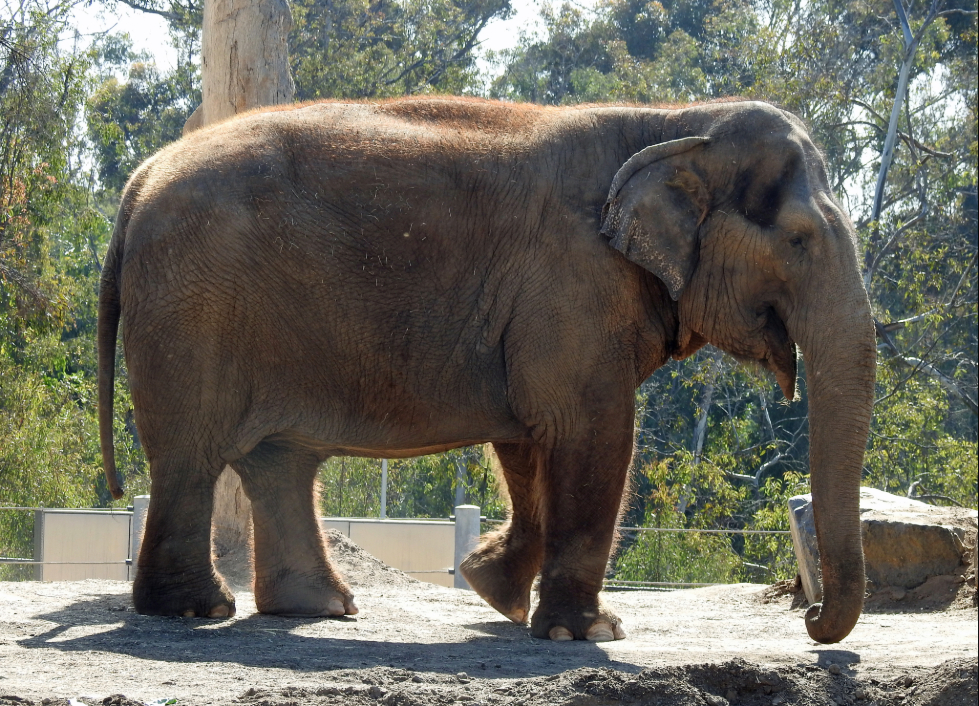
Figure 03. Elephants’ feet can sense distant vibrations moving through the ground. When familiar elephants are approaching, they can even identify each individual by their distinctive vibrations. (Photo of this Asian elephant was taken at the San Diego Zoo.)
Rattlesnakes don’t have feet, but they, too, keenly sense vibrations as they move their bellies along the ground. Frogs use sensations of vibrations to estimate the relative size and vigor of a rival who vibrates its rear end on the branch they’re sharing. Even frog eggs can detect vibrations, such as those created by a hungry snake. On sensing the vibrations, they can quickly hatch to flee the egg (and the snake’s mouth) as premature tadpoles.
Many arthropods can detect minuscule vibrations. Each arachnid has slit sensilla (singular: sensillum) — vibration-detecting organs located in the joints of its exoskeleton. When a vibration nudges the arachnid’s foot, the slit is compressed and triggers its neurons to fire. Infinitesimal compressions elicit a response. Sand scorpions can track prey through these surface vibrations.
Orb-weaver spiders have thousands of vibration detectors in their sensilla and elsewhere. By positioning themselves near the center of the web and keeping their legs on its radial spokes, the slightest vibration of the web alerts the spider to potential prey. These spiders can also differentiate between prey and other sources of vibration, such as a strong breeze or a falling leaf.
Some orb weavers can precisely tune the vibrations of the webs they create. While creating the web, they can adjust the strength and speed of the web’s vibrations by adjusting the web’s shape, the stiffness of the silk, the tension and thickness of individual strands. They can even continue to modify the web after it’s created by adding or removing strands or by making strands more or less taut. “The spider thinks with its web,” and “the web determines which vibrations will arrive at” the vibration sensors on its legs (p. 208). An orb weaver can also change its posture to adjust the vibration frequencies to which its mechanoreceptors are most sensitive.
Orb weavers can even “pluck” the web to send out a vibration, to elicit a response. Other kinds of spiders can also sense vibrations through the ground, plants, and other surfaces, in pursuit of prey. Some sneaky spiders have been able to trick an orb weaver to pursue nonexistent prey while they steal the actual prey. More alarming, a stealthy Portia jumping spider (or assassin bug) will pluck the web to lure the orb weaver to within its grasp, to turn predator into prey.
Fun fact: Spider silk has existed for almost 400 million years — as long as spiders have. Though it’s light and stretchy, it can be made stronger than steel, tougher than Kevlar. When used to make webs, it can signal the arrival of prey, its size, and its location. Spider silk serves many other purposes, too: wrapping eggs, suspension, kiting through the air, building shelters, and more.

Figure 04. At the San Diego Zoo, this tarantula is identified as a Birdeater Spider, though it very rarely preys on birds. (For more information, see https://en.wikipedia.org/wiki/Goliath_birdeater; see also https://en.wikipedia.org/wiki/Tarantula#Nervous_system: “Although a tarantula has eight eyes like most spiders, touch is its keenest sense, and in hunting, it primarily depends on vibrations given off by the movements of its prey. A tarantula’s setae are very sensitive organs and are used to sense chemical signatures, vibrations, wind direction, and possibly even sound. Tarantulas are also very responsive to the presence of certain chemicals such as pheromones.”)
Some arthropods use vibrations to communicate. For instance, to attract a female, a male fiddler crab may thump his claws on the sand. About 200,000 species of insects communicate using surface vibrations — often on springy and flexible plants. These vibrations often originate when insects contract their abdominal muscles. Some insect vibrations are surprisingly deep, creating low-frequency vibrations that carry across longer distances. Treehoppers, leafhoppers, cicadas, crickets, katydids, termite soldiers, and others send vibrations through plants, sending alerts, calling for potential mates, asking for help, and so on. For instance, some caterpillars will use vibrations to call other caterpillars to join them to feast on leaves. Some baby insects synchronize their vibrations when near their moms.
Fun? facts: Termites are cockroaches, not ants; they live in colonies as social insects. Some people eat termites as a delicacy, and some people use them in traditional medicine. (See https://en.wikipedia.org/wiki/Termite for more information.)
Some animals also use vibrations as a ploy to elicit prey. For instance, Herring Gulls and wood turtles will deliberately shake the ground to create vibrations sensed by worms. The worms fear that the vibrations are caused by hungry moles, so the worms wriggle up to the surface, where different hungry predators eat them.
It’s thought that the sense of hearing evolved from the ability to sense surface vibrations. In this view, early amphibians and reptiles laid their heads on the ground so that surface vibrations would travel to their jawbones. Over time, three of those jawbones shrank and moved “turning into the small bones of the middle ear — the hammer, anvil, and stirrup. Now, instead of transmitting surface vibrations from the ground via the jaw, they transmit sounds from the air via the outer ear and eardrum” (p. 200). In fact, we still can sense sounds through our bones, directly to our inner ear, such as by using bone-conduction phones pressed behind our ears.
Fun fact: Cats (e.g., lions) have “vibration-sensitive mechanoreceptors in the muscles of their bellies” (p. 201). When they’re lying about, are they “listening” for potential prey?
Chapter 8. All Ears, Sound, 210–242
“Hearing . . . offers fast, precise, long-range, and 24-hour information that allows animals to sense both rapidly moving prey and rapidly approaching threats” (p. 217).
In total darkness, barn owls (and many other owl species) can find prey using sound alone — not smell, vision, or any other sense. When something triggers a sound, “it produces waves of pressure that radiate outward. As these waves travel, the air molecules in their path repeatedly bunch up and spread out” (p. 211). When these waves compress and disperse frequently, they have a higher frequency, and we hear them as a higher pitch; when the waves compress and disperse more slowly, they have a lower frequency, and we hear them as a lower pitch. Frequency is measured in hertz (Hz). When the waves have a higher amplitude (higher from the top to the bottom of the waves), we hear them as louder; we hear waves with shallower amplitude as being quieter. Amplitude is measured in decibels (dB).
Most humans can hear sound waves between 20 Hz and 20,000 Hz. Below 20 Hz, sounds are called infrasonic; elephants, whales, dolphins, and some other animals can hear infrasounds. Sounds above 20,000 Hz are ultrasonic and can be detected by dogs (dog whistles!), bats, and other animals. (https://en.wikipedia.org/wiki/Hearing#Frequency_range)
Yong points out that hearing is actually closely related to touch because both rely on mechanoreceptors that detect movements; we can hear when our cochlear hair cells are deflected. Unlike touch, though, hearing can work over long distances, as well as in darkness, at rapid speeds.
The ears of barn owls, elephants, bats, and humans have the same basic structure:
- an outer ear
- a middle ear
- an inner ear
In humans, our outer ears collect incoming sound waves and funnel them into the ear canal. In a barn owl, its entire face is part of its outer ear; its densely feathered facial disc collects sound waves and funnels them into the owls’ ear holes — two enormous openings behind the owls’ eyes.


Figure 05 (a,b). (a) We can’t usually see the ginormous ear holes of owls — or of most birds — because they’re covered with feathers. Owl faces are designed for collecting sound waves with dense feathers forming sound-collecting discs. (b) Like most other birds, this bare-headed Southern Cassowary (from the San Diego Zoo’s Safari Park) relies more on vision than on hearing, but feathers don’t conceal its ear holes. Note. This Barn Owl was photographed at Hawk Watch, offered each Saturday morning in January and February by the Wildlife Research Institute, https://www.wildlife-research.org/hawkwatch.
We humans have our ear canals positioned symmetrically on either side of our heads, at the same height relative to our faces. Having ears on either side of our head means we can detect where the sound is coming from pretty accurately, in horizontal space. But we have little idea of where it’s located vertically. Owls (and most birds) fix this problem by having their ears located not only on either side of their heads but also asymmetrically, with one ear hole slightly higher than the other. This asymmetry lets them detect the location of a sound in vertical space, as well as horizontally.
The middle ear of owls (and other birds) and humans performs the same functions — amplifying the collected sound waves and transmitting the waves to the inner ear. At the base of the ear canal in both humans and birds are eardrums, which vibrate in response to the sound waves. These vibrations prompt movement of a single bone in birds or the movement of three tiny bones in humans. In either case, the bones then transmit the vibrations to the inner ear.
The inner ear has a fluid-filled cochlea containing vibration-sensitive “hair cells,” which translate those sensations into neural information and send it on to the brain to interpret the vibrations as various sounds.
Fun fact: Bird ears have a superpower that human ears lack. Unlike humans, birds can regenerate new hair cells on their cochleas when the existing hair cells are damaged or worn out. Old birds don’t need hearing aids. In humans, however, once a hair cell is damaged or worn out, that’s it. That’s why, over a lifetime, many people lose their sense of hearing, and some people lose their hearing permanently because of one damaging experience.
Owls not only have remarkable hearing, but also near-silent flight. The fuzziness of their feathers and the serrations on their wingtips blunt the sound of their wing flaps. Few rodents and other prey can hear them coming. But kangaroo rats can. The middle ears of kangaroo rats are bigger than their brains, so they can hear not only the approach of owls, but also the sounds of striking rattlesnakes — in time to turn and kick the snakes in the face.
Though the outer ears of elephants, dolphins, and kangaroos differ in appearance, most mammals have quite good hearing, using two ears, found on our heads. Insects, however, are all over the map. The first insects to evolve couldn’t hear at all. Insects’ ability to hear evolved at least 19 separate times, with ears located almost anywhere imaginable: Locusts and cicadas have ears on their abdomens; hawkmoths have ears on their mouths; mosquitoes, on their antennae; monarch caterpillars, on their midsection; bladder grasshoppers, 12, in pairs, on their abdomens; mantises, 1 ear in the middle of their chests. According to at least one entomologist, insect ears “tend to appear near the neurons that control the actions for which those ears evolved” (p. 218). For instance, insects that fly off when they hear predators are likely to have ears on or near their wings.
Most insects already have movement-sensitive structures just beneath their exterior cuticle (exoskeleton), all over their bodies. These sensory cells respond to vibrations, sensing their own beating wings, moving limbs, or even expanding guts. In insects who hear, these sensory cells evolved to detect loud airborne vibrations. In further adaptations, the cuticle overlying these sensory cells thinned out to create eardrums. Not all insects have made these adaptations, though; in fact, most haven’t. Most beetles don’t have ears, nor do dragonflies or mayflies.


Figure 06 (a,b). Both of these images show blue morpho butterflies, with wings up or with wings down. Though these butterflies are silent, they have ears on their wings, which are highly attuned to the sound frequencies produced by insectivorous birds. These beautiful butterflies can detect birds’ vocalizations, feet hopping on branches, feathers swishing through grasses, and even wingbeats. (These photos of blue morpho butterflies were taken March 2017, San Diego Zoo Safari Park’s Butterfly Jungle exhibit.)
Starting at least 165 million years ago, cricket and katydid males started communicating through songs they produce with their wings. In these males, one wing has a series of comb-like teeth; the other wing has a series of ridges. When the males rub their two wings together, their wings vibrate with song, which females detect by listening through the eardrums located on their front knees. Her whole sensory system is wired to hear a male’s song and to turn toward it. Unfortunately, about 40 million years ago, parasitic flies started eavesdropping on their songs to track down the males, then the flies lay their larvae on the songster.
Hearing and transmitting sounds are interwoven in each animal’s ecosystem, so the hearing abilities of an animal can affect how it and other animals transmit sounds, and vice versa. For instance, male túngara frogs attract females through their calls. Most calls sound like a short whine with a descending pitch; sometimes, the males will add one or more brief staccato sounds called “chucks.” Female túngara frogs will be attracted to male whines, but they’re very attracted to whines accentuated with chucks, especially low-pitched chucks. Over time, an entomologist noticed that the males increased their use of chucks to suit the females’ preferences. Meanwhile, fringe-lipped bats love to eat frogs; as the frogs’ calls changed, so did the hearing of the bats, to detect the low-frequency chucks of the lusty male frogs.
Bird hearing detects sounds in about the same frequency range that human hearing does, so we easily hear the calls they make for one another. Bird hearing is much faster than human hearing, though; they can auditorily process sounds much more speedily than humans can. Likewise, bird songs are often much faster, as well as much more complex, than humans can detect. “Their songs must be full of subtle nuance that we simply cannot detect. . . . Birds encode meaning in aspects of their songs that our ears can’t pick out and our brains don’t pay attention to” (p. 227).
Intriguingly, birds’ hearing may change across the seasons, just as their behavior may change. Many birds, such as chickadees, have better sensitivity to changes in pitch during mating season than at other times of the year. On the other hand, they have speedier auditory processing in the fall, when they’re forming large flocks for migration. The white-breasted nuthatch makes changes in the opposite direction. In the mating season, their courtship songs have fine details that require rapid processing speed, but less pitch sensitivity. Even weirder, the hearing of female house sparrows changes in the same way that all chickadees change, but male house sparrows hear just the same all year round.
Katy and Roger Payne (author of studies of barn owl hearing) started studying baleen whale vocalizations in the 1960s. In 1970 they released a best-selling record Songs of the Humpback Whale, which wafted through college campuses across the nation (where I was at the time). These vocalizations are within the range of human hearing. Though only male baleen whales sing, all whales also make clicks (for echolocation) and whistles (for communication).
The Paynes also detected infrasound vocalizations in fin whales (second largest whales on Earth), which can possibly carry up to 13,000 miles across the ocean. Blue whales (the largest animals to have existed on Earth) have been heard vocalizing up to 1,500 miles from where the sound was detected (e.g., the distance from Ireland to Bermuda). Infrasound may be used not only for communication, but also for mapping the ocean floor — an acoustic map of oceanic depths where vision is limited. It’s thought that over the long life of a whale, it may build up a memory map of the entire ocean floor through which it has traveled. Water conducts sound waves at less than 1 minute every 50 miles. If a whale hears a vocalization from 1,500 miles away, it’s sensing that vocalization within half an hour of when it was made.
Surprisingly (to me, at least!), whales evolved from small hoofed land mammals, which submerged into water about 50 million years ago. The filter-feeding baleen whales (mysticetes) — blue, fin, humpback — hear well at infrasonic frequencies (7–20 Hz), as well as acoustic frequencies humans can hear (20–22,000 Hz). They also developed to enormous sizes, which may be related to their hearing range. Baleen whales feed on krill, distributed in various pockets from the Arctic to the Antarctic. Enormous whales need to eat enormous amounts of krill, so they must travel over long distances to find their prey. To communicate over long distances, infrasound is ideal. According to Roger Payne, “a whale pod . . . might be a massively dispersed network of acoustically connected individuals, which seem to be swimming alone but are actually together” (p. 235).
Katy Payne suggested that the largest land animals may be doing the same thing with infrasound communication. In collaboration with others, she confirmed that both African and Asian elephants use infrasound to communicate (frequencies of about 14–35 Hz — some sounds within the frequency range of human hearing, and all audible to baleen whales). They follow one another, arrange meetings, and greet each other using infrasound. The previous chapter noted how elephants can detect ground vibrations through their feet, but they can also sense airborne infrasound vibrations. Airborne infrasound doesn’t travel as far as water-borne infrasound, but on a cold, clear, calm day, it can travel quite far. Because heat impedes infrasound’s travel, an elephant’s auditory world shrinks at midday and expands after sunset.
At the opposite end of the hearing range from infrasound is ultrasound, above the frequency range of human hearing. We think that being able to detect ultrasound frequencies is remarkable, but it turns out that most mammals can hear far into the ultrasound frequency range: Chimpanzees, up to 30,000 Hz (30 kHz); dogs, up to 45 kHz; cats up to 85 kHz; mice, up to 100 kHz; bottlenose dolphins, up to 150 kHz. Many rodents (e.g., mice, rats, ground squirrels) also make ultrasonic calls. Mouse mates even sing ultrasonic duets. Among primates, carnivorous tarsiers vocalize at 70,000 Hz (70 kHz), higher frequencies than any mammals other than bats or cetaceans (dolphins and other whales).
A big advantage of being able to hear ultrasound frequencies — especially for tiny creatures — is to be able to detect the location of a sound. With slow, low-pitched frequencies, the wavelengths are so long and far apart that it’s nearly impossible to detect any difference between the two ears. With speedy high-pitched sounds, the wavelengths are short enough that it’s possible for a sound to arrive slightly faster at one ear than at the other, allowing the animal to detect its origin. In general, the smaller the animal’s head, the higher the frequencies it can detect.
Ultrasound has its limitations, though. Ultrasound wavelengths are easily scattered by any obstacles, and they dissipate quickly, so the distance over which they travel is much shorter. A blue whale’s infrasound calls can travel thousands of miles through the water, but a mouse’s ultrasound calls may not travel more than several feet through the air.
We have yet to uncover the mysteries of hummingbird vocalizations. Some hummingbird species can make calls extending up to 30 kHz (30,000 Hz) — BUT they can’t hear frequencies above 7 kHz (7,000 Hz). What’s going on? Are they calling to insects? Most insects can’t hear (and many are silent). Even so, about half of all 160,000 species of Lepidoptera (moths and butterflies) can hear ultrasonic frequencies. In fact, the greater wax moth can hear frequencies up to 300 kHz (300,000 Hz!) — far higher than any other animal on Earth. It’s thought that the insects attuned to ultrasonic frequencies aren’t listening for birds — they’re listening for insectivorous bats! More about bats in Part 3.
Part 3, forthcoming, will discuss these chapters: Chapter 9. A Silent World Shouts Back: Echoes, 243–275; Chapter 10. Living Batteries: Electric Fields, 276–299; Chapter 11. They Know the Way: Magnetic Fields, 300–319; Chapter 12. Every Window at Once: Uniting the Senses, 320–334; Chapter 13. Save the Quiet, Preserve the Dark: Threatened Sensescapes, 335–356; and back matter, 357–453
Copyright, 2025, Shari Dorantes Hatch, images and text, except where specific attributions are noted. All rights reserved.


 Bird Brain


Leave a comment