
Trees, Animals, and the Extraordinary Balance of All Living Things, Stories from Science and Observation” By Peter Wohlleben
Peter Wohlleben, experienced German forester, discusses the importance of conserving trees and their ecosystems worldwide. Though his examples are mostly based on European forests, especially in Germany, his keen observations, commentary, and pleas apply universally. His passionate love of forests and their inhabitants resounds throughout this translated work.
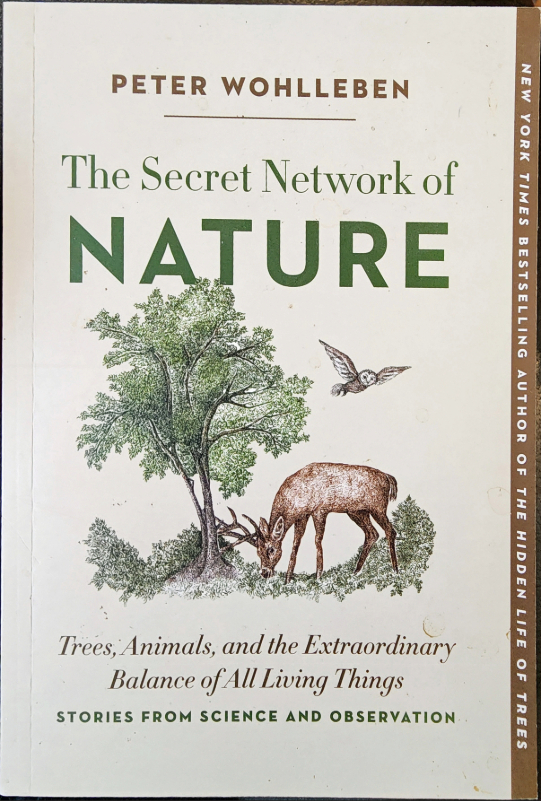
Wohlleben, Peter. (2019). The Secret Network of Nature: Trees, Animals, and the Extraordinary Balance of All Living Things, Stories from Science and Observation. Vancouver, BC, Canada: Greystone Books, David Suzuki Institute.
- Introduction 1–3
- 1. Of Wolves, Bears, and Fish, 5–21
- 2. Salmon in the Trees, 22–34
- 3. Creatures in Your Coffee, 35–52
- 4. Why Deer Taste Bad to Trees, 53–65
- 5. Ants—Secret Sovereigns, 66–76
- 6. Is the Bark Beetle All Bad? 77–86
- 7. The Funeral Feast, 87–95
- 8. Bring Up the Lights! 96–111
- 9. Sabotaging the Production of Iberian Ham, 112–126
- 10. How Earthworms Control Wild Boar, 127–140
- 11. Fairy Tales, Myths, and Species Diversity, 141–156
- 12. What’s Climate Got to Do with lt? 157–175
- 13. It Doesn’t Get Any Hotter Than This, 176–187
- 14. Our Role in Nature, 188–208
- 15. The Stranger in Our Genes, 209–218
- 16. The Old Clock, 219–232
- Epilogue, 233–236
- [Back matter]
- Acknowledgments 237–238
- Notes 239–249
- Index 250–259
- David Suzuki Institute, http://www.davidsuzukiinstitute.org
Introduction, 1–3
We organize organisms into a taxonomy of descending order, such as Order Carnivora → suborder Canifornia → family Canidae → subfamily Caninae → genus Canis species lupus (Canis lupus, wolf). Wolves are apex predators, which regulate the number of herbivores in their territory, so that deer and other plant eaters don’t multiply so rapidly that they destroy the plants in their ecosystem. If we remove wolves from an ecosystem, things go awry.
Likewise, adding a non-native species of organisms to an ecosystem can upset the balance. “The more light you shed on relationships [among] species, the more fascinating facts you reveal. . . . everything [in nature] is . . . connected by a network so intricate that we will probably never grasp it in its entirety. . . . plants and animals will always amaze us” (p. 3).
1. Of Wolves, Bears, and Fish, 5–21
As an example of how things can go awry, when wolves were eradicated from a complex North American ecosystem, there was nothing to stop elks from running amok, reproducing abundantly. Elks then freely consumed saplings along riverbanks, stripping bare the banks, which then eroded into the river, filling it with soil. Because the river and the saplings and trees weren’t available for the beavers, beavers had nothing to eat or to use for building dams. When the beavers disappeared, so did the habitats they created, affecting the fish, birds, and other wildlife that depended on the beaver-built habitats. Over time, the river pulled more soil from the banks, devastating the ecosystem.
When wolves were reintroduced, they caused a trophic cascade, rebuilding the ecosystem. The wolves readily caught and ate many of the abundant elks running rampant through the territory. Over time, the remaining elks were harder to find and to catch. Meanwhile, saplings were able to take root and grow, starting with rapid-growing willows and poplars. Gradually, the ecosystem rejuvenated.
Thousands of miles away, in Europe, a similar story has unfolded, though with different herbivores (deer species and wild boars). Their story has been made worse because of large-scale logging. There, rather than clear-cutting, the loggers chop down the oldest trees, opening the forests to so much light that grasses and non-woody plants can grow, inhibiting the regrowth of new trees. These oldest trees are also the ones to offer extra nutrients to growing trees or to weakened trees under attack from pests or diseases. The removal of these trees also removes the forest’s information hubs, which had conveyed important communications among trees. Add to that the unchecked spread of herbivores, “in most places, forest regeneration no longer happens” (p. 11).
When wolves have finally been returned to the forests, they feast on wild herbivores (deer, boar, as well as hares and other small mammals) — as confirmed by feces samples. Wolves target older animals, not youngsters. Surprisingly, the wolves don’t like to eat neighboring domesticated sheep or goats, which make up 00.75% of the wolf diet. What drastic steps must ranchers and herders be taking? A simple electricized fence deters the wolves. Most ranchers and herders already use such fences to keep their livestock in more than to keep wolves out. Are the wolves a danger to humans? Despite many a European fairytale, “wolves just don’t think of us as prey” (p. 16). To Wohlleben, “the wolf restores the forest’s wild soul” (p. 15).
2. Salmon in the Trees, 22–34
For most of their lives, salmon live at sea, storing up fats and nutrients, while growing large. After they reach maturity, they return to their natal rivers, carrying their nutrients upstream, where they’ll mate, spawn, and die. Along the route, bears line the streams, catching and eating as many salmon as they can, to fatten up for their winter hibernation. Pretty soon, the bears have started to fill up, so they discard fish parts and even entire fishes if the fish aren’t big and fat enough. Raptors, foxes, and other carnivores grab the discards and enjoy a secondary feast. Insects and other consumers savor more of the leftover nutrients. The last bits are consumed by microbes and others who convert the fish remainders into nutrient-rich soil.
In salmon country, researchers found that up to 70% of the nitrogen in the plants growing alongside rivers and streams comes from these life-giving salmon. Some trees show even greater proportions of their nitrogen as coming from salmon. Researchers take narrow horizontal core samples from trees to make these determinations. Core samples can serve as a recording of the tree’s experiences, over time. Analysis of those samples can reveal how many salmon swam in a given area during the tree’s lifetime.
How do the nutrients get from the salmon to the trees? For one thing, the carnivores leave nutrient-rich feces on the ground, which then seep into the soil. In the soil, fungi take up the nutrients and transmit the nutrients to the tree’s roots, both from the outside and by permeating the tree’s roots.
The nutrients don’t just stay in the roots or even in the trees. The trees transfer the nutrients into their leaves (or needles), which drop onto the ground, where various organisms break them down and return the nutrients to the soil, making them available to that tree or its neighbors. When an ancient tree dies, its trunk and branches are also consumed and their nutrients are returned to the forest that gave it life.
Some of the nutrients in the soil are also washed back to the sea, where they’ll eventually enrich salmon and other sea life. Typically, the first consumers of these nutrients are plankton, “the first and most important link in the food chain” (p. 25). Prudent fishers have planted trees along coastlines and river banks, realizing that the trees’ leaves will feed the plankton necessary for the survival of fish. “Increased tree cover led to increased numbers of fish and oysters” available for harvest (p. 25).
Another beneficiary of salmon and trees: insects. In some areas, up to 50% of the nitrogen found in insects originated in fish. And the birds and other animals that feast on insects also indirectly benefit from the salmon’s nutrients. In addition, those scavengers who ate the salmon may be prey to other forest animals.
For decades, humans polluted rivers and streams, built dams and other obstructions, cut down ancient trees, and otherwise threatened the salmon and their ecosystem. Only in recent decades have humans begun to realize their devastating impact and tried to remediate some of the damage we have done. We have been cleaning up waterways, building fish “ladders” for bypassing obstacles on rivers, and replenishing salmon stocks. More must be done, however, if we are to restore at least part of this vital ecosystem. In Europe, this problem is particularly challenging, as bears, cormorants, and other fish-eating species have been nearly wiped out. The bears are gone, but cormorants are beginning to return to European waterways.
Nitrogen is important to humans, too. It makes up 78% of the air we breathe, with oxygen making up another 21%. Though we can’t respire the nitrogen we breathe, we do consume it in the foods we eat, as protein, amino acids, and other substances. Your body holds about 4–5 pounds of nitrogen. Plants can’t directly process nitrogen either; plants rely on fungi, bacteria, or other organisms to make nitrogen accessible.
Wohlleben, an experienced forester, points out that undisturbed ancient forests grow slowly, with young trees spending as much as 200 years in the shade of their mother trees. During this time, their wood grows dense and they build their resistance to weather and other assaults. In comparison, “managed forests” spur trees to grow quickly, using artificial nitrogen supplements. These rapidly growing trees are much less resistant to fungal attacks or other assaults and will probably never live to be ancient trees. If we can refrain from trying to “manage” forests and instead preserve our existing ancient forests, we will be restoring these ecosystems to a natural balance.
3. Creatures in Your Coffee, 35–52
All plants need nutrients — especially phosphorus and nitrogen — to grow. All animals rely on plants to survive; even carnivores do, as they depend on herbivores, who thrive from eating plants.
When humans started settlements, they cut down forests, both to use the lumber and to clear the land. At first, the land was laden with rich humus from the trees that had covered the land, so the land could readily grow crops or feed livestock. Livestock manure could replenish some of the nutrients. As more livestock were consumed, however, less manure was available. Over time, the nutrients were depleted, and settlers would have to move to new cleared land.
Eventually, synthetic fertilizers were developed to compensate for the depleted nutrients. The liquid fertilizer that wasn’t absorbed by the crops seeped into the groundwater. These liquids polluted the groundwater not only directly beneath the crops but also wherever it spread, including where neighboring plants and wildlife were absorbing it. The contamination of groundwater was compounded by soil erosion wherever trees and other deeply rooted plants were no longer holding the soil.
Trees not only hold the soil, but they also slow the intensity of rainstorms. In a heavy downpour, the tree canopy catches much of the water in the leaves, which slowly drip the water down to the ground. The leaves reduce the intensity of the downpour and allow the soil to absorb the water more slowly. The accumulation of leafy debris and other plant matter also make the soil more absorbent, so an ancient forest “acts like an enormous sponge that absorbs and stores large quantities of water” (p. 39).
When trees are stripped from the land, heavy rainfall has nothing to slow it down from ripping through the soil; grasses offer little resistance to the erosive force of the water, and crops offer even less resistance. Further, many crops — such as corn and potatoes — are grown only part of the year, so for much of the year, the ground isn’t covered at all. Water pummels the ground and floods across the surface, taking the soil as it floods away. It can create grooves and troughs as it moves through.
Water runs downhill . . . . Mountain and hillside streams and rivers flow downhill, through coastal cities, to the sea. Nutrients from the plants along the hillsides and mountainsides also flow downstream. Trees can slow down the water’s erosion. If we allow more forests and trees to grow naturally, we can slow the erosion. Over time, forests can even build up the soil to compensate for any erosion.
Surprisingly, though groundwater never receives a single ray of sunlight, it is actually quite warm — “pleasantly warm or extremely hot” (p. 45). Groundwater has no oxygen and little to eat, but it still hosts bacteria, minuscule crustaceans (e.g., water lice), and other organisms. Groundwater relies on rain seeping down to replenish it, but that replenishment can be better absorbed if it is filtered through forests.
Forests can absorb an abundance of rainwater and let it seep into the groundwater. In contrast, grasslands and croplands can’t absorb much rainwater, so it floods across the land’s surface, eroding soil as it flows away from where it could replenish the groundwater. Forests also stay cooler and retain more moisture than grasslands or croplands. The air over croplands heats up and dries out quickly.
The worst assault on groundwater, however, is “fracking,” which forcefully pumps polluted water deep into the ground, under tremendous pressure, in order to fracture rocks. The sand and chemical pollutants hold open the fractured rocks, to allow petroleum companies to extract oil and gas from the rocks up to the surface of the ground.
We can do two things to protect our precious, vital groundwater:
- Stop fracking.
- Reforest our lands.
4. Why Deer Taste Bad to Trees, 53–65
Many plants that are within reach of herbivores have developed defenses against their assaults: thorns, barbs, thick hard bark, toxins or other foul-tasting chemicals, and so on. In a dense forest, little light penetrates to the forest floor — only 3% of sunlight can get through, according to Wohlleben. Few small plants get enough light to grow there; any plants that do take root will have too little sunlight to photosynthesize much sugar, so they don’t taste delicious.
Trees absorb all of the wavelengths of light other than green, which they reflect. Plant chlorophyll can’t use green light to photosynthesize, so the reflected green light may be pleasant for any humans strolling through the forest, but it’s useless to other plants. Mother trees nourish their saplings, growing in their shade. By feeding these saplings through their root systems, the mother trees keep their saplings and young trees alive until the youngsters can grow into the sunlight.
Because dense forests and trees don’t offer scrumptious meals, most herbivores seek open meadows, forest edges, and other sunlit places where diverse low plants grow abundantly. When there are relatively few of these open areas, the ecosystem can maintain a small number of herbivores. If forests are clear-cut, the number and size of these open areas increase, and the herbivores ravage the plants. Per Wohlleben, “clear-cuts are the most brutal form of harvesting timber, yet they are a windfall for browsers” (p. 58).
Efforts to regenerate forests with transplanted young trees often fail. In the tree nurseries, staffers often “trim” the roots, to make it easy to transport the young trees, as well as to plant the trees in smaller holes. Unfortunately, these damaged trees can’t fully replace these roots, and they can be easily toppled by heavy winds or storms.
It’s cheaper for loggers to do clear-cuts — felling an entire stand of trees at once — than to do thinning cuts, which fell rotating harvests of individual trees from within the large stand of trees. The thin-cut cultivated forests may look more appealing than clear-cut forests, but they are almost as bad ecologically, when compared with ancient, untouched forests. In a cultivated forest, trees make up just 50% of the forest biomass, with the rest comprising grasses, bushes, and other non-woody plants. These forests are hotter and dryer than natural forests, and they prompt population explosions among herbivores. These abundant herbivores also target tree saplings, giving the youngsters little chance to grow. The plants that remain have various defenses.
Some trees (e.g., beeches, maples) also defend against the herbivores, producing foul-tasting toxins, but these defenses are inadequate in the face of too many herbivores. To truly protect forests, we must allow forests to grow old and dense, with little light permeating the canopy to reach the forest floor.
5. Ants—Secret Sovereigns, 66–76
There are about 10,000 species of ants, and “their combined weight is equivalent to the weight of all the people on Earth” (p. 67). Many ants are gardeners, helping to distribute plants’ seeds more widely than the plant could manage without them.
Like honeybees, wood ants are social insects, forming elaborate colonies. Unlike honeybees, these ant colonies have multiple queens, and they tolerate the presence of other colonies in the area, without disputes. The ants also like bark beetle adults and larvae — to feed to their own larvae! Red wood ants are so helpful in eliminating the pest species that foresters protect them — much to the delight of birds such as woodpeckers and grouses, who enjoy eating the ants.
Unfortunately, red wood ants aren’t content to eat just bark beetles; they also lap up the sugary feces of aphids, called honeydew. How do aphids produce this sugary excretion? They tap into where the tree sap flows and release enormous quantities of the sap. The gluttonous aphids constantly drink and just as constantly excrete the honeydew. Each season, “a single ant colony digests about 50 gallons of these sugary droplets,” making up about 2/3 of the ants’ diet.
How do the ants return the favor? By licking up the sticky sugars, they help the aphid keep its rear end from clogging with honeydew. The ants also protect the aphids from other predators (e.g., ladybugs), to ensure they continue to enjoy the honeydew. So, the would-be beneficial red wood ants are also aiding the harmful aphids to continue assaulting trees. To make matters worse, when the aphids open up the trees to get access to the sap, other pathogens can enter. The tree becomes vulnerable to fungi and other infectious organisms. On the other hand, the red wood ants seem to deter leaf-eating insects, as well as bark beetles.
Though the ecological impact of the red wood ants is complicated, they may still be beneficial to trees, on balance. Just not as straightforwardly so as was thought.
Wohlleben suggests that the complexity of the forest ecosystem profits from a greater diversity of trees, rather than a monoculture of cultivated trees, which can’t adequately defend against attacks by particular insects and pathogens.
6. Is the Bark Beetle All Bad? 77–86
In a healthy, thriving forest, bark beetles don’t pose a major threat to the well-being of the trees. For instance, when healthy trees sense the boring of bark beetles, the trees release thick globs of pitch, which drowns the boring beetles. When trees are suffering from drought or are otherwise stressed, however, the trees can’t afford to expend limited resources on producing pitch. The stressed trees also broadcast volatile compounds, announcing their distress. These aromatic alerts signal nearby trees to mount their own defenses against stressors, to conserve water and other nutrients, and so on.
Bark beetles can sense these scents, too; the beetles know that stressed trees won’t be able to defend themselves against beetles as well as healthy trees can. First, a male beetle bores a small hole, to make sure that the tree isn’t “pitching” him out. If that goes well, the beetle continues to dig a tunnel running parallel to the bark’s fibers. Little by little, it keeps boring, stopping occasionally to expel frass (discarded feces and sawdust debris) as it digs. Once the beetle has made some progress, it sends its own scent signal, inviting other beetles to the feast. Why invite its pals to join it? Doing so ensures that the tree won’t be able to resist an assault by so many beetles. Once the party of beetles has reached the tree’s limits for feeding them, the beetles send another signal, telling other beetles not to bother with this tree; it has already reached full feeding capacity.
The male bark beetle hasn’t finished, though. He digs out a “nuptial chamber” and sends out a different scent signal to invite a female — or two or three — to join him. Each female mates repeatedly with the male while digging her own tunnel off of the main chamber, leading to her own little alcove, where she’ll lay 30–60 eggs. The male helps, too, removing the frass discarded from each female’s digging. The adults leave the eggs to hatch, knowing that the hatched larvae can literally eat their way out of the chamber, making larger tunnels as their girth expands. They fly off about 10 weeks after mom laid the eggs.
Other insects “eavesdrop” on the bark beetle’s signal, and they, too, feast on the now-dying tree. Adult insects will lay their larvae on the tree, too. One such beetle brings along some fungal spores, which spread throughout the beetle’s tunnels. Once these beetle larvae hatch, they eat the fungi lining the tunnel walls.
A different beetle brings along a fungus that attacks the trees, completely shutting down any of the tree’s defenses and leaving it as easy prey for this beetle and its larvae. This species of beetle has been destroying about 55% of commercial pines in British Columbia, also spreading to areas with older trees. It’s highly unusual for a pest to wipe out its host, but it’s suspected that the climate crisis has changed the ecosystem. Higher winter temperatures allow more of the beetle’s eggs and larvae to survive, and overall warmer temperatures weaken the trees to their attacks. With warmer temperatures, these beetles can expand into higher elevations, where the trees haven’t developed adequate defenses against them.
Wohlleben believes that an even more important factor is the increasing destruction of diverse forests and the cultivation of monoculture evergreen forests. Monoculture conifer forests foster the expansion of beetle populations and of weaker trees. In addition, the suppression of rare lightning-caused fires has allowed beetle populations to grow. When asked whether bark beetles are a pest, Wohlleben answers, “Ultimately, we, not the beetles, are to blame for upsetting the carefully calibrated balance of nature” (p. 85).
Wohlleben goes on to suggest a solution: Replace monoculture cultivated forests with native deciduous trees, allowed to grow to create a richly diverse ecosystem. Beetles eat deciduous trees, too, but most native trees will be healthy enough to resist their attacks. The few weak trees that succumb to beetle attacks will be available for other species, including detrivores, organisms that thrive on detritis, waste products and the remains of dead species.
7. The Funeral Feast, 87–95
Just as dead trees can offer a home and feasts to many organisms, so can dead animals — especially the carcasses of large mammals. A sick, weak, or injured animal will leave its family, to avoid attracting predators to its family, as well as to hide in a secluded location. Large predators can smell freshly dead flesh from far off. Bears, then wolves and other large carnivores will make quick work of the big chunks of meat, usually within a few days. Vultures and ravens will join in the feast once the biggest carnivores have partaken. Wolves and ravens don’t challenge the bears, and ravens will alert wolves when a bear is approaching. In turn, wolves will tolerate ravens joining them at the feast. Young wolf pups can even be seen playing with ravens, learning not to view them as prey.
Bald Eagles and other large raptors aren’t nearly so cooperative, and squabbles can erupt, which shred the carcass. If there’s still too much meat to be eaten immediately, scavengers will cart off and bury some, to enjoy their hidden stash later. Whereas some scavengers feast only on fresh flesh, many others prefer putrefied flesh, at various stages of putrefaction. The remaining bones and other bits are eaten by mice and other small vertebrates. Insects soon join in, continuing to gnaw on the remainders. The remains are slowly devoured by even smaller organisms until the carcass has enriched the soil as humus. Sometimes, the abundance of supergreen plant life reveals the former location of a carcass.
On a smaller scale, smaller vertebrates are decomposed in similar fashion, with insects playing a larger role. Blowflies play a key role, but other insects enjoy the banquet, as well. Wohlleben urges us not to interfere with this natural process. If animal carcasses are in the road, move them aside, but otherwise, leave them alone, allowing these animals to continue to nourish the ecosystem that gave birth to them.
8. Bring Up the Lights! 96–111
Trees grow tall to reach upward to the sunlight, so they can photosynthesize water and air into the sugars on which all organisms depend. Sunlight provides huge amounts of energy. According to Wohlleben, “a mature beech contains up to 14 tons of wood, which, if burned, would release about 42 million kilocalories of energy” (p. 96); “a mature beech stores enough solar energy to feed a person for forty years” (p. 97). Of course, it takes decades for the beech to produce this much wood.
Fun fact: In a mature forest, tree crowns block up to 97% of the sunlight.
Many flowering plants offer not only an array of colors but also a variety of scents, with especially sweet smells indicating lots of nectar, enticing pollinators to visit. Most flowering plants — and honeybees and butterflies — take the night off.
Instead, some flowers and some pollinators take the night shift, avoiding the competition from the abundant flowers and insects of the day shift. Evening primroses, moonflowers, and others welcome moths and other nocturnal visitors to pollinate them. Well-camouflaged moths avoid showy colors while they’re sleeping during the day, so they can avoid being eaten by diurnal insectivorous birds. At night, the moths are safe from birds, but not from moth-eating bats, which use echolocation, not sight, to spot their prey. Furry-looking moth bodies reflect sound less loudly and distinctly, making it harder for bats to spot the moths.
One species of moth can even detect the high-frequency echolocation calls of bats. Greater wax moths can detect sounds at about 300 kHz, “the highest hearing score in the animal kingdom” (p. 101). This species even uses high-frequency calls for courtship. A few other species can use decoy calls, to confuse bats, effectively disappearing.
Moths can’t outfly or outmaneuver bats, so they simply drop to the ground when they detect bats nearby. Bats can’t detect the moths once they’re on the ground, so they turn to their other favorite food item: mosquitoes. “Bats catch up to half their own body weight in insects a night” (p. 103).
At night, moths orient themselves to moonlight, so that the moon is always in a given location in relation to them, such as always on their left side as they fly. When moths encounter artificial light, however, they can’t orient themselves. As they fly past the light, it doesn’t stay in the correct orientation, so they have to keep flying around the light, eventually being unable to escape from it. The moths die of exhaustion or by falling prey to clever bats who know to patrol near artificial lights — street lights, house lights, and so on.
Wohlleben also discusses the marvels of various species of fireflies (aka glowworms), which can convert 95% of energy into light. Whereas fireflies use light to attract mates, anglerfish use light to attract prey, dangling a bioluminescent lure in front of their toothy mouths.
Newly hatched sea turtles rely on light to guide them from their natal beach sand to the moonlit ocean where they’ll spend the next several years. They must get to sea as quickly as possile, to avoid being caught by hungry predators. Unfortunately, artificial lights from human settlements can disorient these youngsters, so they never reach the sea, either dying of exhaustion or becoming gull food.
Artificial light affects more animals than just moths or turtles. It affects humans, disrupting our natural circadian rhythms, distorting our natural sleep/wake cycles. Wohlleben urges us to close our blinds, draw our curtains, and turn off exterior lights, perhaps using motion-detector lights, as needed. We should urge city planners to use street lights only in places where they’re needed, and to focus the lights downward, as spotlights, not as diffuse lights radiating in all directions.
9. Sabotaging the Production of Iberian Ham, 112–126
“Bird migration is a worldwide phenomenon undertaken by about 50 billion birds” (pp. 112–113). Though these migrations mostly occur in the spring and the fall, some birds are migrating every month of the year, following the availability of food resources and avoiding challenging weather. For instance, in harshly cold climates, many insects hibernate, becoming unavailable to insectivorous birds; fruits, too, are available only seasonally in many locations.
Radio trackers have revealed that many birds have been changing their migration routes and destinations. For instance, cranes are especially fond of acorns, and they have recently shifted their migration routes to Spain and Portugal, where oak trees abound. Iberian pigs adore acorns, too, and farmers have traditionally turned their pigs loose in Iberian oak forests, to fatten up. Unfortunately, many land holders have shifted from oak forests to plantations of eucalyptus and conifers, which grow much more quickly than oaks, to produce timber. Natural oak forests rarely burn, but these resin-rich trees readily burn, creating even further problems.
Instead of identifying the problem as being the replacement of natural oak forests with timber plantations, the pig farmers blame the cranes for eating too many acorns, so their pigs have less to eat. Wohlleben suggests that an obvious solution is to replace the timber plantations with oaks. Though oak forests grow more slowly, they yield better wood, and they offer acorns, which pigs and cranes can both enjoy. Would cranes increase in numbers as a result? They wouldn’t, because the limited availability of wetlands will keep their numbers in check.
Wohlleben also highlights the adaptability of birds. Like us, they’re warm-blooded, and they need to maintain an even warmer body temperature than we do — 100–108º F. Luckily, they have feather coats, which they can fluff out to trap warm air next to their skin. Many birds can also minimize their surface area relative to body size by making their bodies nearly spherical. Too hot? They can cool themselves by pumping warm blood into their bare legs, to cool dramatically and then return to their bodies. Even so, very small birds still have much more surface area in relation to volume, so they need to burn a lot of calories to keep warm in cool weather. The need for food often motivates these little birds to migrate when food sources get too low to maintain their high energy needs. (For more on thermoregulation, please see my blog, Feeling the Heat? – Bird Brain)
Humans have been influencing ecosystems and evolution since our origins. More recently, we have been influencing birds by feeding them. One bird species has been documented to have undergone evolutionary changes due to being fed by humans. Formerly, blackcap warblers migrated to and from the United Kingdom, where humans are renowned for their love of birds and their fond treatment of them. Over generations, the bill of this species has become narrower and longer, adapting to the food they’re given in bird feeders. They no longer migrate from the U.K., so their wings have rounded and shortened, as they no longer need long wings for long-distance migrations. Others of this species continue to migrate, have longer wings and a shorter wider bill. In essence, an entirely new species has evolved.
Other changes have evolved due to domestication. Few genetically pure wild apple or pear trees exist, and their domesticated cousins appear quite different. Similarly, modern cattle have entirely replaced wild aurochs.
Wohlleben and his family have developed an intimate, semi-domesticated relationship with a wild crow, to whom they offer food treats, and from whom they occasionally receive gifts — fruits, stones, and so on. He noted other anecdotes of relationships between individual people and individual crows.
Though Wohlleben has mixed feelings about captive animals in zoos, he ends up endorsing zoos, as long as the animals are being kept in species-appropriate environments. Why does he endorse zoos? “People who experience animals up close feel more strongly connected to them and are more prepared to do something to protect them” (p. 125).
If you decide you’d like to help the birds in your neighborhood or yard, don’t forget to provide water, as well as food. In fact, ice-free water is probably more important than food. On the other hand, beware of disrupting the ecosystem by overfeeding birds who may imperil native birds.
10. How Earthworms Control Wild Boar, 127–140
Many insects have developed strategies for surviving freezing winters. They empty their intestinal tracts to get rid of its water content, and they produce their own “antifreeze,” using sugars. If a blanket of snow covers the ground, that adds a layer of insulation, too. Many insects avoid breeding in the fall, so their larvae won’t have to risk undergoing winter freezes, which would probably kill them.
Warm-blooded animals (“endotherms”), such as birds and small mammals, need to eat a lot to heat their bodies, so some rely on food caches accumulated before the onset of winter. Some endotherms also spend a lot of time sleeping, often while lowering their body temperature, so they don’t waste calories on activities.
Wohlleben urges us not to feed deer or other wild animals during winter. By feeding them, we enlarge the animal population that survives until spring. This larger population produces more babies, with a denser population. With populations more dense, deer have closer contact with other deer, facilitating the transfer of parasites and other infections. As the parasites spread widely, the deer may have full bellies, but the food feeds the parasites, while the deer starve to death. If, instead, we let nature take its course, healthy deer and other wild animals will find enough food, but the sick and elderly animals won’t be artificially supported, and deer populations will be maintained at a level supported by the ecosystem.
Unfortunately, in many locations, hunters feed deer, to increase the number of deer available for them to kill. Deer aren’t the only losers when this happens. Trees lose, too. When the population of herbivores increases too much, the trees’ defenses are inadequate to avoid being grievously injured.
These harmful effects extend to the next generation, as well. Parent trees regenerate the forest by producing seeds such as acorns and beechnuts. Herbivores hungrily consume these calorie-rich seeds, full of fats, carbohydrates, and other nutrients. Many trees will limit the populations of herbivores through controlling their production of these seeds. In a given area, the trees will take occasional breaks from producing abundantly. The trees synchronize their cycles to create occasional lean years about every three to five years. During the lean years, populations of boar, deer, birds, and insects thin out. If these animals are artificially fed, their numbers aren’t checked, and they can easily overpopulate the forest. If allowed to overpopulate, they will consume all of the seeds; if they do so year after year, there will be no new trees to replace old or dying trees.
Ideally, hunters could be persuaded to stop feeding their herbivore prey. Perhaps more realistically, Wohlleben has hope that the return of wolves may help to limit the numbers of herbivores. In addition, he holds hope that another wild creature may control the overpopulation of wild boar: earthworms? Huh? It turns out that wild boars like to eat earthworms, as well as seeds and saplings. Earthworms are hosts to lungworm larvae, which quietly wait inside the earthworms until they find their way into a more suitable host: mammals. The lungworm larvae enter the boar’s bloodstream, get into its respiratory system, and weaken the boar. The weakened boars are susceptible to other infections and die, but only after excreting the larvae. Earthworms consume the excreted larvae, and the cycle continues. Boar populations decline, fewer larvae are excreted, fewer earthworms consume the larvae, and fewer boars are affected. Tiny larvae and their small earthworm hosts help the ecosystem stabilize.
Wohlleben discusses a similar situation with viral infections. When wild boar populations are dense, they’re likely to communicate viral infections to one another. As the population thins, they’re less likely to spread the infection, and the population stabilizes.
11. Fairy Tales, Myths, and Species Diversity, 141–156
Though trees — like most other organisms — can’t predict the weather, they can detect a change in seasons, noticing shorter days and cooler temperatures. When the time seems right, deciduous trees drop their leaves before the first snowfall. It’s important to take advantage of the leaves’ photosynthesizing as long as possible, but it’s also crucial to drop the leaves before snow falls on them, weighing down the branches, perhaps even breaking the branches. In the autumn, after dropping their leaves, these trees pull their water and other nutrients into their branches, trunk, and roots as the leaves cover the ground. In the spring, the trees shift water from their roots, trunk, and branches outward, to produce new water- and nutrient-filled leaves.
When nuts and other foods are widely available, squirrels and other small mammals store as much food as they can, in anticipation of lean times ahead.
Earth’s various ecosystems include 1.8 million species of organisms, with new species being discovered — just in the Amazon — every 1.9 days! And those are just the species that have been identified and described. Quite a complex interweaving of organisms across Earth’s vast expanse.
According to Wohlleben, most commercial forests are “thinned” instead of clear-cut. These “thinned” forests are neither cool nor damp, so they’re poor environments for trees. Direct sunlight can reach the ground around each remaining tree, heating and drying the soil. The dried, heated soil can’t sustain the networks of roots and fungi that support the trees. That is, thinned forests disconnect much of the “wood wide web” of the forests.
Trees can communicate with one another by releasing volatile aromatic compounds, such as when alerting trees to danger. These volatile compounds waft downwind, communicating with the trees downwind. Those trees can send the information further downwind, but the volatiles can’t reach back upwind. So an additional means of communication is needed. That’s where the ground network comes in.
In natural forests, fungi spread their filaments through tree roots and from tree to tree, creating a supportive network for all the trees to thrive. In a healthy ecosystem, the fungi can live as long as the trees. (The record-holder is a 2,400-year-old Armillaria ostoyae that covers 3.5 square miles.) Fungi can’t photosynthesize, so they rely on plants to provide them with food. In exchange, fungi help tree roots to absorb water and other key nutrients (e.g., phosphorus). When the network is damaged, such as by foraging wild boars, fungi repair it with their extensive parallel filaments.
Various species of woodpeckers rely on having a mixture of trees into which they can build nest cavities. Some prefer old trees, others prefer young ones. Other birds rely on finding abandoned woodpecker nests to make their own homes for youngsters: doves, jackdaws, and others, including owls. Eventually, the holes enlarge enough to offer homes to mice and other small mammals. Fungi and insect larvae make homes there, too A wide variety of forest organisms rely on having a natural forest of diverse species, ages, and even health status.
Fun fact: “A woodpecker’s brain sits firmly in its skull so that it doesn’t bounce back and forth while it’s using its beak to deal staccato blows to a tree. As an added precaution, there’s a special springy support behind its beak that cushions the blows before they travel to the skull” (pp. 153–154).
Rather than sparing a few trees here and there in commercial forests, large areas of diverse species should be set aside indefinitely, to stand as natural forest ecosystems for the diverse organisms who live there.
12. What’s Climate Got to Do with lt? 157–175
Deciduous forests reflect light and heat, whereas conifers and other evergreens absorb light and heat. Deciduous forests also transpire more water than evergreens do, so the air in evergreen forests is drier than the air in a deciduous forest. Evergreens typically grow where the days are shorter, nights are longer, and winter is longer and harsher; their time to photosynthesize is shorter than it would be in warmer climates. Evergreens hold onto their leaves (needles) through the winter, so they’re ready to spring into photosynthesizing sugar as soon as the days are long enough to do so.
Once photosynthesis is well under way, and the air warms up, evergreens release terpenes (those delicious-smelling aromatic compounds). The terpene particles give water molecules something to hang onto, so they can clump together to make mist and rain. The misty air and rain slow the evaporation of water from the ground, and they cool the air.
Evergreen climate control: At the first signs of spring, the evergreen’s dark crown absorbs light and kicks off photosynthesis, to provide energy for growth and other uses. As spring moves toward summer, and the air warms more, the evergreen kicks off its mist-making, rain-making process, to cool the air.
Oceans have climate controls, too: In winter, ocean temperatures are relatively warm and heat things up; in summer, ocean temperatures are relatively cool and cool things down. That’s why coastal temperatures are usually milder than inland temperatures, where it’s hotter in summer and colder in winter.
Deciduous trees don’t get the head start that evergreens do. Every spring, they must produce every new leaf in order to start photosynthesizing. On the other hand, they don’t have leaves that transpire in winter, so they don’t lose any water that way. In fact, in temperatures below 23º F., trees pull their water farther into the trunk, actually shrinking in diameter, only expanding again when the temperatures warm. Deciduous trees can also disperse their seeds more widely than evergreens can disperse their cones. After a forest fire, deciduous tree seeds are usually the first to arrive.
For all trees, temperature extremes can be challenging. If a tree has been severely wounded, freezing temperatures can break the tree. Heat can be tolerated for a short time, as the trees will moisten the air to maintain a cooler temperature. For a short time, they can draw on moisture from the ground, too. If the heat persists, though, the trees may not have enough reserve moisture to continue. In defense, they may prematurely drop their leaves, to avoid losing moisture, though it costs them their ability to photosynthesize. Any other assaults — pests, herbivores, forestry machinery — may deplete them of the energy stores they need to get through the winter and to produce leaves the following spring.
Earth has undergone many rapid changes, and “every time, many forms of life died out abruptly” (p. 168). When climatic changes are slow, trees can gradually move from one area to another, through seed dispersal and growth of new trees. “The average rate of advance is a quarter mile a year” (p. 168). Genetic changes are even slower, taking generations to adapt to new environments. Trees, with their long life spans, are especially slow to adapt to change. Rapid climatic changes don’t allow trees to adapt or to find more suitable locations and elevations for survival. The speed of climatic change is occurring faster toward the poles, compared with the tropics.
Even when seeds can be started in more suitable locations, it’s tough to be a seed. Until it can start photosynthesizing, it must contain all the energy it needs. It will use some energy to send down a root to search for water and nutrients, as well as some more energy to send up a sprout to form a leaf, to photosynthesize. Until that new leaf starts photosynthesizing, it won’t have any more energy. If it lands where it can’t find adequate nutrients or water, it can’t move to a better location. If it lands in shade, where it has no access to sunlight, it’s done. If it had landed near it’s mother tree, she could have nourished it through its roots until it got a start. In this new location, however, it’s on its own. One more challenge: It might be competing with other seeds and seedlings for sunlight, water, and nutrients.
At present, we just don’t know enough about how to facilitate adaptation to drastic climate changes. “We’d do better to concentrate our efforts on not allowing temperatures to rise too quickly” (p. 175).
13. It Doesn’t Get Any Hotter Than This, 176–187
Forests are tremendous storehouses of carbon, with some containing >300,000 tons/square mile. Evergreen forests are volatile, containing highly flammable materials. Healthy deciduous forests are pretty resistant to fires. “Most [deciduous] forests in their natural state are not acquainted with fire” (p. 178). These trees are fire resistant, but in a fiery inferno, they’re completely defenseless. Usually shaded by nearby trees, these trees are intolerant of intense sun or heat.
For humans, the discovery of fire — and of cooked food — enabled us to enlarge our brains; cooked food “contains more energy and is easier to chew and digest than raw food” (p. 179). With human settlements, forest fires became more likely. To make matters worse, when humans chopped down many of the trees, bushes and grasses replaced them. Bushes and grasses are more susceptible to drought and to heat, and they readily burn up in fires. Often, fire-resistant deciduous trees have been replaced with flammable evergreen and eucalyptus plantations.
Forests of Sequoia redwoods are mostly old trees. Old Sequoias don’t easily ignite and can tolerate rare fires, surviving the assault. In contrast, young Sequoias are easily severely damaged or even destroyed by fire. Ponderosa pines also have fire-resistant bark, but if fire reaches their canopy, their highly flammable needles explode into fire that spreads widely.
Fires also kill the natural decomposers who would be able to break down the damaged remains. The loss of decomposers to the ecosystem causes much greater damage than loss of the large mammals there.
Evergreens, in order to keep their leaves (needles) year round, pump them up with antifreeze. They also have narrower crowns than deciduous trees, to reduce their surface area and the risk of being blown over by wind and snowstorms. Less snow can accumulate on their narrower branches. They grow relatively slowly, to ensure that they can stand their ground as they grow.
Even evergreens, however, drop some needles, and they rely on decomposers — bacteria, fungi, insects — to transform those needles into humus, returning the nutrients to the soil. The decomposers also break down the other detritis and debris of the forest, with different decomposers preferring different remains. Some decomposers also specialize in decomposing dead decomposers! Decomposers transform forest nutrients much more efficiently than do fires, which destroy much more than they give.
14. Our Role in Nature, 188–208
Wohlleben marks the start of human interference with nature as when hunters and gatherers settled into communities and began farming. At that point, humans started to change living species and to transform the natural ecosystem into a landscape designed to meet the needs of humans. “The first irreversible disruptions of the environment became visible, for example, as a result of plowing” (p. 190). Plows so thoroughly disrupt the soil that the imprint of the plow can be seen tens of thousands of years later. Plowed soil drains poorly, it oxygenates poorly, and trees can’t penetrate it to grow deep roots. Instead, trees grow wide, shallow root systems, which make them easy to topple in the face of storms.
Humans removed existing native trees and replaced them with trees not native to their new locales. Worse still, forests were replaced with grasslands for large herbivores such as aurochs (ancestors of cattle) and wild horses. Herbivores prefer open grasslands, where they can see predators at a distance, and human hunters prefer being able to see the large herbivores when hunting. Though the humans didn’t hunt extensively, the megafauna couldn’t reproduce rapidly enough to outpace human hunters, and within a few hundred years, many species disappeared.
Trees can defend themselves against occasional herbivore assaults, producing toxic chemicals to deter the assaults, but these defenses can’t withstand large numbers of wild game animals. Trees are also under attack from dramatic climate changes. Many trees literally die of thirst or of overheating; or sometimes, they’re so weakened that insects polish them off. On the other hand, too much rain can lead to fungi growing on leaves, so the trees shed their leaves and have no means of photosynthesizing.
These problems are exacerbated in “managed” forests, where many trees are extracted. The remaining trees are more exposed to overheating and evaporation. Trees can’t support one another through their root and fungal networks because communication hubs have been knocked out.
In winter, trees store up water reserves in the ground, which they rely on during summer months. Climate change is limiting the rainfall in winter and is forcing trees to use up these limited reserves during hot summers.
Humans are also limiting trees’ migrations to more suitable climates, removing trees that might otherwise grow in meadows or croplands. Wohlleben recommends creating wildlife corridors for trees and ecosystems to migrate toward cooler climates. “We need areas of wild forests to be like . . . steppingstones . . . . If there were enough of them, wild species could travel freely through our culturally manipulated landscape from one preserve to the next” (p. 204).
Another solution: Use less wood, and use less energy. These steps would help halt climate change and lead to having more healthy, resilient ecosystems.
Wohlleben was impressed by the national parks of the United States, but he raised alarms about the increasing use of fracking in the U.S. “Water deep underground contains gas. . . . [To extract this gas,] pressurized liquid is used to fracture the ground up to 10,000 feet below the surface. This process produces numerous earthquakes. As collateral damage, many chemicals remain in the ground, their fine particles dispersing and infiltrating cracks in the layers that are being worked” (p. 207).
In many countries, agriculture and industry are producing pollutants that seep into the groundwater. Open-pit mines also empty into groundwater, irrevocably polluting it. Nonetheless, there are still large areas where the groundwater is still intact — if we protect it.
15. The Stranger in Our Genes, 209–218
Many undesirable genes have stayed with us for good reason — or at least they started out that way. Malaria has been deadly to humans for a long time; it still attacked 200 million people in 2015 alone, killing 440,000 of them. We’re now developing some pretty good strategies for fighting malaria, but people who carry a gene for sickle-cell anemia have a natural resistance to malaria infection. Being a carrier of the disease offers an evolutionary advantage in places where malaria is rampant. Having two copies of the gene, however, is devastating, causing excruciating pain and illness, usually resulting in death by age 30 years. People who have the disease suffer immensely, but people who carry one copy of the gene for the disease are more likely to survive a malaria infection, but they have a 50:50 chance of passing on the gene to their offspring.
Evolution has also made wisdom teeth and appendixes unnecessary. Our conquest over many infectious and chronic diseases is also changing who we are. Though we don’t really notice its slow progress, it’s continuing to shape us, and the human species — assuming it survives — will probably be very different in another 50,000 years. As we migrate and intermingle across continents, our genetics are changing, as well.
Wohlleben also discusses the evolution of Neanderthals, their intermingling with some Homo sapiens, and their demise. Evolution doesn’t necessarily favor larger brains or even greater intelligence, beyond what’s needed for adaptation. Wohlleben goes on to suggest that the process by which we were able to grow larger brains may have left us more vulnerable to cancer. Specifically, compared with humans, other apes have a more effective “cleanup mechanism” for getting rid of old and defective cells. The authors of a study suggest that this less effective cleanup mechanism “allows for larger brain growth and a higher rate of connections between cells” (p. 217). The price of a weaker cleanup mechanism may be greater vulnerability to cancer cells.
16. The Old Clock, 219–232
Under some circumstances, nature can heal itself, but only if it has enough time to do so. Wohlleben gives an example of a beech forest being reborn and the renewal of the ecosystem there, fostering plants, insects, birds, and other organisms. Unfortunately, politicians and business interests continue to displace forests in favor of meadows and croplands. This is in line with a long human history of preferring open grasslands over dense forests and wetlands. Well-meaning humans can disrupt nature’s healing, too, planting cultivated plants instead of natives. The cultivated plants lead to further intervention — fertilizers, insecticides, and so on.
Surprisingly, in the Amazon, much of the tropical soil is nutrient-poor, as millennia of rainstorms have washed many nutrients too deeply into the soil to be reached by plants. Luckily, armies of decomposers — insects, fungi, bacteria — constantly recycle the nutrients left by fallen leaves, dead organisms, and other detritis. These decomposers happily consume the detritis and excrete the minerals and other nutrients into the humus, making it accessible to other plant life. These decomposers rely on tree leaves to make the humus. If humans chop down trees or clear land with fire, they either starve the decomposers or burn them, leaving no one to replenish the humus.
Wohlleben points to an ancient success story. The original indigenous people of the Amazon carefully combined some agriculture and some silviculture (cultivation of trees), without clearing large areas of land. Their agriculture never composed more than 20% of the vegetation, and they planted palms, useful both as food and for building. They planted so carefully that 600 years after their settlements were abandoned, researchers couldn’t detect any deleterious effects on the environment. The forest had recovered so fully that researchers had assumed that the area was virgin forest. These inhabitants’ small agricultural plots were quickly overtaken by trees.
Wohlleben holds out hope that if we can restore our native forests, we can also remediate climate change, at least to some degree. “We need to leave things alone — on as large a scale as possible” (p. 232).
Epilogue, 233–236
Wohlleben often gives guided tours of his forest and talks about ecological forest management. He does his best “to state the facts so that people can understand them emotionally. . . . that way I can communicate one thing above all: the joy our fellow creatures and their secrets can bring us” (p. 236).
[Back matter]
- Acknowledgments, 237–238
- Notes, 239–249, numbered endnotes, by chapter (1–9 per chapter)
- Index, 250–259
- David Suzuki Institute, http://www.davidsuzukiinstitute.org, 260
Copyright © 2025, Shari Dorantes Hatch. All rights reserved.
I welcome your comments, suggestions for improvements, ideas for future blogs, and so on. I hope you have enjoyed reading.

 Bird Brain
Leave a comment