
Whether you’re picking up your first pair of knitting needles or you’ve knitted 20 exotically crafted sweaters, you’ll probably need to have one or two reference books handy, just in case you somehow can’t remember how to pick up a dropped stitch from 18 rows down or you want to do some snazzy shaping without leaving holes, or you want to try making a complicated lacy shawl.

Books and yarn both feel great to hold in your hands, and books can make knitting more fun!
Here are six of the books from my bookshelves, which I have found helpful. Four of the six are available from San Diego Public Library (and presumably many other public libraries); four are available for purchase, used (e.g., from Powell Books, the largest U.S. independent bookstore), and all are still available for sale in some form.
Also included here are two charts: one showing which books would be the most helpful for new knitters, and why; one showing which books offer specific additional important information (e.g., yarns, fabrics, how to fix mistakes!).
Helpful Books for Beginners
Most Comprehensive

Bliss, Debbie (2015). The Knitter’s Book of Knowledge: A Complete Guide to Essential Knitting Techniques. New York: Sterling Publishing. 318 pp., with photos, diagrams; index, 3 pp.
Availability: Not available at San Diego Public Library, but two of her other handbooks are; available to buy new, $29.95.


Figure 02 (a, b). Bliss covers all the bases for beginners, experienced, and adventurous knitters.
Contents
1. Yarns, needles, etc. 2. Hand positions, casting on, stitches, binding off. 3. Knitted fabrics, rows, basic techniques. 4. Shaping (increasing, etc.), 5. Knitting in the round (not flat), 6. Knitting texture (cables, twists, lace, etc.). 7. Color knitting. 8. Embellished knitting (embroidery, beads, trims, etc.). 9. Finishing (blocking, seams). 10. Designing (for fit, for appearance, etc.). 11. Troubleshooting
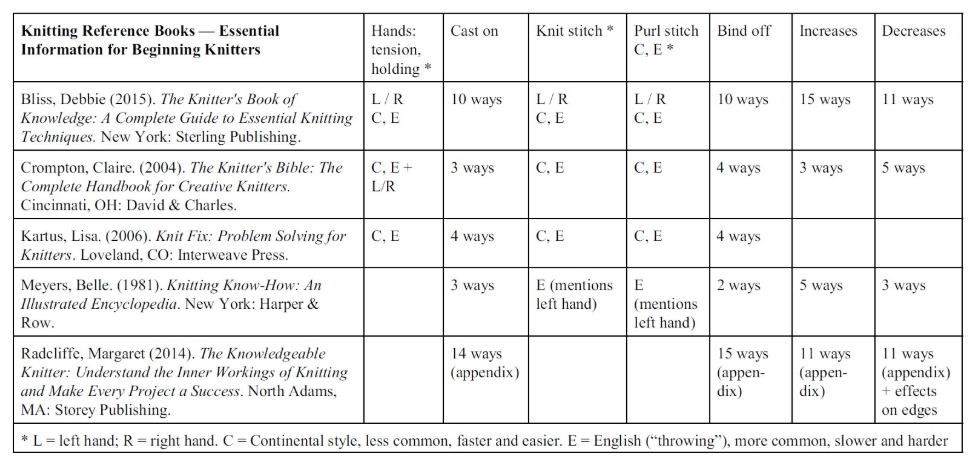
Chart 01. Essential Information for Beginning Knitters and Others
Links Techniques to Projects
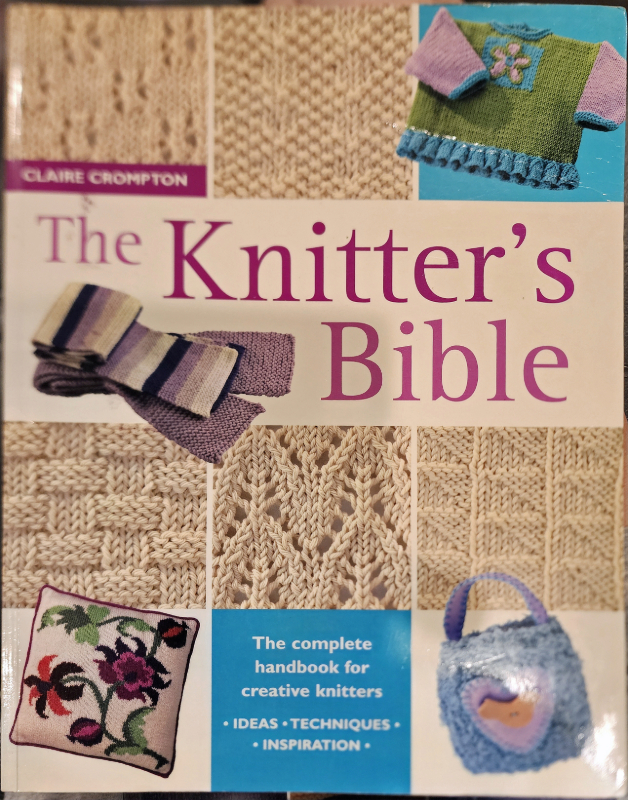
Crompton, Claire. (2004). The Knitter’s Bible: The Complete Handbook for Creative Knitters. Cincinnati, OH: David & Charles. 160 pp., with photos, diagrams; index, 1 p. (5 cols.)
Availability: Available at San Diego Public Library; available used from Powells Books, $12.95
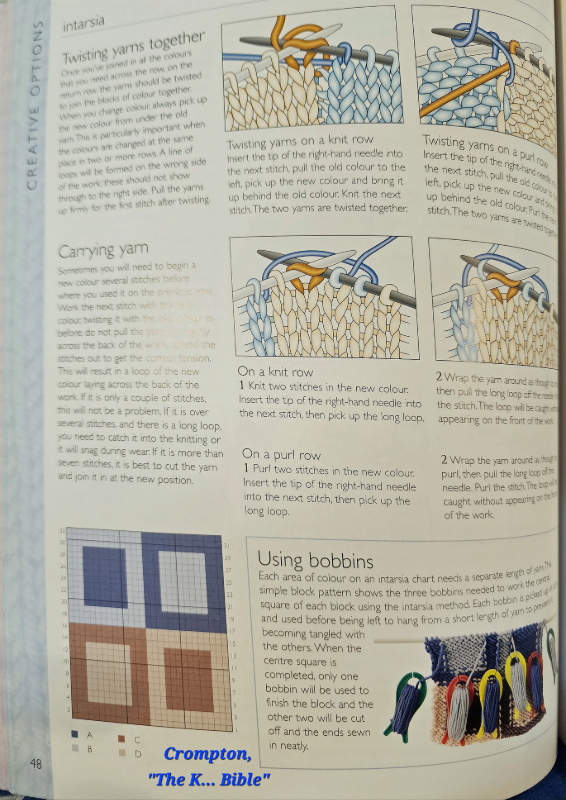

Figure 04(a,b). For most of these techniques, Crompton links the techniques to a project for trying the technique. Great resource for knitters of all experience and skill levels.
Contents
a. Yarns, needles, etc. + holding needles, cast on, knit/purl, bind off, shaping (increasing, decreasing), gauge. b. Lace, color knitting, cables, embossed stitches, short rows, in the round. c. Medallions, beads, loops, entrelac, miters, felting, smocking, embellishments. d. Stitch library (>100 patterns). e. Projects.
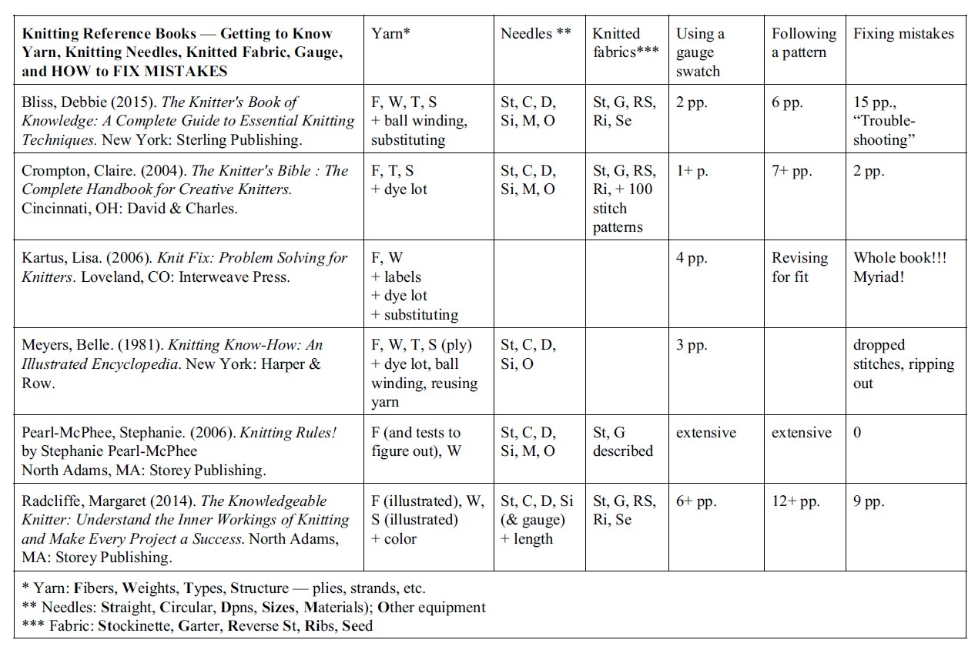
Chart 02. Knitting Reference Books — Getting to Know Yarn, Knitting Needles, Knitted Fabric, Gauge, and HOW to FIX MISTAKES
Helpful Books for Experienced Knitters
How to Avoid and to Fix Problems

Kartus, Lisa. (2006). Knit Fix: Problem Solving for Knitters. Loveland, CO: Interweave Press. 111 pp., with photos, diagrams; index, 2 p. (3 cols./p.)
Availability: Available at San Diego Public Library; available used, spiral-bound, $9.57

Figure 06. Kartus offers an excellent resource for those myriad mistakes we knitters make. Not a good intro to knitting, but a valuable aid for all levels of knitters.
Contents
1. Knitting philosophy (approach to knitting). 2. Knitting foundations (knit/purl stitches, tension). 3. Fixes you’ll use again and again (unknitting, aka unraveling; fixing vertical mistakes; unraveling then picking up). 4. Troubleshooting (twisted stitches, direction reversals, skipped stitches, too many stitches, too few stitches, incorrectly crossed cables, counting stitches/rows, chart problems, color corrections). 5. Solving problems before they grow (casting on, joining new yarn, working in the round, buttonholes, picking up stitches, binding off, putting it together, Kitchener stitch/grafting, blocking). 6. Extreme fixes: Altering when you’re done knitting (bound-off edge, cast-on edge, seams, subtracting width). 7. Test-driving (gauge, yarn weights, fit, ease, revising a pattern, choosing fibers & yarn behavior, yarn labels)
Alphabetized Listings
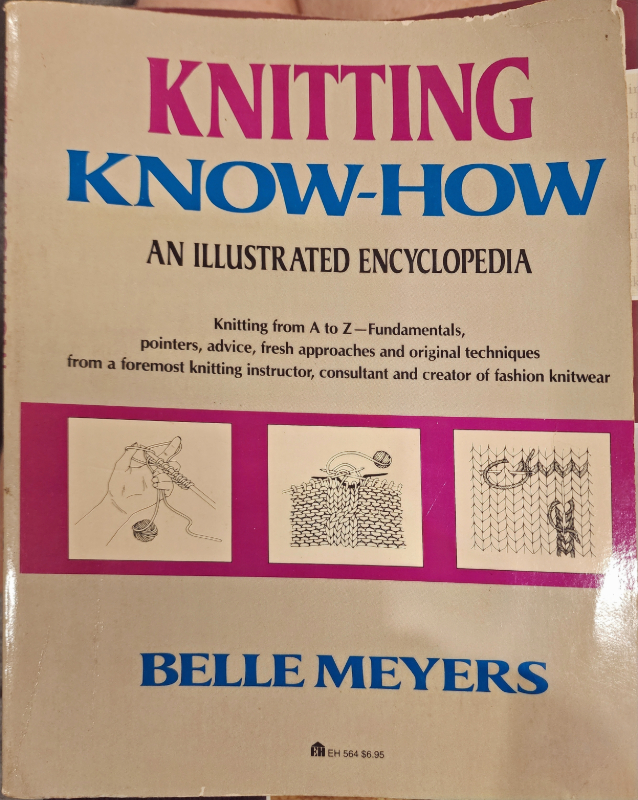
Meyers, Belle. (1981). Knitting Know-How: An Illustrated Encyclopedia. New York: Harper & Row. 191 pp., with diagrams; NO index.
Availability: Not available at San Diego Public Library; available used, $8.95, Powells Books.
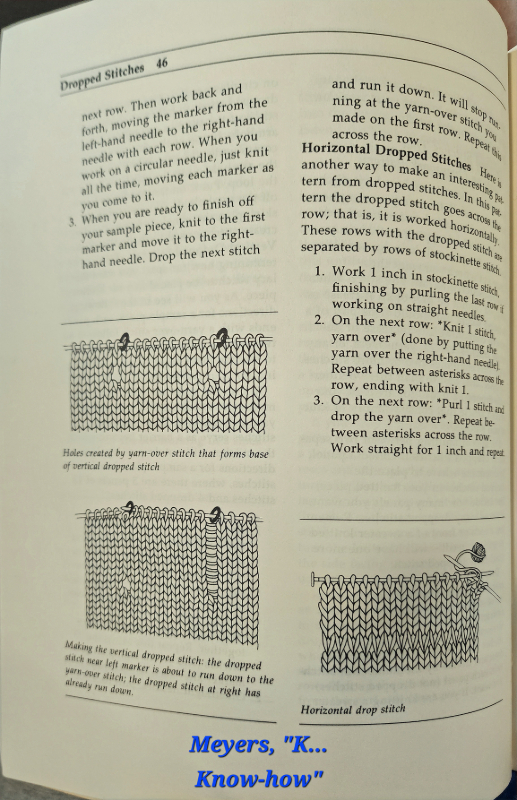
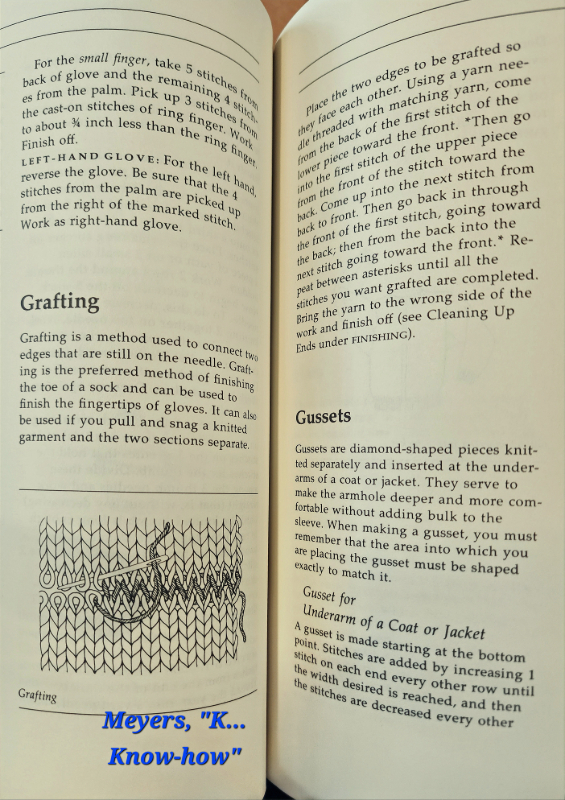
Figure 08(a,b). Arranged alphabetically; helpful if you know the information you want to find; some very helpful techniques, but quality of explanations and illustrations varies; plenty of info on making various kinds of projects (e.g., baby clothes, skirts, sweaters).
Fun Book for Experienced Knitters
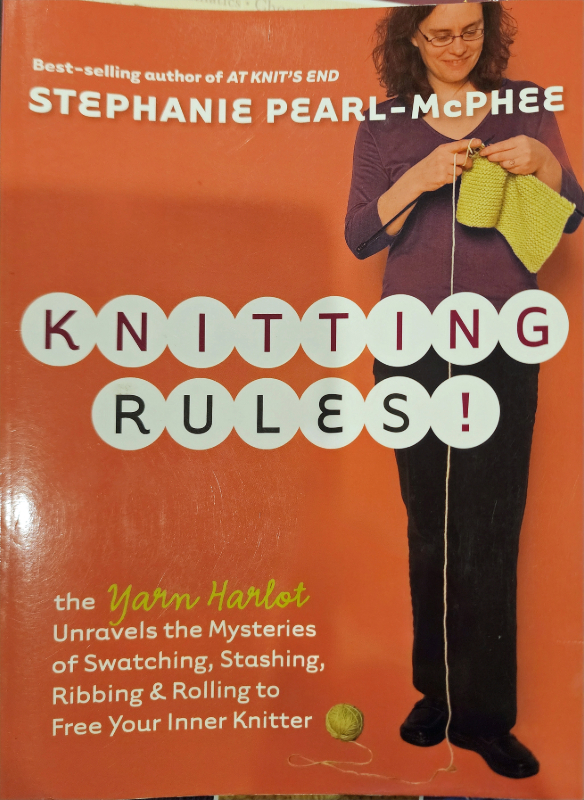
Pearl-McPhee, Stephanie. (2006). Knitting Rules! North Adams, MA: Storey Publishing. 224 pp.; index, 5 pp.
Availability: Available at San Diego Public Library; buy $14.95, Powells Books.
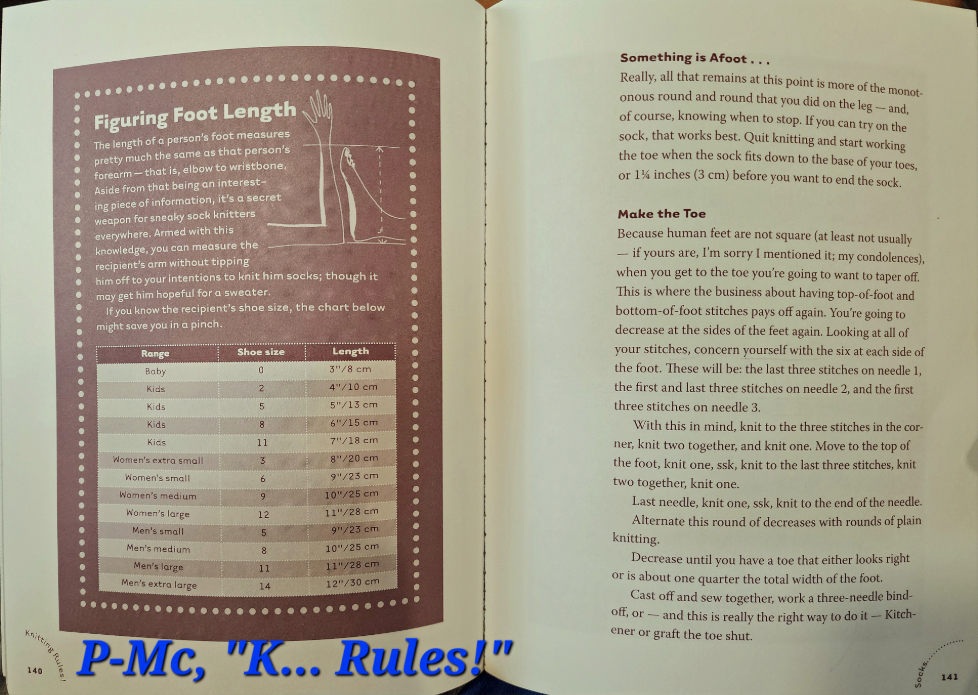
Figure 10. A few interwoven parts: humorous personal narrative about her knitting experiences, information and guidance (global and related to various kinds of projects), nudges to use gauge swatches for following a pattern.
Contents
1. What is knitting …? 2. Yarn (good info about fibers and how to evaluate them). 3. Know your stuff (needles, supplies, patterns, books and magazines). 4. Gauge, swatches. 5. Hats. 6. Socks. 7. Scarves and shawls. 8. Sweaters. Glossary.
Guide to Using Patterns or Designing Your Own Pattern

Radcliffe, Margaret (2014). The Knowledgeable Knitter: Understand the Inner Workings of Knitting and Make Every Project a Success. North Adams, MA: Storey Publishing. 295 pp., with photos, diagrams; index, 7 pp.
Availability: Available at San Diego Public Library; available used, $17.95, Powells Books.

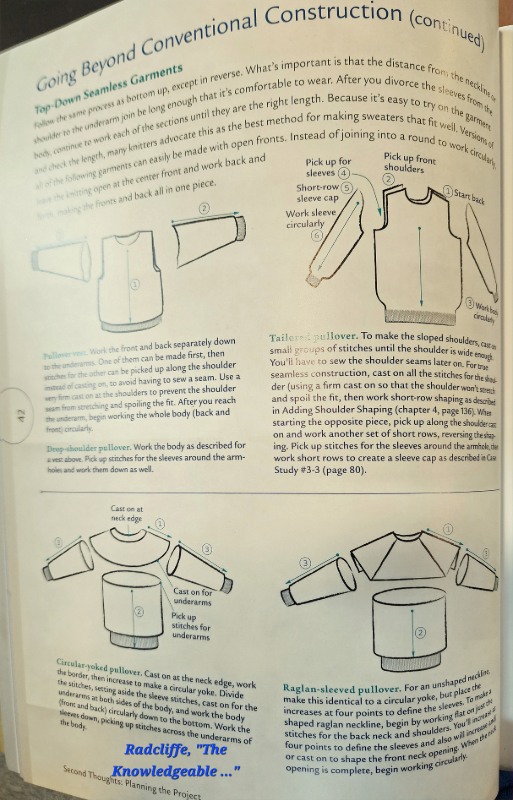
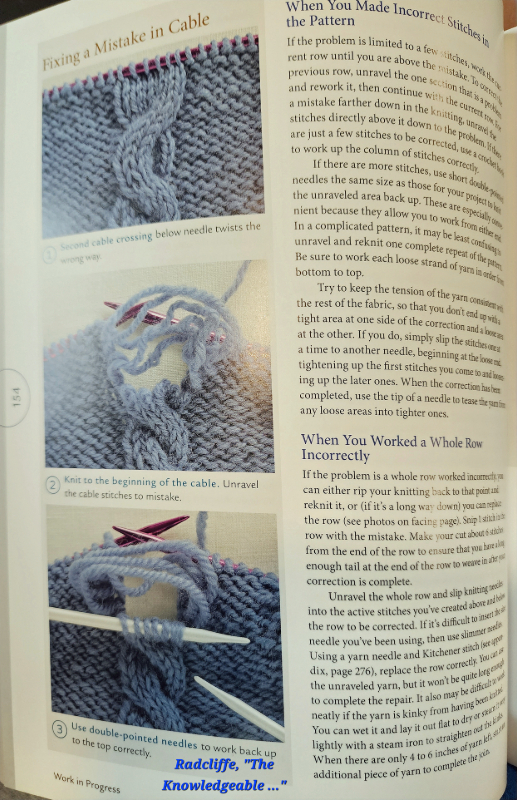
Figure 12(a,b,c). Not a good starter manual for a complete beginner, but for knitters who prefer to knit projects that follow a pattern, this would be an excellent resource, from choosing the pattern and the yarn to adapting the pieces to fit to trouble-shooting to embellishing the piece.
Contents
1. Pattern, yarn, and needles. 2. Planning the project. 3. Modifying your pattern. 4. Shaping and fitting. 5. Work in progress (e.g., special situations). 6. Evaluation and adjustments (fixing mistakes, adjusting for fit, dealing with variations in yarn, cutting). 7. Putting it all together (finishing, blocking, ends, joining). 8. Borders, bindings, and embellishments. Appendix (Glossary of techniques and terms — VERY HELPFUL! — abbreviations, symbols, resources).
As always, I welcome your suggestions for improvement, tips, thoughts, comments, and so on. What would you think of my next knitting-related blog being about fibers (wool, cotton, linen, etc.)? Or maybe kinds of stitches (cables, lace, ribbing, texture, etc.)? Please feel free to suggest additional ideas.
Copyright © 2025, text and photos, Shari Dorantes Hatch. All rights reserved.
 Bird Brain
Leave a comment